
Supercomputers no longer look like single cabinets humming in a back room; the biggest now sprawl across warehouse-sized halls and draw as much electricity as a small town. Their pecking order shifts constantly, since the TOP500 ranking is only recalculated twice a year, each June and November. The machines below are eight of the heaviest hitters in high-performance computing.
1. Frontier: The First Exascale Machine
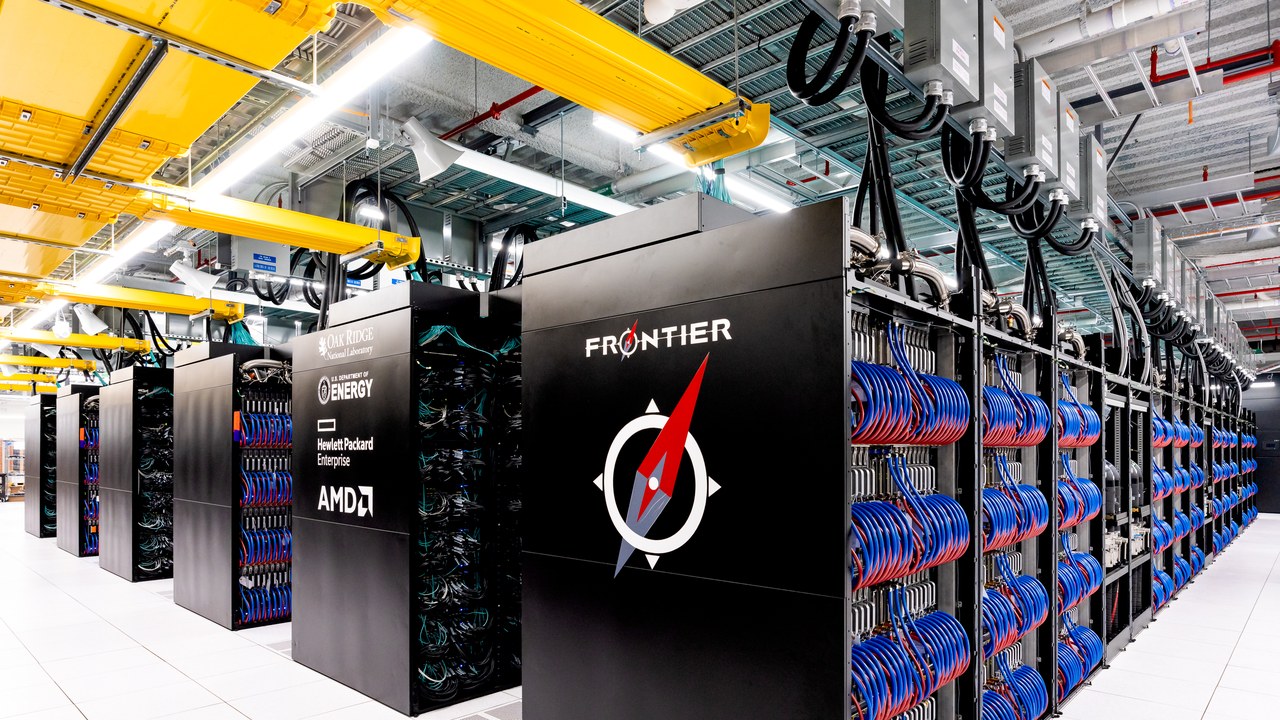
Oak Ridge National Laboratory in Tennessee runs the Frontier supercomputer, an HPE Cray EX system that broke the exascale barrier in 2022 and has since been measured at roughly 1.35 exaflops on the Linpack benchmark. Its cabinets pair custom AMD EPYC processors with AMD Instinct MI250X accelerators, stitched together by HPE’s Slingshot-11 interconnect.
The hardware is aimed at open science rather than classified work: climate modeling, fusion and materials research, and training large AI models for the Department of Energy. Feeding it costs around 21 megawatts, which is why efficiency per watt now matters nearly as much as raw speed.
2. El Capitan: Livermore’s Weapons Engine
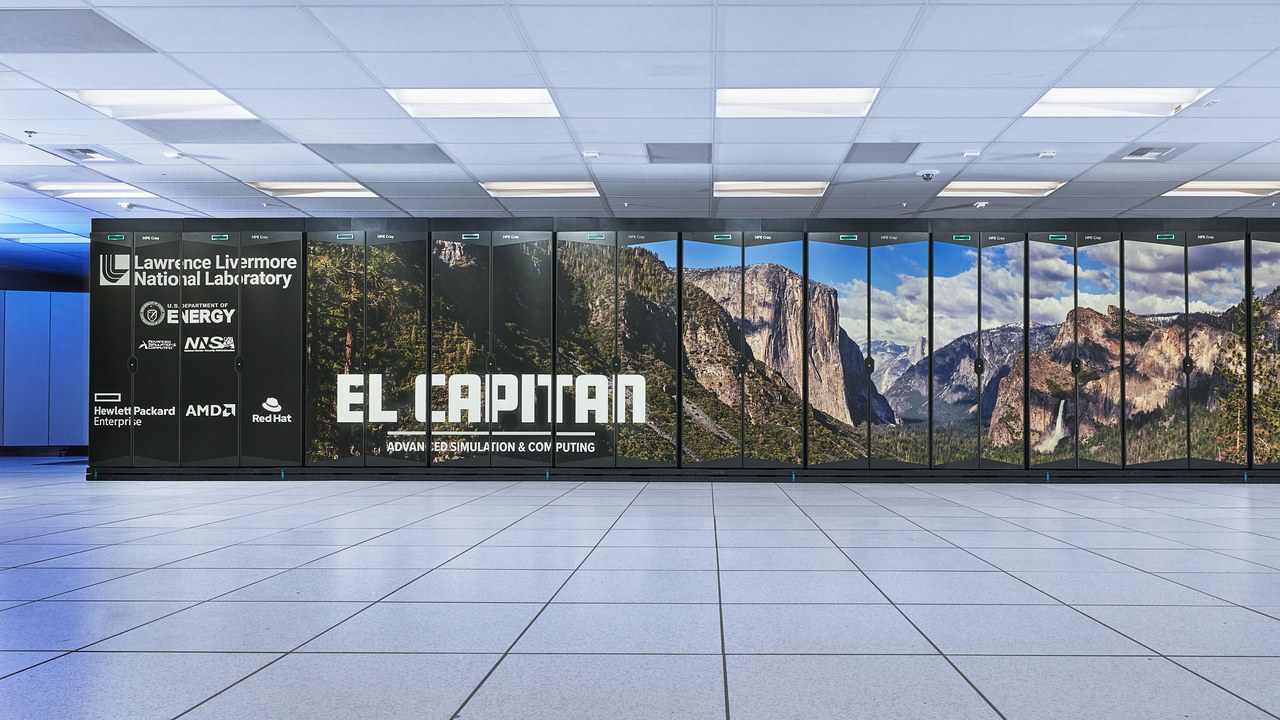
Lawrence Livermore National Laboratory switched on El Capitan in late 2024, and it entered the rankings at 1.742 exaflops on Linpack, the highest figure any system had posted to that point. The design leans on AMD Instinct MI300A chips, which fuse processor and graphics cores onto a single package, wired together on HPE’s Slingshot-11 fabric.
Its purpose is nuclear stockpile stewardship: three-dimensional simulations that let the National Nuclear Security Administration certify an aging arsenal without live detonations. Power draw at full load approaches 30 megawatts, and because most of the workload is classified, very little of what it computes is ever published.
3. Aurora: Intel’s Exascale Bet
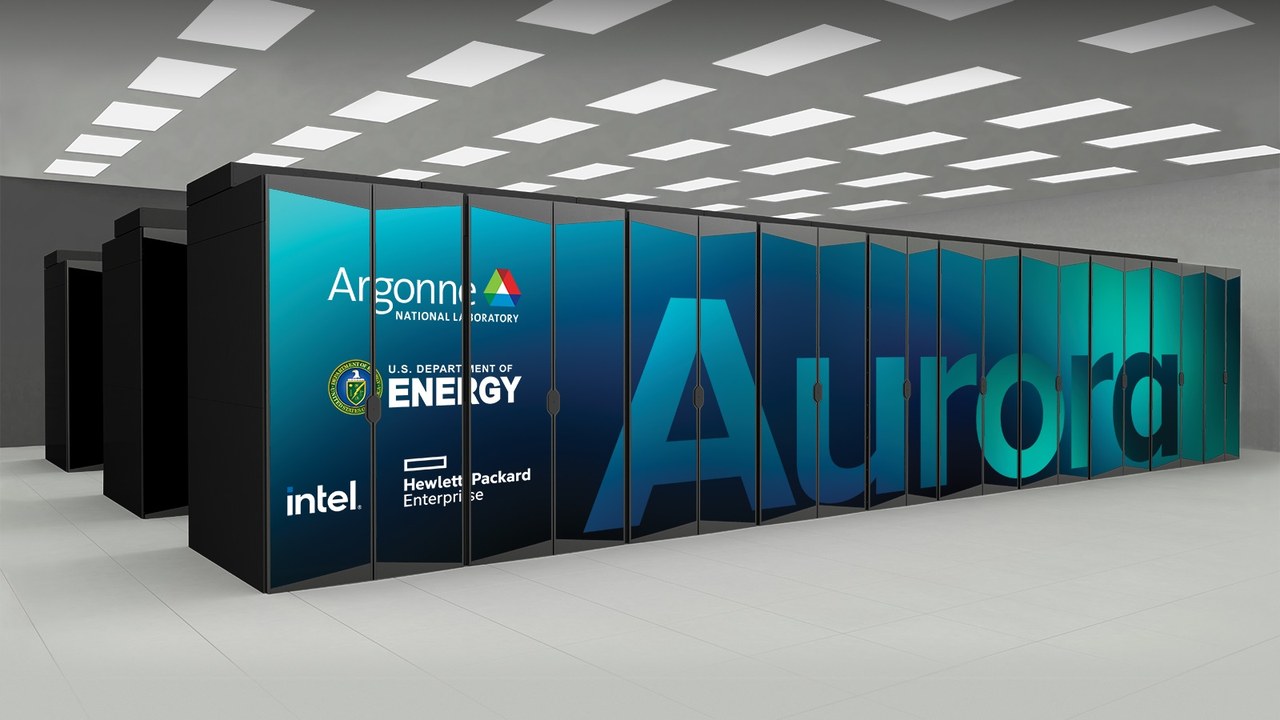
Argonne National Laboratory outside Chicago operates the Aurora supercomputer, which cleared 1.012 exaflops on Linpack in late 2024 while running on only part of the machine. Aurora is the outlier for leaning on Intel silicon, matching Xeon CPU Max processors that carry memory on-package with Data Center GPU Max accelerators across more than 10,000 blades.
Argonne aims it at cancer research, climate simulation, fusion modeling, and a homegrown scientific language model. Appetite is the catch: that exascale run drew close to 39 megawatts, more than either American rival, a reminder that this tier of computing is a power-engineering problem as much as a chip problem.
4. Fugaku: The Machine Without GPUs
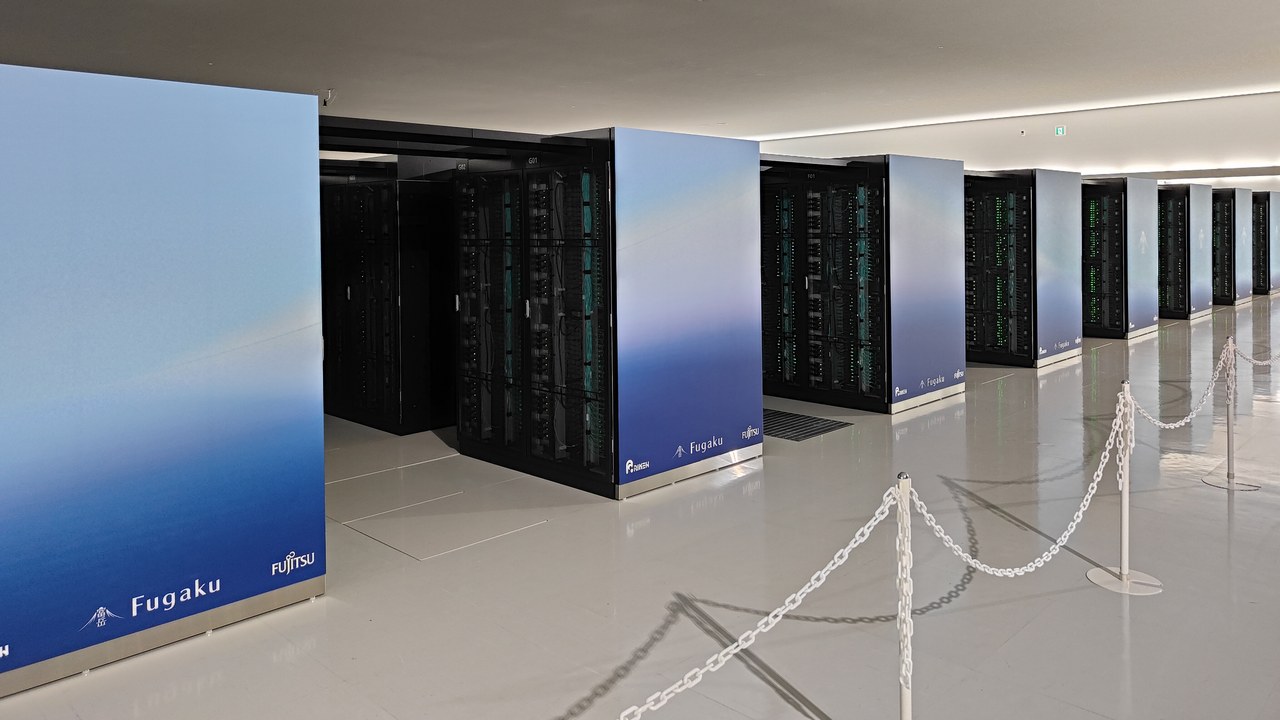
Installed at the RIKEN Center for Computational Science in Kobe, Japan’s Fugaku system is rated at about 442 petaflops on Linpack and held the world’s top ranking from 2020 until 2022. What sets it apart is the absence of graphics accelerators entirely: all 158,976 nodes run Fujitsu A64FX Arm processors with high-bandwidth memory built in, joined by a Tofu interconnect.
That general-purpose design made the machine easy to repurpose during the pandemic, when researchers modeled how virus-laden droplets drift through classrooms, offices, and train carriages. Drug screening, tsunami forecasting, and weather prediction fill much of the rest of its calendar, at a cost of roughly 30 megawatts.
5. Summit: The Fading Champion
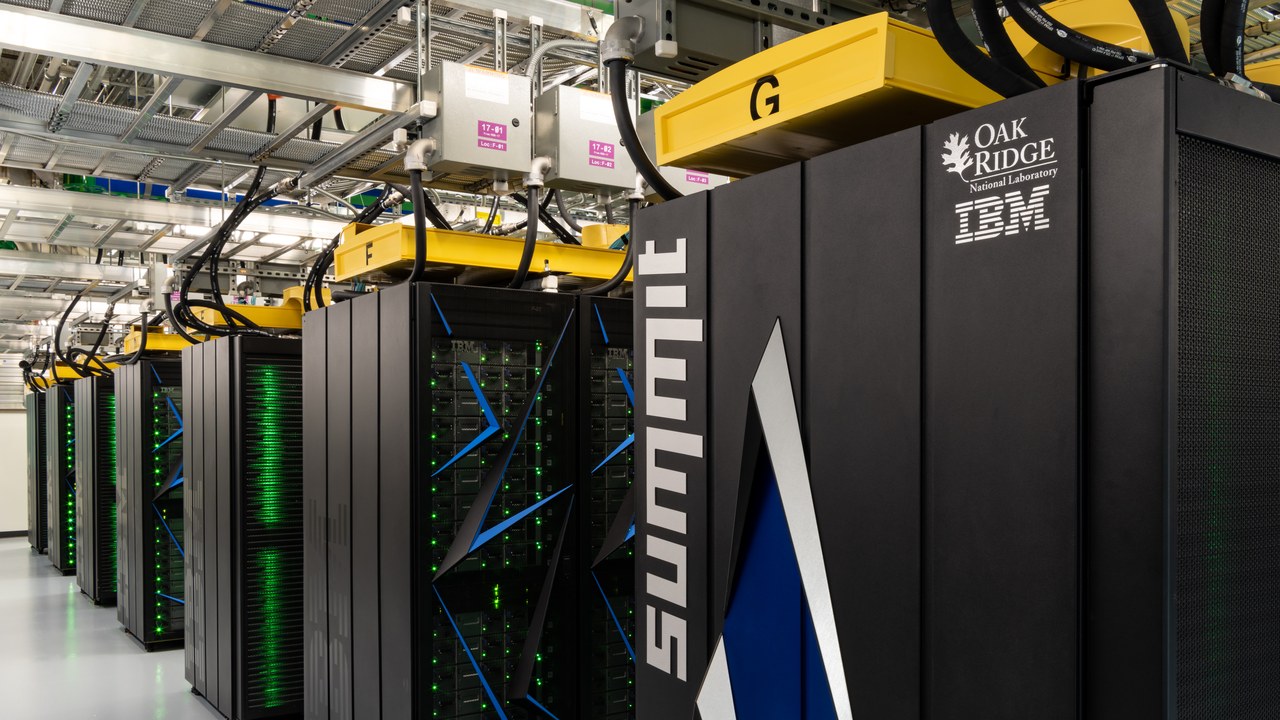
Oak Ridge’s Summit machine topped the world rankings from 2018 to 2020 at 148.6 petaflops on Linpack, and it proved that GPU-heavy design could dominate scientific computing. Each of its 4,608 nodes carried two IBM POWER9 processors and six Nvidia V100 accelerators, connected by dual-rail Mellanox InfiniBand.
Genomics, earthquake modeling, and some of the earliest large-scale scientific AI work all ran on it before Frontier arrived in the same building. Oak Ridge began winding Summit down in 2024 to free up floor space and electrical capacity, so its status is closer to end-of-life than cutting edge.
6. Sierra: The Quieter Twin
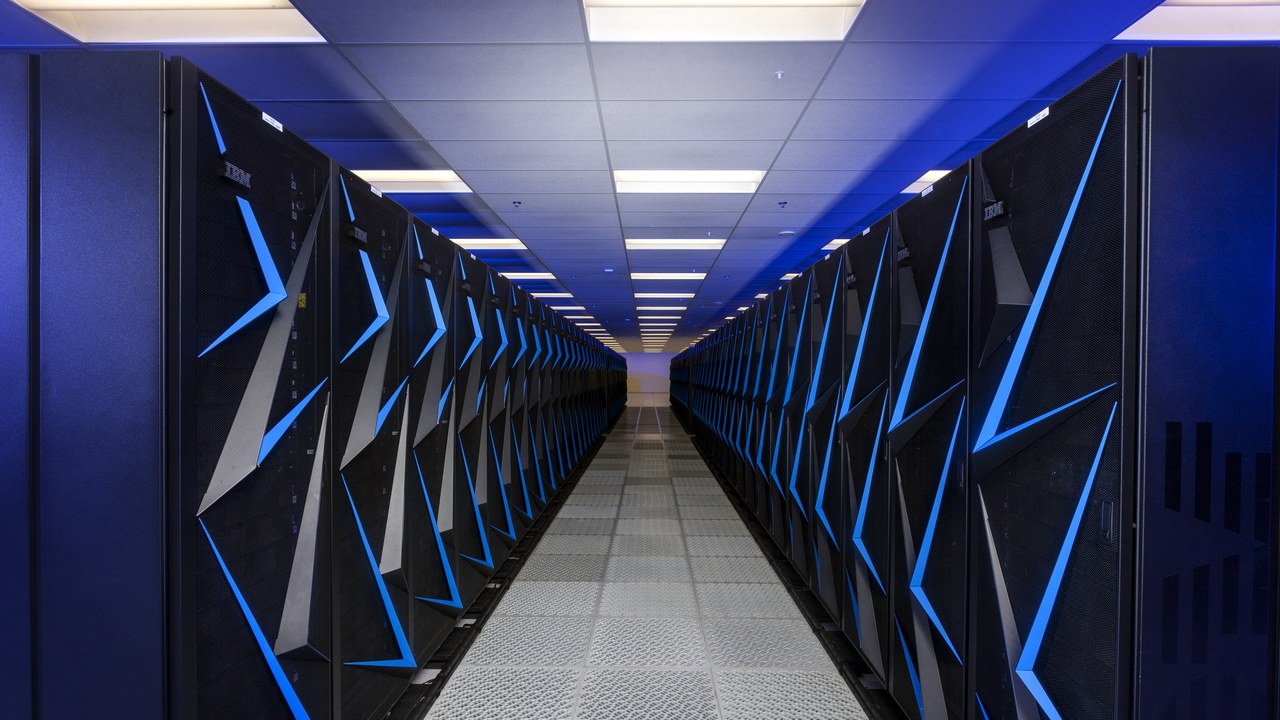
Lawrence Livermore’s Sierra supercomputer is Summit’s smaller sibling, built on the same IBM POWER9 and Nvidia V100 blueprint and rated at 94.6 petaflops on Linpack. Its 4,320 nodes each hold two processors and four accelerators on EDR InfiniBand, and the installation draws only about 7 megawatts, a fraction of what the exascale generation demands.
Sierra was procured for the same weapons-science mission El Capitan now leads, running the simulations that underpin warhead certification. With a far newer and vastly faster system installed at the same laboratory, Sierra is no longer Livermore’s flagship, though the hardware remains a serious machine by any ordinary measure.
7. MareNostrum: Spain’s EuroHPC Flagship
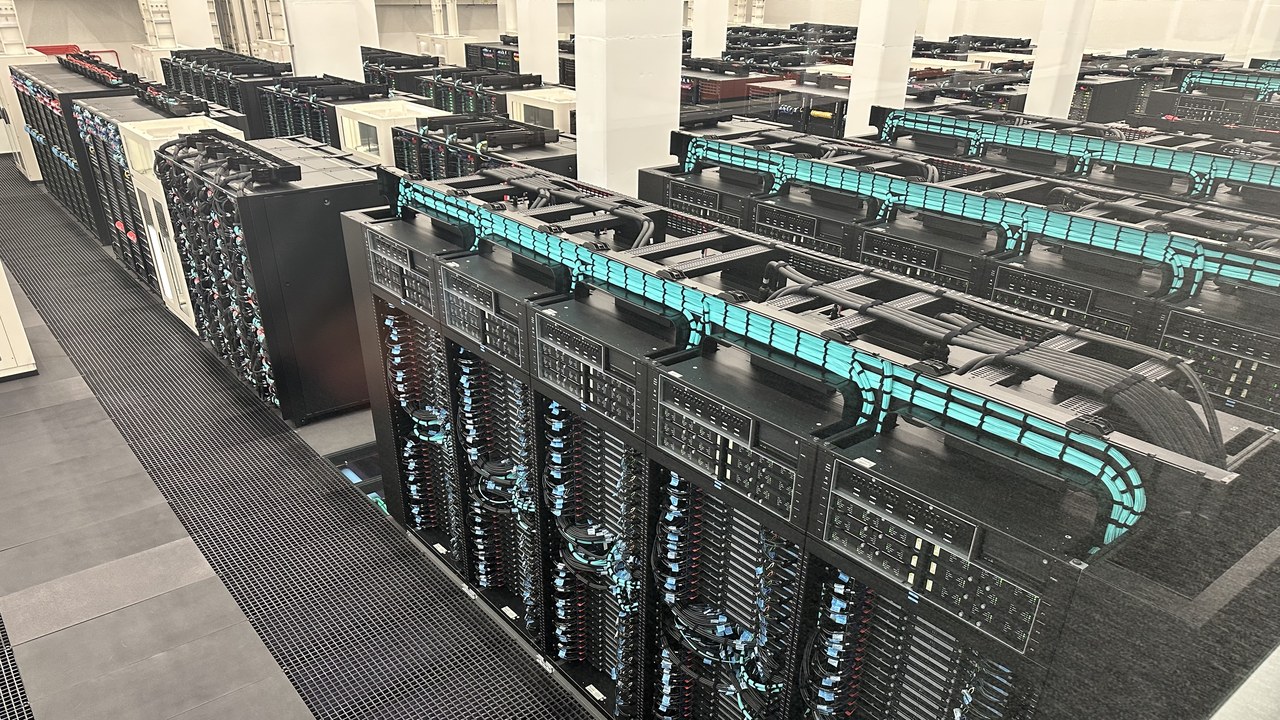
The fifth incarnation of MareNostrum has been running at the Barcelona Supercomputing Center since December 2023, rated at a peak of roughly 314 petaflops across its partitions. Its accelerated section, built on Atos BullSequana hardware for the EuroHPC Joint Undertaking, pairs Intel Xeon processors with Nvidia H100 accelerators and has been measured at about 138 petaflops on Linpack.
Earlier generations of the machine gave it a look no rival could match: rows of racks sealed in glass inside Torre Girona, a deconsecrated chapel on the Universitat Politecnica de Catalunya campus. Genomics, climate simulation, and Spanish-language AI models fill much of the current system’s workload.
8. Leonardo: Italy’s Pre-Exascale Giant
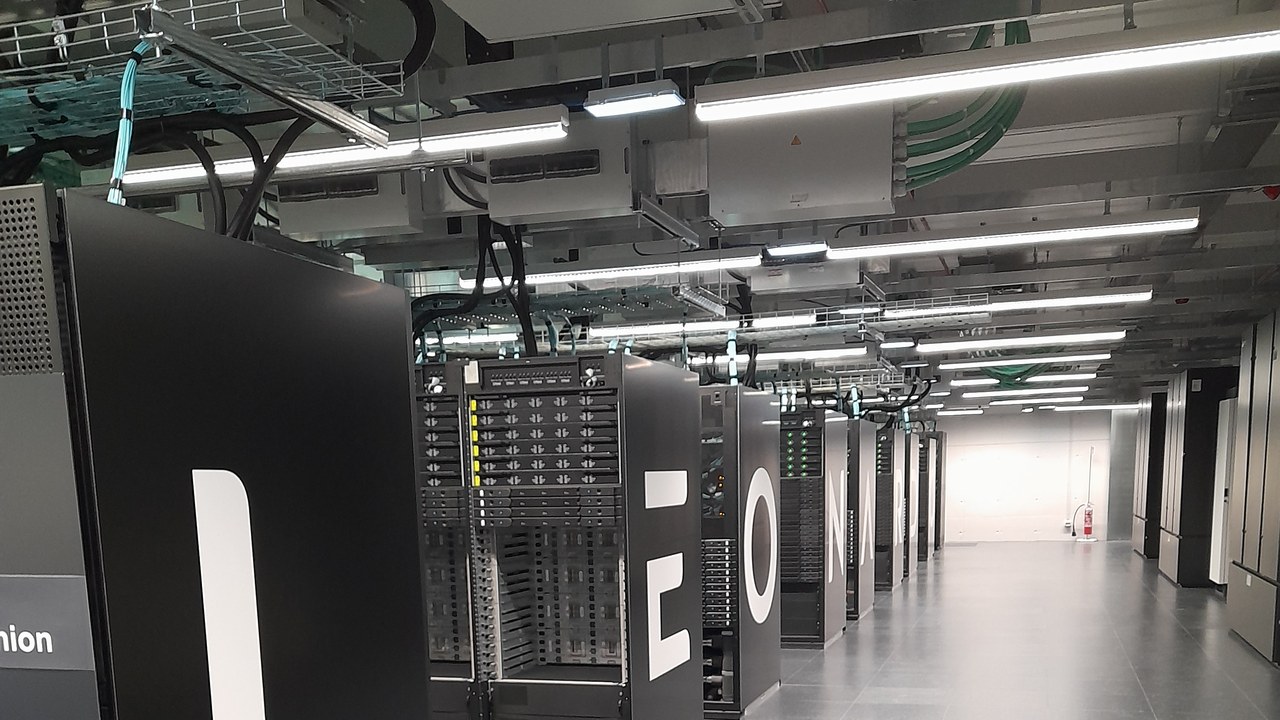
Bologna’s Tecnopolo campus hosts the Leonardo supercomputer, operated by the Italian consortium Cineca and rated at about 241 petaflops on Linpack following an expansion. The Atos BullSequana design pairs Intel Xeon processors with Nvidia A100 accelerators across roughly 3,500 booster nodes, linked by an Nvidia InfiniBand fabric.
Weather and climate forecasting, drug discovery, and engineering simulation dominate the queue, with Italian universities holding guaranteed access alongside other EuroHPC users. Consumption lands near 7 megawatts, modest beside the American exascale machines, because pre-exascale hardware buys its performance at a far gentler energy cost.
More from Morning Overview
- The NSA is again telling phone owners to switch off one location setting
- A handful of car transmissions are so tough mechanics say they almost never fail
- A handful of SUVs keep hitting 300,000 miles, and they share one engine trait
- Supplements now rank as the fifth-leading cause of death from liver disease.
