
Size in aviation can be measured by wingspan, length, cargo volume or takeoff weight, and different giants win different contests. Some were built for passengers, some for freight, and one for a single famous flight. Here are eight of the largest aircraft ever built, from a legendary flying boat to modern jetliners.
Help yourself and the planet: The Cool Down makes it easy to help yourself while helping the planet, with smart, simple changes to save more and waste less in your everyday life.
We may earn a commission if you sign up.
1. Hughes H-4 Hercules ‘Spruce Goose’: Wings Without Rival
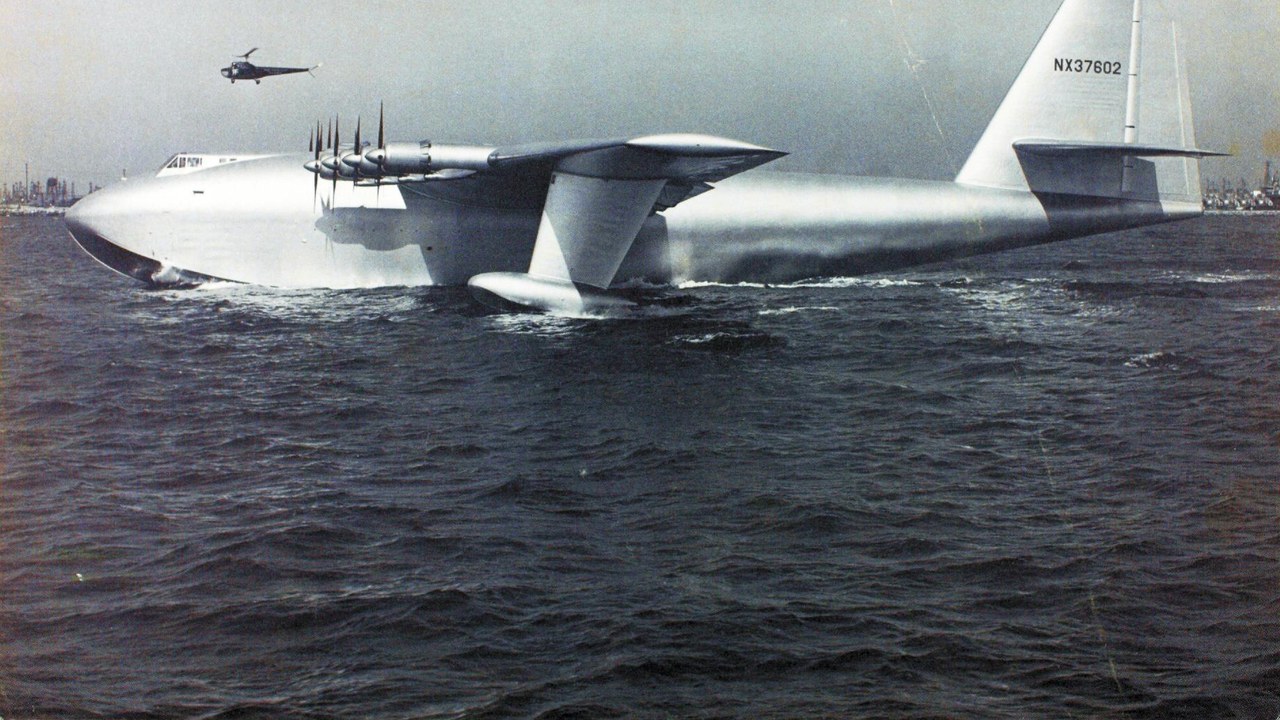
Howard Hughes’ flying boat stretched 319 feet of wing, the span that anchors this whole list, according to 319 feet of wing. It also flew only once, skimming along in ground effect rather than climbing away into open sky.
The H-4 shows how far ambition can outrun practical need. Nothing about its single short hop made it a working aircraft, yet its enormous size is the lasting legacy, and it remains a benchmark for anyone judging how large a wing can be built and still leave the water. Visitors who see the hull today grasp the scale in a way that numbers alone struggle to convey, since the aircraft was built almost entirely of wood.
2. Antonov An-225 Mriya: The Dream Freighter
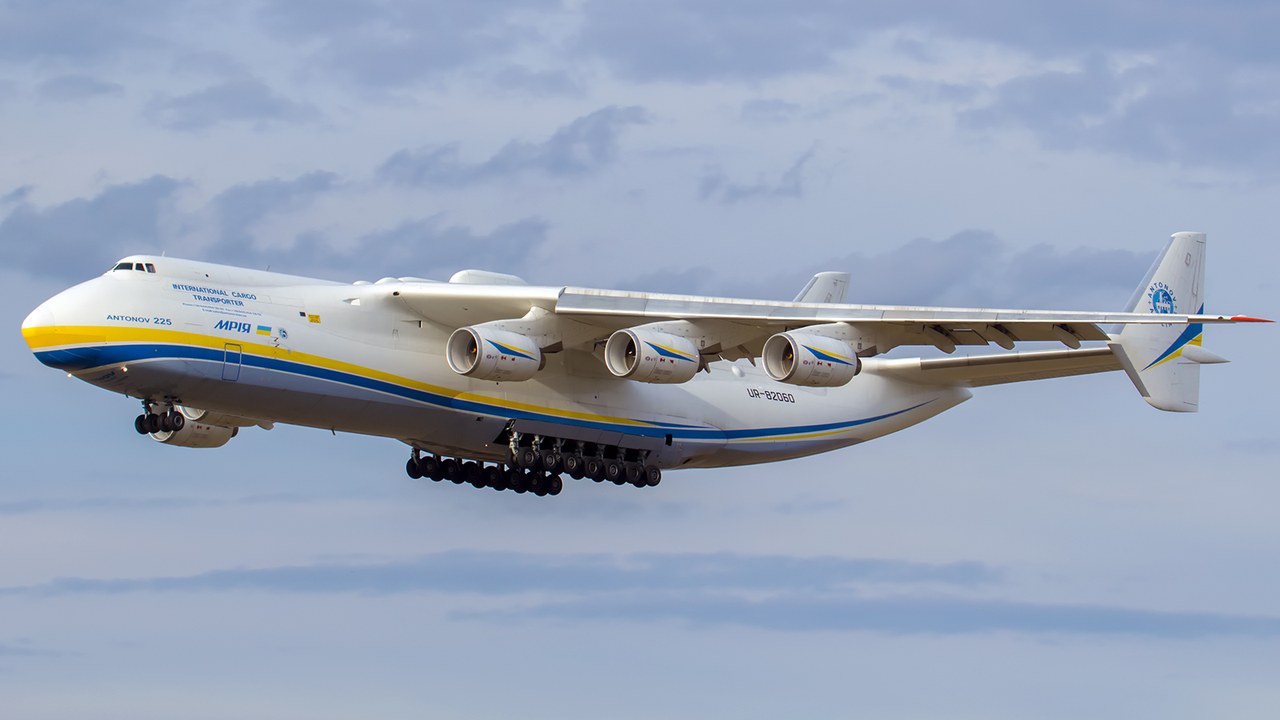
At 290 feet tip to tip, the Mriya earned its place through sheer scale, and better than 1.4 million pounds notes it could take off at better than 1.4 million pounds. That figure puts it in a class that very few machines have ever approached.
Few aircraft have matched that combination of span and mass. For operators with oversized cargo to move, the An-225 stood as an answer to loads that nothing else in the sky could swallow, and its name still carries weight among aviation enthusiasts. Its single airframe became a symbol of what heavy airlift could achieve, and enthusiasts still measure other cargo aircraft against it.
3. Airbus Beluga XL: Whale Of A Hold
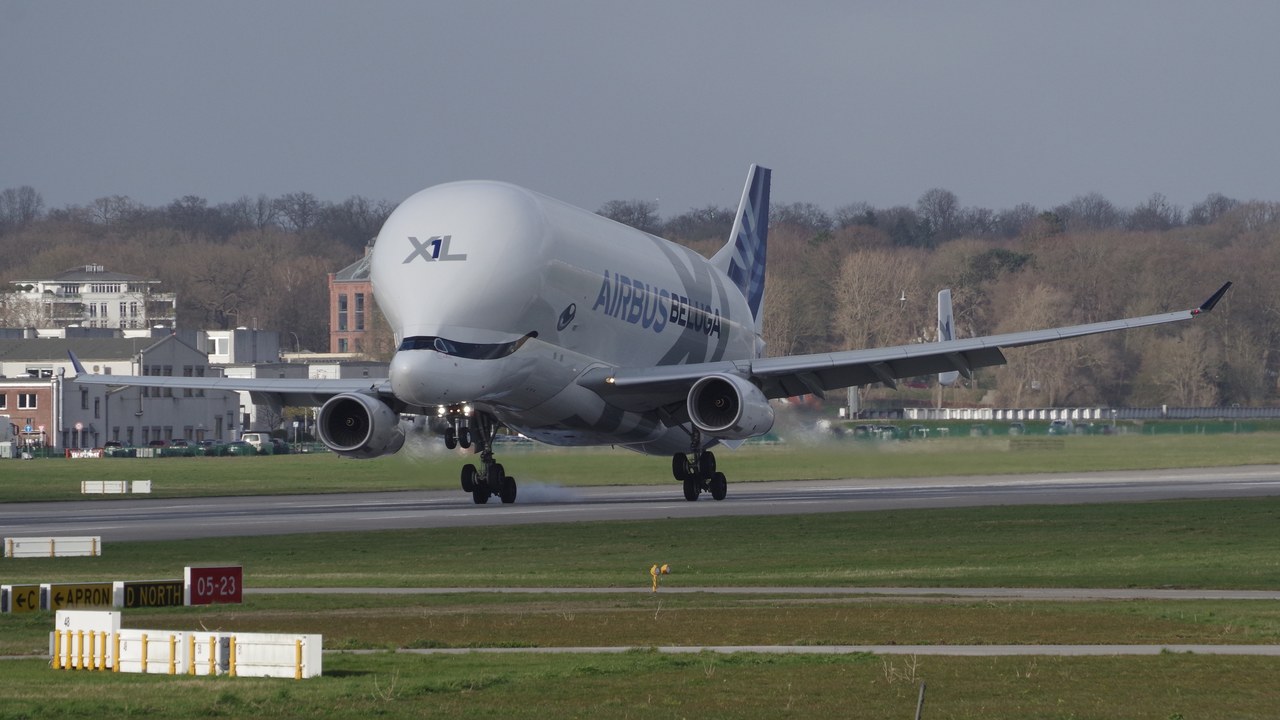
Airbus built this whale-shaped freighter around volume rather than span, and 78,000-cubic-foot hold puts its hold at 78,000 cubic feet. The rounded, swollen profile follows directly from that single goal of carrying bulky loads.
The bulbous fuselage exists for a specialized job: hauling large aircraft sections between production sites. For a logistics planner, the Beluga XL is a reminder that cargo capacity depends on shape and usable space as much as on raw weight or wingspan. That trade-off explains why the Beluga XL looks nothing like a conventional airliner, even though it is built to fly the same skies.
4. Airbus A380: Double-Decker Giant
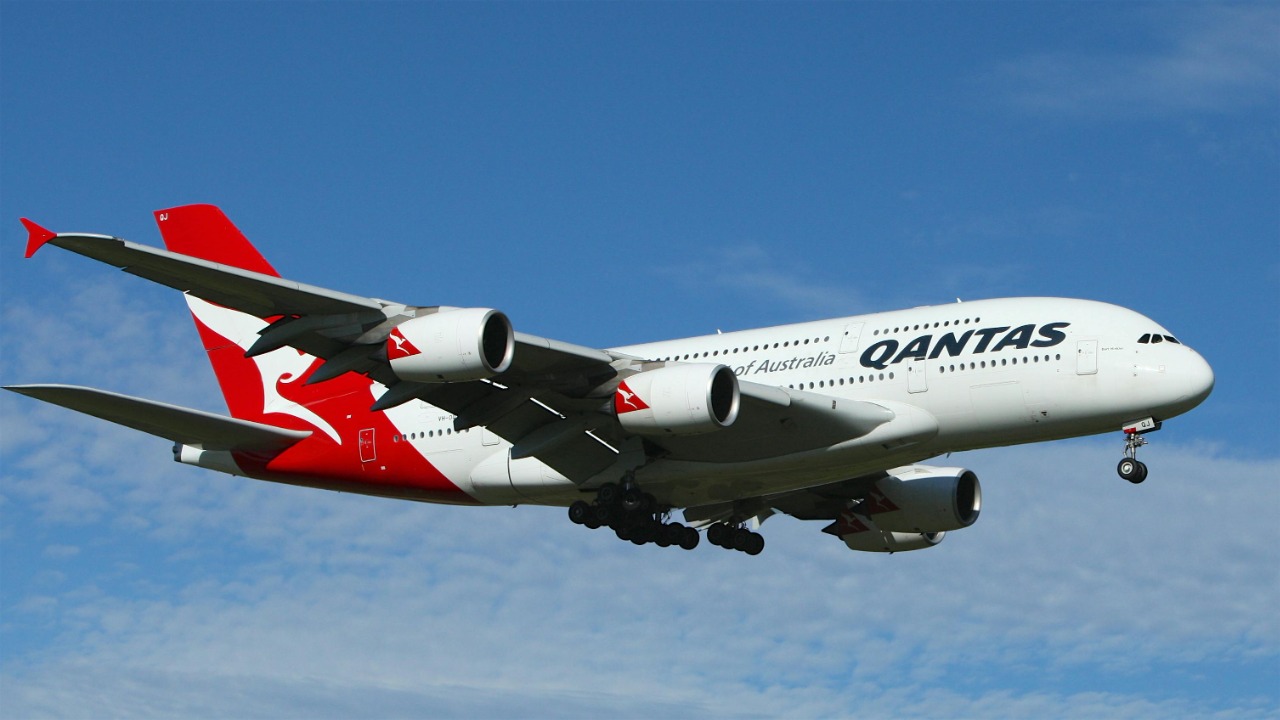
The double-decker spans 79.80 meters and carries a 565.92-ton maximum takeoff weight, which makes it the highest-capacity airliner built, per highest-capacity airliner. Few passenger aircraft come close to those proportions.
Travelers experience it as a spacious, quiet cabin, but airports experience it as a planning challenge. Gates, taxiways and runways all had to be sized for a wing this wide, which is part of why only certain hubs handle the type routinely. Airlines that operate it tend to deploy it on dense, long routes where its capacity can be filled.
5. Antonov An-124 Ruslan: Soviet-Era Workhorse
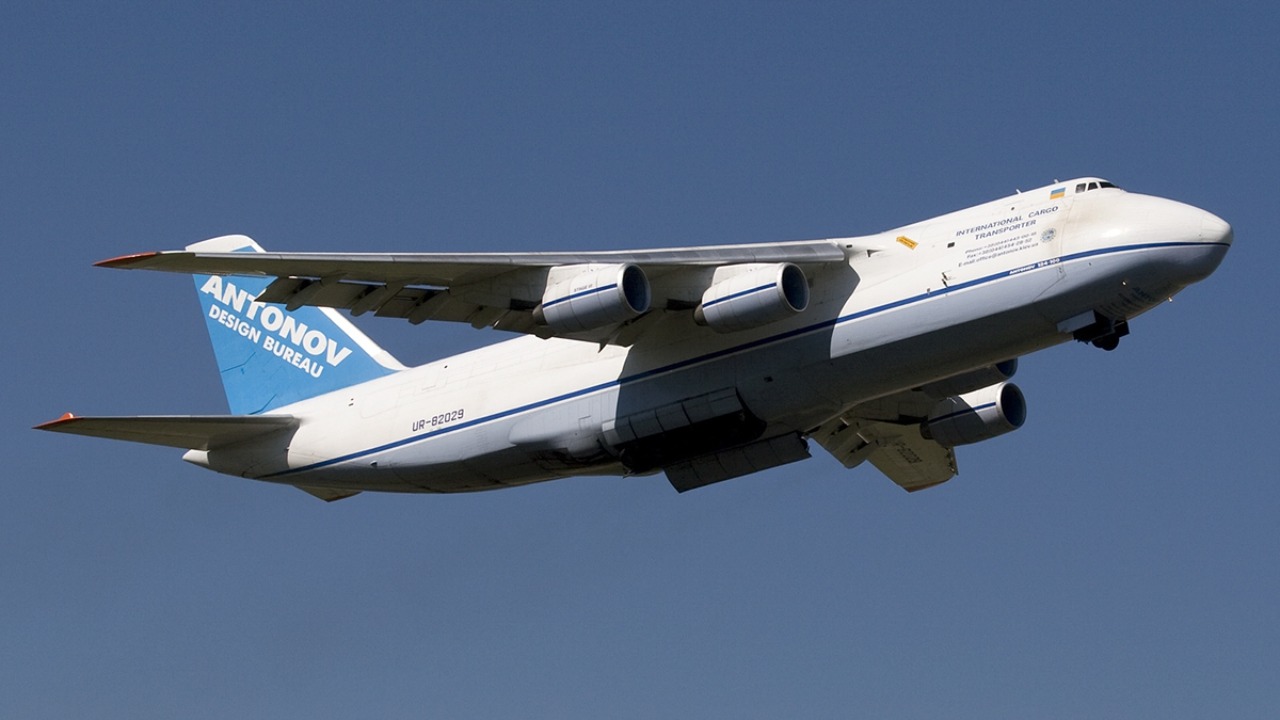
Spanning 73.30 meters and grossing 395.65 tons at takeoff, the Soviet-era freighter earns its slot in large aircraft table. Those numbers place it among the heaviest aircraft ever to go into production.
The Ruslan fills a gap that commercial widebodies cannot, moving outsized loads that would never fit through a standard cargo door. Shippers of heavy industrial gear and large machinery have long looked to this design when conventional freighters fall short. The same rear and nose loading arrangement makes it a practical choice for charter work involving unusual cargo.
6. Boeing Dreamlifter: Swollen 747 For Parts
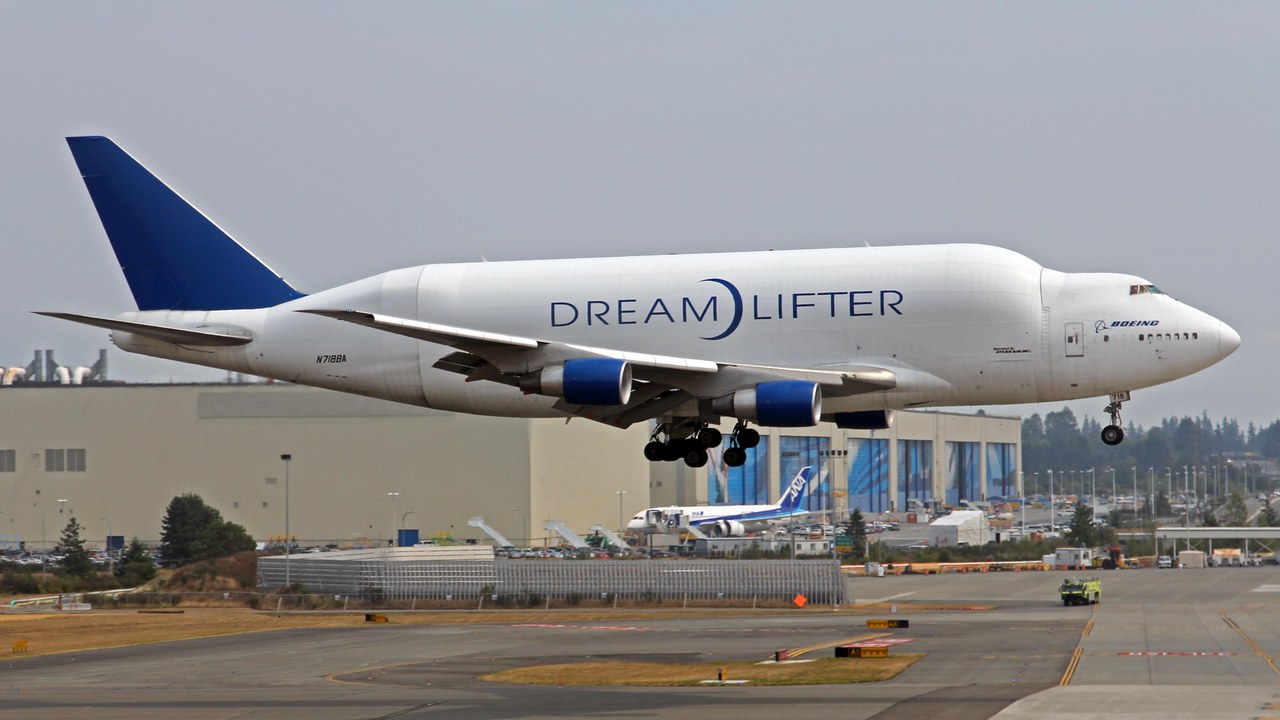
Boeing’s swollen 747 freighter was built to move 787 parts, and Dreamlifter dimensions lists it at 71.70 meters long with a 64.40-meter span. It is a jumbo jet visibly stretched around its cargo.
Its bulging fuselage is unmistakable on any ramp. The conversion shows how a proven jetliner airframe can be reshaped into a specialist hauler, a practical route when designing an entirely different giant from scratch would cost far more time and money. For Boeing, the arrangement kept 787 components moving between distant factories on a schedule that ships could not match.
7. Lockheed C-5 Galaxy: Air Force Heavyweight
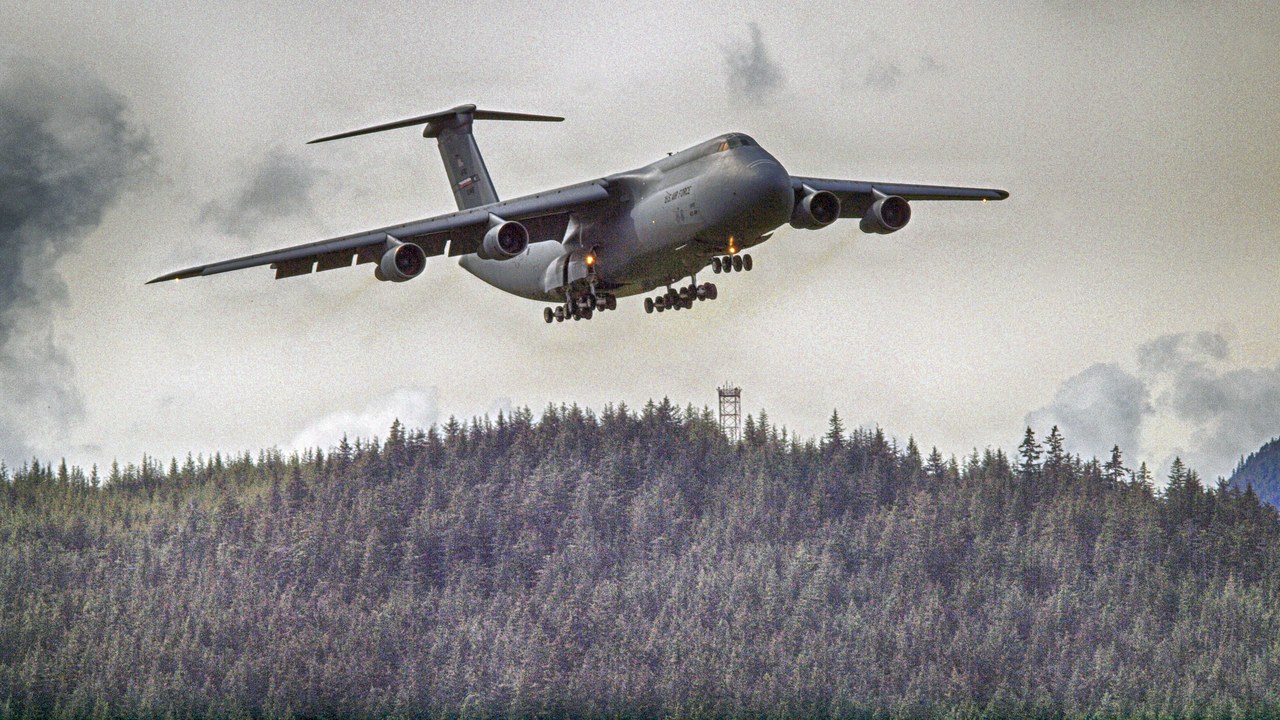
The largest aircraft in the Air Force inventory spans 222 feet 9 inches and grosses 840,000 pounds, according to Air Mobility Command fact sheet, whose inventory figures run current to April 2025. It is the service’s biggest airlifter by that measure.
The Galaxy is a reminder that the biggest flying machines are often tools of logistics, built to carry heavy military cargo over long distances. Its dimensions come straight from an official fact sheet, which makes them some of the most dependable on the list. Readers comparing the giants here can treat it as the anchor for the military entries in particular.
8. Boeing 777X: Folding Wingtips
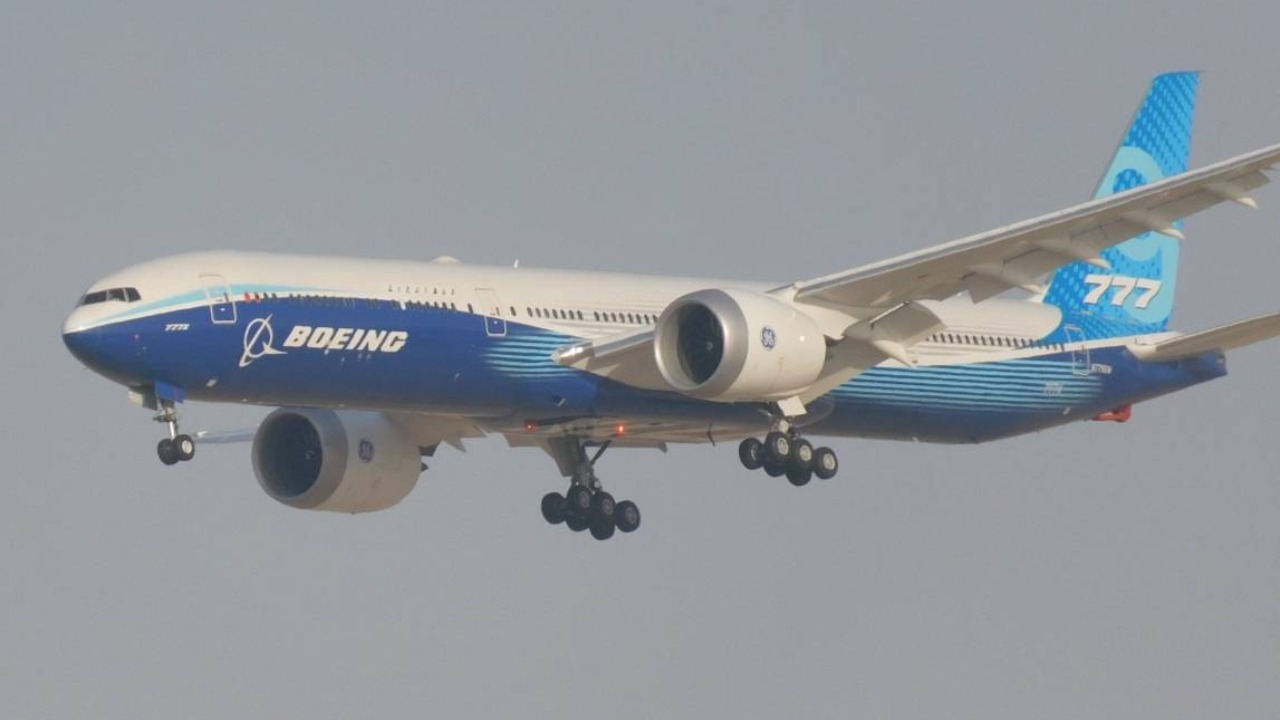
Its 235.5-foot wings are too wide for current 777 gates, so the tips fold, and 777X folding wingtips adds that the 777-9 is more than 251 feet long. The folding feature is the headline trick of the design.
Airlines buying the type must plan around that span on the ground as well as in the air. The folding tips are the compromise that lets a very large, efficient wing fit into airport layouts originally designed for narrower aircraft. Owners and buyers weighing the type should expect that gate compatibility will keep shaping where and how it operates.
Help yourself and the planet: Get The Cool Down →
We may earn a commission if you sign up.
More from Morning Overview
- Tropical Storm Rachel is dumping up to 12 inches on four Mexican states on its way to major hurricane strength
- The FTC says Lens.com doubled the price shoppers saw in Google ads
- Common allergy, bladder and sleep pills tied to sharply higher dementia odds
- NOAA now gives this winter a 75% chance of the strongest El Nino since 1950
