
Generating power at immense scale rarely leaves the surrounding land unchanged. Dams create reservoirs and reroute rivers, while wind and solar complexes repeat machines across horizons once defined by rock, water, or desert. These five projects became pieces of infrastructure so large that the landscape itself joined the power system.
1. Three Gorges Dam: A Power Station Across the Yangtze
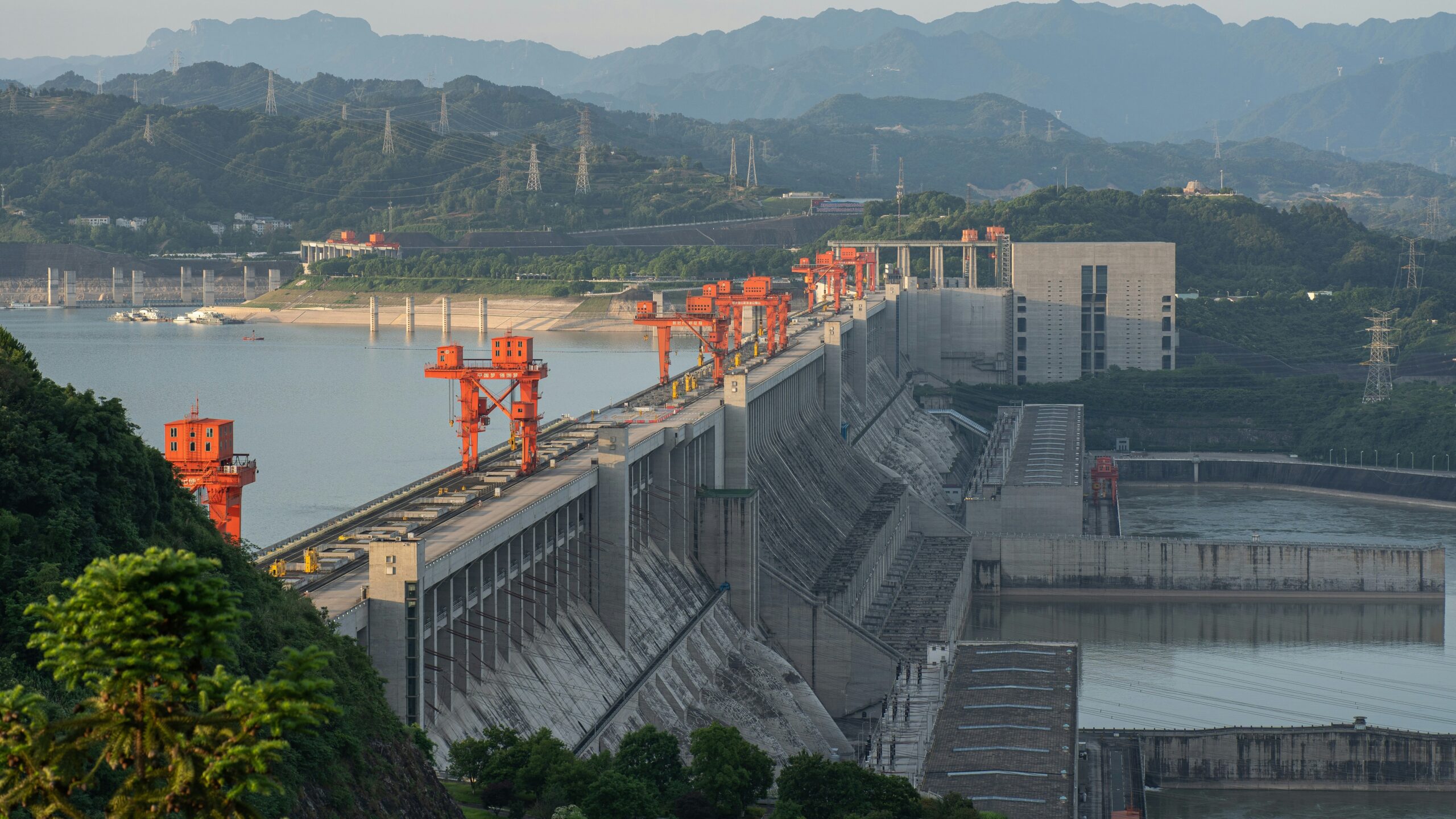
Three Gorges Dam turned a broad section of the Yangtze River into an enormous engineered power corridor. Ranked as the world’s largest power station by installed capacity, the project combines a long concrete barrier, turbine halls, navigation works, and a reservoir stretching far upstream. Its output comes from directing a major river through generating equipment at a scale no isolated plant could match. The dam is therefore not one structure but an interlocking river system.
That scale transformed shorelines, settlements, habitats, sediment, and travel along the valley. Hydropower avoids burning fuel during generation, but its civil works carry environmental and social costs. Flood management and navigation add purposes beyond electricity, making operation a balance among competing needs. Three Gorges demonstrates the bargain of mega-hydropower: exceptional generating capacity arrives by redesigning the behavior and geography of an entire river reach.
2. Hoover Dam: Concrete, Power, and a Desert Reservoir
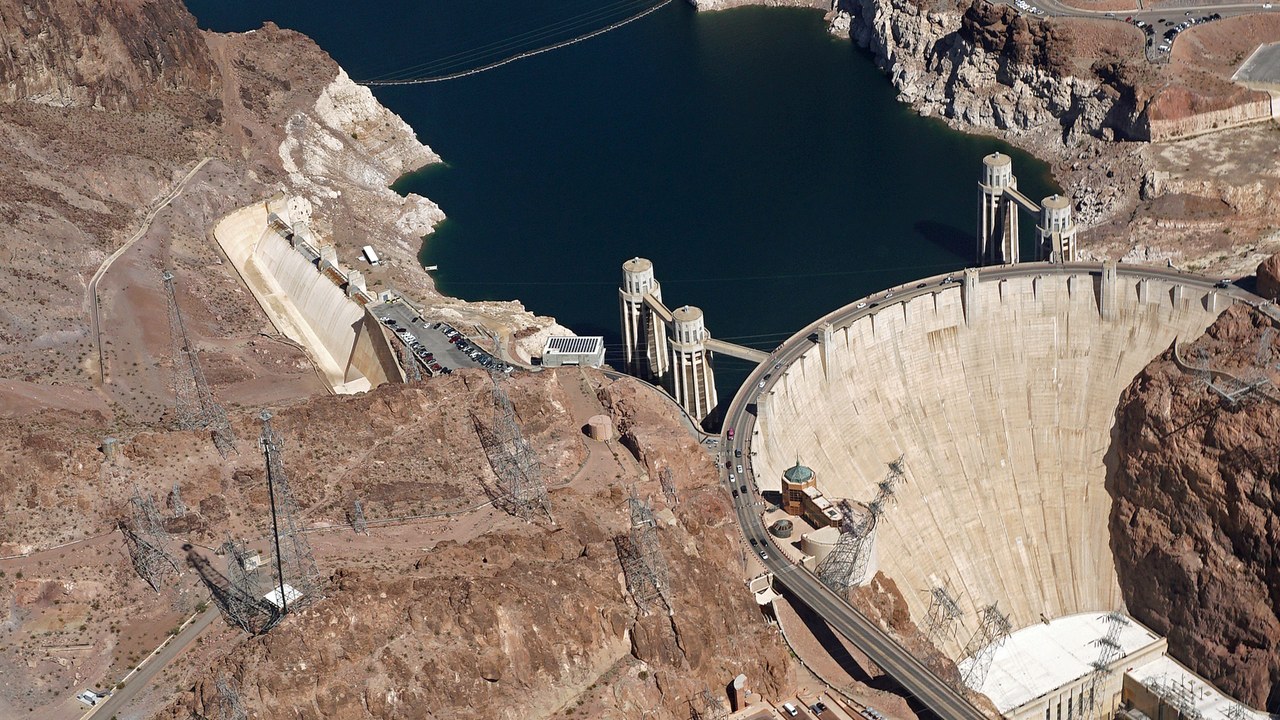
Hoover Dam placed a massive concrete arch-gravity barrier inside Black Canyon and created Lake Mead behind it. The federal complex stores Colorado River water while generating hydroelectric power, tying electricity production to the management of a scarce regional resource. Intake towers, spillways, transmission lines, and the power plant extend the visible project beyond the dam face. Water level changes then redraw the reservoir’s edge across the surrounding desert.
Its landscape impact made settlement and growth possible in places where water and electricity were limiting constraints, but it also locked the river into a managed system. Every release affects downstream users, ecosystems, and other reservoirs, while drought exposes pale bathtub rings on canyon walls. Hoover’s engineering remains visually compact compared with the huge lake behind it. The project shows how a single power structure can become the hinge for a much larger network of cities, farms, habitats, and interstate water obligations.
3. Grand Coulee Dam: The Columbia Rebuilt for Power
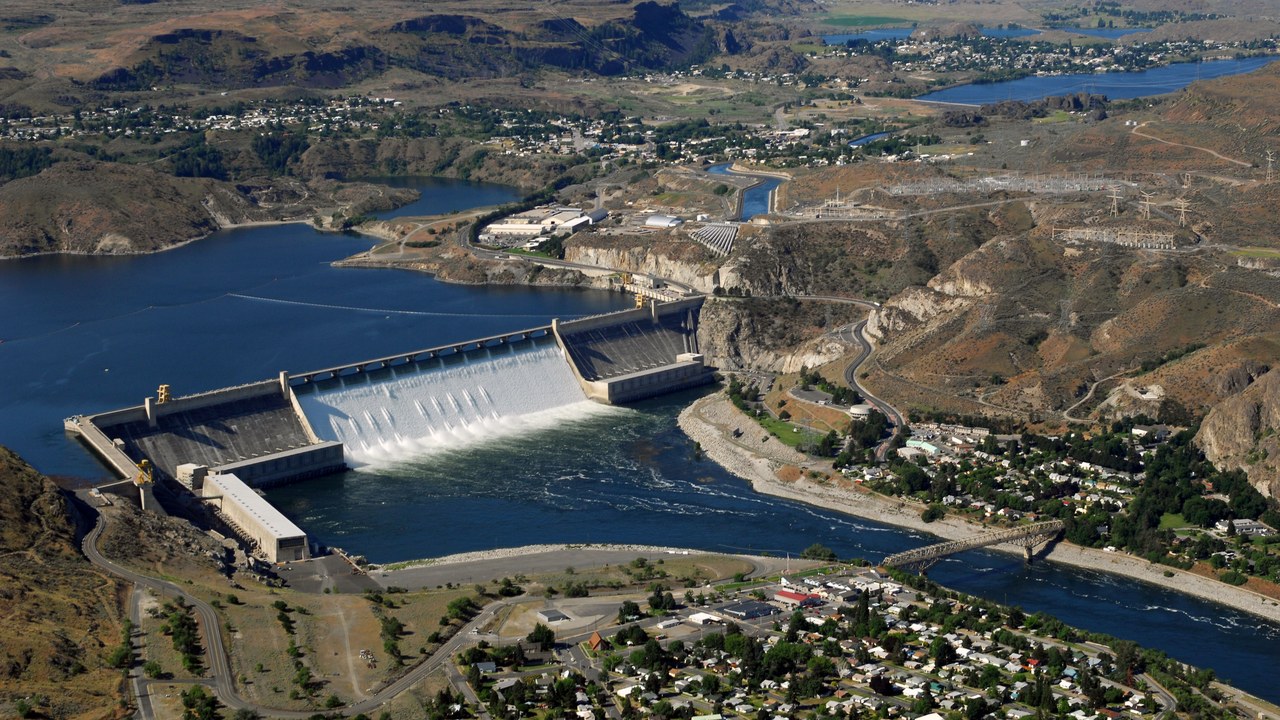
Grand Coulee Dam spans the Columbia River with a power complex whose influence extends far beyond its concrete wall. The Bureau of Reclamation describes it as a leading U.S. hydropower producer, using the river’s flow across multiple generating facilities. The project also raises water into a vast irrigation network, connecting electrical infrastructure with reservoirs, canals, and farms. Its landscape footprint therefore reaches into both the river corridor and dry country away from the main channel.
Grand Coulee delivered power and water at scale, yet the barrier disrupted fish migration and cultural relationships with the Columbia. Those consequences show project size cannot be measured only in megawatts or concrete. The system reorganized water movement, irrigation, and river function. It remains a landmark and a reminder that a dam’s boundaries follow the networks and biological processes it changes, not merely the edges in an aerial photograph.
4. Gansu Wind Farm: Turbines Repeated to the Horizon
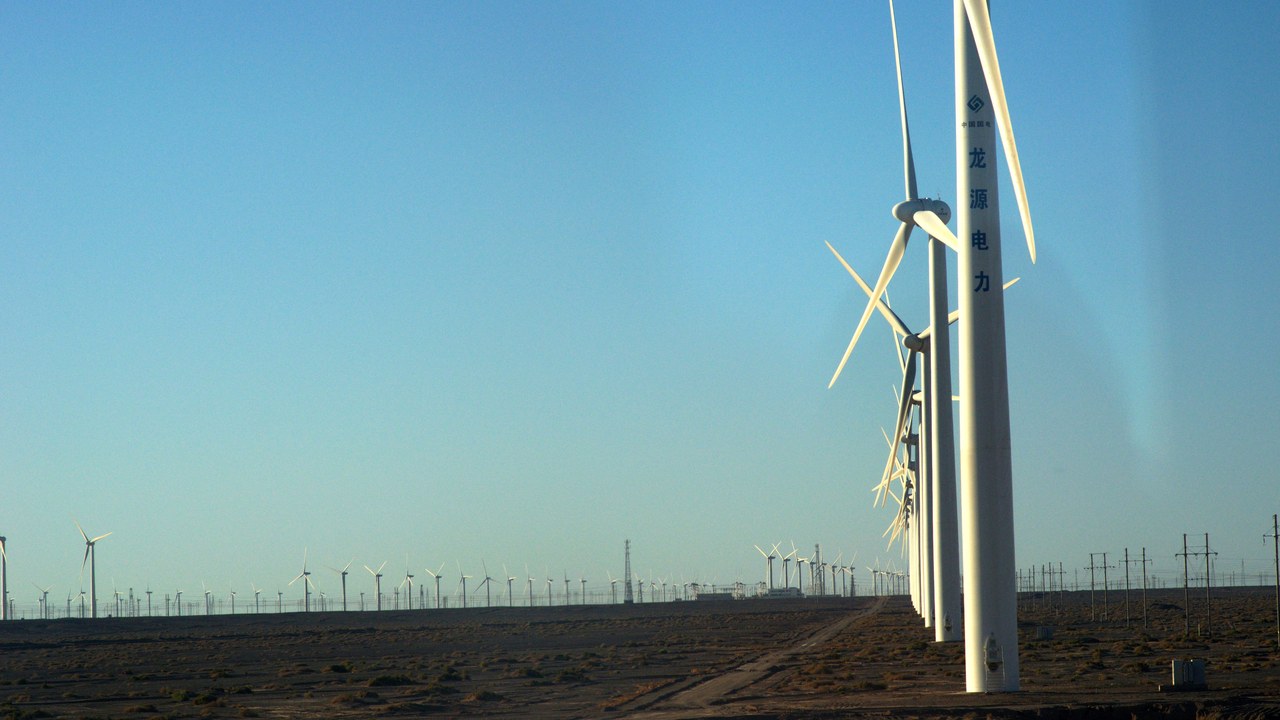
Gansu Wind Farm is less a single fenced plant than a regional buildout spread across an arid corridor in northwestern China. The desert wind megaproject joins thousands of turbines with substations, roads, and long-distance transmission. Repetition creates the visual scale: tower after tower converts a broad atmospheric resource into electricity. Empty-looking land becomes an industrial energy field whose machines can continue beyond the distance at which individual blades remain easy to see.
Wind generation consumes no fuel at the turbine, but this scale demands steel, access routes, grid connections, maintenance, and coordination with power demand. Remote production is useful only when transmission carries the output and the grid absorbs variable generation. Gansu therefore rewrote more than the view; it required an electrical network capable of treating a sparsely populated desert as a major supply zone. The project makes the infrastructure behind renewable scale visible in one sweeping landscape.
5. Ivanpah Solar Power Facility: Mirrors Turning Desert Into a Collector
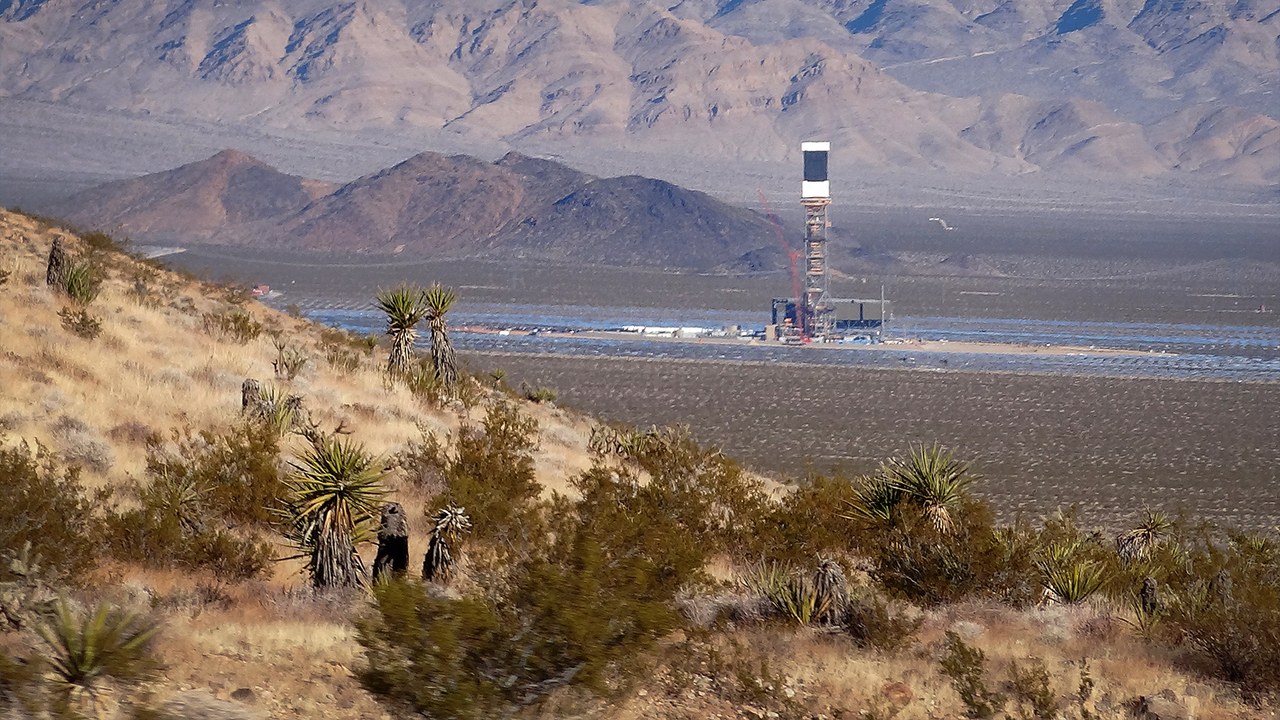
Ivanpah Solar Power Facility replaced the familiar image of flat photovoltaic panels with vast fields of steerable mirrors. The Mojave solar project uses heliostats to concentrate sunlight on elevated receivers, producing heat for utility-scale electricity generation. Three bright towers rise above repeated mirror arrays and service roads, making the collection area much larger than the central equipment suggests. From nearby mountains, the facility reads as a geometric intervention spread across the desert floor.
Concentrating solar power turns sunlight into thermal energy, but the footprint brings tradeoffs involving habitat, glare, water, and wildlife. Ivanpah’s visibility made those conflicts part of public understanding of large renewable projects. Its challenge was not merely building a receiver; thousands of mirrors had to track the sun and operate as one field. The result shows that harvesting a diffuse resource at grid scale can require a land transformation as legible as a dam or wind farm.
This article was produced with the assistance of AI and reviewed by Morning Overview editors prior to publication.
More from Morning Overview
- A Colorado wildfire has exploded past 87,000 acres with no containment
- A wildfire near Ouray swelled past 18,000 acres, putting Colorado towns on alert
- The Pentagon’s newest UFO files describe a fish-scaled, potato-shaped object on camera
- Scientists spotted a rare tusked whale alive at sea for the first time, then fired a crossbow at it.
More from Morning Overview
