
Wood trim once signalled a family wagon, whether it was real timber, vinyl or a printed imitation. The look ran from carefully framed bodies through moulded plastic and adhesive film across several decades of the American market. Here are eleven cars that carried it in some form.
1. Morris Minor Traveller: The Last Real Timber
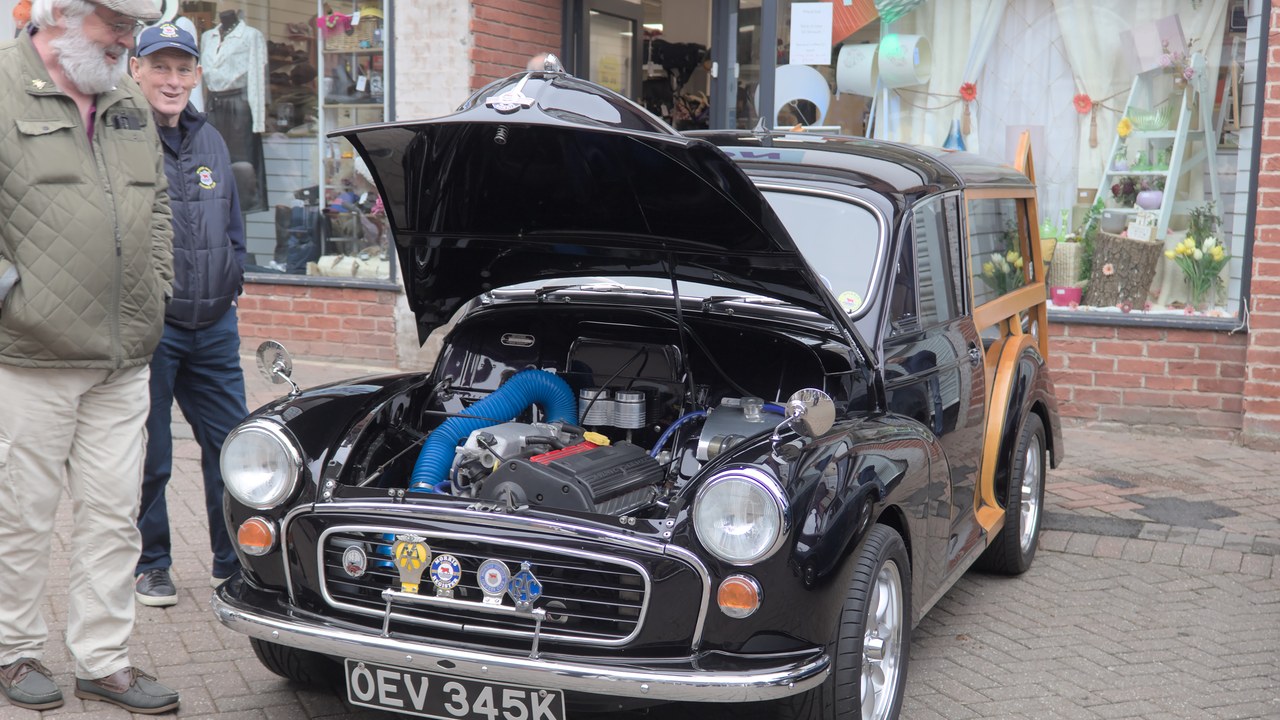
Built from 1953 to 1971, the Traveller carried wood structural components, with painted aluminium infill panels between the framing. Wikipedia calls it “the last true mass-produced woodie”, as outlined in the woodie body-style entry.
The timber was structural, not decoration, which is why survivors need regular attention to the ash framing. It also marks the sharp contrast with the printed and moulded imitations that filled American showrooms in later decades. Few later wagons could make the same claim, which gives the Traveller its distinct place at the start of the survey.
2. Buick Roadmaster Estate: Wood Near The End
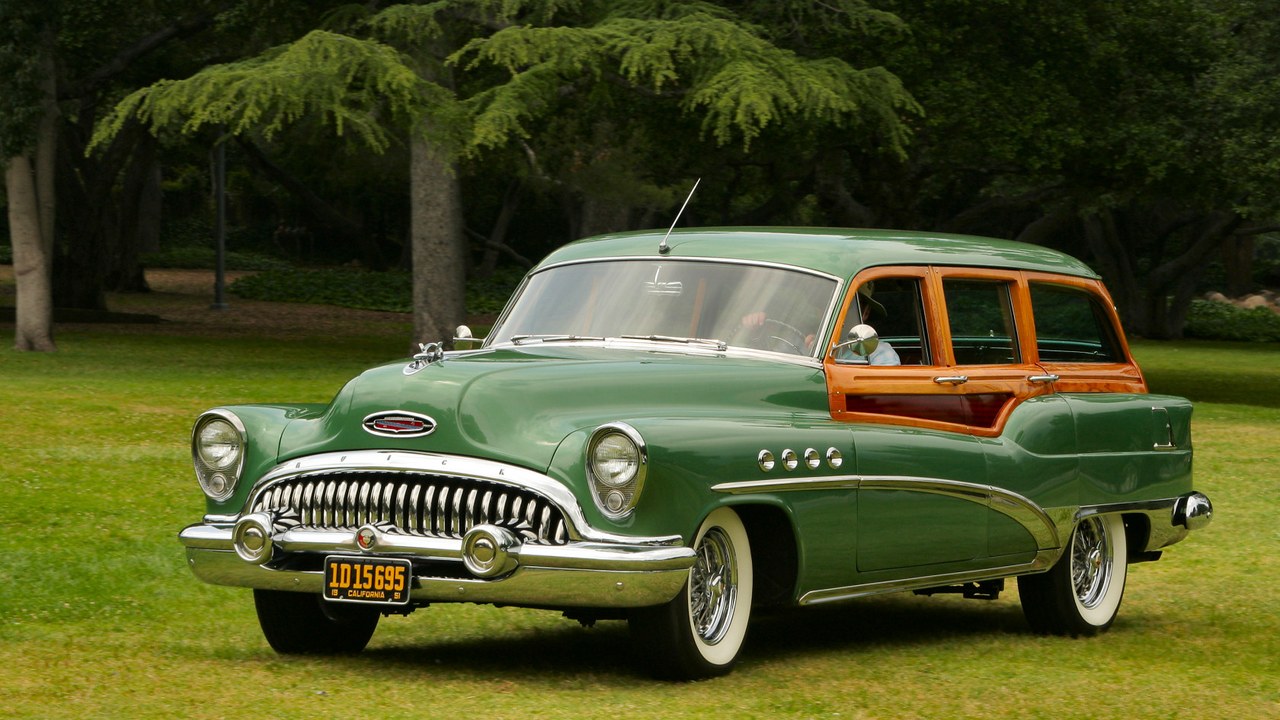
The 1953 Roadmaster Estate Wagon was among the last production American station wagons to retain genuine wood construction, a point recorded in the woodie article. By that time the body style had been moving toward all-steel construction across the industry.
Real timber demanded varnish, sanding and dry storage, while steel panels with printed trim needed none of it. That maintenance gap explains why the genuine article faded so quickly once alternatives arrived. The change also reflected rising production costs, since hand-fitted framing was slow to build compared with stamped steel.
3. Chrysler Town & Country: Moulded Plastic Frames
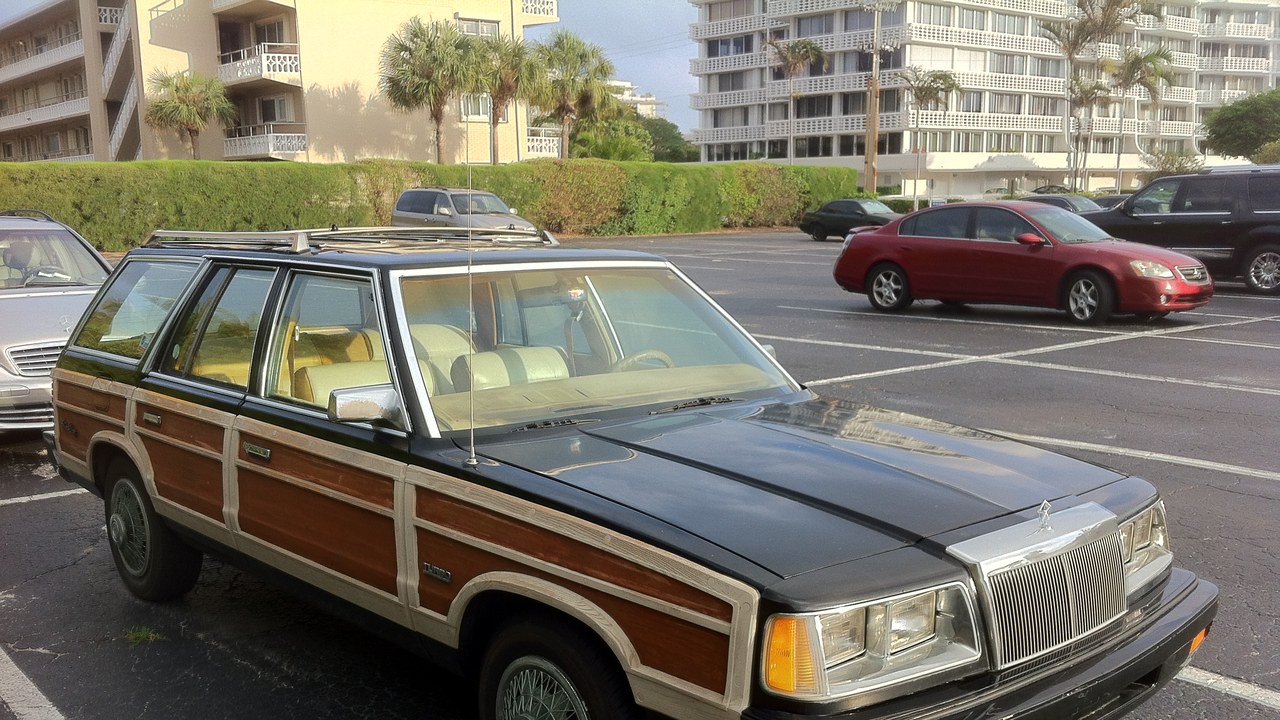
Between 1982 and 1988 the LeBaron-based Town & Country wagon wore plastic woodgrain exterior trim with three-dimensional simulated framework, according to the woodie body-style article. The raised framing gave the imitation a physical depth that flat decals never managed.
The name had once belonged to real-wood Chrysler bodies, so the plastic version closed a long arc from craftsmanship to styling cue. Collectors still seek clean examples because the trim tends to fade and crack. Surviving cars are often judged first on how well the grain panels have held up.
4. Ford Pinto Squire: Vinyl On A Subcompact
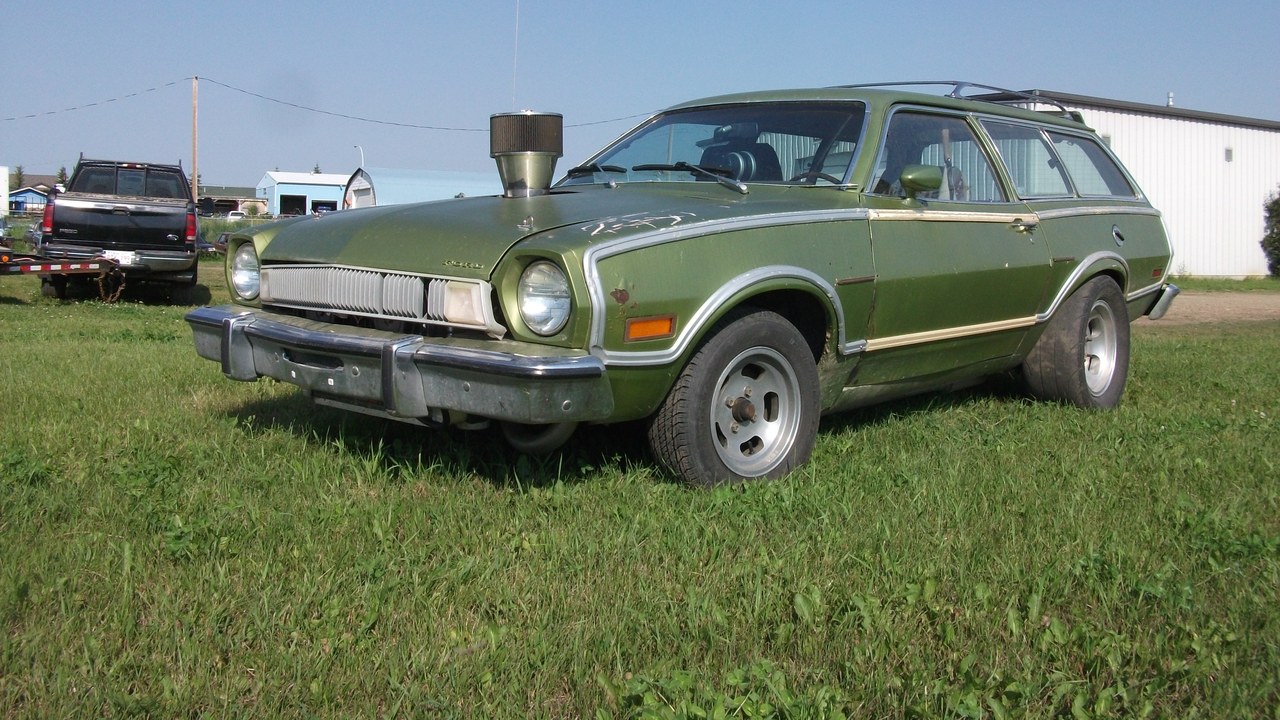
Early-1970s Pinto wagons wore vinyl simulated wood trim, one of several cheap applications listed in the woodie entry. The small Ford wagon carried the look at a price level where genuine timber would have been absurd.
The Pinto Squire shows how far the styling cue had travelled from large luxury wagons. A compact economy car dressed with printed panels could still signal a family-wagon heritage to buyers on a budget. Few shoppers in that segment expected anything beyond a stick-on appearance upgrade, and the cost stayed modest.
5. Ford Country Squire: A Museum Piece
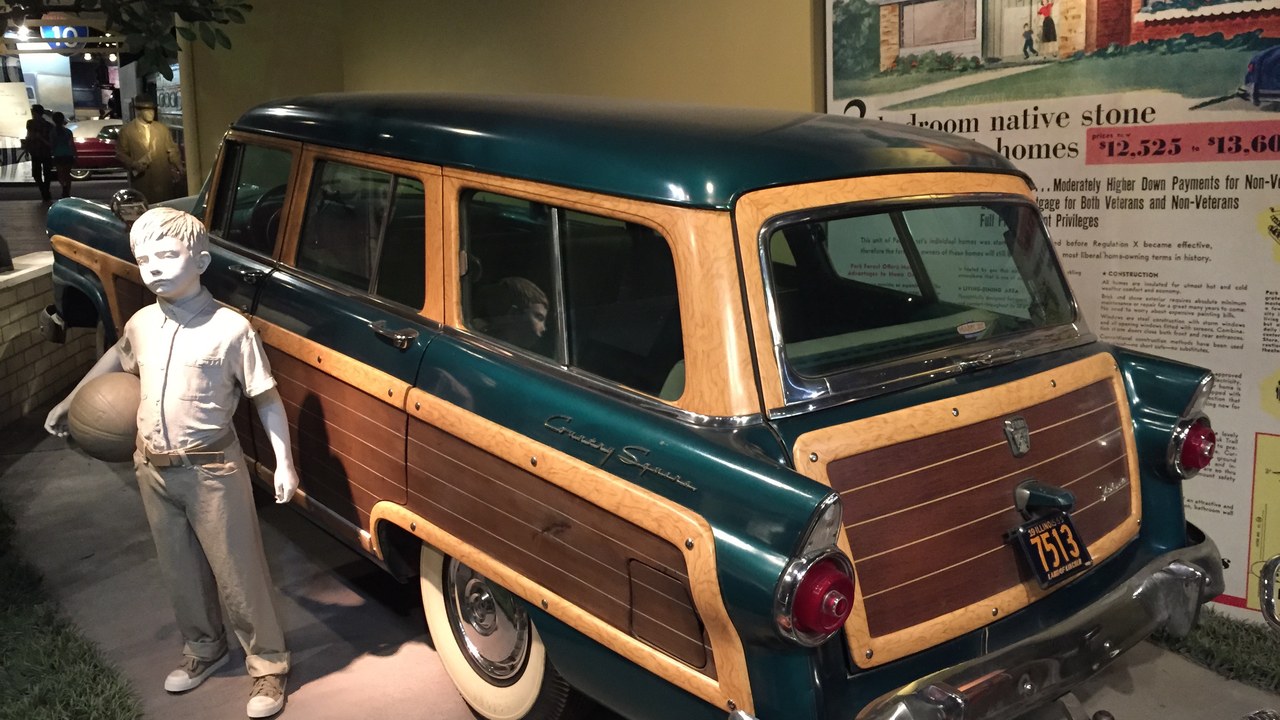
The Smithsonian’s National Museum of American History holds a 1955 Ford Country Squire station wagon, which can be seen in the museum’s collection record. The Country Squire was Ford’s best-known woodgrain wagon nameplate.
Placement in a national collection signals how thoroughly the woodgrain wagon came to stand for postwar family life. It is also the one source on this list that comes from an institution rather than an encyclopedia entry. Its inclusion here keeps the survey tied to a documented, physically preserved vehicle.
6. Chevrolet Vega: A Proposed Woodgrain Option
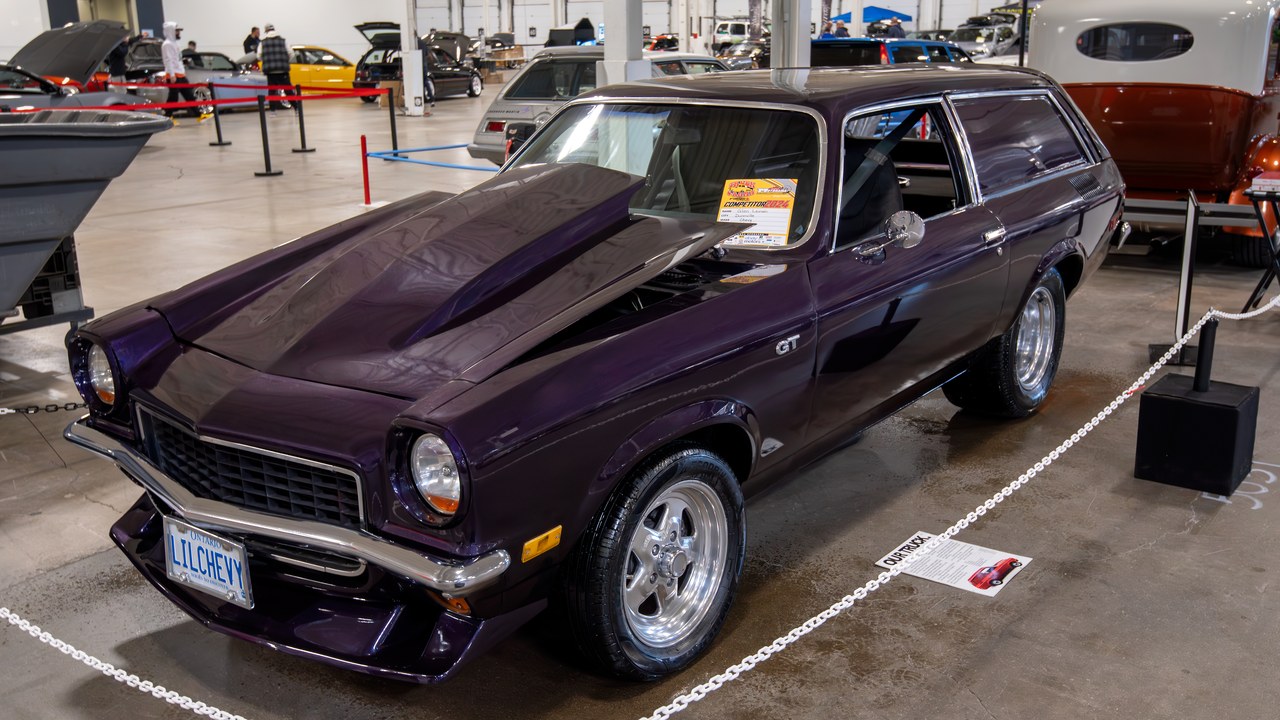
Chevrolet proposed a simulated woodgrain option for the 1973 Vega Kammback wagon, as noted in the Vega article. The wording is careful, since it describes a proposal rather than a confirmed volume of cars sold.
The Vega is included because the wagon body suited the treatment, not because woodgrain defined the model. Readers should treat it as a smaller, lighter example of the broader trend toward printed wood on compact wagons. Details on actual take-up are thin in the source, so the claim stays limited to the option itself.
7. Chevrolet Chevette: Small Car, Big Pretension
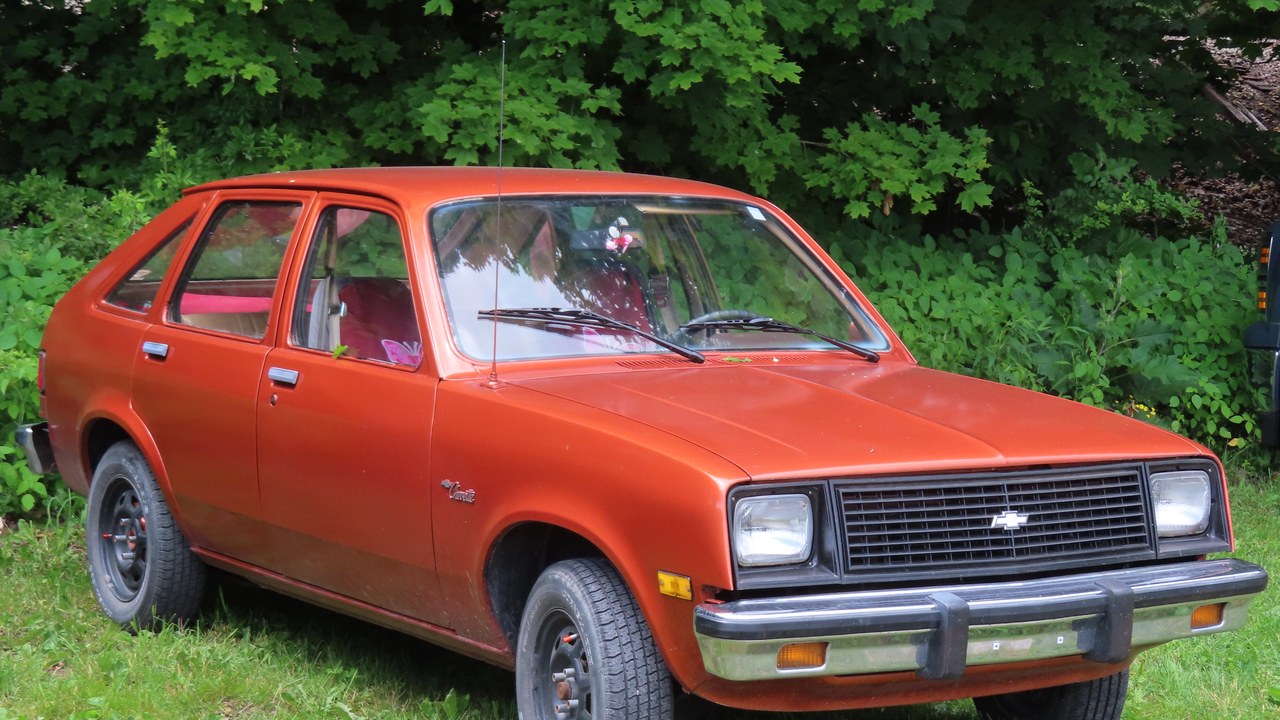
The Chevette offered a simulated woodie version in 1976, a detail recorded in the Chevette entry. General Motors thus applied the treatment to one of its smallest and cheapest American cars.
By the mid-1970s even entry-level hatchbacks could borrow the grandeur of an earlier wagon era. The idea was inexpensive to execute, which suited a model sold mainly on low price and fuel economy. Such touches were largely about appearance, adding little cost and no change to the mechanical layout.
8. AMC Pacer: Wood On A Fishbowl
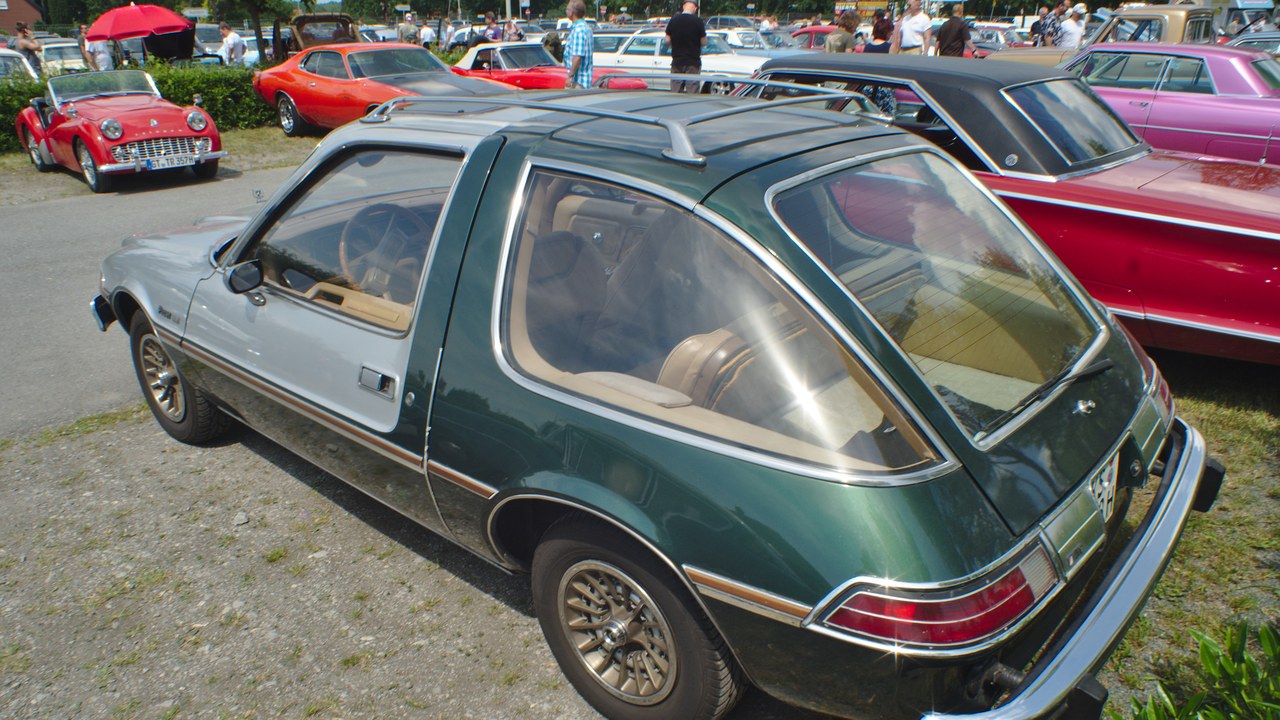
The 1977 Pacer wagon offered optional simulated wood trim, according to the AMC Pacer article. The Pacer’s wide glasshouse and rounded body made it one of the stranger canvases for the woodgrain look.
The pairing gave an unconventional car a conventional family-wagon costume. Because the trim was optional, original cars with the factory wood treatment are a smaller subset of the Pacer wagons built. That detail matters when judging whether a given car is correct for its model year.
9. Ford Escort: Compact Wagon Treatment
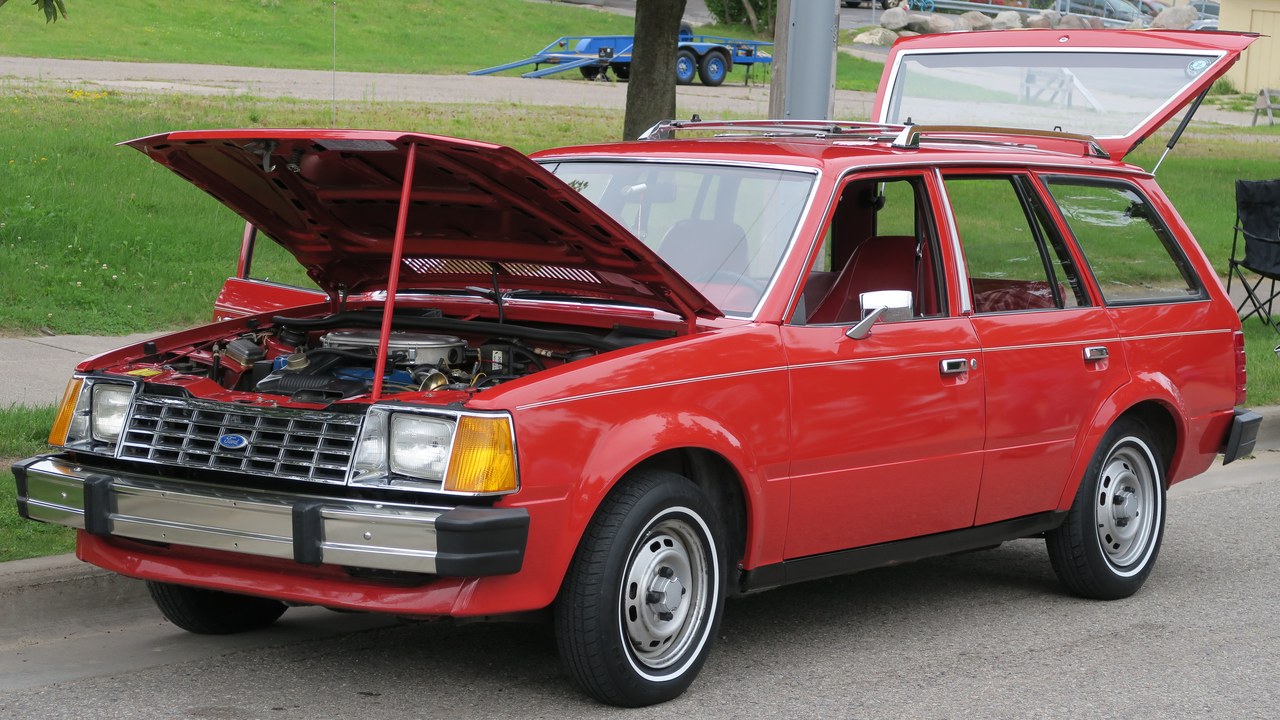
The 1981 four-door Escort wagon, along with its Mercury Lynx twin, offered optional simulated wood trim, as covered by the North American Escort entry. The option placed the cue on a front-drive compact.
Ford brought the traditional Squire styling language down to a new generation of small, efficient cars. The shared Mercury version shows the look was a platform-wide sales feature rather than a single-model quirk. Wagon bodies were the natural home for such trim, since their long flanks displayed it best.
10. Ford Flex: Grooves Without Any Wood
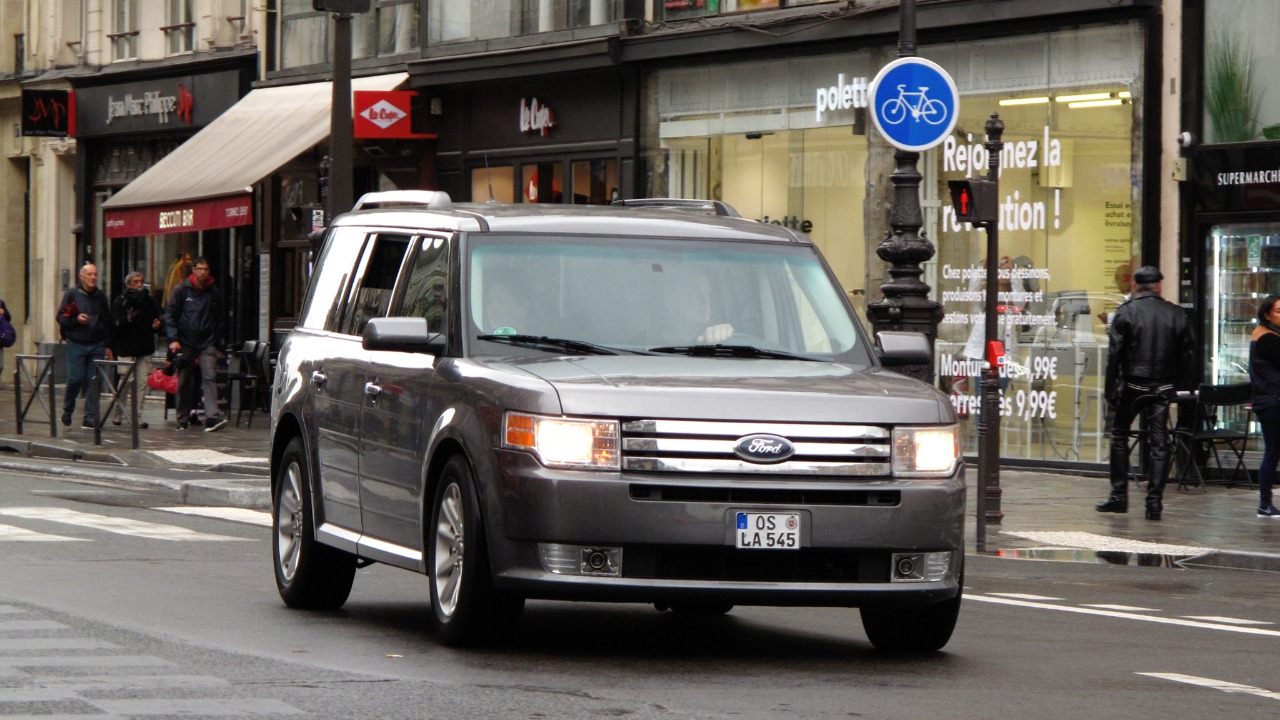
The 2008 Flex used horizontal grooves to evoke a woodie look, with no wood or simulated wood at all, as described in the Flex article. The body sides carried only moulded lines.
The Flex is the clean endpoint of the story, a modern crossover that keeps the visual memory while dropping the material entirely. It shows the woodie idea surviving purely as shape. Ford relied on shape alone, and the sides carry the only suggestion of timber.
11. Chevrolet Caprice: Film Through 1996
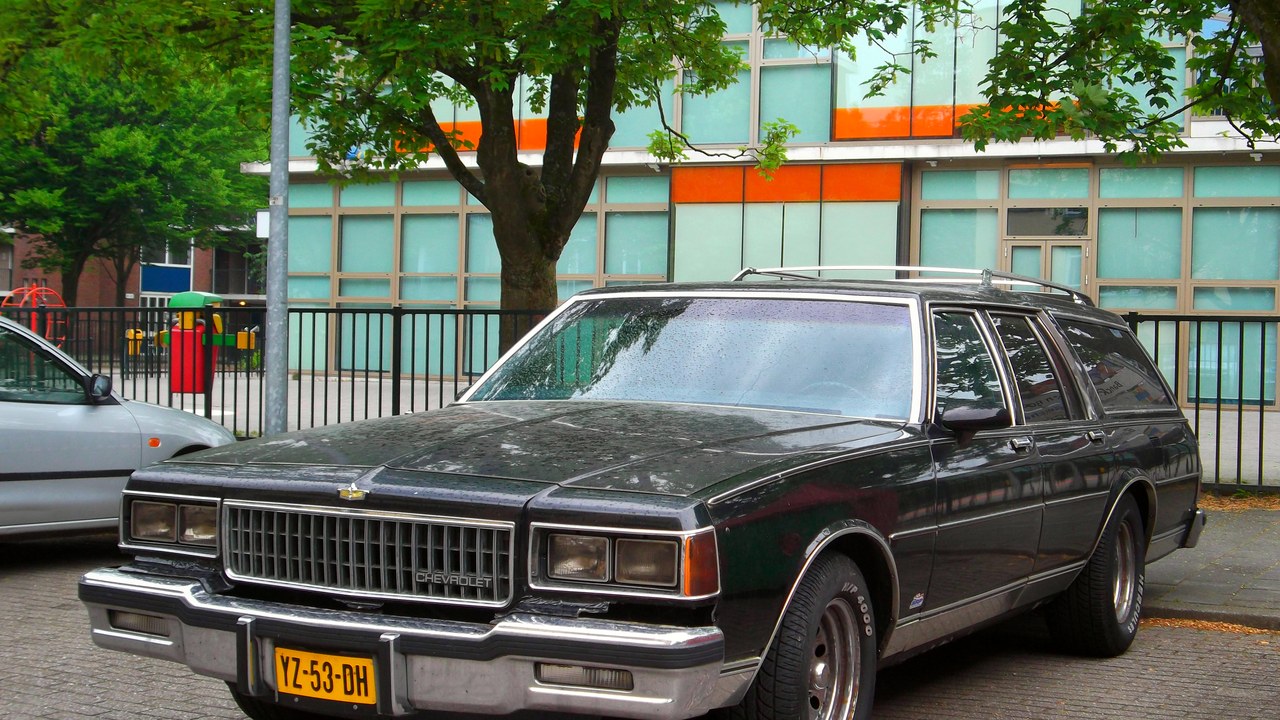
Woodgrain film was applied to the Caprice wagon, and GM full-size wagons offered wood trim through their final year, 1996, according to the Caprice article. The adhesive film replaced earlier moulded approaches.
The last full-size General Motors wagons therefore carried the trim to the very end of the body style. Their disappearance in 1996 closed one of the longest-running wood-look traditions in the American market. Owners and restorers of such wagons usually treat the film as a signature element of the original look.
More from Morning Overview
