
Few American nameplates changed as often as the Ford Thunderbird, which went from a two-seat roadster to a luxury land yacht and finally a retro revival. Along the way it won awards, set sales records and sat on several different platforms. Here are eleven Thunderbird generations, from the first car in 1955 to the last in 2005.
Read next on Morning Overview: Debris from the Greenacres Learjet crash landed on Florida rooftops, and the NTSB wants it
1. Ford Thunderbird first generation (1955-1957): The Two-Seat Corvette Rival
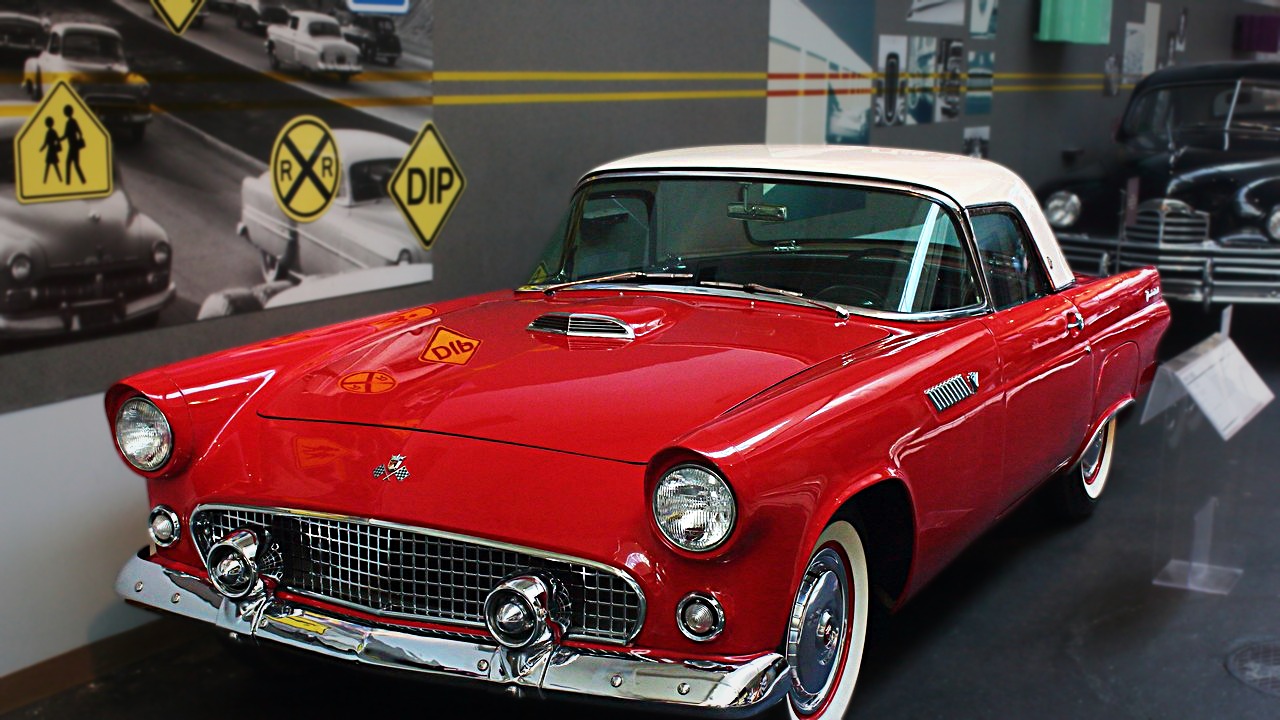
Ford introduced the Thunderbird for 1955 as a two-seat convertible, a direct answer to the Corvette that Chevrolet had launched two years earlier. According to The Henry Ford’s collections, the company built more than 16,000 of them in that first model year, pairing sports-car looks and V-8 power with a more refined interior.
FordMuscle adds that the 1955 car outsold the Corvette by a factor of 23 to 1. Ford positioned it less as a pure sports car than as a stylish personal car with power-assisted options, an idea that shaped every generation that followed.
2. Ford Thunderbird second generation (1958-1960): The Square Bird Goes Four-Seat
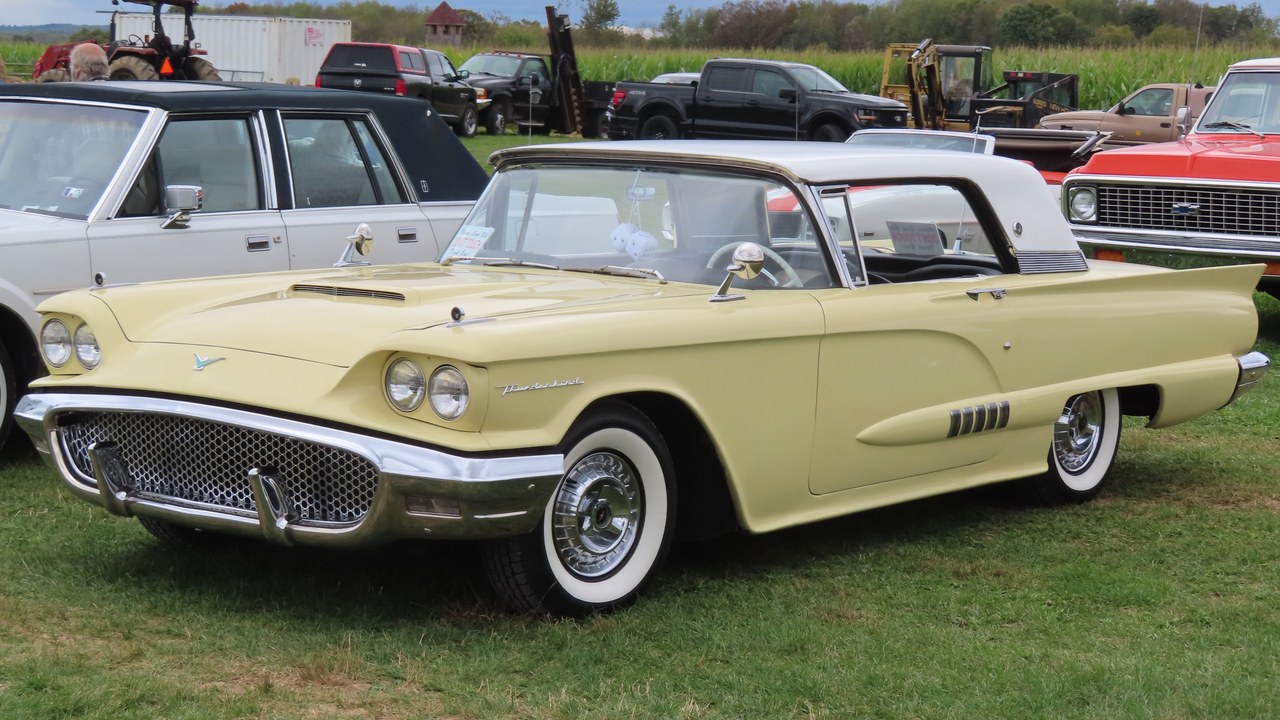
For 1958 the Thunderbird gave up its two-seat layout and grew a back seat, earning the nickname Square Bird. Supercars.net notes it became the first personal luxury car to receive the Motor Trend Car of the Year award, which it took in 1958.
The redesign rode a 113-inch wheelbase and added roughly a thousand pounds, according to FordMuscle, which also reports that the second generation outsold the original by more than four to one and that nearly 93,000 were sold in 1960.
3. Ford Thunderbird third generation (1961-1963): The Bullet Bird Rides in a Parade
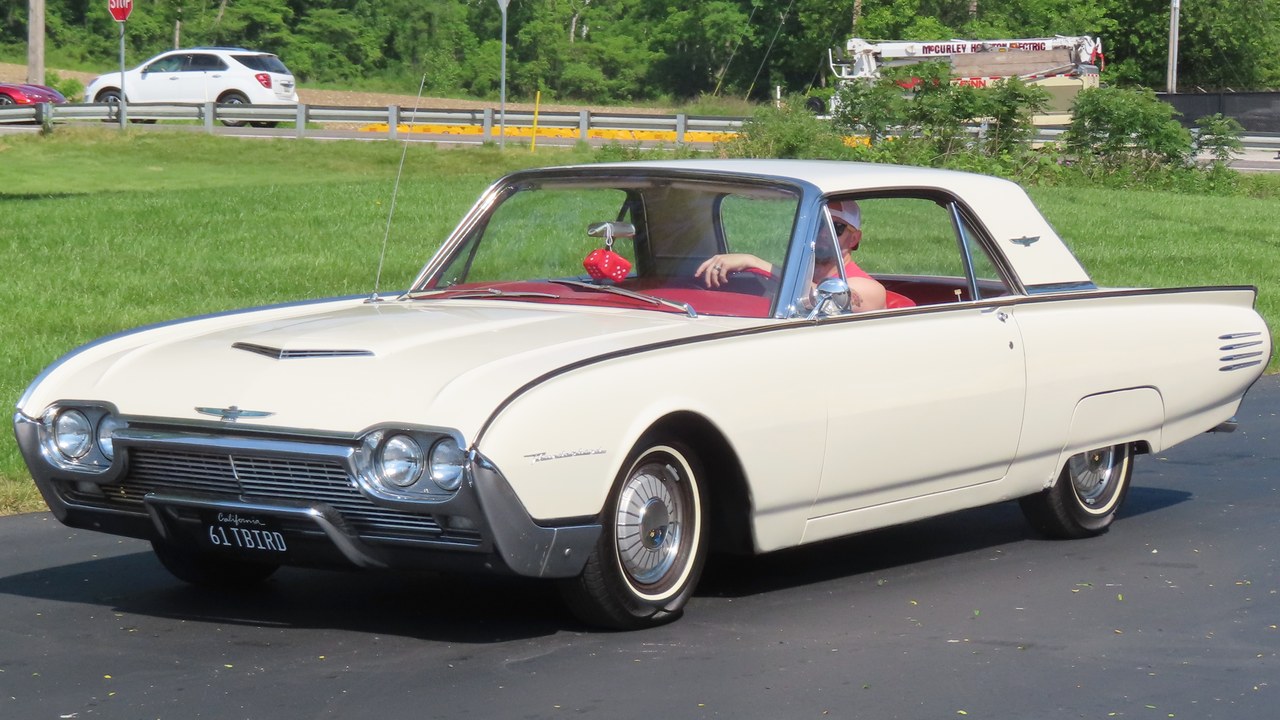
The 1961 redesign gave the Thunderbird a futuristic, bullet-like body-side look, which is why it is remembered as the Bullet Bird. Wikipedia records that the car was the 1961 Indianapolis 500 pace car and was featured prominently in President John F. Kennedy’s inaugural parade.
Sales backed up the styling, with 73,051 sold for 1961. A 390 cubic-inch FE V8 rated at 300 horsepower was the standard and only engine at first. Supercars.net adds that the swing-away steering wheel, which pivoted aside for easier entry, became a signature feature.
4. Ford Thunderbird fourth generation (1964-1966): The Flair Bird Flashes Its Signals
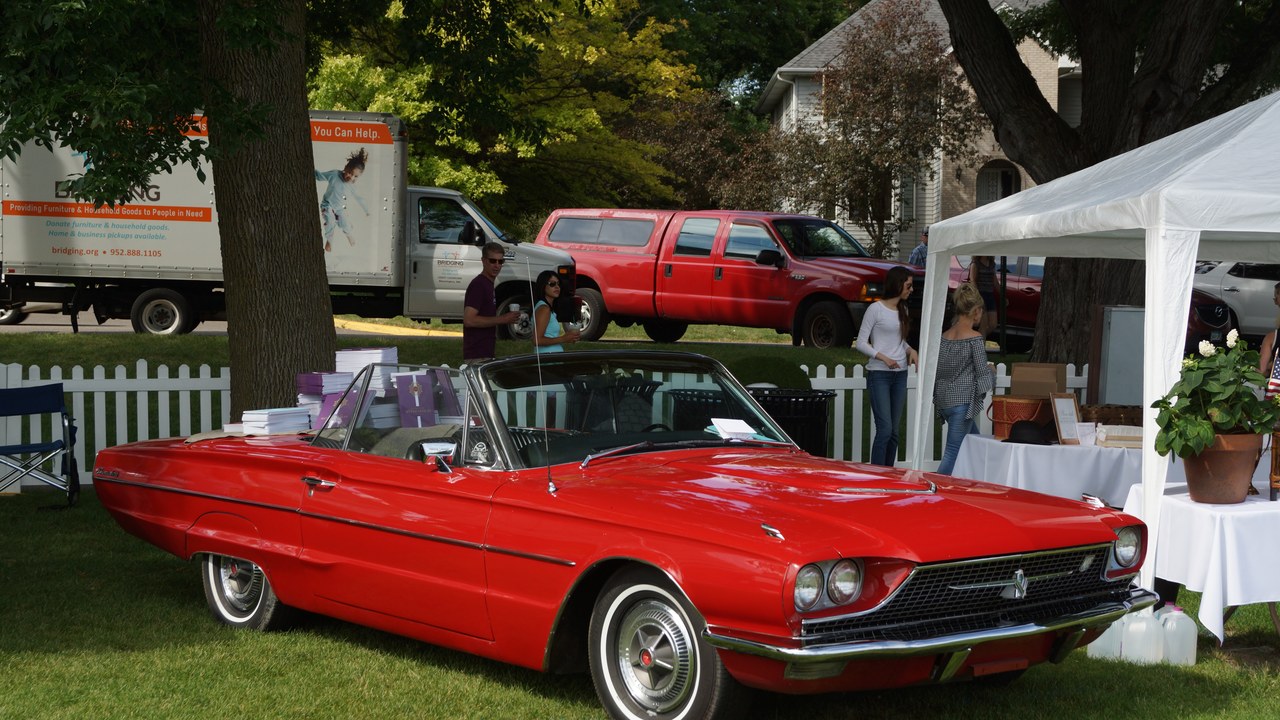
Ford restyled the Thunderbird for 1964 with a squared-off look, and the generation is often called the Flair Bird. Among its novelties, Supercars.net lists sequential turn signals, along with floating rear taillights that gave the car a distinctive appearance at night.
Wikipedia notes that the new model kept a similar grille and quad headlights to its predecessor, and that hardtop, convertible and Landau versions were offered. A 390 cubic-inch V8 rated at 300 horsepower stayed as the standard engine.
5. Ford Thunderbird fifth generation (1967-1971): Hidden Headlamps and a Fourth Door
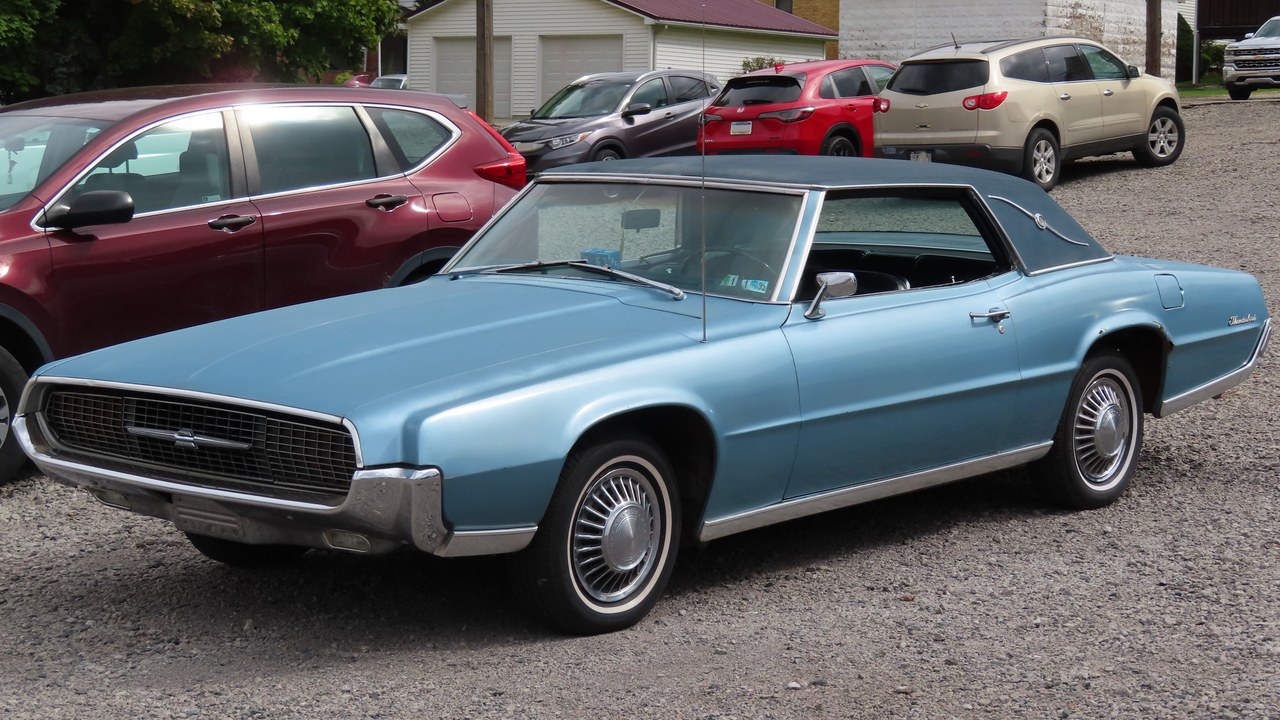
The fifth-generation car arrived for 1967 with a fuselage-style body and a large, wide grille in place of the rocket-style look. Wikipedia states that hidden headlamps were used for the first time on a Thunderbird, a feature that returned on later generations.
The Mustang and Mercury Cougar were drawing sporty buyers, so the Thunderbird leaned further into luxury. The convertible was traded for a four-door sedan with simulated landau bars, and FordMuscle reports that the manual gearbox and convertible top were gone from the options list.
6. Ford Thunderbird sixth generation (1972-1976): Sharing Its Platform with the Mark IV
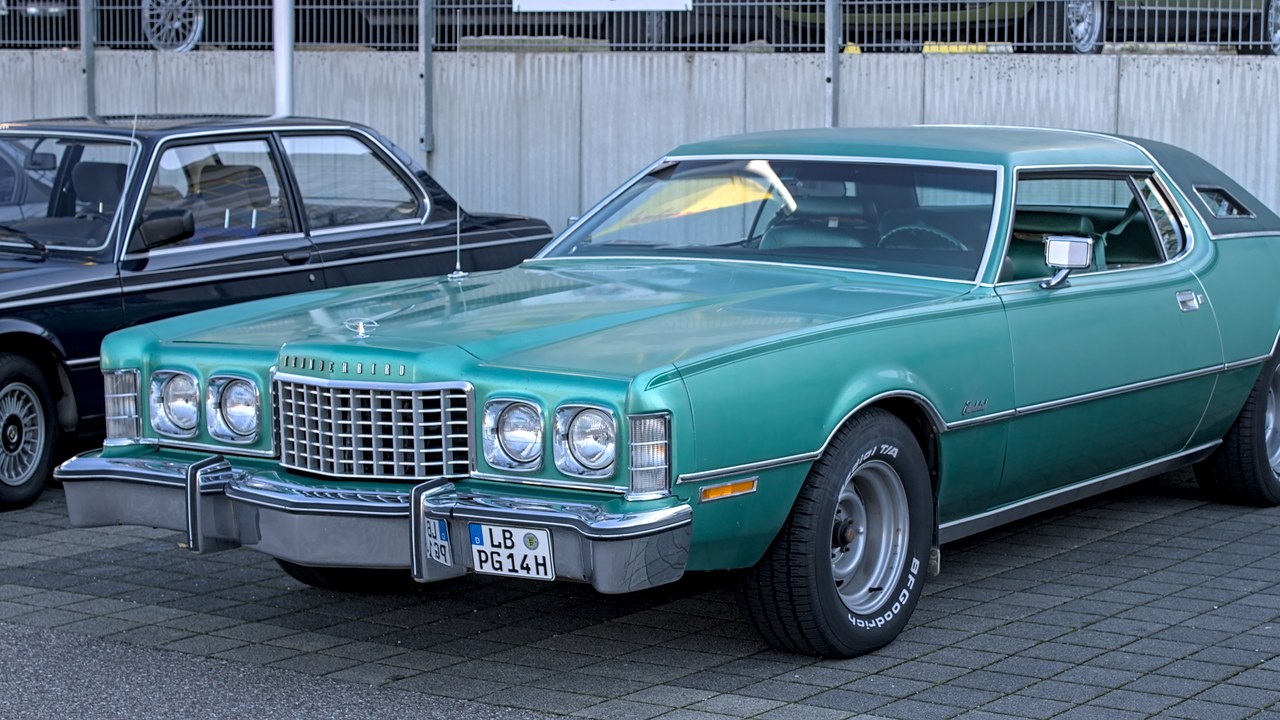
The sixth generation, built from 1972 to 1976, was the Thunderbird at its most massive. Supercars.net describes a car almost nineteen feet long, sharing a platform with the Lincoln Continental Mark IV and dressed in plenty of chrome.
Wikipedia gives the wheelbase as 120.4 inches, the longest of any Thunderbird, and says the four-door was dropped in favor of a single two-door hardtop roofline. Federal 5 mph bumpers added roughly eleven inches of length for 1973 and 1974.
7. Ford Thunderbird seventh generation (1977-1979): The Best-Selling Bird
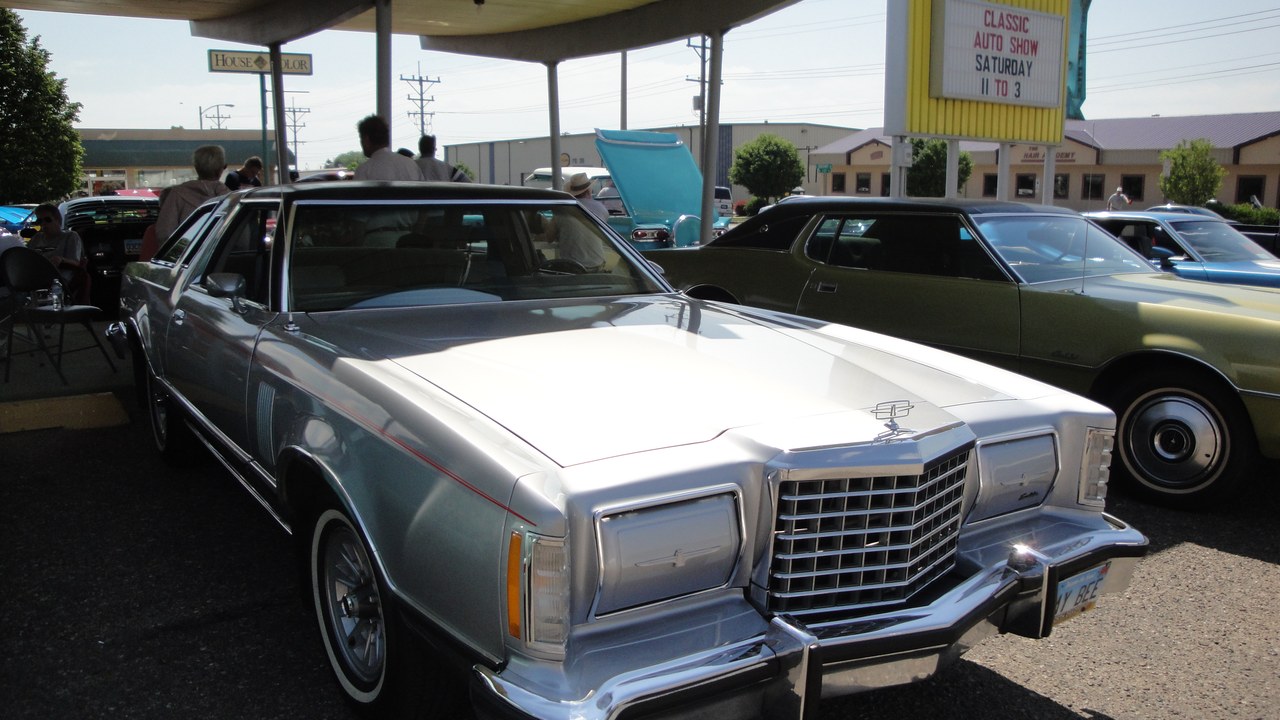
Built for only three model years, the seventh generation turned out to be the Thunderbird’s biggest hit. Wikipedia calls it the most successful version of the model line, with over 955,000 units produced, nearly matching the combined output of the previous three generations.
Ford moved to a smaller body for 1977, and Supercars.net describes a sleeker profile with hidden headlights, opera windows and an optional vinyl roof. Wikipedia adds that T-tops were offered for the first time, an option that suited the car’s personal luxury image.
8. Ford Thunderbird eighth generation (1980-1982): The Boxy Fox-Body Reset
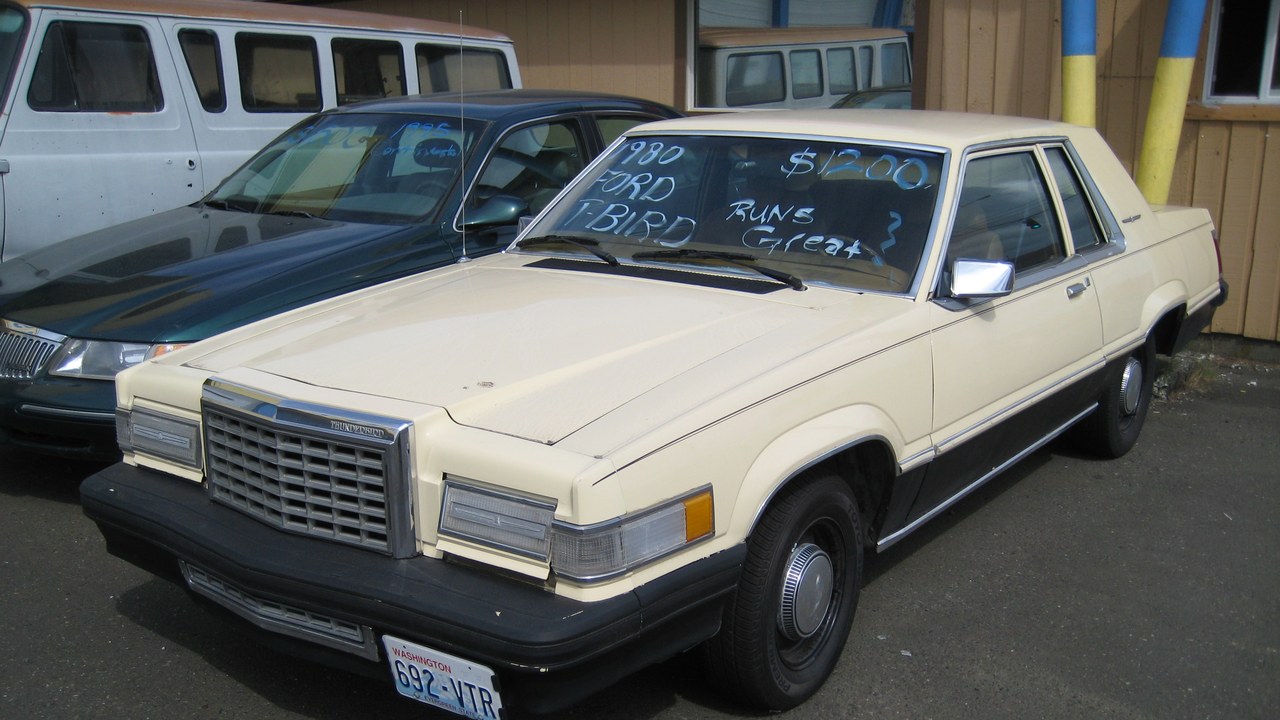
For 1980 Ford retired the Torino-derived cars and rebuilt the Thunderbird as a mid-size coupe on the lighter Fox platform. Supercars.net says the result faced mixed reactions because of its conservative styling and reduced performance, even as it met the goal of a more fuel-efficient car.
Wikipedia describes an extremely straight-edged exterior and a 4.2-liter V8 making 115 horsepower, with a larger 4.9-liter V8 optional. FordMuscle calls the styling lukewarm and says sales were middling, which set up the sleeker redesign that followed.
9. Ford Thunderbird ninth generation (1983-1988): The Aerodynamic Comeback
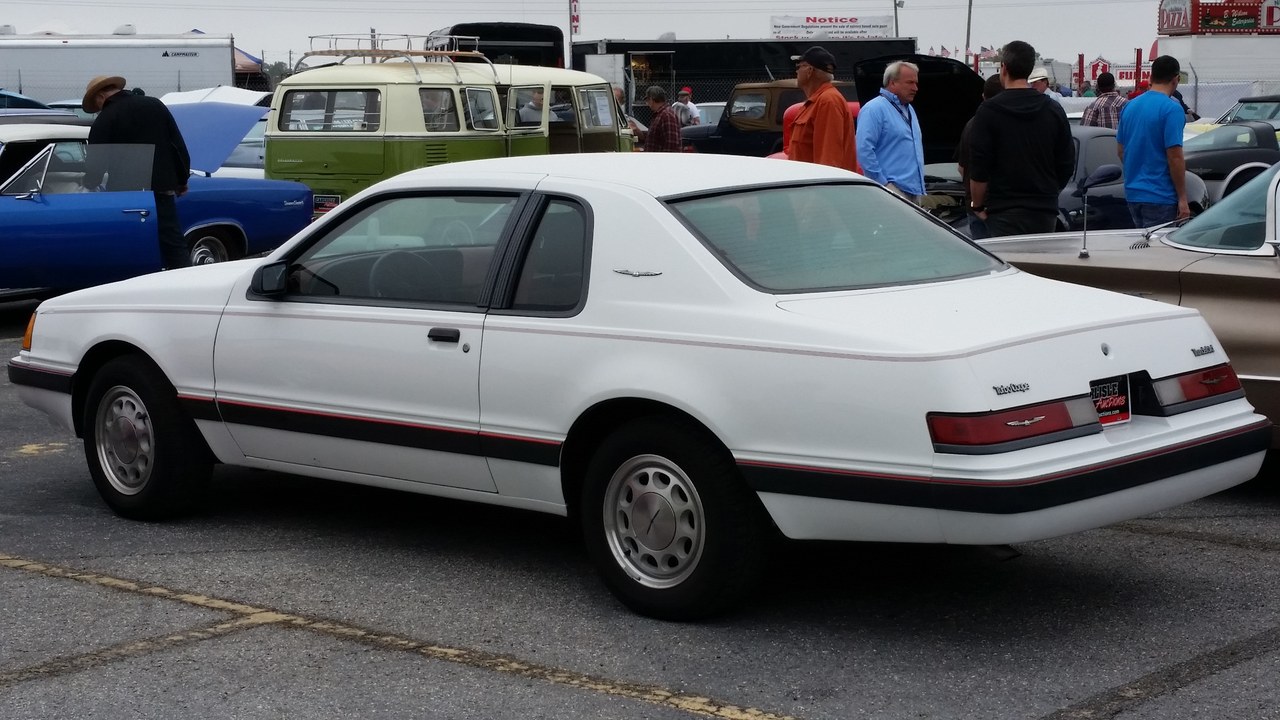
The 1983 Thunderbird swapped the boxy look for a rounded, wind-cheating shape. The change worked: Wikipedia reports that the market responded well, selling nearly 900,000 examples, effectively triple the sales of the eighth generation.
FordMuscle notes that engineers backed the new look with a 5.0-liter small-block V8 or a turbocharged 2.3-liter four-cylinder, and the four could be paired with a five-speed manual. The car stayed on the Fox platform through 1988, a long run for a single design.
10. Ford Thunderbird tenth generation (1989-1997): The Super Coupe Wins Car of the Year
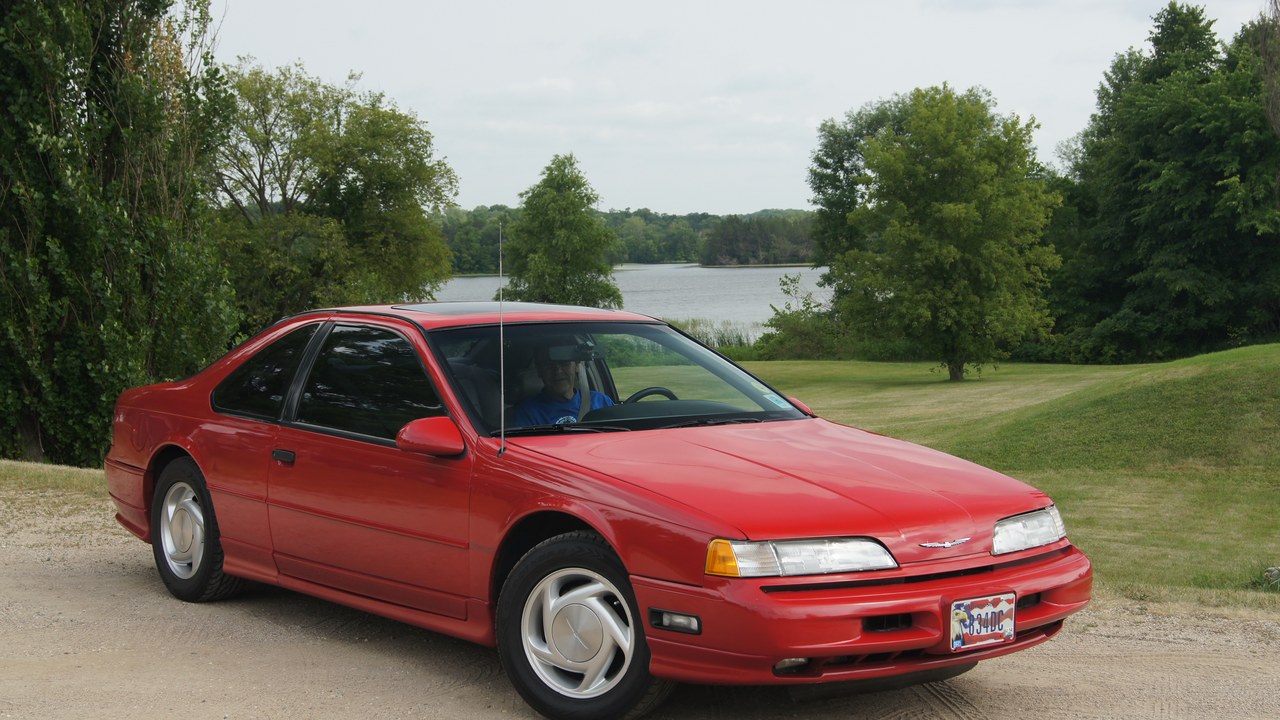
The tenth generation arrived for 1989 on the new MN12 platform it shared with the Mercury Cougar. At its top sat the Super Coupe, with a supercharged 3.8-liter V6 making 210 horsepower, and FordMuscle says it received the Car of the Year award from Motor Trend upon its debut.
Critics liked the car, but it never matched the sales of its predecessor. In September 1997 Ford pulled the plug on the Thunderbird, ending more than four decades of continuous production and leaving the nameplate dormant for five years.
11. Ford Thunderbird eleventh generation (2002-2005): The Retro Revival Bows Out
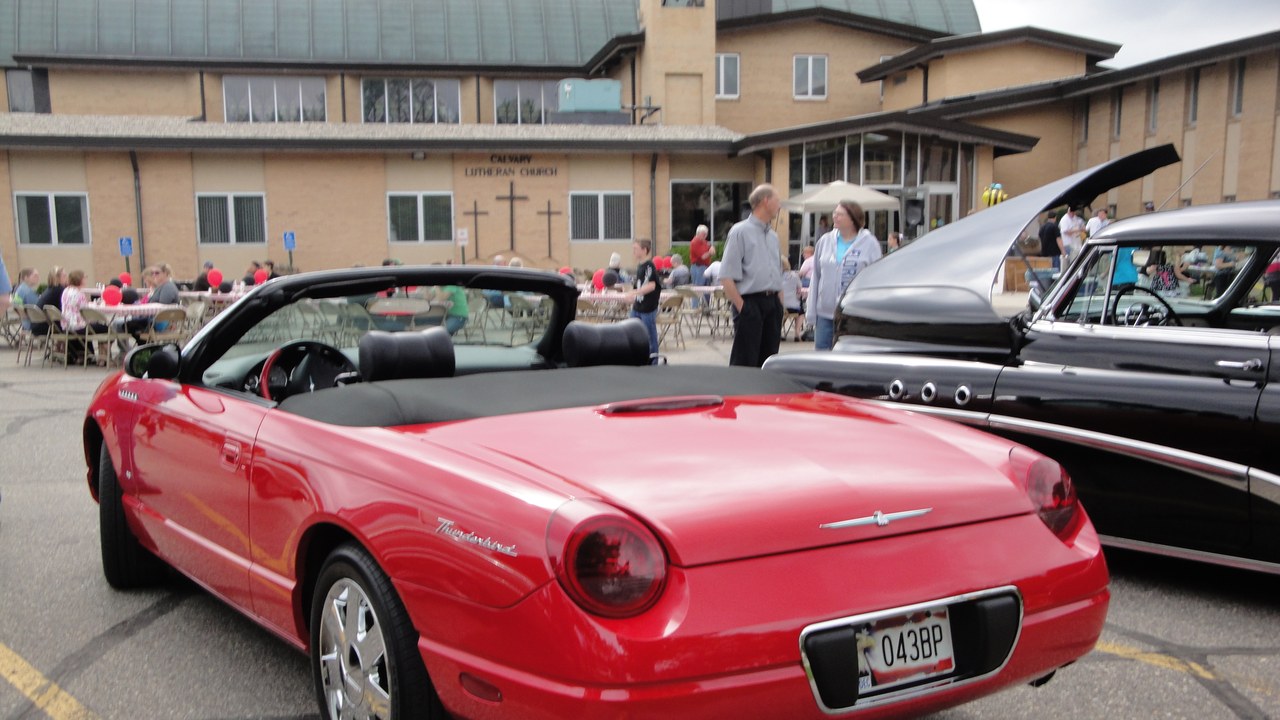
After a five-year hiatus, the Thunderbird returned for the 2002 model year as a retro-styled two-seater. FordMuscle explains that it rode a rear-drive platform shared with the Lincoln LS, and its hood scoop and chrome grille were clear nods to the first generation.
A Jaguar-derived 3.9-liter V8 made 252 horsepower at first and 280 later. Despite a strong debut the car missed Ford’s sales targets, and the Thunderbird bowed out again in 2005 after roughly 68,000 of the eleventh generation had been built.
More from Morning Overview
- Thousands of bottles of a combination blood pressure pill are recalled nationwide
- The Honda Pilot has quietly overtaken every model in blown-engine complaints
- Older Teslas mostly keep their batteries, and here’s what wears out instead
- Hidden card skimmers on gas pumps and ATMs can be exposed with one quick shake
