
Earth’s hottest temperature records span deserts, river valleys, and a Siberian town above the Arctic Circle, each one certified after years of instrument checks by meteorological authorities. Some records measure shaded air temperature the way weather stations do, while others come from satellites reading bare ground that runs far hotter than the air above it. Here are eleven places that hold some of the hottest temperature records ever measured.
1. Furnace Creek, Death Valley (California, USA): World’s Hottest Reading

Furnace Creek in Death Valley, California, holds the highest air temperature ever officially recorded anywhere on Earth, a reading of 56.7 degrees Celsius, or 134 degrees Fahrenheit, logged on July 10, 1913, and still listed today in the WMO records table as the world’s standing benchmark.
More than a century later, that single scorching afternoon in the Mojave still functions as the yardstick every other entry on this list is measured against, including several readings that have come remarkably close without ever surpassing it.
2. Kebili (Tunisia): Africa’s Hottest Reading

Kebili, Tunisia, set the record for both the Eastern Hemisphere and the entire African continent when it reached 55.0 degrees Celsius in July 1931, a figure the World Meteorological Organization still lists as standing nearly a century later.
The reading has survived decades of subsequent North African heat waves without being broken, an unusually long stretch of stability for a continental temperature record of that magnitude, especially compared with the shorter-lived records some other continents have since posted.
3. Tirat Tsvi (Israel): Europe And Middle East Mark

Tirat Tsvi in Israel recorded 54 degrees Celsius, or 129 degrees Fahrenheit, on June 21, 1942, a reading the WMO records table lists as the official record for Europe, a category that under the agency’s classification also includes the Middle East.
The settlement’s location in the Jordan Valley, well below sea level, helps explain how a spot so close to the Mediterranean managed to produce a reading that extreme, given how rarely coastal regions reach such levels.
4. Lake Havasu City (Arizona, USA): Arizona’s All-Time High

Lake Havasu City reached 128 degrees Fahrenheit (53.3 degrees Celsius) on June 29, 1994, the hottest temperature ever recorded in Arizona according to the list of US state temperature extremes. The same day, Laughlin, Nevada, set its state’s record at 125 degrees.
The resort city on the Colorado River, famous for the relocated London Bridge, sits in the same low desert basin that bakes Death Valley. That reading still stands as Arizona’s official record more than three decades later.
5. Turbat (Pakistan): Near-Record Verified Heat

Turbat, Pakistan, reached 54.0 degrees Celsius on May 28, 2017, a reading the World Meteorological Organization verified as 53.7 degrees Celsius, with a margin of uncertainty of plus or minus 0.4 degrees, after reviewing the station’s equipment.
It now ranks among the small handful of officially verified readings that come closest to the world record set at Furnace Creek more than a century earlier, a distinction shared by only one other station on this list.
6. Oodnadatta (South Australia): Southern Hemisphere’s Hottest
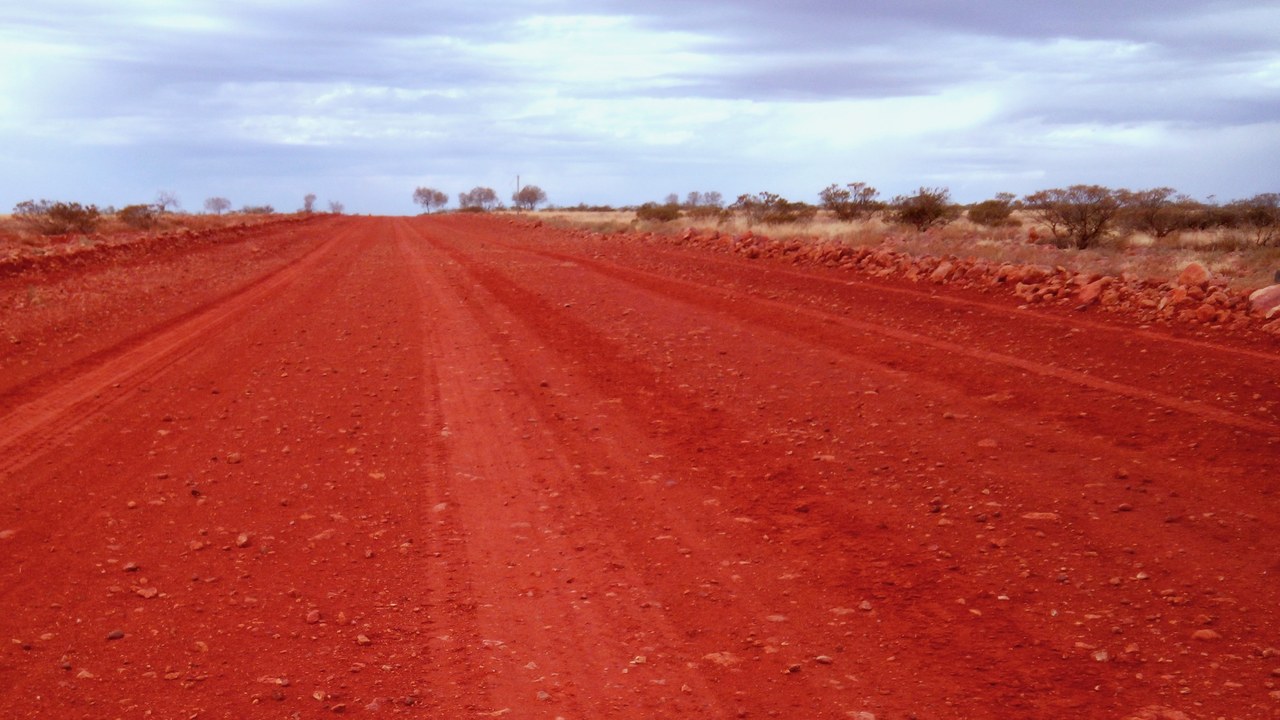
Oodnadatta in South Australia set the Southern Hemisphere’s record when it reached 50.7 degrees Celsius, or 123 degrees Fahrenheit, on January 2, 1960, a figure still standing in the WMO records table more than sixty years later.
The mark has survived decades of Australia’s own frequent summer heat waves, a stretch of longevity that puts it in the same company as several of the older Northern Hemisphere records on this list.
7. Syracuse, Sicily (Italy): Continental Europe’s Record

Syracuse, on the Italian island of Sicily, recorded 48.8 degrees Celsius, or 119.8 degrees Fahrenheit, on August 11, 2021, a reading the World Meteorological Organization confirmed only in 2024 as the official continental European record.
The three-year gap between the reading and its confirmation reflects how carefully the agency checks extreme temperatures before certifying any new record, especially one set in a historically densely populated Mediterranean region with dense weather-station coverage.
8. Lut Desert (Iran): Satellite’s Hottest Surface
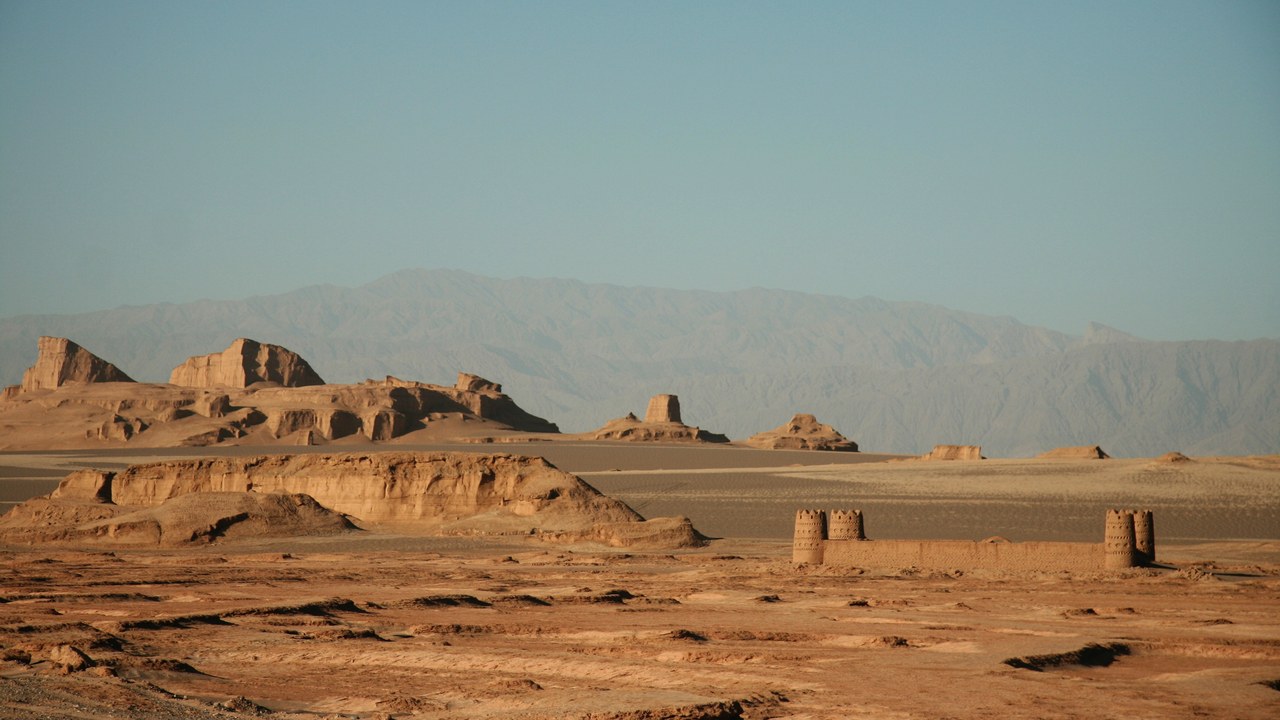
The Lut Desert in Iran produced the hottest land-surface temperature ever measured by satellite anywhere on Earth, 70.7 degrees Celsius, or 159.3 degrees Fahrenheit, recorded by NASA’s Aqua satellite in 2005, according to EarthSky’s reporting.
That figure measures the heat of the bare ground itself rather than the shaded air temperature used for official WMO records, so the two kinds of extremes are not directly comparable, even though both describe the same desert.
9. Turpan Depression (China): China’s Satellite Extreme
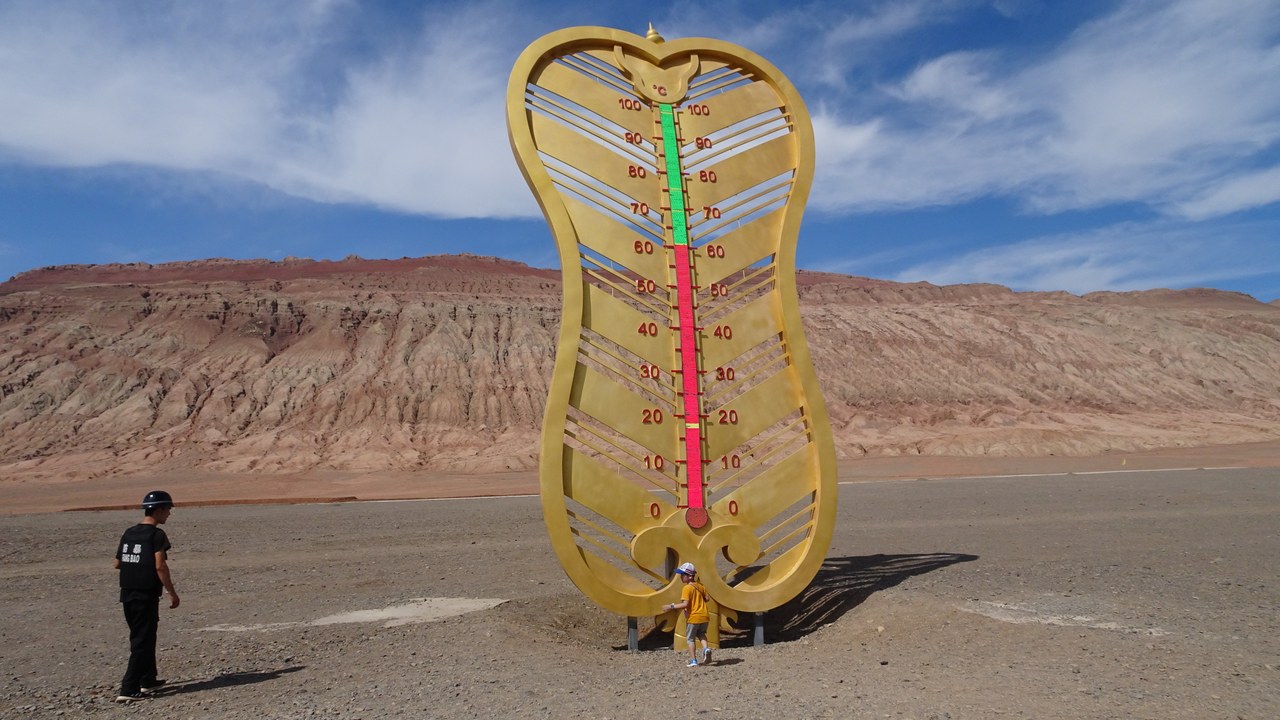
The Turpan Depression in China registered a satellite-measured land-surface temperature of 66.8 degrees Celsius, or 152.2 degrees Fahrenheit, in 2008, a reading covered in the same EarthSky roundup that tracks the world’s extreme surface temperatures.
Like the Lut Desert reading, it reflects the heat radiating from bare rock and sand rather than the shaded air temperature that official weather-station records are built around, a distinction that matters for anyone comparing the two kinds of extremes.
10. Dallol (Ethiopia): Hottest Place Year-Round

Dallol, Ethiopia, holds the Guinness World Record for hottest inhabited place on an annual-mean basis, averaging 34 degrees Celsius, or 94 degrees Fahrenheit, across six full years of readings taken between 1960 and 1966, per Guinness World Records.
Rather than describing a single scorching afternoon, the record instead reflects a punishing year-round average that almost never lets residents of the settlement escape the heat, even during the cooler months of the year.
11. Verkhoyansk (Russia): Arctic Circle’s Heat Record

Verkhoyansk, a Siberian town sitting above the Arctic Circle, reached 38 degrees Celsius, or 100.4 degrees Fahrenheit, on June 20, 2020, a reading the World Meteorological Organization formally recognized as the official Arctic temperature record.
The reading sat so far outside normal expectations for the region that officials at the time described conditions there as more befitting the Mediterranean coastline than the harsh Arctic Circle climate it actually sits within.
More from Morning Overview
- A recalled pill hid a stimulant dose linked to heart attacks and death
- Four U.S. startups fired up their first small nuclear reactors, aiming to power AI data centers on-site
- Card skimmers hidden on gas pumps and ATMs are draining accounts, and here’s the tell
- Doctors warn a silent liver disease now affects one in three American adults
