
The heavy trucks below were built to haul freight on American highways, and they span decades of production. Some earned a place through long production runs, one through sheer size, and the newest through fuel-efficiency claims from their makers. Here are ten trucks, from older conventionals to current models, that cover that stretch.
1. Peterbilt 379: Flagship for Two Decades
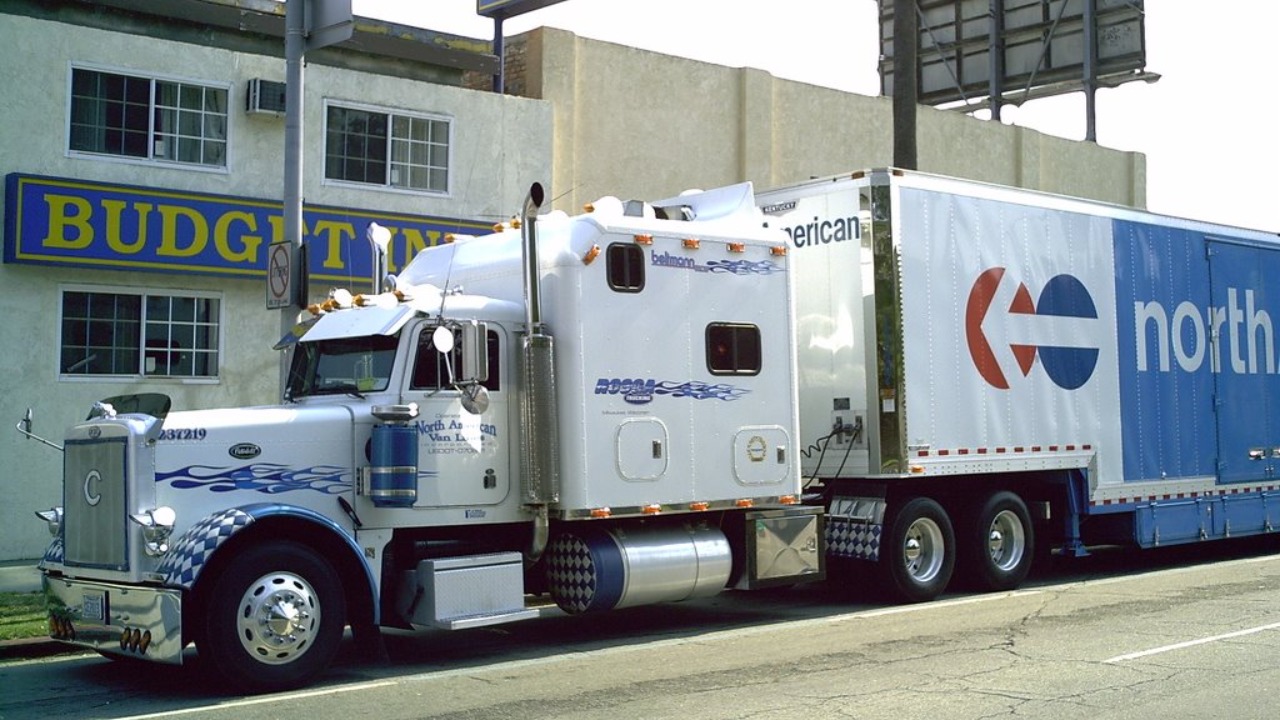
PACCAR’s Peterbilt division produced the 379 from 1987 to 2007 as a Class 8 model line, and it served as Peterbilt’s flagship highway conventional. The last 1,000 trucks were sent off as Legacy Class.
Those final trucks carried the Legacy Class name, which marks the end of the 379’s run. The 1987 to 2007 span gives a clear dating window for used examples. Twenty years of production under the PACCAR umbrella placed the 379 among the longer-running models here, though the Kenworth W900 and Mack R series outlast it.
2. Kenworth W900: Six Decades and Counting
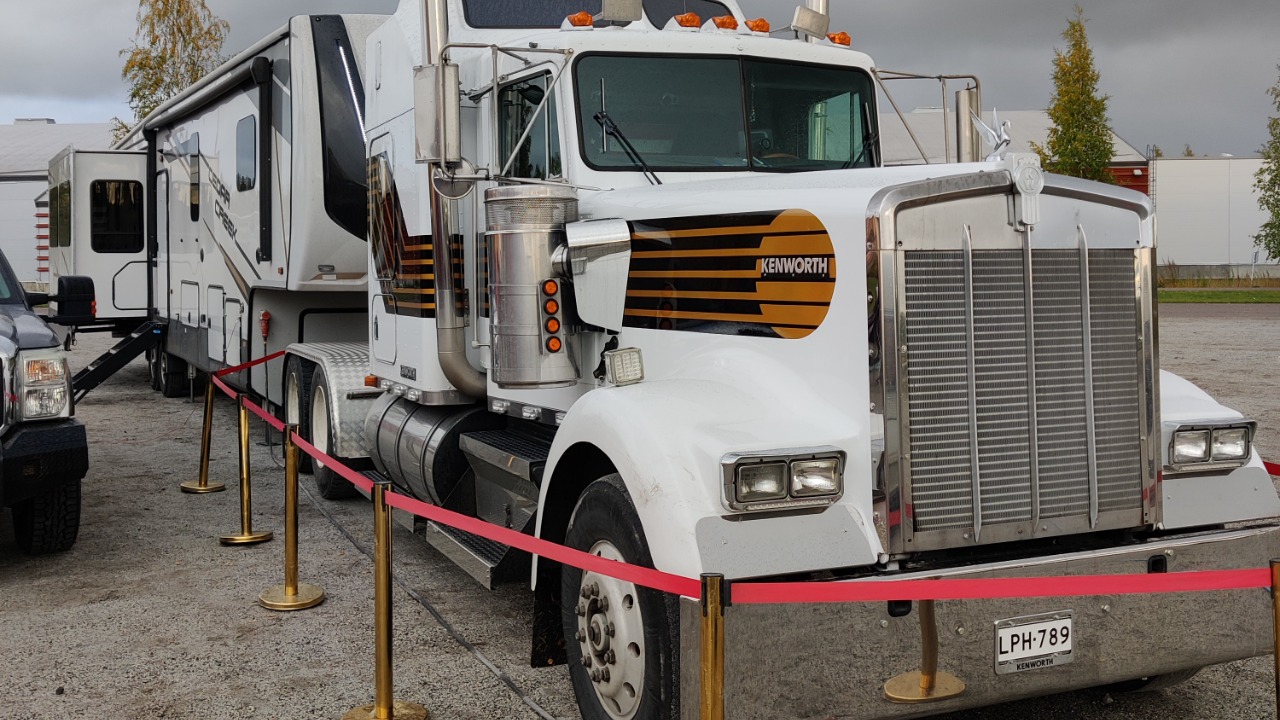
More than six decades after its introduction, the Kenworth W900 remains in production, currently in its third distinct generation, which was introduced in 1982.
The span means a single nameplate covers trucks of very different ages, with the 1982 generation the newest of three distinct designs. Its longevity is the benchmark for the next entry, since the Mack R is called the longest-produced commercial truck apart from this one. Introduced more than six decades ago and currently in a third generation, the W900 has changed in distinct stages rather than staying frozen.
3. Mack R series: Second-Longest Run
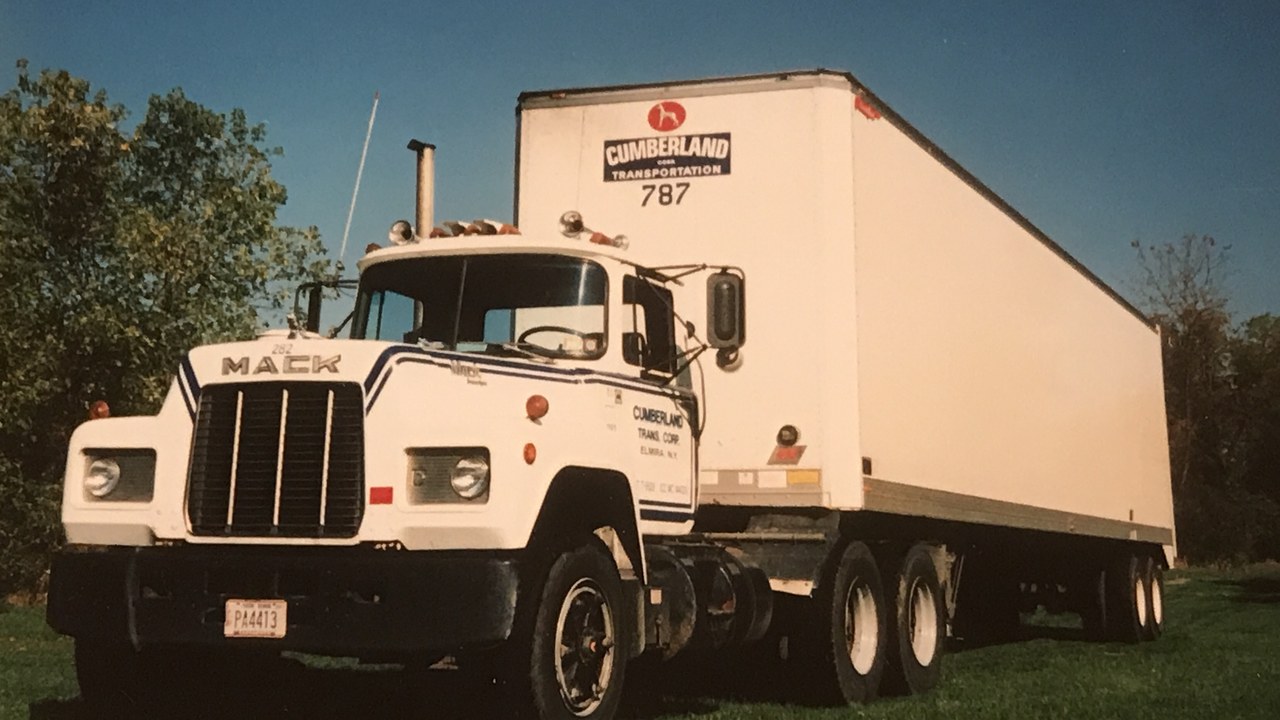
Built from 1966 to 2005, the Mack R series is, with the exception of the Kenworth W900, the longest-produced commercial truck in history.
A 39-year run is the figure by which the R ranks behind only the W900 on this list. Owners and restorers dating an R can place it between those 1966 and 2005 bookends. The ranking belongs to the Mack R, whose run began in 1966. That 39-year span exceeds the 20-year run of the Peterbilt 379 and the 16-year run of the Super-Liner, leaving only the Kenworth W900 ahead of it.
4. Mack Super-Liner: Flagship Conventional
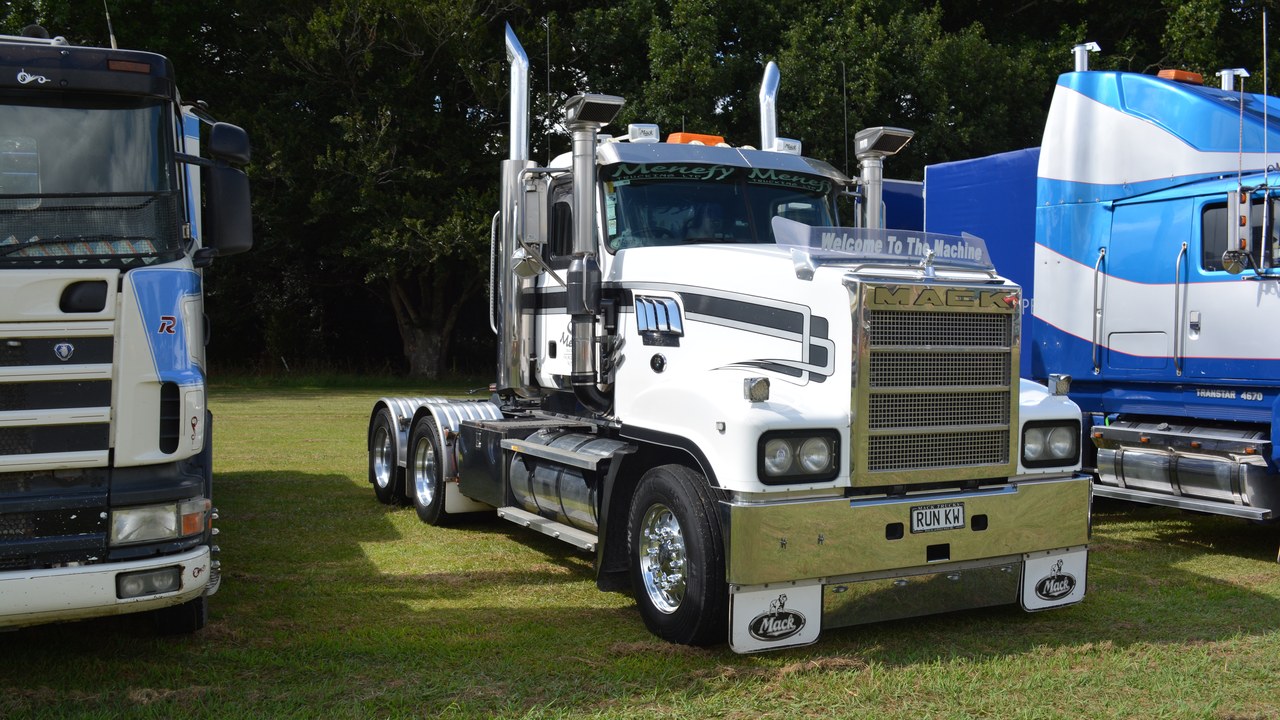
Produced in North America from 1977 to 1993, the Mack Super-Liner was a conventional-cab tractor configured primarily for highway and vocational applications, serving as the flagship conventional of Mack’s North American lineup.
The model was built for 16 years in North America, yet its story did not end there, because Australia still buys a third-generation version. The split shows that a nameplate retired in one market can continue in another. The Super-Liner’s dual role in highway and vocational work shows the tractor was not limited to over-the-road hauling.
5. GMC General: GM’s Largest Conventional
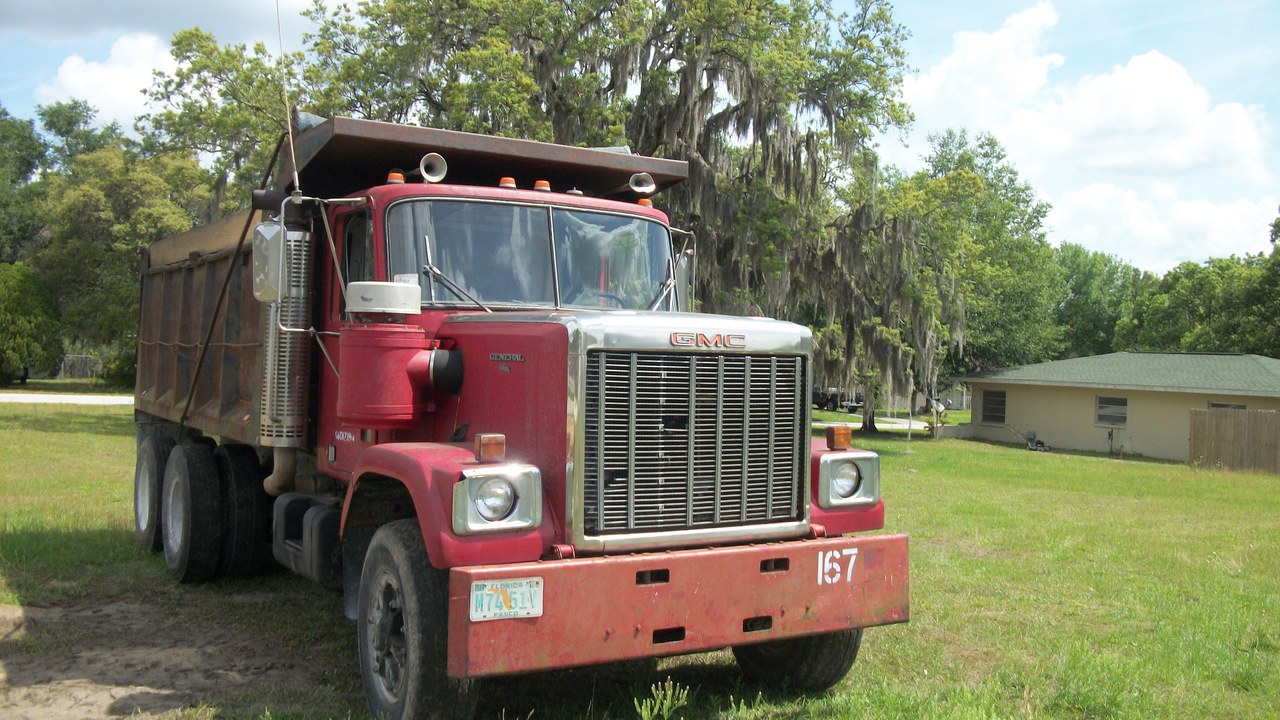
Assembled from 1977 to 1987, the GMC General was the largest conventional-cab truck General Motors ever built.
The truck took over from the Chevrolet/GMC C/M 90/9500 line and carried the General name for a decade, the briefest of the dated production runs on this list. Its size is the reason it earns a place here. The 1977 start overlaps the Mack Super-Liner’s, so the two heavyweights were launched in the same year. The superlative is limited to one company, and covers General Motors’ own lineup, not rival makers’ trucks.
6. White Freightliner: Co-Branded Cabovers
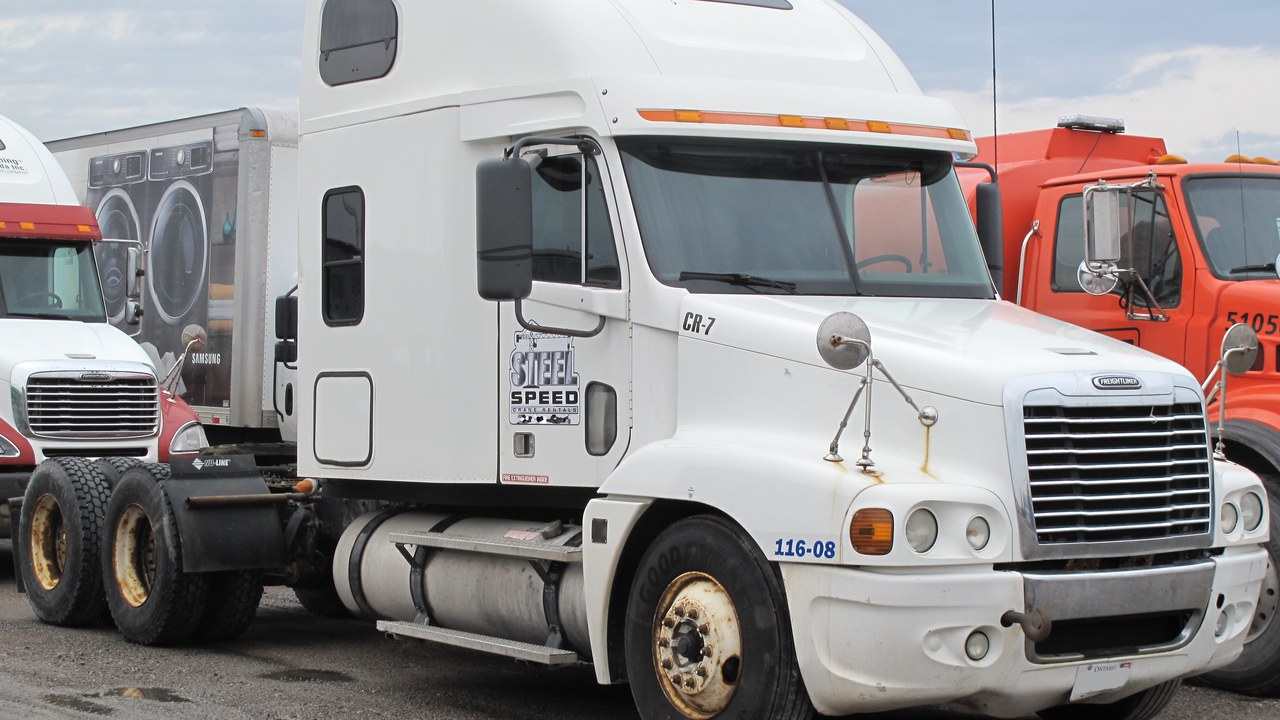
White, described as one of the largest truck manufacturers in the United States at the time, sold Freightliner cab-over-engine trucks under the White Freightliner co-branding.
The arrangement ran through White’s dealer network, which put the Freightliner product in front of buyers nationwide. The badge therefore reflects a sales partnership, with the trucks themselves coming from Freightliner. Co-branding of this kind meant a buyer at a White dealership could purchase a cab-over built by another maker, with White contributing the sales channel. That dealer network is why the badge reached highways nationwide.
7. Freightliner Cascadia: The Efficiency Pitch
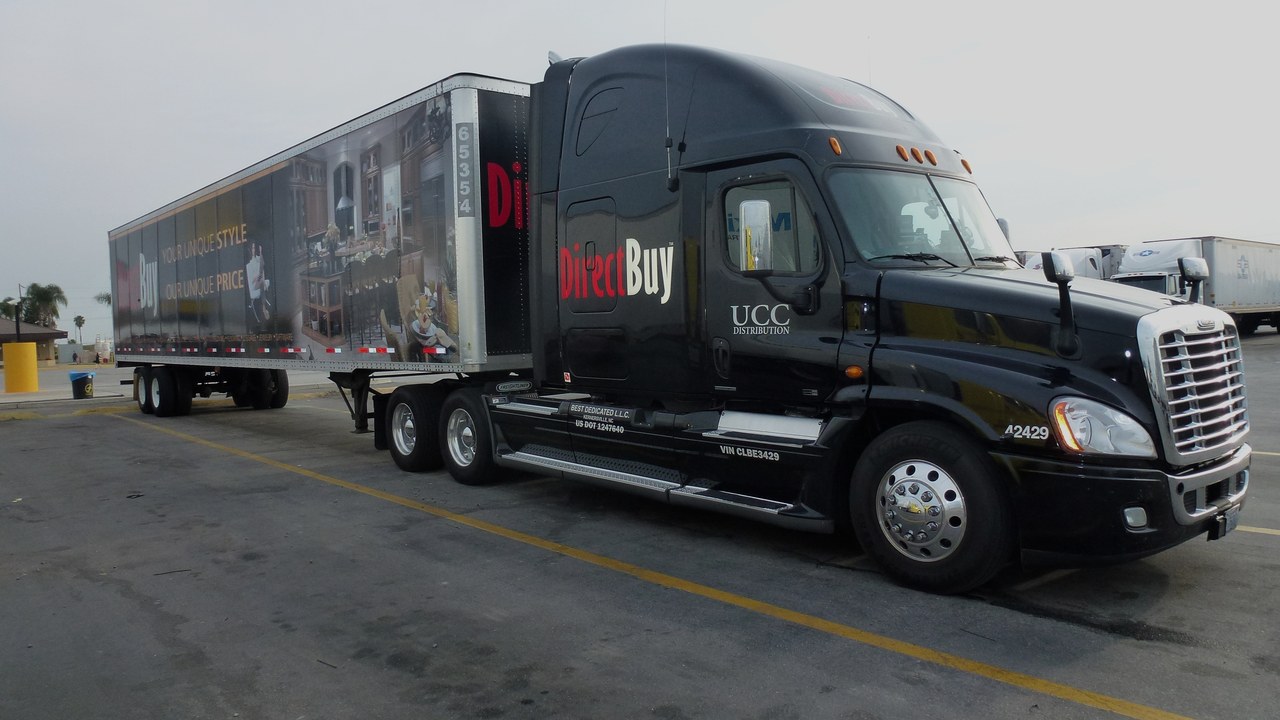
Freightliner promotes its fifth-generation Cascadia under the line Engineered for Efficiency, with better fuel efficiency and the most aerodynamic Cascadia ever.
Both claims are the maker’s own and are comparative, measured against earlier Cascadias rather than rival trucks. Next to Volvo’s up-to-10% figure, the Freightliner wording is qualitative, and the Engineered for Efficiency line puts fuel economy first among its selling points. Five generations of the nameplate mean the Cascadia has been redesigned several times, and this passage describes only the latest.
8. Volvo VNL: Up to Ten Percent
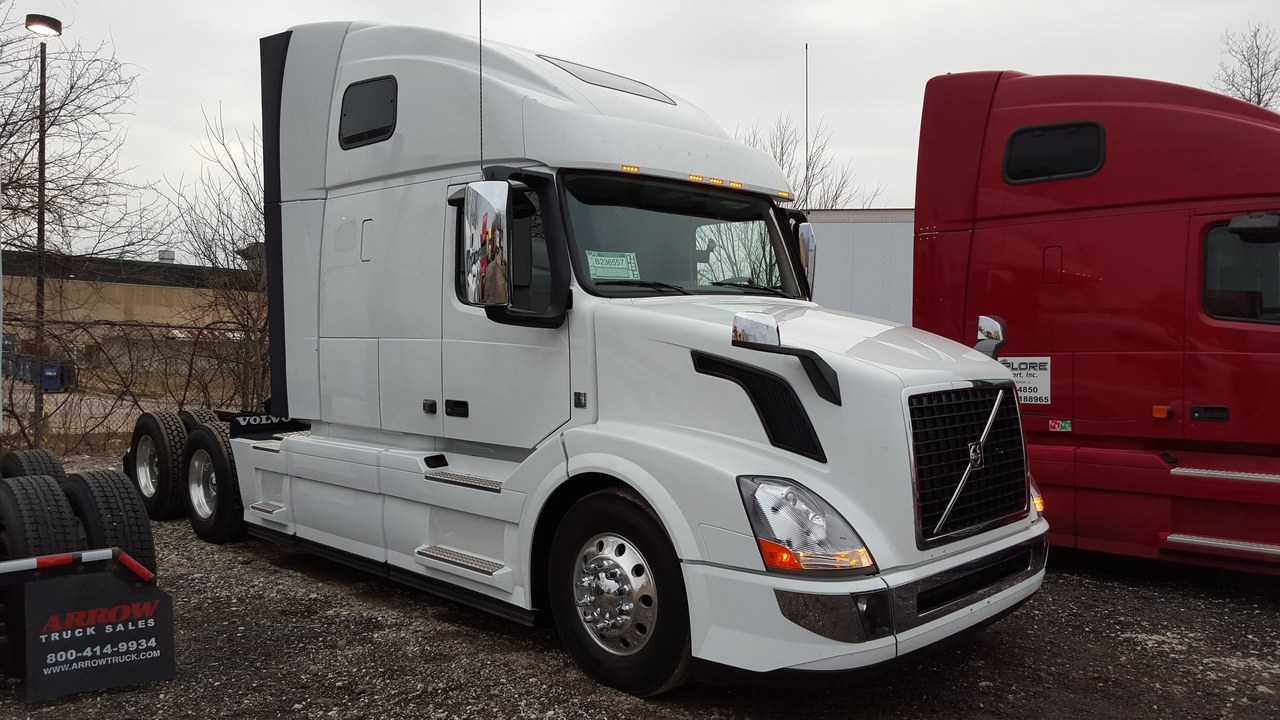
Volvo says the aerodynamic and powertrain changes together create up to a 10% improvement in fuel efficiency versus its previous model.
The wording is up to 10%, so the figure is a ceiling and not a guaranteed result, and the baseline is Volvo’s own prior VNL rather than a competing truck. Fleet buyers comparing claims would need to match that baseline. At 10% the figure is twice the 5% number International cites, though the two use different baselines and wording. The claim is Volvo’s own and rests on a comparison with its earlier VNL.
9. International LT: At Least Five Percent
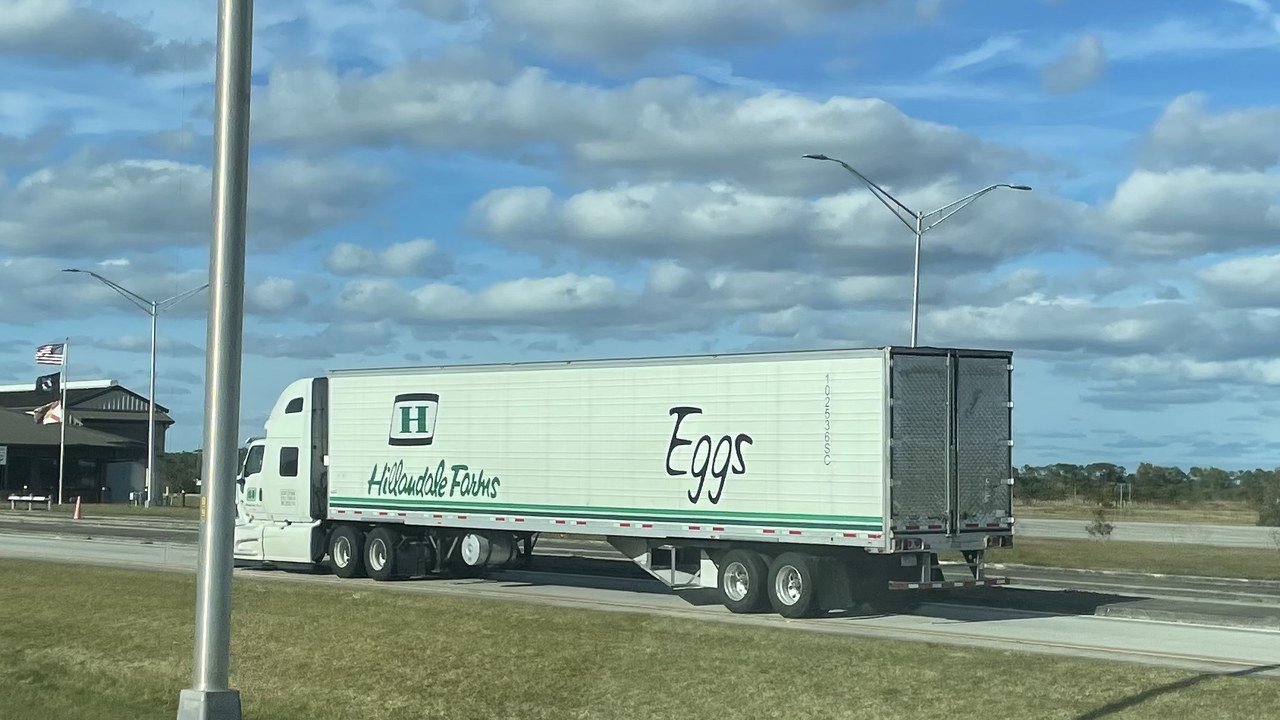
International states that testing proved the LT with the S13 Integrated Powertrain to be 5% more fuel efficient than comparable on-highway aero tractors.
Unlike Volvo’s up-to figure, this is a floor, though it is still the manufacturer’s own testing and the comparison group is the set of models the company chose. The claim attaches to the LT paired with the S13 powertrain, not to the cab alone. Using at least makes the number a lower bound for those tests. Since the figure is a minimum, the LT’s advantage over any particular comparable tractor could be larger than 5%.
10. Mack Pinnacle: The MP8 Numbers
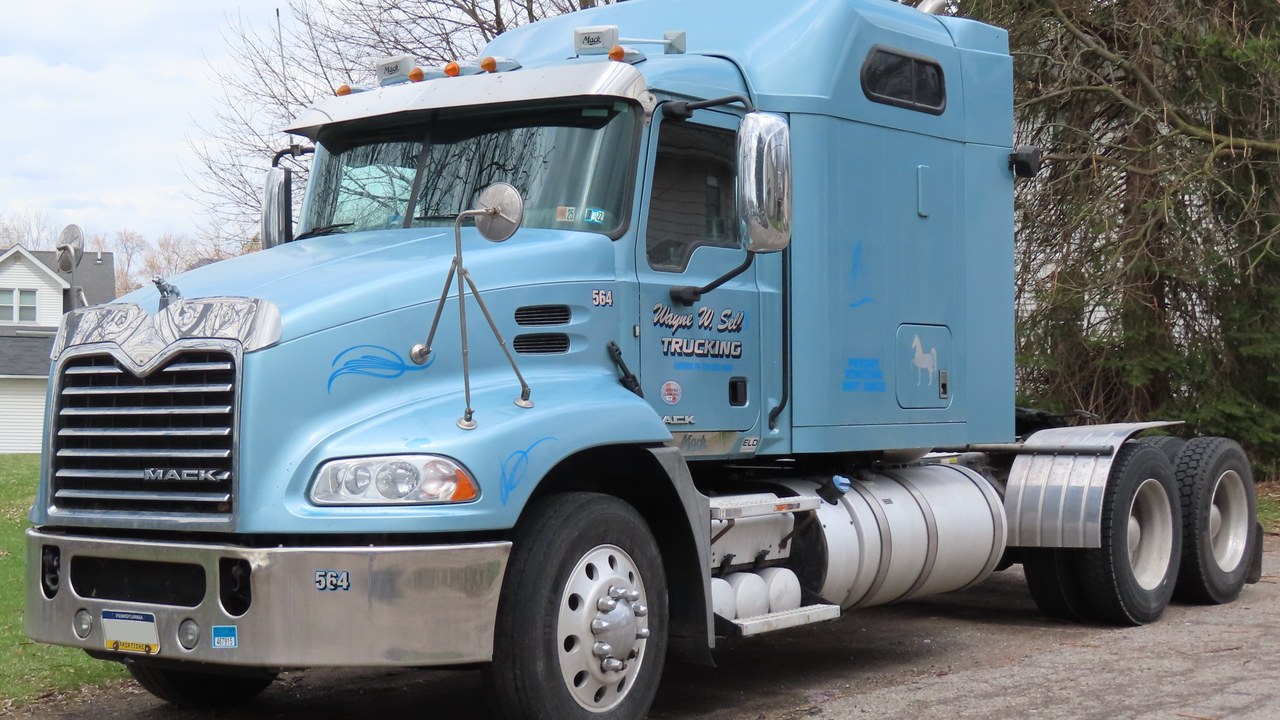
Mack lists the 13-liter MP8 diesel in the Pinnacle at 415 to 505 horsepower with 1,650 to 1,900 lb-ft of torque.
The spread offers a choice of ratings within one engine family, with the top rating adding 90 horsepower and 250 lb-ft over the lowest. These are catalog figures from the manufacturer rather than tested results. The same engine covers the whole spread, from 415 horsepower and 1,650 lb-ft at the low end to 505 horsepower and 1,900 lb-ft at the top.
More from Morning Overview
- General Motors is switching on cameras that record inside your vehicle by update
- A geomagnetic storm is forecast to hit Earth today, pushing the northern lights unusually far south
- A recalled pill hid a stimulant dose linked to heart attacks and death
- Four U.S. startups fired up their first small nuclear reactors, aiming to power AI data centers on-site
