
NASA has taken ownership of the X-59, an experimental jet built to turn a loud sonic boom into a soft thump. The handover on November 18, 2026 is the latest step in a story that stretches back to the first supersonic flight in 1947. These slides trace how a half-century ban on supersonic flight over land came about and what the X-59 hopes to prove.
Read next on Morning Overview: The Bay Area’s highest king tides in 18 years are colliding with a Thanksgiving-week storm
X-59: The Jet Changes Hands
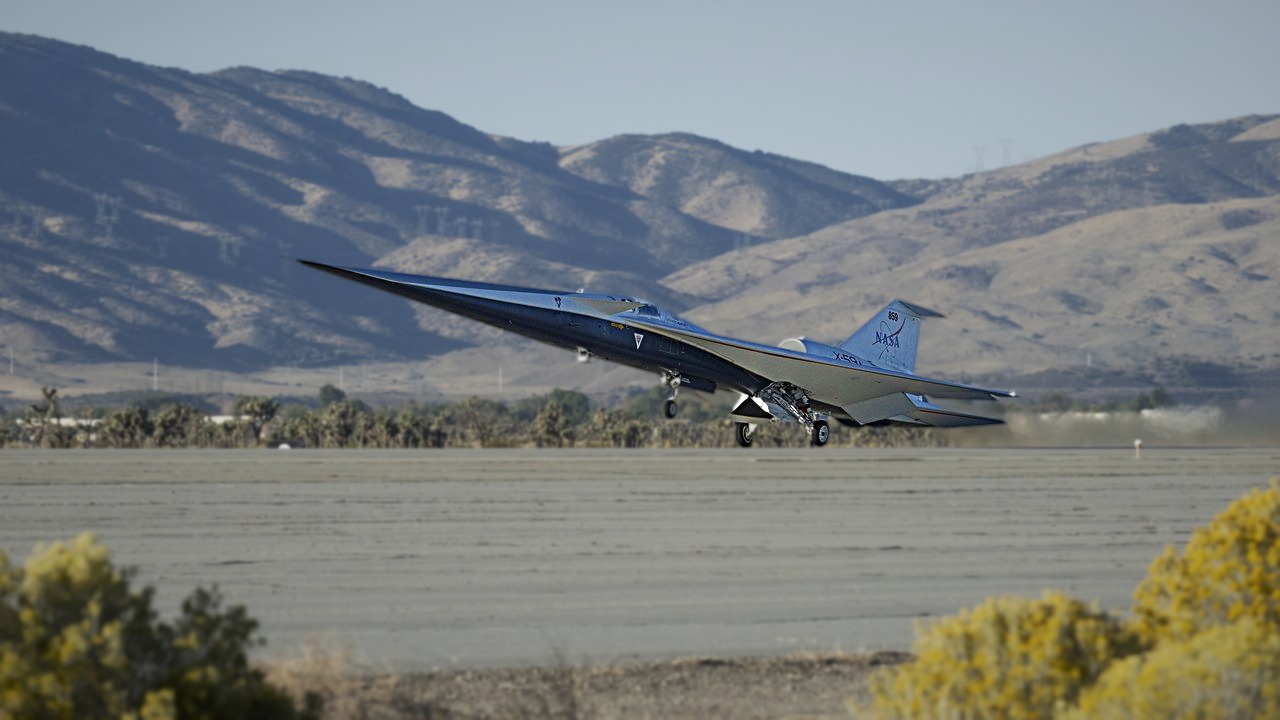
NASA’s X-59 reached a milestone on Nov. 18, 2026, when the agency officially took ownership of the quiet supersonic research aircraft. According to the ownership announcement, the jet came from contractor Lockheed Martin Skunk Works after an aircraft acceptance review, which the agency describes as a key step in contract closeout.
The X-59 is designed to fly faster than the speed of sound while reducing the loud sonic boom to a quieter sonic thump. Project manager Cathy Bahm said the change might seem subtle to someone outside flight test, but called it another big moment toward providing the data to hopefully make commercial supersonic flight over land a reality.
Lockheed Martin Skunk Works: The Builder Steps Back
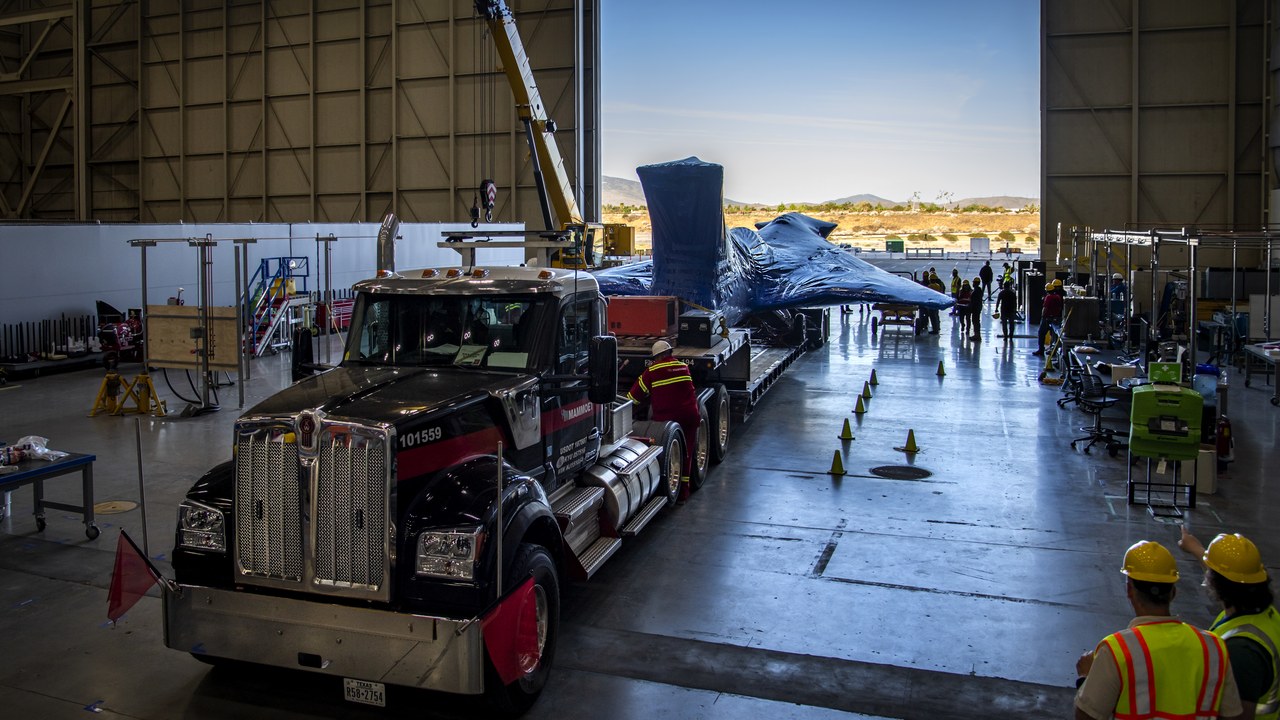
NASA selected Lockheed Martin to collaborate on the design of the X-59 and to lead on vehicle building and testing for the Quesst mission. Until the handover, the company kept official ownership while flight testing went on, as NASA explained in its release.
The change does not end the relationship. As the X-59 continues flight testing under NASA ownership, Lockheed Martin Skunk Works will provide supplemental support on an as-needed basis. The arrangement lets the agency run the experimental aircraft as its own research tool while the team that built it stays available when questions arise.
Armstrong Flight Research Center: The Desert Test Base
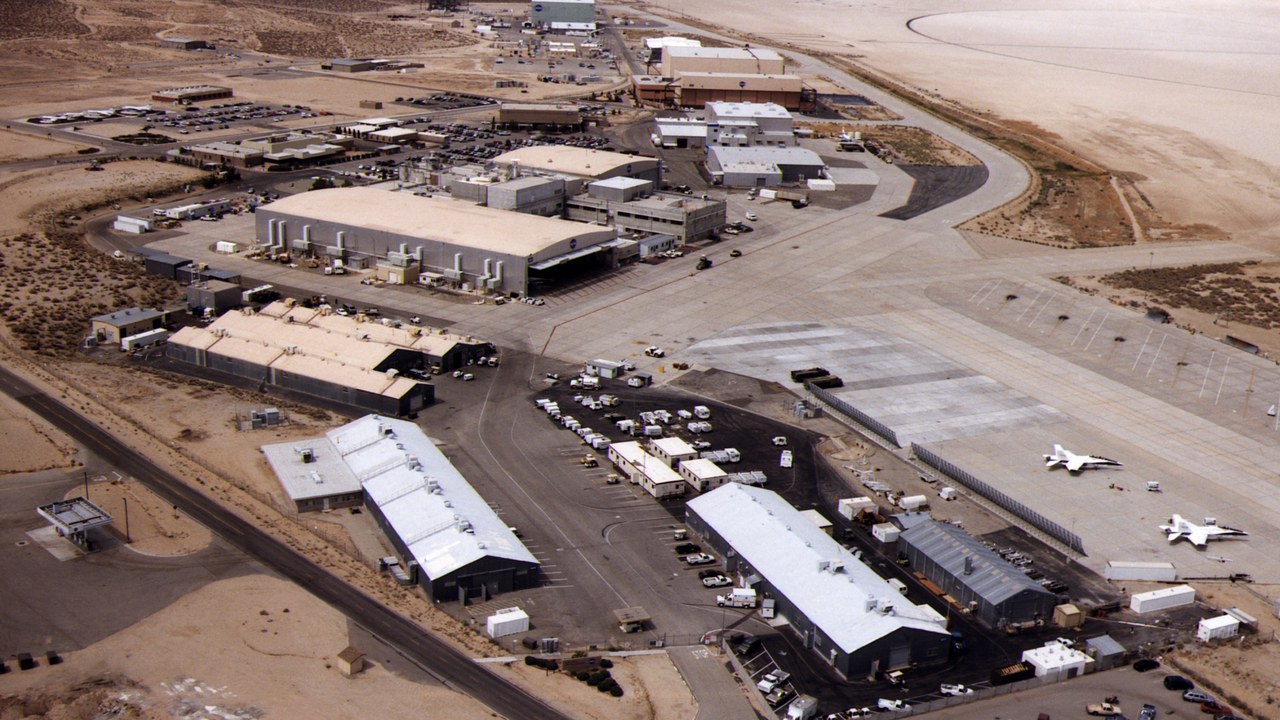
The X-59 made its first flight on Oct. 28, 2025, departing the Skunk Works facility in Palmdale, California, and flying to Armstrong Flight Research Center in Edwards, California. That center has served as the jet’s home base ever since, and flight testing has continued out of it.
The same site is where the ownership paperwork finally caught up with the hardware. Lockheed Martin retained official ownership while the aircraft flew from Edwards, and the acceptance review with NASA closed that gap. For the X-59 team, the high desert remains the working address for the next phase of flight research.
Bell X-1: The Sound Barrier Falls
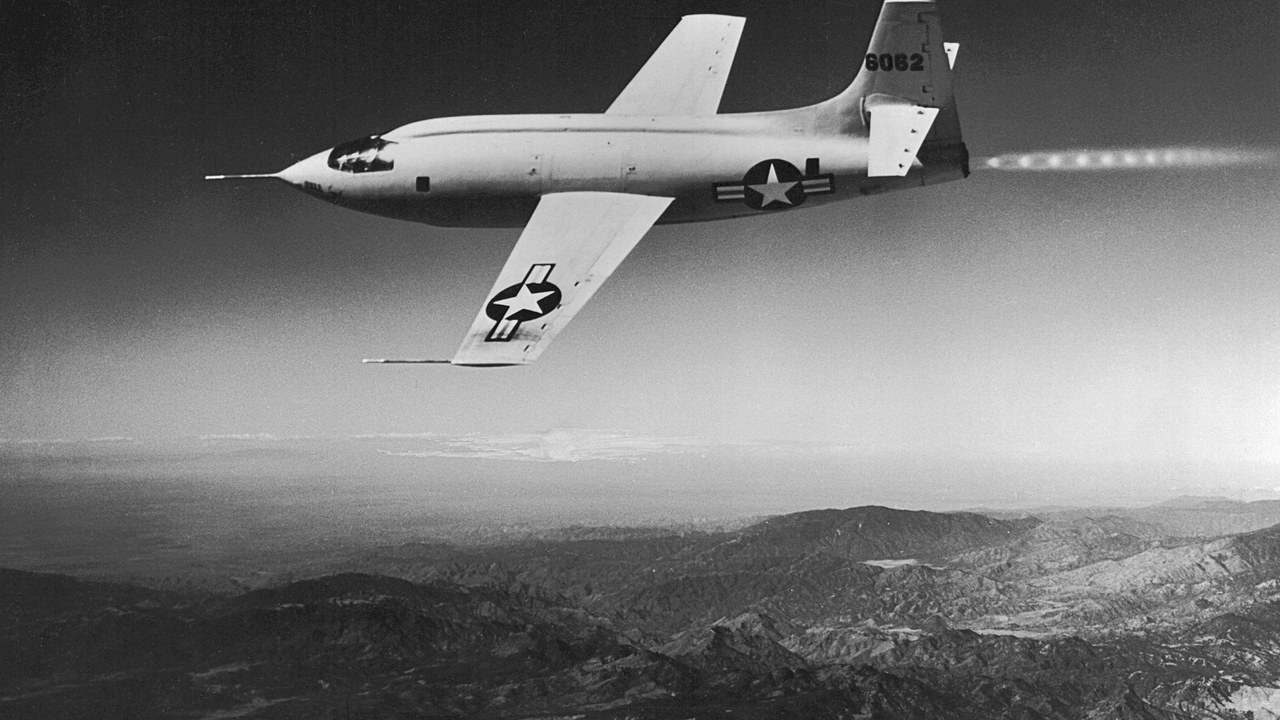
The story of the federal ban on supersonic flight over land goes back to 1947, when, as the Quesst history recounts, the rocket-powered XS-1 airplane first broke the sound barrier and began the heroic era of faster-than-sound research. The aircraft is better known today as the Bell X-1.
At first, research was about flying X-planes faster and higher, and nobody gave sonic booms a second thought, mostly because few people lived where the work took place. The phenomenon was still mysterious, with few tools and only limited data to explain the atmospheric shock waves that people on the ground hear as booms.
B-58 Hustler: Booms Over American Cities
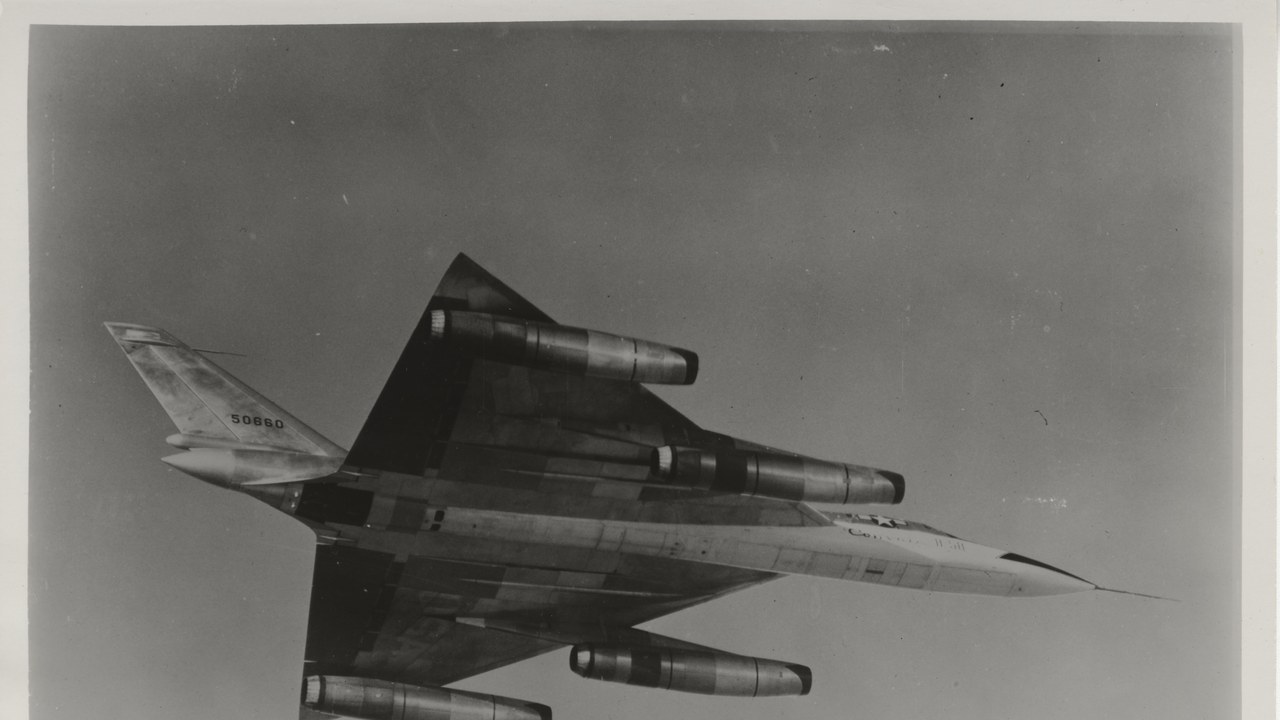
As the Air Force and Navy deployed more supersonic jets, the public heard more of the alarming noise. Beginning in 1956 and continuing well into the 1960s, military and federal agencies studied how sonic booms form, what they do to buildings and how people react, as the NASA history describes.
An Air Force B-58 Hustler supersonic bomber was one of many military jets used in the 1960s to generate booms over U.S. cities. Residents of Atlanta, Chicago, Dallas, Denver, Los Angeles and Minneapolis were among those exposed. Two concentrated studies, over St. Louis in 1961 and Oklahoma City in 1964, left no doubt that the public was not fully supportive.
Air Force Academy Cadet Chapel: The Chapel Windows
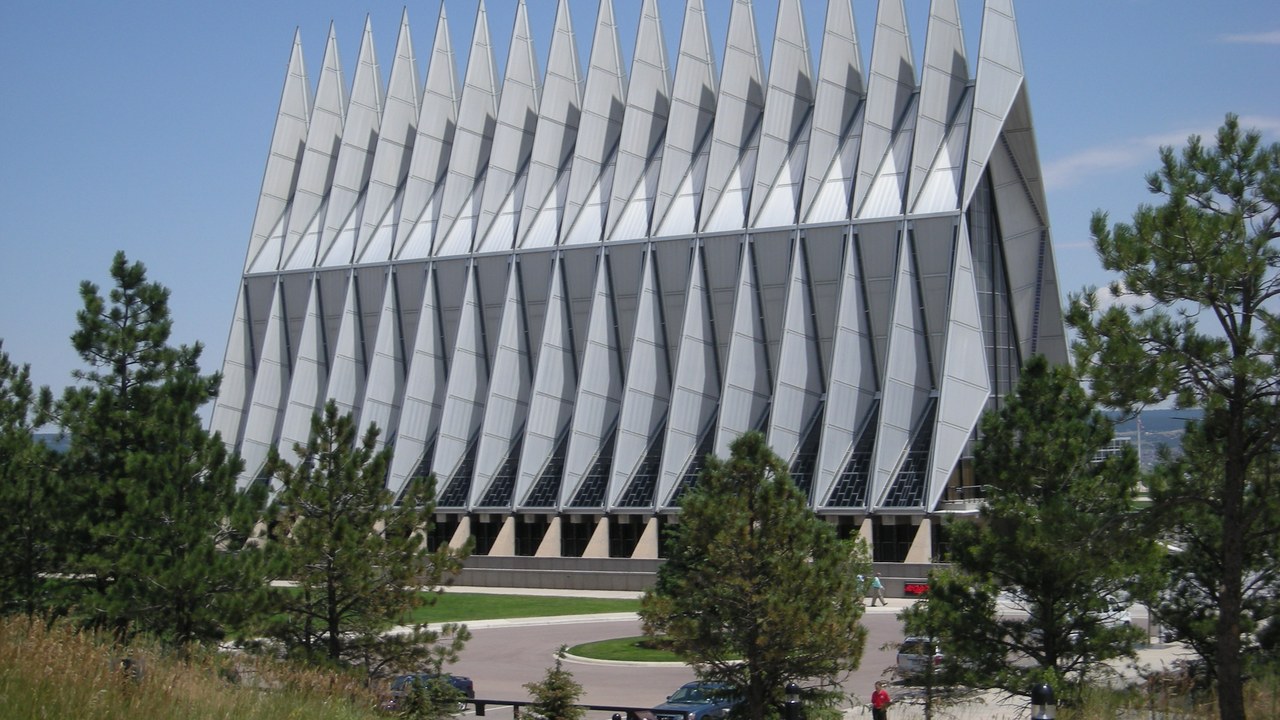
On May 31, 1968, during a ceremony at the Air Force Academy in Colorado, an F-105 Thunderchief broke the sound barrier while flying 50 feet over the school grounds. The boom blew out 200 windows on the side of the iconic Air Force Chapel and injured a dozen people, according to the Quesst history.
A week later, on June 8, the New York Times used the incident in an editorial about the danger of sonic booms. On July 21, Congress directed the FAA to develop standards for aircraft noise and sonic boom. Within a couple of years the agency formally proposed a rule restricting civil aircraft from flying faster than Mach 1.
Concorde: Concorde and the Ban
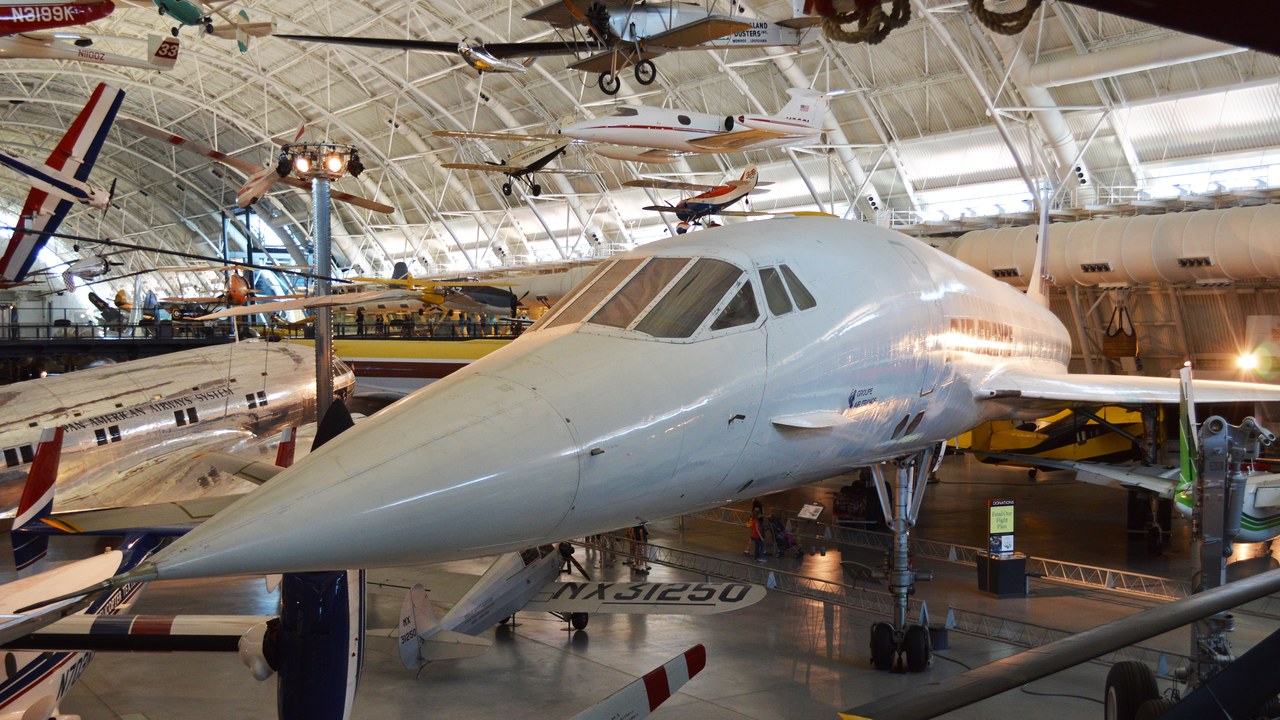
Congress cancelled the Supersonic Transport program in May 1971, and the rule banning civil supersonic flight over land went into effect two years later. Meanwhile Britain and France were developing the Concorde, which, as the NASA account notes, went on to provide commercial supersonic air travel between 1976 and 2003.
There were many reasons for its demise, including a deadly crash in 2000, but economic and environmental issues top the list. Restrictions against flying faster than sound over land, in the United States and elsewhere, greatly limited its revenue-generating options. That commercial lesson is part of why the X-59 aims at the sound, not just the speed.
The sonic thump: The Sonic Thump
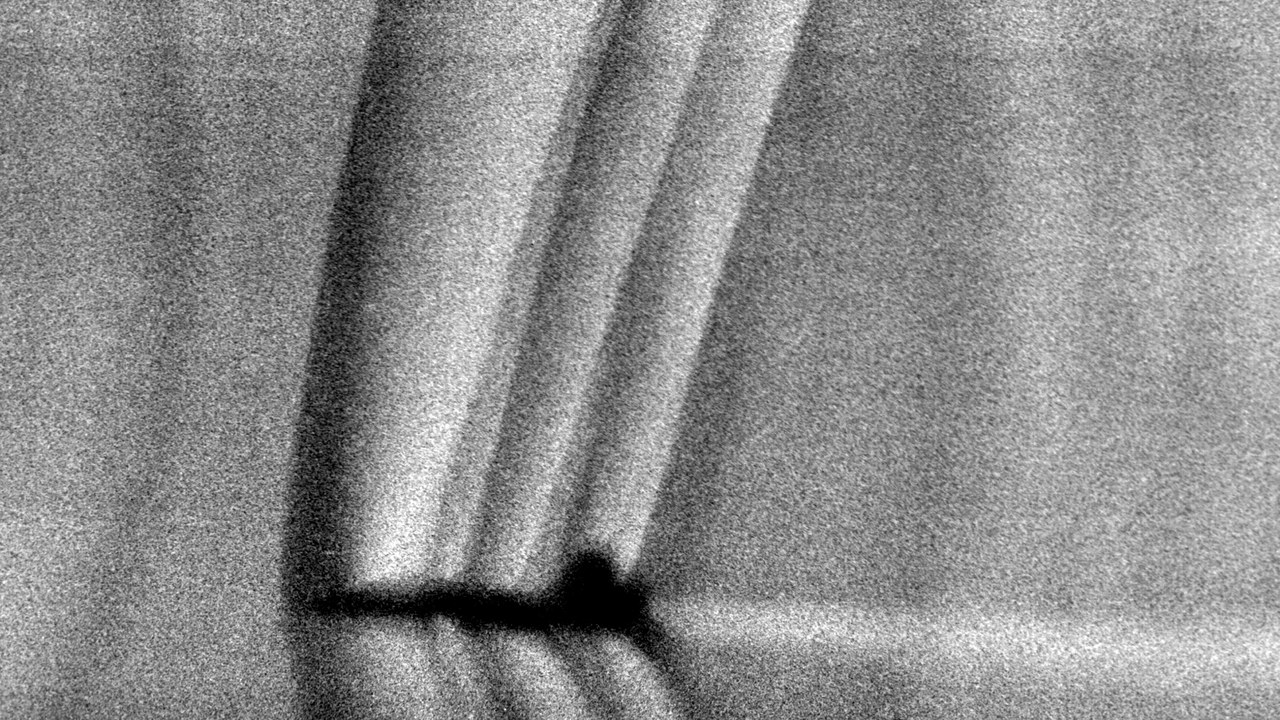
The X-59 is shaped so that, flying at its intended quiet supersonic altitude of 55,000 feet and speed of Mach 1.4, people on the ground will not hear a loud sonic boom. NASA says they will hear a thump projected to sound like a car door closing from about 20 feet away.
During future flight tests, NASA will study and record those sonic thumps in a new phase called acoustic validation, which focuses on analyzing the sounds the X-59 makes. The Quesst mission aims to help enable a new era of commercial supersonic flight over land by gathering evidence regulators can weigh when they decide whether to replace the speed limit with a sound-based rule.
First flight at Edwards: First Flight at Edwards
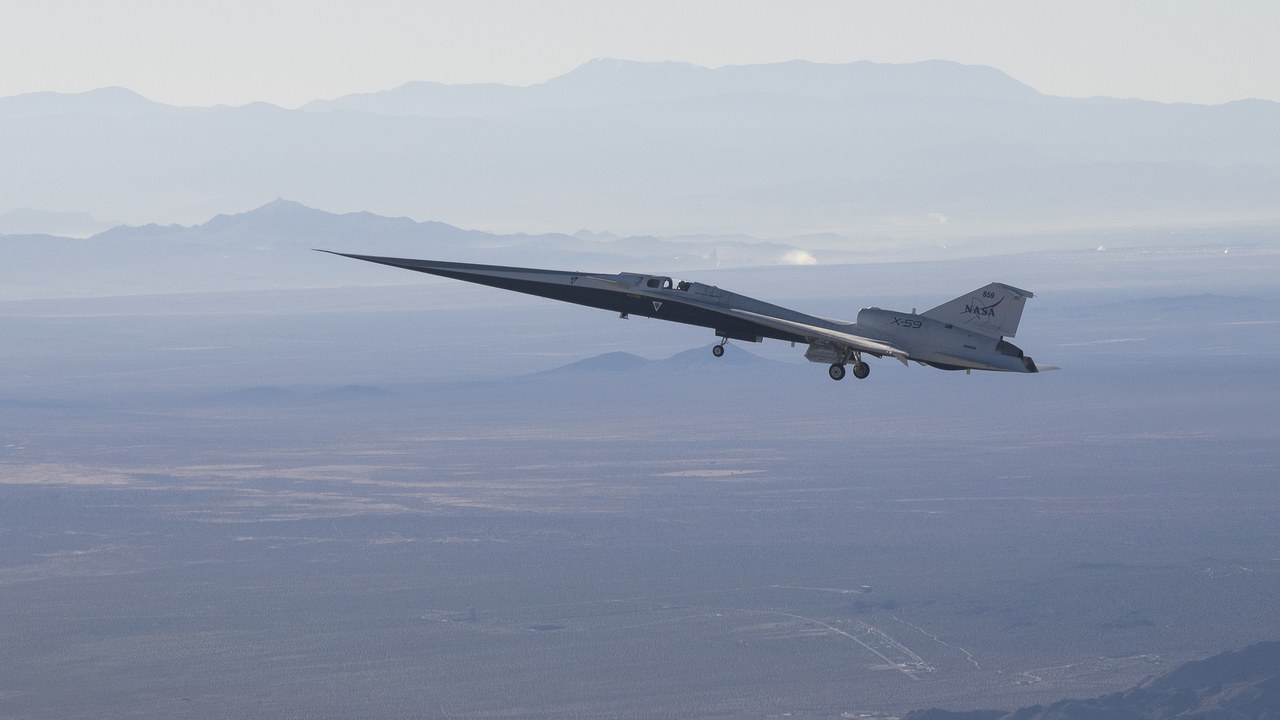
The X-59’s first flight on Oct. 28, 2025, was piloted by Nils Larson and lasted 67 minutes, The Aviationist reports. It focused on assessing the aircraft’s basic flying qualities and systems rather than speed, flying low and slow to run systems checks.
NASA’s own account describes the flight as departing Skunk Works in Palmdale and flying to Armstrong Flight Research Center in Edwards. Since that day the high-desert center has served as the home base for the test campaign, which has since moved from basic checks to supersonic flight and a widening envelope of speeds and altitudes.
Mach 1.53: Mach 1.53
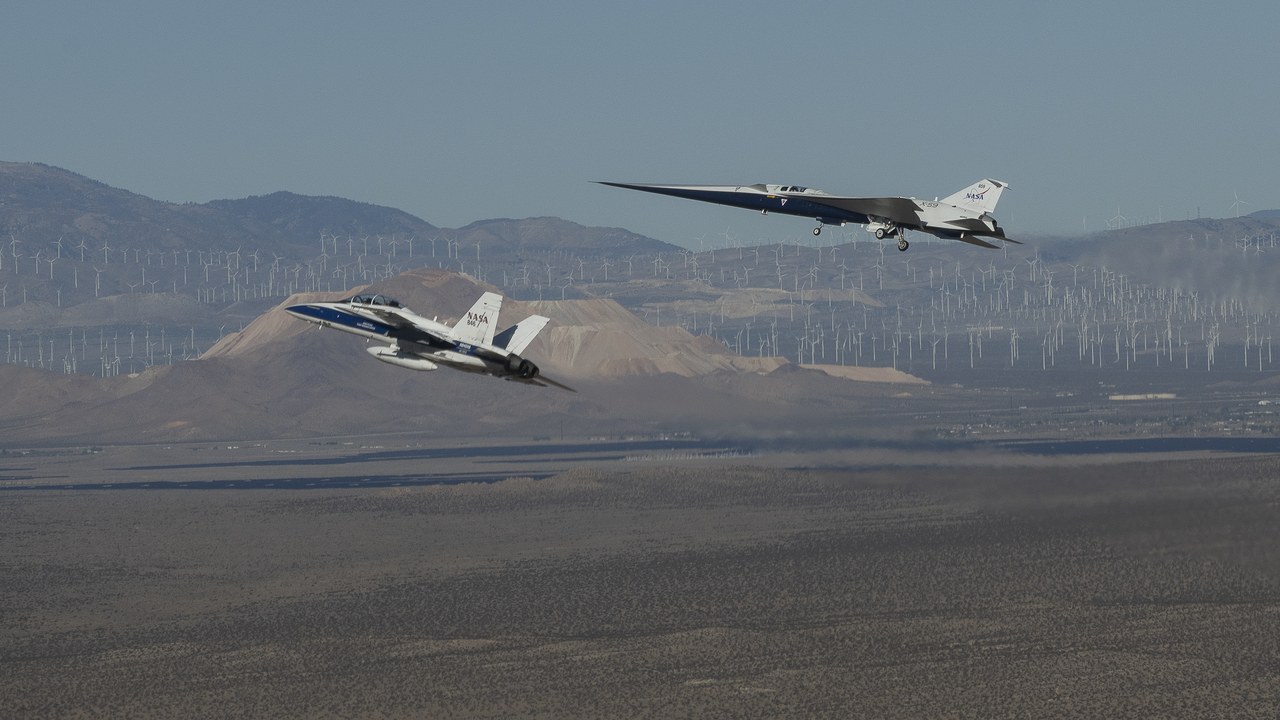
One year after first flight, NASA reported that the X-59 had completed 40 additional flights. Since that first outing, NASA reported on Oct. 28, 2026, the aircraft has reached a maximum altitude of more than 56,000 feet and speeds up to Mach 1.53, a long way from the low, slow systems checks of its debut.
The past year was spent expanding the flight envelope, flying at the altitudes, speeds and conditions that will be used for all aspects of the Quesst mission. The team will continue that work in the coming months while also moving toward acoustic validation, the step that decides whether the quiet thump holds up for people on the ground.
More from Morning Overview
- The EPA killed the credit behind the start-stop feature it calls almost universally hated
- Tesla’s Cybercab is finally for sale to select buyers, but it only drives with a $299 monthly plan
- A Swiss mountain pass that melting ice keeps opening up has given up a 4,000-year-old bronze neck ring
- USS Michael Murphy is finally home after a grueling 346-day deployment
