
Venom has evolved independently across snakes, spiders, insects, mollusks, and amphibians as a tool for hunting and defense. Some animals use it to subdue prey twice their size, while others rely on it purely to survive an encounter with something larger. From a snail that fires a venomous harpoon to a snake with the world’s most potent venom, these nine animals show just how varied and dangerous venom can be.
1. Inland taipan: The World’s Deadliest Venom
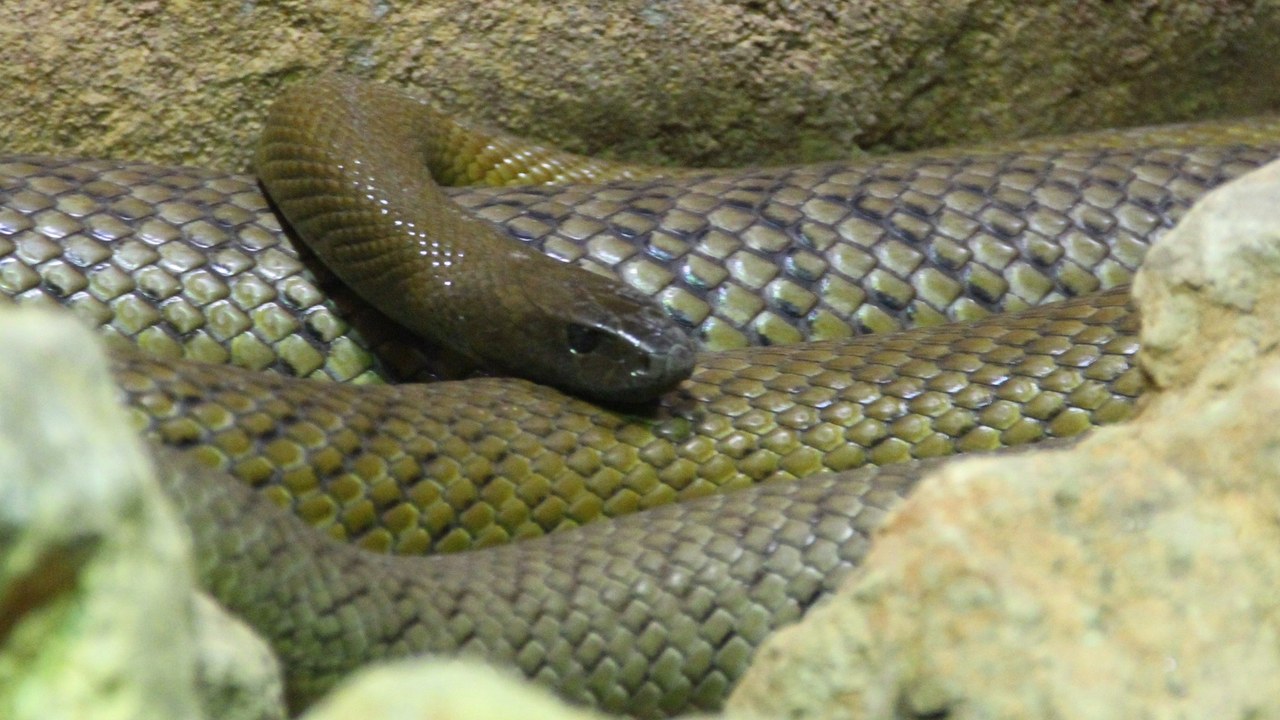
The inland taipan carries the most toxic venom of any land snake, based on its extremely low lethal dose in laboratory tests on mice. A single bite injects a neurotoxic and blood-clotting cocktail that can paralyze prey and trigger uncontrolled clotting within minutes. Taipoxin, the venom’s primary toxin, attacks nerve signals and can stop breathing in an untreated victim.
The snake lives across the arid channel country of central Australia, far from most people, and instinctively avoids confrontation rather than striking first. Antivenom has prevented any confirmed human death from this species, though a full untreated bite could kill an adult within about 45 minutes.
2. Box jellyfish: A Sting That Stops Hearts
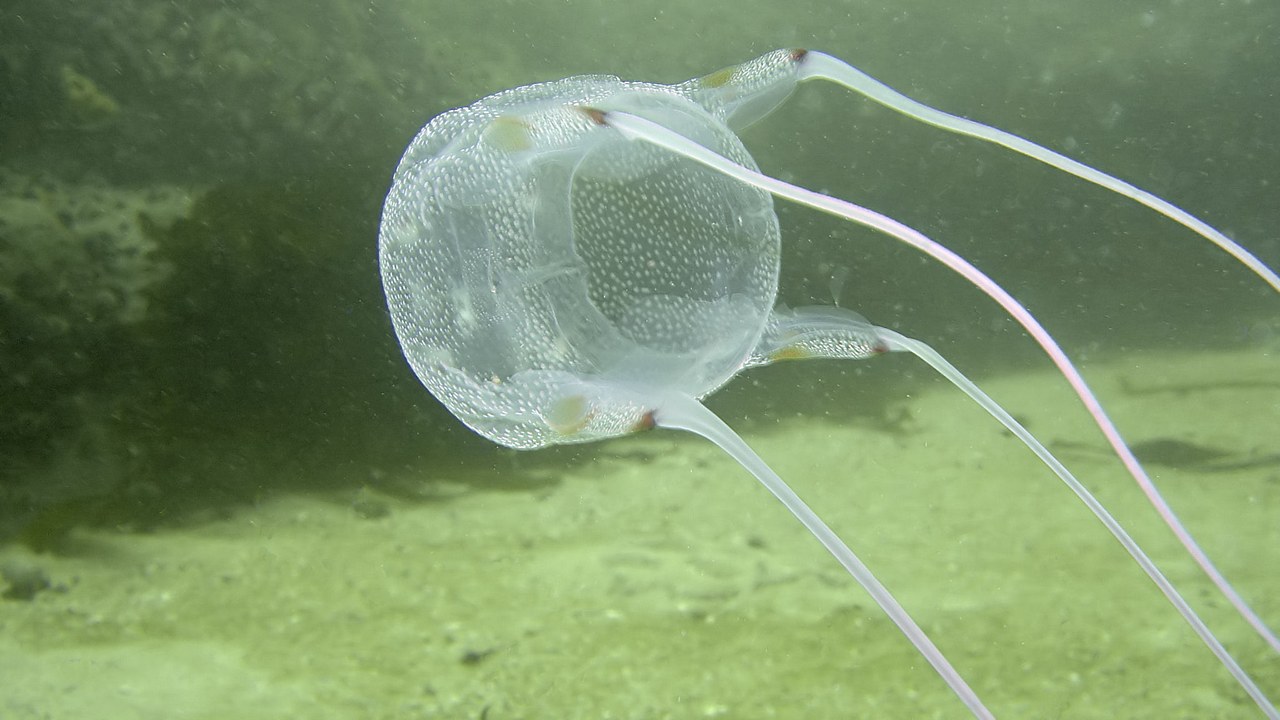
The box jellyfish trails tentacles lined with millions of stinging cells that inject venom directly into a victim’s bloodstream on contact. The toxins attack the heart, nervous system, and skin at once, and a serious sting can trigger cardiac arrest within minutes. Some species in Australian and Indo-Pacific waters are blamed for more swimmer deaths than sharks in the same regions.
Swimmers often do not see the near-invisible tentacles until after they are stung, so beaches within its range post seasonal warning flags and keep vinegar on hand for first aid. Vinegar deactivates unfired stinging cells still on the skin, and prompt treatment greatly improves the odds of survival.
3. Blue-ringed octopus: Small Body, Lethal Bite
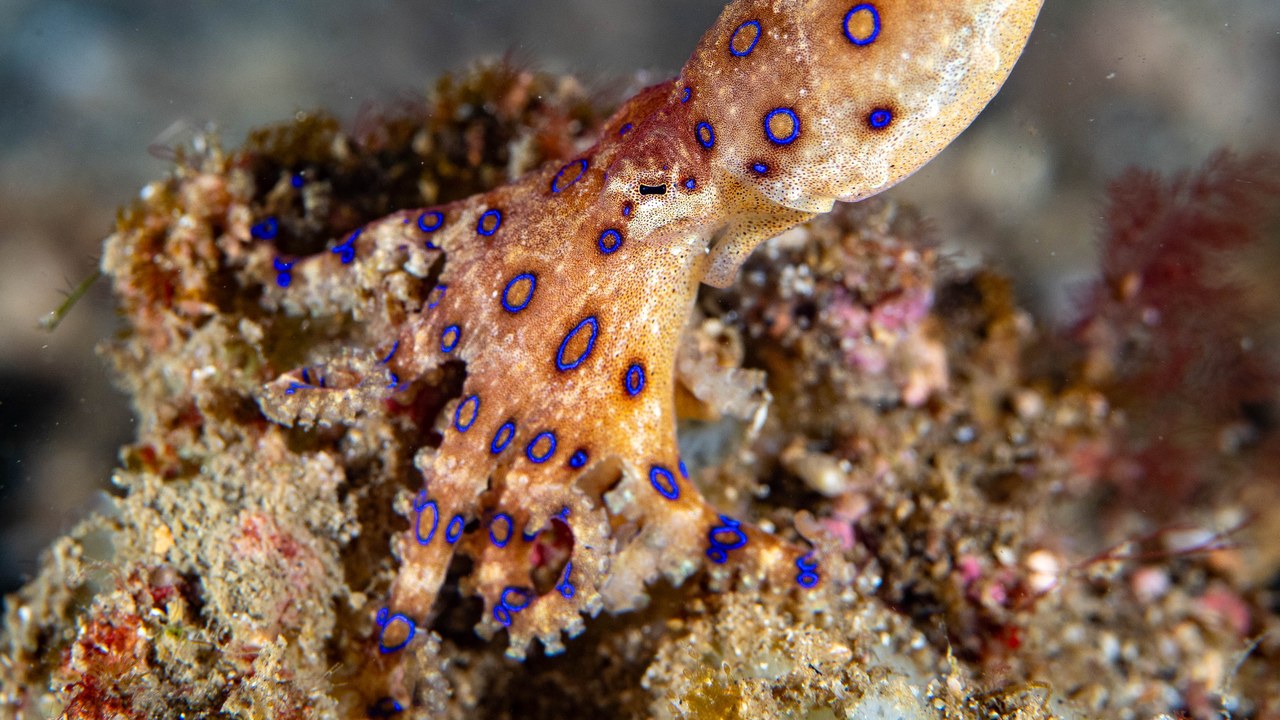
Despite measuring only a few inches across, the blue-ringed octopus carries tetrodotoxin, a neurotoxin roughly a thousand times more potent than cyanide. Its bite is often painless, but the toxin blocks nerve signals to muscles and can cause respiratory paralysis within minutes, leaving a victim unable to breathe while remaining fully conscious.
The octopus flashes its namesake blue rings as a warning when threatened, usually just before it bites, and it lives in tide pools and reefs across the Indo-Pacific where waders can accidentally provoke it. There is no antivenom, so survival depends on immediate artificial respiration until the toxin wears off.
4. Cone snail: A Shell That Fires Harpoons
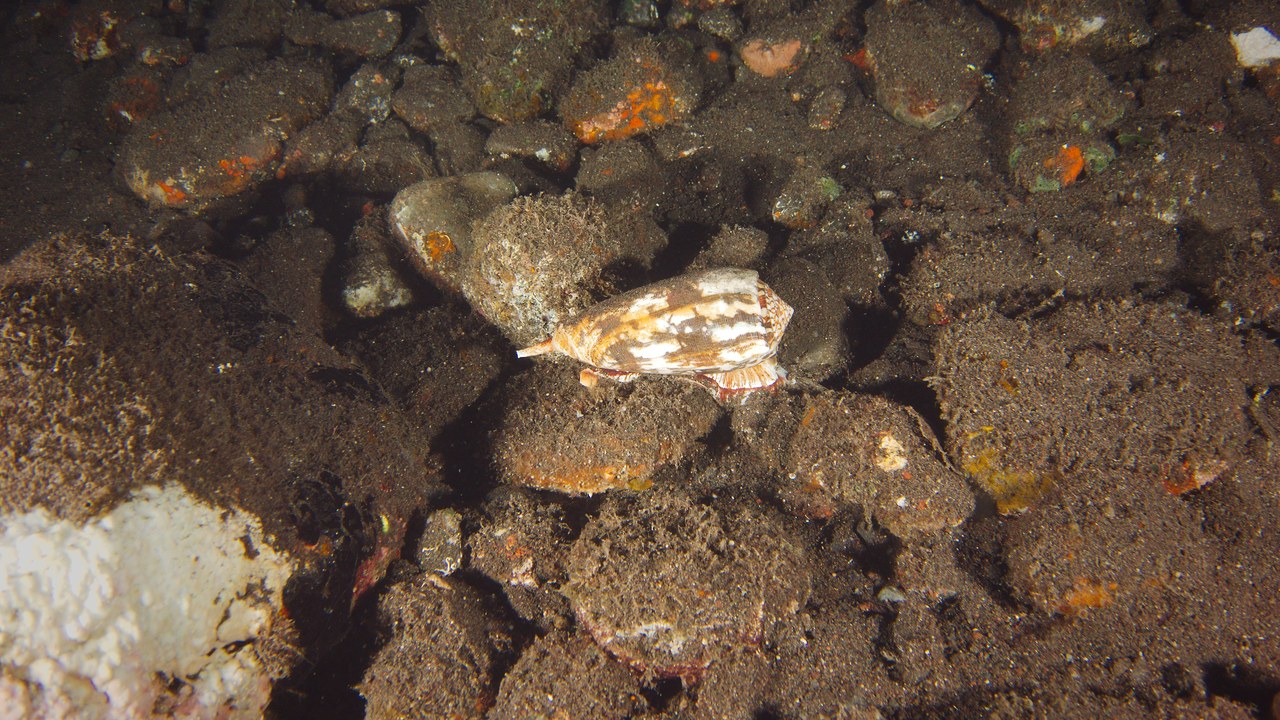
The cone snail hunts by firing a hollow harpoon tipped with a fast-acting venom cocktail of dozens of distinct toxins, some of which shut down nerve and muscle function almost instantly. Larger species that prey on fish carry venom potent enough to kill an adult human, and the sting has earned the nickname cigarette snail from the idea a victim has only enough time to smoke one before dying.
Cone snails move slowly across reefs and sandy seafloors in tropical waters, so most stings happen when a diver or shell collector picks one up. There is no antivenom, and treatment is limited to life support until the toxins clear the body.
5. Stonefish: Camouflage With a Painful Sting
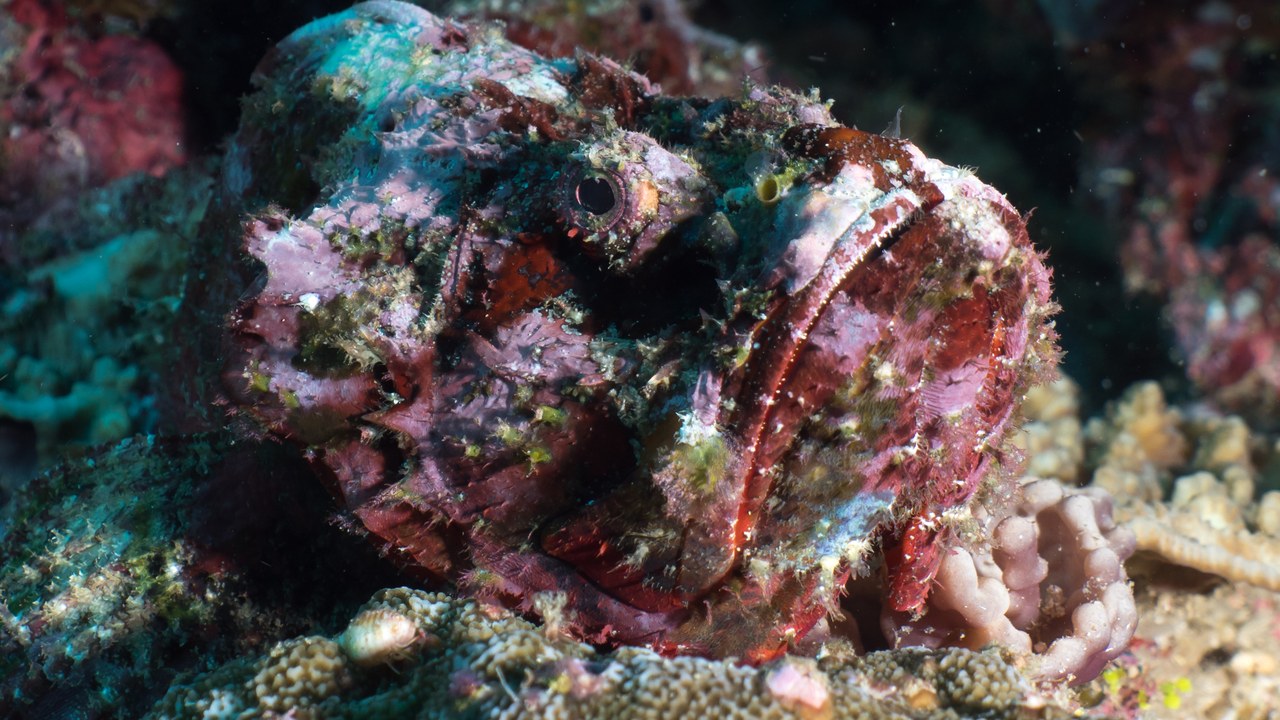
The stonefish disguises itself as a rock or coral rubble on the seafloor, and thirteen venomous dorsal spines along its back inject toxin the instant something presses down on them. The venom causes intense pain, swelling, and tissue damage, and in severe cases can affect the heart and breathing.
Most injuries happen when a swimmer or wader steps on the fish without seeing it among rocks in shallow Indo-Pacific waters. A specific antivenom exists and, combined with hot water immersion to break down the toxin, has made human deaths rare today despite the pain being described as excruciating.
6. Deathstalker scorpion: A Sting Worse Than the Others
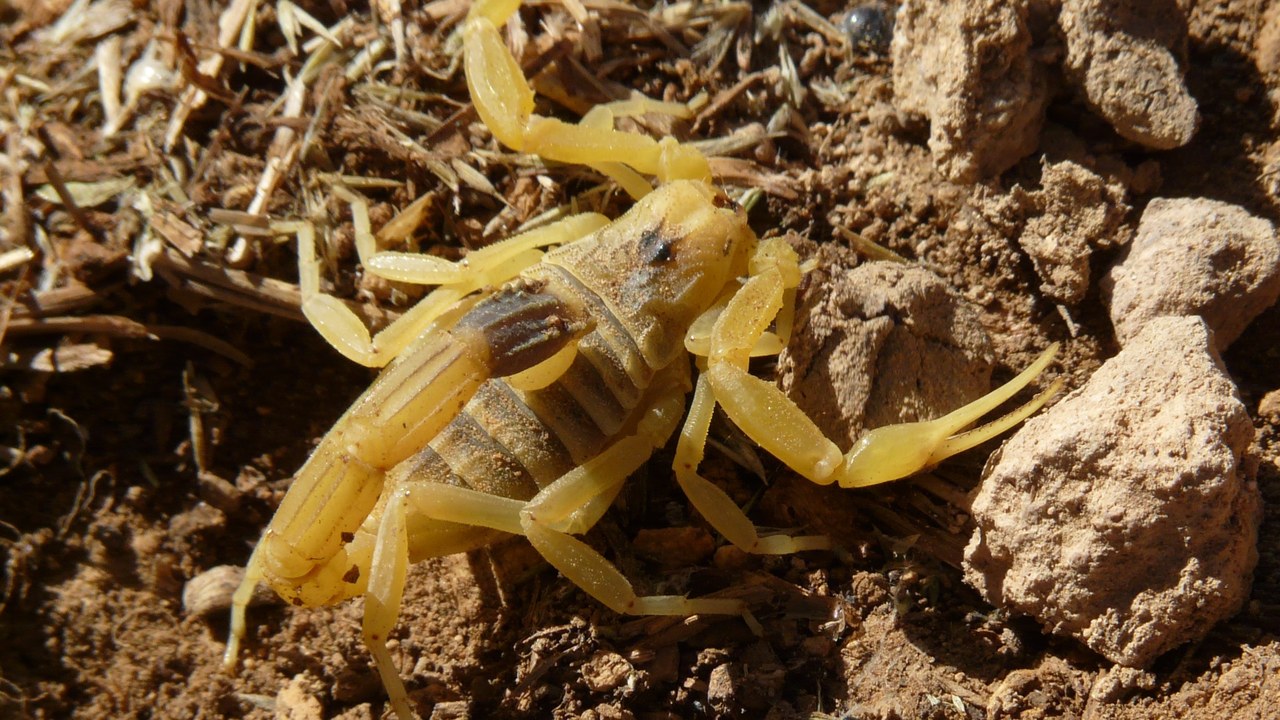
The deathstalker scorpion delivers a highly neurotoxic venom that overstimulates nerve cells, causing intense pain, fever, and muscle spasms, and in vulnerable victims, disruption of heart rhythm and breathing. Healthy adults usually survive a sting with severe pain, but the venom poses a real danger to small children and the elderly.
Found across arid regions of North Africa and the Middle East, the scorpion hides under rocks and in burrows by day and hunts at night. Its venom has also drawn medical research interest for a component that helps highlight tumor cells during surgery.
7. King cobra: The Longest Venomous Snake Alive
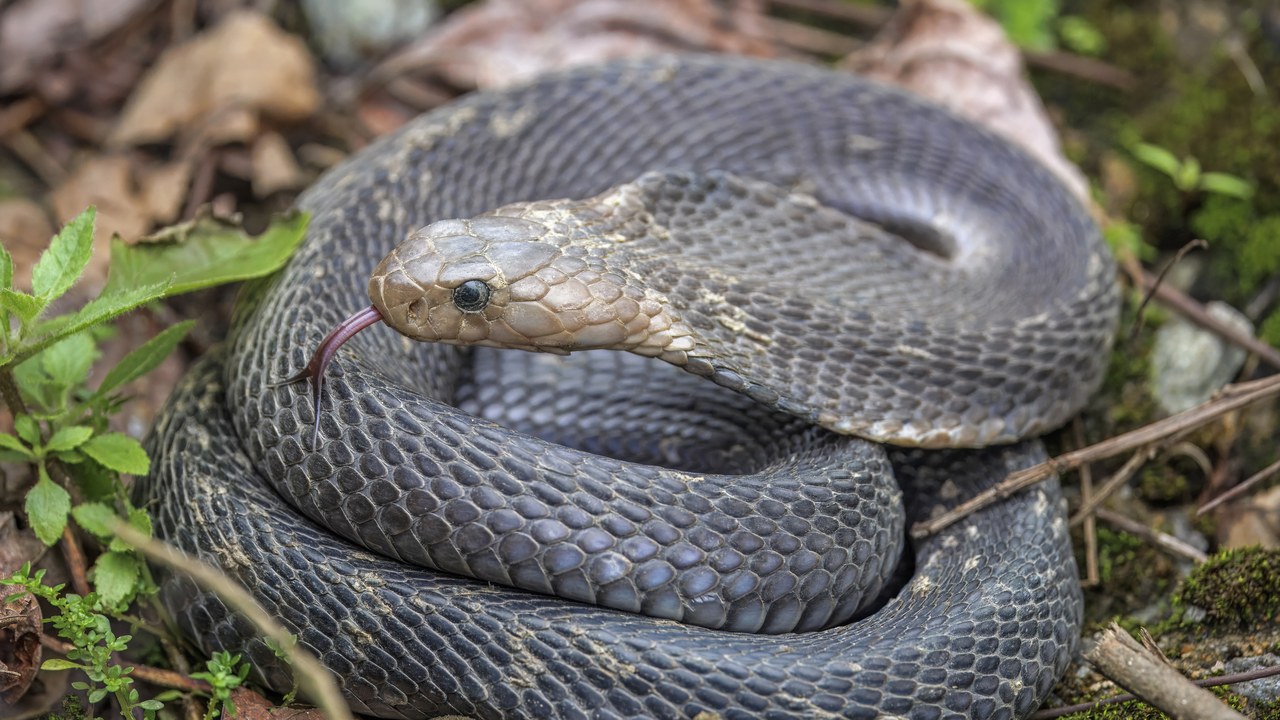
The king cobra is the longest venomous snake in the world, reaching lengths beyond 18 feet, and its bite delivers a large volume of neurotoxic venom in a single strike. The toxin blocks communication between nerves and muscles, causing muscle paralysis that can shut down breathing within thirty minutes if the bite goes untreated.
Native to forests across South and Southeast Asia, the snake preys mainly on other snakes and generally avoids humans unless cornered or defending a nest. Antivenom exists, but the sheer volume of venom in one bite means hospital treatment must begin quickly.
8. Brazilian wandering spider: One of the Most Toxic Spider Bites
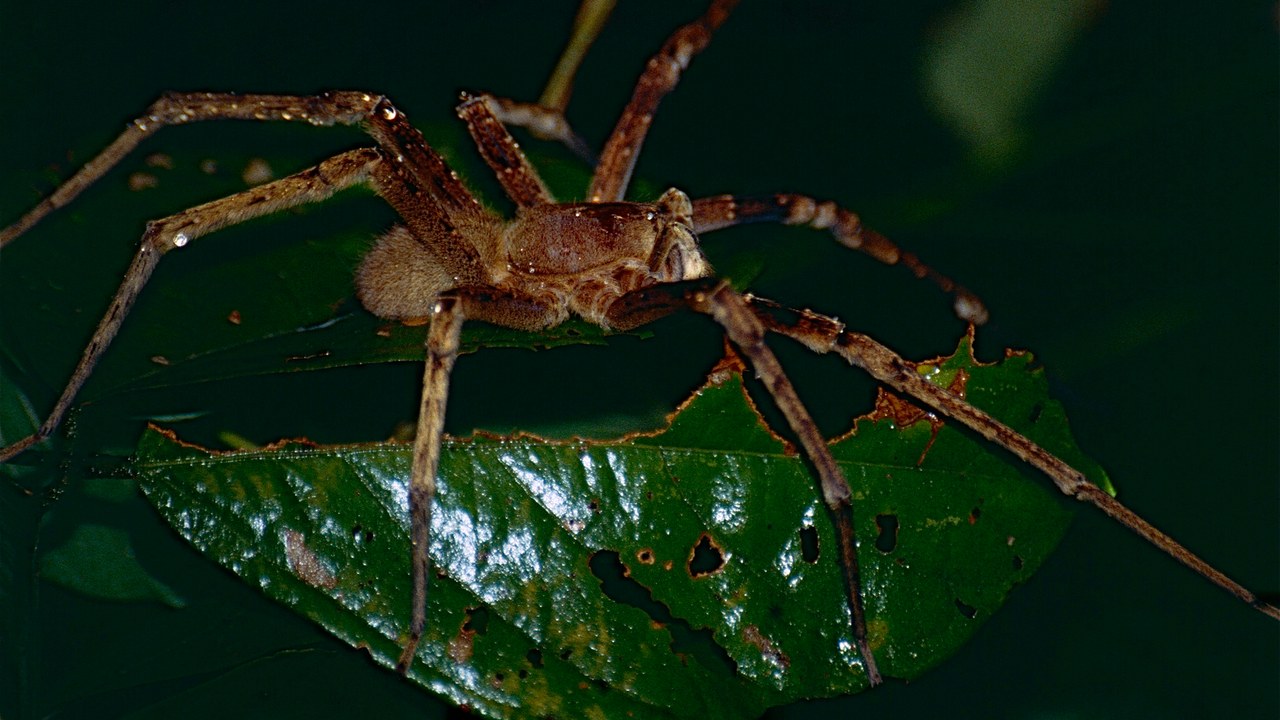
The Brazilian wandering spider produces a venom loaded with neurotoxins that can cause intense muscle contractions, excessive salivation, irregular heartbeat, and in severe cases, respiratory failure. It ranks among the most venomous spiders documented, and unlike many spiders it does not build a web, instead roaming forest floors and hiding in shoes, clothing, or produce shipments overnight.
Native to Central and South America, the spider raises its front legs and bites readily when it feels cornered, which has made accidental encounters with people common in its range. Antivenom developed in Brazil has made deaths from its bite rare in areas where treatment is available.
9. Golden poison frog: Skin Toxic Enough to Kill
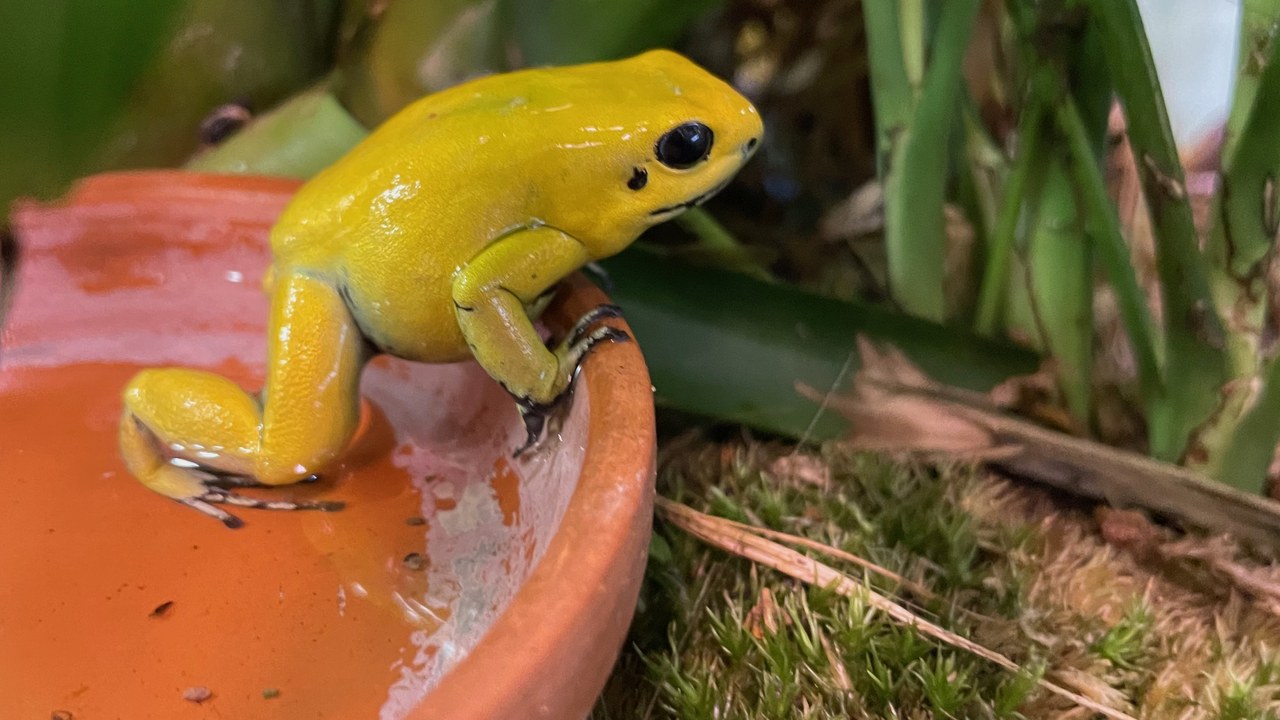
The golden poison frog secretes batrachotoxin through its skin, one of the most potent natural toxins known, in a concentration high enough to be lethal to multiple adult humans through a single touch to broken skin or a mucous membrane. The toxin locks open sodium channels in nerve and muscle cells, causing paralysis and cardiac failure.
Native to the rainforests of Colombia’s Pacific coast, the frog gets its toxin from compounds in the ants and other small invertebrates it eats in the wild, and captive-bred frogs raised on a different diet lose most of their toxicity. Indigenous communities have historically used the toxin to tip blowgun darts for hunting.
More from Morning Overview
- The NSA is again telling phone owners to switch off one location setting
- A handful of car transmissions are so tough mechanics say they almost never fail
- A handful of SUVs keep hitting 300,000 miles, and they share one engine trait
- Supplements now rank as the fifth-leading cause of death from liver disease.
