
Some engines are remembered less for their numbers than for the sound they make when the throttle drops. Enthusiasts trade video clips and stories of these cars decades after they left showrooms, often ranking them purely on exhaust note and induction snarl. From screaming naturally aspirated V10s to menacing turbocharged sixes, these 9 cars are the ones gearheads keep coming back to for the noise alone.
1. Lexus LFA: A 4.8-liter V10 tuned by Yamaha that shrieks to 9,000 rpm
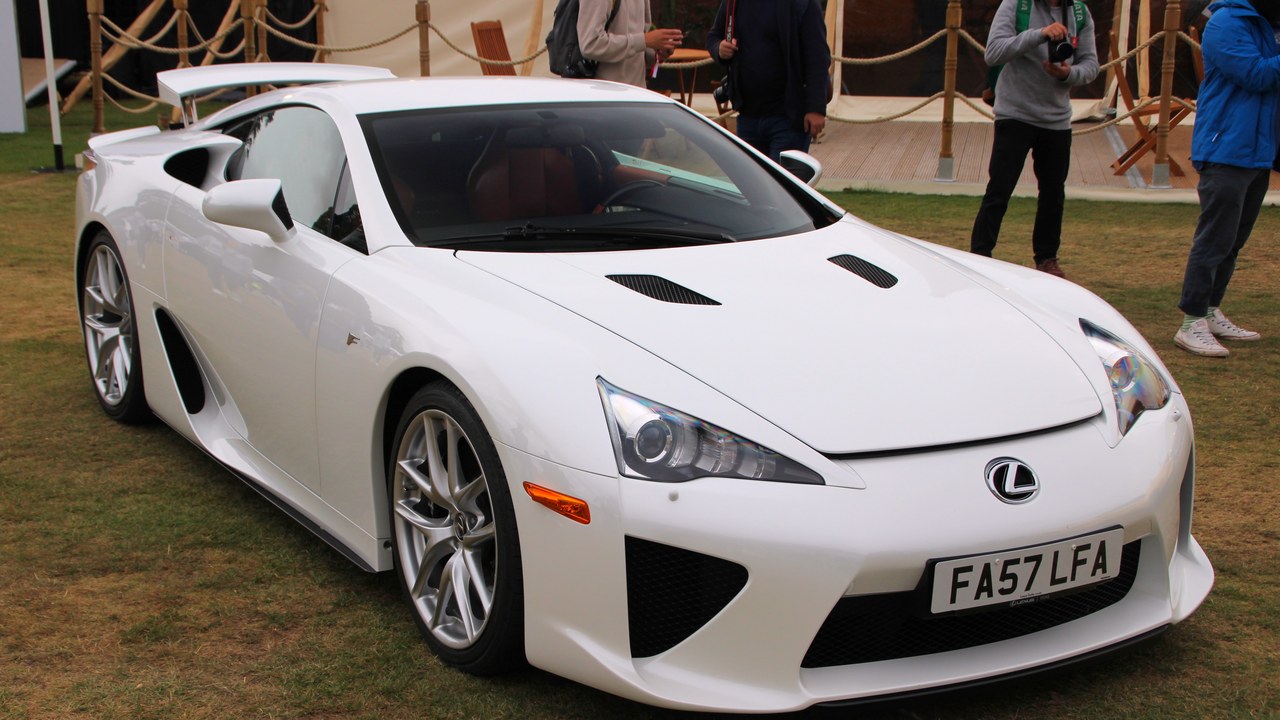
Toyota’s luxury division built the LFA as a low-volume showcase, and the highlight wasn’t outright speed — it was the sound. A 4.8-liter V10, developed with help from Yamaha’s acoustic engineers, revved with a mechanical urgency unlike anything else in a production car, climbing toward 9,000 rpm with a note that shifted in pitch as the digital tachometer swept around its dial.
Owners and reviewers alike have compared the exhaust note to a warplane or a shrieking chorus of trumpets, and Toyota spent as much effort tuning the intake and exhaust resonance as it did on horsepower. More background on the car’s development sits on its Wikipedia page, which details just how unusual the LFA’s approach to sound really was.
2. Dodge Viper: An 8.4-liter V10 with a thunderous, unfiltered roar
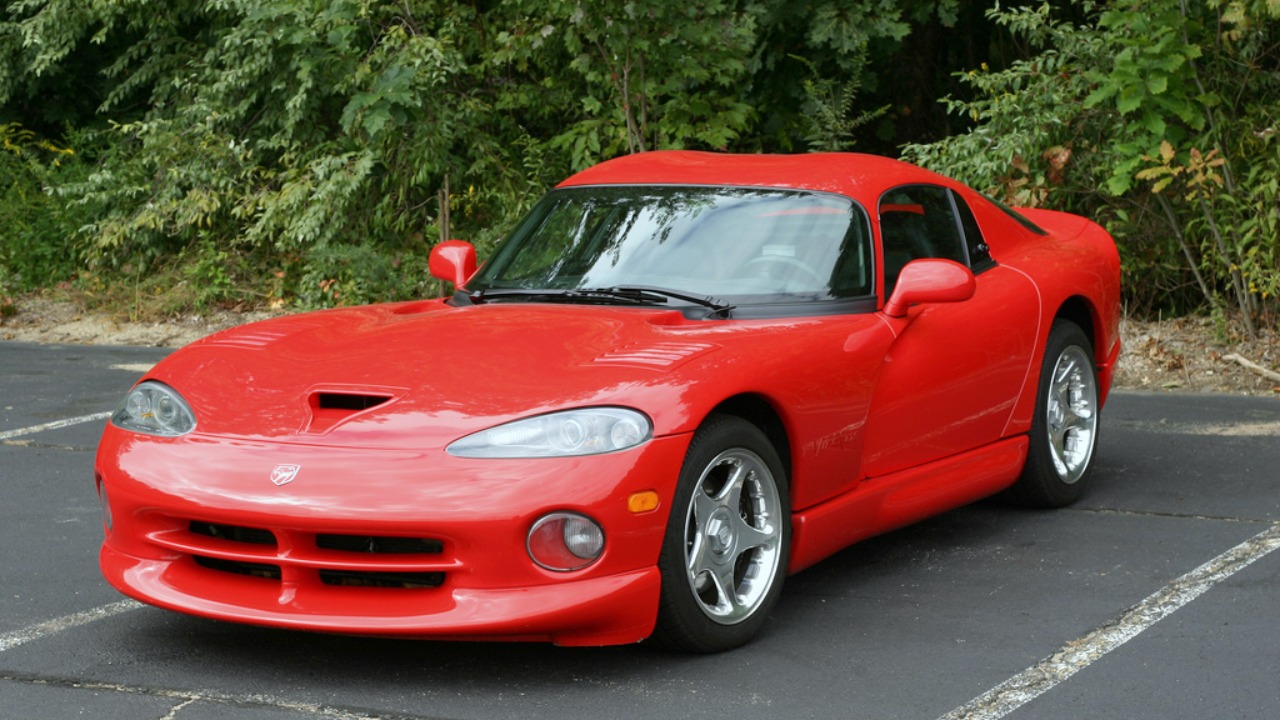
The Viper never chased refinement the way rivals did, and its 8.4-liter V10 made that clear the instant it fired up. Dodge built the engine with a truck-derived block reworked for a sports car, and the resulting exhaust note was less a hum than a low, chest-thumping rumble that announced the car long before it came into view.
Enthusiasts often describe the Viper’s idle as menacing on its own, and at wide-open throttle the ten-cylinder growl turns into something closer to a snarl. Details on the car’s specifications and history are laid out on Car and Driver’s Viper page, which covers the generations built around that same booming V10.
3. Porsche 911 GT3: A high-revving flat-six that howls past 9,000 rpm
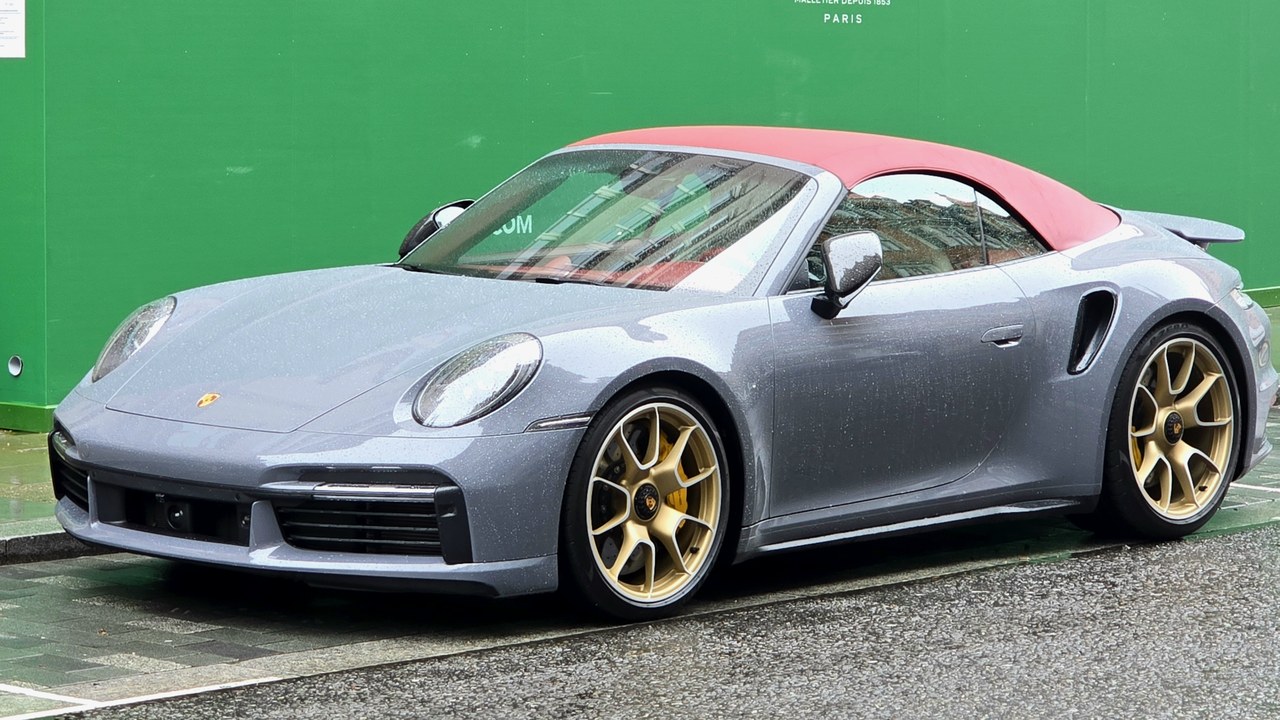
The GT3 trades forced induction for a naturally aspirated flat-six that revs freely to nearly 9,000 rpm, a rarity in an era of turbocharged everything. Porsche tuned the engine’s intake and exhaust specifically to preserve that high-pitched wail, giving the car a soundtrack that builds intensity as the tachometer needle keeps climbing toward redline.
Track-day regulars often rank the GT3 among the best-sounding modern cars precisely because it never leans on turbo whistle or synthetic amplification for drama. The full model lineup and specs sit on Car and Driver’s 911 page, covering how the GT3’s engine differs from other versions of the range.
4. Ferrari 812 Superfast: A naturally aspirated V12 that screams past 8,000 rpm
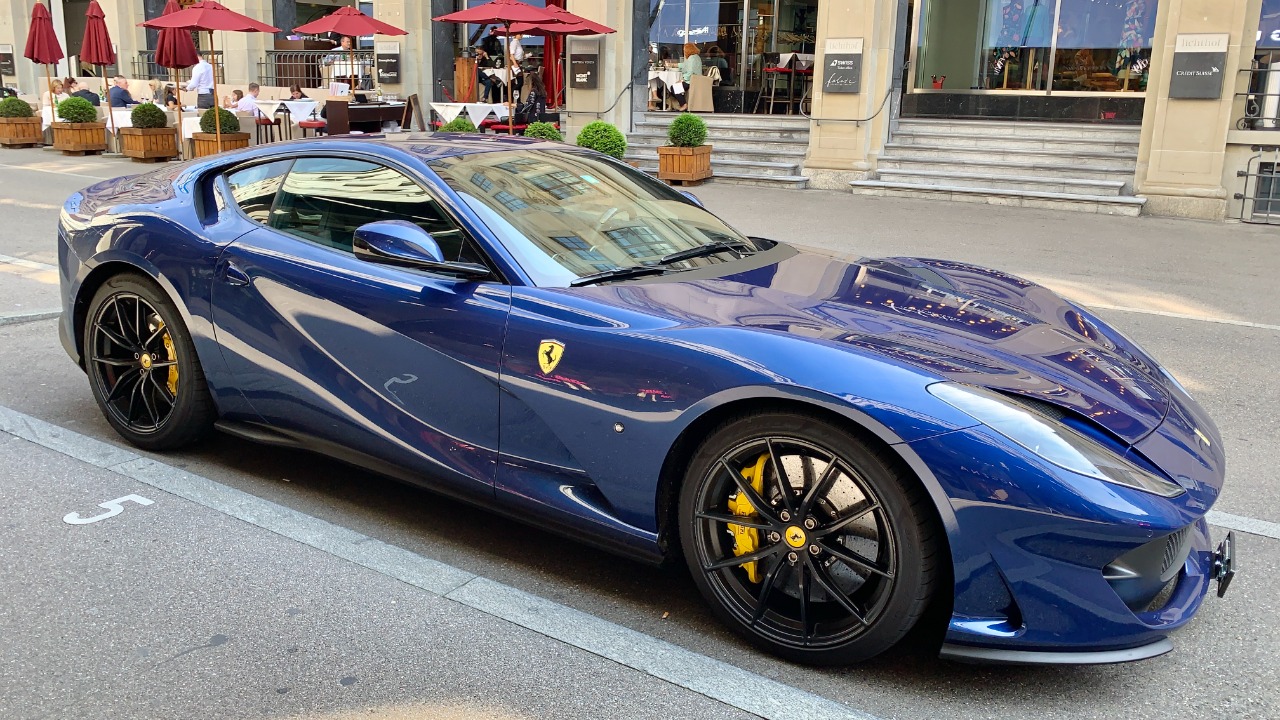
Ferrari kept the 812 Superfast naturally aspirated at a time when most V12 flagships had already gone hybrid or turbocharged, and the payoff is an engine note that climbs cleanly past 8,000 rpm without any electronic assistance muffling the drama. The V12 sits up front, close to the cabin, so its wail arrives with almost no filtering.
Reviewers frequently cite the 812 as one of the last naturally aspirated front-engine V12 Ferraris, a detail preserved in its Wikipedia entry. That combination of displacement, rpm ceiling, and lack of turbo lag is exactly what gives the car its distinct, operatic character at full throttle.
5. Jaguar F-Type R: A supercharged V8 that crackles and barks on lift-off
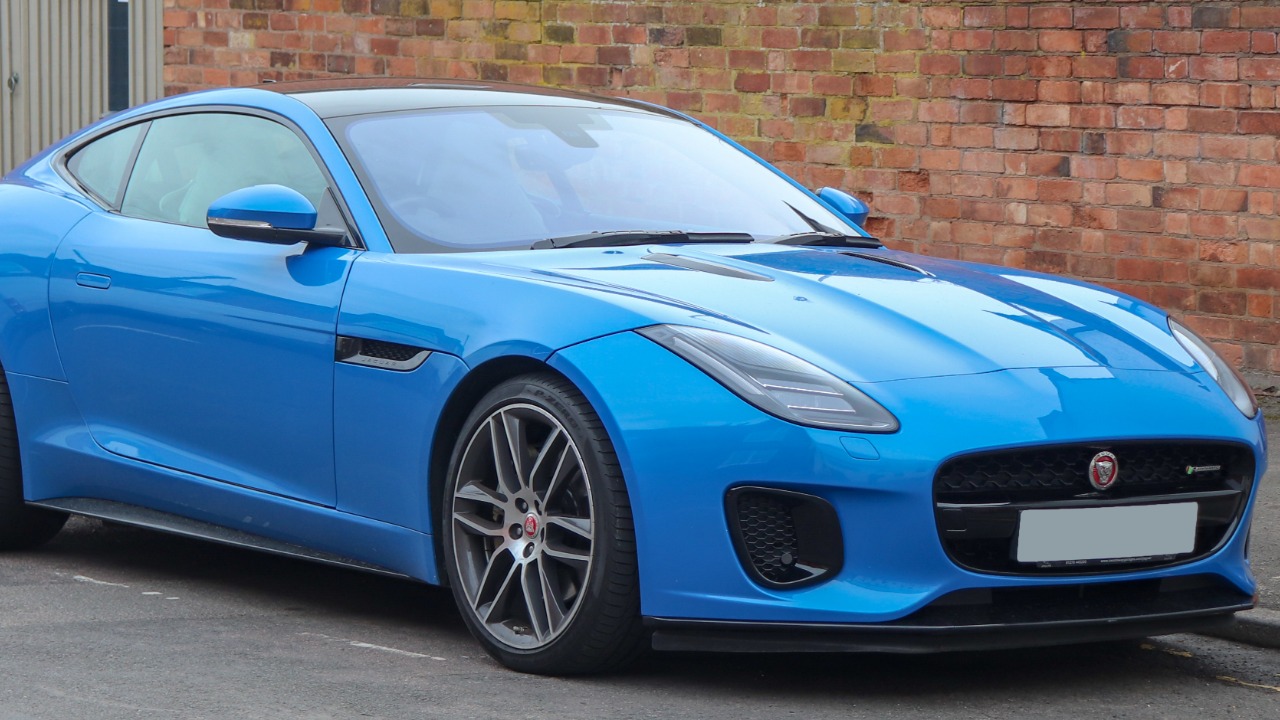
Jaguar tuned the F-Type R’s supercharged V8 to crackle and pop on every throttle lift, turning routine deceleration into part of the show. The supercharger’s whine layers on top of a deep V8 burble, giving the car a sound that feels theatrical without needing a track or high rpm to deliver it.
That combination made the F-Type a fixture on enthusiast sound-comparison videos long after its debut, and specification details for the range are listed on Car and Driver’s F-Type page. Few production cars make idling in traffic sound like part of the performance.
6. Audi R8: A naturally aspirated V10 shared with the Lamborghini Huracan
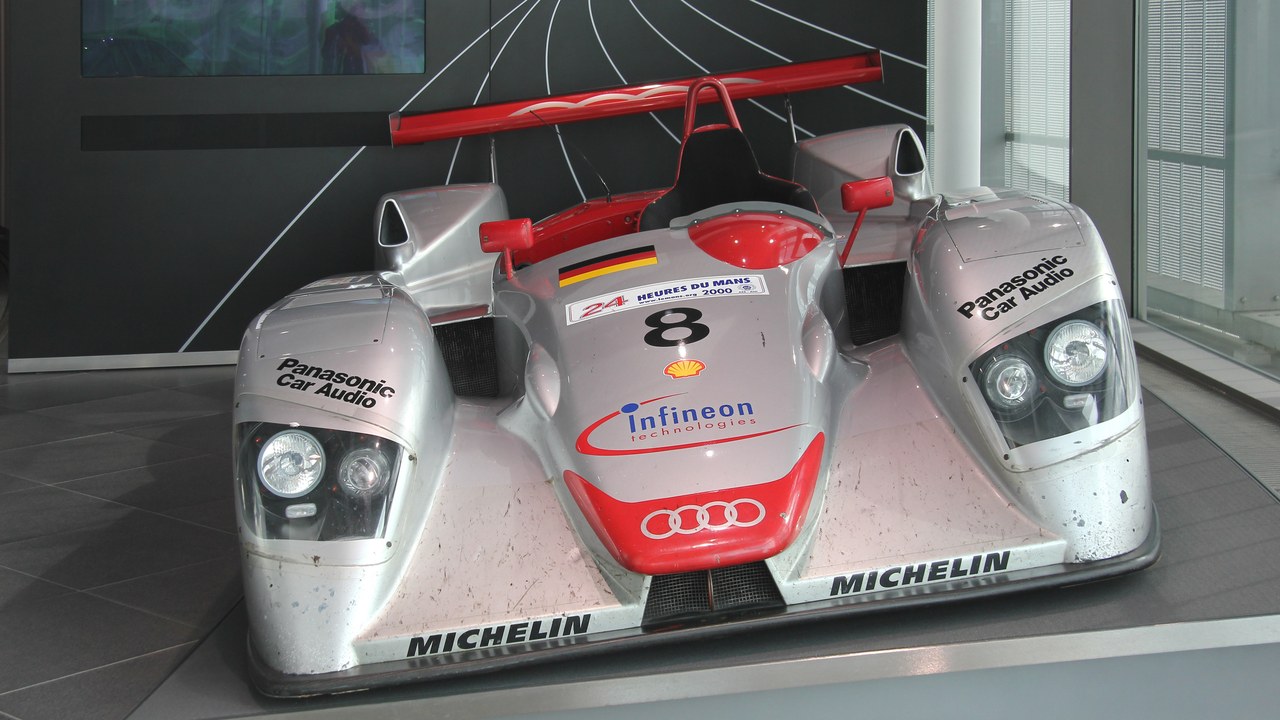
The R8 borrows its naturally aspirated V10 from the same family as the Lamborghini Huracan, and the shared engine gives the Audi a snarling, high-revving character usually reserved for cars costing far more. Positioned just behind the cabin, the V10 sends its sound directly into the interior with little insulation to dull it.
Audi has kept the naturally aspirated V10 in production even as most rivals switched to turbocharging, a decision the brand’s own R8 page highlights as central to the car’s identity. That commitment is a big reason the R8 still draws comparisons to cars well above its price.
7. Chevrolet Corvette Z06: A flat-plane V8 that spins to a screaming 8,600 rpm
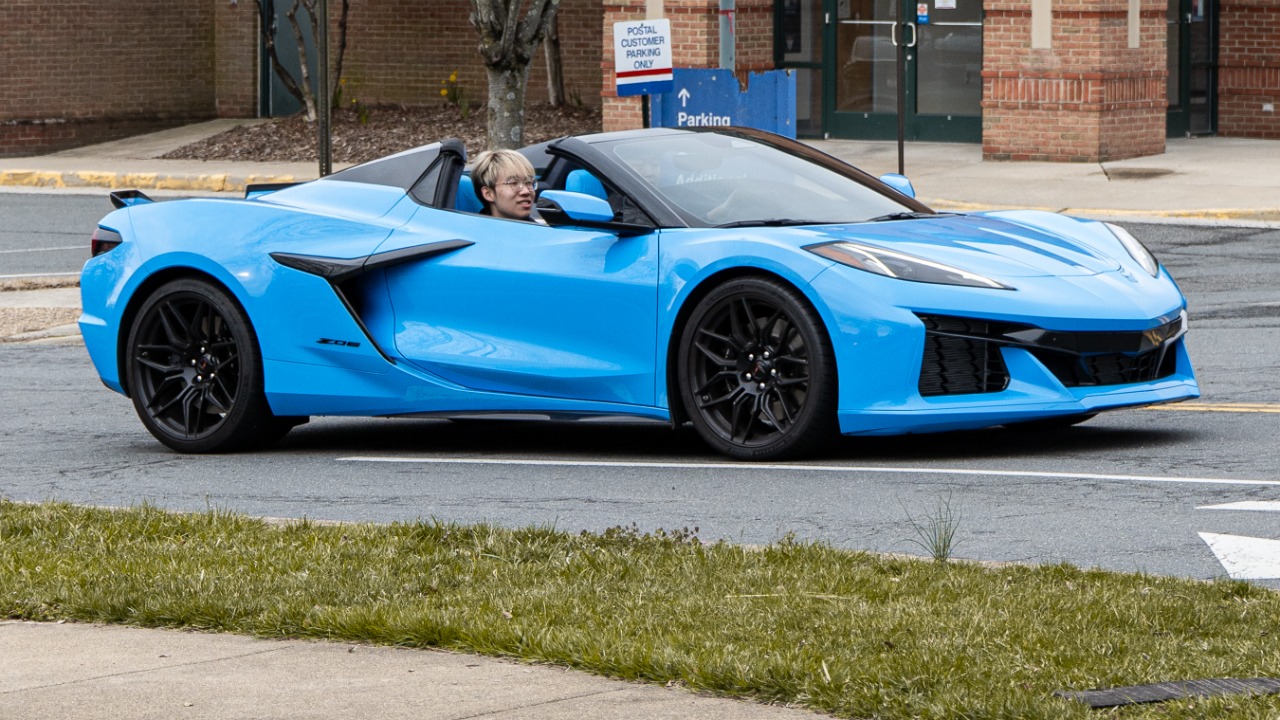
The Z06 broke from Corvette tradition with a flat-plane-crank V8 borrowed from racing practice, allowing it to spin to a screaming 8,600 rpm instead of the low-rev rumble typical of American V8s. The result sounds closer to an exotic Italian engine than anything previously built by Chevrolet.
That high-revving character surprised even longtime Corvette fans when the car launched, and full specifications sit on Car and Driver’s Corvette Z06 page. Few naturally aspirated production V8s anywhere rev as high or sound nearly as aggressive doing it.
8. BMW M3 (E46): A silky inline-six that defined a generation of M cars
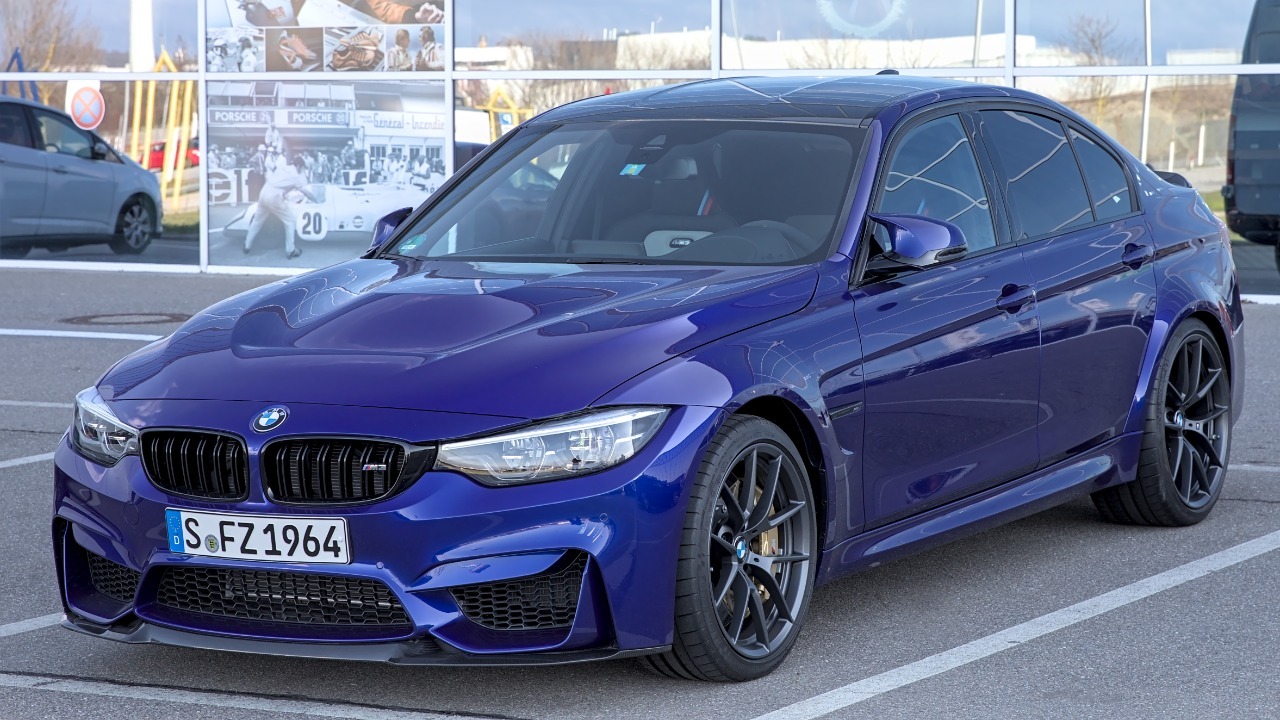
The E46-generation M3 carried a naturally aspirated inline-six known for revving with a smoothness that many later turbocharged M cars never matched. Its high-revving character and mechanical precision earned it a reputation among enthusiasts as one of the defining engines of its era, admired as much for how it sounded as for how it performed.
Background on the model’s production run and engine specifications is available on its Wikipedia page, which traces how that six-cylinder set the tone for the M3 nameplate. Decades later, used examples still command a premium largely because of that engine’s reputation.
9. Nissan GT-R: A twin-turbo V6 with a distinctive, menacing growl
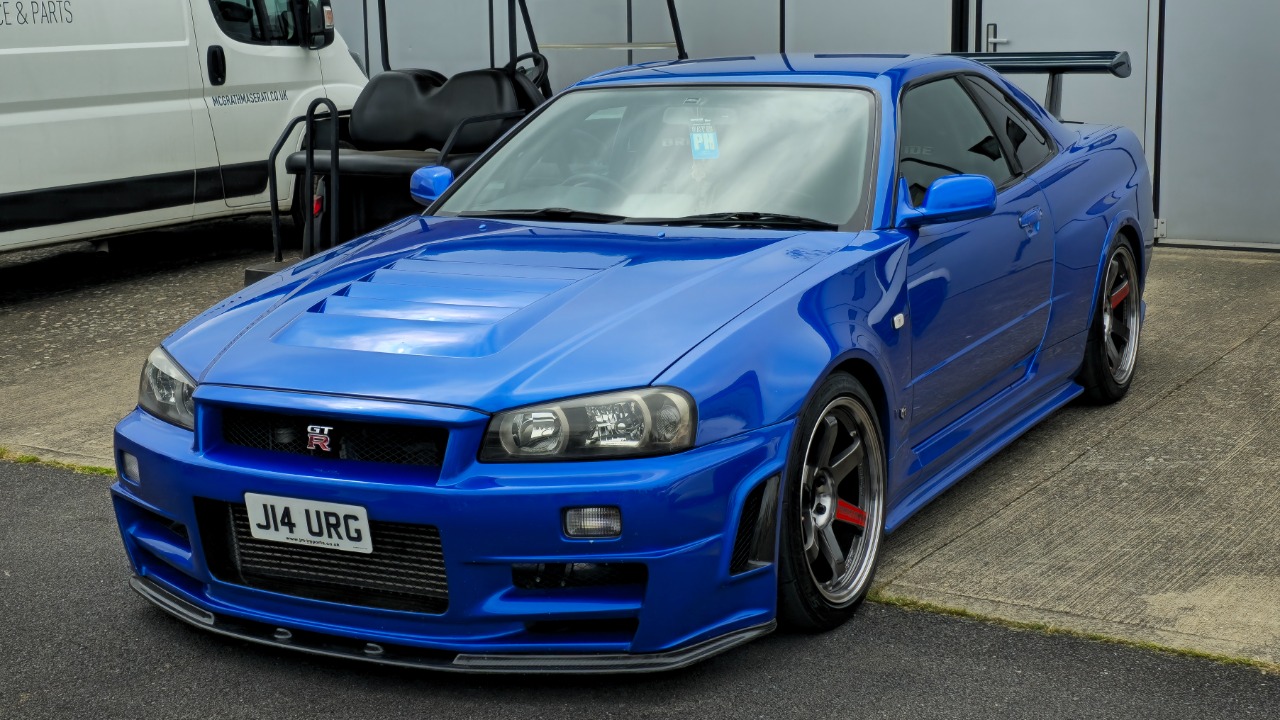
Unlike most cars on this list, the GT-R earns its reputation with a turbocharged engine rather than a naturally aspirated one, proof that forced induction can still sound menacing when engineered right. Its twin-turbo V6 produces a deep, mechanical growl accented by the whine of its turbochargers spooling under load.
That distinctive soundtrack, along with the car’s transmission whine, has become part of the GT-R’s identity among fans, details of which appear on Car and Driver’s GT-R page. Few turbocharged cars manage to sound as aggressive at idle as the GT-R does at full throttle.
More from Morning Overview
- Long-term use of common heartburn pills is tied to kidney and dementia risk
- A California supervolcano has bulged upward about two and a half feet since 1978
- The FTC is warning about a scam quietly draining thousands from victims
- The NSA is again telling phone owners to switch off one location setting
