
The open ocean supports body sizes that no land habitat can carry, because water holds up weight that legs would have to. That single physical advantage explains the whales, sharks, octopuses and jellyfish that dwarf every terrestrial animal alive. Here are eight ocean giants whose measured size still sets the upper limit for animal life.
1. Blue whale: The Upper Limit Of Animal Size
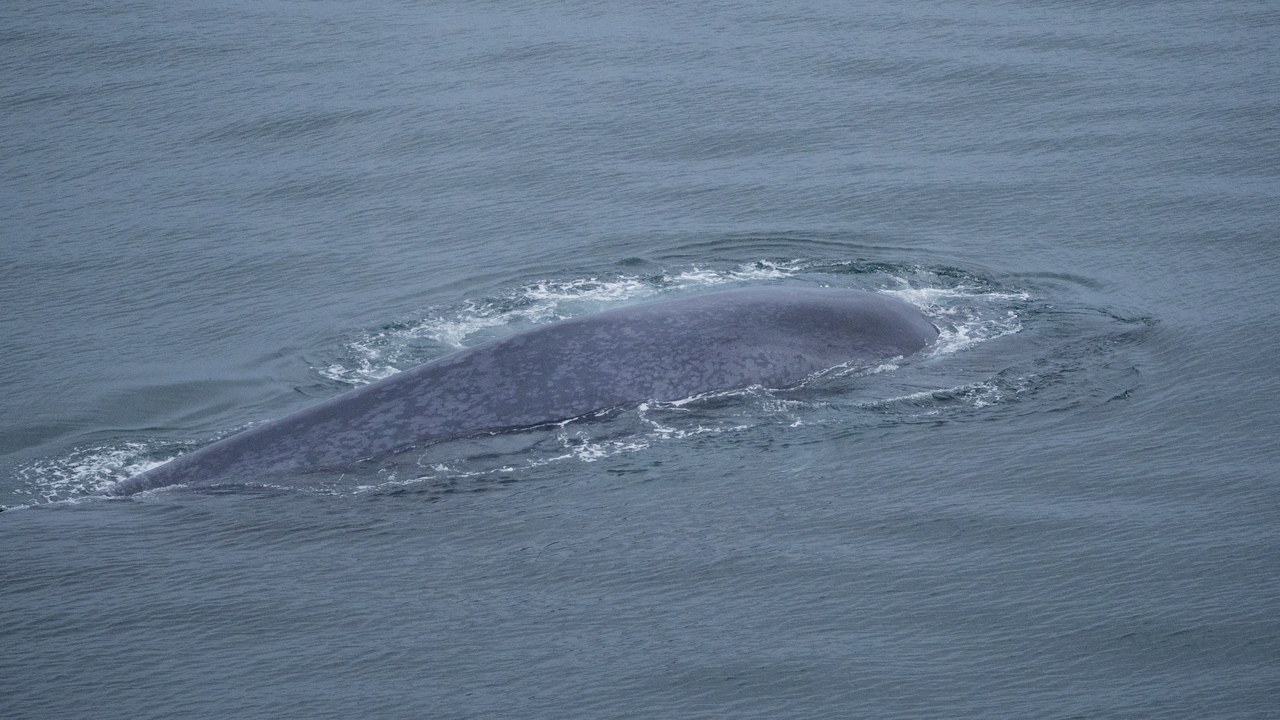
Nothing in the fossil record outweighs a mature blue whale, so the largest animal alive is also the largest that has ever existed. Adults reach roughly 30 meters, near 98 feet, and heavy individuals pass 100 tons, with a tongue that outweighs a small car. The whole structure runs on krill, strained by the ton through baleen plates during a short summer feeding season.
Industrial whaling cut the population to a small fraction of its original size before protection arrived, and recovery is slow because a female raises a single calf at intervals of two or three years. Sightings stay scattered and seasonal, which is why an animal of this scale remains something most people only ever see in photographs.
2. Fin whale: Built Like A Racing Hull
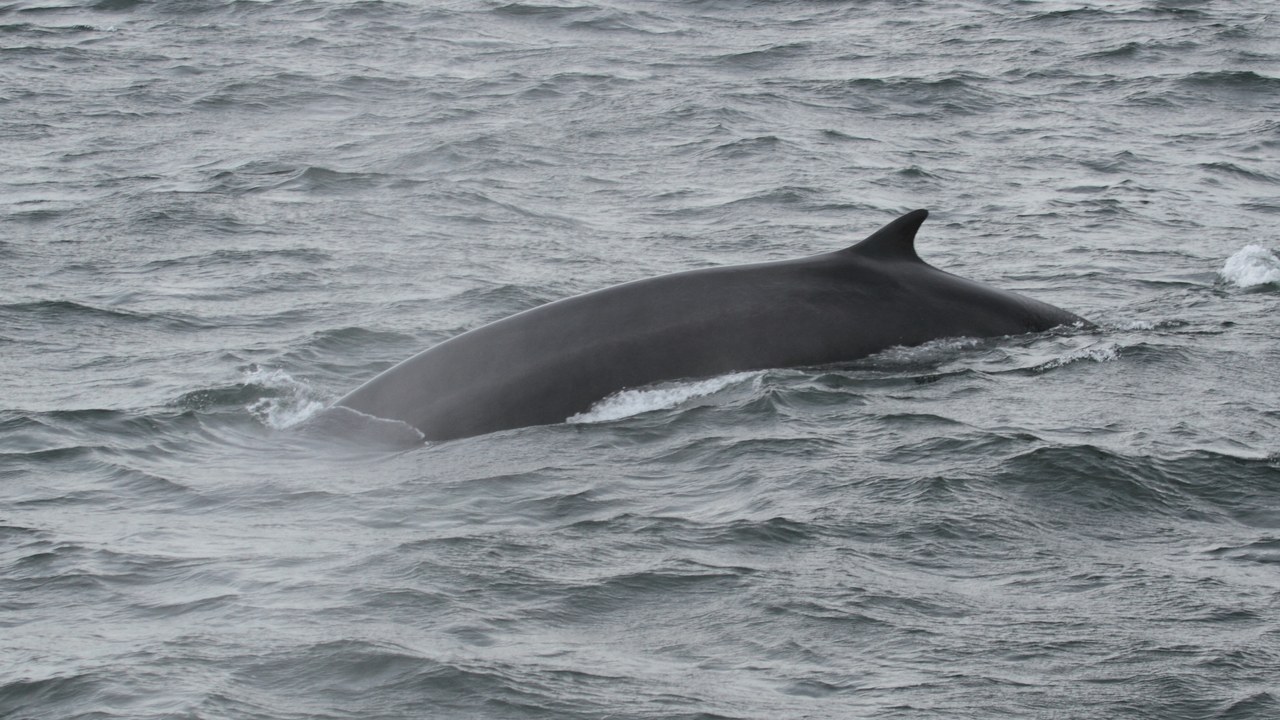
Second only to its larger relative in length, the fin whale is the second-longest whale in the sea, with adults stretching past 20 meters, roughly 70 feet, and heavy individuals running into the seventies of tons. The body is narrow and streamlined rather than bulky, and the species swims fast enough that early whalers could not catch it until steam-powered boats and explosive harpoons arrived.
Its markings are famously lopsided: the right side of the lower jaw is pale while the left stays dark, an asymmetry tied to the way the whale rolls as it lunges through schools of krill and small fish. Fin whales turn up in every major ocean, which makes them one of the more widely encountered great whales.
3. Sperm whale: The Deep Diver With The Biggest Brain
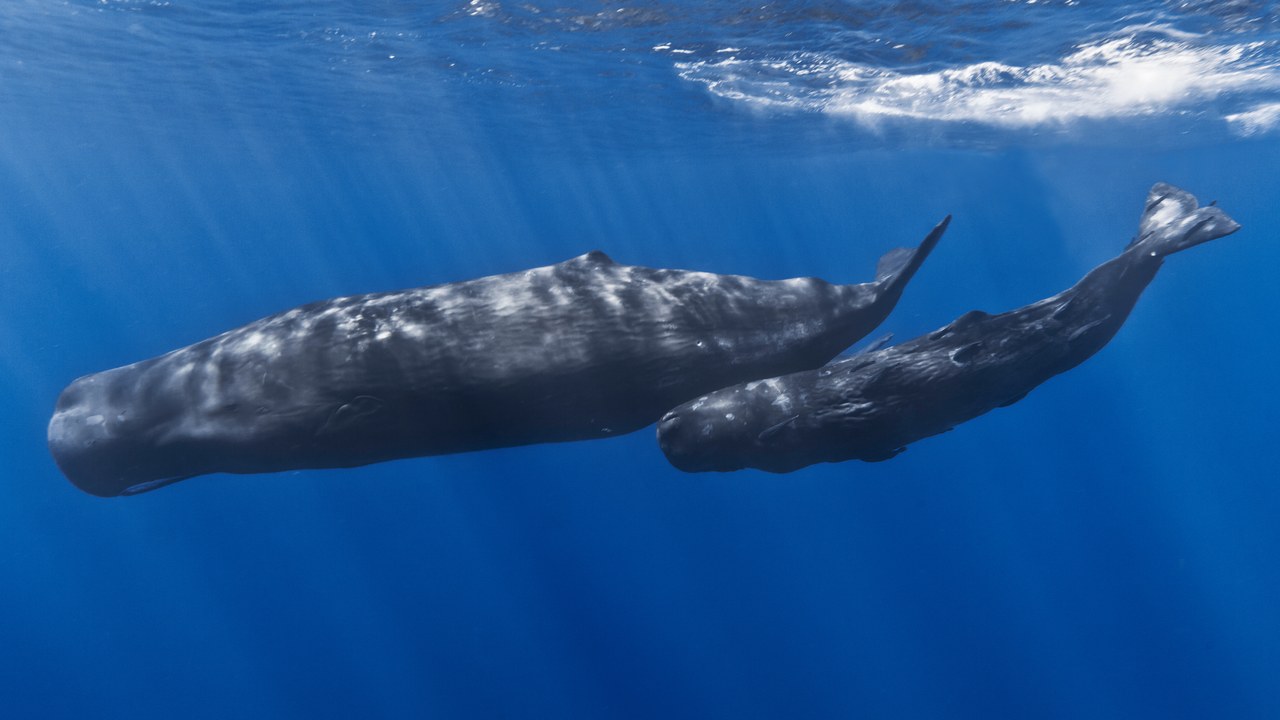
As the largest toothed predator on Earth, the sperm whale hunts rather than filters, and mature males can exceed 15 meters, close to 50 feet. Its blunt head holds the spermaceti organ, a wax-filled structure bound up with the animal’s powerful echolocation clicks, and its brain is the heaviest of any animal known.
Foraging dives routinely pass several hundred meters and can last more than an hour, carrying the whale into dark water where deep-sea squid live. Sucker scars across the heads of older males are the visible record of those encounters, and squid beaks recovered from whale stomachs remain a main source of information about species rarely seen alive.
4. Whale shark: A Filter Feeder Wearing A Shark’s Body
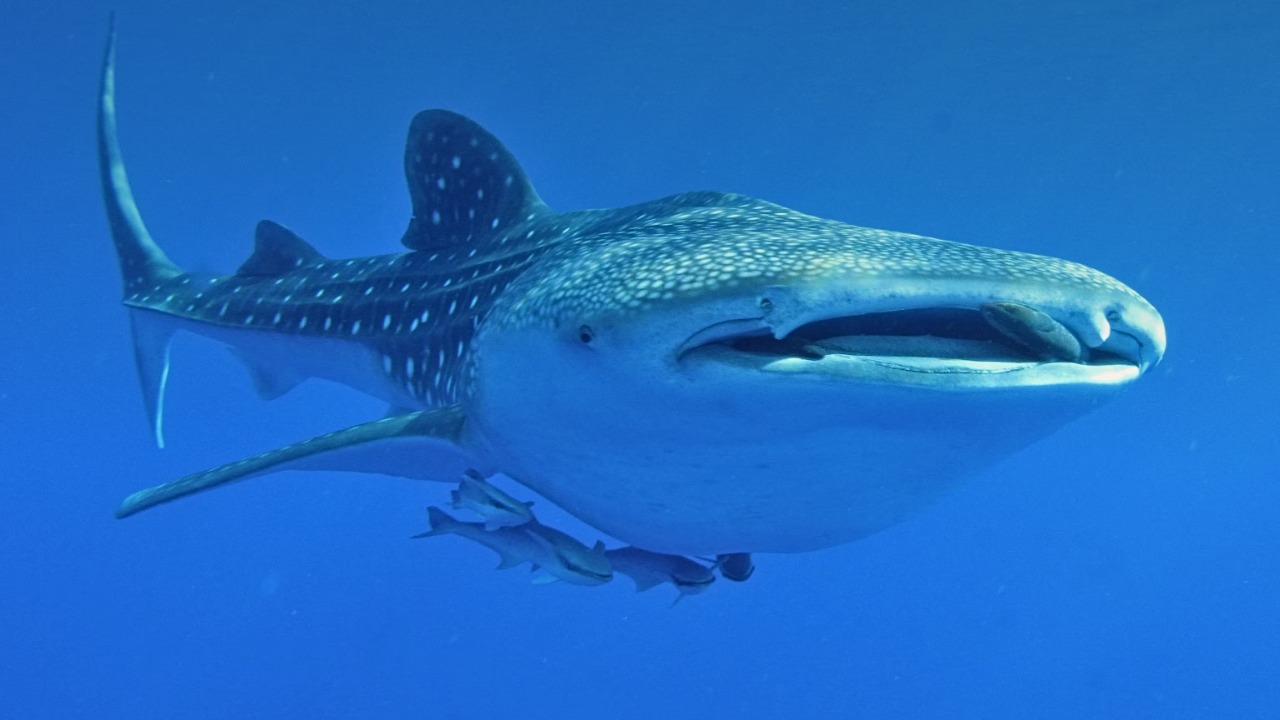
The whale shark is the biggest fish alive, with individuals confirmed beyond 12 meters, about 40 feet, yet it feeds on plankton, small fish and spawn drawn in through an enormous mouth and strained by fine gill filters. Its teeth are tiny and play no real part in feeding.
Each animal carries a pattern of pale spots and stripes that works like a fingerprint, letting researchers recognize returning individuals at seasonal gathering sites year after year. The species is slow-moving and harmless to swimmers, which has turned it into a tourism draw and, at the same time, left it exposed to boat strikes and fishing pressure.
5. Giant Pacific octopus: Fourteen Feet Of Arm Span
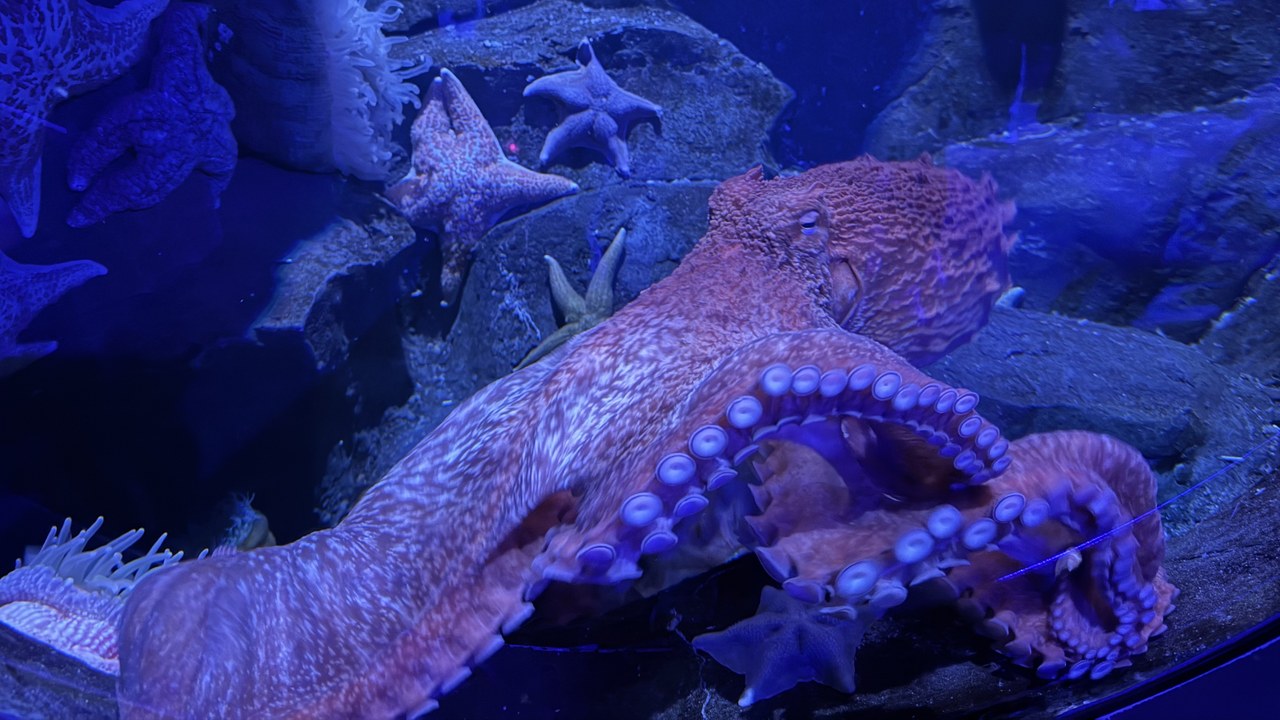
Among cephalopods that stay close to the seafloor, this animal is the largest octopus species on record, with large individuals spanning several meters across the arms and weighing tens of kilograms. It ranges through the cold North Pacific, shifting color and skin texture to match rock and kelp, and it is strong enough to open shellfish and prise apart crab armor.
That size comes with a short life. Most individuals last only a few years, and a female stops feeding once she lays her eggs, guarding them until they hatch and dying soon after. The pace explains why an animal this large is a familiar aquarium resident yet almost never an old one.
6. Lion’s mane jellyfish: Tentacles Longer Than A Whale
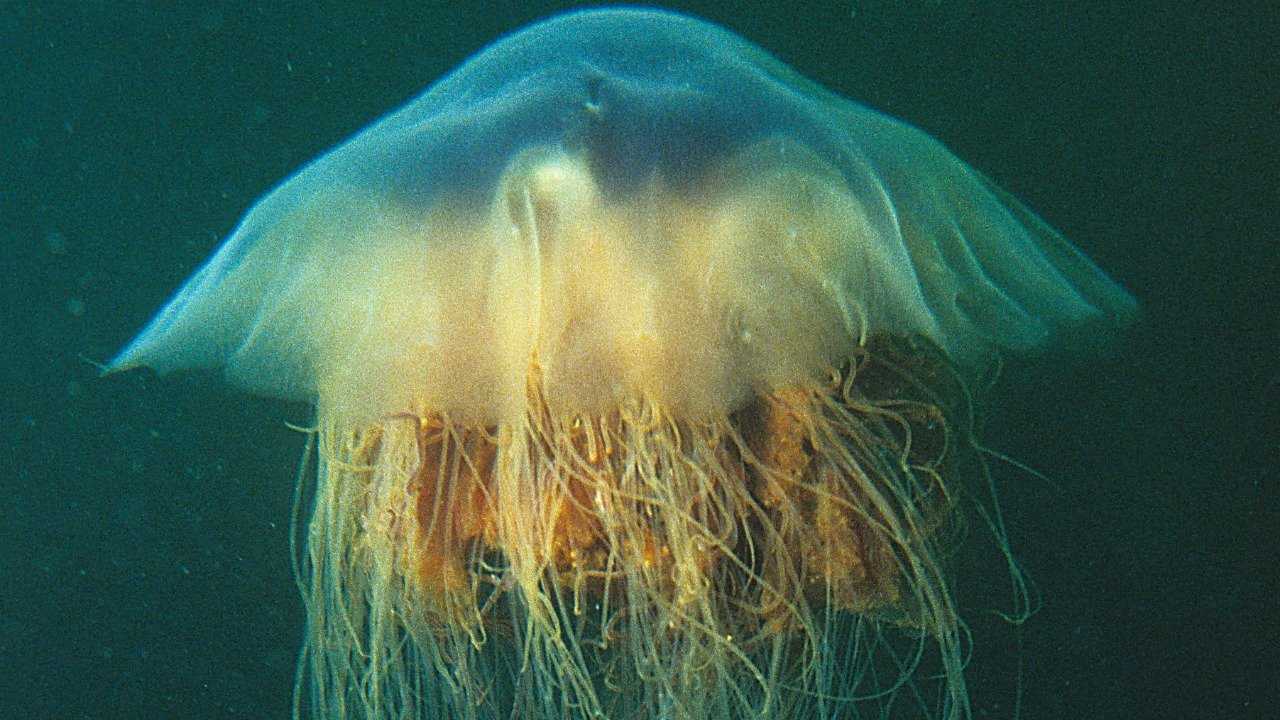
Length and mass are not the same thing, and this cold-water drifter makes the point with tentacles that can stretch longer than a blue whale, trailing in fine clusters behind a bell that can pass two meters across. The bulk is water and thin tissue rather than muscle, so the animal weighs a tiny fraction of the whales on this list.
Those tentacles carry stinging cells that catch small fish, plankton and other jellyfish, and they keep working after the animal washes ashore or breaks apart. Swimmers in the cold northern waters where the species is common are usually stung by drifting fragments they never saw, not by an intact jellyfish.
7. Ocean sunfish: A Head That Swims Without A Tail
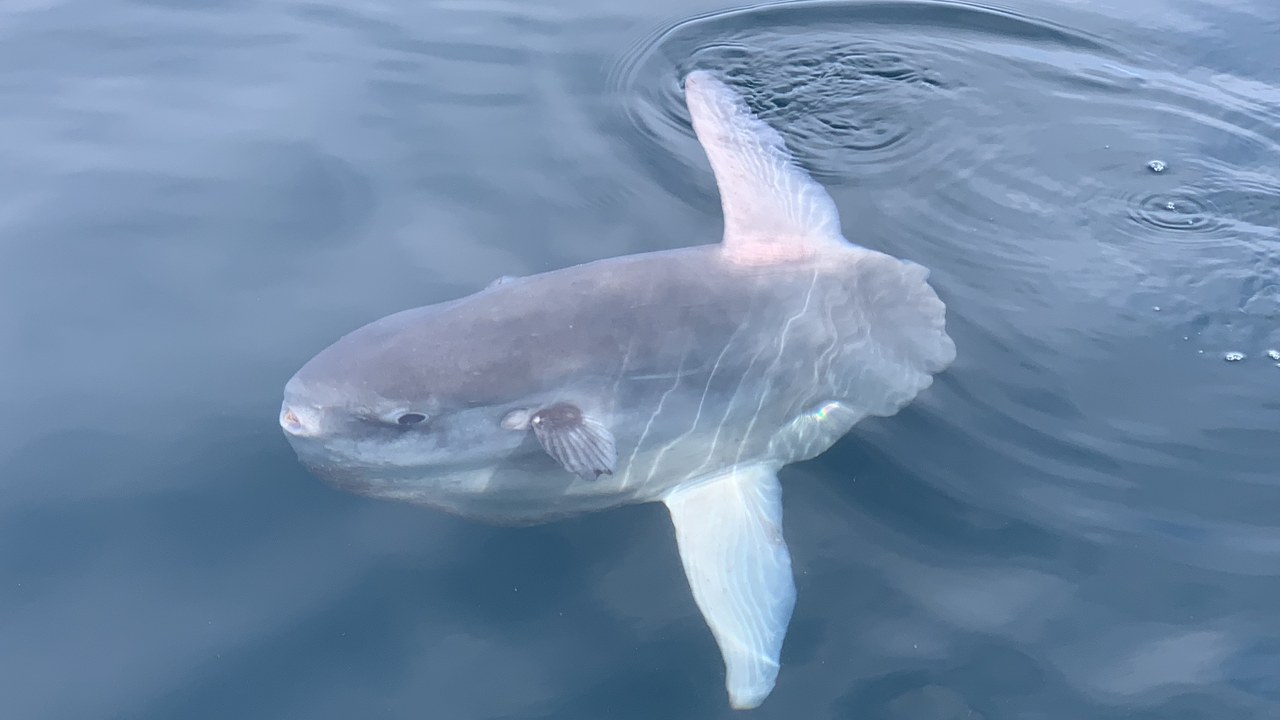
Adults run past a ton and the biggest go well beyond it, which puts the ocean sunfish among the heaviest bony fishes ever weighed. All of that mass rides on a flattened disc of a body that stops abruptly instead of tapering into a tail, giving the fish a silhouette closer to a swimming head than to a normal fish.
In place of a tail it steers with a stiff rudder-like clavus and drives itself with tall dorsal and anal fins, a shape built for hanging in open water rather than sprinting. It feeds heavily on gelatinous prey and is often seen lying on its side at the surface, a habit long read as warming up after deep, cold dives.
8. Basking shark: Second Only To The Whale Shark
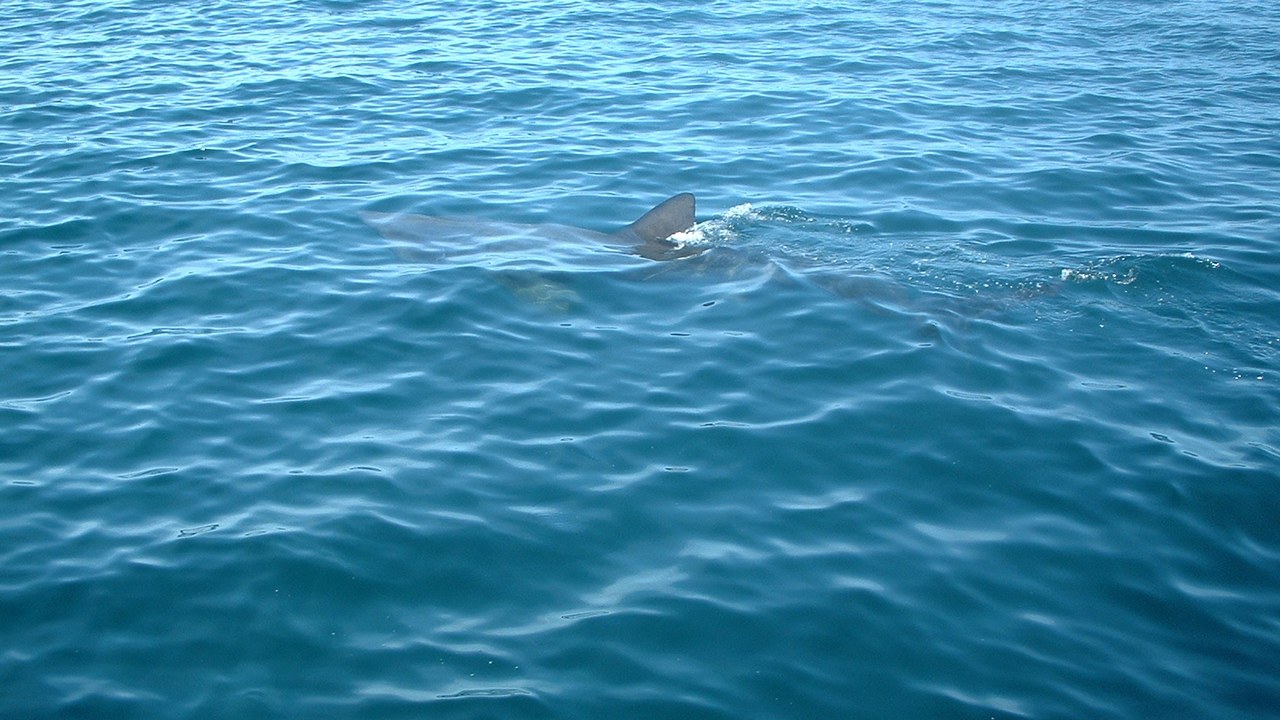
Only the whale shark grows larger, which makes this plankton-eating giant the second-largest fish alive, with adults commonly reaching around eight meters, roughly 26 feet, and the largest individuals reported longer still. It feeds by cruising slowly with its mouth held wide open, straining seawater through gill rakers rather than chasing anything down.
The gaping mouth looks predatory, yet the teeth are minute and the diet is drifting plankton, so nothing about the animal threatens a swimmer. Sightings cluster seasonally in temperate coastal waters where plankton concentrates near the surface, and the tall dorsal fin cutting slowly through calm water is regularly mistaken for something far more dangerous.
More from Morning Overview
- A California supervolcano has bulged upward about two and a half feet since 1978
- The FTC is warning about a scam quietly draining thousands from victims
- The NSA is again telling phone owners to switch off one location setting
- A handful of car transmissions are so tough mechanics say they almost never fail
