
Hydroelectric capacity is measured in megawatts, and the gap between the biggest plants and the merely famous ones is enormous. A handful of concrete walls on the Yangtze, the Parana and the Caroni generate more power than entire national grids elsewhere. Here are eight dams that define the upper limit of what moving water can produce.
1. Three Gorges Dam: The 22,500-Megawatt Benchmark
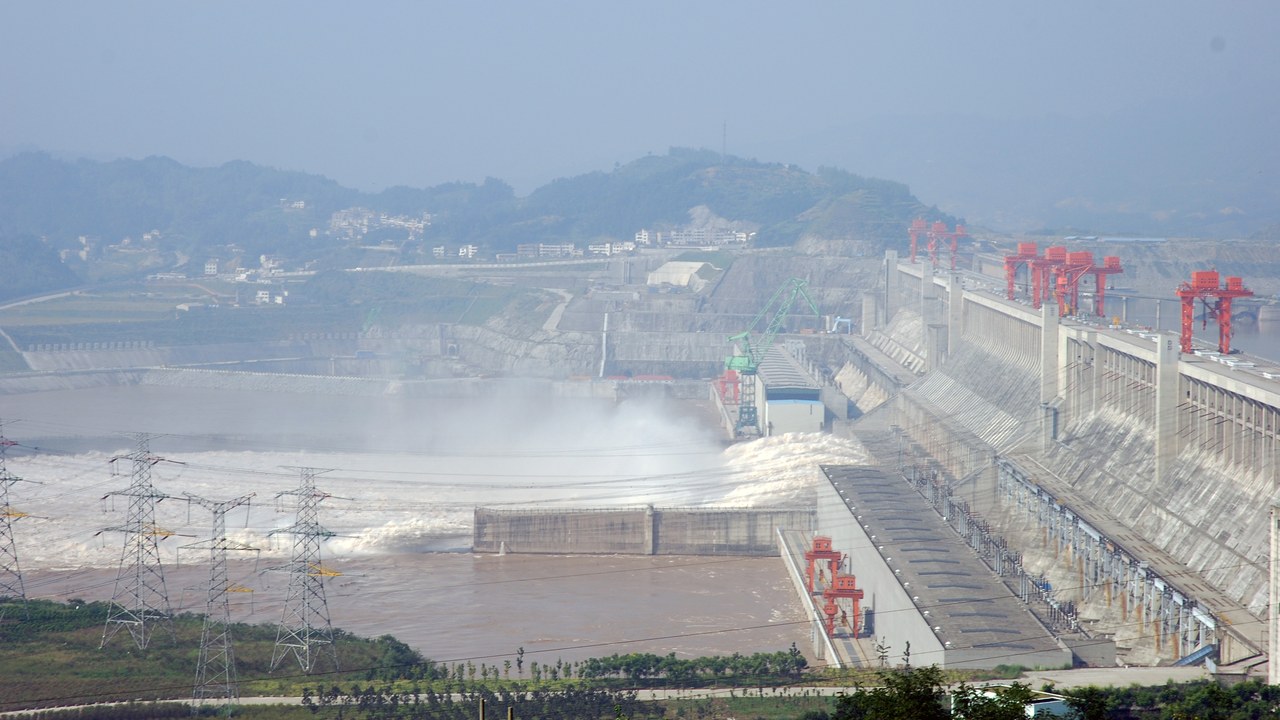
China’s Yangtze River carries the largest power station ever built by installed capacity, a concrete gravity wall at Sandouping in Hubei province. The barrier stretches roughly 2,300 meters bank to bank and rises about 181 meters above its foundations, and its 32 main turbines are rated near 700 megawatts each. Together they give the Three Gorges project an approximate total of 22,500 megawatts.
Capacity is not the same as output, and the plant’s annual generation swings with the monsoon rather than tracking the nameplate figure. The reservoir behind it extends hundreds of kilometers upstream, displaced well over a million residents during construction, and traps sediment that once reached the delta. Engineers also monitor reservoir-induced seismicity along the surrounding valley.
2. Itaipu Dam: The Generation Record Holder
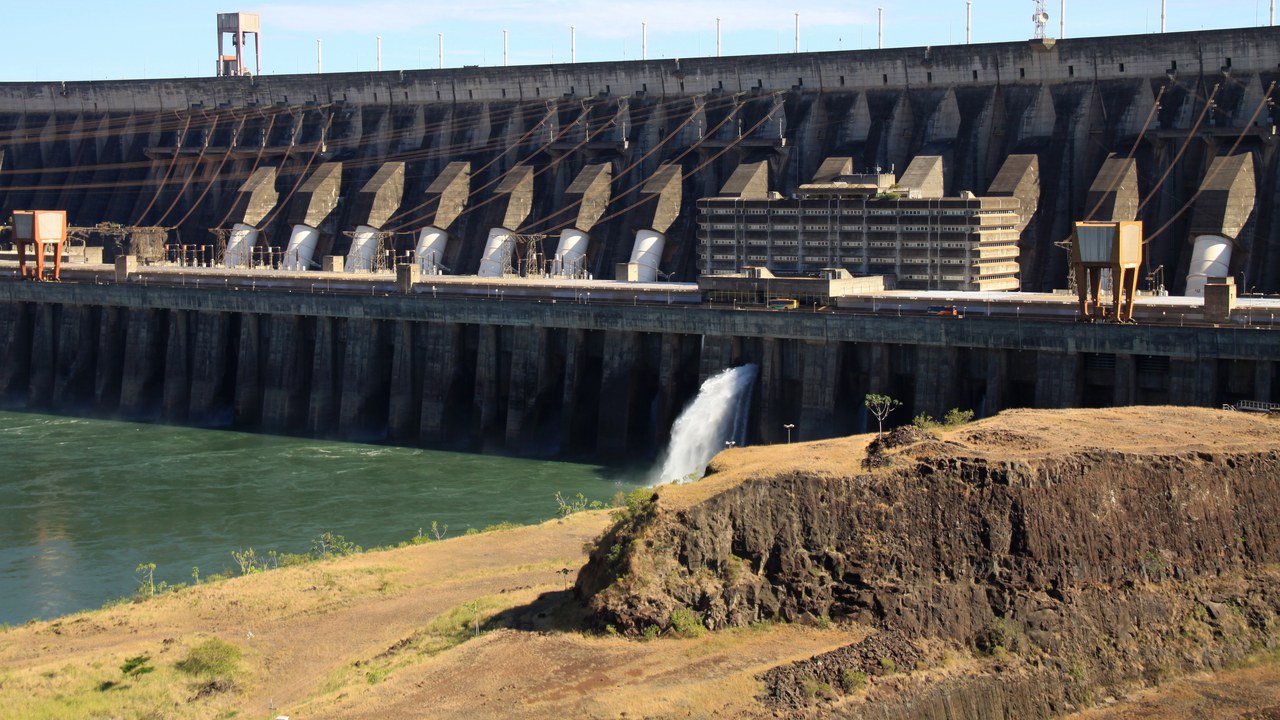
Straddling the Parana River on the border between Brazil and Paraguay, this hollow gravity structure runs nearly eight kilometers end to end and stands about 196 meters at its highest section. Twenty generating units rated at 700 megawatts apiece give the binational hydroelectric plant roughly 14,000 megawatts of installed capacity, well short of the Chinese record.
Annual generation tells a different story. Because the Parana delivers steadier year-round flow than the Yangtze, the plant has in several years produced more electricity over twelve months than larger-capacity rivals, setting records above 100 terawatt-hours. Paraguay consumes only a fraction of its half and exports the surplus across the border, an arrangement governed by a 1973 treaty that both governments have repeatedly renegotiated.
3. Tucuruí Dam: Built for the Smelters
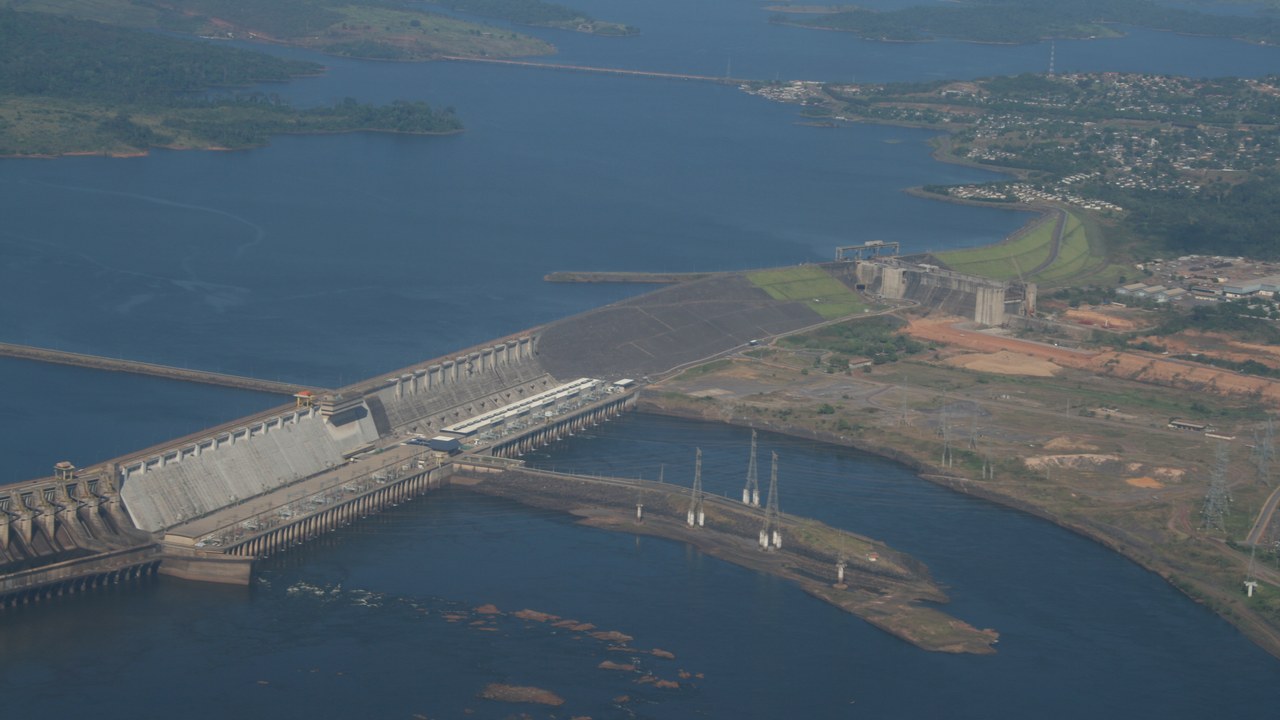
Two construction phases, beginning in the mid-1980s and finishing in the early 2000s, produced an earth-and-concrete wall about 78 meters tall and some 11 kilometers long across the Tocantins River in Pará, Brazil. That effort gave the Tucuruí generating complex an installed capacity near 8,370 megawatts, one of the largest of any plant built entirely within the country.
Much of that electricity never reaches households. Aluminium smelters in the Amazon basin were built alongside the project and absorb a large share of its output, with the remainder feeding Brazil’s northern grid. The reservoir flooded a vast tract of rainforest, displaced thousands of residents including Indigenous communities, and altered downstream fisheries on the Tocantins, effects documented in the decades of monitoring that followed.
4. Guri Dam: Venezuela’s Single Point of Failure
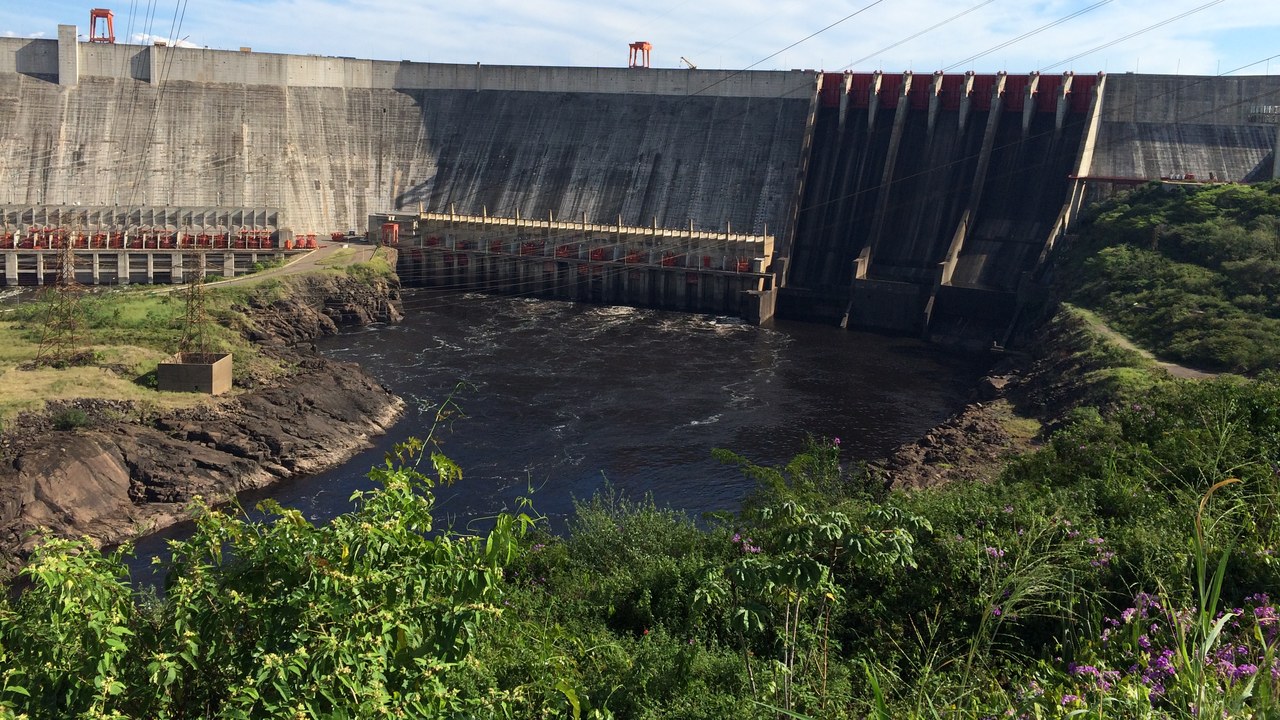
The Caroni River in eastern Venezuela drives a plant rated near 10,200 megawatts, formally named for Simon Bolivar and known almost universally by the name of its reservoir. Concrete and embankment sections carry the structure more than a kilometer across the gorge, and the Guri powerhouses hold twenty generating units delivered in two construction phases.
Concentration is the risk. The plant has long supplied the majority of Venezuela’s electricity, so a drought that drops the reservoir toward minimum operating level translates directly into national rationing, as it did during the severe shortfalls of 2016. Deferred maintenance on the turbines and the transmission lines leaving the site has compounded the exposure in the years since.
5. Grand Coulee Dam: The American Heavyweight
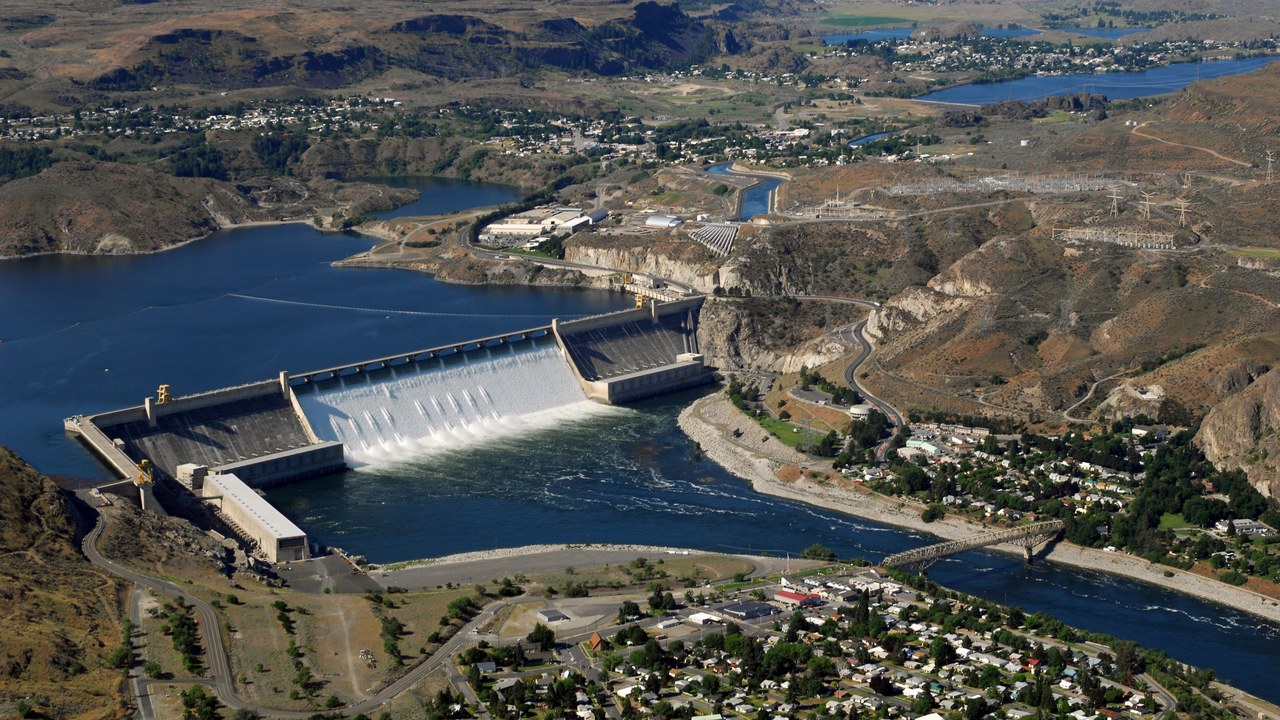
Washington State’s Columbia River holds the largest power station in the United States, a concrete gravity dam roughly 1,590 meters long and 168 meters tall completed in 1942. Later expansion, including a third powerhouse finished in the 1970s, lifted the Grand Coulee installation to about 6,800 megawatts across pumped-storage and conventional units.
The reservoir, Franklin D. Roosevelt Lake, also feeds the irrigation canals of the Columbia Basin Project, which is why the dam is as much a water project as a generator. It was built without fish ladders, and that decision permanently cut salmon and steelhead off from more than a thousand miles of upstream spawning habitat, a loss tribes in the basin still press to address.
6. Robert-Bourassa generating station: Carved Into the Canadian Shield
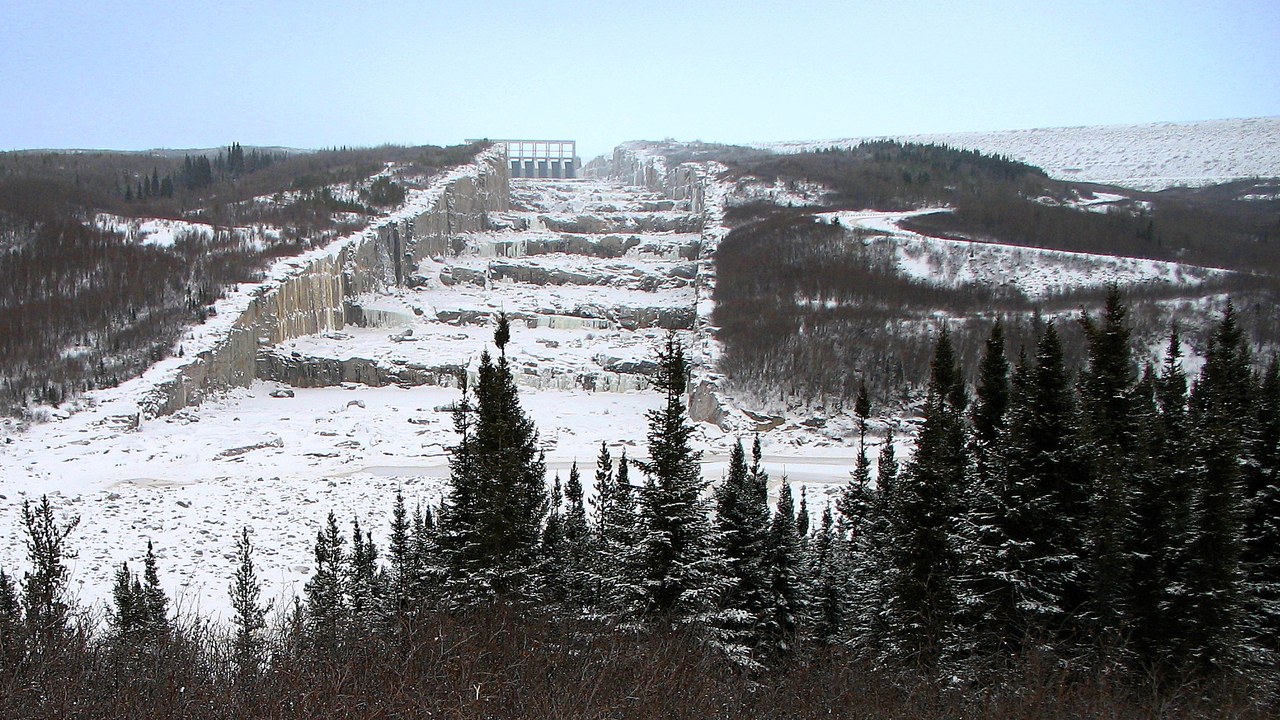
Beneath the taiga of northern Quebec, an underground powerhouse blasted out of bedrock holds sixteen turbines rated near 5,600 megawatts, fed by water falling roughly 140 meters down vertical shafts. Diverted flow from the La Grande River drives the whole arrangement, making the Robert-Bourassa generating station the centerpiece of Hydro-Québec’s northern hydroelectric complex.
A spillway cut into the rock beside the dam handles spring meltwater in ten broad terraces, an excavation known as the giant’s staircase. Output from the complex anchors Quebec’s grid and supplies a steady export flow to the northeastern United States. Building it meant flooding large areas of Cree territory in the James Bay region, which led to the 1975 James Bay and Northern Quebec Agreement.
7. Sayano-Shushenskaya Dam: Rebuilt After Catastrophe
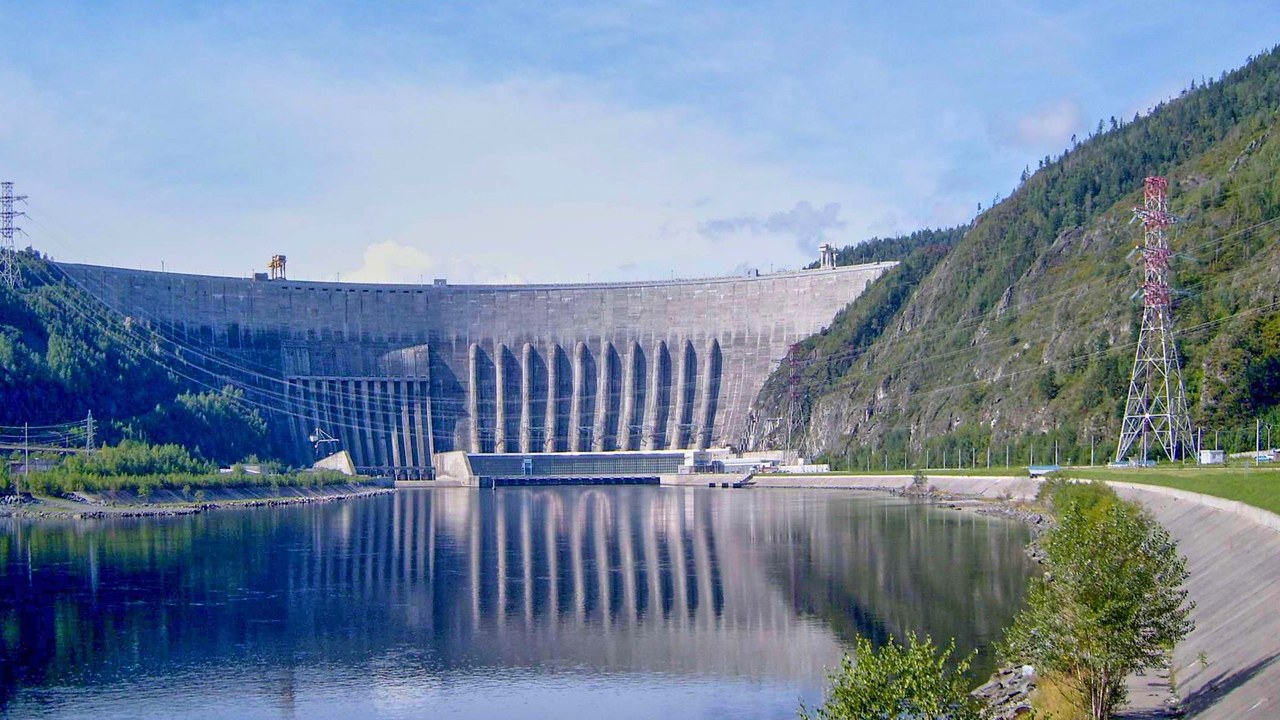
Russia’s largest power station spans the Yenisei River in Khakassia behind an arch-gravity wall about 242 meters tall, the tallest dam in the country. Ten turbines rated at 640 megawatts each give the Sayano-Shushenskaya plant roughly 6,400 megawatts, output that feeds aluminium smelters across Siberia more than it feeds households.
In August 2009 a turbine tore loose from its mountings and flooded the machine hall, killing 75 workers and taking the entire plant offline in the worst accident in Russian hydropower history. Reconstruction ran for years and every unit was eventually replaced, a reminder that at this scale the vulnerable component is rarely the dam wall itself.
8. Hoover Dam: Famous, and Far Smaller
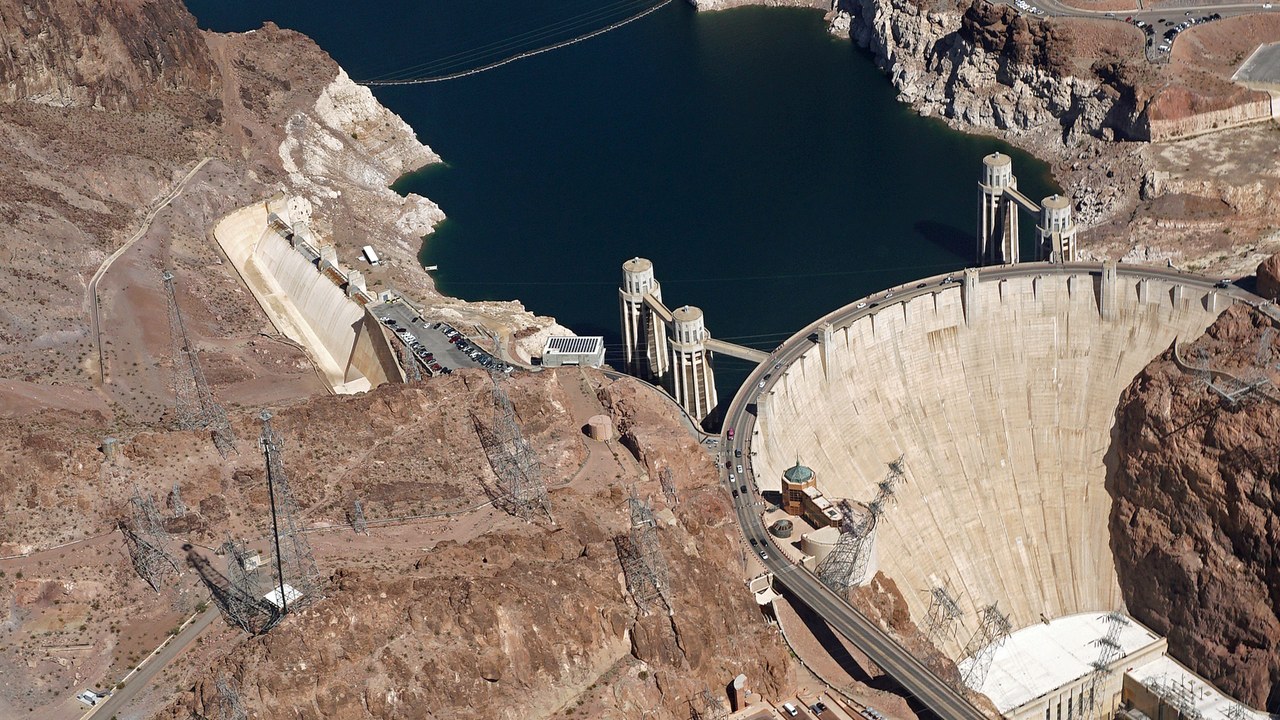
Fame and output diverge sharply at the Colorado River structure on the Nevada-Arizona line. Completed in 1936 and rising about 221 meters, the Hoover Dam powerplant carries roughly 2,000 megawatts of capacity, a fraction of the Chinese leader’s total and the smallest figure in this group. Its significance was always as much about water storage and Depression-era engineering as electricity.
Lake Mead, the reservoir it created, remains the largest in the United States by maximum capacity and supplies cities and farms across the Southwest. Sustained drought has pulled the surface far below full pool, and because generating capacity falls as head pressure drops, the plant now produces meaningfully less than its nameplate rating during low-water years.
More from Morning Overview
- A handful of SUVs keep hitting 300,000 miles, and they share one engine trait
- Supplements now rank as the fifth-leading cause of death from liver disease.
- A study names the one SUV most likely to reach 250,000 miles
- More than 60,000 people flee the Spokane area as complex fires overrun 600 structures
