
Hydroelectric dams supply a large share of electricity across the American West and beyond, often from concrete walls that most passing drivers never connect with the power grid. The list starts with the largest stations by nameplate capacity and then adds several major dams on the Columbia, Sacramento and Missouri rivers. These twelve dams show where falling water becomes grid power.
1. Grand Coulee Dam: The Nation’s Biggest Station
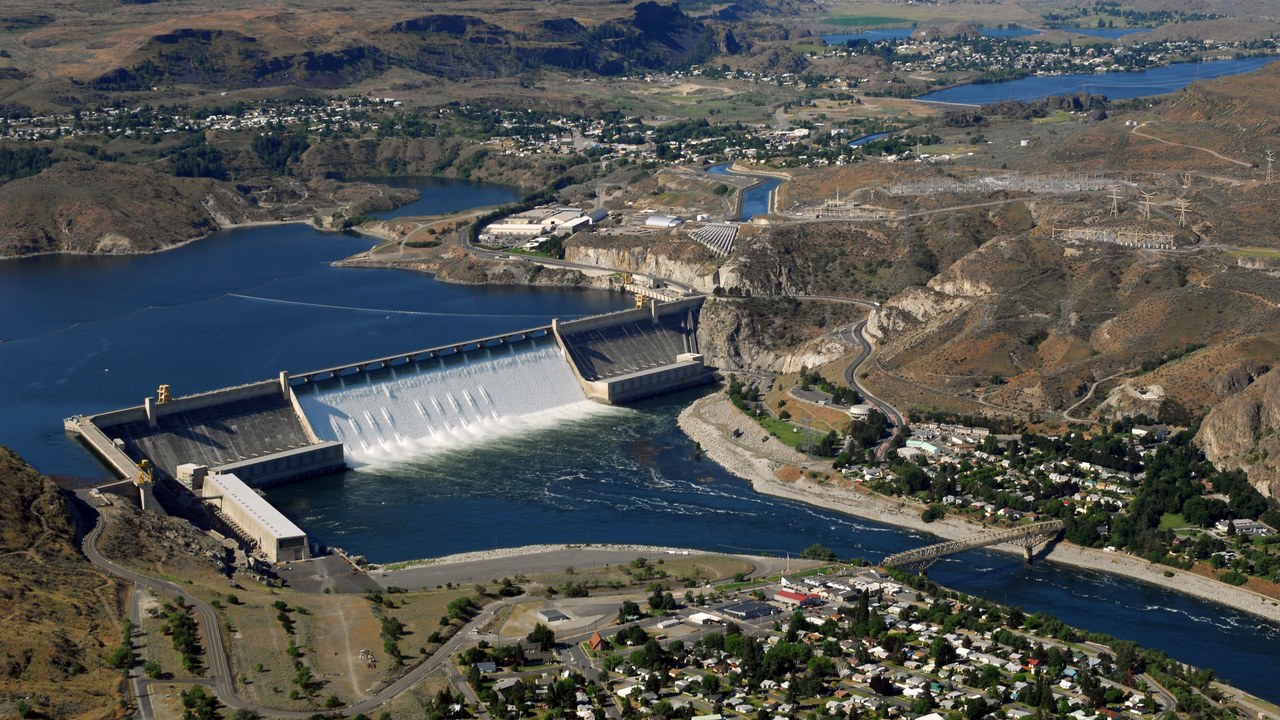
Grand Coulee sits on the Columbia River in Washington and carries a nameplate capacity of 6,809 megawatts, making it the largest hydroelectric station in the United States, as laid out in a the largest hydroelectric power stations of the biggest American plants. The Wikipedia capacity table notes that about 95 percent of that total is conventional reservoir generation, with a small slice belonging to pumped storage.
No other American dam comes close to that figure; the runner-up is a little over a third of the size. That scale explains why the structure anchors the regional grid and why the list begins here.
2. Chief Joseph Dam: Second On The Columbia
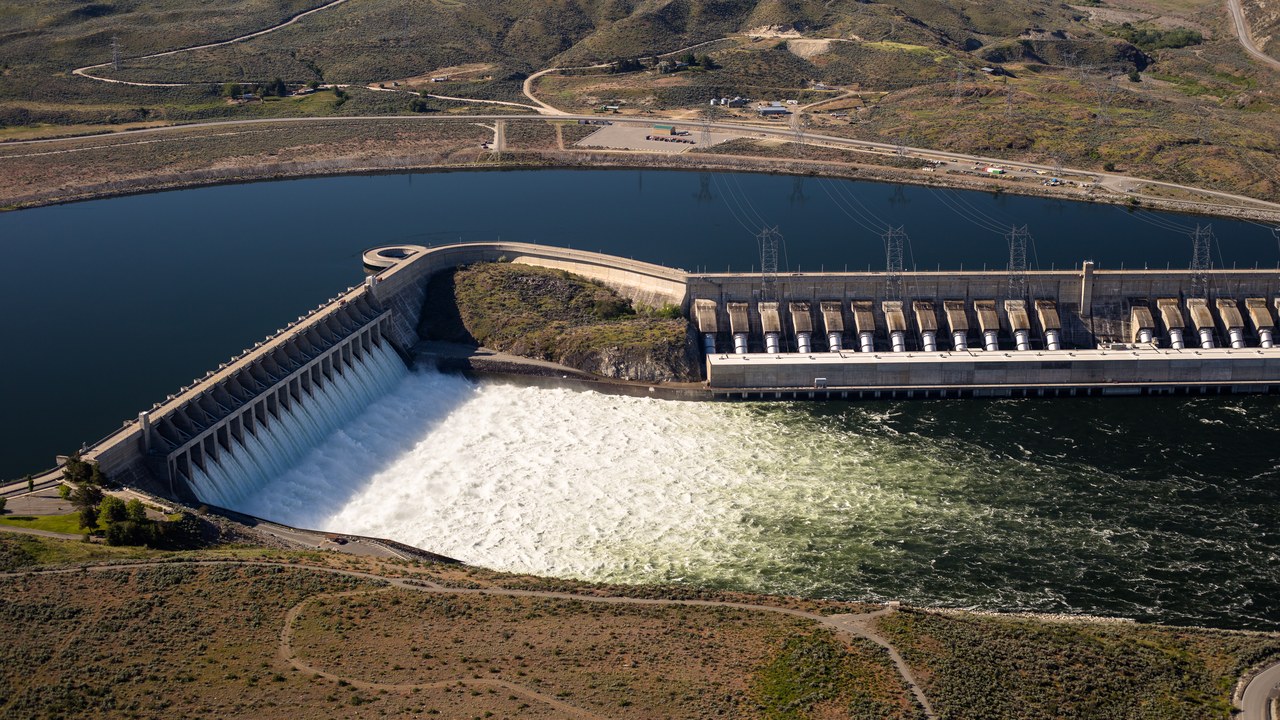
Chief Joseph Dam, also on the Columbia River in Washington, is rated at 2,620 megawatts, according to the same ranking of American hydro stations that ranks Grand Coulee first. It sits downstream of its larger neighbour on the same river, so the two stations work one after the other along a single stretch of water.
Stacking big plants on one river is the pattern that makes the Pacific Northwest so heavily hydroelectric. Chief Joseph alone rivals the output of many large power stations, a reminder of how concentrated American hydropower capacity is.
3. John Day Dam: Straddling Two States
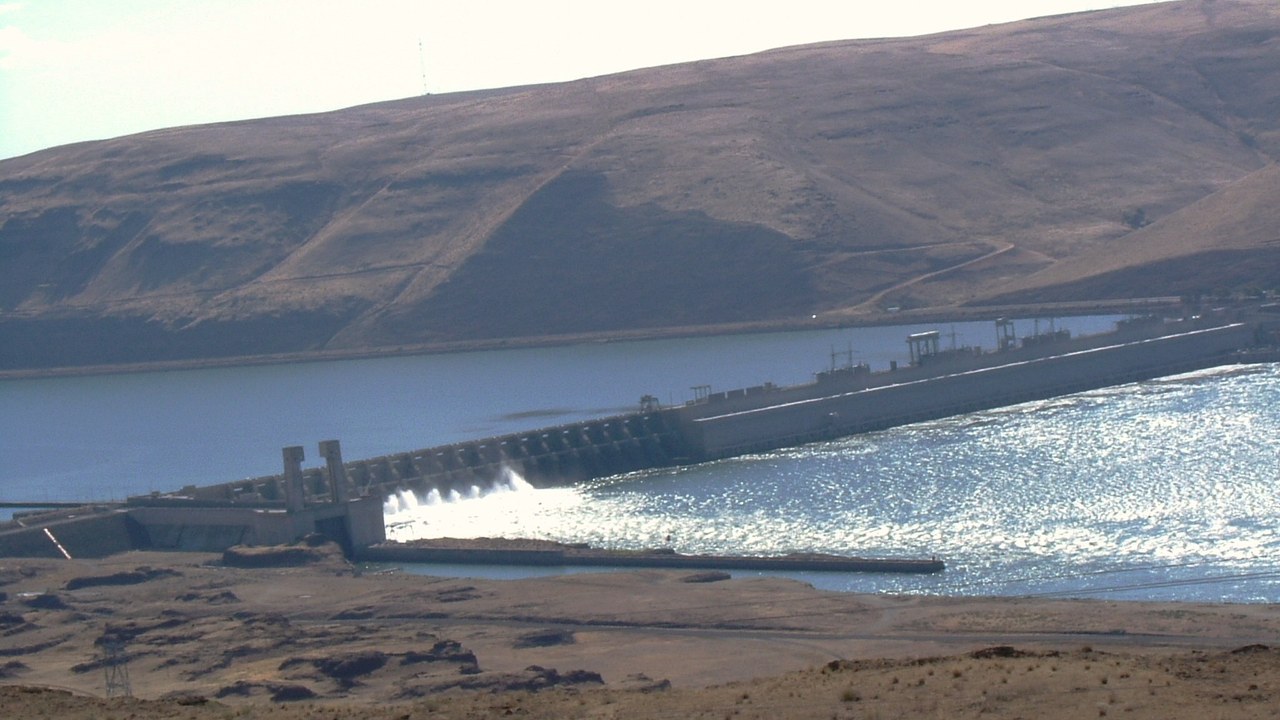
John Day Dam is a run-of-the-river station that straddles Oregon and Washington, with a nameplate capacity of 2,160 megawatts in the WorldAtlas capacity list. Run-of-the-river means the plant relies mostly on the flow passing through rather than a deep storage reservoir.
That design limits how much water the operators can hold back for later, so output follows the river’s seasonal rhythm. Even so, the capacity figure places John Day among the largest hydroelectric stations in the country, ahead of several better-known dams.
4. Hoover Dam: A Famous Wall, A Modest Rank
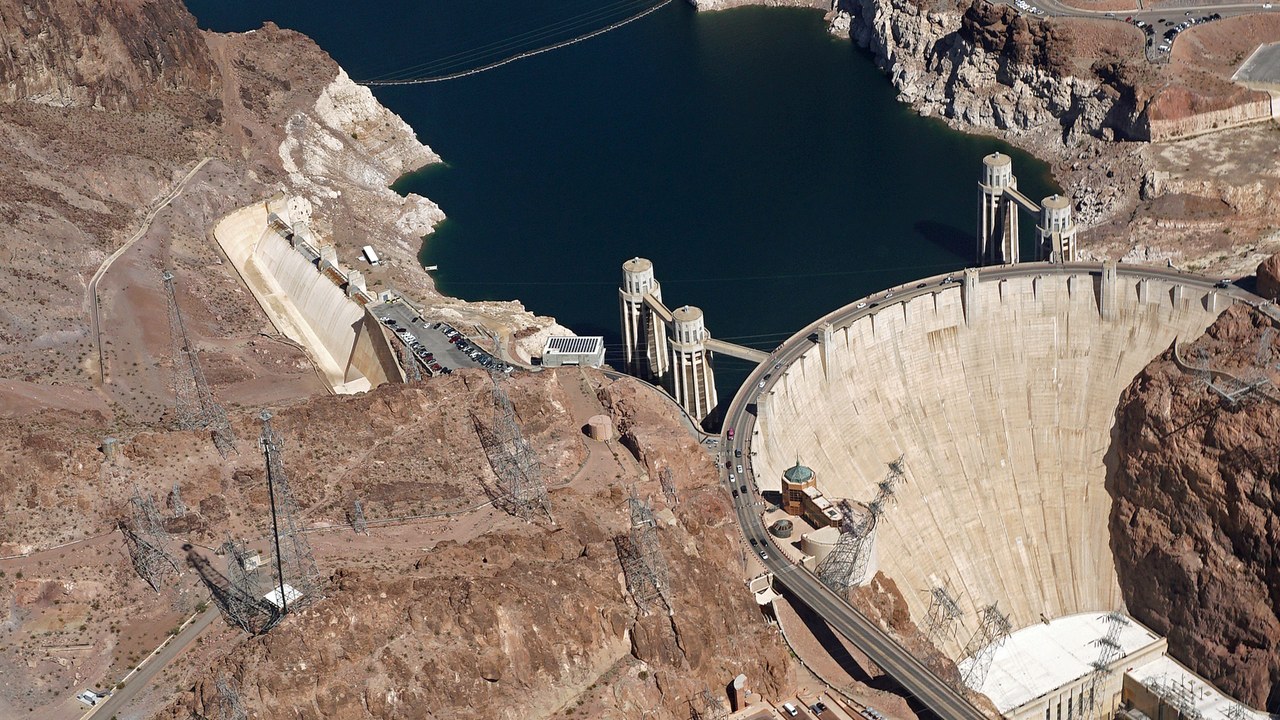
Hoover Dam holds back the Colorado River between Arizona and Nevada and is rated at 2,080 megawatts, a figure on which the 2,080-megawatt figure and the Wikipedia table agree. The curved concrete structure is among the best-known dams in the world.
Fame and output do not line up neatly here: Hoover ranks behind three dams on the Columbia and a plant in New York. Its generating capacity is substantial, though, and it remains central to power supply across the desert Southwest.
5. Robert Moses Niagara Power Plant: New York’s Giant
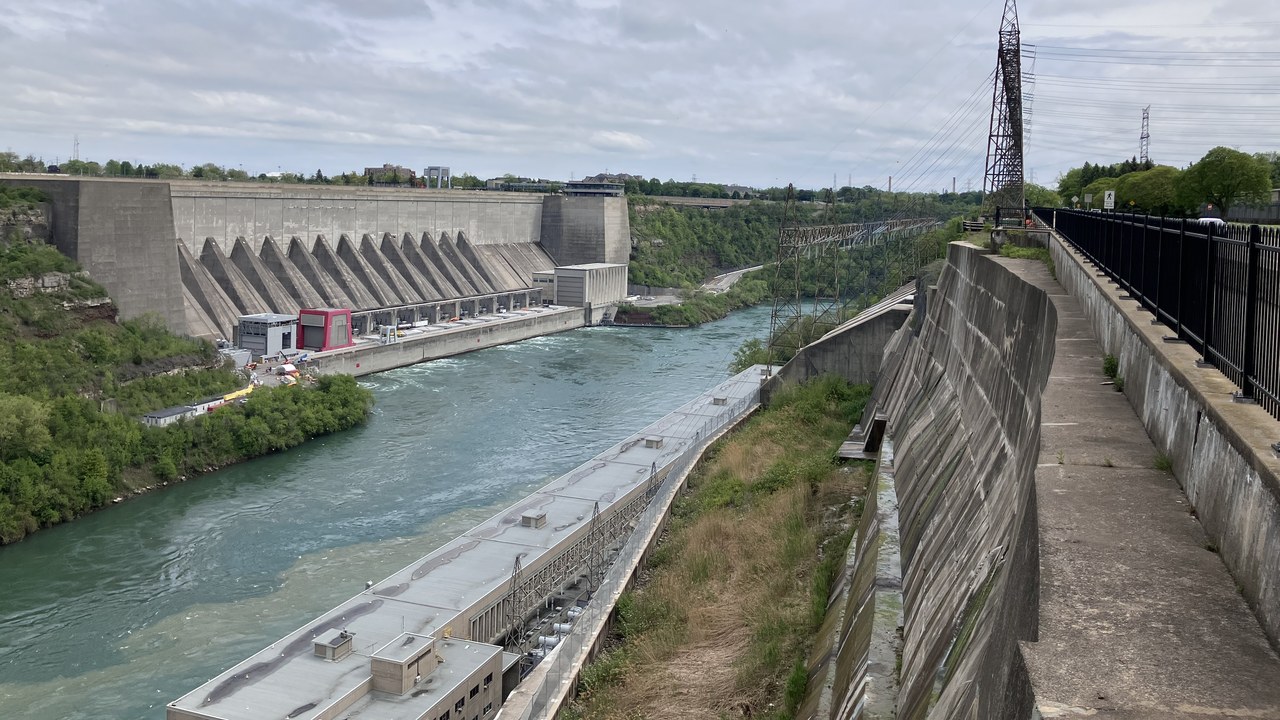
The Robert Moses Niagara Power Plant in New York is listed at 2,675 megawatts in the Wikipedia list of American hydro plants, which makes it the second-largest conventional hydroelectric station on the list. It draws on the Niagara River below the falls and is the biggest hydropower producer in the eastern United States.
Sources differ slightly on the number, since the WorldAtlas article gives 2,515 megawatts for the same station, so the figure depends on which nameplate rating is used. Either way, the plant is the one entry here far from the Pacific Northwest.
6. The Dalles Dam: A Dalles Dam Detail
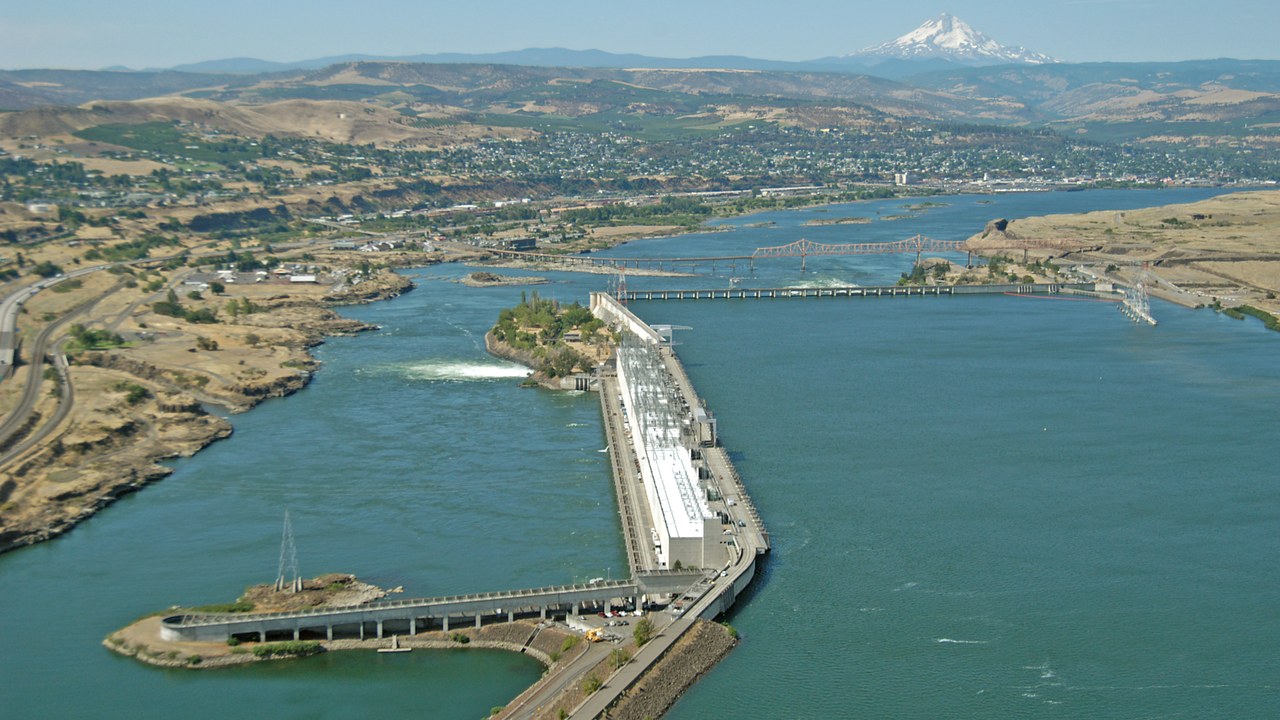
The Dalles Dam crosses the Columbia between Oregon and Washington and operates as a run-of-the-river plant rated at 1,813 megawatts, per the Wikipedia list of hydroelectric stations. A long powerhouse and spillway span the channel beside the town that shares its name.
Like John Day upstream, it depends on river flow instead of a large storage lake. That makes it a steady producer in wet months and a lighter one in dry spells, and it shows how the lower Columbia is lined with plants of near-identical design.
7. Rocky Reach Dam: Chelan County’s Flagship
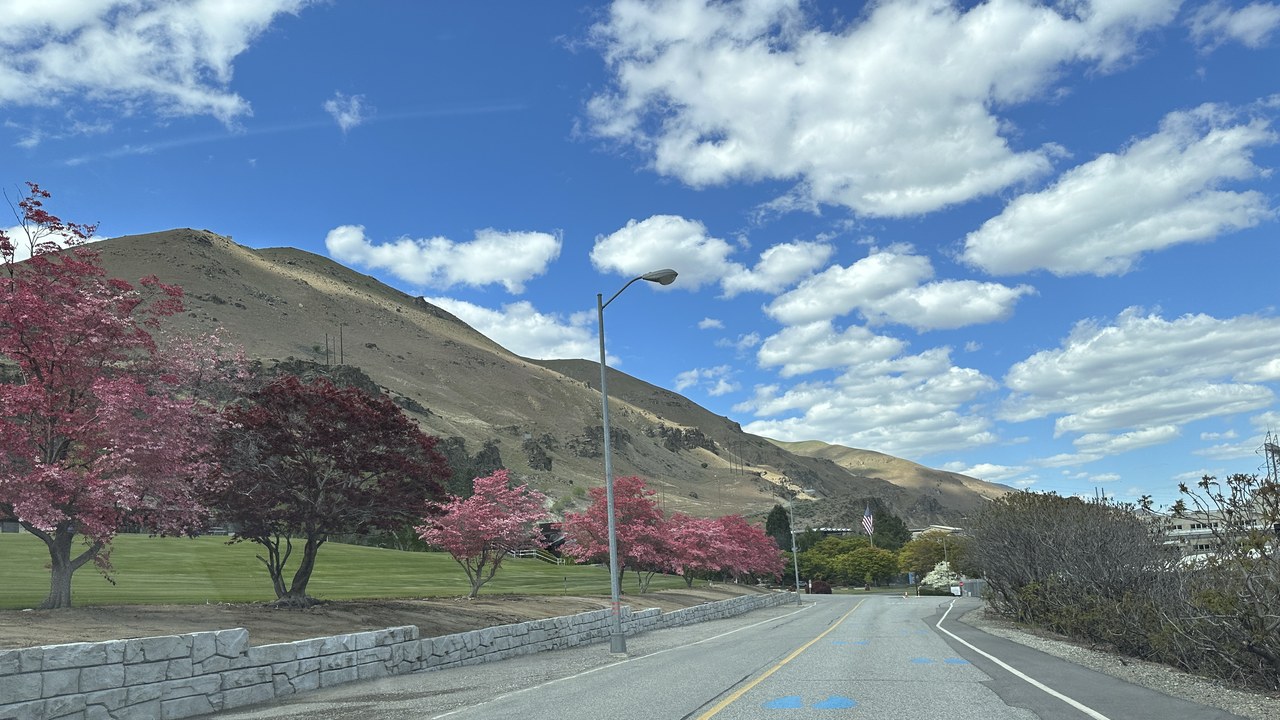
Rocky Reach Dam in Washington is a reservoir station with a nameplate capacity of 1,347 megawatts, according to the American hydroelectric station table. The facility is operated by Chelan County Public Utility District, whose power company runs it for local customers.
Public ownership of a plant this size is notable, since much of the Columbia’s hydropower sits with federal agencies. Rocky Reach shows that a county-level utility can run a major dam, with the output serving a region far smaller than the capacity might suggest.
8. Glen Canyon Dam: Holding Back Lake Powell
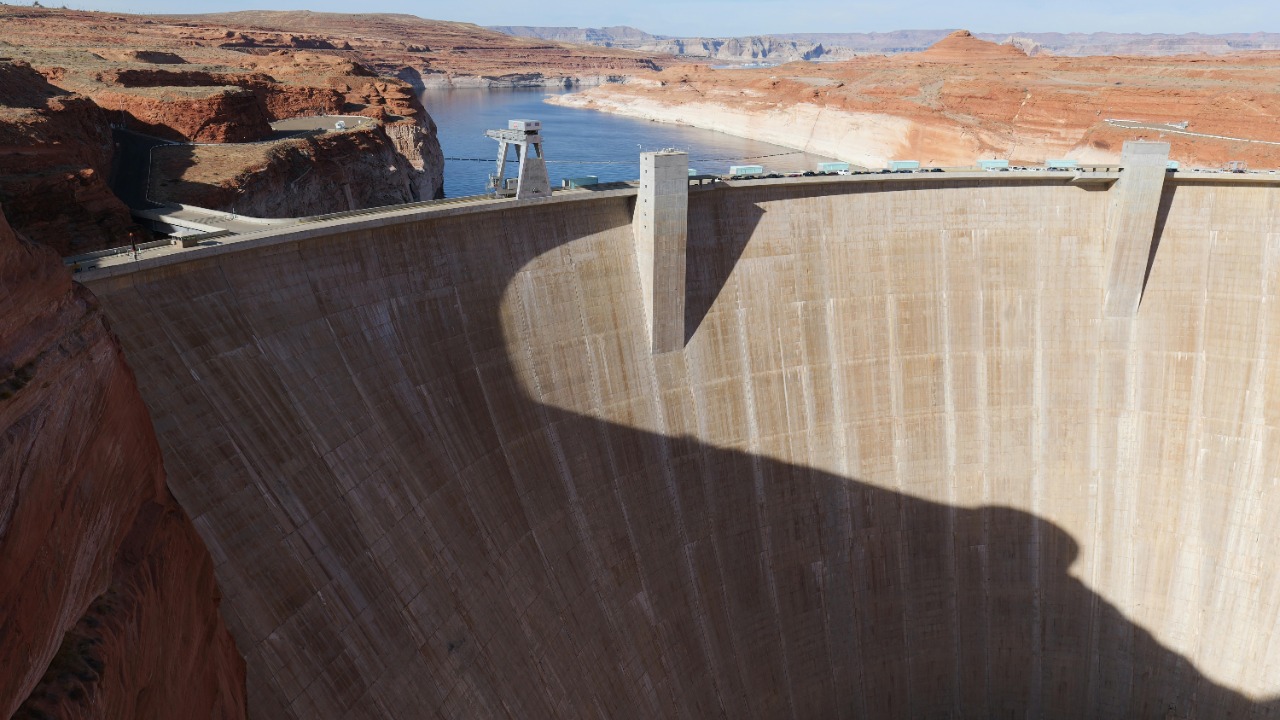
Glen Canyon Dam in Arizona is rated at 1,320 megawatts and holds back Lake Powell on the Colorado River, as recorded in the Wikipedia capacity table. The towering curved concrete face rises above the canyon floor and is one of the most photographed dams in the country.
The reservoir does double duty as a bank of stored water and stored energy. When the lake runs low, the pressure on the turbines drops and so does generating capacity, which ties this plant’s output closely to Colorado River drought conditions.
9. Bonneville Dam: Where The Columbia Narrows
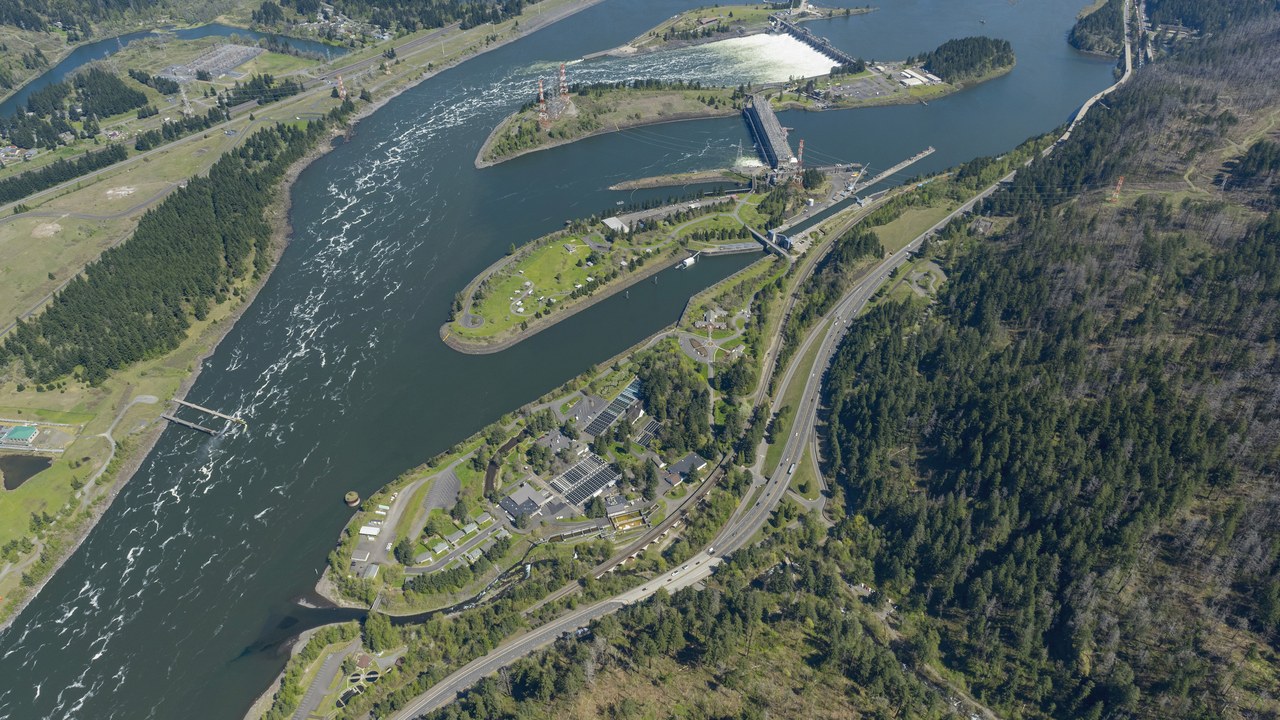
Bonneville Dam is a run-of-the-river dam and lock on the Columbia between Oregon and Washington, described on its Wikipedia article as the point where the river is harnessed closest to the Pacific. It combines powerhouses, a spillway and navigation locks in one complex.
The lock lets barges and other vessels travel the river past the dam, so the site serves shipping as well as electricity. Visitors can see fish passage works and the powerhouse, making it one of the more accessible hydro facilities on the list.
10. Shasta Dam: Curved Concrete In California
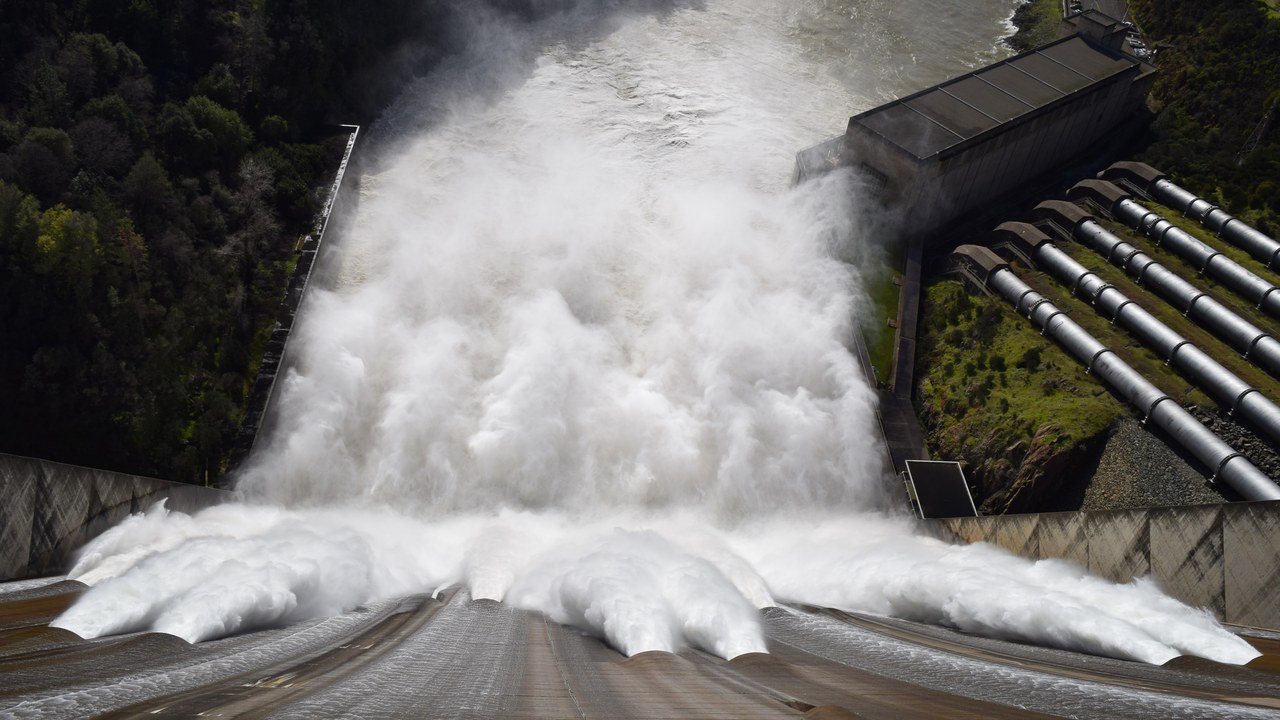
Shasta Dam is a curved concrete gravity dam on California’s Sacramento River that forms Shasta Lake, according to its Wikipedia entry. The structure combines the mass of a gravity design with a gentle arc across the canyon.
The lake it creates is the largest reservoir in the state, and the dam serves water supply and flood control along with power. Releases over the spillway, which sends water down the curved face, are an occasional spectacle in wet years.
11. Oahe Dam: An Earthen Giant
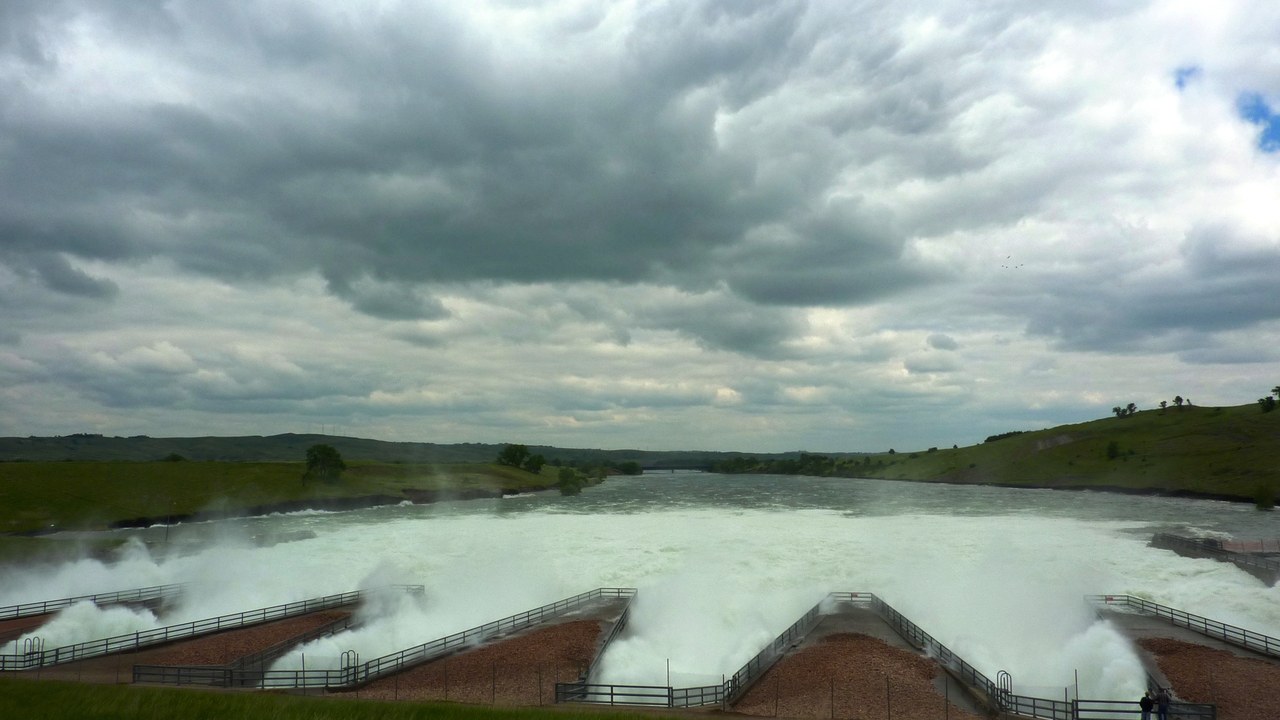
Oahe Dam is a rolled-earth dam on the Missouri River above Pierre, South Dakota, as outlined on its Wikipedia page. Rather than a concrete wall, it is a massive embankment of compacted fill that backs up Lake Oahe across the Great Plains.
It is the only Missouri River dam on this list and the only earth-fill one, a reminder that hydropower is not limited to the mountain West. The long reservoir behind it stretches far upstream, shaping water use for a wide stretch of the Dakotas.
12. McNary Dam: Lock And Dam At Umatilla
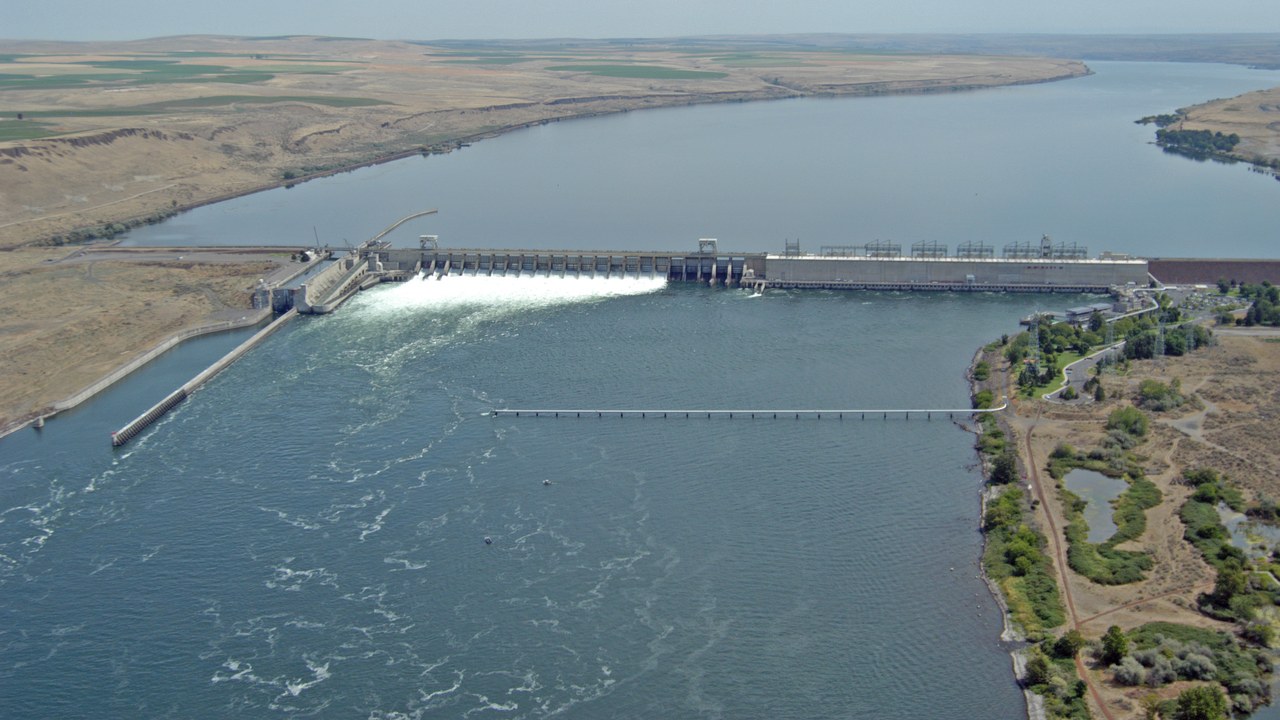
McNary Dam is a concrete run-of-the-river dam and lock on the Columbia at Umatilla, Oregon, detailed in its Wikipedia article. It spans the wide river with a spillway, powerhouse and navigation lock arranged in a long line across the channel.
It helps complete a chain of Columbia plants that appear throughout the list. The lock keeps barge traffic moving upriver, tying power generation to the grain shipping that depends on the waterway.
More from Morning Overview
- Long use of a common prostate pill is tied to a higher chance of glaucoma
- Ford is recalling 223,472 F-150 pickups because the fuel tank can leak or detach
- Hybrids have 15% fewer problems than gas cars, while EVs and plug-in hybrids have about 80% more, Consumer Reports finds
- Regulators cleared the first U.S. small modular reactor, 4 months early
