
Hurricane damage in the United States is measured in two currencies, dollars and lives, and the worst storms run up staggering totals in both. Federal forecasters and post-storm surveys have cataloged the landfalls that reshaped coastlines, building codes and insurance markets. Here are eight storms that did the most damage on American soil.
1. Hurricane Katrina: The Costliest Storm on Record
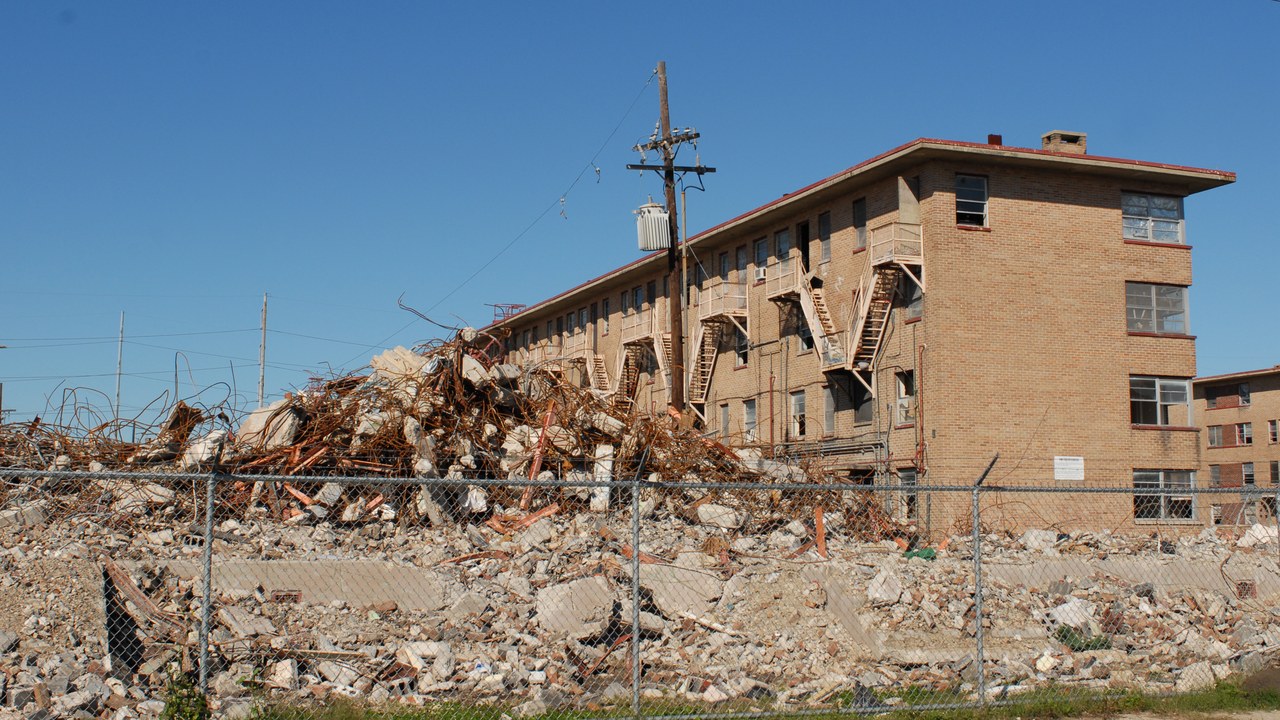
The destruction Katrina caused in southeast Louisiana on August 29, 2005, was as much an engineering failure as a meteorological one. More than 50 breaches in the region’s levees and floodwalls put roughly 80 percent of New Orleans underwater, in places for weeks. The National Hurricane Center’s damage estimate of about $125 billion is stated in 2005 dollars, unadjusted; NOAA’s inflation-adjusted archive still ranks the storm the costliest tropical cyclone in United States history.
The human toll remains contested. A later reassessment by the hurricane center attributes roughly 1,400 deaths to the storm, while contemporary tallies ran closer to 1,800. Neither number captures the displacement that followed, which kept New Orleans below its pre-storm population for more than a decade.
2. Hurricane Harvey: Four Days of Relentless Rain
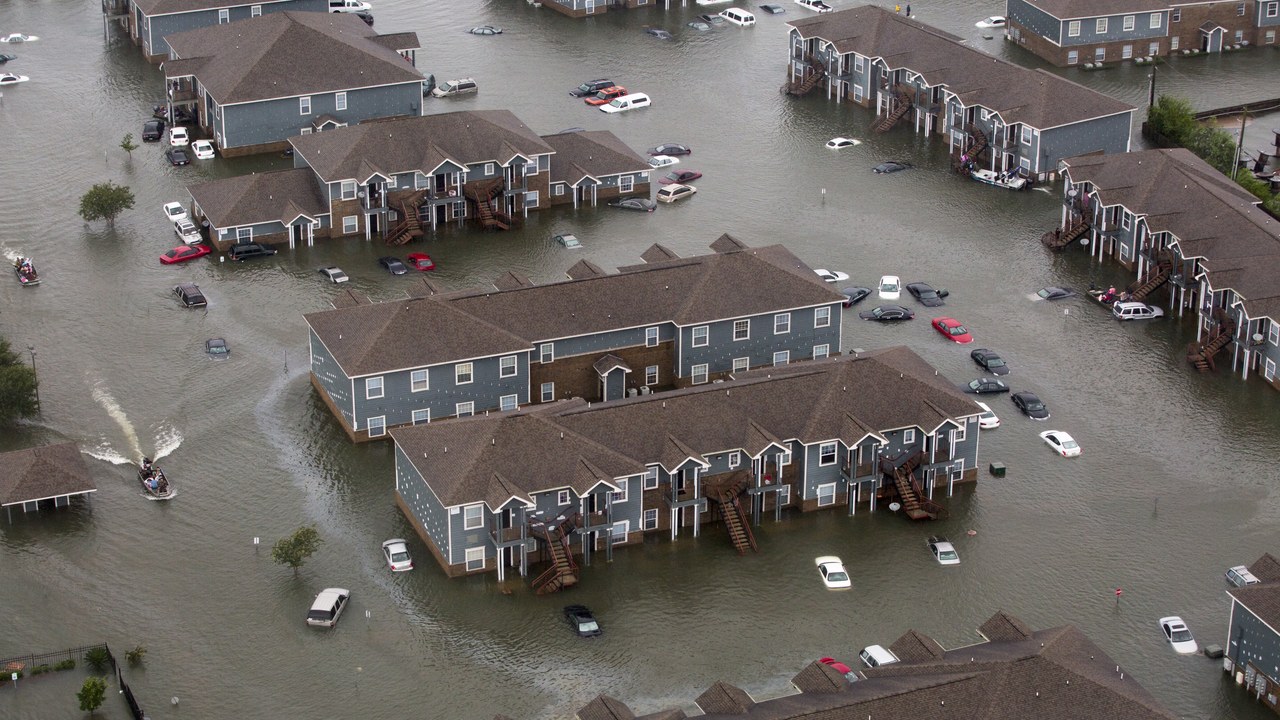
Harvey made landfall near Rockport, Texas, as a Category 4 on August 25, 2017, then stalled over the upper Gulf Coast for four days. A gauge at Nederland recorded 60.58 inches, the largest rainfall total from a tropical cyclone anywhere in the continental United States, according to the official storm report. Floodwater reached hundreds of thousands of homes across Harris County and its neighbors.
Losses came to roughly $125 billion in 2017 dollars, a figure quoted before any inflation adjustment. Sixty-eight direct deaths were recorded in Texas, the most from a Texas tropical cyclone since 1919. Much of the flooded property sat outside mapped high-risk zones, which is why so many owners carried no flood policy at all.
3. Hurricane Maria: The Longest Blackout in US History
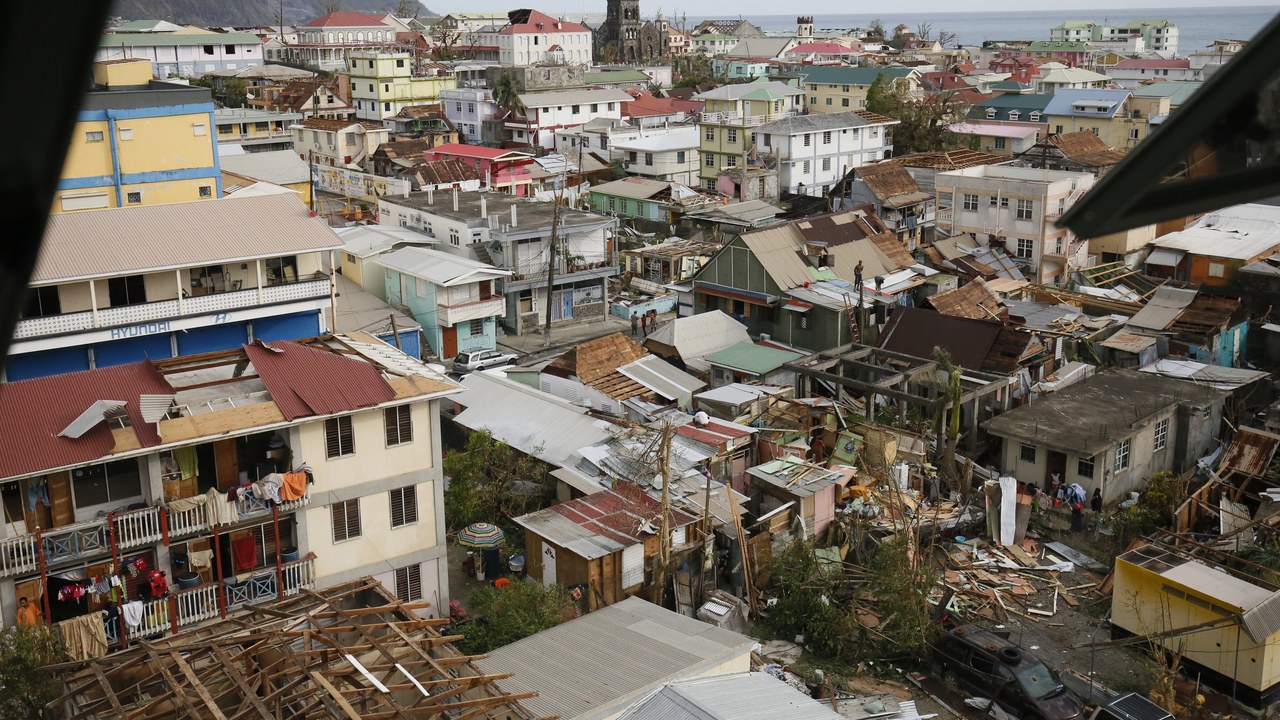
Maria struck Puerto Rico on September 20, 2017, with 155 mph winds that toppled the island’s transmission towers and severed the lines carrying power north from the southern generating plants. Some customers waited close to eleven months for electricity, the longest blackout in American history. Damage was assessed at roughly $90 billion in 2017 dollars, unadjusted for inflation.
The death toll was revised long after the winds passed. Puerto Rico’s government raised the official figure to 2,975 following an excess-mortality study by George Washington University researchers, a count driven by interrupted dialysis, failed oxygen machines and roads that ambulances could not pass rather than by flying debris.
4. Hurricane Sandy: The Surge That Flooded the Subway
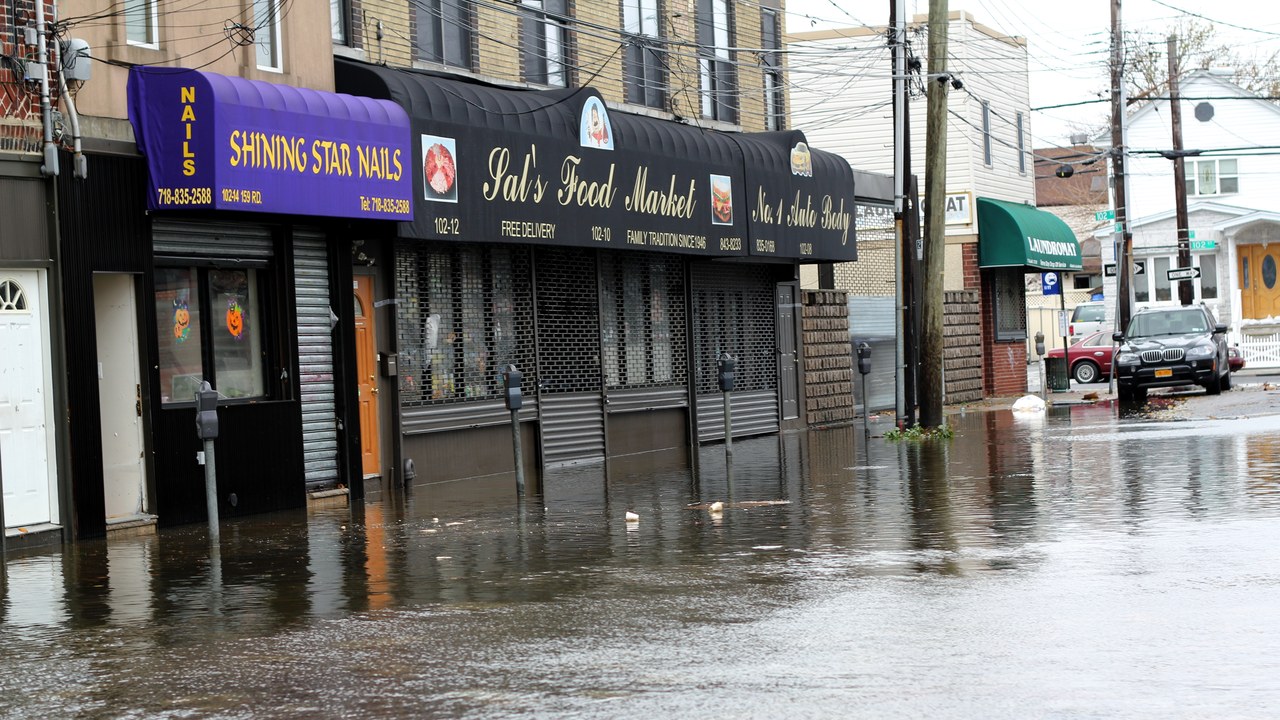
Sandy had already lost its tropical characteristics when the center crossed the New Jersey shore near Brigantine on October 29, 2012, yet a wind field spanning more than 900 miles pushed a record storm surge into New York Harbor. Water at the Battery rose to nearly 14 feet above the tidal datum, filling subway tunnels, road crossings and the low blocks of the Rockaways.
United States damage was put at about $70 billion in 2012 dollars, and 147 direct deaths were attributed to the system, 72 of them in the mid-Atlantic and Northeast. The lasting response was infrastructural: floodgates on tunnel portals, relocated electrical equipment and elevated substations across the region.
5. Hurricane Andrew: The Storm That Rewrote Building Codes
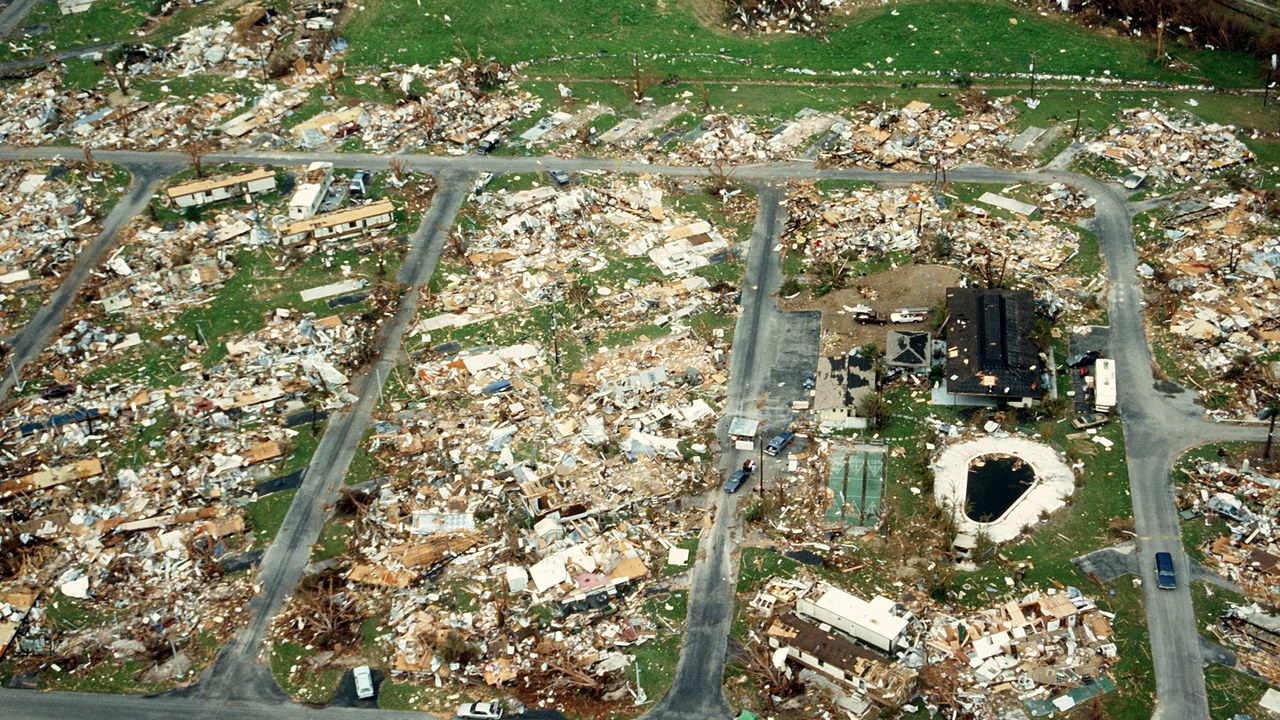
Andrew crossed southern Miami-Dade County before dawn on August 24, 1992, and a decade later a hurricane reanalysis panel upgraded it to a Category 5 with sustained winds near 165 mph. Homestead and Florida City lost entire subdivisions. Post-storm inspections found stapled roof sheathing and missing tie-downs, construction shortcuts that turned a survivable wind load into a total loss.
Damage reached roughly $26 billion in 1992 dollars, several times that in today’s money on NOAA’s adjusted list, and 65 deaths were blamed on the hurricane. Its most durable legacy was regulatory. Florida moved toward a statewide building code, and more than a dozen property insurers were pushed into insolvency by the claims.
6. Hurricane Ian: Florida’s Costliest Landfall
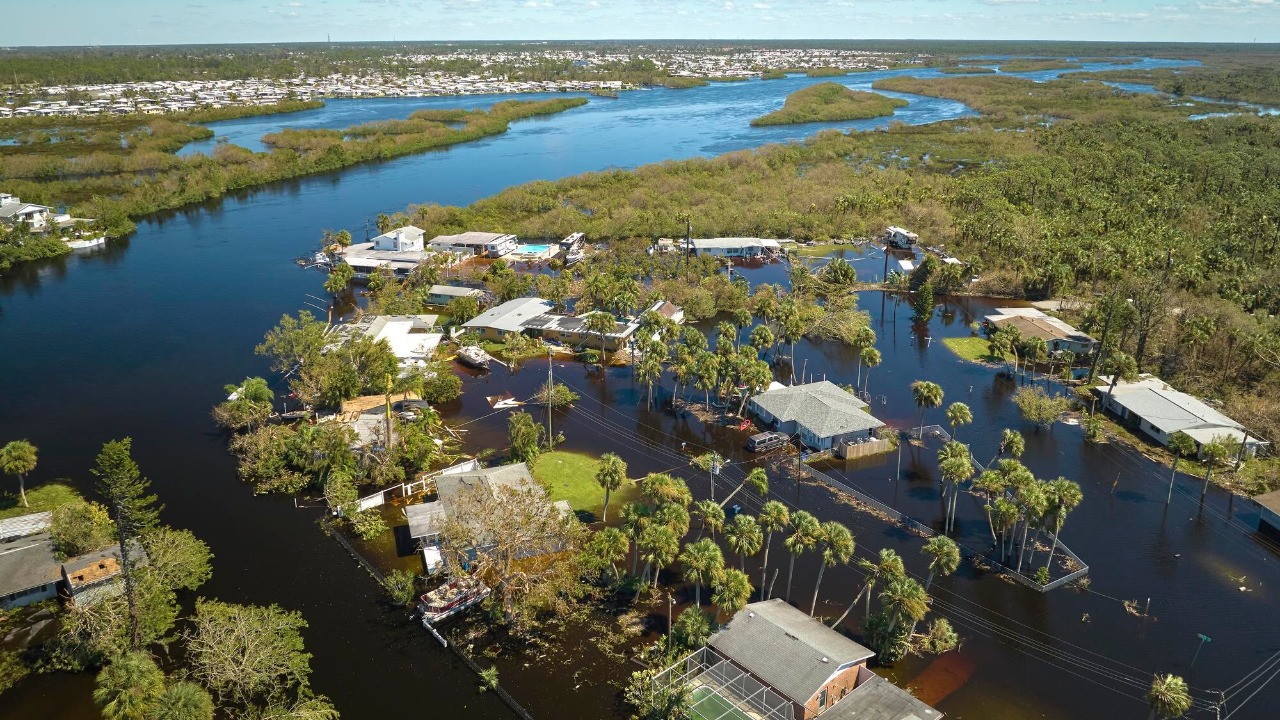
Ian reached Cayo Costa on September 28, 2022, with 150 mph winds and drove 10 to 15 feet of water across Fort Myers Beach and Sanibel, breaking the causeway that connects the island to the mainland. Federal forecasters attributed 66 direct deaths in Florida to the storm, most of them drownings, making it the deadliest hurricane to hit the state since 1935.
The damage estimate of about $112 billion, quoted in 2022 dollars, ranks Ian as the costliest hurricane in Florida’s history by that measure. Rebuilding on the barrier islands has been slow, partly because elevation rules require replacement houses to sit well above the grade of the ones the surge removed.
7. Hurricane Michael: The Panhandle’s Category 5
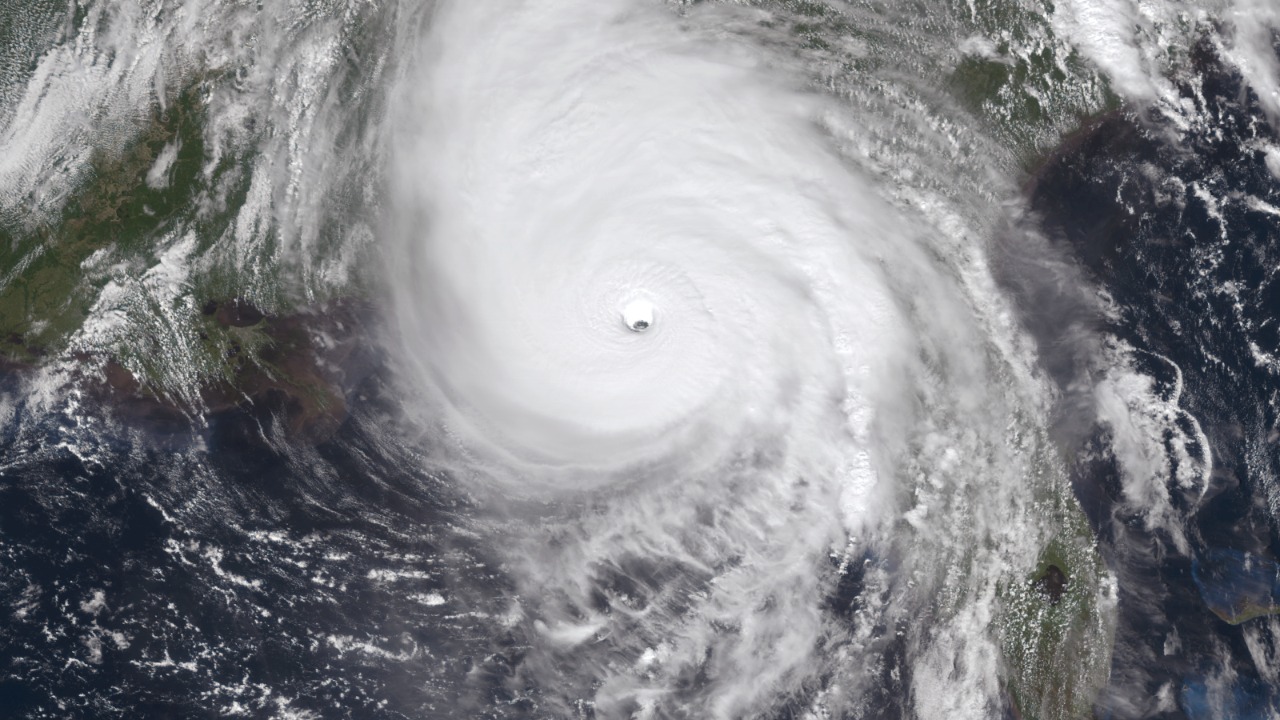
Michael arrived at Mexico Beach on October 10, 2018, and later post-storm analysis raised it to a Category 5, with sustained winds of 160 mph and a central pressure of 919 millibars, the third-lowest measured at a mainland landfall. The beachfront was scoured down to concrete slabs, and inland winds flattened commercial timber across the Panhandle and into southwest Georgia.
Damage totaled roughly $25 billion in 2018 dollars. Sixteen deaths in the United States were classified as direct, with dozens more counted as indirect, a low figure for that intensity because the strongest winds came ashore over a thinly settled stretch of coast. Tyndall Air Force Base lost most of its hangars.
8. Hurricane Camille: The 1969 Gulf Coast Benchmark
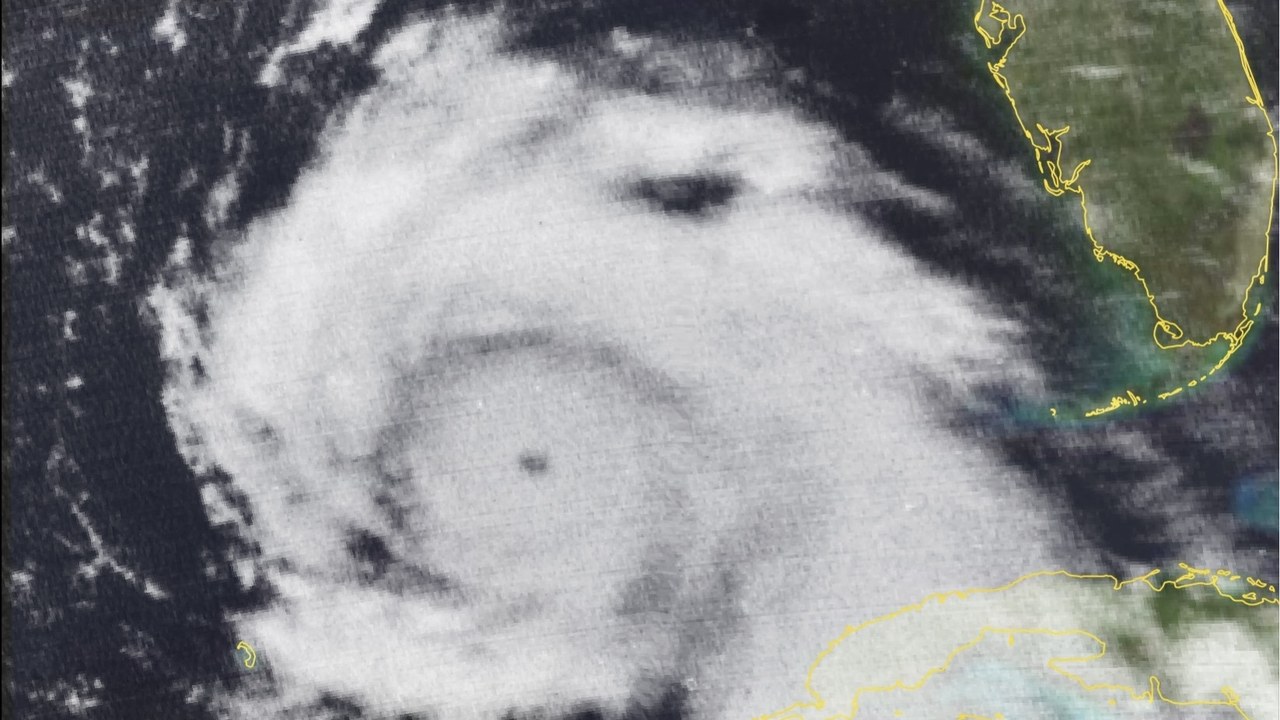
Camille came into the Mississippi coast on the night of August 17, 1969, with a central pressure of 900 millibars, the second-lowest ever measured at a United States landfall. No instrument survived to record the peak gust, so Camille’s landfall intensity rests on reanalysis at roughly 175 mph. Surge above 20 feet removed the first row of buildings outright.
Damage was about $1.4 billion in 1969 dollars, worth many times that in current money, and 143 people died along the coast. Two days later the remnants dropped extraordinary rain on Nelson County, Virginia, where 113 more died in flash floods and landslides on saturated mountainsides far from any beach.
More from Morning Overview
- A handful of SUVs keep hitting 300,000 miles, and they share one engine trait
- Supplements now rank as the fifth-leading cause of death from liver disease.
- A study names the one SUV most likely to reach 250,000 miles
- More than 60,000 people flee the Spokane area as complex fires overrun 600 structures
