
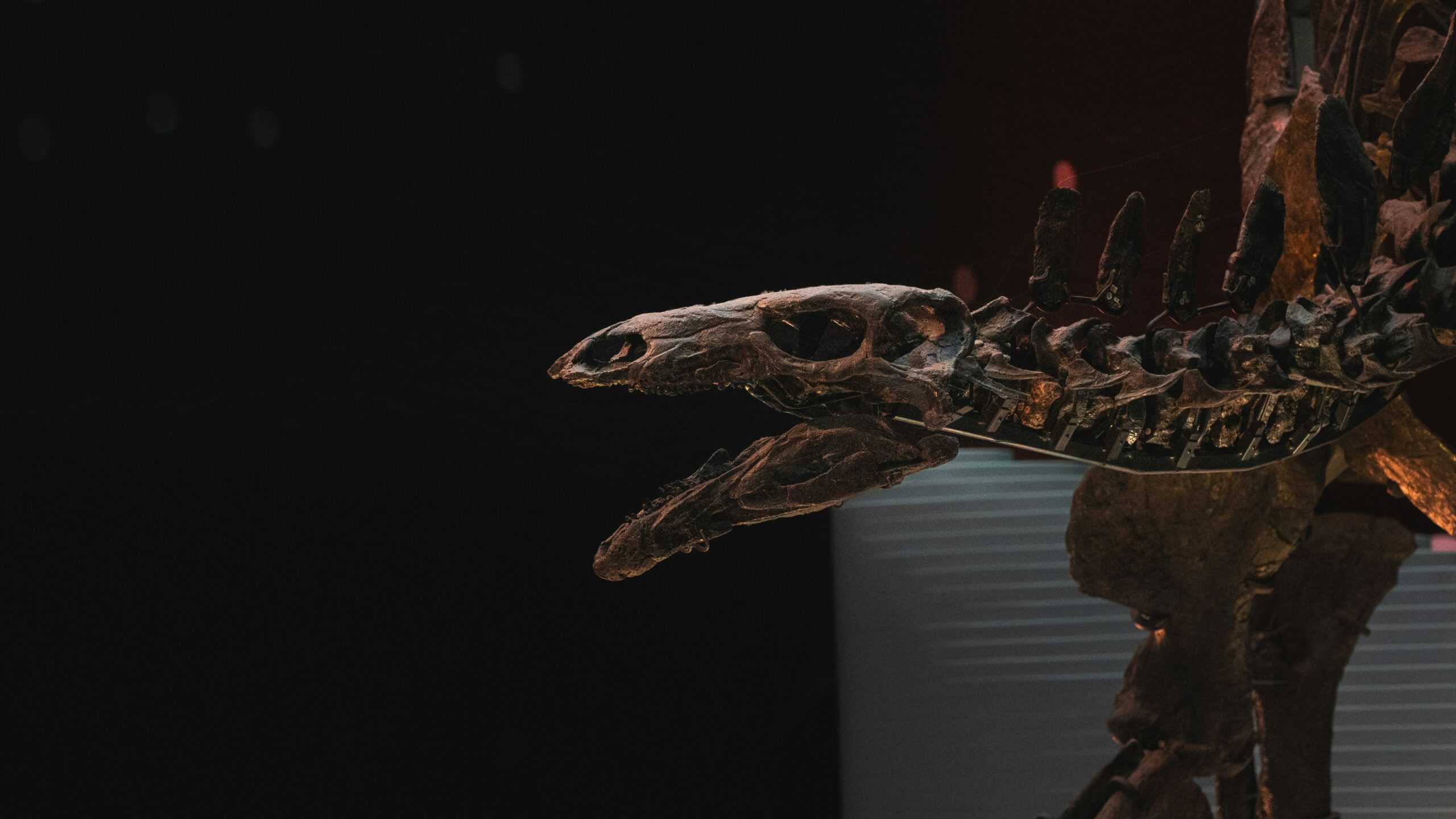
Few experiences shrink a visitor faster than standing under the ribs of a creature that died tens of millions of years ago. Natural history museums around the world mount towering fossils that let anyone look straight up into deep time. Here are eight famous dinosaur skeletons worth the trip.
1. Tyrannosaurus rex: The tyrant king in bone
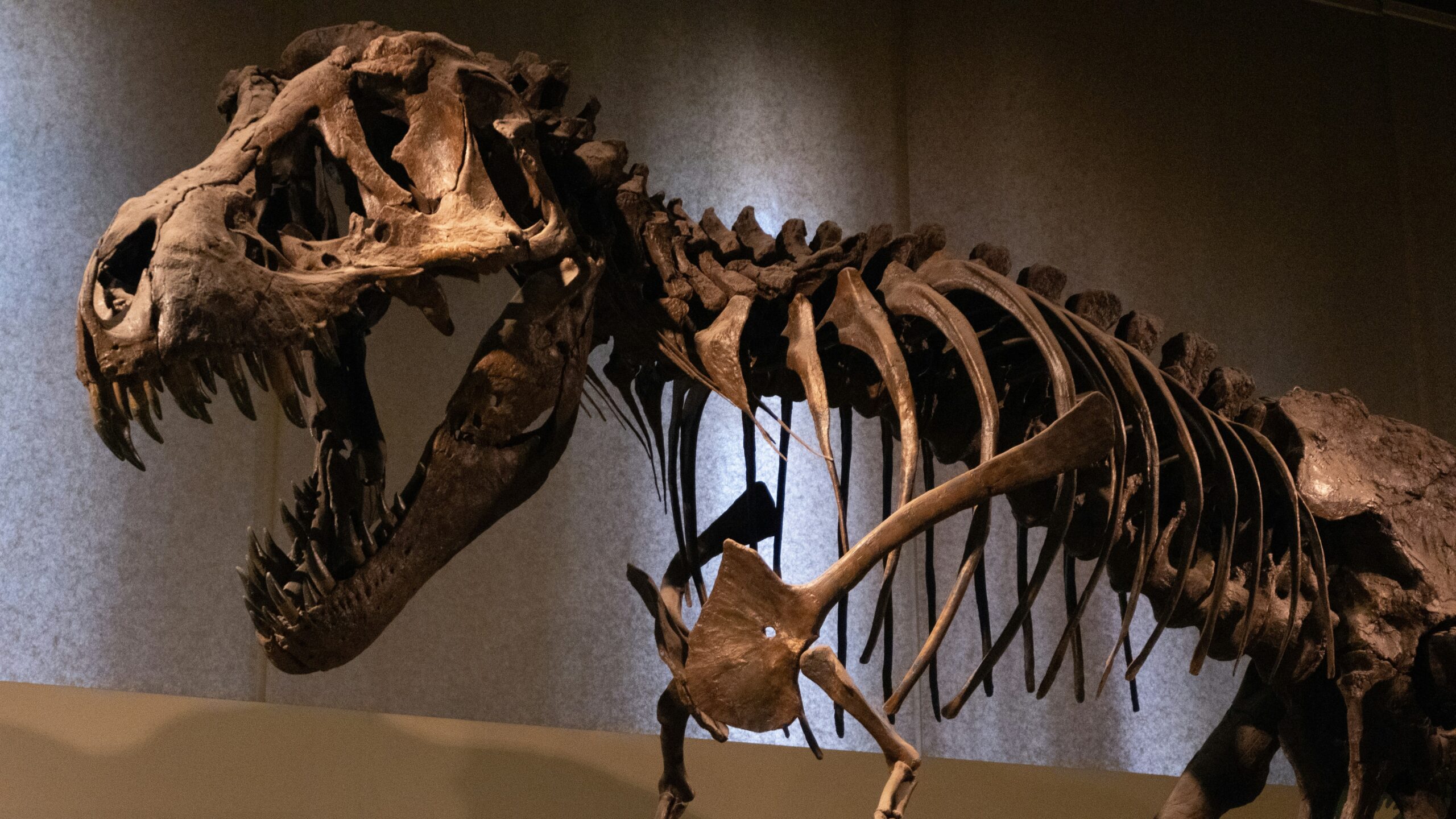
No dinosaur draws a crowd quite like Tyrannosaurus rex, and the most celebrated mounts carry names of their own. The Field Museum in Chicago displays a specimen called Sue, one of the most complete ever found. Farther north, the specimen known as Stan has been cast and copied for halls around the globe.
Standing beneath a rex mount reveals a skull longer than a person’s torso, studded with serrated teeth built for crushing bone. The forward-tipped posture used in modern reconstructions shows a hunter balanced over its hips, tail thrust out behind for counterweight. It is a body plan tuned entirely for the chase.
2. Brachiosaurus: A neck built for the ceiling
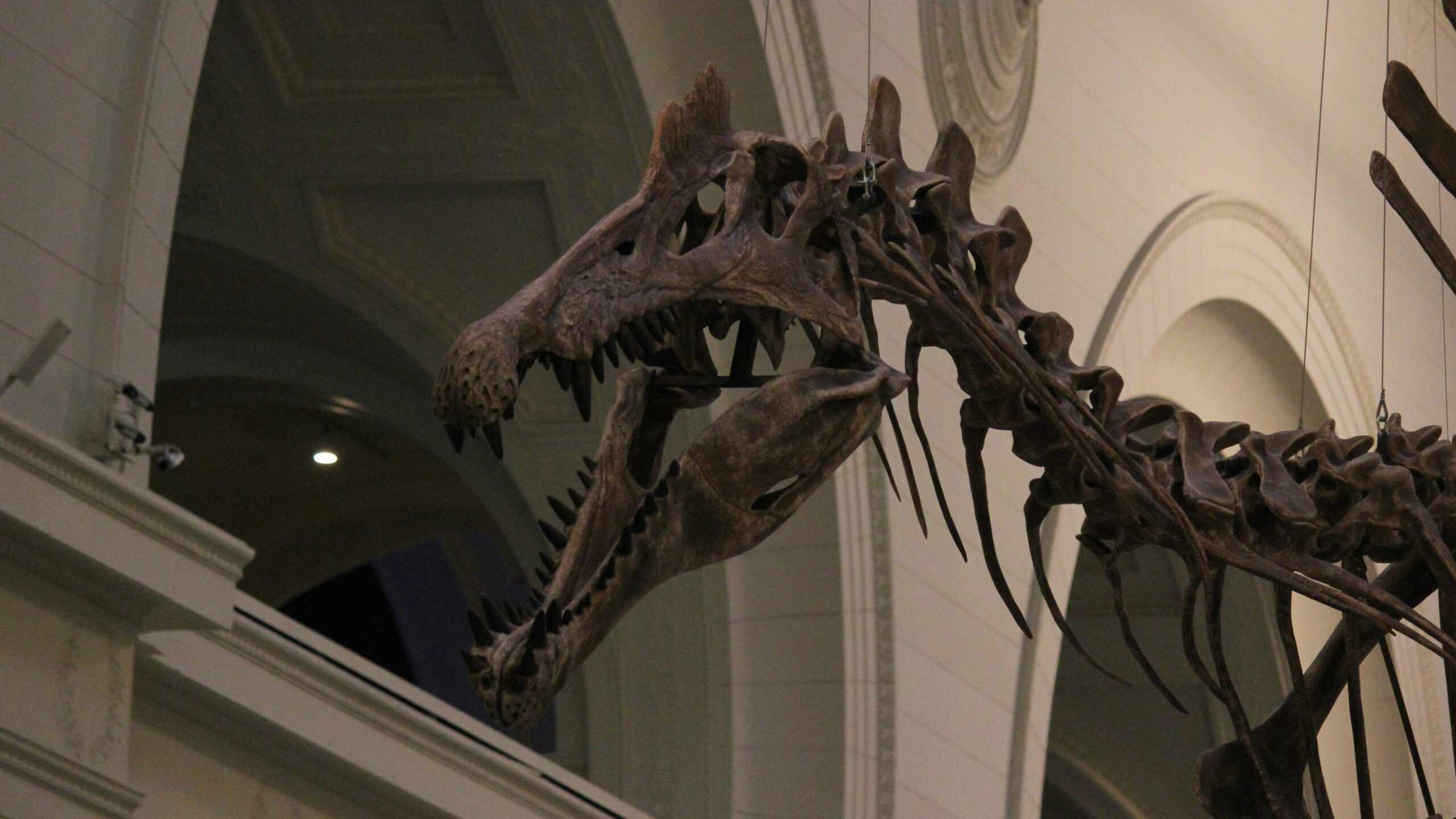
Where a rex fills a hall lengthwise, Brachiosaurus fills it upward. Its forelimbs stand taller than its hind legs, tilting the whole body toward the sky and lifting the head far above the floor. The Field Museum famously placed a towering cast in its outdoor plaza and airport terminal.
Visitors often crane their necks just to meet the animal’s gaze, which sat roughly four stories up in life. That giraffe-like build let the plant-eater browse treetops no other herbivore could reach. A mounted Brachiosaurus turns an ordinary museum atrium into something closer to a cathedral.
3. Diplodocus: The long-neck that circled the world
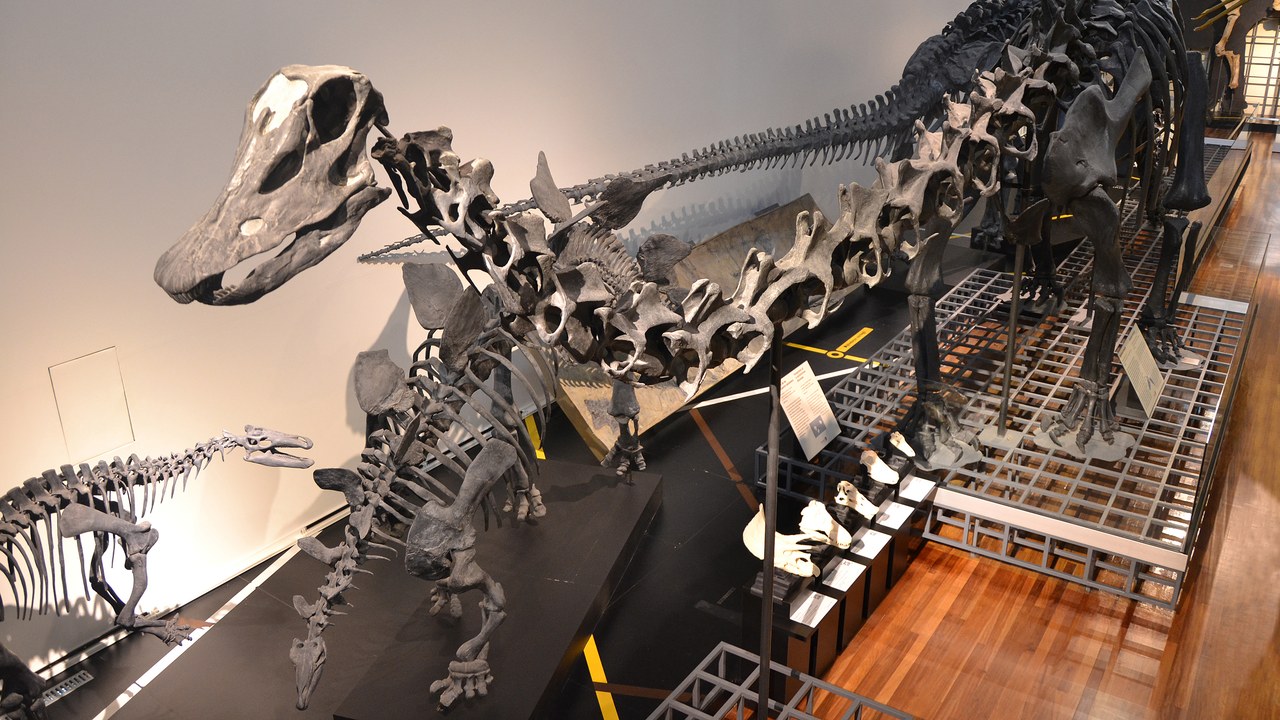
Perhaps no fossil has traveled farther than Diplodocus, thanks to a cast nicknamed Dippy. Andrew Carnegie funded copies of the original skeleton and sent them to museums across Europe and beyond in the early twentieth century. For generations of visitors, Dippy was the first dinosaur they ever met.
The animal stretches an astonishing length, most of it neck and whip-thin tail, all balanced over surprisingly modest legs. Its horizontal pose lets a mount run the full span of a gallery, forcing walkers to follow the spine from head to tail. Few skeletons better capture the sheer scale of the sauropods.
4. Triceratops: Three horns and a bony frill
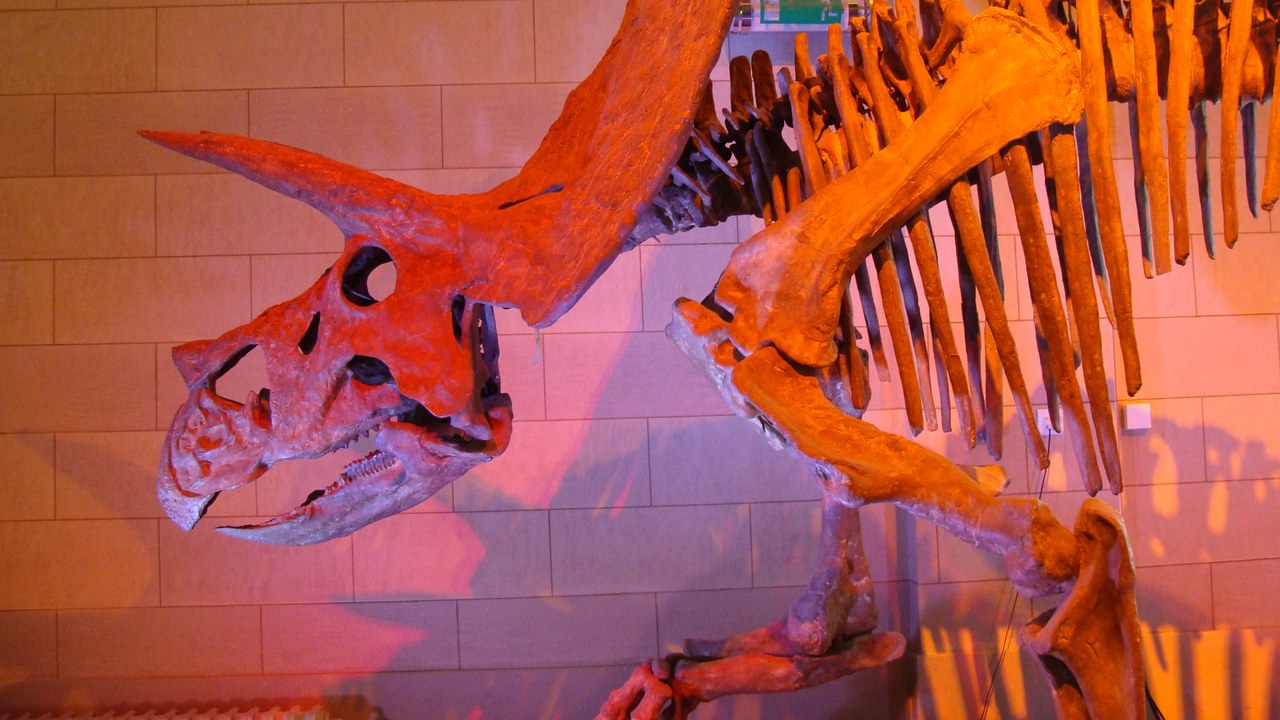
Squat and heavily armored, Triceratops anchors fossil halls with one of the most recognizable skulls in nature. A broad bony frill sweeps back over the neck while two long brow horns and a shorter nose horn jut forward. The Smithsonian has long displayed a restored mount at the heart of its dinosaur hall.
That massive head could account for nearly a third of the animal’s entire length. Researchers still debate whether the horns served mainly for defense against predators or for sparring among rivals. Either way, the skull alone is enough to stop a passing crowd in its tracks.
5. Stegosaurus: Plates up top, spikes out back
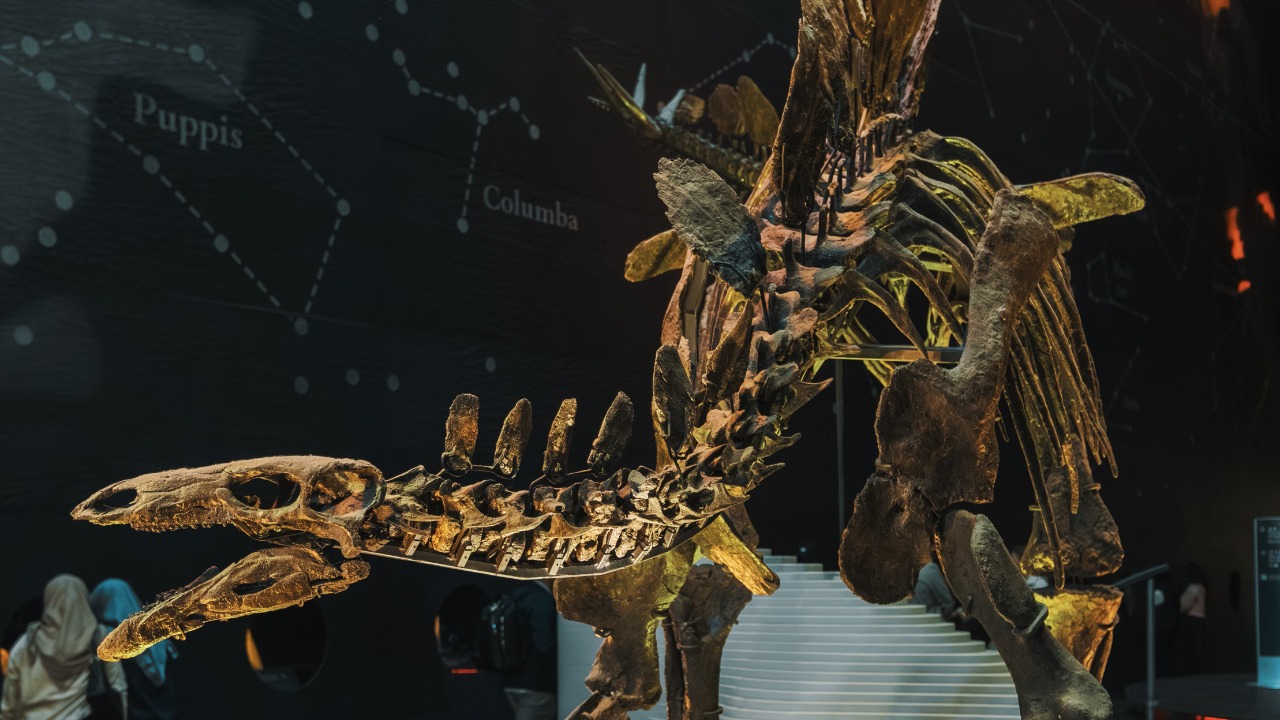
Stegosaurus is unmistakable the moment a visitor rounds the corner, thanks to the double row of tall plates running down its spine. The Natural History Museum in London unveiled a remarkably complete specimen nicknamed Sophie in recent years. Its tail ends in four fearsome spikes.
Scientists have argued for decades over whether those back plates were used for display, for regulating body heat, or for both at once. The spiked tail, informally called a thagomizer, was clearly a weapon a predator would learn to avoid. The result is a herbivore that looks armed from nose to tail.
6. Spinosaurus: The sail-backed river hunter
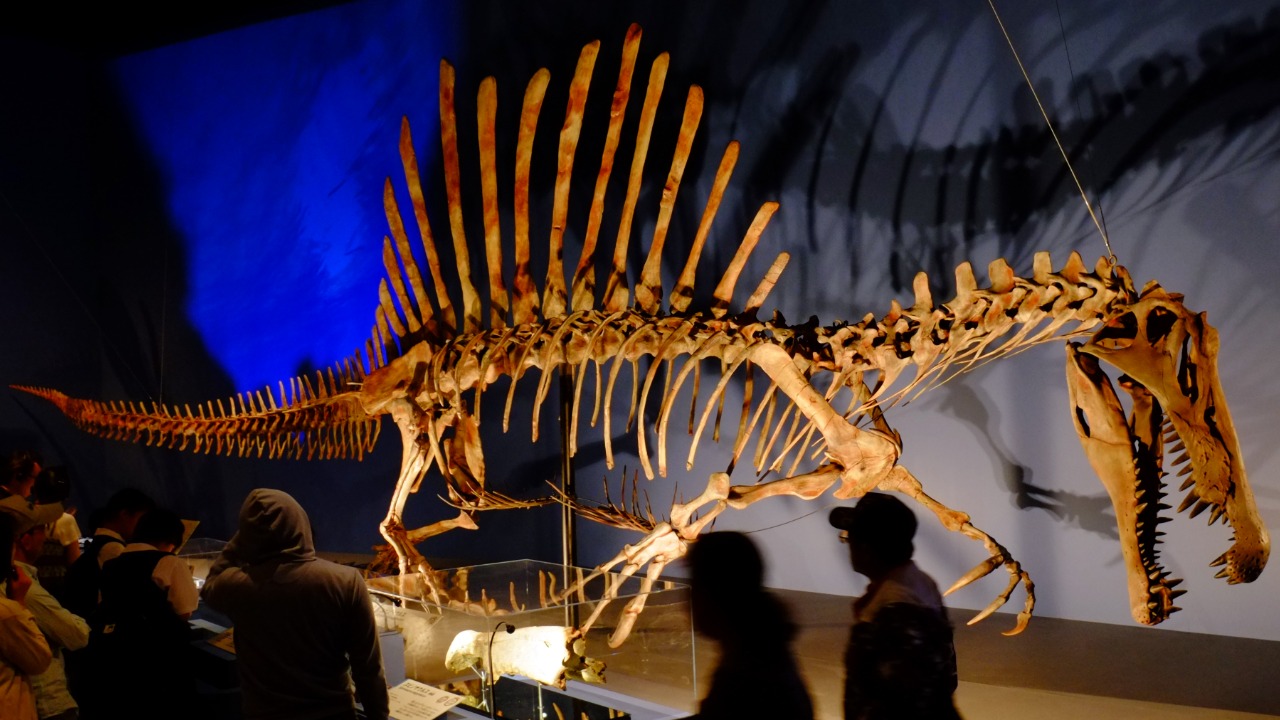
Longer than Tyrannosaurus and far stranger, Spinosaurus wore a tall sail of skin stretched over bony spines along its back. The National Geographic Society helped fund a life-size reconstruction built from newer North African finds. Its long, crocodile-like snout points to a life spent hunting fish.
Recent studies suggest the animal spent much of its time in the water, using a paddle-shaped tail to swim after prey. That makes it one of the only large dinosaurs adapted for a semi-aquatic existence. A mounted Spinosaurus rewrites the usual picture of what a giant predator looked like.
7. Allosaurus: The Jurassic predator on the prowl
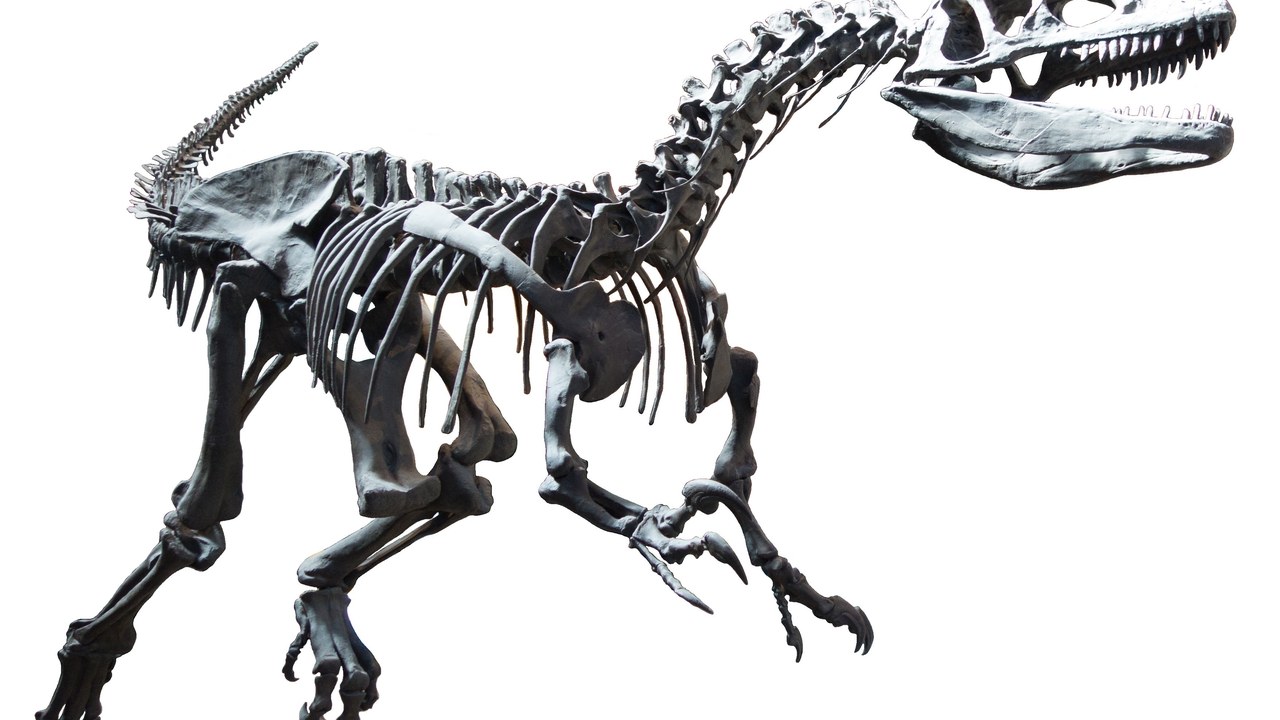
Tens of millions of years before the rex, Allosaurus was the dominant hunter of the Jurassic plains. Museums often mount it mid-stride, jaws parted and clawed arms reaching, as if frozen in the middle of a chase. Utah’s fossil beds have yielded so many specimens that it became the state fossil.
Smaller than its later Cretaceous cousins, Allosaurus made up for it with longer arms and strong grasping claws. Bite studies suggest it may have struck at prey with its upper jaw like a hatchet. Its mounts remain among the most dynamic and lifelike in any fossil hall.
8. Argentinosaurus: Among the largest to ever walk
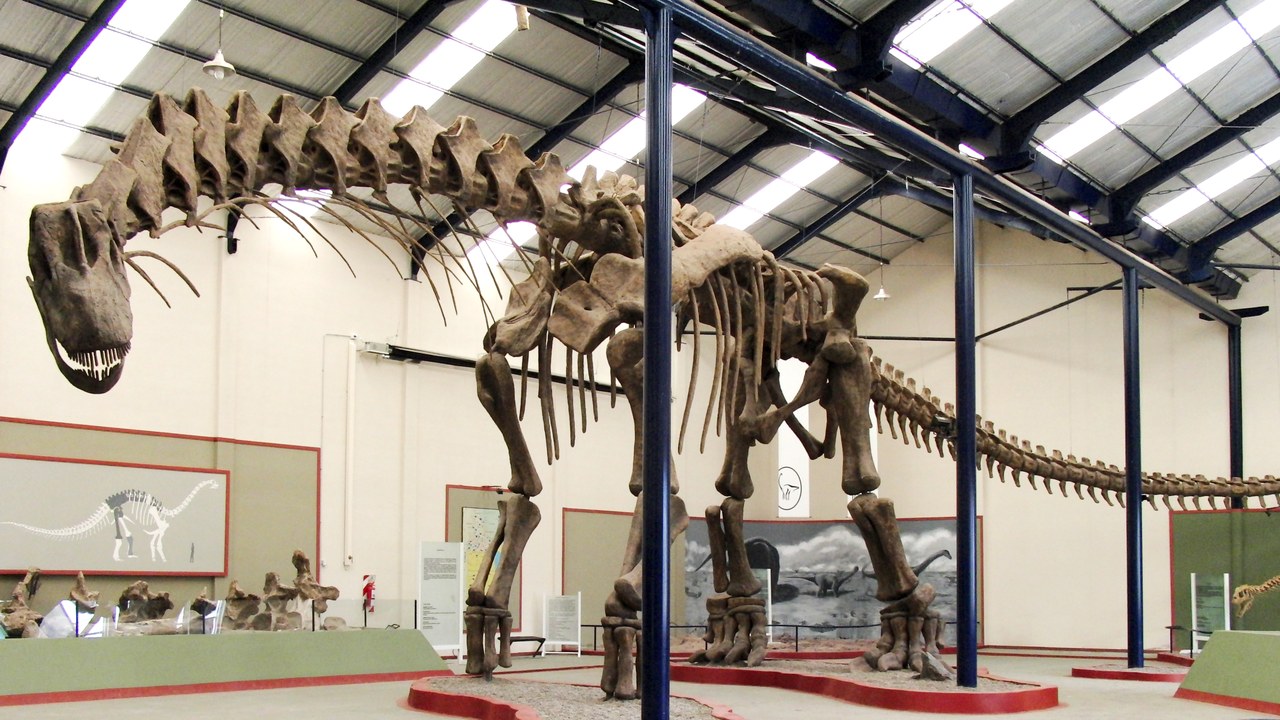
If sheer size is the goal, few skeletons rival Argentinosaurus, a titanosaur known from fragmentary bones found in Patagonia. Because complete remains are scarce, museums build reconstructed casts that stretch the length of an entire gallery. A single vertebra can stand taller than an adult.
Estimates place this giant among the most massive land animals ever to have lived, weighing as much as a herd of elephants. Walking beneath its cast, a visitor passes under a ribcage wide enough to park cars inside. It is a fitting finale to any hall of ancient giants.
More from Morning Overview
