Cruise ships are ranked by gross tonnage, a measure of enclosed internal volume rather than weight, which is why the biggest of them are described as enormous without anyone ever putting one on a scale. The largest now carry more people than many small towns and run well past 1,100 feet from bow to stern. These seven vessels sit at the top of that list.
1. Icon of the Seas: A New Ceiling for Cruise Size
Image Credit: Chakie2 – CC BY-SA 4.0/Wiki Commons
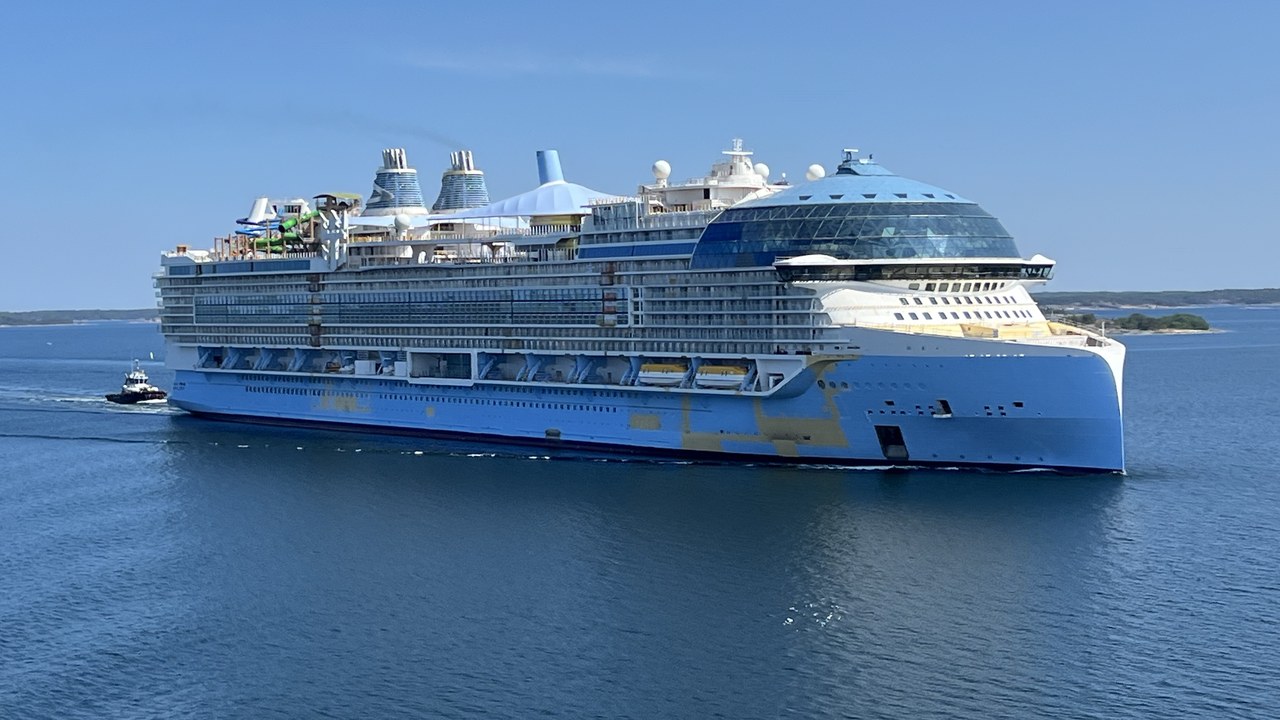
Royal Caribbean took delivery of Icon of the Seas from the Meyer Turku yard in Finland in late 2023, and the ship began sailing out of Miami in January 2024 at 248,663 gross tons, a measure of enclosed internal volume rather than weight. Its published specifications list a hull roughly 1,198 feet long, 20 passenger decks, a maximum capacity near 7,600 guests and about 2,350 crew.
Ending a fifteen-year run in which Oasis-class ships held the size title took roughly 13,000 additional gross tons. That scale buys amenities rather than range: the layout suits short Caribbean itineraries from the handful of ports able to handle the beam and draft. Rankings shift as yards deliver, so a largest-in-the-world label belongs to the date it was published.
2. Wonder of the Seas: Nearly Seven Thousand Berths
Image Credit: Thank You (25 Millions ) views from Fresno, USA – CC BY 2.0/Wiki Commons
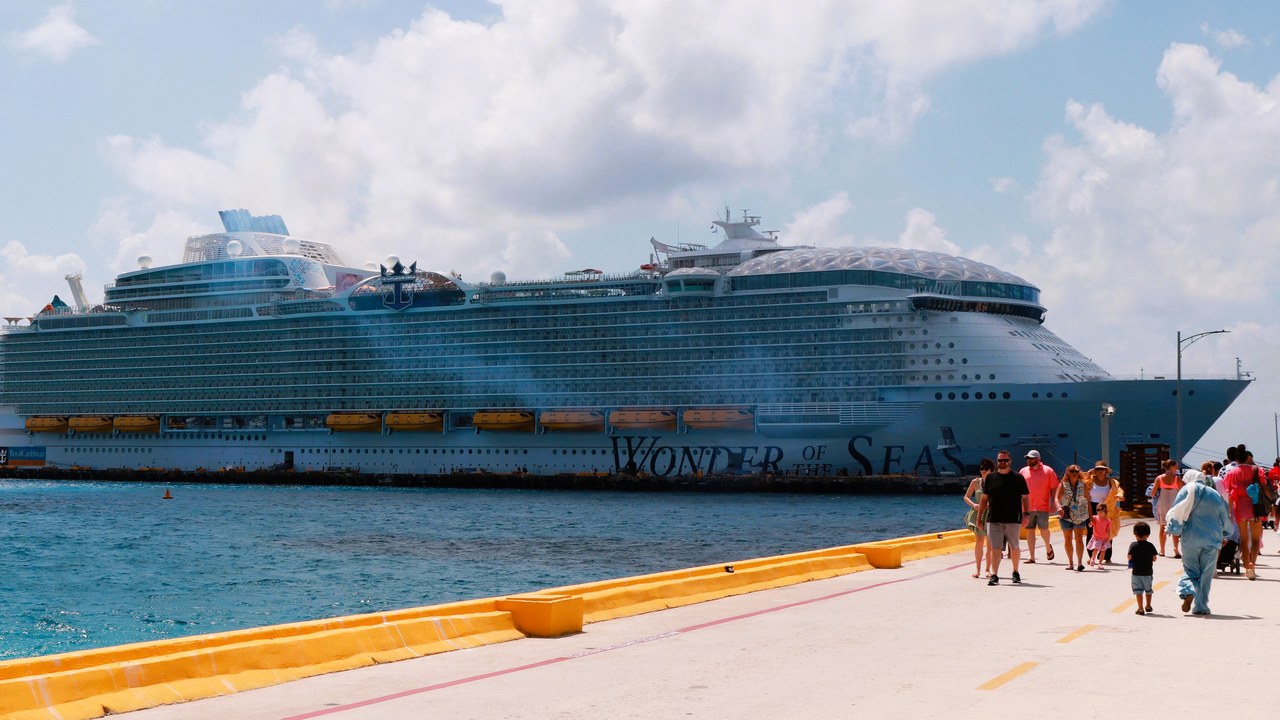
Delivered in March 2022 from Chantiers de l’Atlantique at Saint-Nazaire, Wonder of the Seas measures 235,600 gross tons and stretches about 1,188 feet across 18 decks. The fifth Oasis-class hull is rated for a maximum of 6,988 passengers alongside roughly 2,300 crew, a combined complement larger than the population of many American towns.
For two years it was the biggest cruise ship in service, a position it gave up to Icon of the Seas in January 2024. The design splits that crowd into eight themed neighborhoods, including an open-air park planted with live trees, which is how a vessel this size avoids reading as one continuous corridor.
3. Symphony of the Seas: Four Years at the Top
Image Credit: Yoeth Gallopers – CC BY 4.0/Wiki Commons
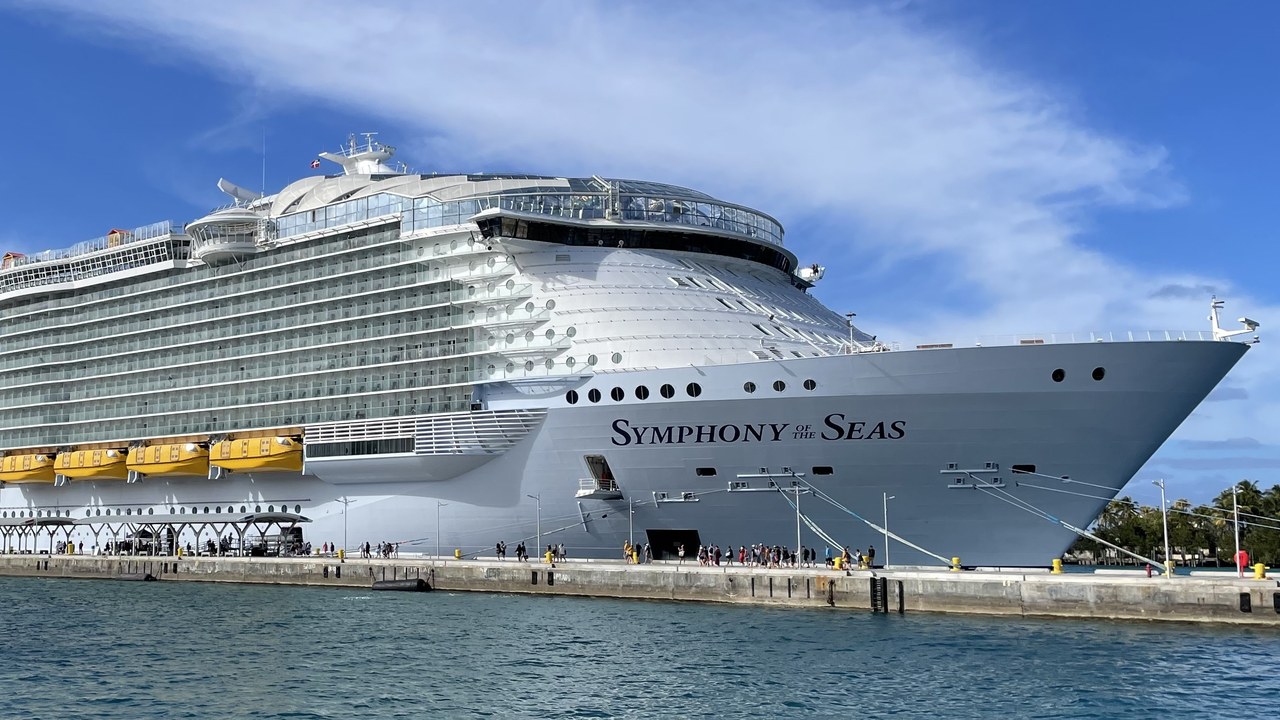
At 228,081 gross tons, Symphony of the Seas entered service in March 2018 as the largest cruise ship then afloat and held that standing until Wonder of the Seas arrived four years later. Built at Saint-Nazaire, the ship runs about 1,184 feet long with a listed maximum capacity of 6,680 guests and around 2,200 crew.
The margin over its immediate predecessor came to roughly 1,100 gross tons, a reminder that records in this class have moved in increments rather than leaps. Because gross tonnage counts enclosed volume, the figure rewards tall superstructures and interior atriums as much as hull length, which is how these ships gained size without getting much longer.
4. Harmony of the Seas: Ten Stories of Dry Slide
Image Credit: Frans Berkelaar – CC BY 2.0/Wiki Commons
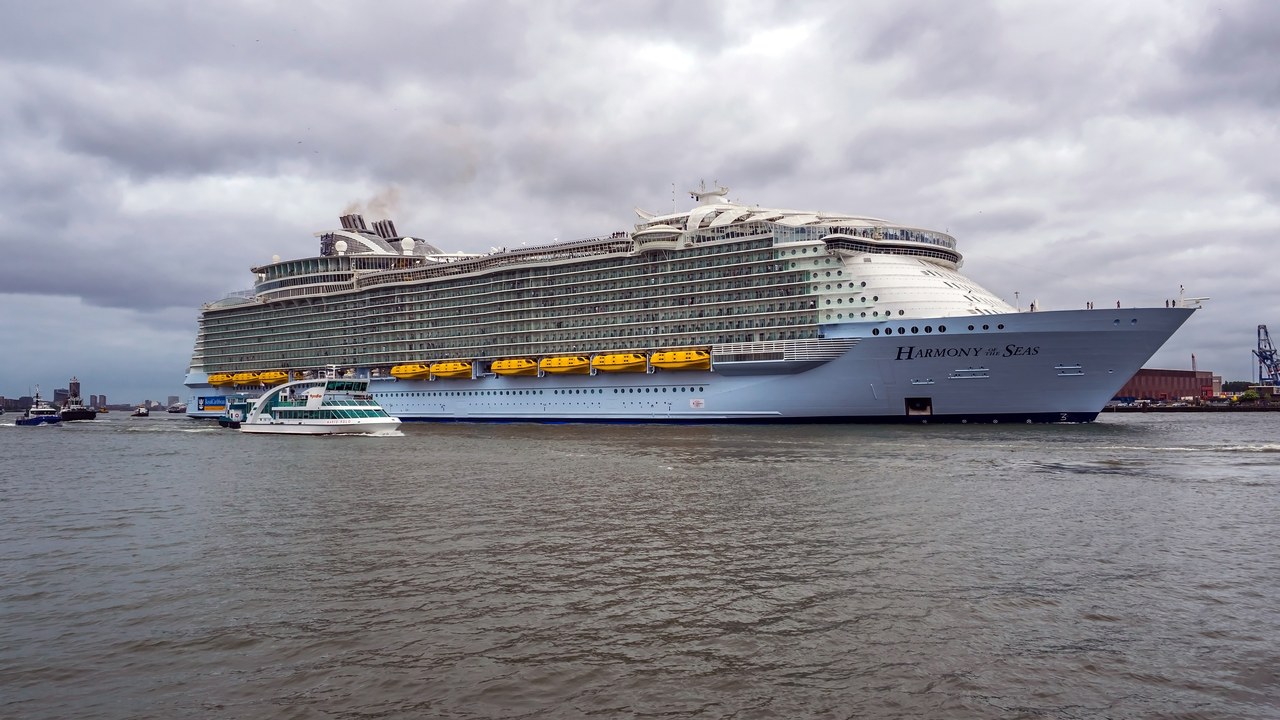
Harmony of the Seas came out of the Saint-Nazaire yard in 2016 at 226,963 gross tons, the third Oasis-class hull and the first to carry the Ultimate Abyss, a ten-story dry slide dropping from the sports deck toward the boardwalk far below. Its recorded dimensions put length at about 1,188 feet, with 6,687 passengers at maximum occupancy.
Reported construction cost approached a billion dollars, spent largely on the interior volume that the tonnage figure is actually measuring. The practical consequence of that size is scheduling: a single call brings close to 9,000 passengers and crew into one harbor at once, which is why only a limited set of terminals can take the class at all.
5. Allure of the Seas: Two Inches of Bragging Rights
Image Credit: Thomas Dahlstrøm Nielsen – CC BY 4.0/Wiki Commons
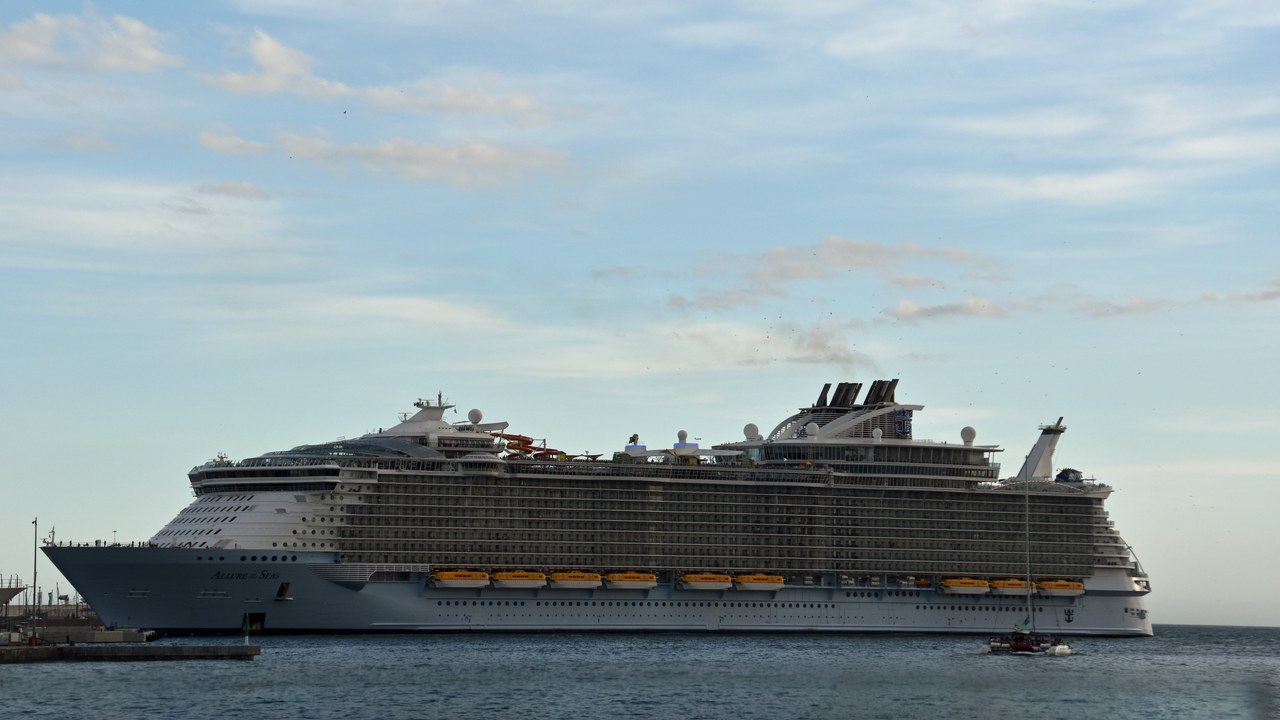
Built alongside its near-twin at the Turku yard in Finland and delivered in 2010, Allure of the Seas measures 225,282 gross tons and is recorded as 50 millimeters, about two inches, longer than the ship it was copied from, a difference attributed to warmer weather during construction. The vessel’s specifications list a maximum of 6,780 passengers.
That trivia matters only because the two hulls are otherwise near-identical, which is the entire point of building a class instead of one-offs: the second ship costs less to design and takes less time to finish. It also shows how little separates these giants, since five of the seven vessels here share the same basic architecture.
6. Oasis of the Seas: The Ship That Broke the Ceiling
Image Credit: kees torn – CC BY-SA 2.0/Wiki Commons
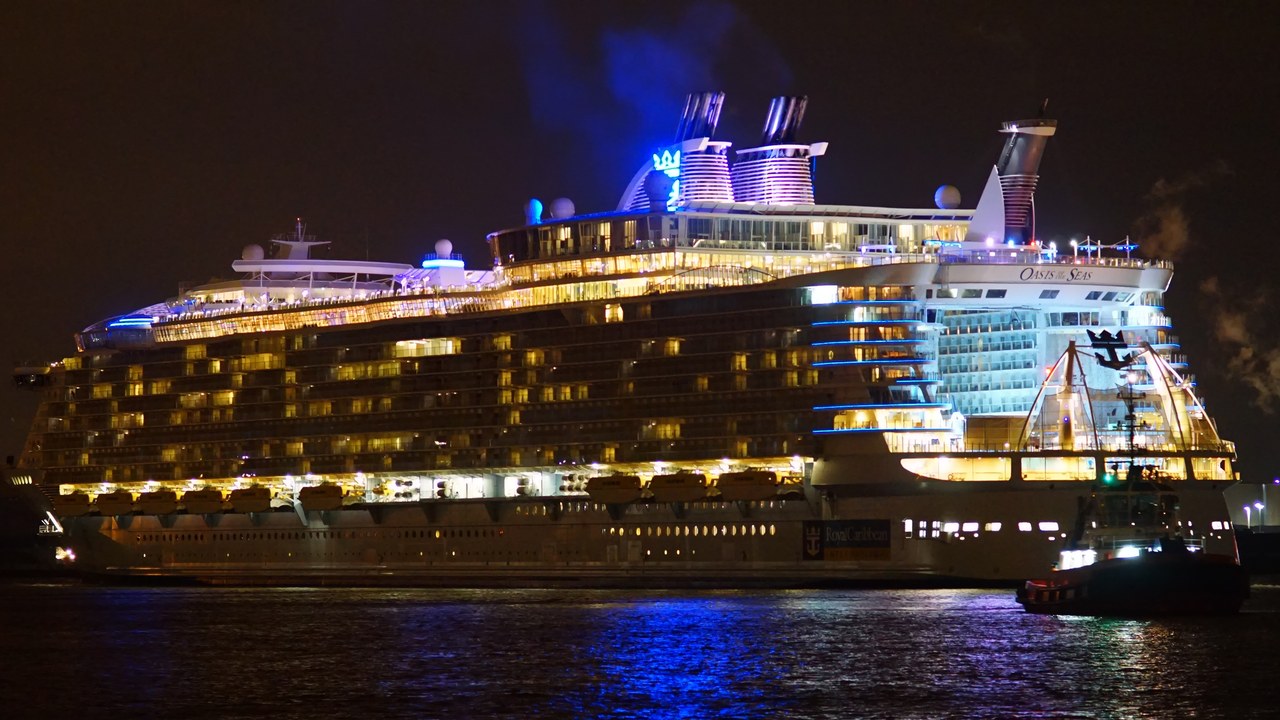
When Oasis of the Seas entered service in December 2009, no passenger vessel had come close to it: at 225,282 gross tons it held about 45 percent more enclosed volume than Freedom of the Seas, the largest cruise ship before it. The original design introduced the split superstructure and the open-air park running down the middle that every later ship in the class reused.
Its funnels were built to retract so the hull could clear the Great Belt Fixed Link on delivery from Finland, a detail that shows how bridges and channels quietly cap ship design. A later refit added attractions and further tonnage, so figures published for the ship now can differ from the number recorded at delivery.
7. MSC World Europa: A Gas-Powered Outlier
Image Credit: ND44 – CC BY-SA 4.0/Wiki Commons
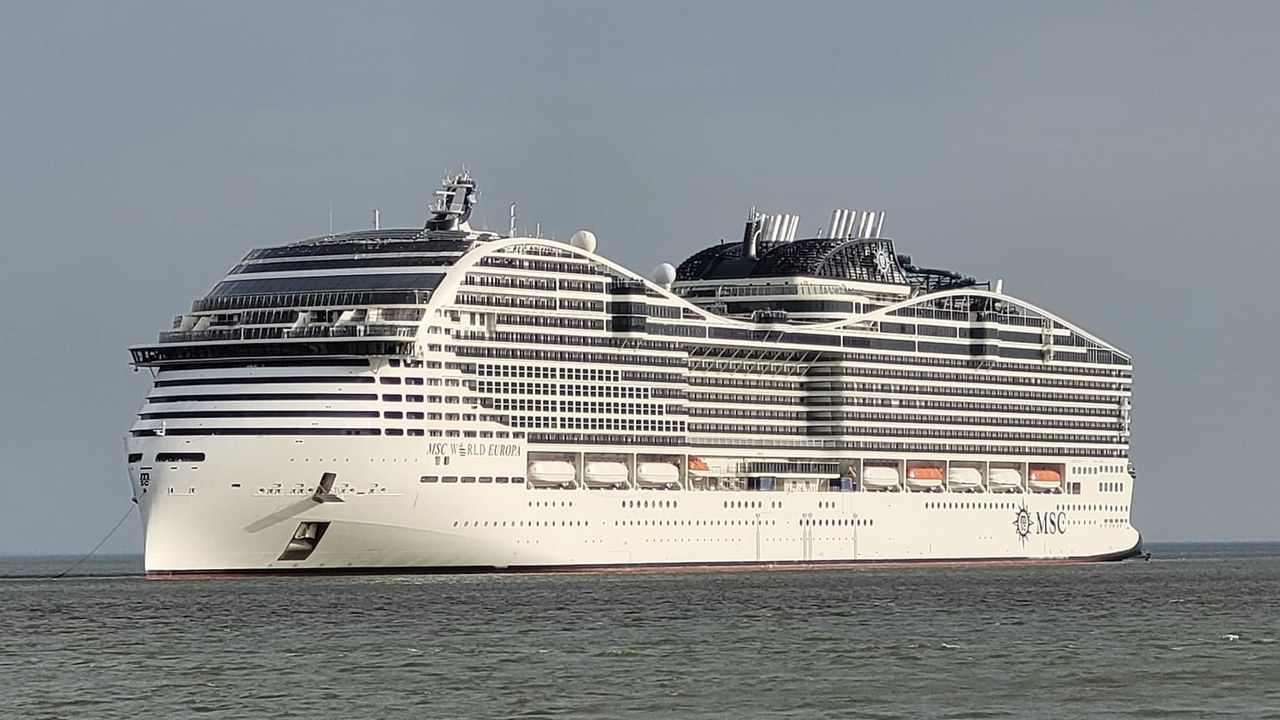
Chantiers de l’Atlantique handed MSC World Europa over in late 2022 at 215,863 gross tons, then the largest ship in the MSC fleet and the first the line ordered with liquefied natural gas propulsion. Its technical description gives a length near 1,094 feet, 22 decks and room for roughly 6,762 passengers, plus a solid oxide fuel cell installed as a demonstrator.
The ship spent its first weeks moored at Doha as floating accommodation during the 2022 football World Cup before starting Mediterranean service. Gas propulsion cuts sulphur and particulate emissions against marine fuel oil, though methane slipping through combustion offsets part of the climate benefit, so the environmental case is narrower than the brochures suggest.
Morning Overview is reader-supported. Some links in our articles are affiliate links, and we may earn a commission at no extra cost to you. As an Amazon Associate I earn from qualifying purchases. Full disclosure.