
Some landscapes seem designed for science fiction even though geology, chemistry, ice, and wind made every detail. Red-stained glaciers, wandering rocks, caustic water, immense dunes, and empty salt flats create scenes that appear detached from ordinary Earth. These five places show how natural processes can build settings stranger than a movie crew could convincingly invent.
1. Blood Falls, Antarctica: A Glacier Stained by Ancient Brine
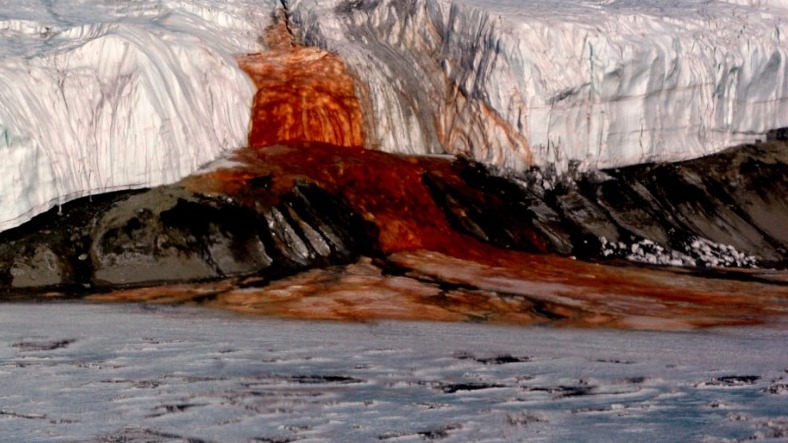
Blood Falls spills a rust-red stain across the pale face of Taylor Glacier, creating the unsettling impression that the ice itself is bleeding. An NSF-hosted study of the outflow identifies it as iron-rich brine discharged at the glacier’s terminus. The dissolved iron reacts after reaching the surface, producing the color that makes the flow visible from far across the frozen landscape.
The setting adds to its extraterrestrial character. Antarctica’s cold, dryness, and isolation leave the red flow surrounded by a nearly monochrome world of ice and rock. High salt content allows the brine to remain liquid at temperatures that freeze ordinary fresh water, while its buried environment preserves chemical conditions unlike the surface. Blood Falls is therefore not a theatrical effect but the exposed edge of a hidden system operating beneath one of Earth’s harshest glaciers.
2. The sailing stones of Death Valley: Rocks Draw Tracks Across a Dry Lakebed
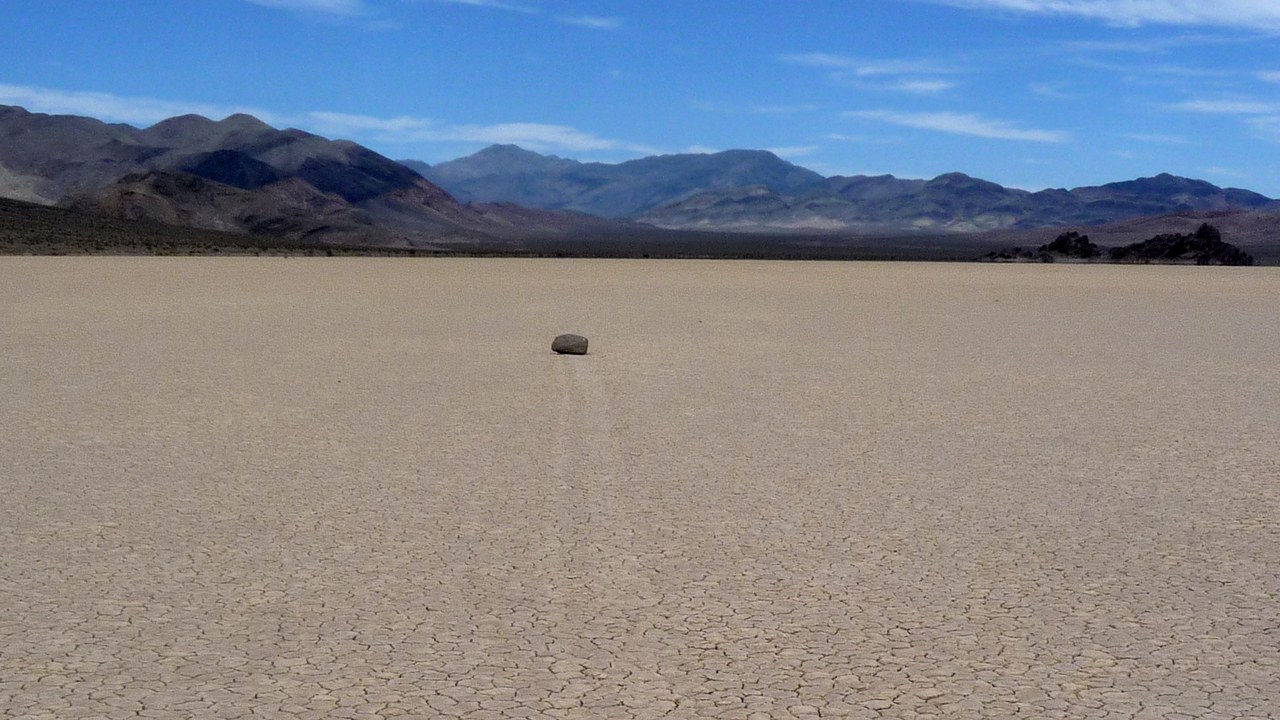
The sailing stones of Death Valley leave long trails across Racetrack Playa even though no person or machine pushes them. A National Park Service Racetrack explanation describes the rare combination behind the movement: shallow water freezes into thin panels, sunlight breaks the ice, and light wind drives those panels against rocks. The stones then slide slowly over slick mud.
Most visits reveal only the aftermath, with isolated rocks resting at the ends of sharp or curving tracks across a flat expanse. That silence made the phenomenon mysterious for decades because the correct conditions are uncommon and the motion can be subtle. The playa’s cracked surface, distant mountains, and apparently self-propelled stones create a natural scene with the visual grammar of another planet, yet every line records a real meeting of water, ice, wind, and stone.
3. Lake Natron: Minerals Turn a Lake Into a Red Mosaic
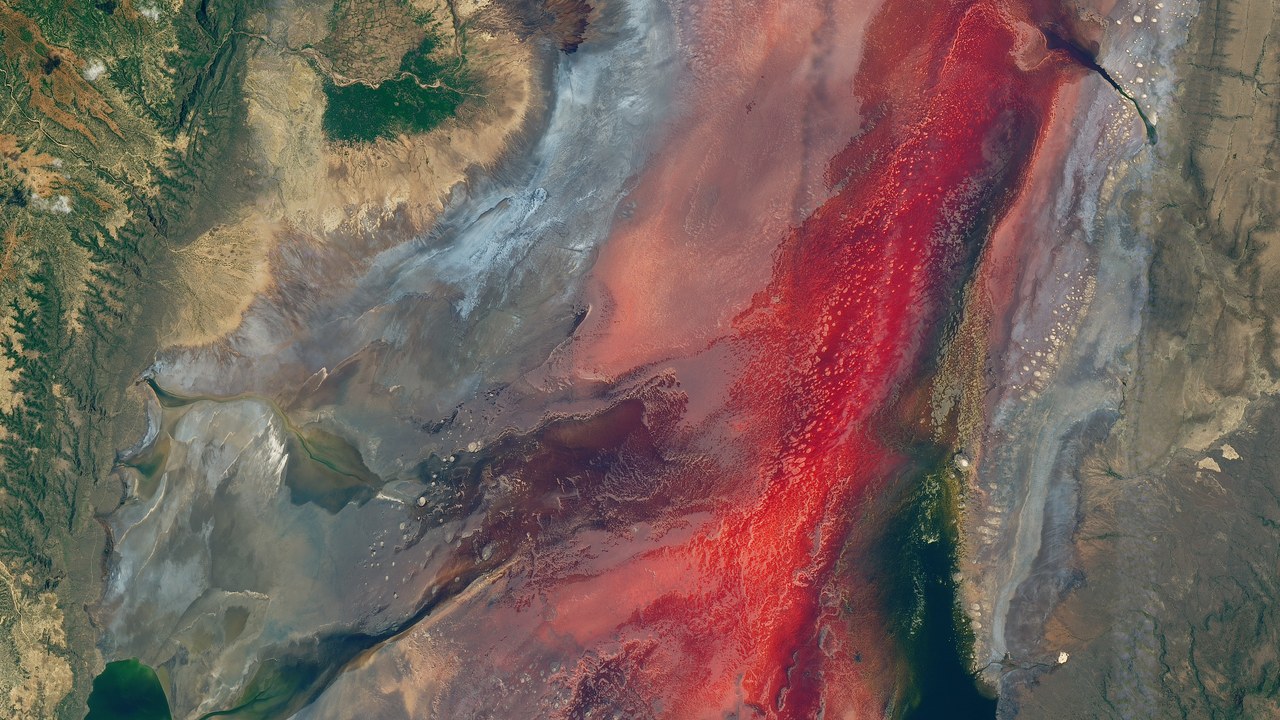
Lake Natron can shift into broad fields of red, orange, and white as shallow water, salt, minerals, and microorganisms divide its surface into unnatural-looking patterns. NASA’s Earth Observatory account describes water that is warm, salty, and alkaline enough to exclude most species. Seasonal changes in water depth and exposed salt crust continually redraw the lake’s otherworldly surface.
The same alkaline environment that is hostile to many animals supports organisms adapted to extreme water chemistry. Microbial pigments help produce the vivid colors, while the lake remains an important breeding place for lesser flamingos. This contrast makes Natron stranger than a simple dead zone: life flourishes there, but only under conditions that exclude many other species. From above, its shifting color fields resemble a planetary map painted in salt, heat, and concentrated minerals rather than an ordinary lake.
4. Sahara: A Continental Desert Sculpted by Wind
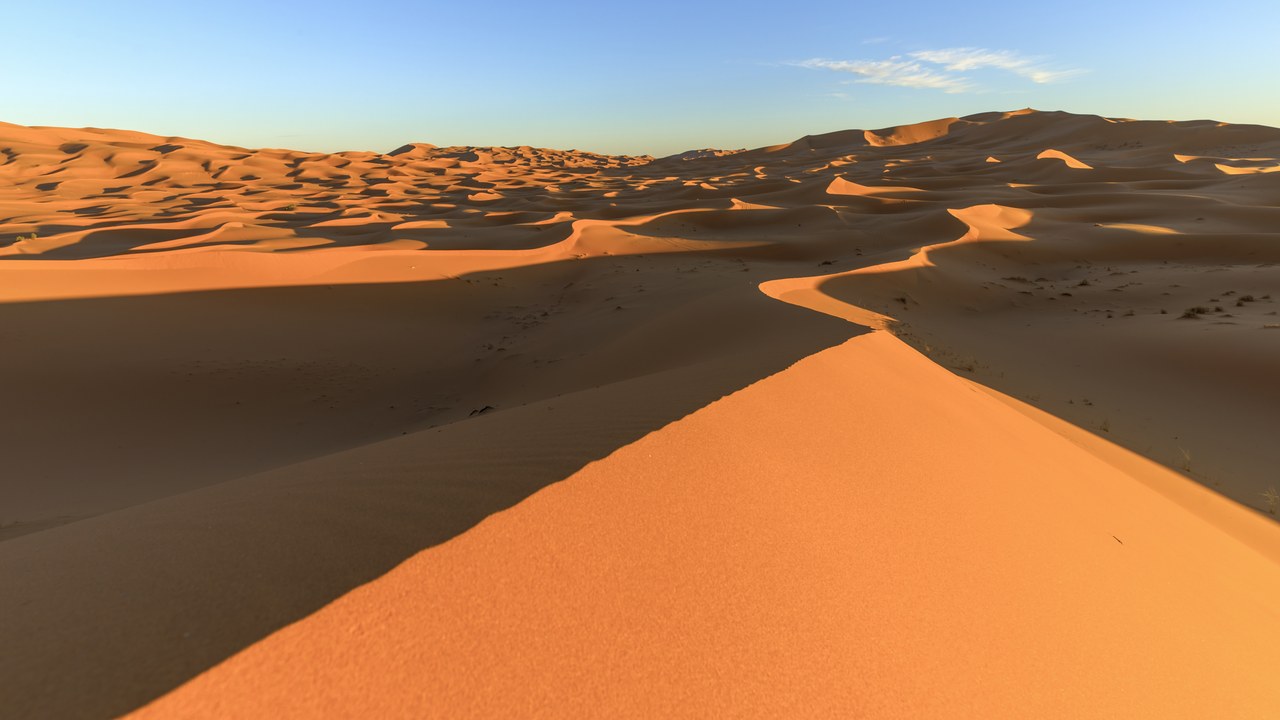
The Sahara is the world’s largest hot desert, covering an area roughly comparable to the United States. Its continental scale allows dune seas, gravel plains, bare plateaus, mountain ranges, and salt flats to exist within one region. In places such as Erg Chebbi, repeated ridges of sand catch changing light and erase familiar signs of roads, buildings, plants, or water.
That apparent emptiness is deceptive rather than absolute. Wind continually reshapes exposed surfaces, while temperature, scarce rainfall, and distance determine where plants, animals, and settlements can persist. Dunes may dominate popular images, but much of the Sahara is stony terrain whose muted colors look equally remote. The result is a landscape where scale overwhelms ordinary depth cues. A person, vehicle, or tree can disappear into the frame, leaving sweeping geometry that resembles an uninhabited planet more than a populated continent.
5. Great Basin Desert: A Cold Desert of Basins and Ranges
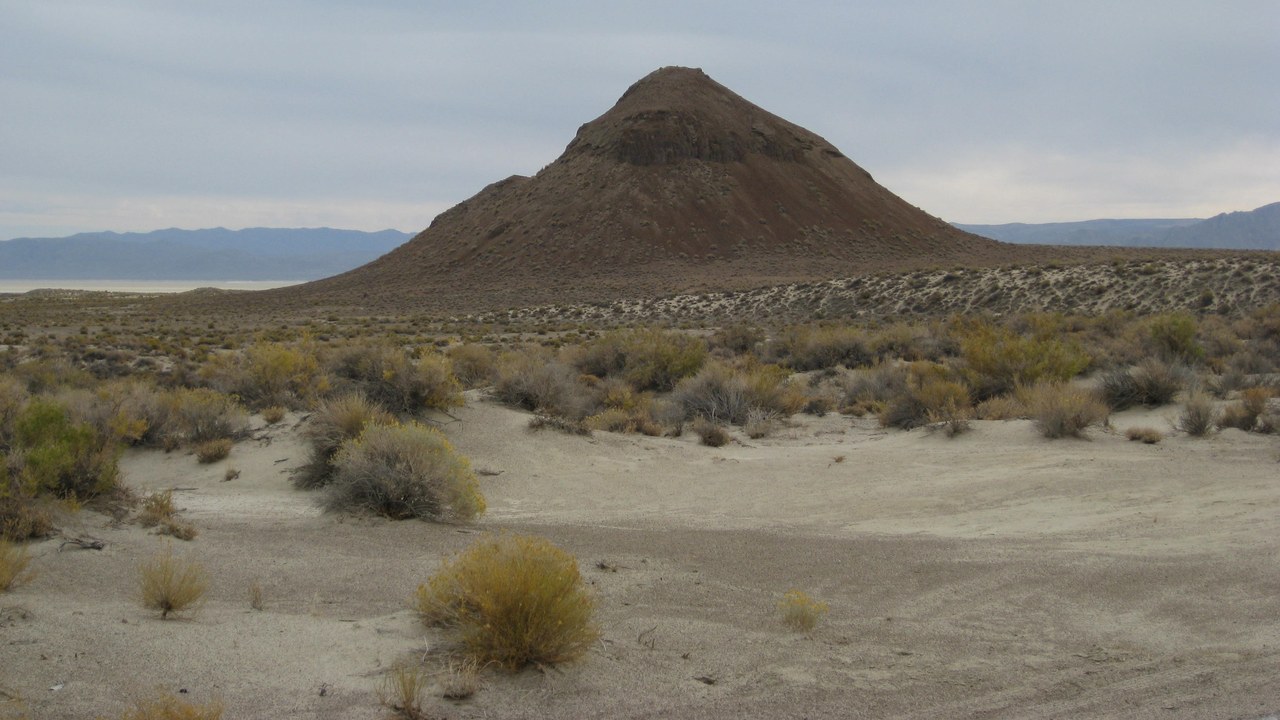
The Great Basin Desert is the largest desert in the United States, spreading across a broad section of the interior West. The cold-desert region is defined by mountain ranges separated by wide basins with no outlet to the sea. Dry lakebeds and pale playas flatten the foreground while dark ridges rise abruptly at the horizon, producing an austere, almost lunar sense of scale.
Unlike a stereotypical hot sand desert, this landscape receives winter snow and supports communities adapted to cold, elevation, and limited moisture. Water drains inward and disappears through evaporation or into the ground, leaving salts and fine sediment across basin floors. In the Black Rock Desert, that process creates a vast, hard surface that can appear nearly featureless under open sky. The combination of emptiness, sharp topography, and seasonal extremes makes the region feel less like one ecosystem than a chain of separate worlds.
This article was produced with the assistance of AI and reviewed by Morning Overview editors prior to publication.
More from Morning Overview
- A Colorado wildfire has exploded past 87,000 acres with no containment
- A wildfire near Ouray swelled past 18,000 acres, putting Colorado towns on alert
- The Pentagon’s newest UFO files describe a fish-scaled, potato-shaped object on camera
- Scientists spotted a rare tusked whale alive at sea for the first time, then fired a crossbow at it.
More from Morning Overview
