
Ancient builders understood that placement could become a performance, whether stones framed the sky, gears tracked celestial cycles, or monuments commanded an entire landscape. Their surviving creations join careful geometry with immense labor, making orientation visible at a scale no visitor could ignore. These five works turned alignment itself into spectacle.
1. Göbekli Tepe: Pillars Ordered Around a Center
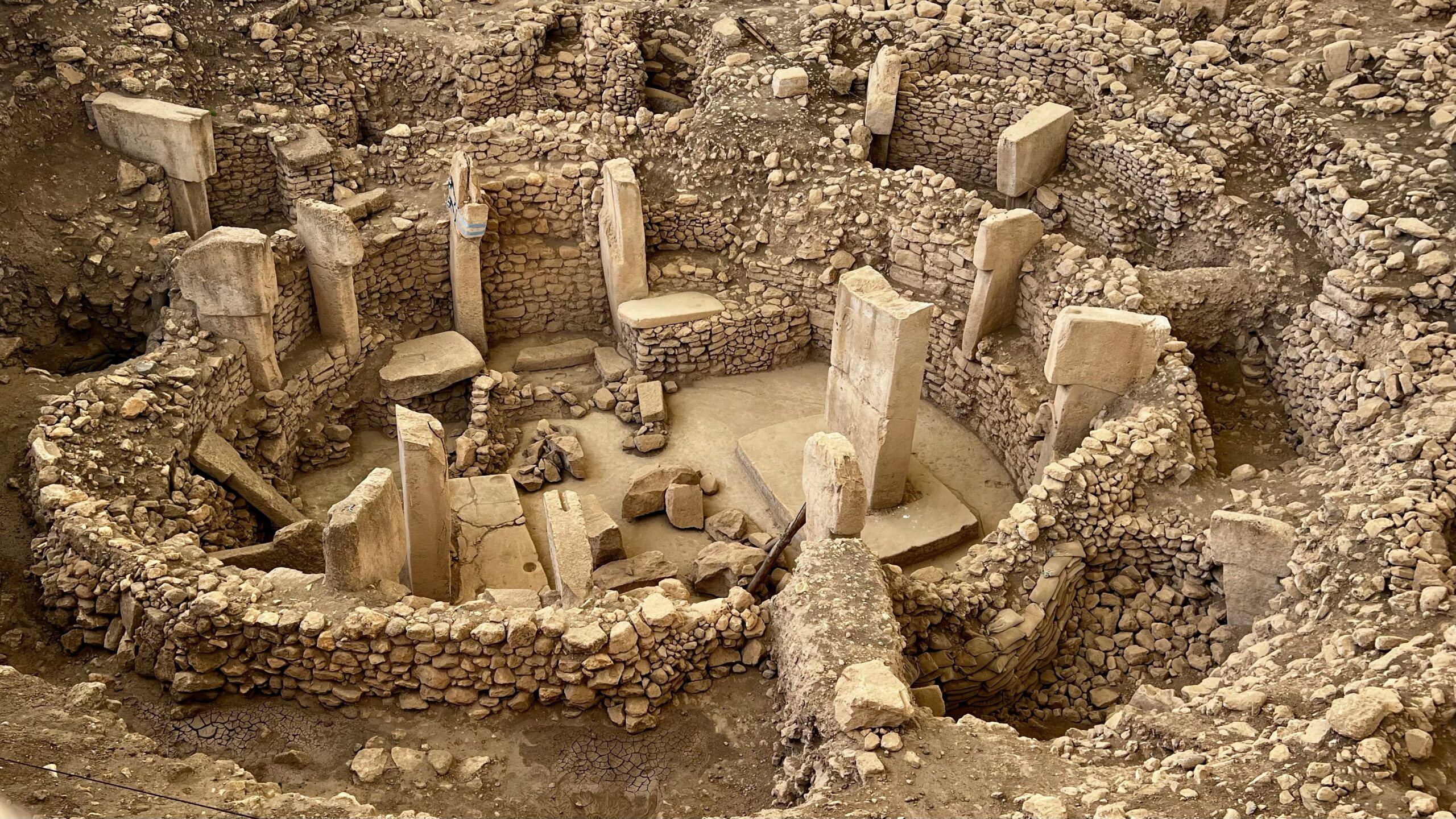
Göbekli Tepe arranged carved T-shaped pillars into monumental enclosures long before the great cities of later civilizations. The ancient hilltop complex used repeated rings and prominent central stones to turn spatial order into an experience. Visitors moving around those enclosures would have encountered carved animals, looming monoliths, and sightlines shaped by the builders’ placement choices. The spectacle came from relationships among the stones, not from any single pillar in isolation.
That organization is remarkable because the site belongs to a prehistoric world without modern instruments, cranes, or written plans. Builders selected, carved, transported, and stood heavy limestone elements in a coherent layout. Archaeologists still debate how the enclosures were used and what their imagery meant, so claims about a single astronomical purpose go too far. The safer conclusion remains powerful: coordinated geometry and repeated orientation helped an early community create architecture larger and more deliberate than ordinary shelter.
2. Stonehenge: A Horizon Framed in Stone
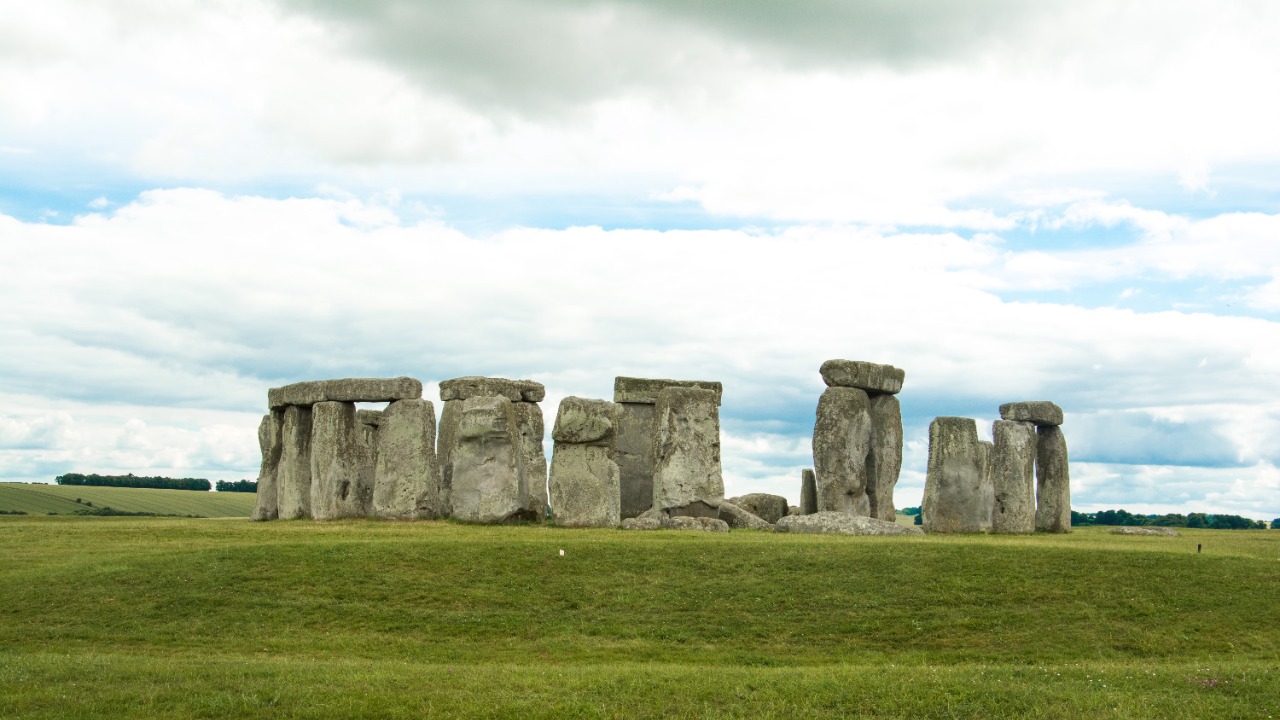
Stonehenge turns a ring of stone into a carefully directed encounter with the horizon. Its builders arranged uprights, lintels, and an avenue along a strong axis associated with the sun’s seasonal extremes, making a celestial event legible through architecture. The monument’s solar alignment connects its carefully placed stones with recurring moments in the year. Material, route, and sky therefore meet in one enduring composition.
The effect does not require every construction question to have a dramatic solution. Communities could organize labor, revise the monument over generations, and combine routes without leaving modern records. What survives is deliberate: massive elements positioned so movement through the site and views beyond it feel controlled. Stonehenge shows how a structure can act as both place and instrument, directing attention toward recurring moments no wall or roof could create alone.
3. The Antikythera mechanism: Celestial Cycles Meshed in Bronze
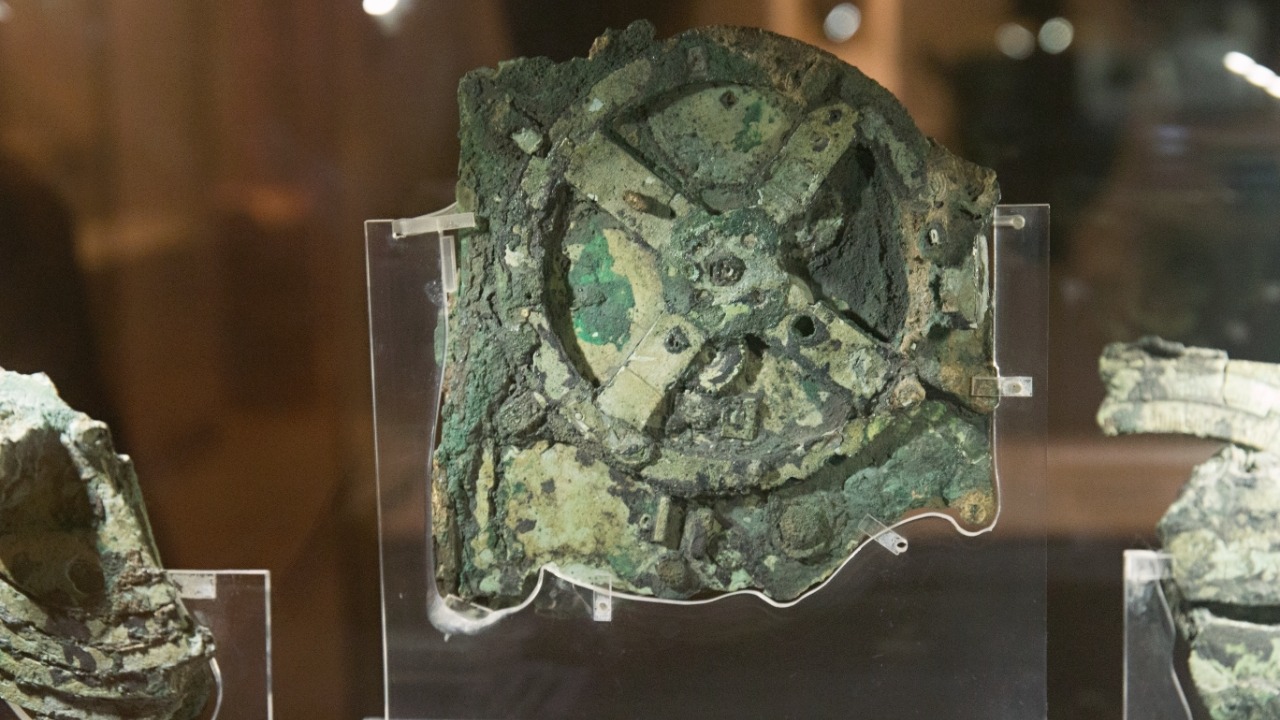
The Antikythera mechanism miniaturized celestial alignment into a dense assembly of bronze gears. The roughly 2,000-year-old geared computer modeled motions and cycles in the heavens through mechanical relationships among its components. Turning an input moved multiple displays in coordinated ways, translating time into positions a user could read. Instead of waiting for the sky to reveal an event, the mechanism made recurring astronomical patterns available through a portable object.
Surviving fragments are corroded and incomplete, so modern understanding comes from imaging, inscriptions, and reconstruction rather than an intact manual. That uncertainty makes the known achievement more striking. Ancient makers calculated gear ratios, cut small teeth, and packaged interacting parts so their motions stayed synchronized. It was neither a modern digital computer nor a decorative model, but a specialized calculator whose spectacle lay inside the case, where mathematical cycles became the alignment of pointers and dials.
4. The Great Pyramid of Khufu, Giza: Geometry Enlarged to a Horizon
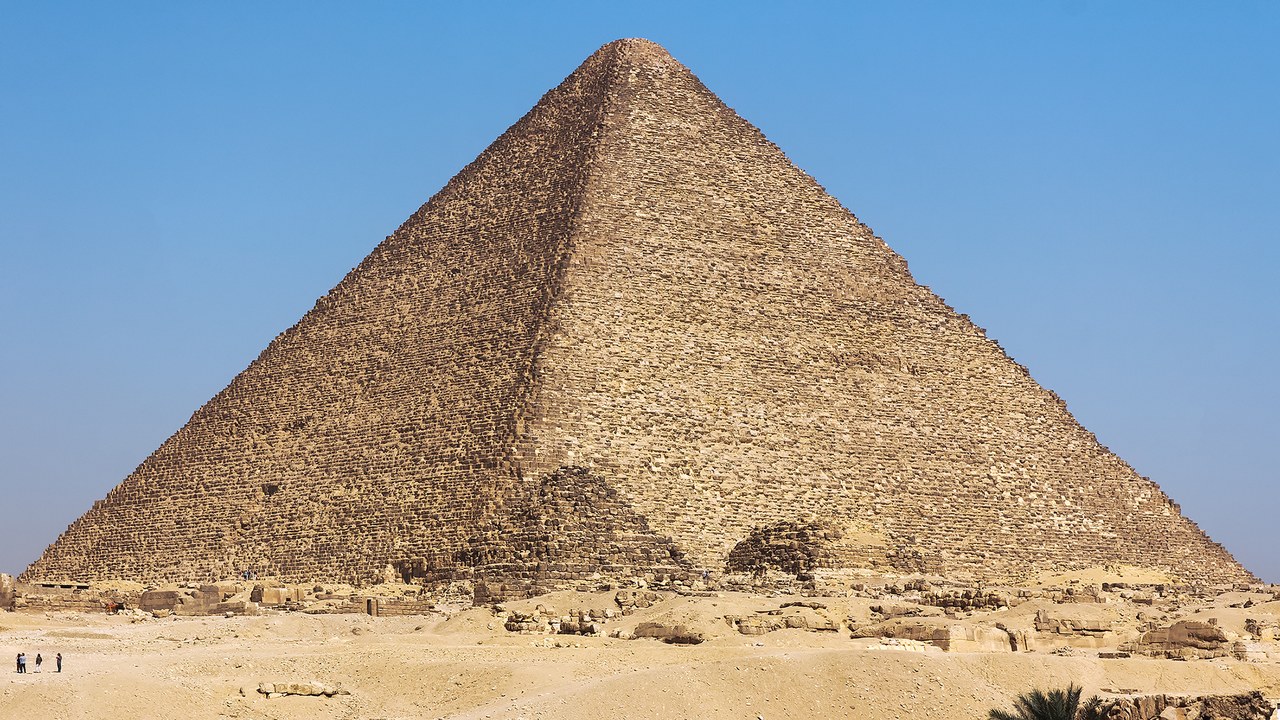
The Great Pyramid of Khufu transforms basic geometry into an overwhelming landscape presence. Its square base, rising faces, and carefully ordered orientation gave a royal tomb the clarity of an immense geometric statement. The Giza pyramid complex has endured for roughly four and a half millennia, yet the precision and scale of its construction still command attention. Millions of stone elements had to accumulate without losing the form that made the monument immediately legible from far away.
Researchers continue investigating how labor, ramps, transport, measurement, and staging combined. The lack of one accepted sequence reflects the difficulty of reconstructing a huge project from incomplete physical traces. What remains visible is the builders’ ability to hold alignment across an enormous footprint while the structure rose course by course. Modern equipment can place material faster, but few objects turn straight edges, mass, and orientation into a spectacle with comparable permanence.
5. The moai of Rapa Nui (Easter Island): Faces Positioned Across an Island
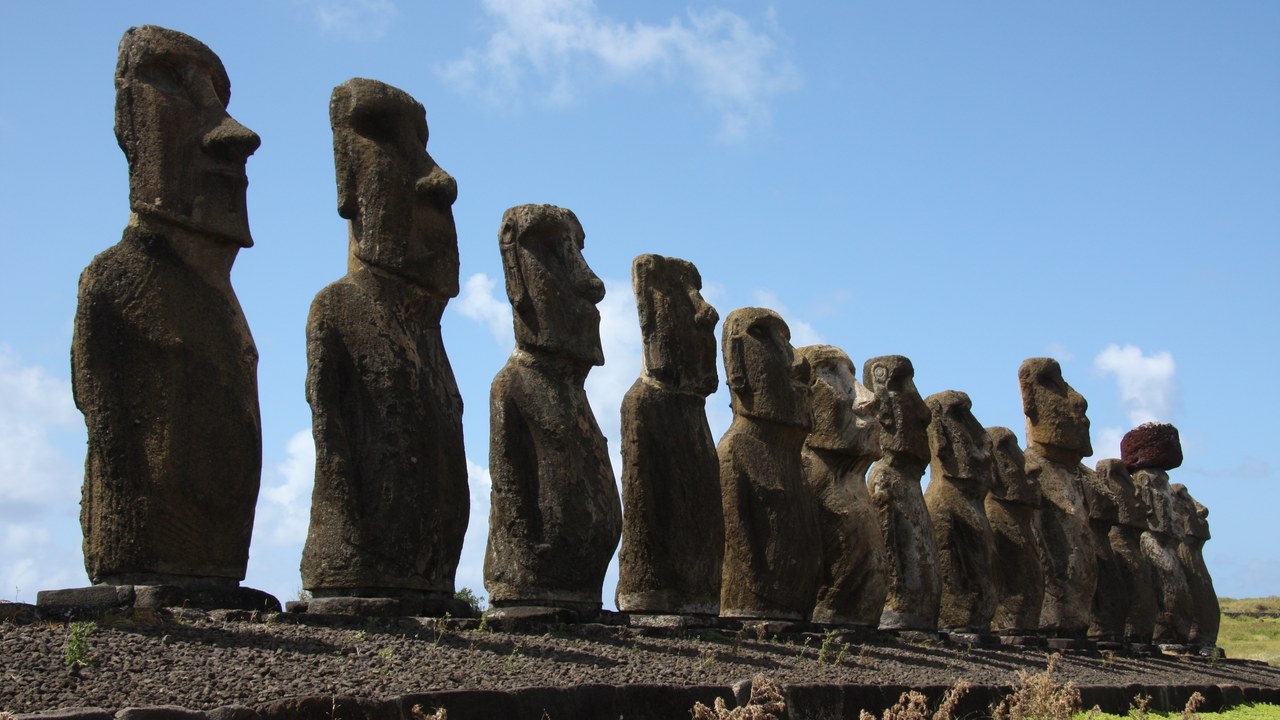
The moai of Rapa Nui turned repeated human forms into markers distributed across an island landscape. Many statues were carved at a central quarry, yet the multi-ton stone figures reached ceremonial platforms miles away. Their final placement organized colossal faces into visible groups, connecting sculpture, community space, and surrounding terrain. The work required more than carving: each figure had to survive a difficult trip and arrive oriented for its intended setting.
Researchers have tested transport ideas, including methods that rock a standing replica forward with coordinated ropes. Such experiments show what may be possible without proving that every statue traveled the same way. Terrain, statue shape, labor, and local practice could change the method. The enduring spectacle lies in the completed distribution. Rapa Nui’s builders repeated a recognizable form across great distances, making placement part of the art and turning separate monuments into an island-wide visual system.
This article was produced with the assistance of AI and reviewed by Morning Overview editors prior to publication.
More from Morning Overview
- A Colorado wildfire has exploded past 87,000 acres with no containment
- A wildfire near Ouray swelled past 18,000 acres, putting Colorado towns on alert
- The Pentagon’s newest UFO files describe a fish-scaled, potato-shaped object on camera
- Scientists spotted a rare tusked whale alive at sea for the first time, then fired a crossbow at it.
More from Morning Overview
- Long-term use of common heartburn pills is tied to kidney and dementia risk
- A California supervolcano has bulged upward about two and a half feet since 1978
- The FTC is warning about a scam quietly draining thousands from victims
- A handful of car transmissions are so tough mechanics say they almost never fail
