
Far below where sunlight ever reaches, MBARI’s remotely operated vehicles have spent decades filming animals that rarely cross paths with humans. Some glow, some vanish into their own transparent skin, and others simply defy what a body is supposed to look like. Here are thirteen creatures the institute’s cameras have caught roaming the ocean’s darkest layers.
1. Glass Squid: An Invisibility Cloak Made Of Skin
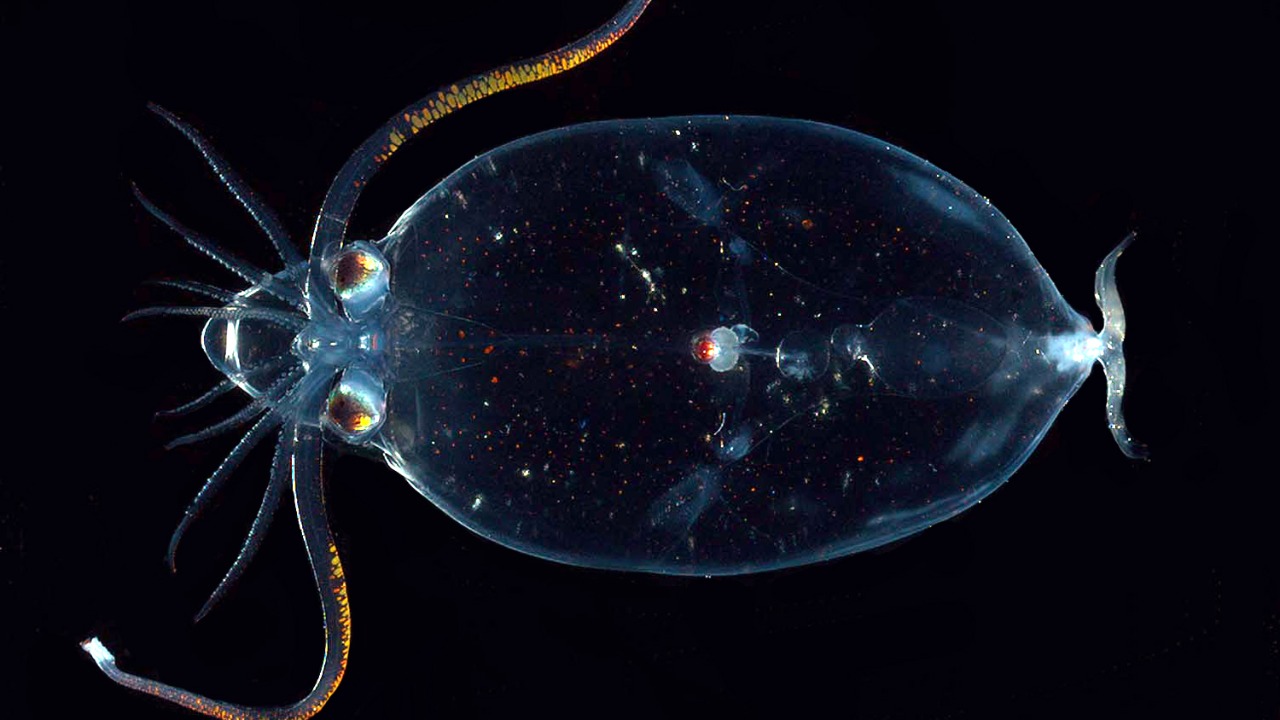
With no shell and nowhere to hide in open water, MBARI’s glass squid research describes family Cranchiidae keeping the pigment sacs in their skin closed so their bodies stay almost completely see-through to predators and prey alike.
Special light organs mask the shadow cast by their eyes and other opaque parts, glowing at the same faint intensity as sunlight filtering down from above, and when the disguise fails, the squid can darken its skin or squirt ink and jet away into the dark.
2. Basket Star: A Tangle Of Arms That Fishes The Current
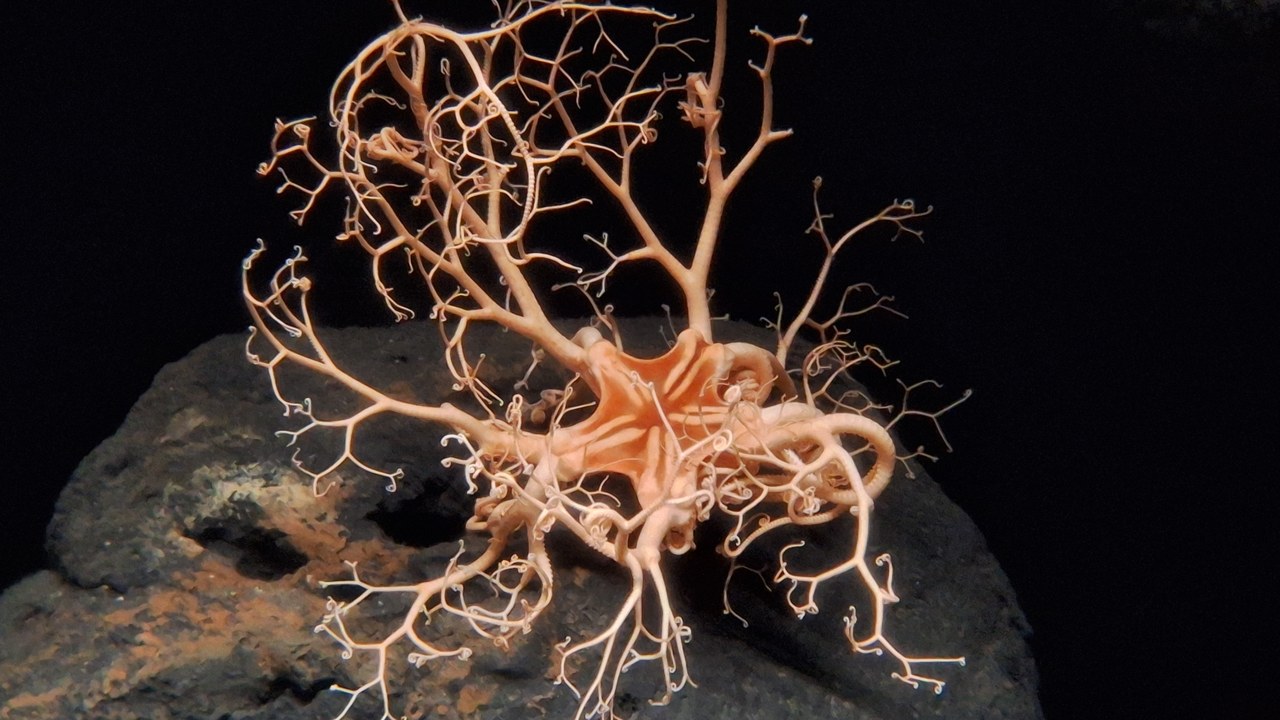
Perched high on a rocky outcrop, MBARI’s basket star research describes Gorgonocephalus eucnemis stretching its repeatedly branching arms into the passing current, snagging drifting plankton with microscopic hooks and sticky mucus.
After a branch snags a morsel of food, it curls into a tight knot and passes the meal down to the mouth hidden beneath the star’s central disc, a feeding trick that works best on seamounts where currents concentrate food.
3. Flapjack Octopus: A Pancake That Parachutes
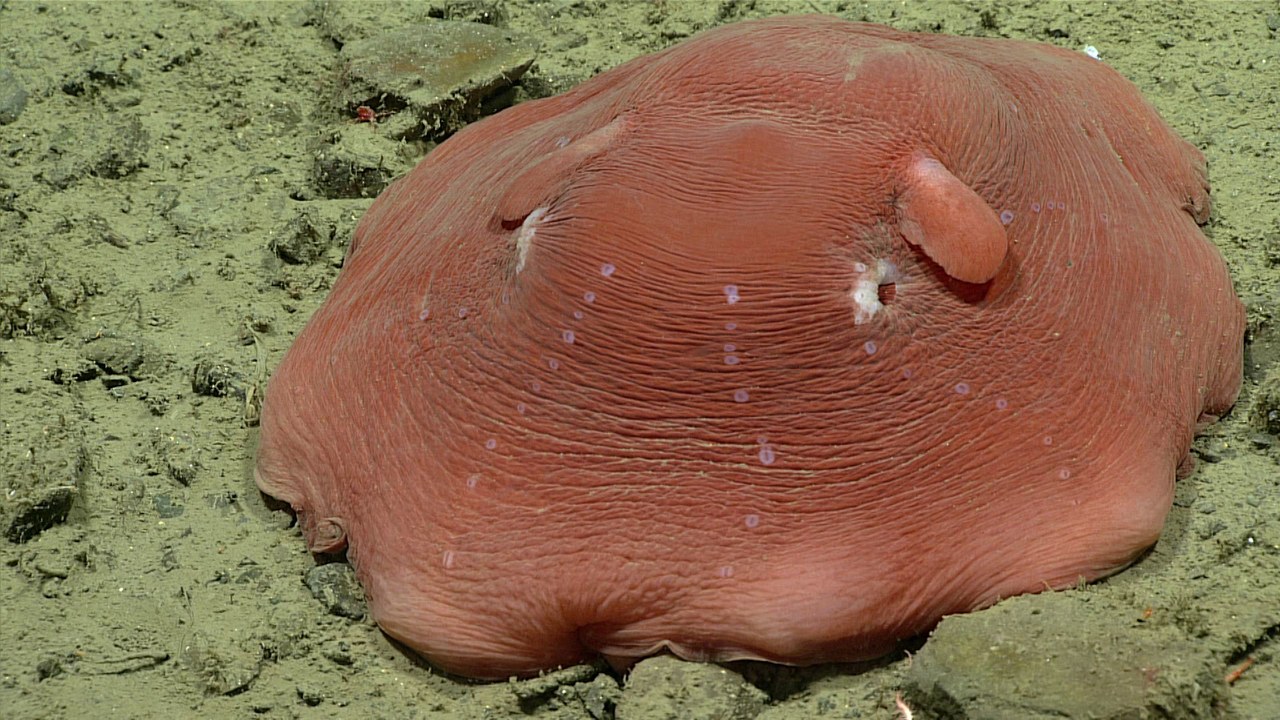
MBARI’s flapjack octopus footage shows Opisthoteuthis resting flat on the deep mud, its orange body webbed into the rounded shape of a fluffy pancake until something startles it into sudden motion.
Once alarmed, the octopus flaps a pair of stubby fins, pulses its webbed arms, and jets water through its funnel, sometimes doing all three at once, then stretches those arms wide and parachutes gently back down once the danger has passed.
4. Predatory Tunicate: A Filter Feeder That Learned To Bite
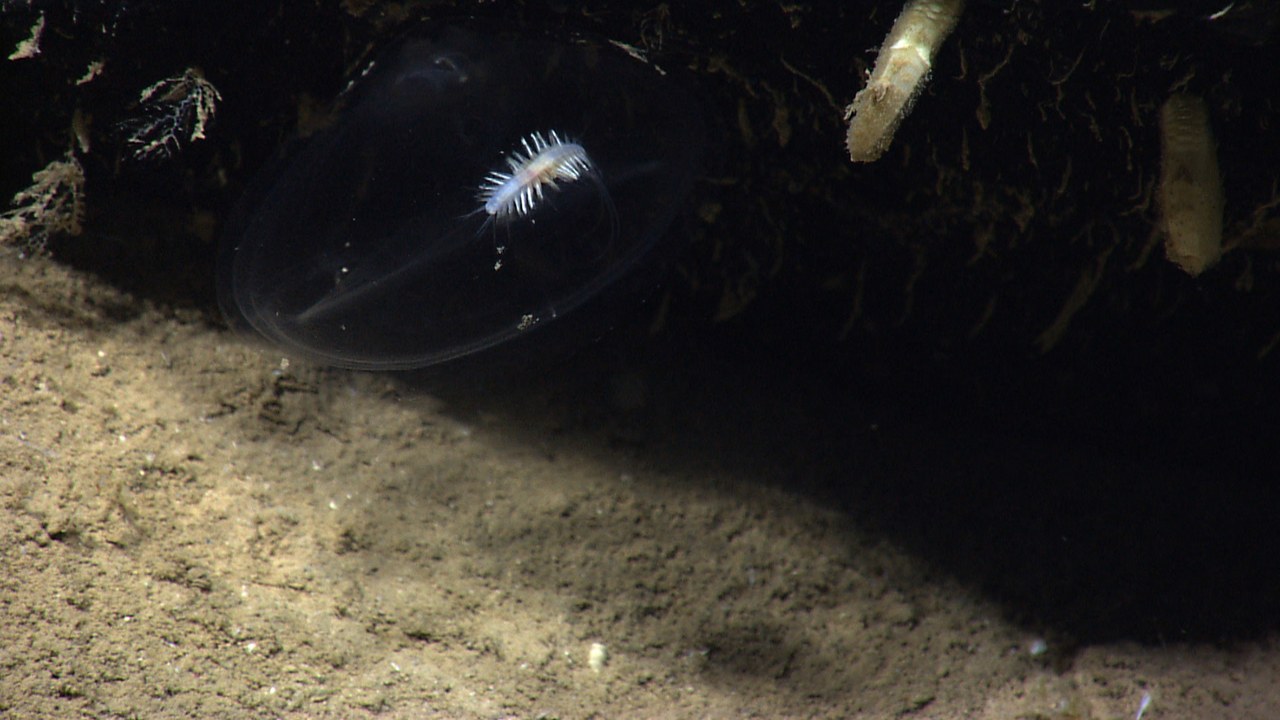
Most tunicates draw water through their bodies and filter out tiny plankton, but MBARI’s predatory tunicate research describes Megalodicopia anchored to the rocky seafloor with its oral siphon evolved into a large pair of lips.
Those lips snap shut around crustaceans and other invertebrates that drift too close, a far more active hunting style than any typical filter feeder, and the animal usually lives alone except on steep, rocky walls where conditions favor small clusters.
5. Big Red Jelly: Found By Accident Over A Seamount
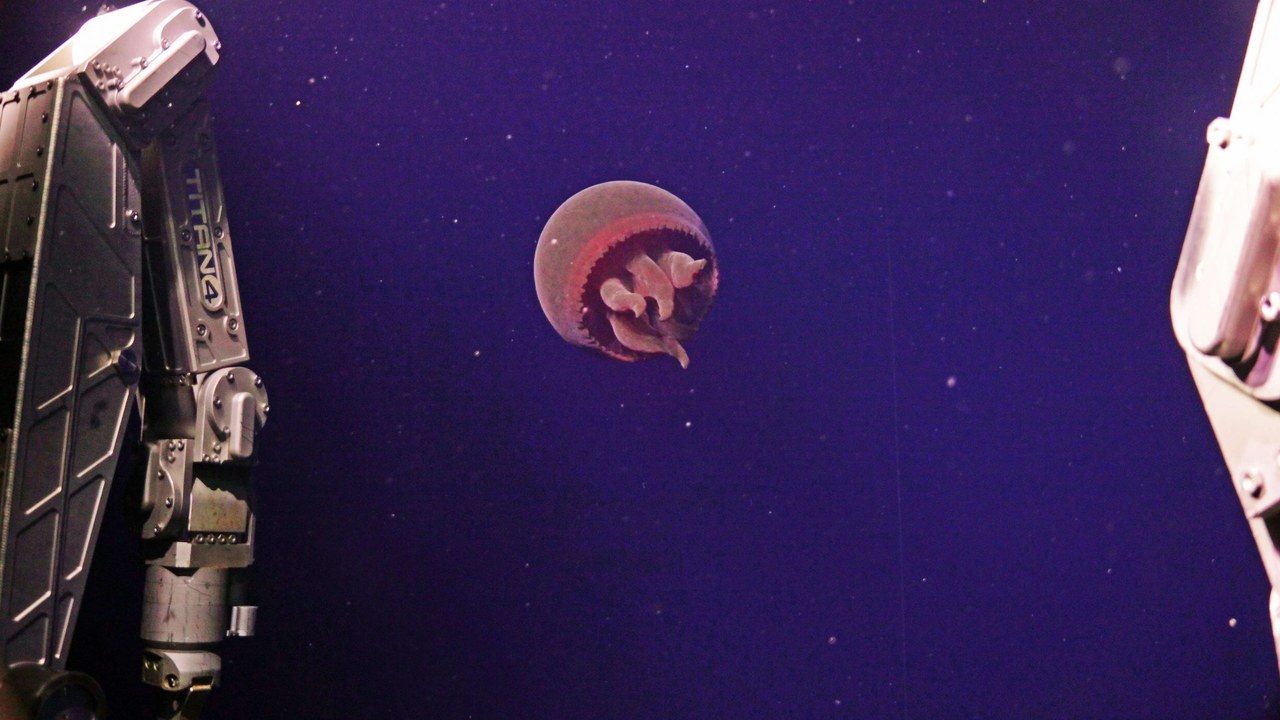
Tiburonia granrojo was first spotted in 1998 when MBARI researchers surveying Gumdrop Seamount noticed a huge maroon bell with thick, fleshy arms drifting past their remotely operated vehicle’s cameras, unlike any jellyfish then known to science.
Unlike most jellies, it has no thin trailing tentacles at all, instead using between four and seven paddle-shaped arms to move prey toward its mouth, a body plan that still surprises researchers decades after the first sighting.
6. Giant Tubeworm: Feeding On Nothing But Bacteria And Sulfur
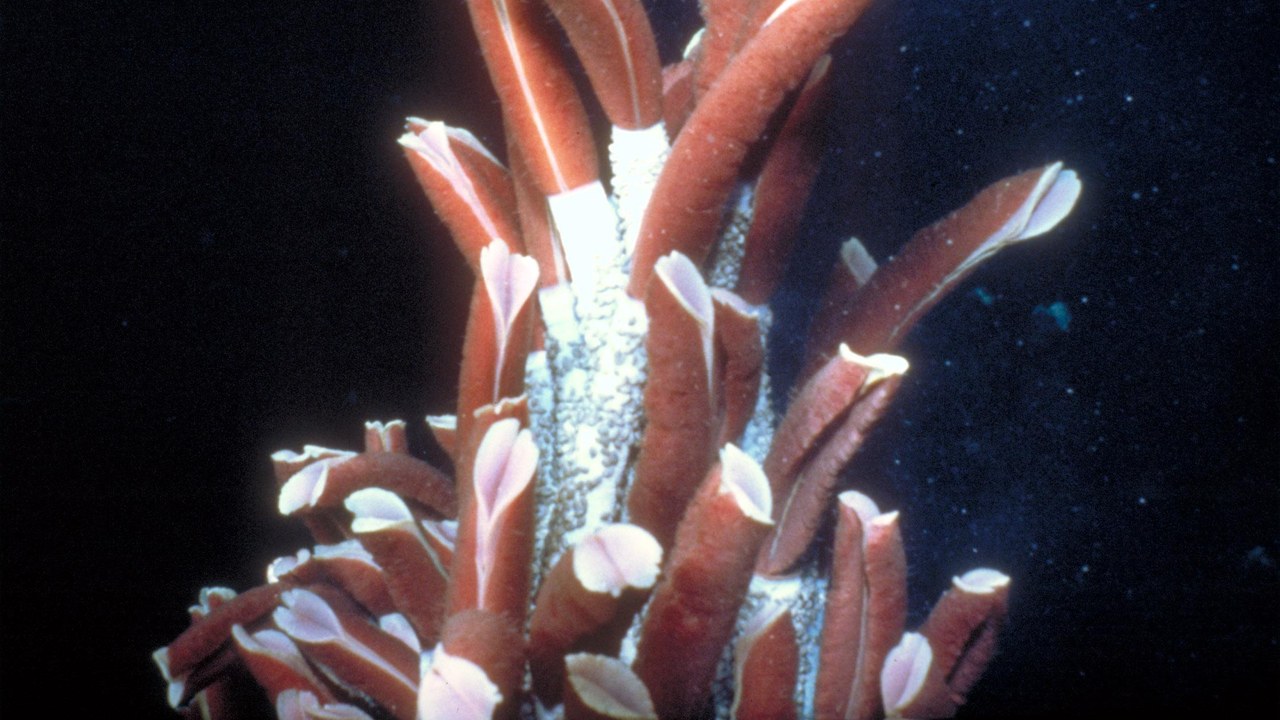
Towering colonies of Riftia pachyptila crowd around hydrothermal vents on the East Pacific Rise and near the Galapagos Islands, and MBARI’s giant tubeworm research notes the worms never eat, instead relying on sulfur-oxidizing bacteria living in their guts to turn vent chemicals into energy.
Foot-long red gills that resemble feathers extend from the tube to absorb those chemicals, but they retract instantly whenever a hungry vent crab or other predator strays too close, and when volcanic activity shuts off a vent’s flow, drifting larvae recolonize new hot springs that can form dozens of miles away.
7. Bloody-Belly Comb Jelly: A Red Stomach That Hides A Glowing Meal
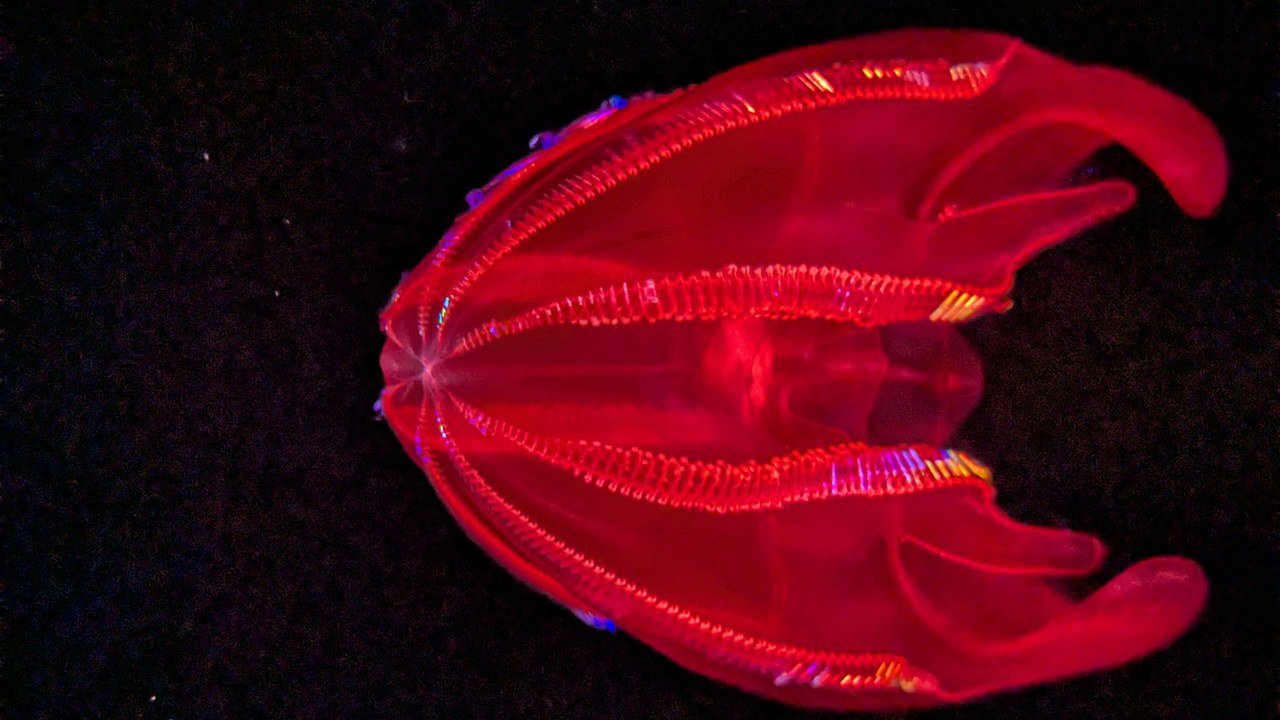
MBARI’s bloody-belly comb jelly research describes Lampocteis cruentiventer using its deep crimson stomach to conceal bioluminescent prey, since red light barely travels in the deep sea and effectively disappears against the surrounding darkness.
Without that disguise, a recent meal could glow right through the jelly’s translucent body and reveal its location to predators nearby, so the vivid color that gives the species its name functions as camouflage rather than a warning.
8. Abyssal Comb Jelly: A Pink Predator On Permanent Patrol
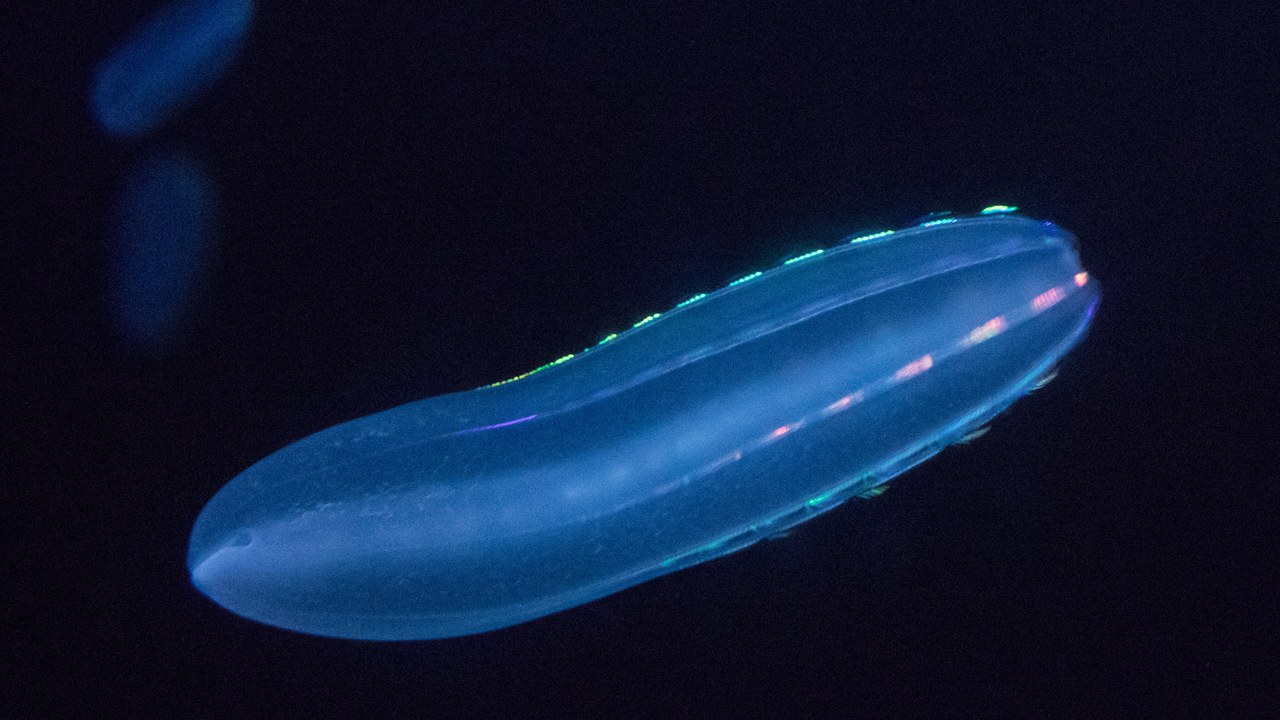
Beroe abyssicola patrols the midnight zone as MBARI’s abyssal comb jelly page describes it, its translucent pink body rippling with rows of shimmering comb-like cilia that catch light even in near-total darkness.
Rather than stinging its prey, the jelly simply engulfs other gelatinous animals whole, stretching its body around them, a feeding strategy that MBARI’s cameras have filmed repeatedly over many years of expeditions into that deep, lightless water column.
9. Dinner Plate Jelly: Hunting With Tentacles Held Out Front
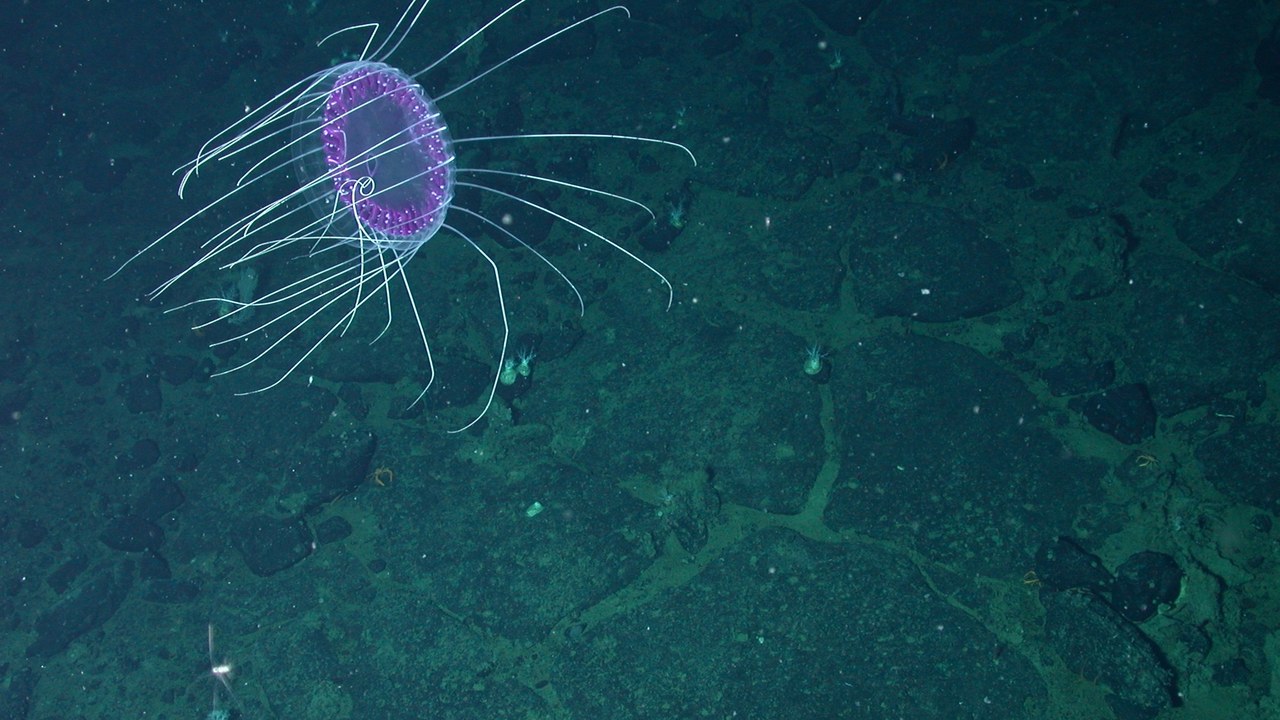
Most jellies drag their tentacles passively behind them, but MBARI’s dinner plate jelly research shows Solmissus swimming with its crown of tentacles held forward, ready to snare prey before it ever senses the jelly’s approach.
Researchers have watched it eat more than twenty different kinds of gelatinous animals, using microscopic stinging harpoons to snag anything from other jellies to skinny, wispy siphonophores drifting through the depths of Monterey Bay’s submarine canyon.
10. Warty Deep-Sea Octopus: A Mother’s Four-And-A-Half-Year Vigil
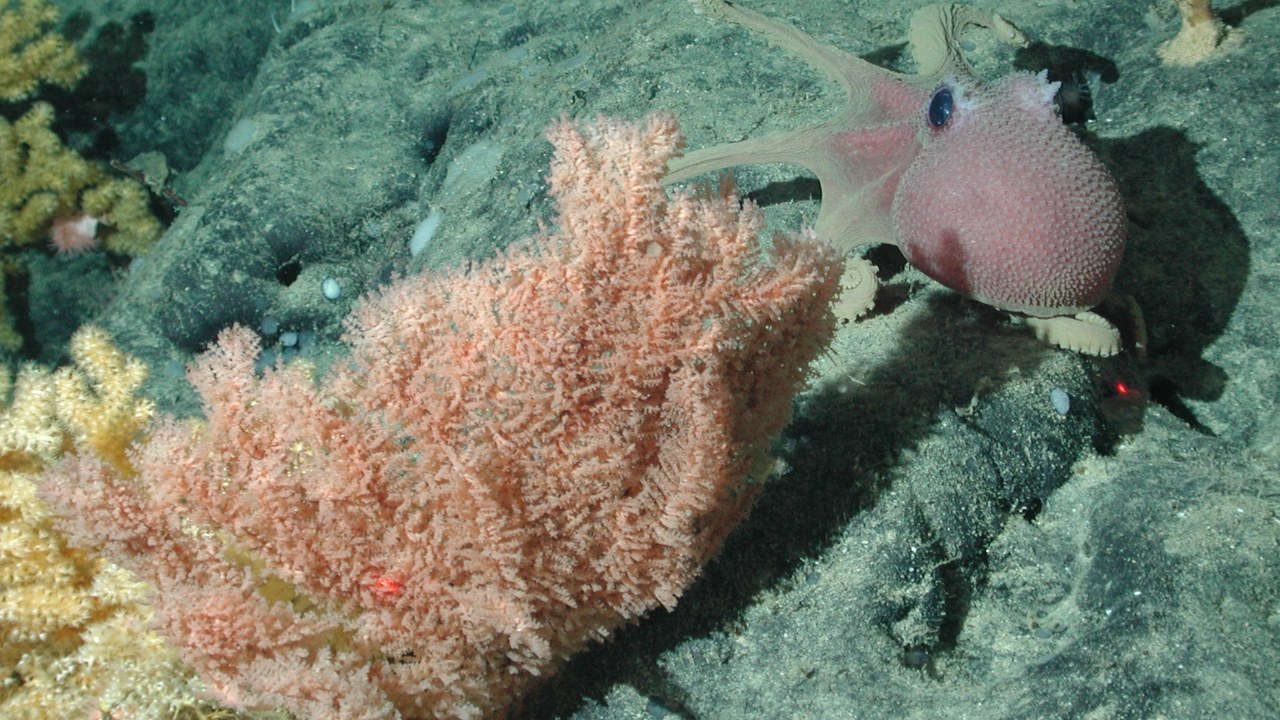
Graneledone boreopacifica was filmed by MBARI clinging to the same rocky outcrop far below the surface, guarding a cluster of eggs in what its warty deep-sea octopus page calls the longest brooding period ever recorded.
For roughly four and a half years the octopus barely moved and never ate, repeatedly filmed on return dives fanning water over the eggs until they finally hatched, a feat of endurance unmatched by any other known animal.
11. Vampire Squid: A Cloak That Turns Itself Inside Out
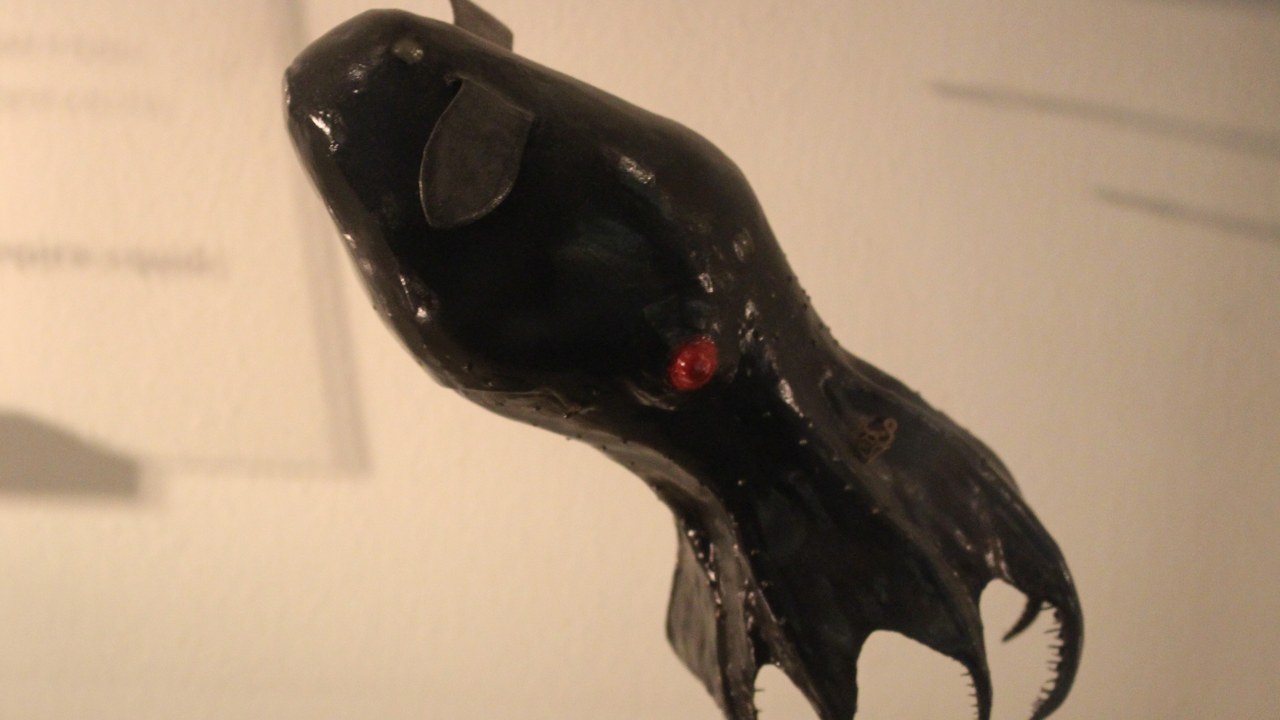
Vampyroteuthis infernalis drifts through the oxygen minimum zone feeding on marine snow, and MBARI’s vampire squid research describes two long, sticky filaments collecting dead plankton and mucus that the animal later pulls through its arms and wipes into its mouth.
When something threatens it, the squid turns its webbed cloak of arms inside out to look larger and stranger, and if that fails, the tips of all eight arms begin pulsing with blue bioluminescent light instead of the ink most cephalopods rely on for defense.
12. Pompeii Worm: Living On Water Hot Enough To Melt Plastic
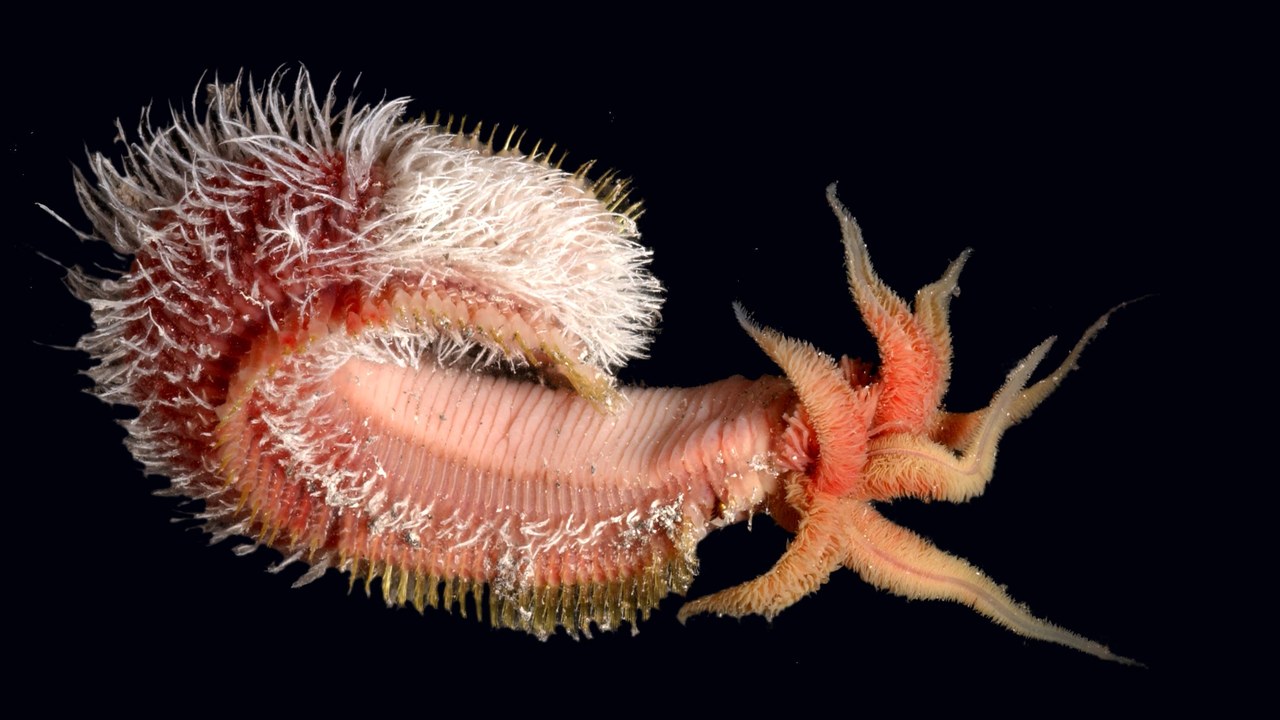
Scalding chimneys of hydrothermal vents host Alvinella pompejana, an extremophile whose feathery tube pokes directly from the vent wall in temperatures that would kill most other animals, exactly the kind of encounter documented in MBARI’s pompeii worm footage.
Its tail end can tolerate near-boiling water while its feeding tentacles reach into far cooler currents just inches away, a temperature gradient across one small body that still puzzles the researchers who have filmed it up close.
13. Balloon Worm: A Worm That Looks Nothing Like One
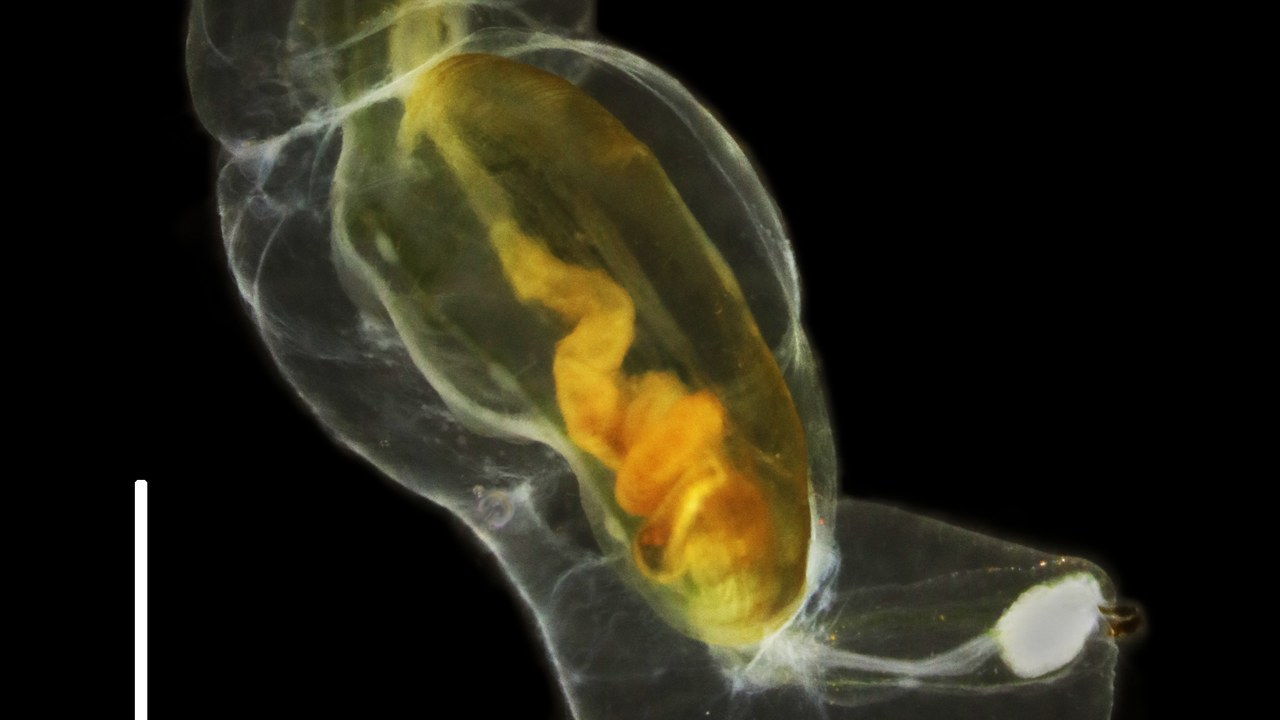
Poeobius meseres hardly looks like a worm at all on MBARI’s balloon worm footage, appearing instead as a translucent, softly glowing blob that drifts passively through the midwater far from any seafloor.
Instead of crawling or burrowing like its relatives, the animal spends its entire life suspended in open water, catching drifting particles of food, a lifestyle so far removed from a typical worm that early observers mistook it for something else entirely.
