Image Credit: Melissa McMasters from Memphis, TN, United States - CC BY 2.0/Wiki Commons
Bioluminescence turns ordinary creatures into living lanterns, using chemical reactions instead of electricity to produce cold light. Insects, fungi, and deep-sea animals rely on this glow to attract mates, lure prey, or startle predators in total darkness. Here are twelve organisms that generate their own light, from a backyard beetle to a deep-sea worm that drops glowing decoys.
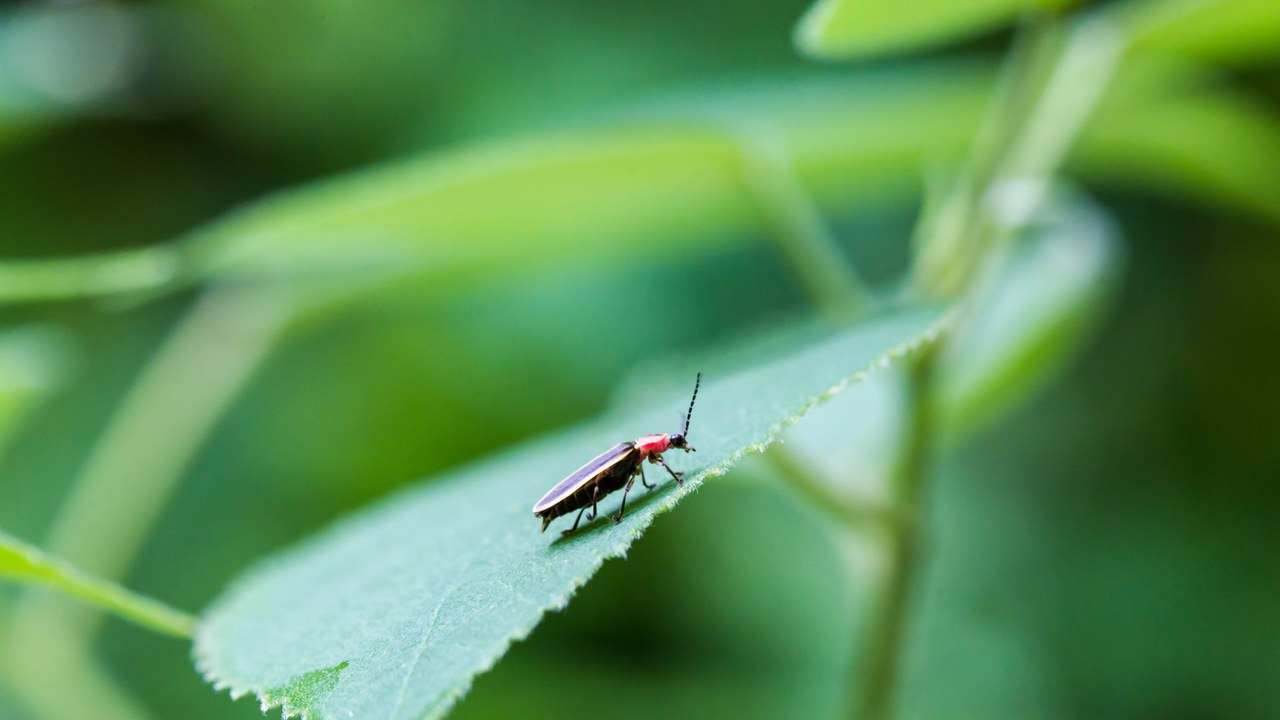
1. Common Eastern Firefly: The Backyard Light Show
Image Credit: Melissa McMasters from Memphis, TN, United States – CC BY 2.0/Wiki Commons
Every stage of the common eastern firefly’s life gives off light, from egg to larva to the familiar flashing adult, a pattern documented by the Animal Diversity Web species account. The insect manufactures its glow chemically, using a compound called luciferase rather than any external power source.
Adults flash in patterns at dusk to find mates across a lawn or field, turning a routine summer evening into a beetle’s own signal lamp. The glow costs the firefly almost no heat, making it one of the most efficient light sources found in nature.
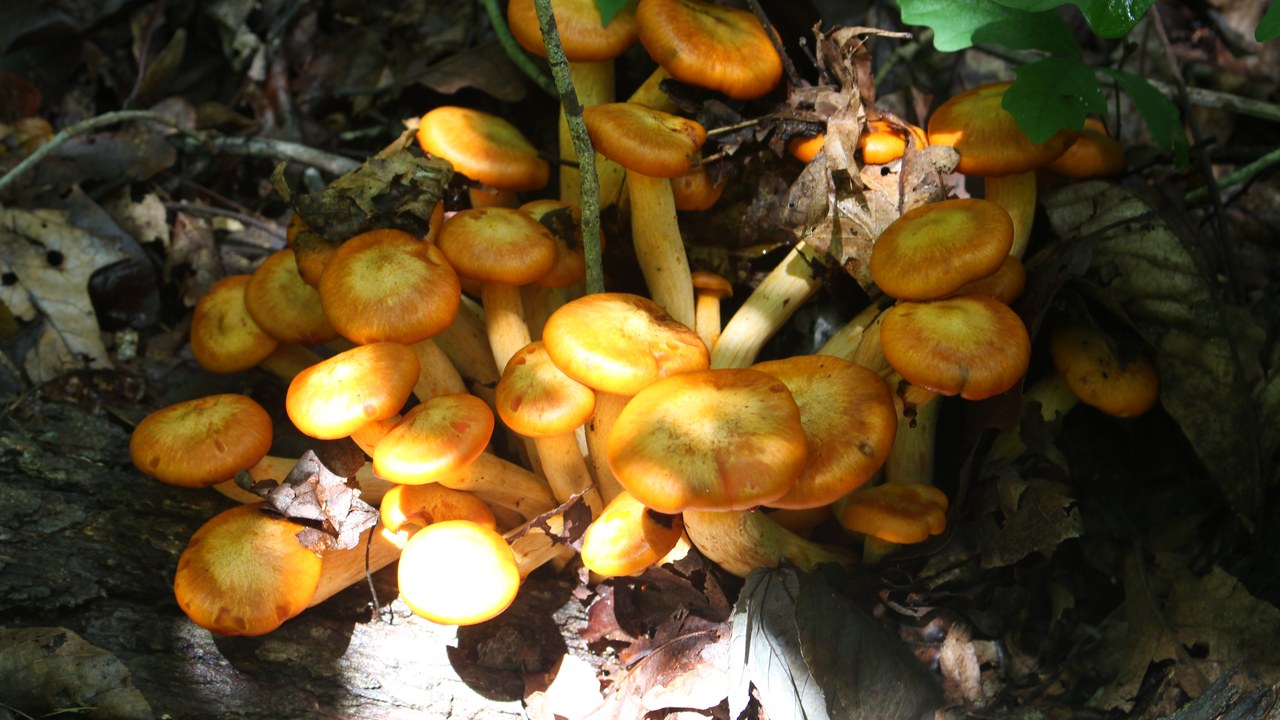
2. Jack-o’-Lantern Mushroom: A Fungus That Glows After Dark
Image Credit: j33pman – CC BY-SA 2.0/Wiki Commons
Clusters of jack-o’-lantern mushrooms sprout at the base of trees and give off a genuine glow, states a Missouri Department of Conservation field guide, which describes fresh gills emitting a faint greenish light after dark. The effect is easiest to see once eyes adjust in a fully darkened room.
The bright orange caps often get mistaken for edible chanterelles, but Omphalotus illudens is toxic and causes severe stomach upset if eaten. Its glow offers one clue that separates the two, since true chanterelles never light up at all.
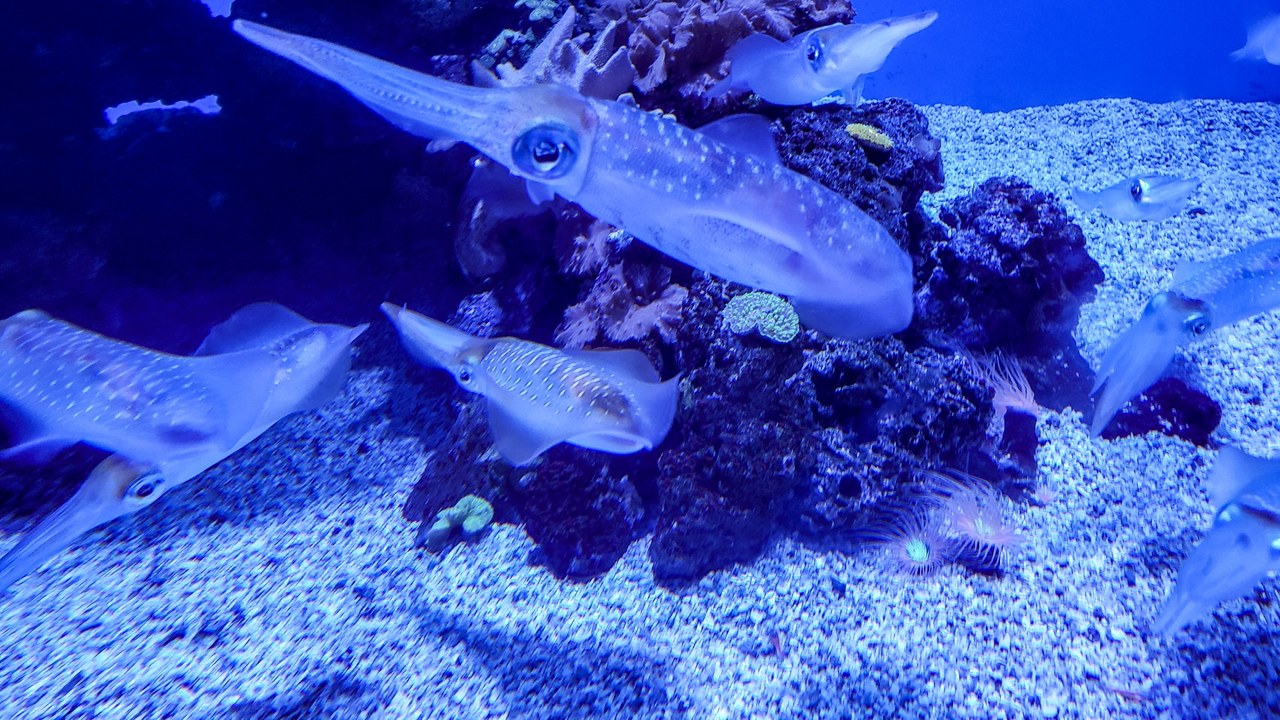
3. Firefly Squid: Japan’s Glowing Tide
Image Credit: Circe Denyer – CC0/Wiki Commons
Watasenia scintillans carries rows of light-producing photophores across its small body, a feature the Animal Diversity Web account credits with helping the squid attract mates and communicate with others of its kind. Off Japan’s coast, mass spawning events turn shallow bays into sheets of blue light.
The squid spends most of the year in deep water before rising toward the surface to breed each spring. Beachgoers who time a visit right can watch thousands wash ashore glowing at once, a spectacle unique to this species.
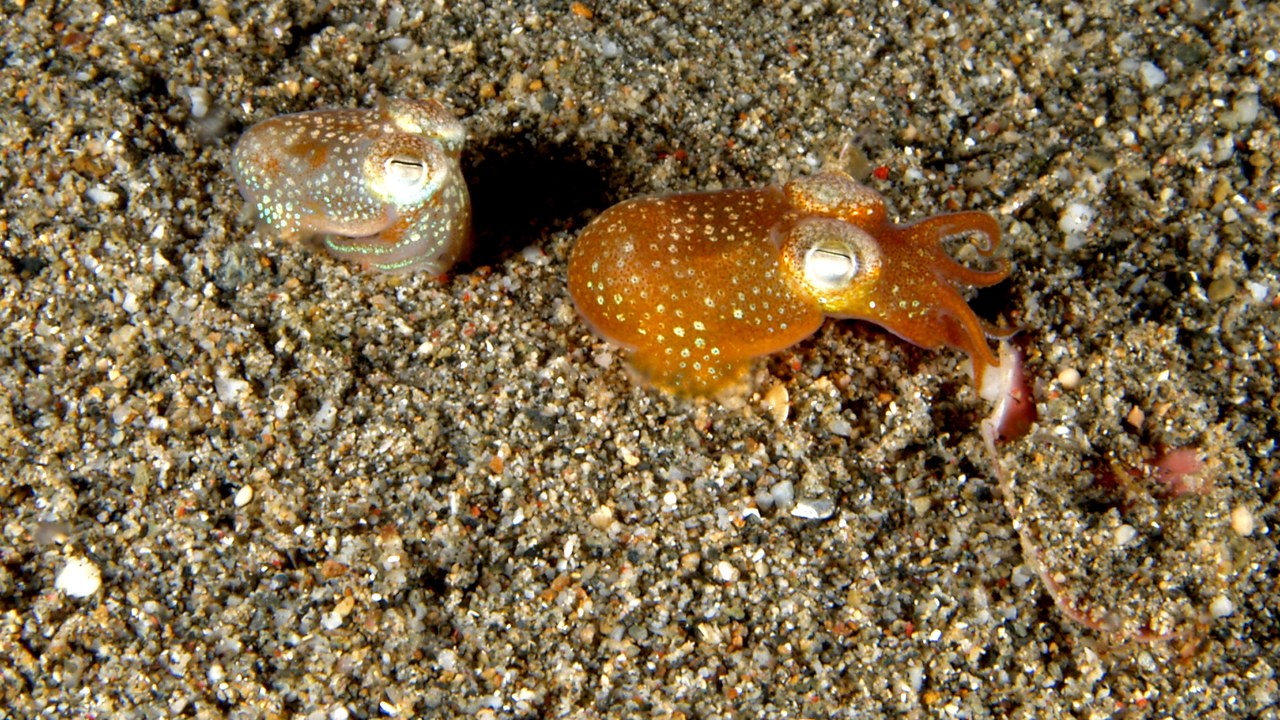
4. Hawaiian Bobtail Squid: A Bacterial Flashlight
Image Credit: Nhobgood Nick Hobgood – CC BY-SA 3.0/Wiki Commons
Euprymna scolopes hunts after sunset using a light organ powered by live bacteria housed inside its body, according to the Animal Diversity Web entry, which describes the squid wading through sand as the glow helps it see and hunt in darkness. By day it buries itself, invisible until night falls again.
The squid remains buried through daylight hours and becomes active only after dark, when its bacterial glow effectively doubles as a hunting light. That nightly hunt depends entirely on light its own body cannot produce without bacterial help.
5. Cookiecutter Shark: The Shark With a Glowing Belly
Image Credit: Hugues Evano (IFREMER, Délégation océan Indien (DOI), Département Ressources Biologiques et Environnement (RBE), F-97420 Le Port, France) – CC BY 4.0/Wiki Commons
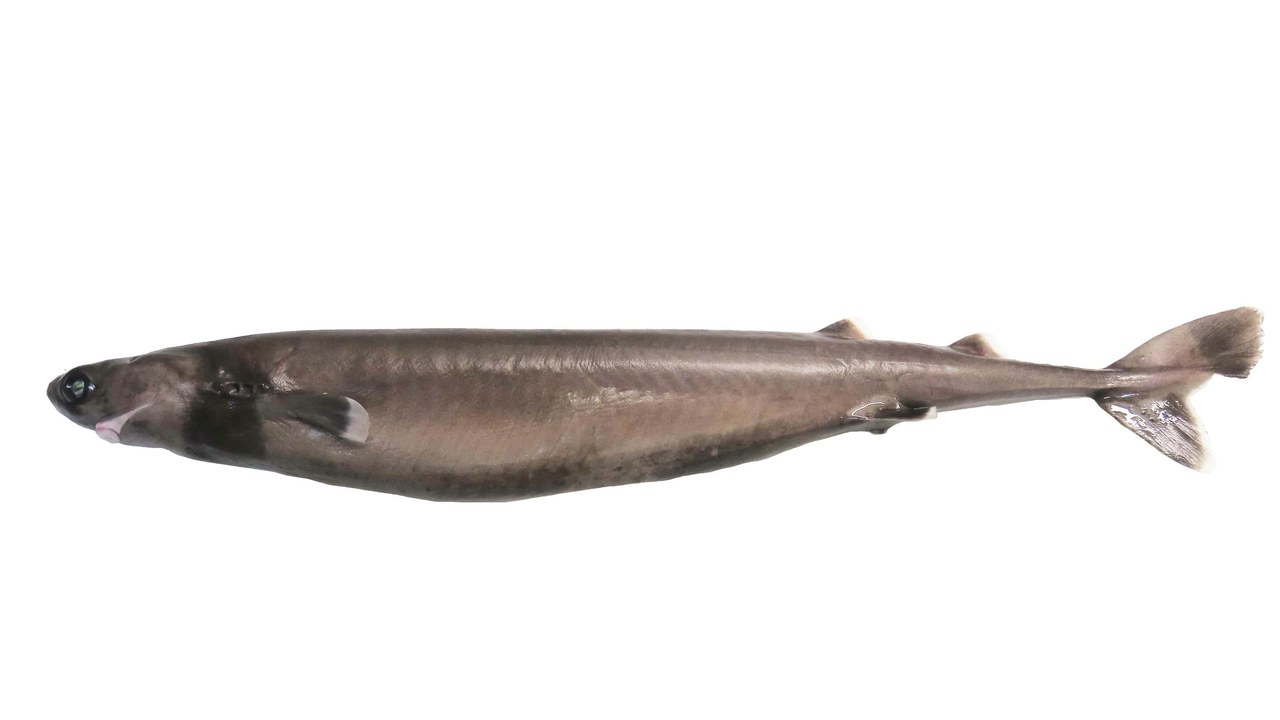
The cookiecutter shark’s entire underside functions as a light panel, a Florida Museum species profile explains, describing a network of tiny photophores that produce an even greenish glow across the belly. Seen from below, the glow blends the shark into the sunlit water overhead.
That camouflage lets the small shark approach much larger prey without being noticed from below. Once close, it clamps on and twists free a round plug of flesh, the cookie-shaped bite that gives the species its common name.
6. Crystal Jelly: More Than 100 Living Lights
Image Credit: Jim G from Silicon Valley, CA, USA – CC BY 2.0/Wiki Commons
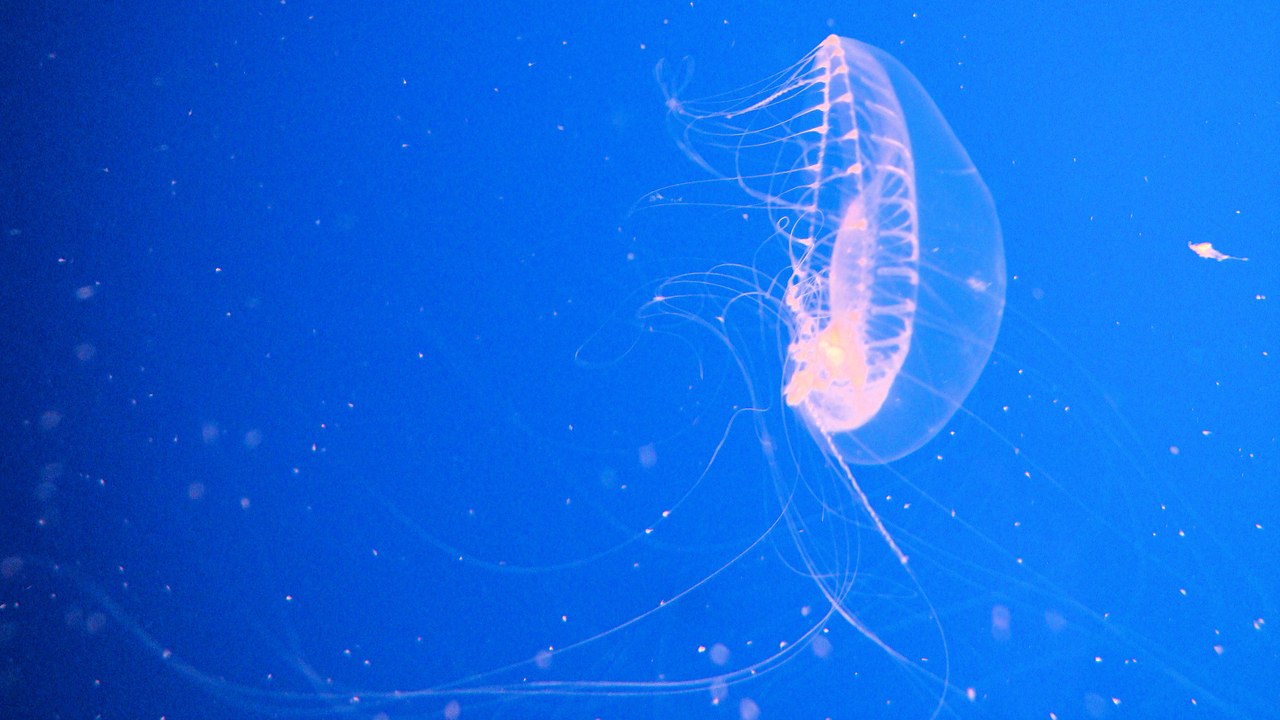
More than 100 tiny light-producing organs ring the bell of the crystal jelly, the Monterey Bay Aquarium reports, adding that the jelly gives off a green-blue glow when disturbed. The animal’s clear, nearly invisible body makes the sudden light even more striking against dark water.
Aequorin, the protein responsible for that glow, is named directly for the jelly’s scientific name, Aequorea victoria. The sudden flash serves as a startle response, a quick warning flare aimed at whatever bumped it in the dark.
7. Vampire Squid: Not a Vampire, Just Glowing
Image Credit: Emőke Dénes – CC BY-SA 4.0/Wiki Commons
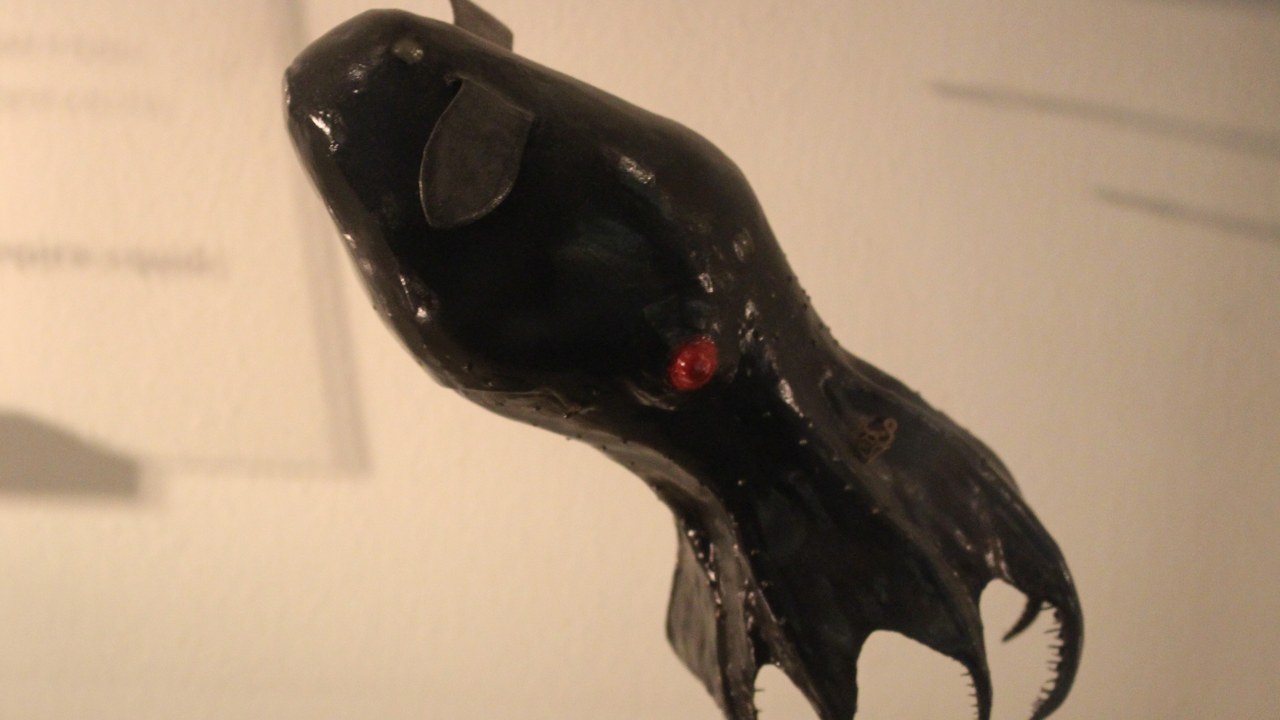
Despite its name, the vampire squid is a mild deep-sea animal that defends itself with light instead of teeth, according to MBARI’s animal profile, which notes the tips of all eight arms glow with pulsing blue bioluminescence when the animal is cornered. It can also release a cloud of glowing fluid instead of the ink other squid use.
That glowing decoy buys time to escape into deeper, darker water while a predator investigates the light instead of the squid itself. Living far below the sunlit zone, the animal relies on light as its main line of defense.
8. Pacific Viperfish: The Deep Sea’s Invisible Predator
Image Credit: David Csepp, NMFS/AKFSC/ABL – Public domain/Wiki Commons
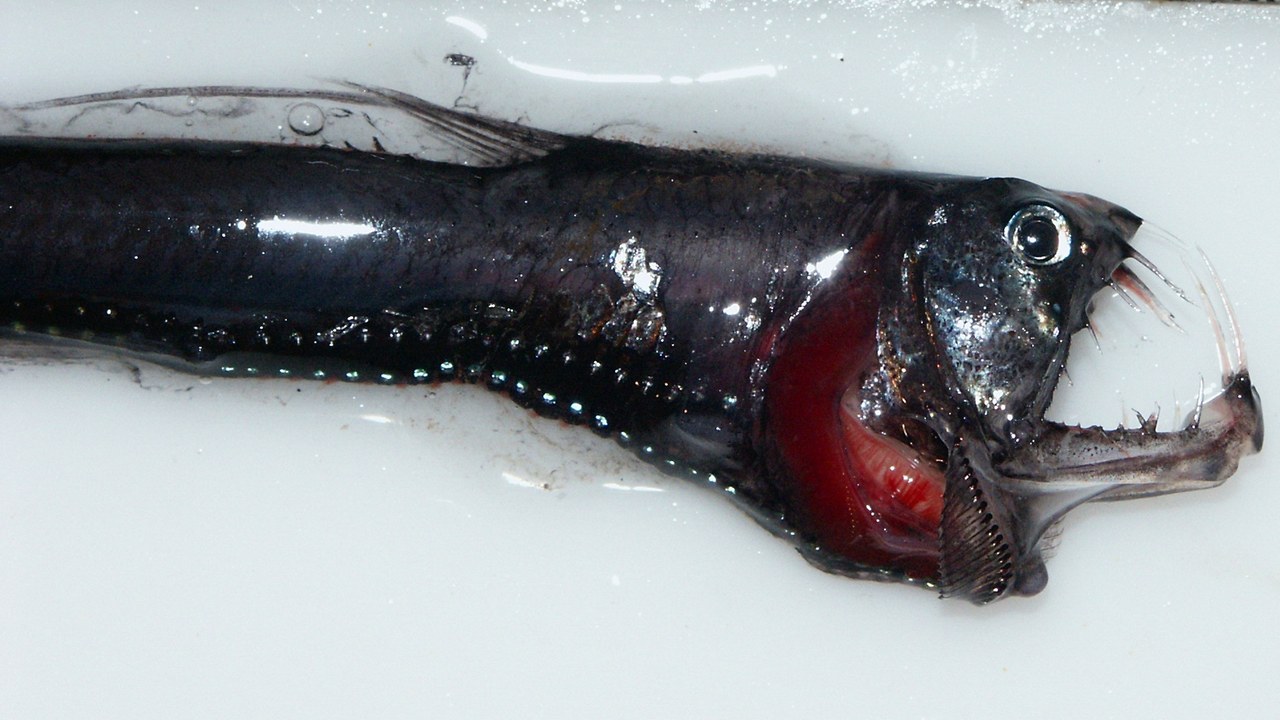
The Pacific viperfish is built to disappear, MBARI’s profile of the species explains, describing a sleek, silvery fish with modest bioluminescence along its belly that helps make it a fearsome predator in deep water. The light glows faintly downward, matching the dim glow that filters from the surface far above.
A fish lit from beneath is far harder for anything below to spot against the sunlight overhead, giving the viperfish an edge over prey swimming underneath it. That belly light does its work quietly, with no flash or pulse to give the ambush away.
9. Red Tide Algae: The Wave That Glows Blue
Image Credit: Saltytog – CC BY 4.0/Wiki Commons
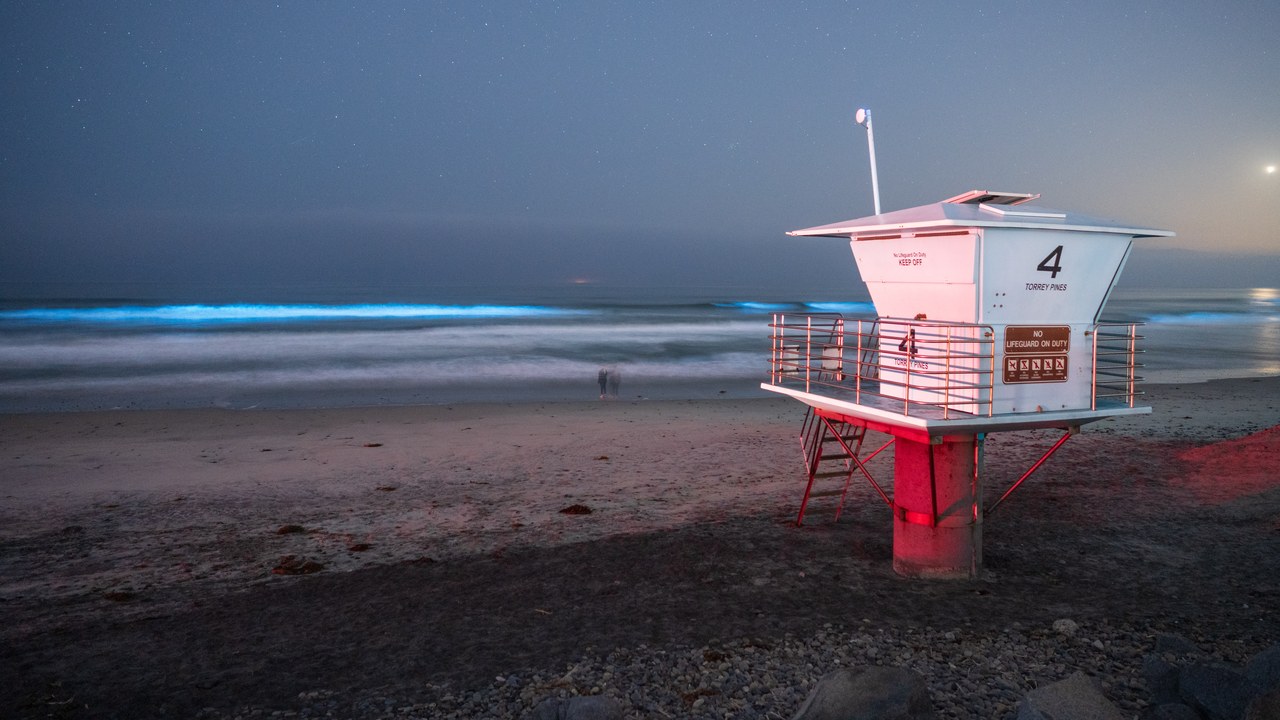
Lingulodinium polyedra is a microscopic, single-celled alga responsible for the red tides that regularly appear off Southern California, according to its Wikipedia species page, which notes the bloom produces bioluminescent displays on beaches at night. Each wave breaking on the shore stirs billions of the cells at once, turning the surf a brief electric blue.
The light follows a circadian rhythm, growing brighter after dark and fading again by morning no matter how rough the surf gets. A single wave at Torrey Pines State Beach near San Diego can look lit from within, the collective glow of an organism too small to see with the naked eye.
10. Comb Jelly: A Jelly Without the Sting
Image Credit: Holger Krisp – CC BY 3.0/Wiki Commons
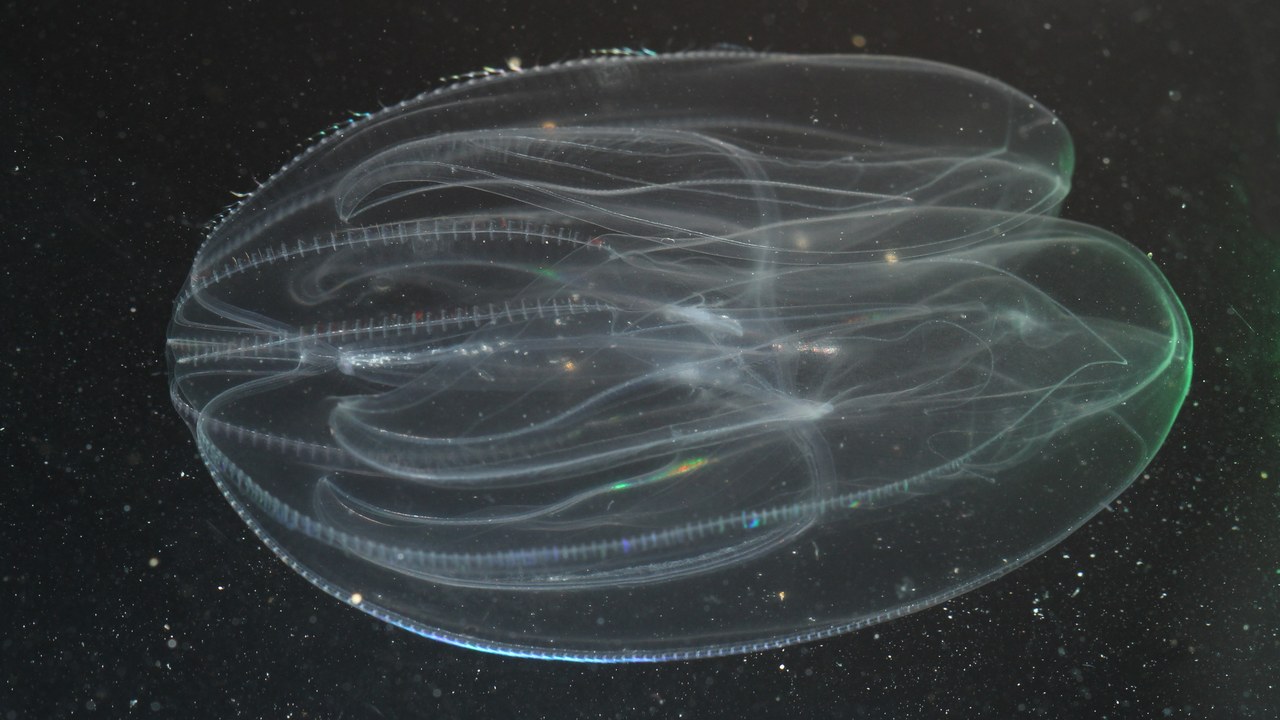
Mnemiopsis leidyi, commonly called the sea walnut, carries eight rows of ciliated combs running the length of its transparent, lobed body that glow blue-green when the animal is disturbed, according to its Wikipedia entry. Native to the western Atlantic, the comb jelly has since become an established invasive species across European and western Asian waters.
Unlike the jellyfish it is often mistaken for, Mnemiopsis leidyi has no sting, and its body is roughly 97 percent water, rarely growing past 12 centimeters. A single disturbance can set every row of combs flashing at once, turning a passing touch into a brief ripple of green light down the length of its body.
11. Mystery Mollusc: A Slug That Sheds Its Glow
Image Credit: NOAA/MBARI – Public domain/Wiki Commons
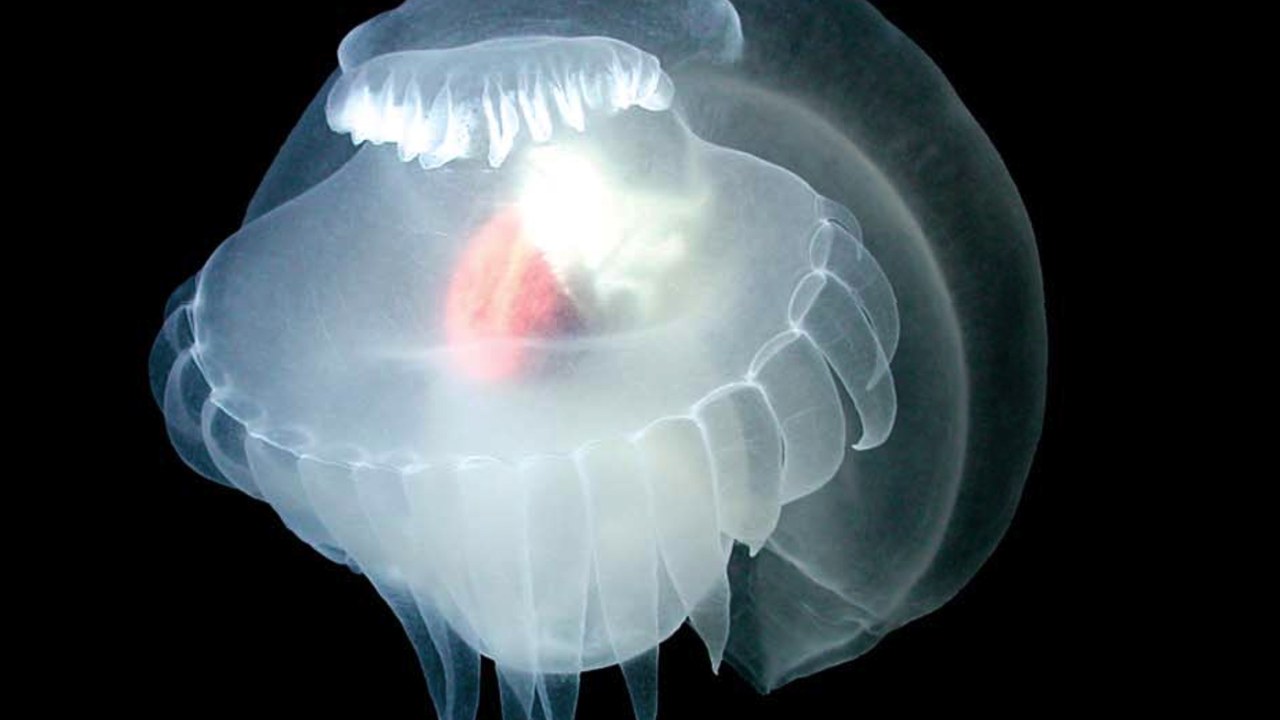
Bathydevius caudactylus, nicknamed the mystery mollusc, lights up when threatened, a defense documented by MBARI scientists who observed the deep-sea slug detach a glowing finger-like projection from its tail during an encounter. The severed piece keeps glowing on its own after it separates from the animal.
A predator chasing the still-lit decoy loses track of the slug itself as it drifts away into darker water. Losing a glowing body part is a small price for an animal with few other ways to escape in open water far from any shelter.
12. Mushroom Soft Coral: The Coral That Glows Blue
Image Credit: NOAA/Monterey Bay Aquarium Research Institute – Public domain/Wiki Commons
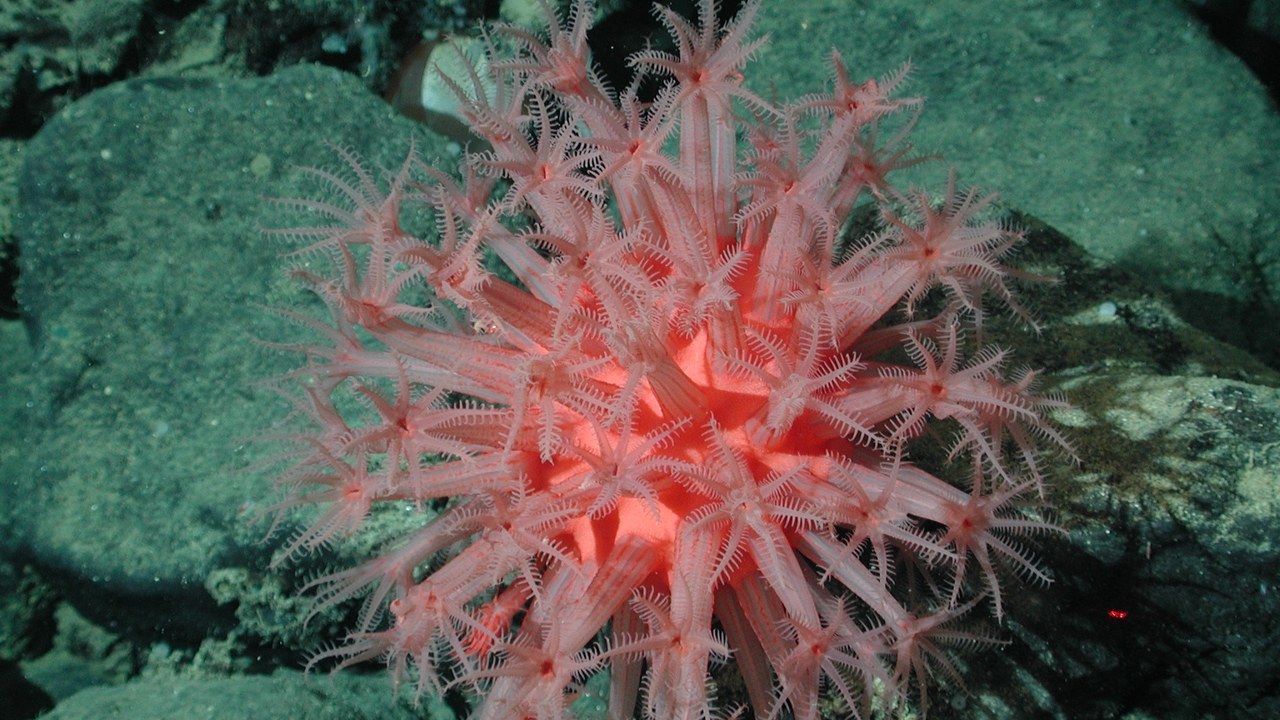
The mushroom soft coral glows with a steady blue light when disturbed, according to MBARI’s profile of Heteropolypus ritteri, which notes researchers still do not fully understand why the species produces such brilliant bioluminescence. Found scattered across the deep seafloor, the coral is one of the more common glowing animals researchers encounter.
Unlike a flash or pulse, this coral’s light holds steady once triggered, more like switching on a lamp than striking a match. That steady blue glow remains one of the deep sea’s more ordinary mysteries, common to see but still unexplained.
Morning Overview is reader-supported. Some links in our articles are affiliate links, and we may earn a commission at no extra cost to you. As an Amazon Associate I earn from qualifying purchases. Full disclosure.