
Plenty of familiar sport utility vehicles trace their design back to machines built for armies and police forces. Some began as wartime scouts, others as troop carriers or patrol trucks, and several were later offered to civilians. Here are nine of them, from the Willys-derived Wrangler to the Humvee-based Hummer.
1. Jeep Wrangler: Wartime Blueprint Revived
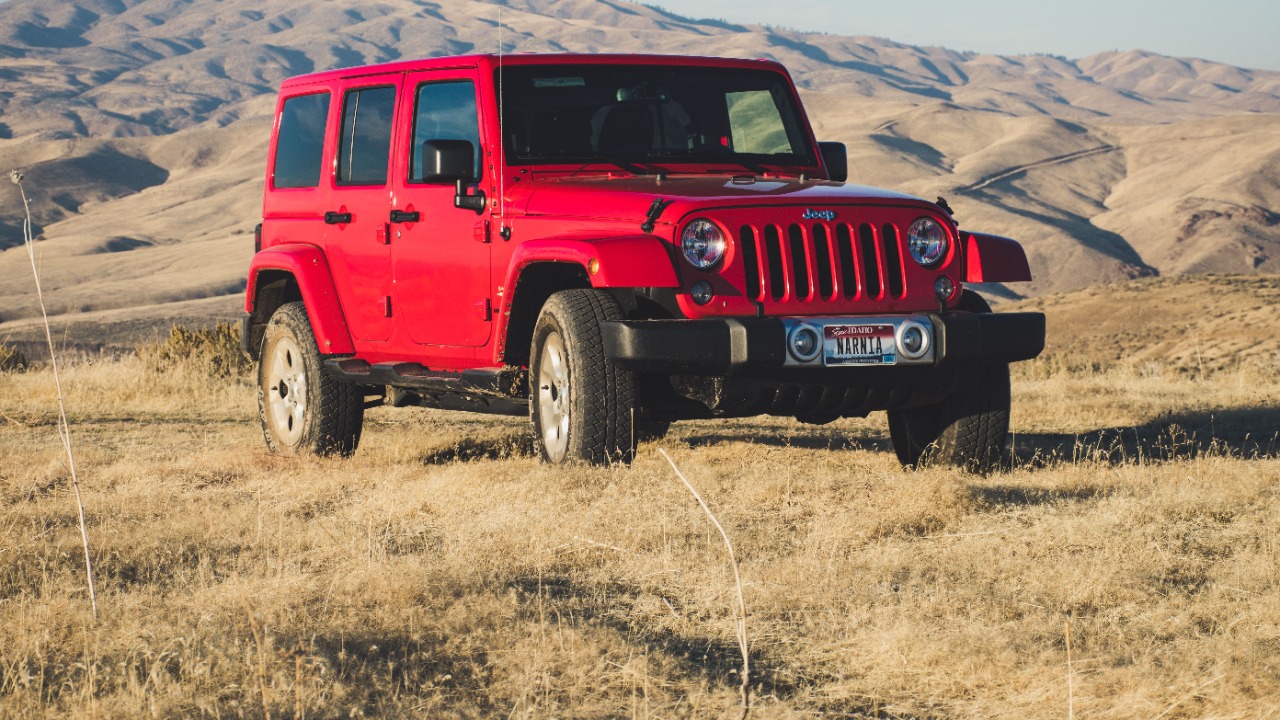
Jeep’s own 2027 Sarge edition release openly draws on the 1941 Willys MB, the reconnaissance vehicle that Willys-Overland won a July 1941 contract to build for the United States Army. That order covered 16,000 vehicles at $738.74 each, and the small four-wheel-drive scout became the template for the whole Jeep family.
No other vehicle on this list sits as close to its battlefield ancestor. Round headlamps, flat fenders and an upright windshield remain recognisable cues, and the maker treats the military lineage as a selling point rather than a footnote.
2. Jeep CJ: The Civilian Jeep
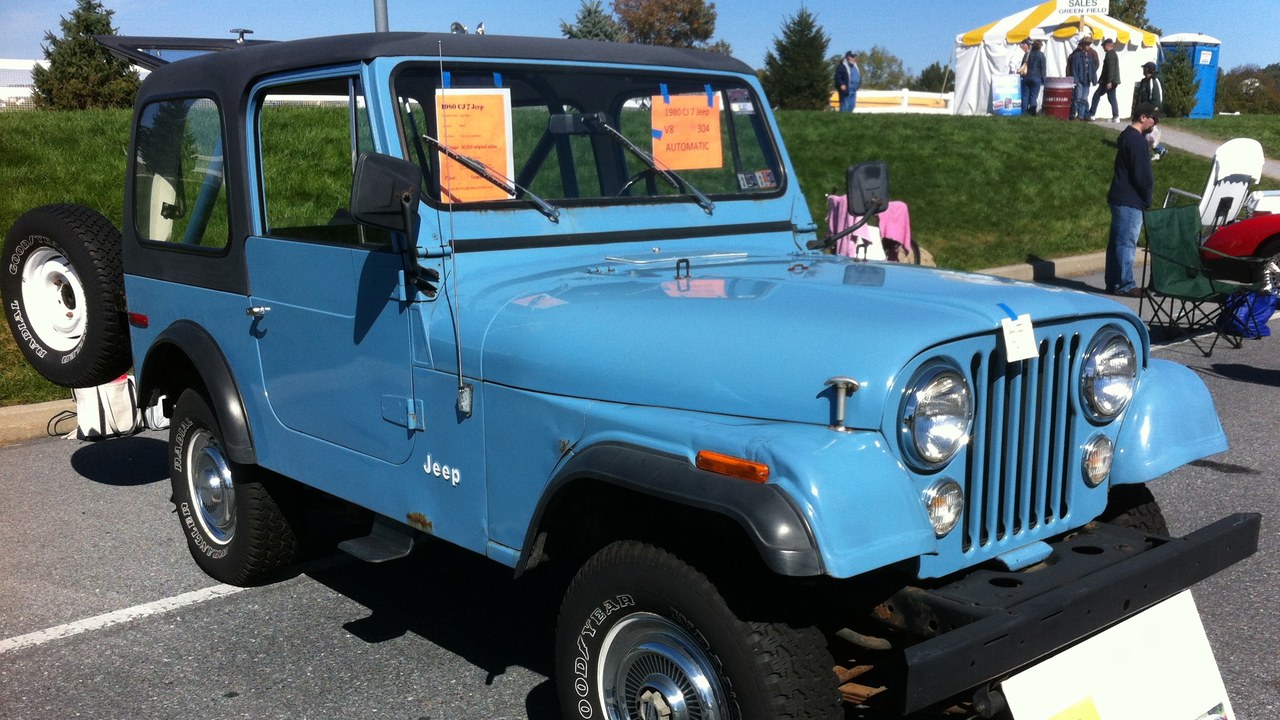
The Civilian Jeep grew straight out of the wartime Willys MB, and the Jeep CJ history says the first full-production civilian model, the CJ-2A, was built from 1945 to 1949. Farmers and tradesmen were the target buyers, since the same mechanical package had already proved itself under army use.
The CJ line is the bridge between the military original and the modern Wrangler. Buyers of surviving examples are getting wartime engineering adapted for peacetime work, though the details differ by model and by the years in which each was built.
3. Mercedes-Benz G-Class: A Wolf in Showroom Clothing
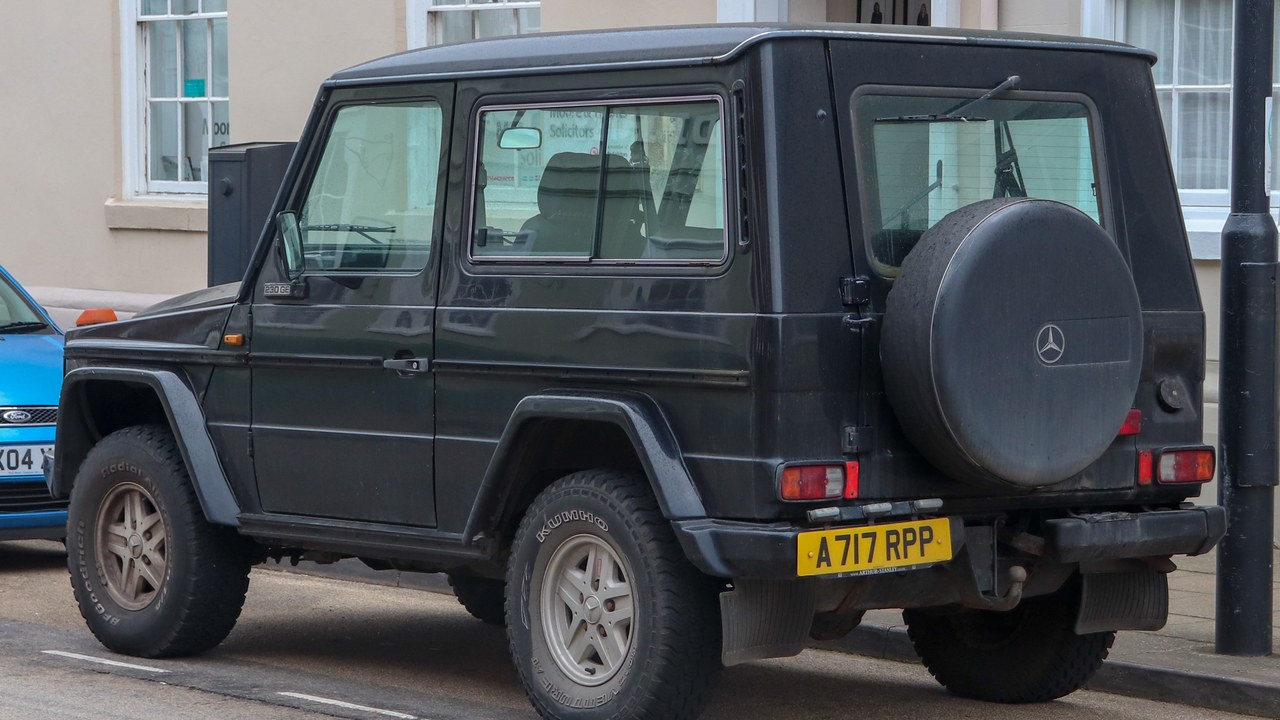
Fitted into more than 20 armies and security agencies, the G-Class is covered by reporting on the Wolf that mention a 12,500-vehicle Bundeswehr order for the 250 GD, nicknamed the Wolf, and a Swiss Army decision in 1982. Military demand shaped the boxy truck long before it became a luxury status symbol.
The civilian G-Class that sells today still carries the upright shape of those service vehicles. Its military customers helped keep a niche off-roader in production for decades, which explains how a design built for armies ended up in expensive showrooms.
4. Hummer H1: From Humvee to Hummer
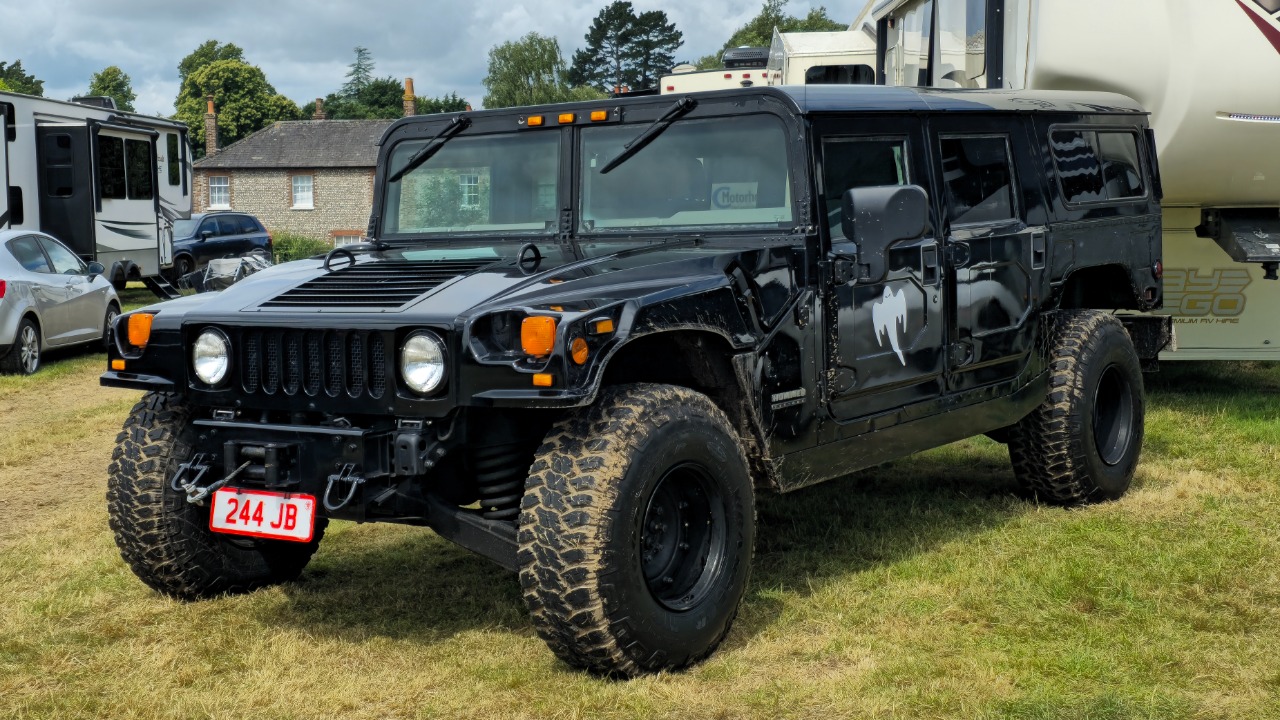
AM General’s HMMWV won a 55,000-vehicle production contract in 1983, and the military origins of the Hummer records that the civilian Hummer followed in 1992 after Arnold Schwarzenegger pressed the company to sell the machine to the public. The road-going version was a close relative of the army Humvee.
The H1 is the most openly military vehicle here, wide and slab-sided, with proportions that reflect battlefield requirements rather than family transport. Its origin explains both its unmistakable presence and why it was never a conventional daily driver. Few vehicles on the road carry such a direct link to a service contract.
5. Toyota Land Cruiser: A Jeep Built for Police
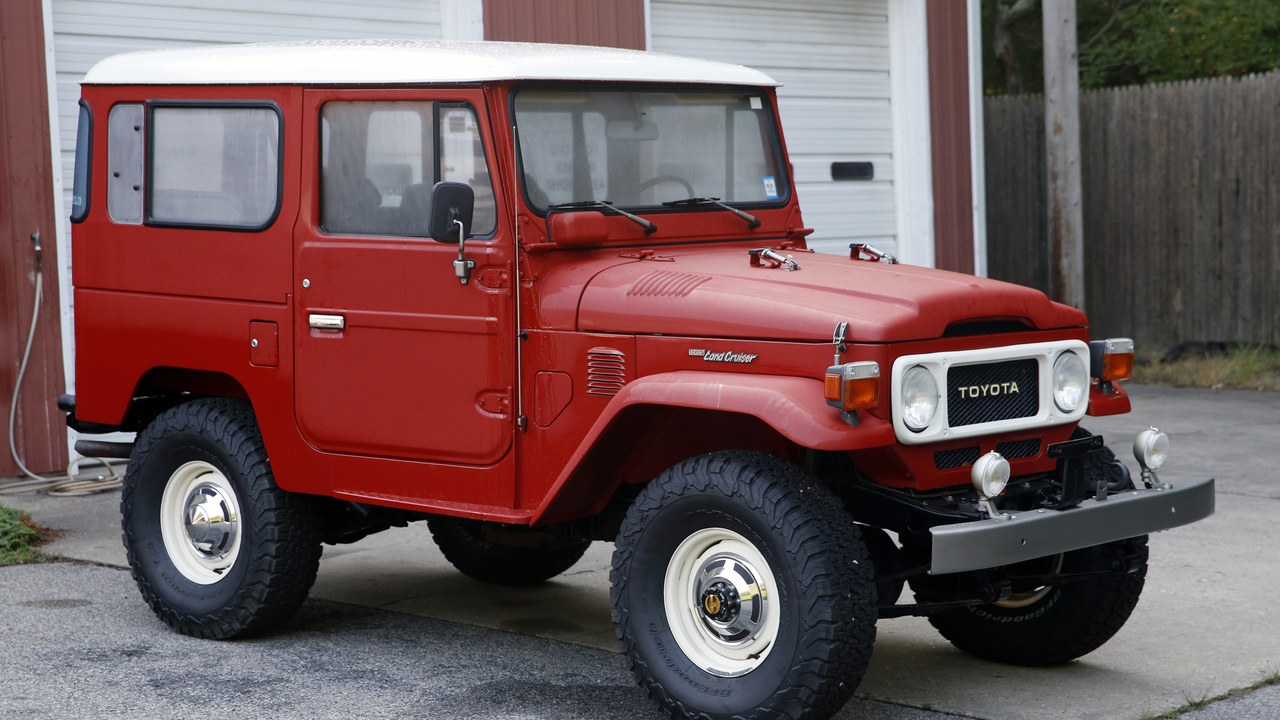
Toyota’s own Land Cruiser history explains that the Land Cruiser began as the Toyota Jeep BJ, shown to Japan’s National Police Reserve in January 1951. Series production started in August 1953, and the name Land Cruiser arrived in 1954.
The nameplate therefore started life answering a security-force requirement rather than a leisure market. It went on to become one of the most widely used four-wheel-drive models in the world, with a utility reputation that traces back to that early government prototype. Its early history also shows how often government and military buyers, rather than private motorists, drove the first demand for rugged four-wheel-drive vehicles.
6. Volkswagen Iltis: The Soldier That Flopped Downtown
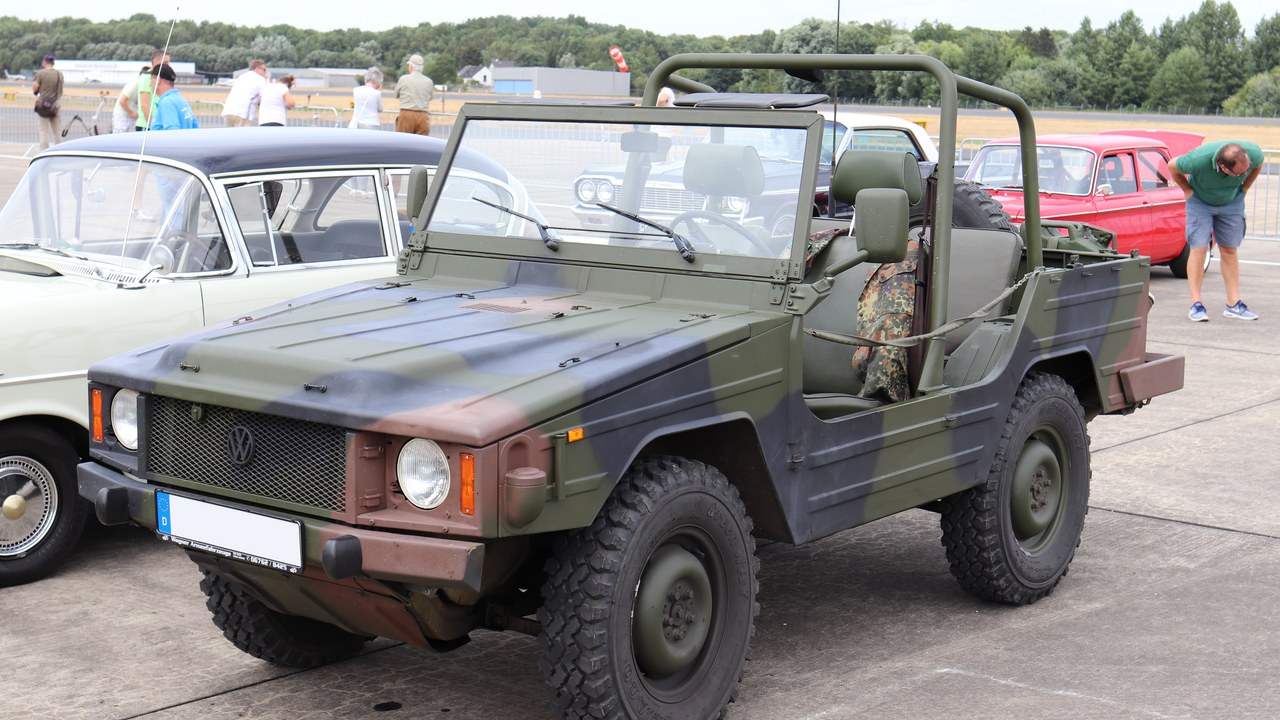
Built for the West German Bundeswehr from 1978, the Iltis reached 9,547 units through 1988, and Volkswagen Iltis entry notes it was offered to civilians from the 1979 Geneva show. It was a straightforward army light vehicle first, with the civilian version added as an afterthought.
Civilian sales were poor. The Iltis earns its place as the clearest example here of a military design pushed toward the public that did not take to it, a reminder that army pedigree alone does not guarantee showroom success. Collectors now value it as an unusual piece of Volkswagen history.
7. Nissan Patrol: Willys Looks and Dodge Bones
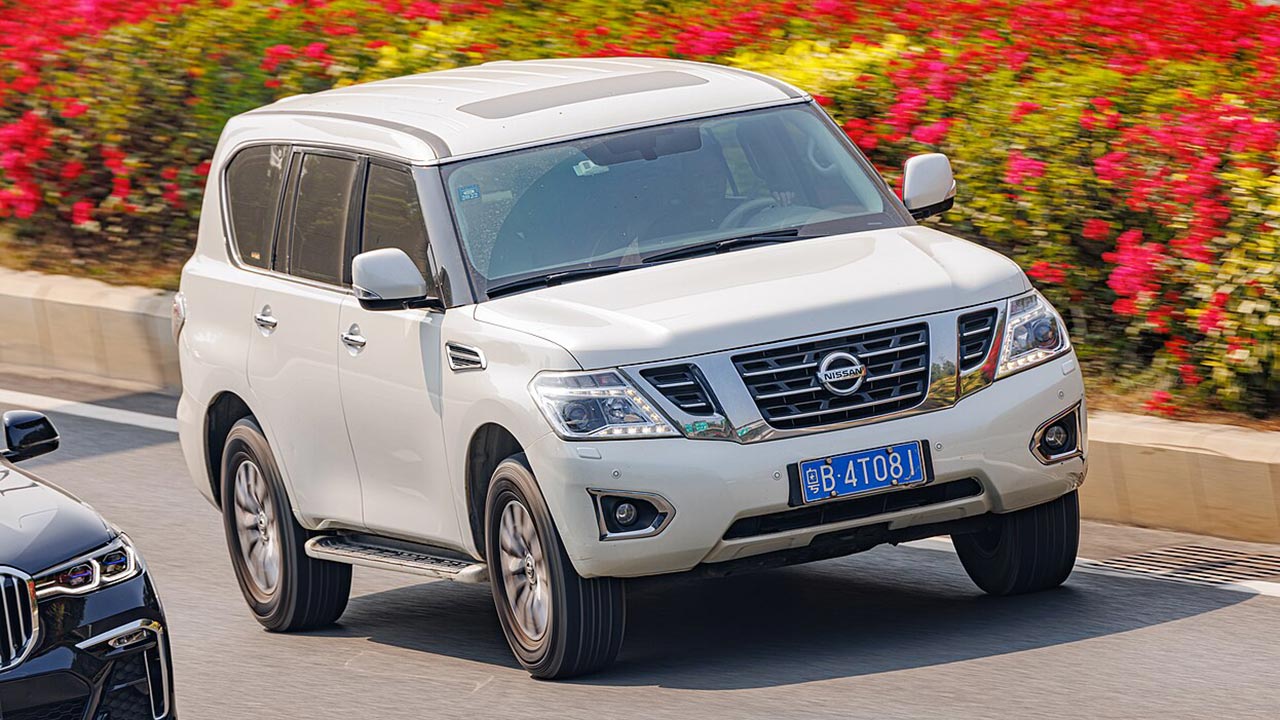
The 1951 4W60 was styled like the Willys Jeep, and the Nissan Patrol history adds that the related 4W70 Carrier, a troop and weapon carrier, used the Dodge M37 chassis with the Patrol’s drivetrain. Nissan’s first Patrol thus borrowed from American military hardware in more than one way.
The Patrol later grew into a large family wagon, and the version in current showrooms looks nothing like the early utility models. The military influence lies at the start of the nameplate, in both its styling and its underpinnings. Few buyers of the modern wagon would guess at that origin.
8. Land Rover Defender: Britain’s Answer to the Jeep
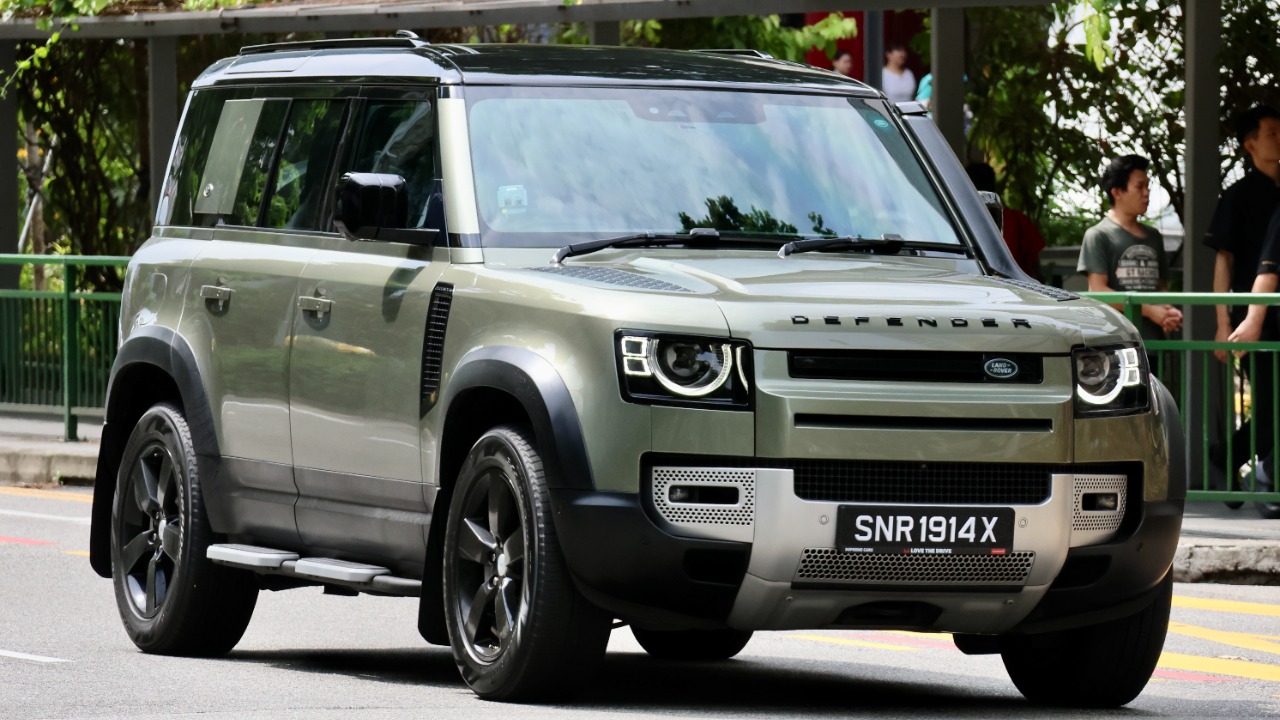
Billed as Britain’s counterpart to the Willys Jeep, the Land Rover Defender entered the British Army’s fleet in the 1980s, with One Tens from 1985, and a military Wolf version arrived in 1994. Defender trucks became a familiar sight in service across the armed forces.
The military career and the civilian one ran in parallel for years, and the same basic layout served farmers, expeditions and soldiers. That dual identity is a large part of why the Defender name carries such weight with enthusiasts and collectors today. Its long service history is part of the appeal.
9. Land Rover Series I: Amsterdam Debut
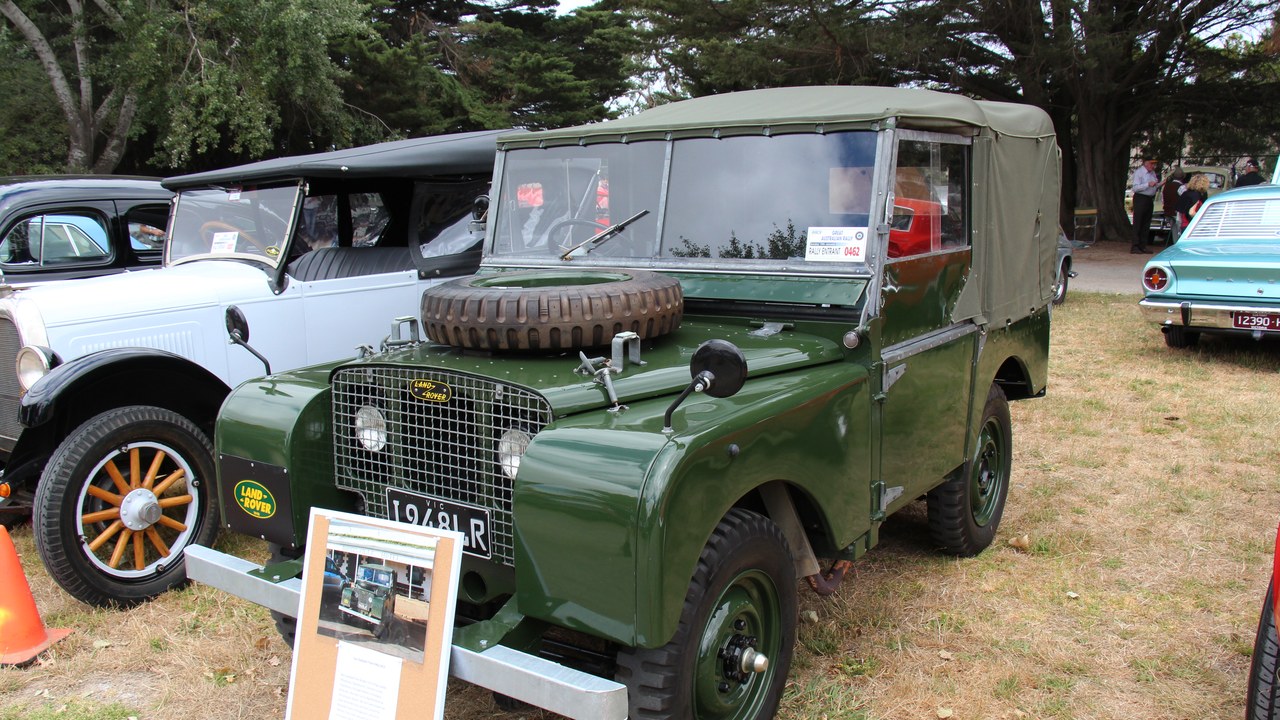
Launched at the Amsterdam Motor Show in April 1948 as a British counterpart to the Willys Jeep, the original Land Rover is described in the Series I Land Rover history alongside the observation that Land Rovers had served the British Army since the 1950s. Military use followed the civilian launch.
This entry is the odd one out because it was designed to compete with the Jeep rather than copy a specific army contract. Its direct line to the later Defender explains why the Series I belongs on a list of military-rooted SUVs.
More from Morning Overview
- Lake Powell sank to a record 3,517 feet, nearing the level that stops Glen Canyon Dam’s turbines
- Seven of Earth’s nine planetary boundaries are breached, and all seven are worsening
- The NSA says three phone features should be off whenever you aren’t using them
- Hurricane Hunter radar shows four warning signs that a tropical cyclone is about to strengthen, a University of Miami study found
