
The largest dinosaurs are known mostly from broken pieces: a vertebra here, a thighbone there, and a great deal of careful scaling. Every headline figure attached to them is an estimate, and those estimates move as new bones surface and old methods are revised. Here are nine of the largest dinosaurs ever discovered, and the fragmentary evidence behind each.
1. Patagotitan: The Heaviest Weight Class
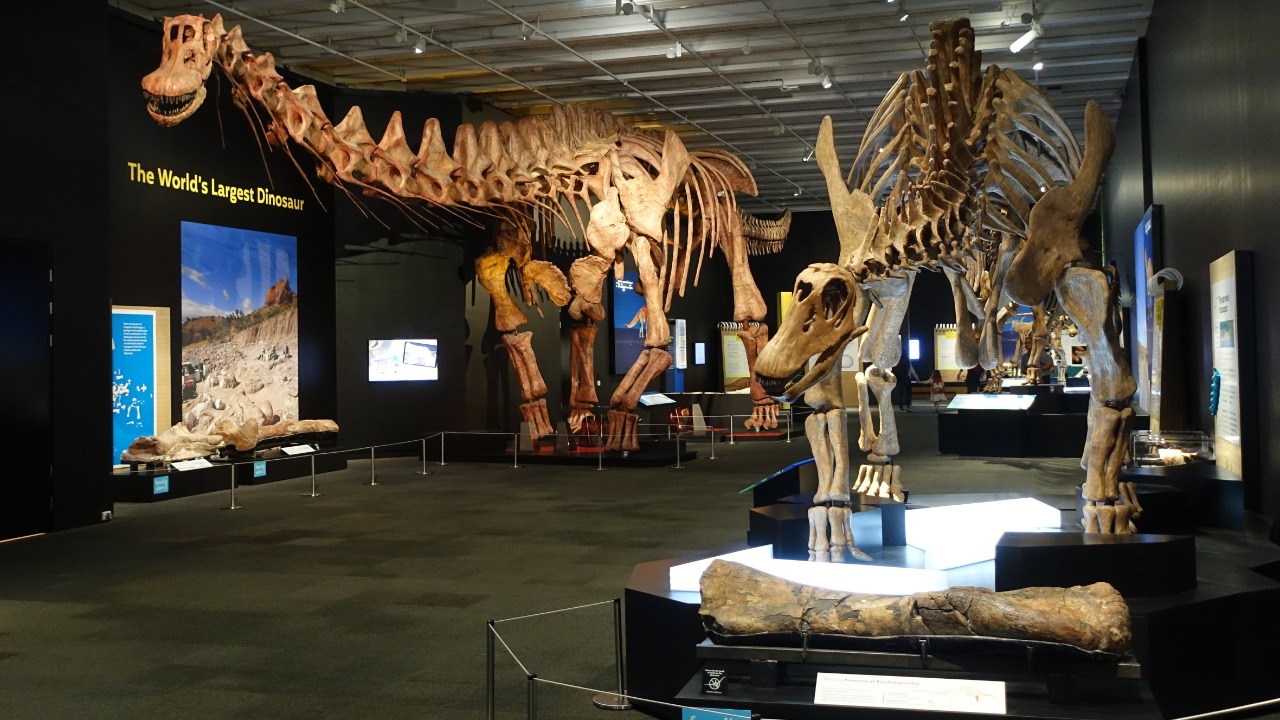
Patagotitan mayorum was described in 2017 from a bone bed in Chubut Province, Argentina, that yielded material from at least six individuals, an unusually rich haul for a giant titanosaur. The initial published estimate put the Patagonian titanosaur near 37 meters long and about 69 metric tons, figures drawn from the circumference of the femur and humerus.
Later work has pulled those numbers down; more recent estimates cluster nearer 31 meters and roughly 50 to 57 tonnes, with some analyses spreading wider still. The cast displayed in several museums is therefore a reconstruction built from many animals, not one skeleton, and its proportions carry the uncertainty of that composite.
2. Argentinosaurus: A Giant Built From Scraps
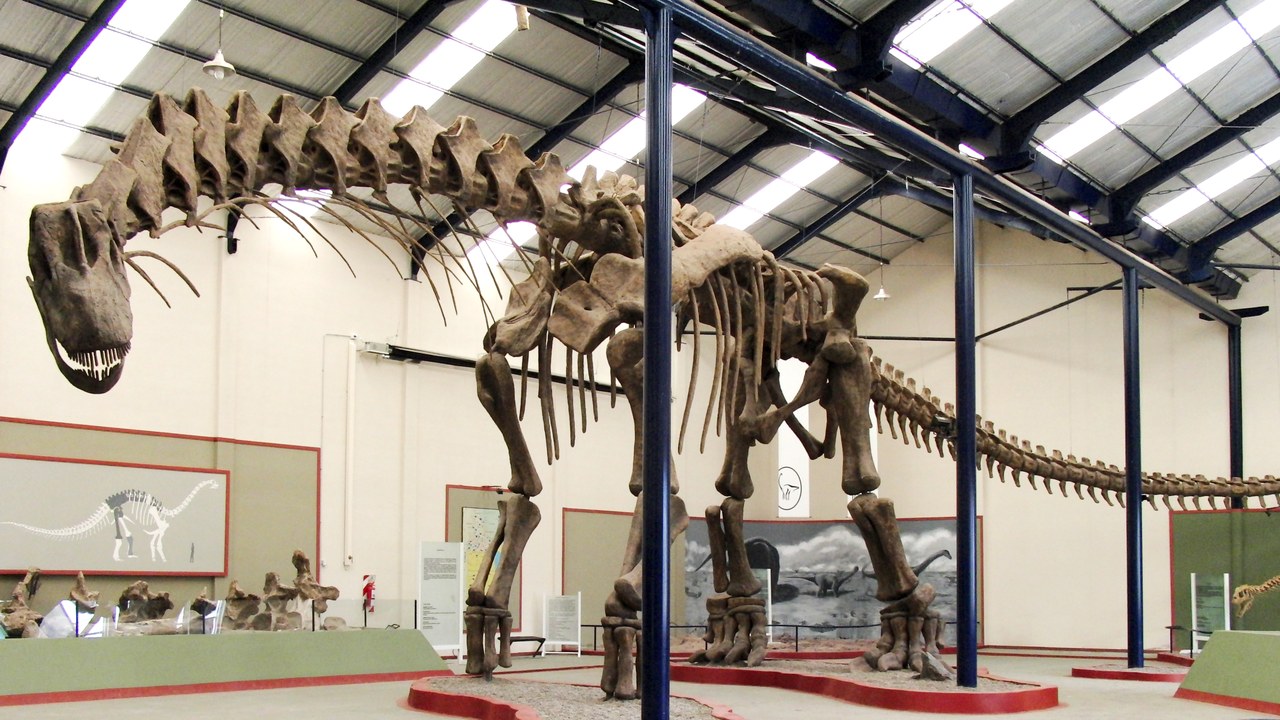
Since 1993 the name Argentinosaurus huinculensis has stood in for sheer size, yet the material behind it is startlingly thin: a handful of dorsal vertebrae, some ribs, a partial sacrum and a fibula. Estimates for the Neuquen titanosaur generally run about 30 to 35 meters in length and 65 to 80 metric tons, with older figures reaching higher.
No complete limb bone or skull is known, so every dimension rests on scaling from better-preserved relatives. The mounted skeletons on display in Argentina and elsewhere are reconstructions, sculpted around the few real elements, which is why the animal’s rank among the largest sauropods shifts each time a rival is described.
3. Dreadnoughtus: Weighed, Then Reweighed
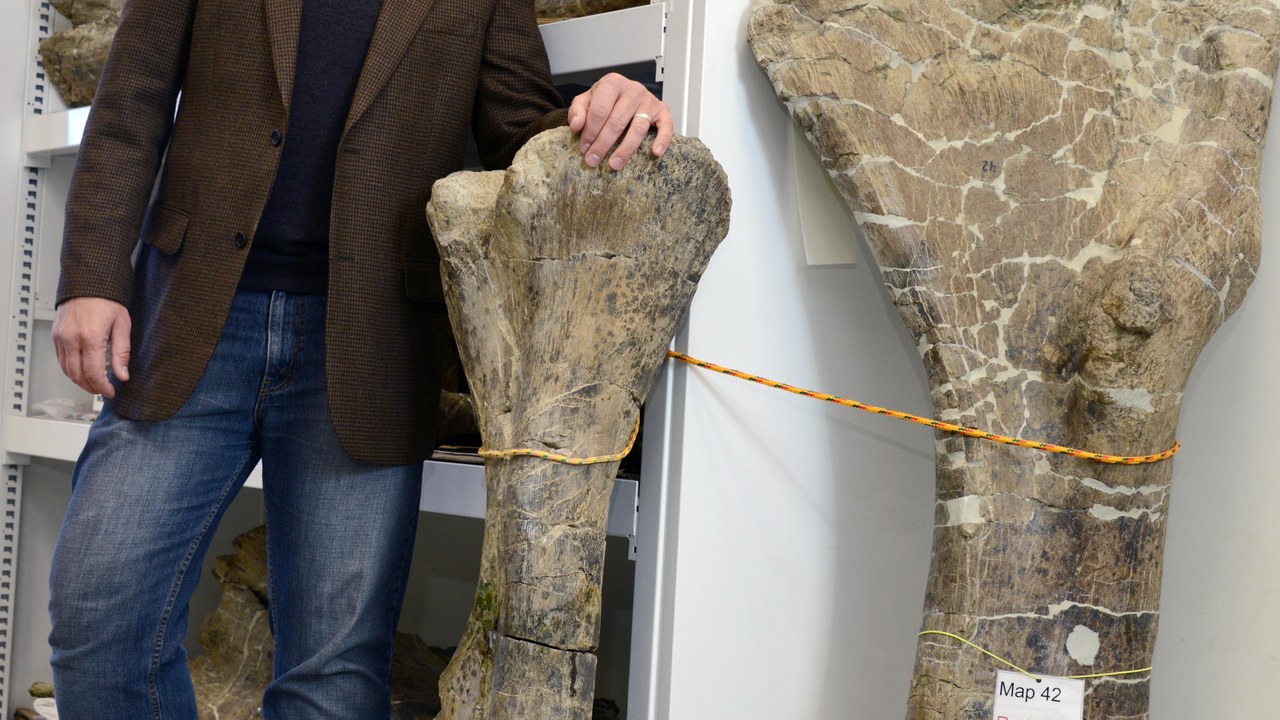
Announced in 2014 from southern Patagonia, Dreadnoughtus schrani is prized less for its size than for its completeness: roughly 70 percent of the bone types below the skull were recovered, including the huge femur and humerus that anchor every mass estimate. The describing team put the animal near 26 meters long and about 59 metric tons.
That tonnage did not survive scrutiny. A 2015 reanalysis using three-dimensional body reconstruction argued for something closer to 30 to 40 tonnes, and bone microstructure indicates the individual was still growing when it died. The specimen therefore sets a floor rather than a ceiling for the species, which is an awkward footing for any ranking.
4. Supersaurus: Long Bones, Longer Arguments
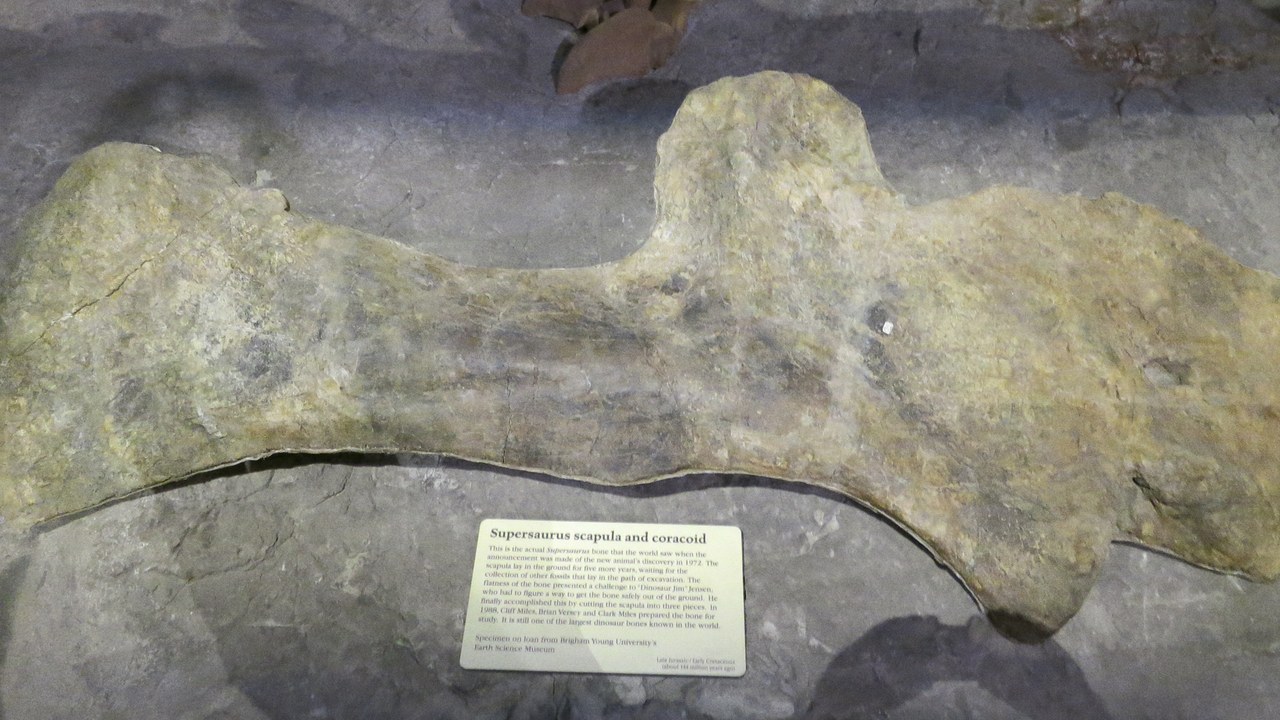
Named in 1985 from the Dry Mesa Quarry in Colorado, Supersaurus vivianae is known chiefly by its shoulder: a scapulocoracoid more than two meters long that first betrayed the animal’s scale. Length estimates for this Morrison Formation diplodocid have ranged from about 33 meters to claims above 39 meters in more recent reassessments.
Much of that spread comes from disagreement over which bones belong together, since the quarry mixed the remains of several sauropods. Weight estimates stay comparatively modest at roughly 35 to 40 tonnes, because diplodocids were long and whip-tailed rather than bulky, a reminder that longest and heaviest are separate contests.
5. Diplodocus: The Museum Standard
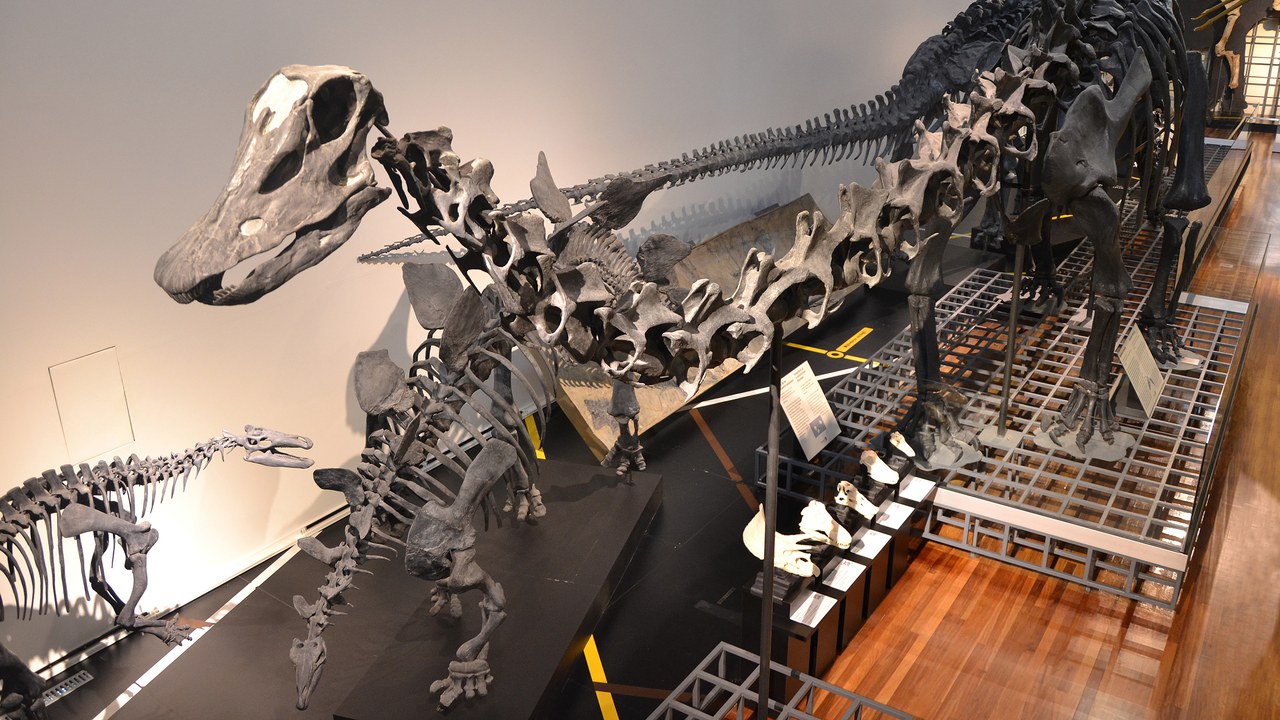
Most museum visitors who have stood beneath a giant sauropod were standing beneath a Diplodocus, thanks to Andrew Carnegie, who paid for casts of the Diplodocus carnegii skeleton to be shipped to museums across Europe and the Americas from 1905 onward. The genus is known from unusually complete remains, with the best specimens measuring around 25 meters.
Completeness makes Diplodocus the yardstick against which fragmentary giants are measured, but it was not especially heavy: perhaps 12 to 15 tonnes, a fraction of the largest titanosaurs. The species D. hallorum, once given its own name Seismosaurus, pushes the genus toward 32 meters, though that figure has been revised downward more than once.
6. Spinosaurus: The Largest Hunter
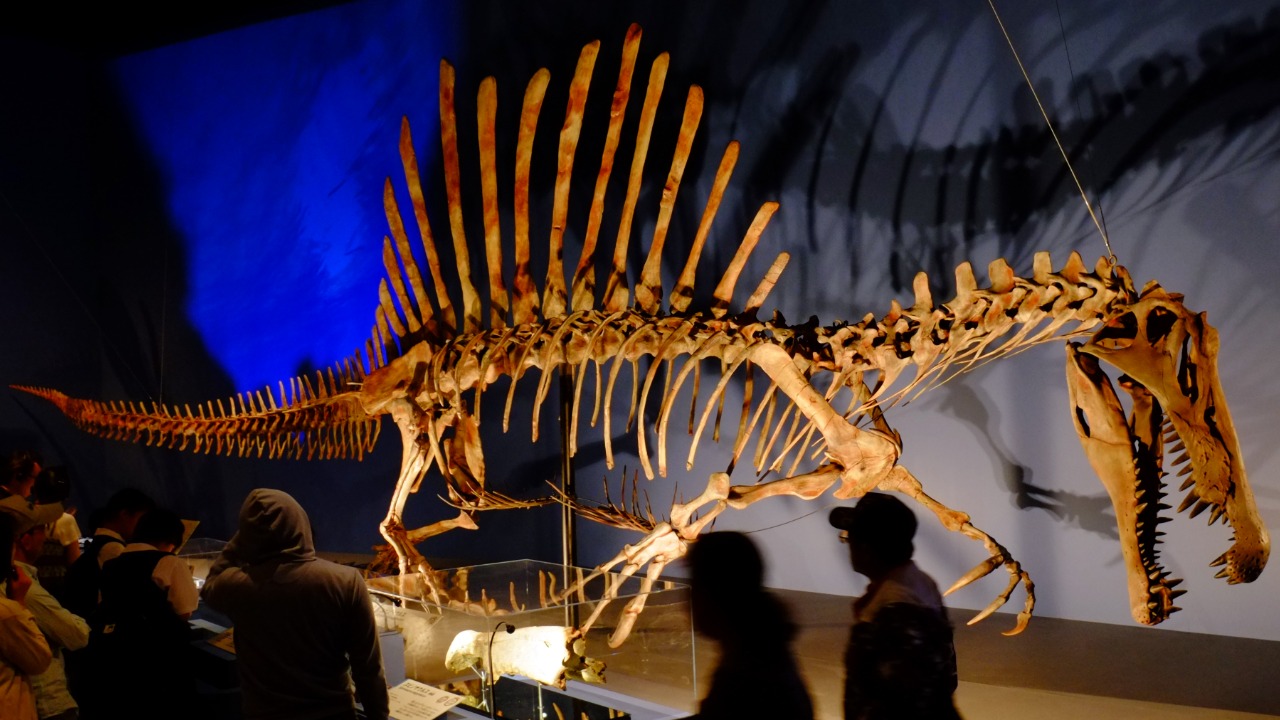
No predatory dinosaur is credibly larger than Spinosaurus aegyptiacus, with length estimates for the sail-backed Egyptian hunter running from roughly 14 to 18 meters and mass figures generally between six and nine tonnes. Its trademark is a sail of elongated neural spines, some exceeding a meter and a half, rising from the back.
The reconstruction rests on shakier ground than the numbers suggest, because the original Egyptian fossils were destroyed in a 1944 bombing raid on Munich and survive only as drawings and photographs. Later Moroccan material has rebuilt the picture, including a paddle-shaped tail described in 2020 that reopened a long argument about how much time the animal spent in water.
7. Tyrannosaurus: Big, And Actually Measured
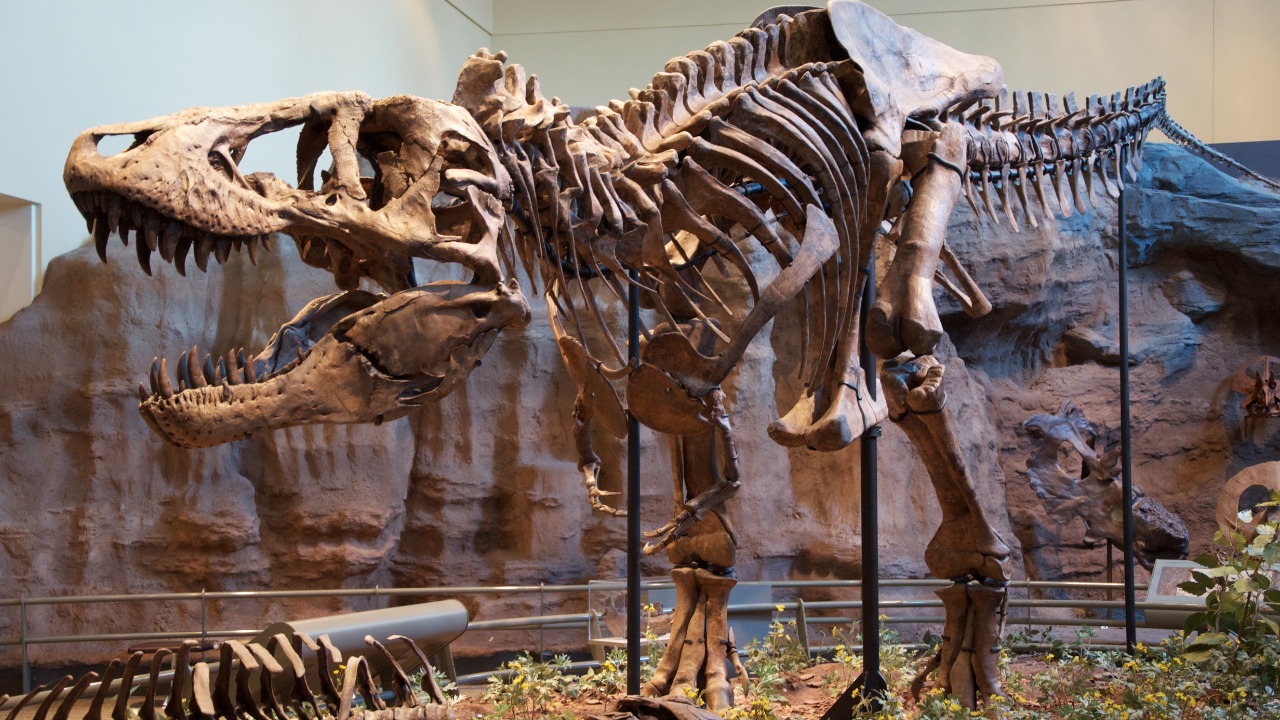
Tyrannosaurus rex earns its place on evidence rather than extrapolation: dozens of specimens are known, and the most complete of them, the specimen nicknamed Sue, measures about 12.3 meters long. Mass estimates for the largest individuals generally fall between roughly 8 and 9 metric tons, with some analyses reaching higher.
Even here the figures move. A Saskatchewan specimen known as Scotty has been argued to be more massive still, and rival methods for converting limb-bone dimensions into body weight produce results that differ by tonnes. What separates Tyrannosaurus from the fragmentary sauropods is that the disagreement is about method, not about which bones exist.
8. Brachiosaurus: Built Like A Crane
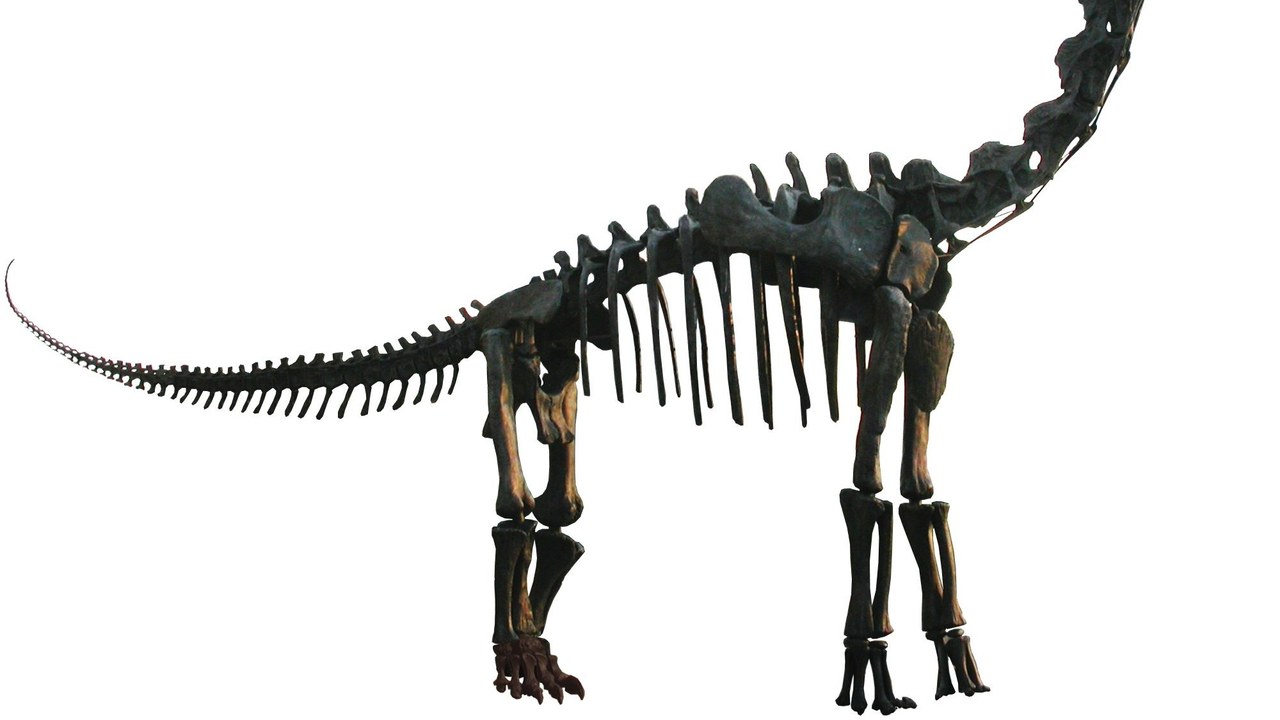
Forelimbs longer than hindlimbs give Brachiosaurus altithorax its crane-like tilt, a build Elmer Riggs described in 1903 from Colorado’s Grand River valley. Estimates for the Morrison Formation browser put it around 20 to 22 meters long and somewhere between 30 and 60 tonnes, a range wide enough to be an admission of ignorance.
That spread reflects how little of the animal has been found; no complete skull is known for the North American species. Much of the public image of Brachiosaurus in fact comes from the towering Berlin mount, which was reassigned to the African genus Giraffatitan and is a different, if closely related, animal.
9. Mamenchisaurus: A Neck Half Its Length
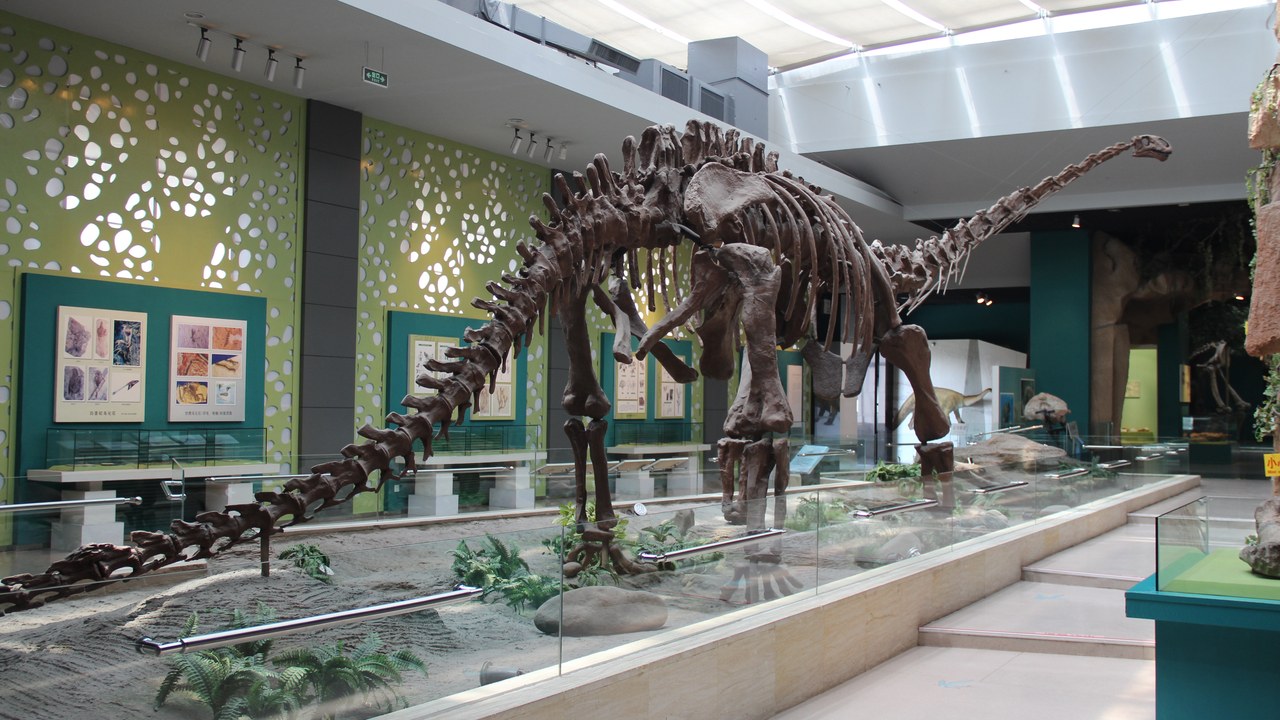
Named in 1954 from a partial skeleton turned up by highway construction in Sichuan, Mamenchisaurus stands out for proportion rather than bulk: the neck of the Chinese sauropod accounts for close to half of its total length. Several species are known from material complete enough to mount, which is why the genus is a fixture of Chinese museum halls.
The largest species, M. sinocanadorum, rests on a partial skull, a few cervical vertebrae and some cervical ribs, so its dimensions are extrapolated from that. A 2023 study estimated the neck at about 15.1 meters, described as the longest of any known animal, while total length estimates for the species run near 35 meters.
More from Morning Overview
