
Some of the largest holes on Earth were not carved by nature but dug out one truck-load at a time by mining companies chasing copper, gold, and diamonds. Decades of blasting and hauling can turn a mountainside into a mile-wide crater visible from orbit, reshaping landscapes long after the richest ore has been carried away. This gallery tours nine of the deepest and widest open-pit mines ever dug.
1. Bingham Canyon Mine: The Original Mega-Pit
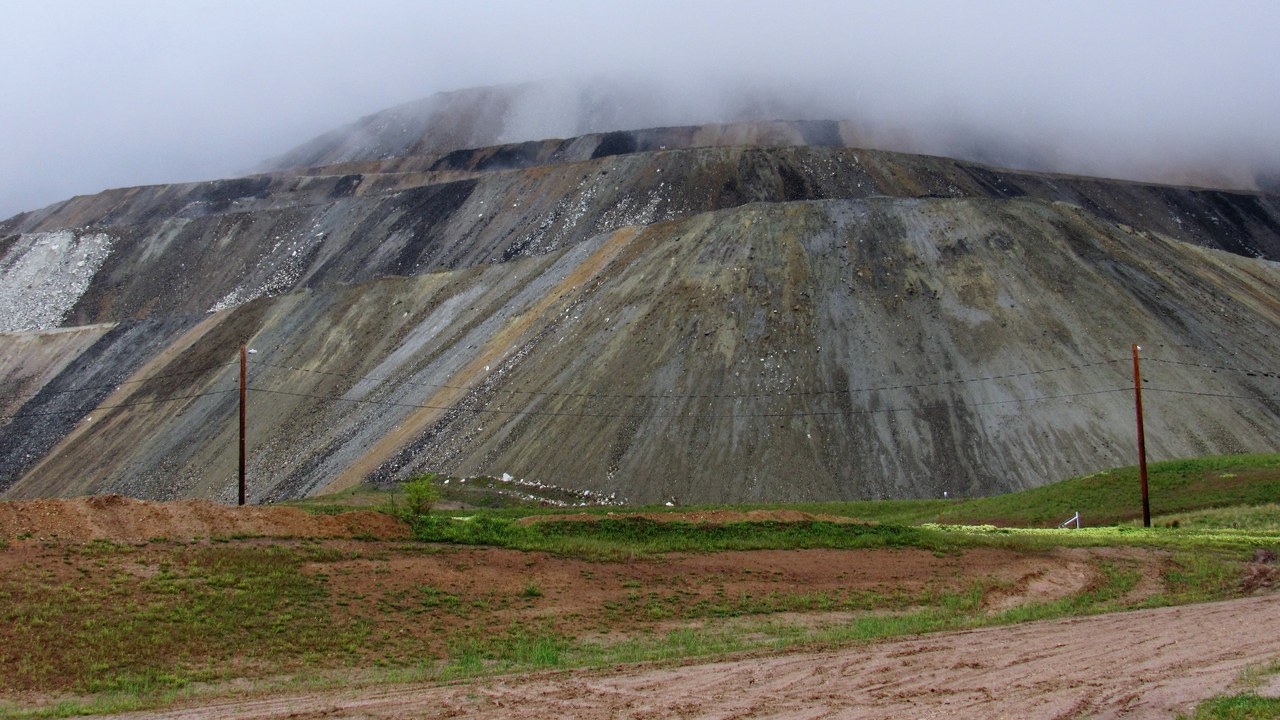
Bingham Canyon Mine southwest of Salt Lake City has been cut roughly 1.2 kilometres deep and about 4 kilometres wide by more than a century of continuous copper mining. Terraced benches ring the walls of the pit, each one wide enough for multi-story haul trucks to circle slowly toward the ore body far below.
Because the excavation has grown gradually since the early twentieth century, its stacked walls read almost like a timeline of mining technology, with narrower old terraces near the rim giving way to the wider benches cut for today’s larger equipment and steeper hauling routes.
2. Chuquicamata: A Century Carved Into Desert
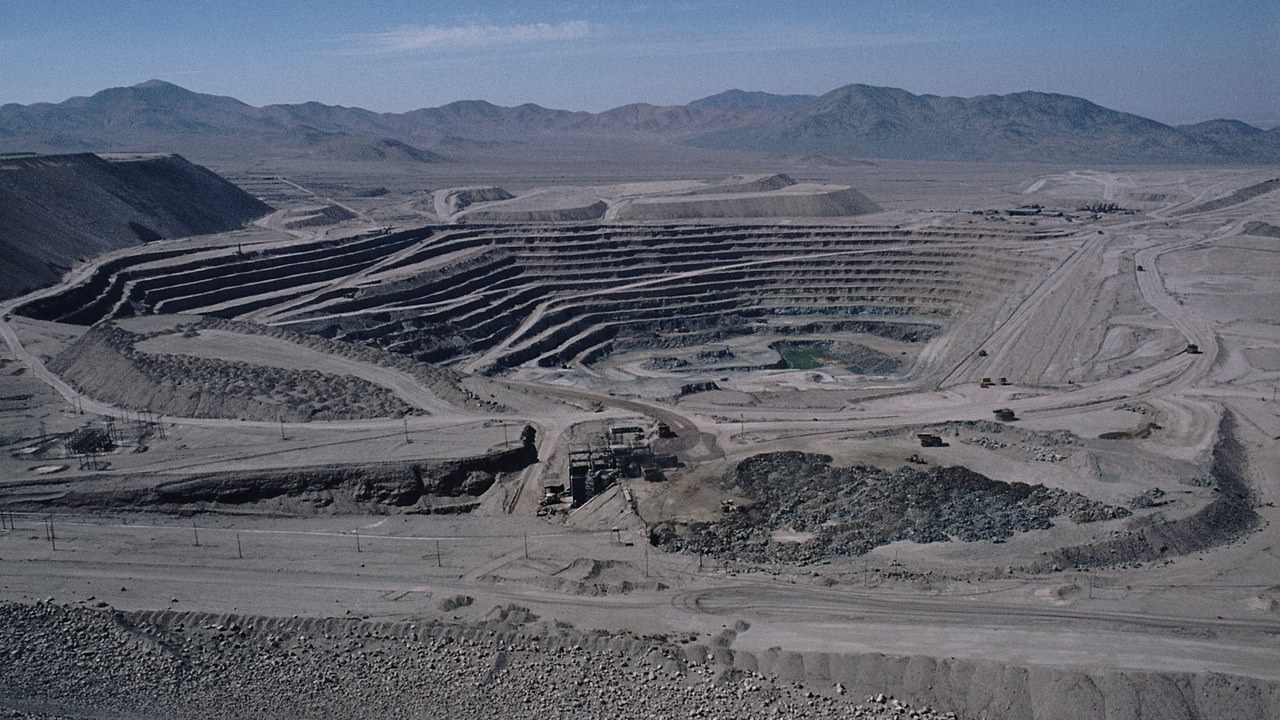
Chuquicamata, one of the largest copper pits on the planet, sits in northern Chile’s Atacama Desert and has expanded outward for roughly a hundred years of near-continuous excavation. Satellite passes over the Chuquicamata pit show the crater visibly widening decade after decade as engineers chase copper deeper underground.
The surrounding company town of Chuquicamata was eventually relocated because the pit’s footprint and dust had grown too large to coexist with nearby housing, a rare case of a mine physically outgrowing the community built to serve it.
3. Escondida: The Desert’s Biggest Copper Source
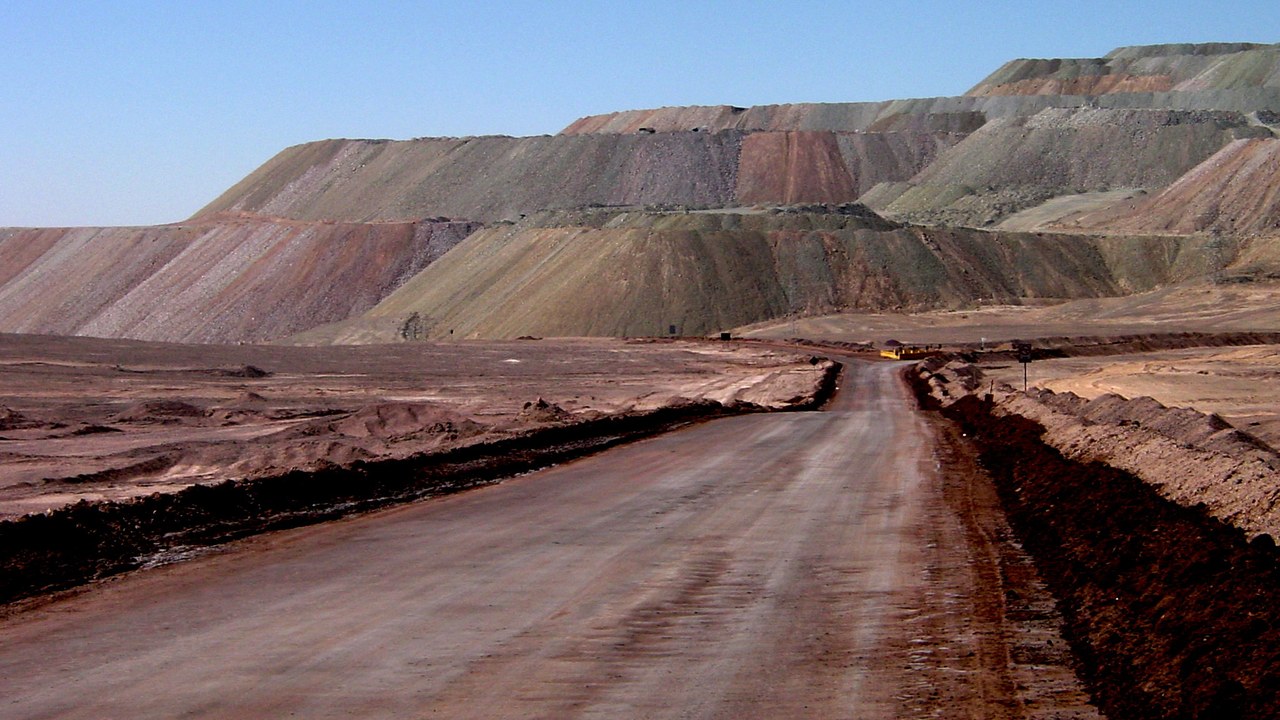
Escondida, also in Chile’s Atacama Desert, has swallowed several kilometres of arid landscape since operations began there in 1990, making it one of the world’s largest sources of mined copper. Long haul roads spiral down into the Escondida pit, carrying ore up toward processing facilities on the surface.
Because the Atacama is one of the driest places on Earth, the pit’s expansion is unusually easy to track from orbit year over year, with almost no cloud cover or vegetation to obscure how far the excavation has crept since the 1990s.
4. Grasberg mine: Mining One of the Richest Deposits on Earth
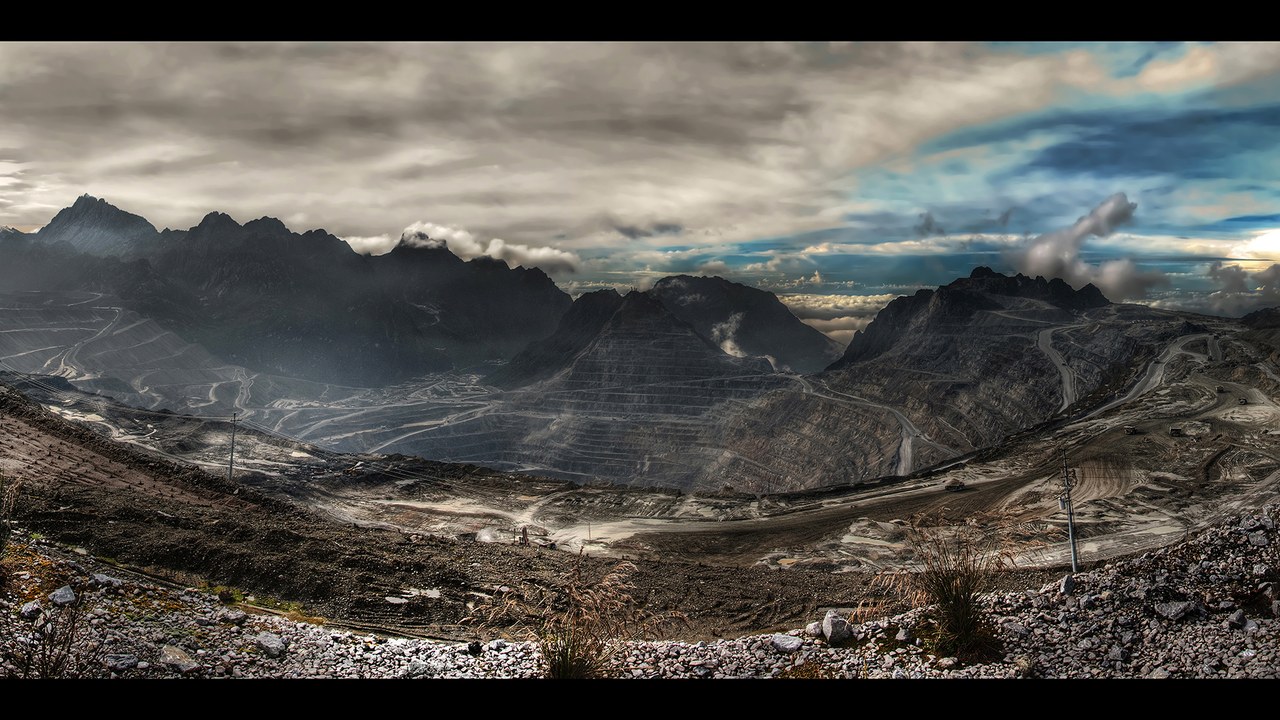
Grasberg, high in the mountains of Indonesia’s Papua province, was built to work one of the largest combined copper-and-gold deposits ever found, and its open pit became one of the biggest excavations in the mining industry. Persistent cloud and mist often wrap around the Grasberg operation, which sits at an altitude few mines ever reach.
As the open pit’s easily reached ore has been worked down over the decades, operations have increasingly shifted toward underground extraction beneath the original crater, a common next chapter once a surface pit like this one nears its practical limits.
5. Kalgoorlie Super Pit: Australia’s Golden Gash
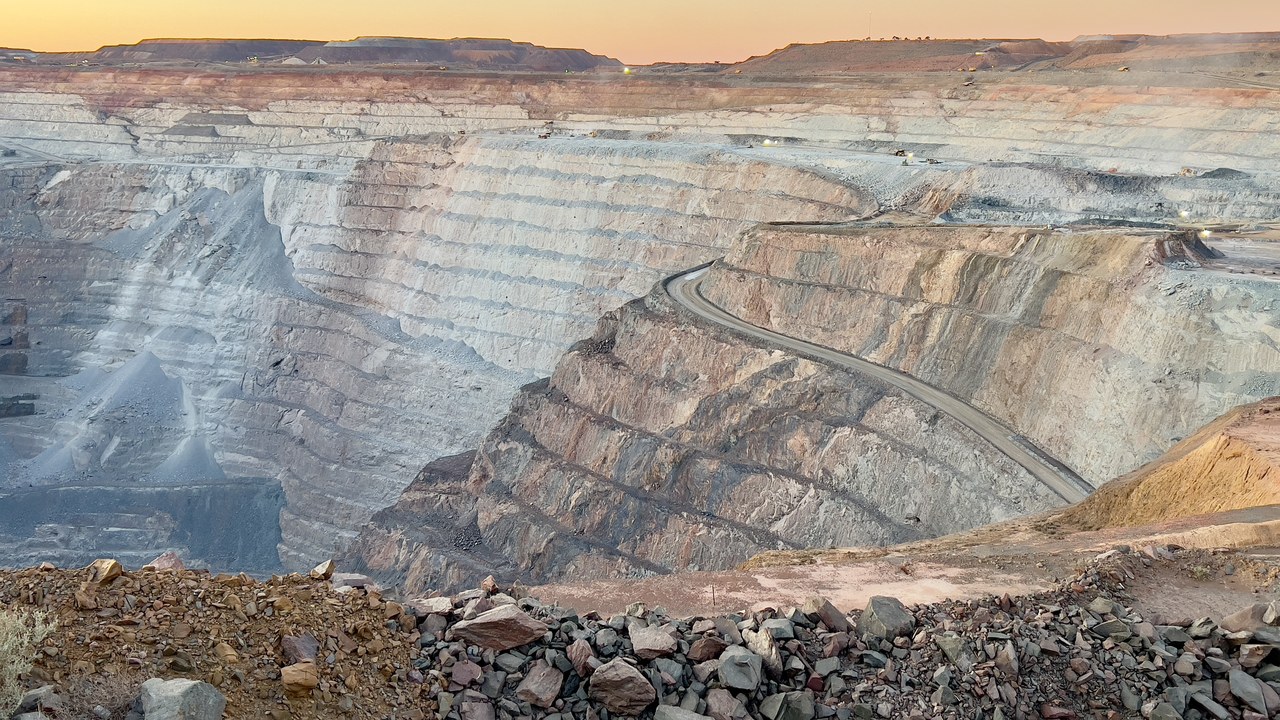
The Kalgoorlie Super Pit in Western Australia stretches about 3.5 kilometres long and reaches roughly 600 metres deep, making it the country’s best-known gold excavation. A single access road switchbacks down the Super Pit’s walls in a pattern that has become one of the most photographed shapes in Australian mining.
The pit sits directly beneath what was once a patchwork of separate underground gold claims dating back to the 1890s, later combined into a single open-cut operation large enough to be seen clearly from passing aircraft at cruising altitude.
6. Mir Mine: The Hole That Grounded Helicopters
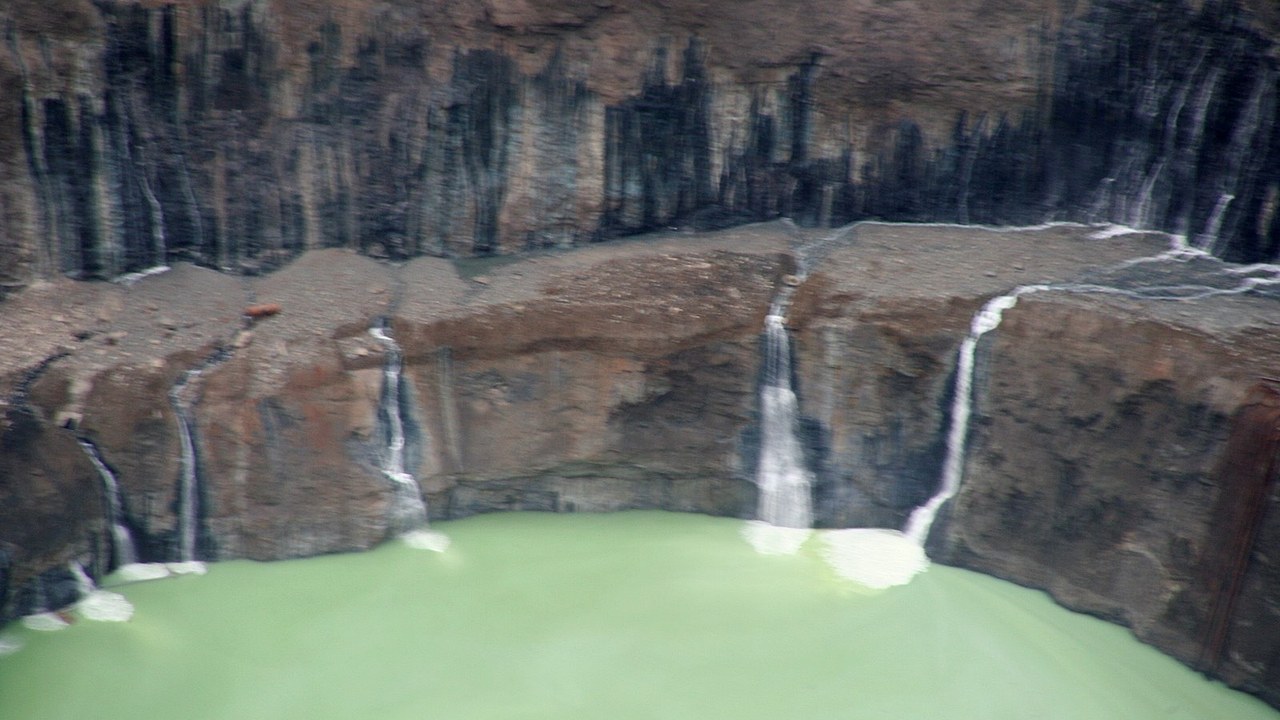
Mir Mine in Siberia drops about 525 metres into the earth and spans roughly 1,200 metres across, and its shape became infamous for reportedly pulling small aircraft into a downdraft if they flew too close overhead. Russian authorities eventually restricted airspace above the Mir diamond pit as a precaution.
Winters in the region are severe enough that engineers once pumped warm air into the pit to keep machinery from freezing solid, a reminder that Siberian diamond mining is as much a fight against climate as against rock.
7. Udachnaya pipe: Diamonds Mined Past 600 Metres
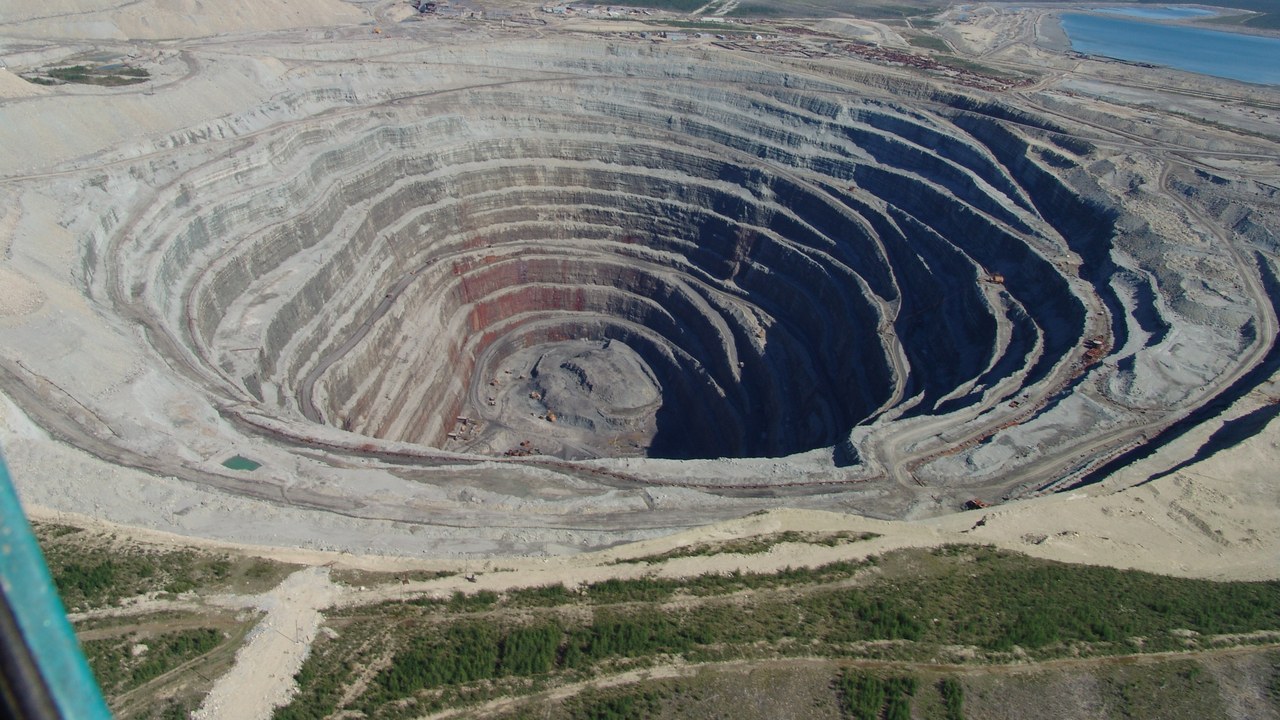
The Udachnaya pipe, another major Siberian diamond source, was mined as an open pit past 600 metres deep before the operation shifted underground once surface reserves became impractical to reach. The concentric rings visible around the Udachnaya crater mark decades of progressively deeper benches.
Its remote location near the small town of Udachny means the mine operates through long, brutal Siberian winters far from any major city, and the eventual switch to underground tunnels was driven largely by the point where digging a wider open pit stopped making economic sense.
8. Palabora Mine: South Africa’s Copper Giant
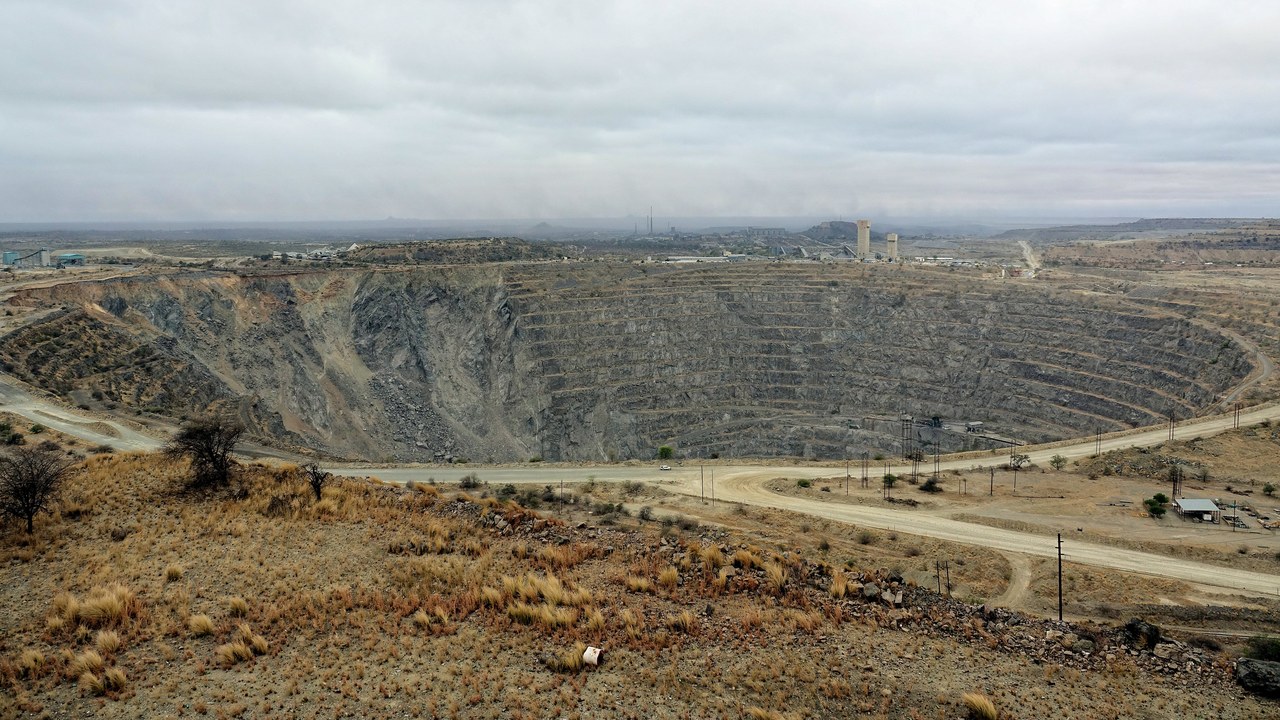
Palabora Mine sits at Phalaborwa in South Africa’s Limpopo province, where a copper mining company carved an open pit roughly 762 metres deep and more than a kilometre across, ranking it among the deepest open pits ever dug by hand and machine alike.
Open-cast operations continued until 2002, when the ore body near the surface was worked down to its economic limit. Production then moved underground, following the same path taken by several other mines on this list to keep extracting ore long after surface mining alone could no longer reach it.
9. Kimberley Big Hole: Dug Entirely by Hand

The Big Hole in Kimberley, South Africa, reached about 240 metres deep and was excavated almost entirely with picks, shovels, and basic hoists during a nineteenth-century diamond rush, long before mechanized mining equipment existed. Thousands of individual claims once honeycombed the Kimberley pit before larger companies consolidated the site.
That chaotic, claim-by-claim digging is part of why the walls look so irregular compared with the smoothly terraced benches of modern pits, since each miner cut downward largely on their own rather than following a single engineered plan.
More from Morning Overview
- A handful of car transmissions are so tough that mechanics say they almost never die
- Card skimmers hidden on gas pumps are draining accounts, and there’s a quick way to spot them
- The NSA warns one messaging setting can clone your texts to a stranger
- Security experts still urge phone owners to switch off one location-tracking setting
