
Venom evolved as a hunting tool rather than a weapon against people, which is why the animals carrying the deadliest doses are usually the ones least interested in a confrontation. Some are snakes holding enough toxin in one bite to fell a crowd; others are spiders, scorpions and even a lizard. Here are nine venomous land animals that earn their reputations.
1. Inland taipan: The Most Toxic Bite On Record
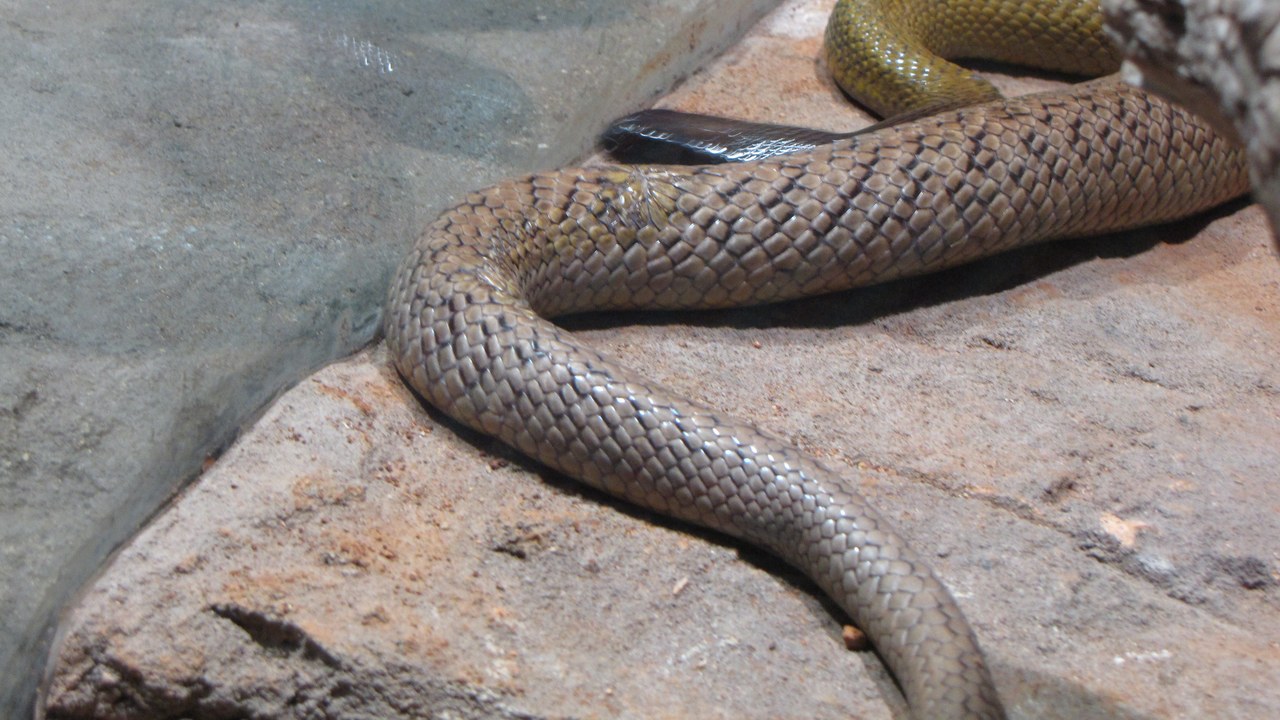
Drop for drop, no snake carries a more toxic bite. Laboratory measures of venom potency put the inland taipan of Australia at the top of every ranking, and a single bite is estimated to hold enough venom to kill around 100 adult humans. The dose combines neurotoxins that shut down nerve signalling with agents that wreck the blood’s ability to clot.
Reputation and real risk are not the same thing. The species lives on remote black-soil plains in Australia’s arid interior, shelters in soil cracks and abandoned burrows, and almost never meets anyone; recorded bites are rare, and antivenom has kept the ones that happen survivable.
2. Black mamba: Africa’s Fastest Killer

Speed is what separates this one from the rest. Africa’s longest venomous snake can pass four metres and travels faster than any other snake on the continent, and its venom is a fast-acting neurotoxic mix that can shut down breathing within hours of a bite.
Encounters usually begin with a warning rather than a strike: the snake gapes an inky black mouth and lifts a third of its body off the ground. Untreated bites are close to uniformly fatal, so the practical danger lies in how far a rural victim often is from a clinic that stocks antivenom.
3. King cobra: The Longest Venomous Snake

Length is the headline. The king cobra grows beyond five metres, longer than any other venomous snake alive, and the size of its head lets it inject a volume of neurotoxic venom that smaller species cannot match even when their toxins are stronger.
Its diet of other snakes keeps it in forest, farmland and plantations across South and Southeast Asia rather than in towns, and bites are uncommon. The animal also signals before it commits, rearing up, spreading a narrow hood and producing a low growl, but the dose it can deliver makes prompt antivenom essential.
4. Sydney funnel-web spider: The Spider With A Body Count

Few spiders anywhere have killed as reliably as the male Sydney funnel-web spider, whose venom contains a peptide that primate nerve cells happen to be unusually sensitive to. Thirteen deaths were recorded before an antivenom became available in 1981, and none have been recorded since.
Risk clusters in a radius around Sydney, where wandering males turn up in garages, shoes and swimming pools during warm, wet weather. Bites hurt immediately and can progress quickly, which is why the standard response is a pressure-immobilisation bandage and an ambulance rather than a wait-and-see approach.
5. Brazilian wandering spider: A Hunter That Comes To You

Instead of waiting in a web, the Brazilian wandering spider walks the forest floor at night and spends the day tucked under logs, inside banana bunches or in anything dark and hollow, boots included. Its venom is one of the few among spiders that doctors treat as medically significant.
Serious envenomation brings severe local pain, sweating and, in some male patients, a prolonged and painful erection that turned the venom’s chemistry into a research subject. Brazilian hospitals stock an antivenom, and the majority of recorded bites deliver little venom and resolve with pain relief alone.
6. Deathstalker scorpion: Small Sting, Serious Emergency

Pale yellow and easy to overlook, the deathstalker scorpion carries a cocktail of neurotoxins ranked among the most potent measured in any scorpion, and the sting itself is described as extraordinarily painful.
A healthy adult usually recovers with supportive care; children, older people and anyone with a heart or lung condition face the genuine danger, which is why stings across North Africa and the Middle East are handled as emergencies. One component of the venom, chlorotoxin, has been studied as a way of tagging tumour tissue during surgery.
7. Gila monster: The Venomous Lizard

North America’s entry on this list is a lizard. The Gila monster delivers venom through grooved teeth in its lower jaw, chewing it into the wound rather than injecting it, and it holds on while doing so.
Bites are excruciating and bring swelling and a sharp fall in blood pressure, yet human deaths are essentially unheard of, and the animal is slow, largely nocturnal and legally protected across its range. A hormone isolated from its saliva, exendin-4, became the template for a class of type 2 diabetes drugs.
8. Bullet ant: The Worst Sting On The Index

Pain rather than lethality earns the bullet ant its place. Entomologist Justin Schmidt put its sting at the top of his sting pain index, calling it pure, intense and brilliant, and the common name comes from victims who compared the sensation to being shot.
One sting will not kill a healthy adult, but the waves of throbbing can run for most of a day. Among the Satere-Mawe people of Brazil, young men take part in an initiation that involves wearing gloves woven full of the ants, repeated many times over, turning an insect sting into a test of endurance.
9. Coral snake: Bright Bands, Slow Symptoms

Bright banding is the advertisement. Coral snakes belong to the same family as cobras and mambas and carry a potent neurotoxic venom, and a serious bite can bring slurred speech, drooping eyelids and eventual failure of the muscles that drive breathing.
What keeps the toll low is anatomy and temperament: short fixed fangs, small mouths and a strong preference for retreat mean most encounters end without any venom being delivered. Symptoms can also take hours to surface, so a confirmed bite is treated as urgent even when the first evening looks uneventful.
More from Morning Overview
- A California supervolcano has bulged upward about two and a half feet since 1978
- The FTC is warning about a scam quietly draining thousands from victims
- The NSA is again telling phone owners to switch off one location setting
- A handful of car transmissions are so tough mechanics say they almost never fail
