
Presidents have traveled in purpose-built propeller planes, early jets, jumbo airliners and helicopters, and each type reflects the technology and priorities of its era. The list begins with the Sacred Cow, the first aircraft built for the job, and ends with a 2026 arrival. Here are nine aircraft that carried presidents.
The tech news worth your time: 400,000+ professionals from Google, Apple and OpenAI read Techpresso, a daily email with the most interesting tech news and insights.
We may earn a commission if you sign up.
1. Douglas VC-54C Sacred Cow: The First Purpose-Built
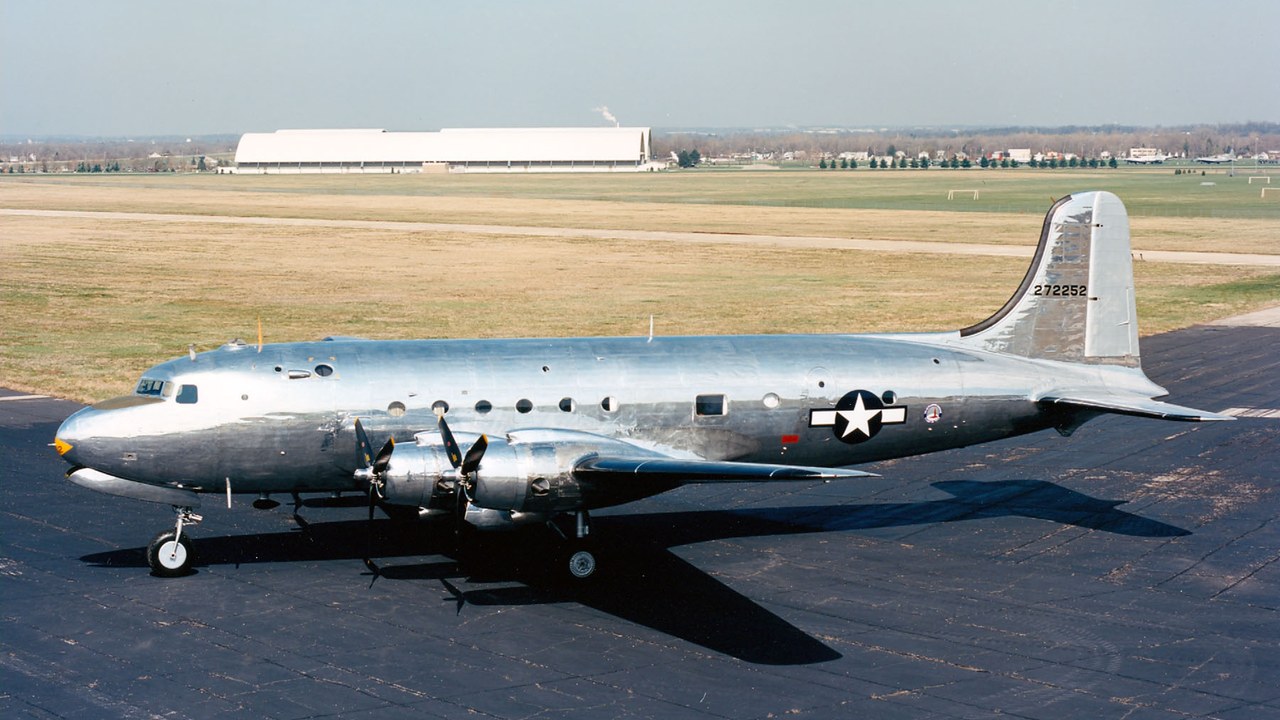
National Museum fact sheet describes the Sacred Cow as the first aircraft built specifically to carry the U.S. president. It flew Roosevelt to Yalta in February 1945, and Truman signed the National Security Act aboard it on July 26, 1947.
The museum notes that Truman used the aircraft during the first 27 months of his administration. A converted Douglas C-54 transport, it set the template for dedicated presidential airplanes that followed it. Its Roosevelt-era flights and the later bill signing tie it to two pivotal moments of the 1940s, one in wartime diplomacy and one in the reorganization of American defense.
2. Douglas VC-118 Independence: Named For Home
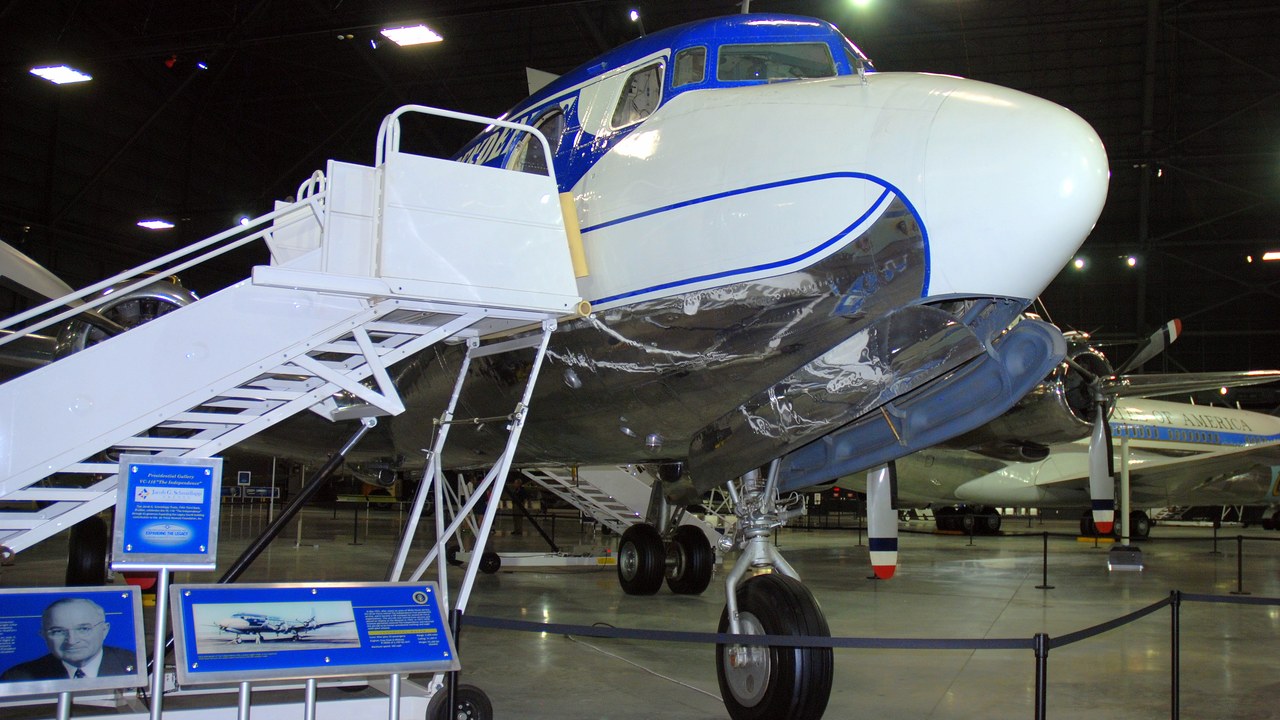
museum’s Independence fact sheet calls this the second aircraft built specifically to transport the president. Truman’s plane took its name from his hometown of Independence, Missouri, and it carried him to Wake Island in October 1950 to meet General MacArthur.
The airplane belongs to the Douglas family of propeller airliners, and the Wake Island trip remains its best-known assignment. That meeting put a presidential aircraft at the center of a Cold War summit far from Washington. Its role as the second dedicated presidential airplane makes it a direct successor to the Sacred Cow, extending the practice of giving the president a purpose-built aircraft rather than borrowing a standard transport each time.
3. Lockheed Constellation Columbine III: Eisenhower’s Constellation
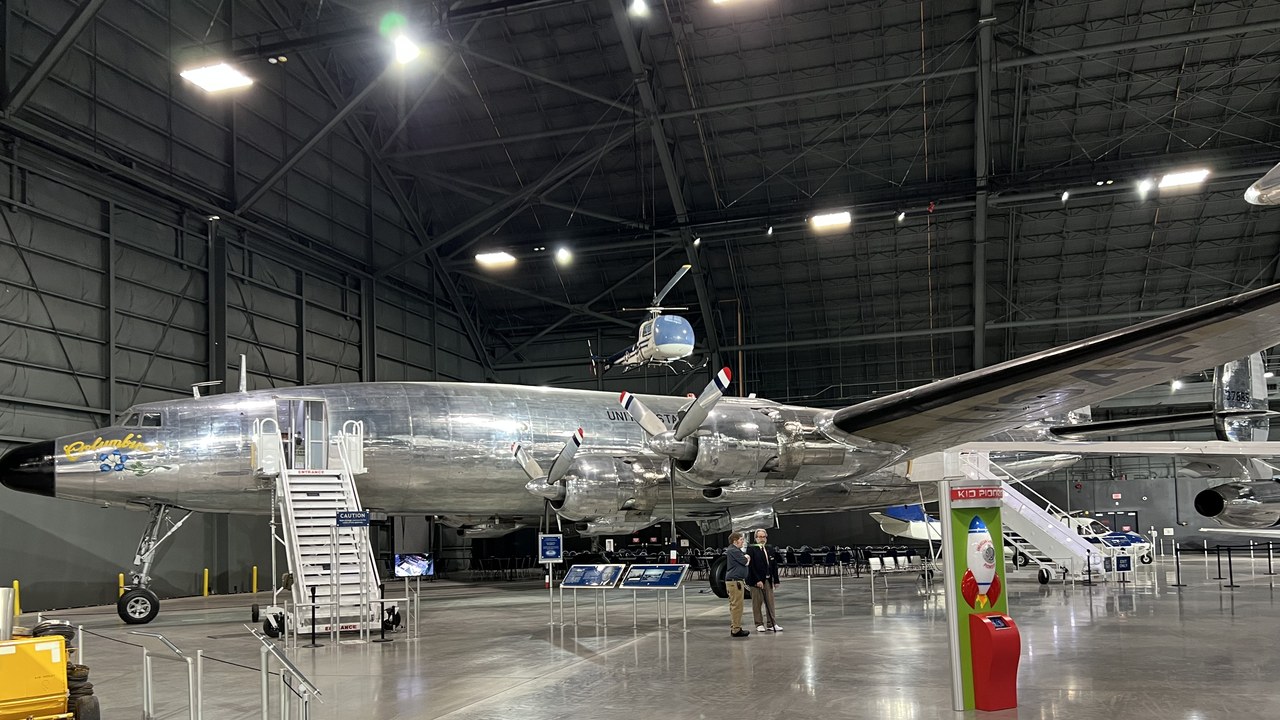
Dwight Eisenhower brought two Lockheed Constellations, Columbine II and Columbine III, into the presidential fleet, as Wikipedia’s Air Force One article records. Columbine III is the second of that pair.
The Constellation is a four-engine, triple-tail propeller airliner that was among the most recognizable aircraft of its day. Detailed documentation of this particular airframe is thin, so its place on the list rests mainly on the name and the fleet it joined. Even so, the Constellation represents a notable stage between the earlier Douglas transports and the first jets, when the president’s aircraft gradually became a larger and more prominent symbol of the office.
4. Boeing VC-137B SAM 970: The Jet Age Arrives
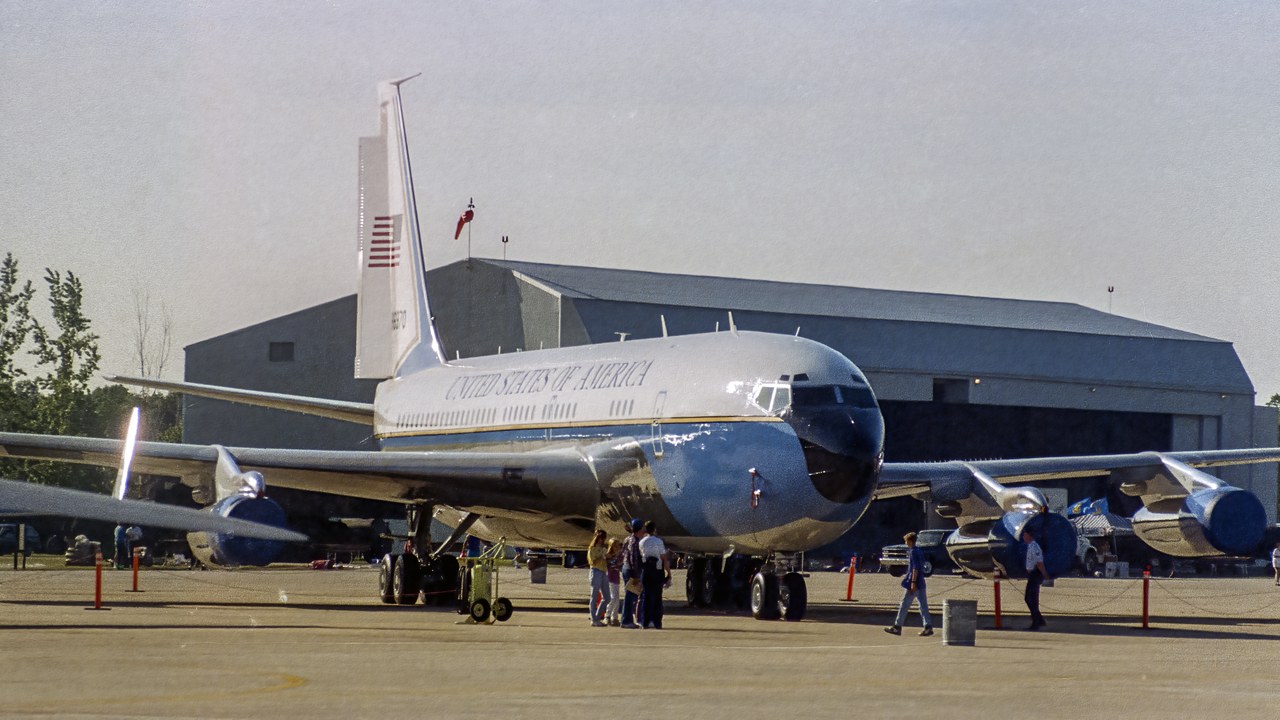
Dwight Eisenhower became the first U.S. president to fly by jet on SAM 970 on August 26, 1959, according to the Museum of Flight page. The airplane is a Boeing VC-137B, a military version of the 707.
Moving from piston airliners to a jet changed how quickly a president could cross the country or an ocean. The Museum of Flight now preserves the aircraft, so visitors can see the machine that opened that era. Its place in the museum’s collection also helps explain why later presidential aircraft kept the jet airliner formula, which has remained the basis of the fleet for decades afterward.
5. Boeing VC-137C SAM 26000: Eight Presidents Aboard
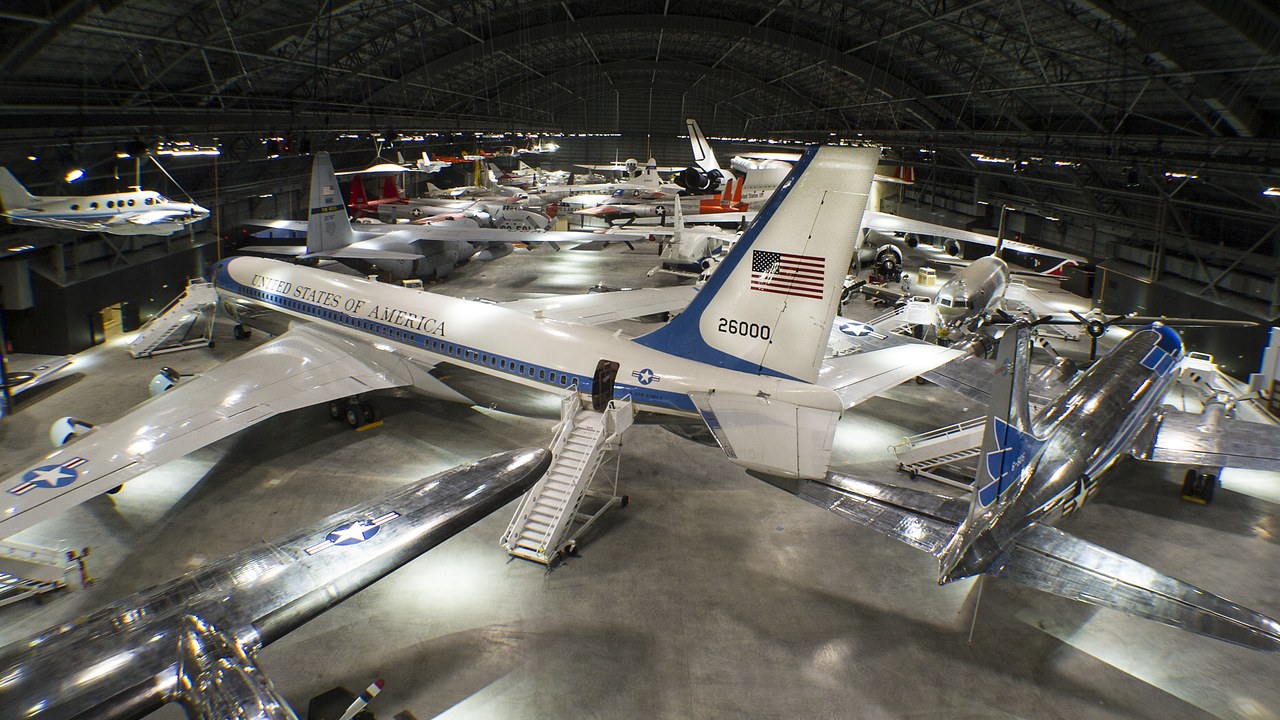
SAM 26000 carried eight presidents, as the Air Force museum fact sheet states. It also returned President Kennedy’s body to Washington on November 22, 1963.
The Boeing VC-137C was retired to the museum in May 1998 and is displayed in its presidential gallery. Few aircraft connect so many administrations with one of the most somber flights in American history. Because the record spans so many administrations, the airplane works as a rolling archive of presidential travel, and its preserved interior lets visitors compare the working spaces used by successive occupants of the office.
6. Boeing VC-137C SAM 27000: Retired To California
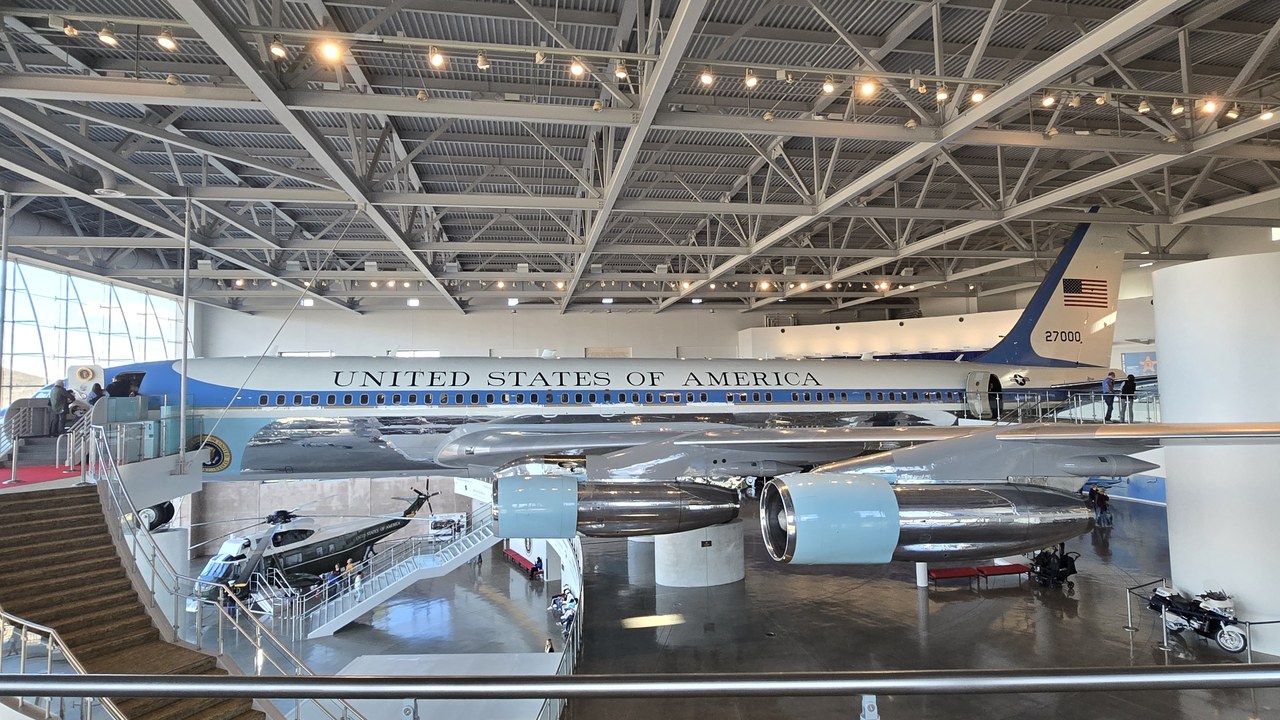
Entering service in 1973 under Nixon, SAM 27000 made its last official flight in 2001, and it now anchors the Air Force One pavilion at the Reagan Library, according to a Christian Science Monitor report.
The Boeing VC-137C is a long-range jet built for presidential duty. Its move from active service to a California library pavilion lets the public walk through an airplane that once flew the commander in chief. Its retirement after nearly three decades of service, followed by display, kept a working piece of presidential history accessible to the public, with the setting at the library reinforcing the connection to that administration.
7. Boeing VC-25A (tail numbers 28000 and 29000): Two Jumbo Jets
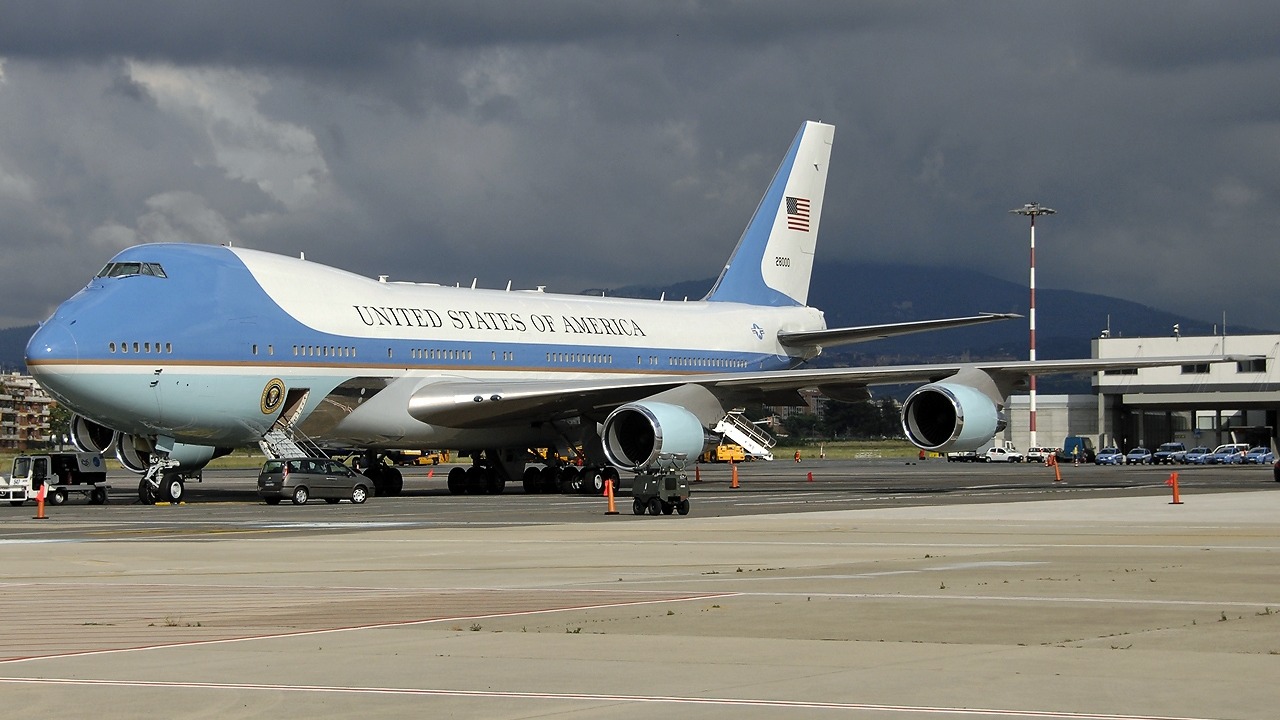
The VC-25A designation covers two modified 747-200B jets with tail numbers 28000 and 29000, in service since 1990 and offering about 4,000 square feet of floor space, per Wikipedia’s VC-25 entry. They carried the bodies of Reagan, Ford, George H. W. Bush and Carter.
Those state funeral flights add a ceremonial role to the aircraft’s duties as a flying office and residence. The pair serves as what most people picture when they hear the call sign Air Force One. Their size, communications equipment and long range make them the fullest expression of the idea behind the Sacred Cow, and the long service of the pair explains why a replacement program became necessary for the fleet.
8. Boeing VC-25B (Bridge): The Newest Arrival
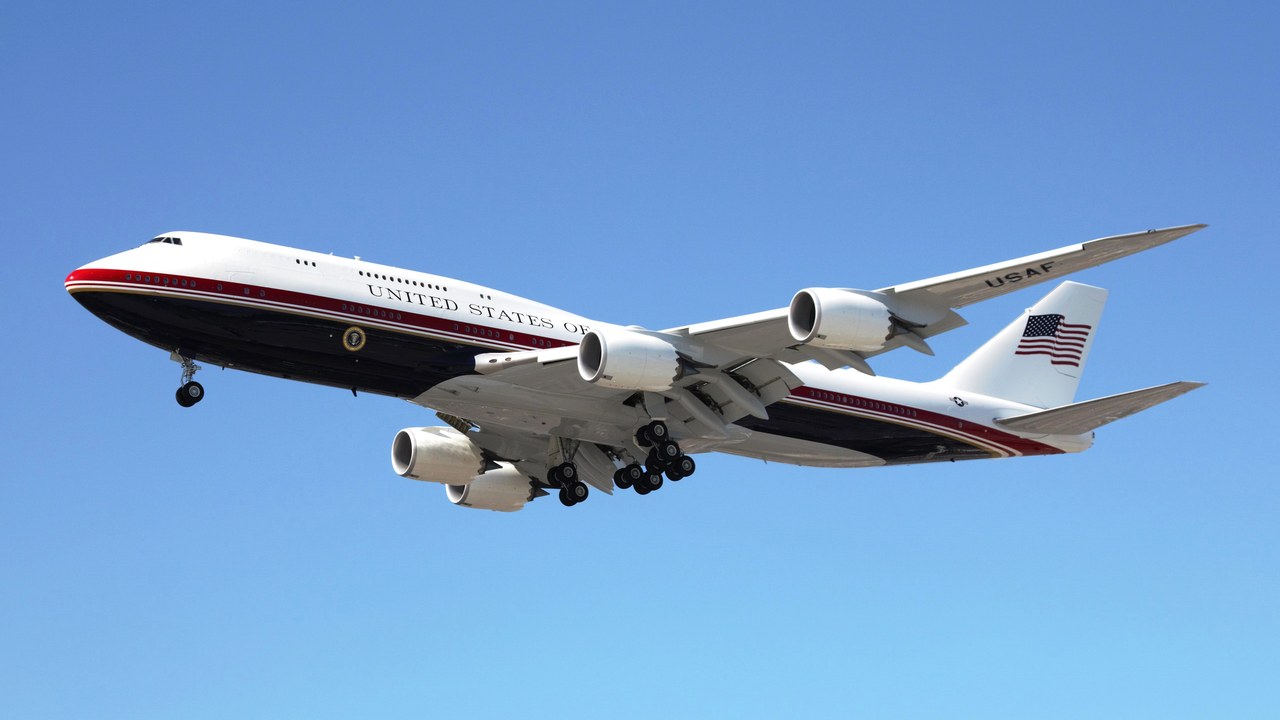
A VC-25B Bridge aircraft entered service as Air Force One on July 1, 2026, as the Air Force One article notes. It is the most recent addition to a lineage that began with the Sacred Cow.
Bridge aircraft fill the gap while longer-term replacements for the two VC-25A jets are completed. Its arrival gives this list a 2026 endpoint and shows the presidential fleet is still being renewed. The designation continues the same naming logic as the earlier jets, and its place at the end of the list shows how a story that started in 1945 is still being written during the current year.
9. Marine One (Sikorsky VH-3D Sea King): Decoys In The Sky
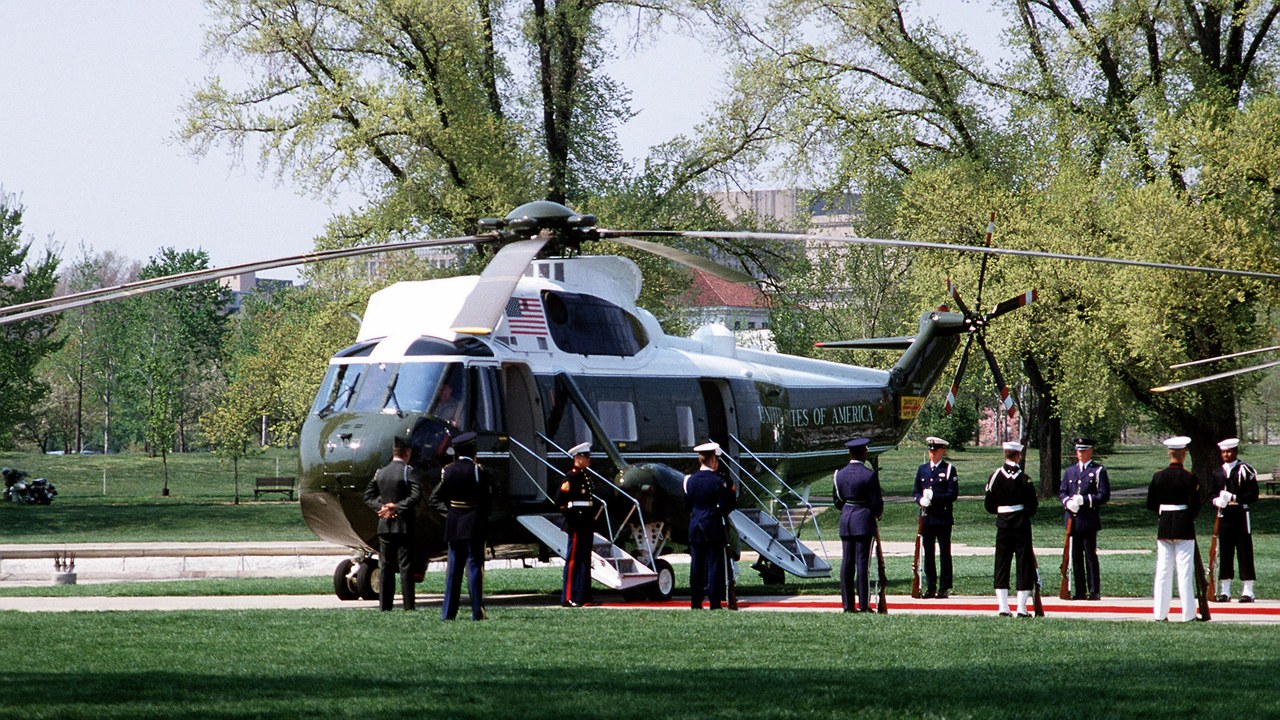
Marine One entered presidential service in 1978 with the Sikorsky VH-3D Sea King, and Wikipedia’s Marine One article notes it often flies with up to five identical helicopters as decoys. The arrangement is described there as a presidential shell game.
The call sign applies to any Marine Corps aircraft carrying the president, and the helicopter is the usual link between the White House lawn and Air Force One. Identical decoys make it harder to tell which one carries the passenger. The aircraft has become a familiar sight in news footage, because short hops between the White House and nearby airfields are usually made by helicopter rather than by motorcade or by fixed-wing aircraft.
The tech news worth your time: Subscribe to Techpresso →
We may earn a commission if you sign up.
More from Morning Overview
- Common allergy, bladder and sleep pills tied to sharply higher dementia odds
- NOAA now gives this winter a 75% chance of the strongest El Nino since 1950
- Doctors warn a silent liver disease now affects one in three American adults
- The FBI told the rest of ShinyHunters to surrender after a 24-year-old was arrested
