Image Credit: George Burns - Public domain/Wiki Commons
A waterfall’s power comes from more than height. River flow, channel width, seasonal floods, geology, and the shape of the drop determine whether water descends as one silver thread or an immense moving wall that shakes the ground. These eight waterfalls combine scale and volume in ways that make their landscapes feel almost too large to process.
1. Niagara Falls: Millions of Cubic Feet Each Minute
📷 Kalen Emsley/Unsplash
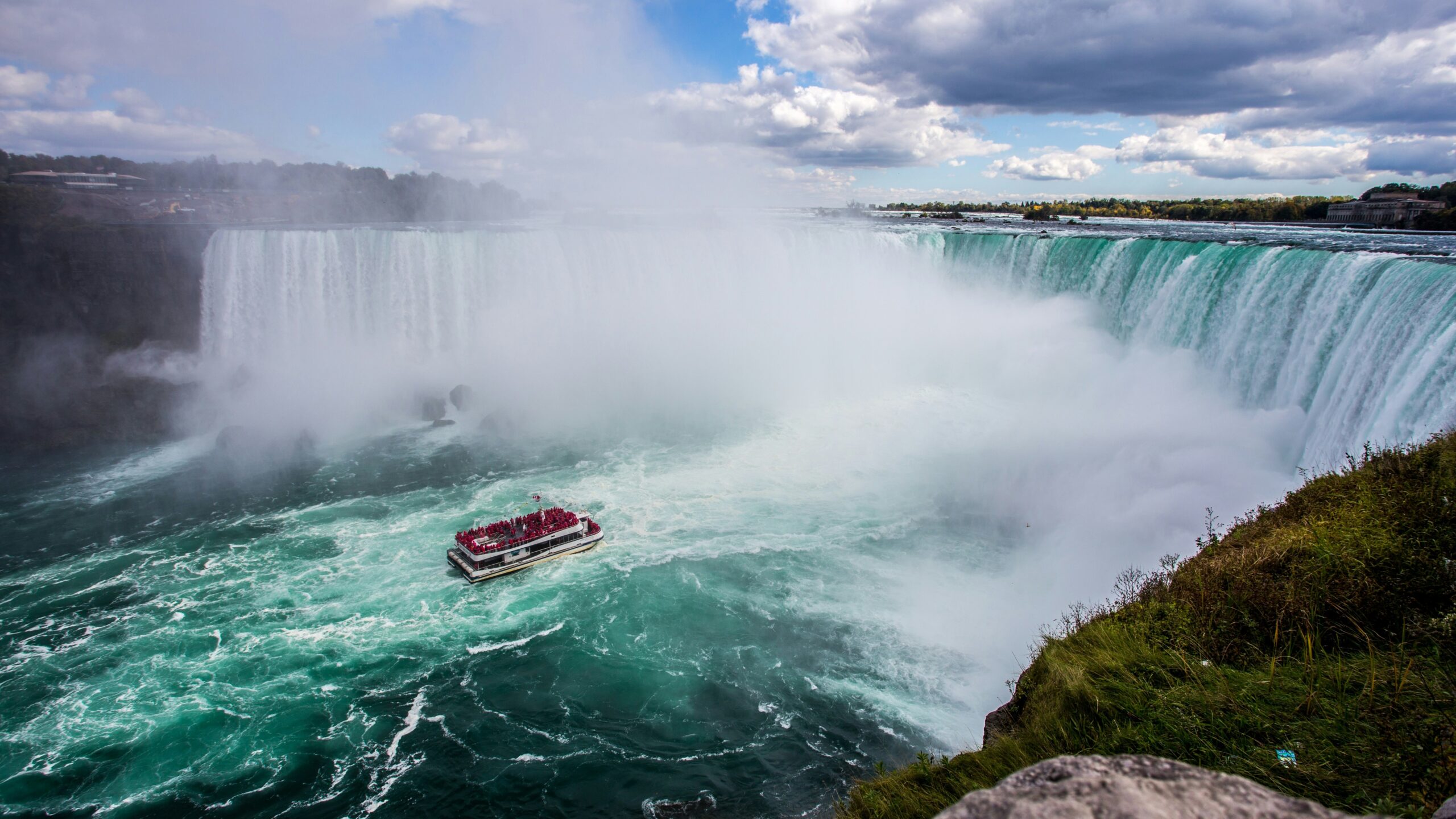
Niagara is a three-part waterfall system where the Niagara River drops between Lakes Erie and Ontario. The Horseshoe, American, and Bridal Veil falls together move more than six million cubic feet of water per minute during periods of high flow. Horseshoe Falls carries most of that volume across the Canadian side of the border.
The river is heavily managed rather than left entirely to chance. Water is diverted for hydroelectric generation, and agreements regulate how much must pass over the brink at different times. Even with those controls, the combination of width, flow, and a drop of roughly 167 feet creates persistent spray, turbulence, and erosion that slowly moves the crest upstream.
2. Victoria Falls: The World’s Largest Falling Curtain
Image Credit: Original uploader was Ian Restall at en.wikipedia – Public domain/Wiki Commons
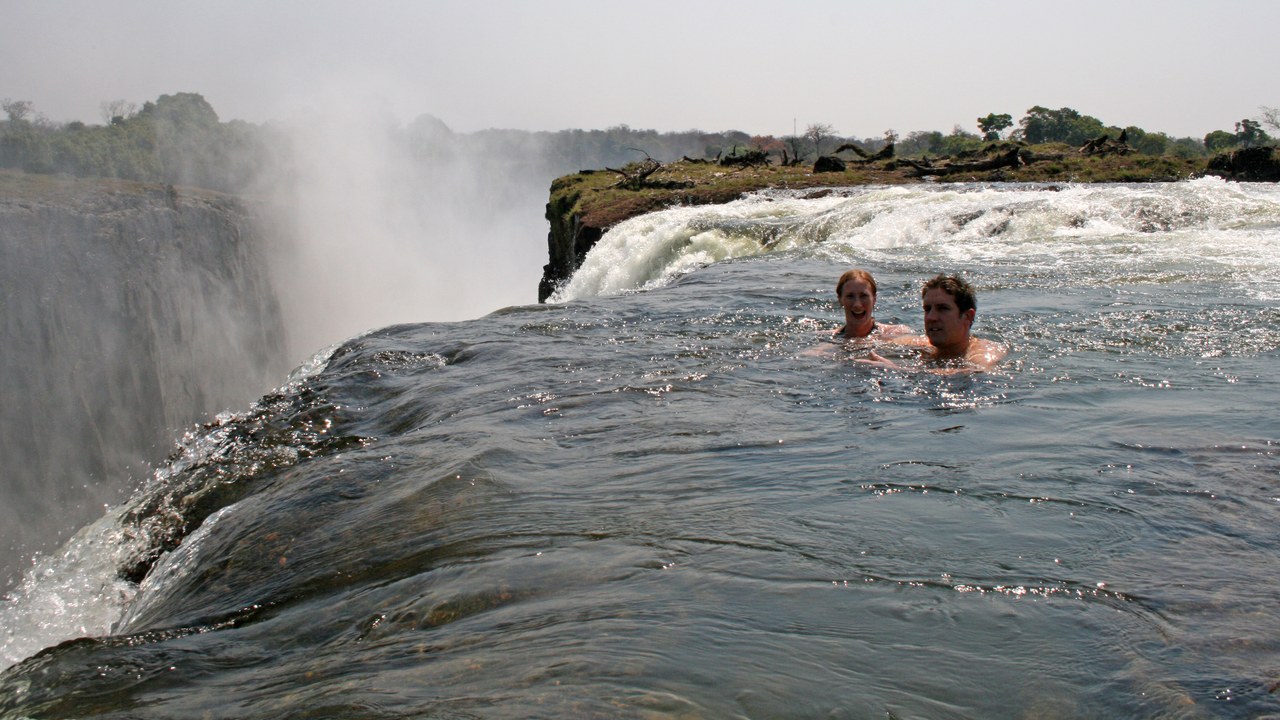
Victoria Falls forms where the broad Zambezi River plunges into a narrow basalt gorge between Zambia and Zimbabwe. The mile-wide waterfall is often described as the world’s largest sheet of falling water when width and height are considered together. At high flow, separate channels merge into a roaring curtain hidden behind towers of spray.
Seasonal change transforms the experience. Floodwater can obscure the gorge and soak viewpoints, while low water exposes rock and separates the curtain into distinct falls. That rhythm is part of the system rather than a failure of the spectacle. The local name Mosi-oa-Tunya, commonly translated as the smoke that thunders, captures both the visible plume and the continuous sound.
3. Iguazu Falls: Hundreds of Cascades Share One River
Image Credit: chensiyuan – CC BY-SA 4.0/Wiki Commons
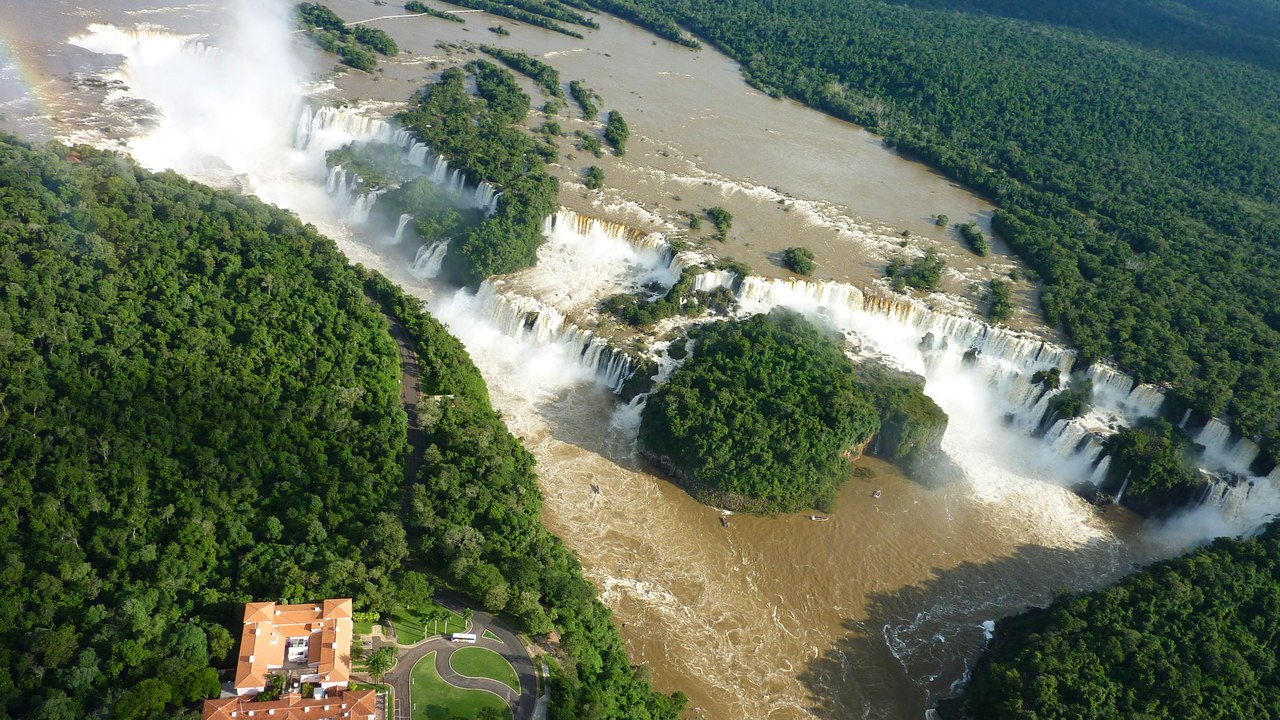
Iguazu spreads the Iguazu River across a broad, broken edge on the Argentina-Brazil border. The waterfall system contains roughly 275 individual falls and cascades depending on river conditions, divided by forested islands and dark basalt ledges. Instead of one smooth curtain, water attacks the plateau through an enormous maze of channels and drops.
The largest concentration is Devil’s Throat, a horseshoe-shaped chasm where multiple flows converge into spray and violent turbulence. Seasonal floods can erase smaller islands and visually connect the falls, while lower stages reveal their separate structure. The surrounding subtropical forest intensifies the contrast, placing a moving white wall inside dense green habitat shared by two national parks.
4. Angel Falls: The Tallest Uninterrupted Drop
Image Credit: RajibP – CC BY-SA 4.0/Wiki Commons
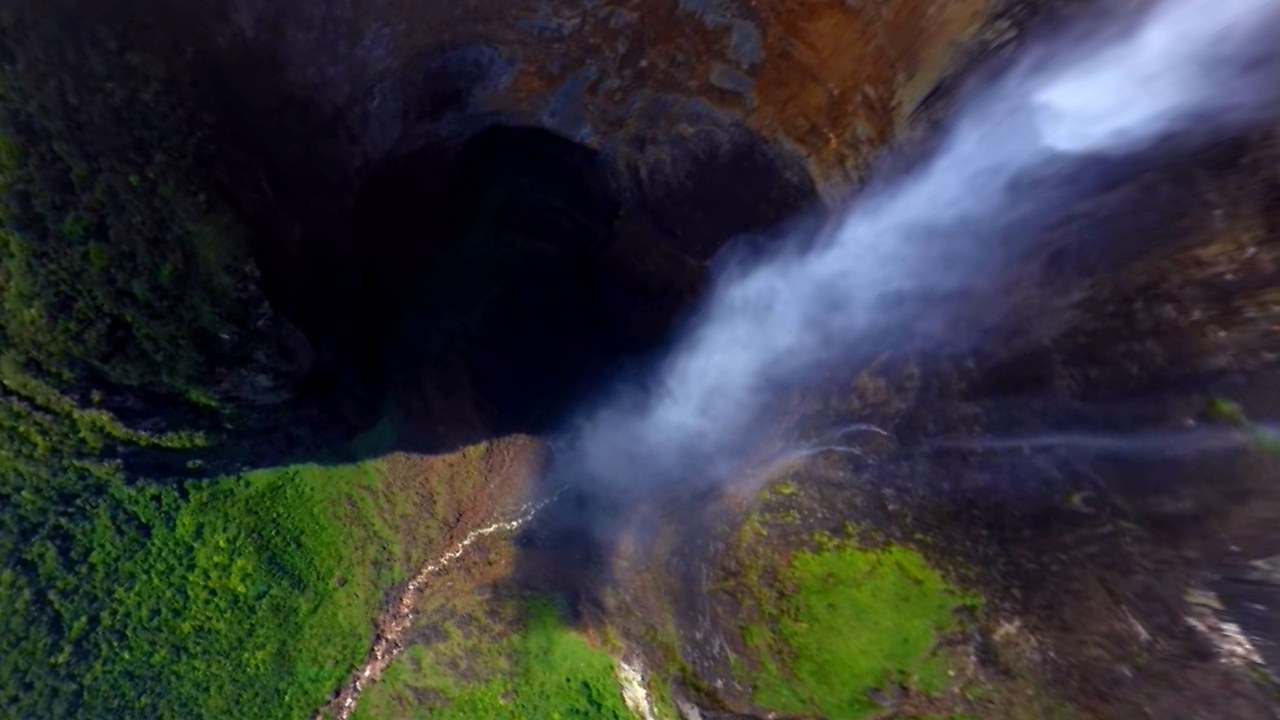
Angel Falls descends from the summit of Auyán-tepui, a table-top mountain in Venezuela’s Guiana Highlands. The waterfall’s total height is about 3,212 feet, including an uninterrupted plunge of roughly 2,648 feet. Water has so far to fall that wind can break part of the stream into mist before it reaches the forest below.
Height does not make Angel Falls the volume leader. Its flow changes dramatically with rainfall, and in drier conditions the narrow ribbon can look fragile against the cliff. The record lies in the extraordinary vertical distance created by tepui geology. Reaching the remote site also requires river and air travel, reinforcing how deeply the falls remain embedded in a vast wilderness landscape.
5. Boyoma Falls: The Congo Becomes Seven Cataracts
Image Credit: Julien Harneis from Conakry, Guinea – CC BY-SA 2.0/Wiki Commons
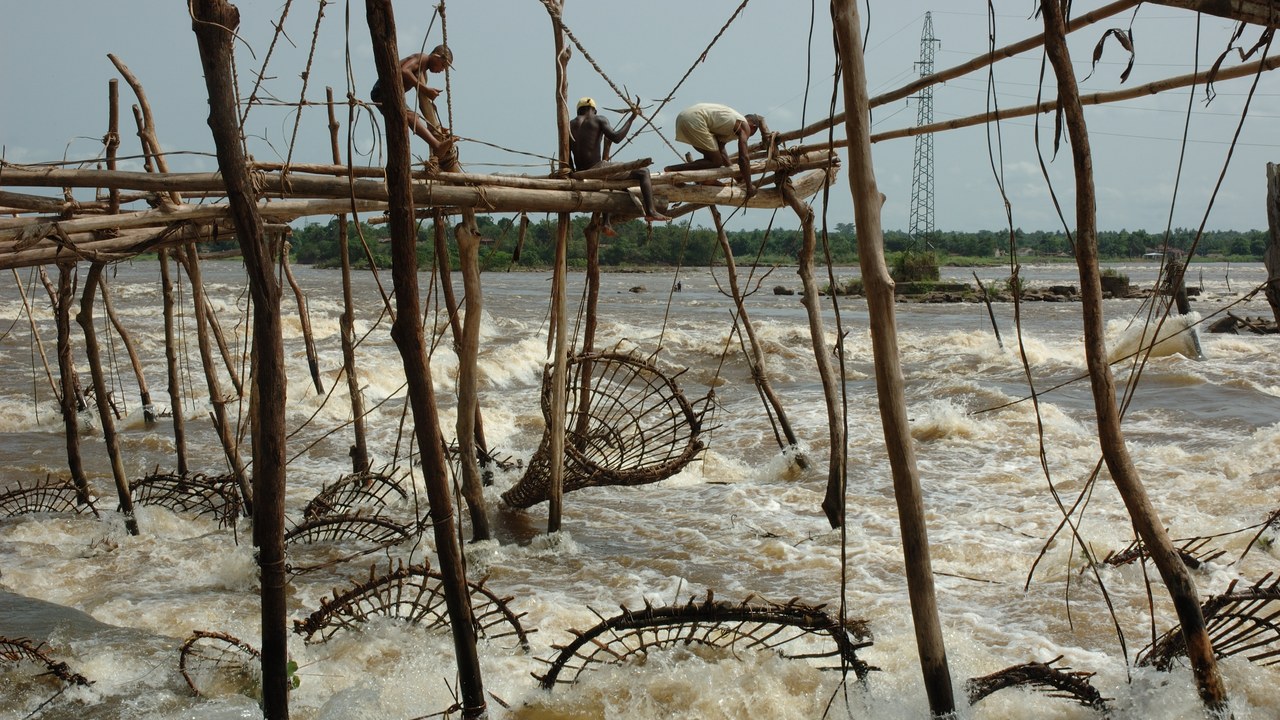
Boyoma Falls is not one clean vertical leap but a chain of seven cataracts on the Lualaba River near Kisangani in the Democratic Republic of the Congo. The rapids span roughly 60 miles and carry the immense flow that becomes the Congo River downstream. That volume places the system among the most powerful waterfall complexes by average discharge.
The landscape also supports the Wagenya fishing tradition. Wooden scaffolds are anchored into rock amid violent current, holding large woven traps where fish move through channels. Those structures make the water’s force easier to read than a distant height measurement: people work directly beside broad brown rapids whose energy is spread across a long river corridor rather than concentrated at one brink.
6. Khone Phapheng Falls: The Mekong Spreads Into a Giant Barrier
Image Credit: Jakub Hałun – CC BY-SA 4.0/Wiki Commons
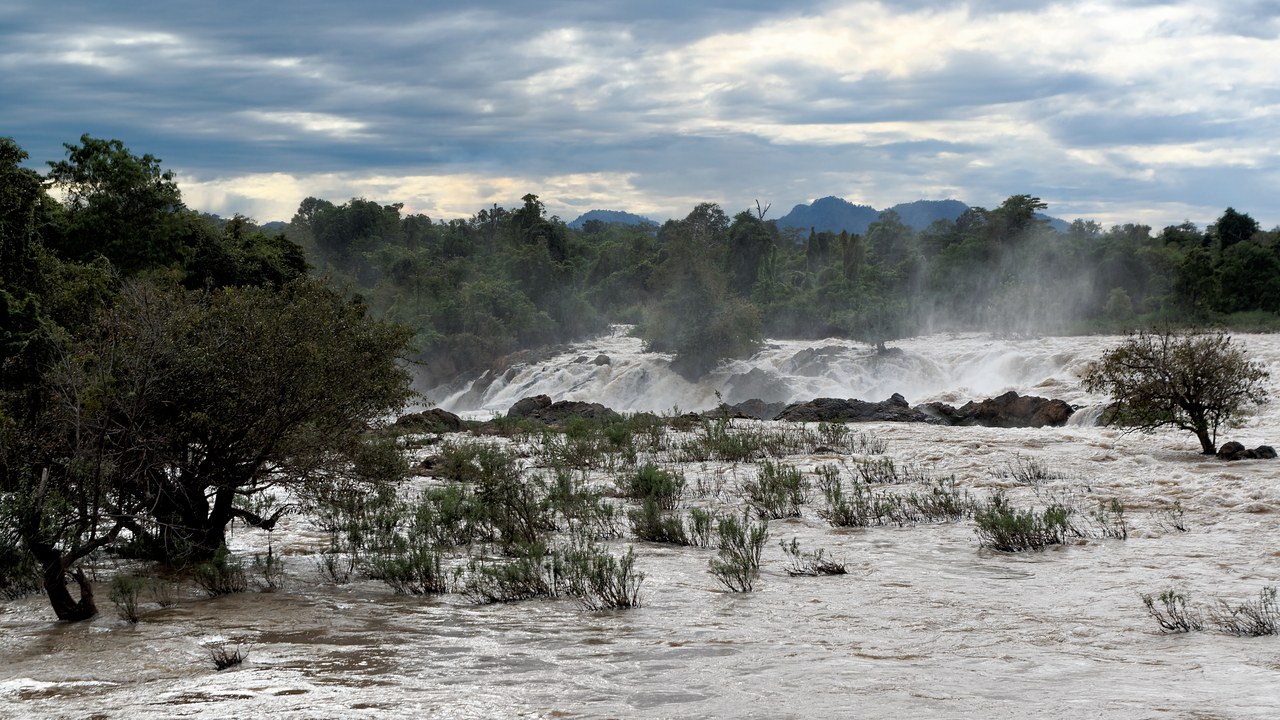
Khone Phapheng lies in southern Laos where the Mekong fragments around islands, reefs, and channels before dropping through a broad field of cataracts. The Khone Falls system stretches across several miles and is often identified as the world’s widest waterfall. Its enormous discharge forms a major natural barrier to navigation along one of Asia’s great rivers.
Width changes how the falls appear. Water does not descend as a single symmetrical curtain; it pours through countless rocky steps and forested channels, with different sections taking prominence as river levels rise or fall. The rapids also shape fish migration and local livelihoods. Volume, ecological importance, and geographic spread matter here more than one dramatic vertical drop.
7. Kaieteur Falls: A Huge River Takes One Clean Leap
Image Credit: Amanda – CC BY 2.0/Wiki Commons
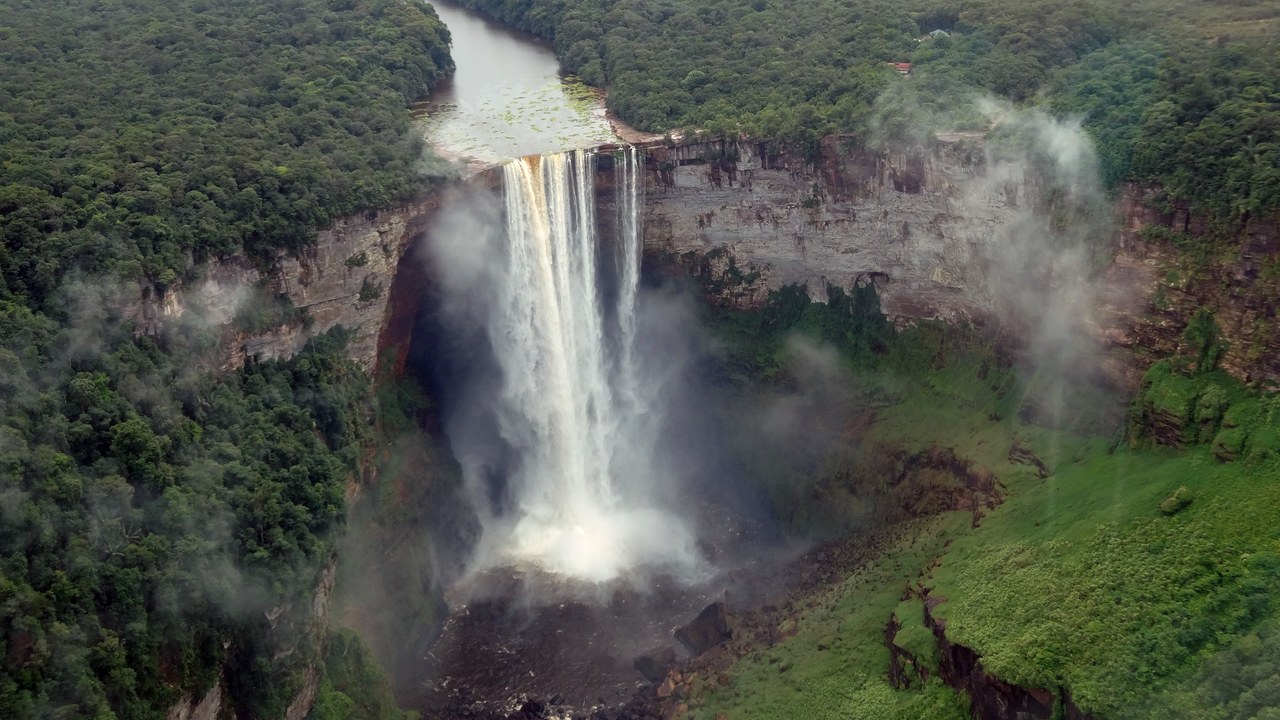
Kaieteur Falls sends Guyana’s Potaro River over a sandstone and conglomerate cliff in a single powerful drop. The main plunge is about 741 feet, nearly five times the height of Niagara’s Horseshoe Falls. Unlike extremely tall but narrow waterfalls, Kaieteur combines major height with a substantial tropical river, producing a broad column and a deep, mist-filled gorge.
Its isolation preserves much of the surrounding Guiana Shield forest and keeps buildings from providing an easy sense of scale. Flow varies with rainfall, but the geometry remains striking: a relatively wide river reaches a sharp shelf and disappears almost at once. That combination gives Kaieteur an unusual balance of height, volume, and uninterrupted visual force.
8. Gullfoss: Glacial Water Drops in Two Stages
Image Credit: mandoft from El Campello (Alicante), Spain – CC BY-SA 2.0/Wiki Commons
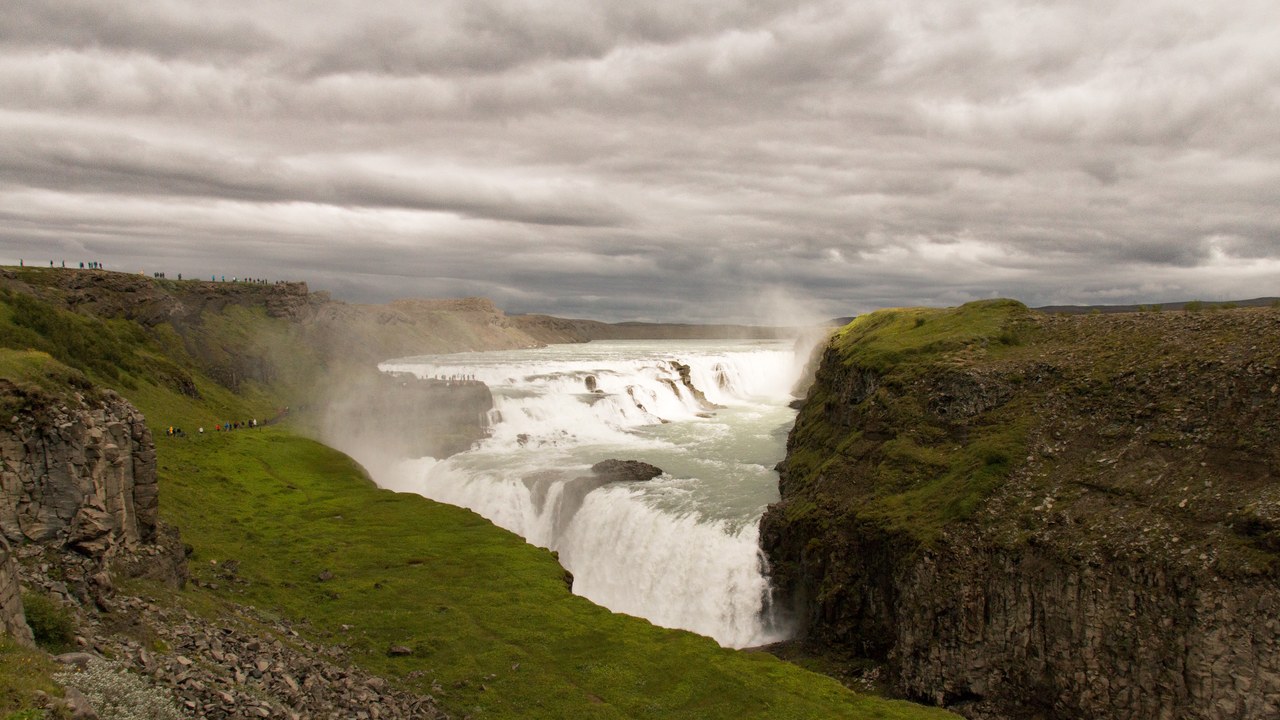
Gullfoss channels Iceland’s Hvítá River through two abrupt drops before the water turns into a narrow canyon. The two-tier waterfall is fed by meltwater from the Langjökull glacier, giving the river a cold, sediment-rich flow that changes with season and weather. From some viewpoints, the lower cascade appears to vanish directly into a crack in the earth.
The falls are modest in height beside Angel or Kaieteur, but their tightly folded geometry concentrates sound, spray, and turbulence. Winter ice can coat the stair-stepped walls while dark basalt remains exposed beneath the river. Gullfoss shows why volume and channel shape matter as much as a record-breaking drop: water repeatedly changes direction and compresses before continuing downstream.
More from Morning Overview
Morning Overview is reader-supported. Some links in our articles are affiliate links, and we may earn a commission at no extra cost to you. As an Amazon Associate I earn from qualifying purchases. Full disclosure.