
In ground-based astronomy, aperture is everything: a wider mirror gathers more photons and resolves finer detail. That is why the biggest instruments are hauled to remote high-altitude peaks, above much of the atmosphere’s turbulence and far from city light. Here are eight telescopes that push the limit of how much sky a single ground-based mirror can collect.
1. Extremely Large Telescope: The 39-Meter Giant Under Construction
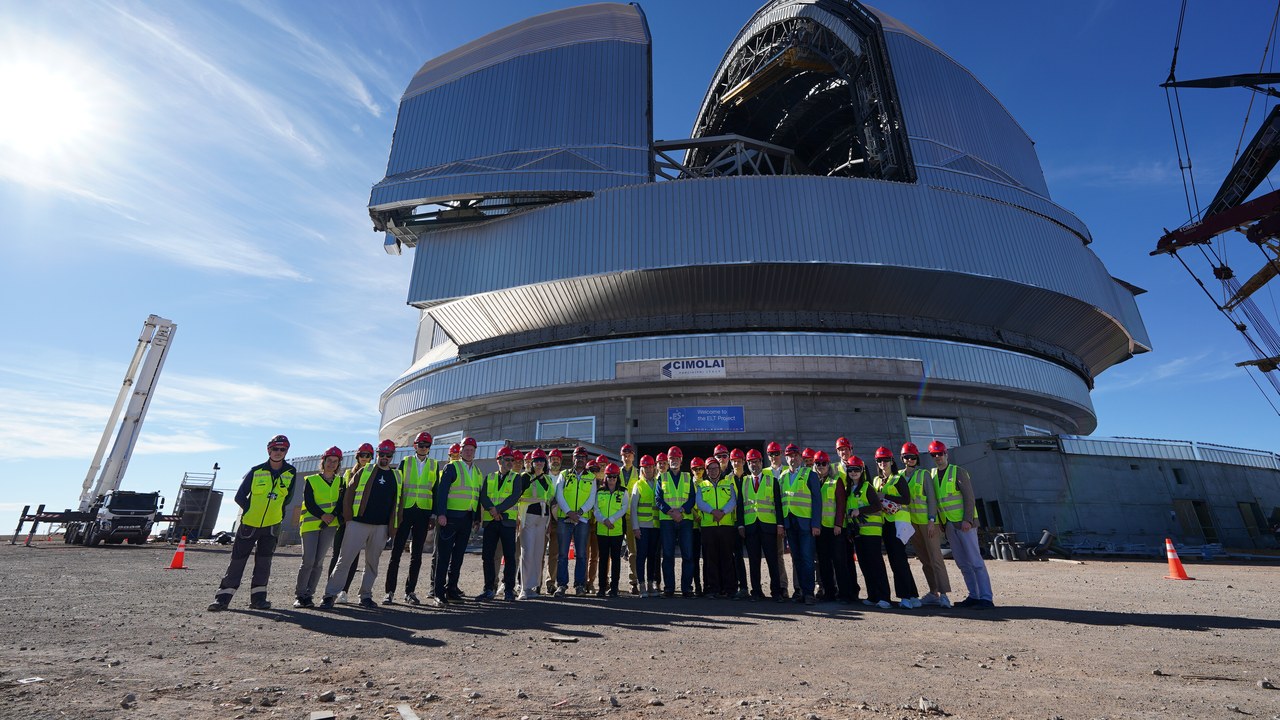
On Cerro Armazones in Chile’s Atacama Desert, the European Southern Observatory is assembling a 39-meter primary mirror built from 798 hexagonal segments that will act as one continuous reflecting surface. The Extremely Large Telescope is still under construction and has not begun observing, so its numbers describe designed capability rather than delivered results.
Aperture is the reason for the effort. A mirror that wide would gather far more light than any optical telescope now operating, pushing toward fainter, more distant targets and the direct study of planets around other stars. Segments on that scale must be held in alignment constantly, which is part of why such projects take a decade or more.
2. Gran Telescopio Canarias: The Largest Single Aperture in Use
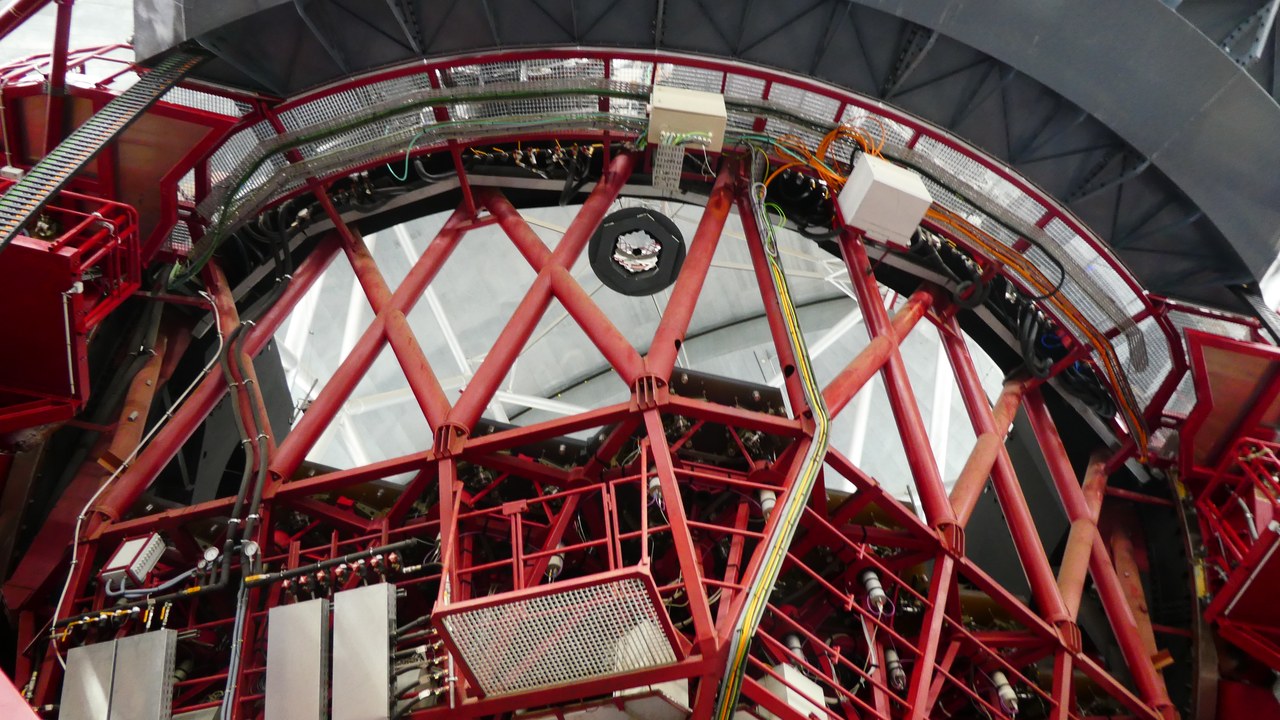
The Gran Telescopio Canarias sits at roughly 2,267 meters on the Roque de los Muchachos ridge on La Palma, in the Canary Islands. Its 10.4-meter primary is assembled from 36 hexagonal segments, which makes it the largest single-aperture optical and infrared telescope currently in regular use.
The Atlantic site earns its place through stable air, because the ridge rises above a persistent inversion layer that keeps turbulence low for much of the year. That steadiness suits spectroscopy of faint galaxies and distant quasars, though observing time is shared among Spanish, Mexican and American partners rather than reserved for one institution.
3. W. M. Keck Observatory: Twin Tens Above the Pacific
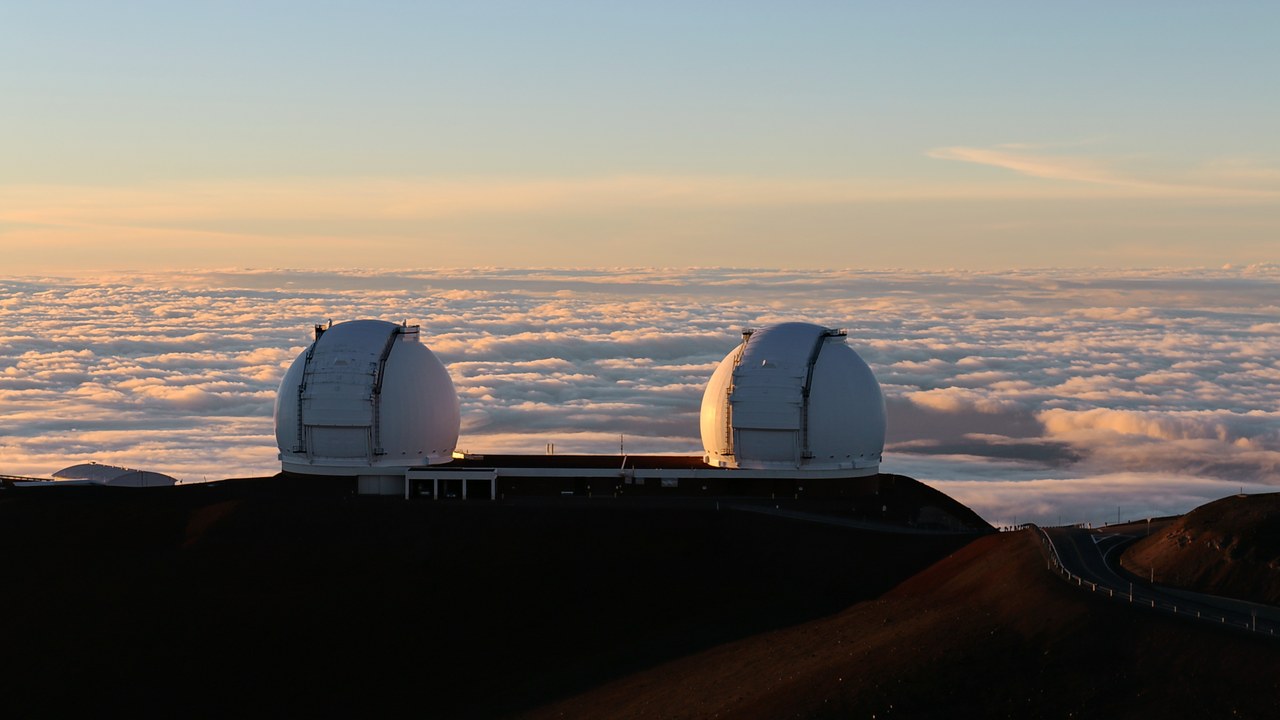
Two telescopes, not one, make up the W. M. Keck Observatory near the summit of Mauna Kea in Hawaii, at about 4,145 meters. Each carries a 10-meter primary built from 36 hexagonal segments held in alignment by active sensors, and the pair can run separately or be linked for interferometry.
Height is much of the advantage. The domes sit above roughly 40 percent of the atmosphere and most of its water vapor, which matters enormously for infrared work. Laser guide-star adaptive optics corrects much of the blur that remains, sharpening images of stars orbiting the galactic center and of young planetary systems.
4. Very Large Telescope: Four Mirrors Working as One
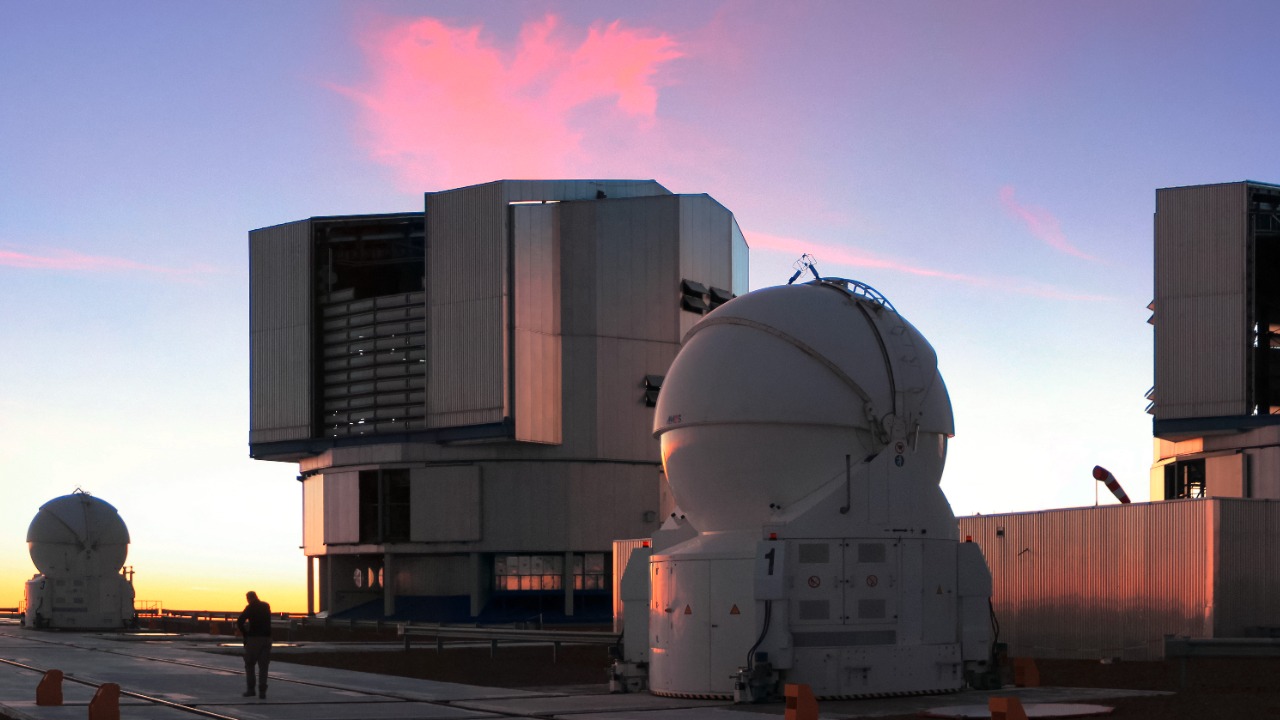
Perched at about 2,635 meters on Cerro Paranal in northern Chile, the Very Large Telescope is an array rather than a single instrument. Four 8.2-meter unit telescopes, named Antu, Kueyen, Melipal and Yepun, work independently on most nights, joined by four movable 1.8-meter auxiliary telescopes.
Combined as an interferometer, those units deliver angular resolution far beyond what any one of them reaches alone. Paranal ranks among the driest observing sites on the planet, with clear skies for most of the year, which is why the site was chosen despite sitting hundreds of kilometers from the nearest city.
5. Gemini Observatory: One Telescope in Each Hemisphere
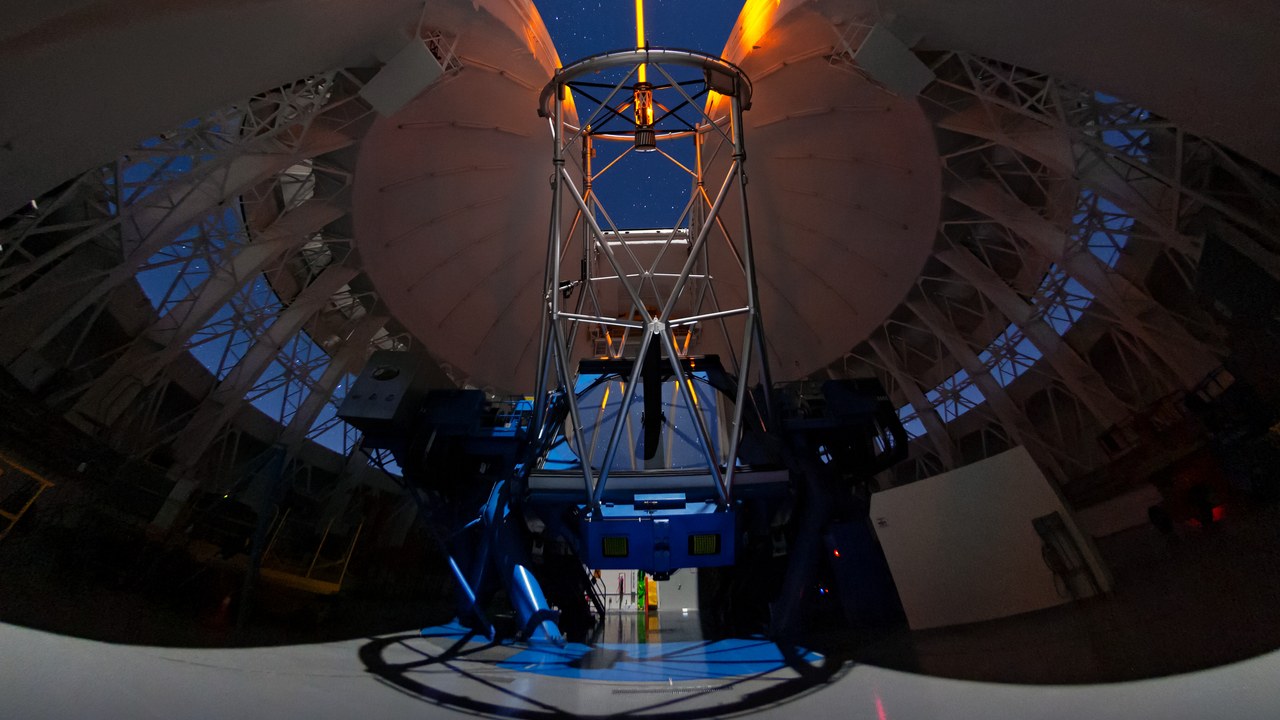
No single site can see the whole sky, and the Gemini Observatory was built around that limitation. Its answer is a matched pair of 8.1-meter telescopes, Gemini North on Maunakea in Hawaii and Gemini South on Cerro Pachon in Chile, constructed to near-identical specifications.
Running twins lets an observing program follow a target across both hemispheres using consistent instruments and calibration. Both primaries are relatively thin and rest on actuators that flex them into shape against gravity, and both telescopes were designed with silver coatings and careful thermal control to favor infrared observations.
6. Large Binocular Telescope: Two Mirrors, One Mount
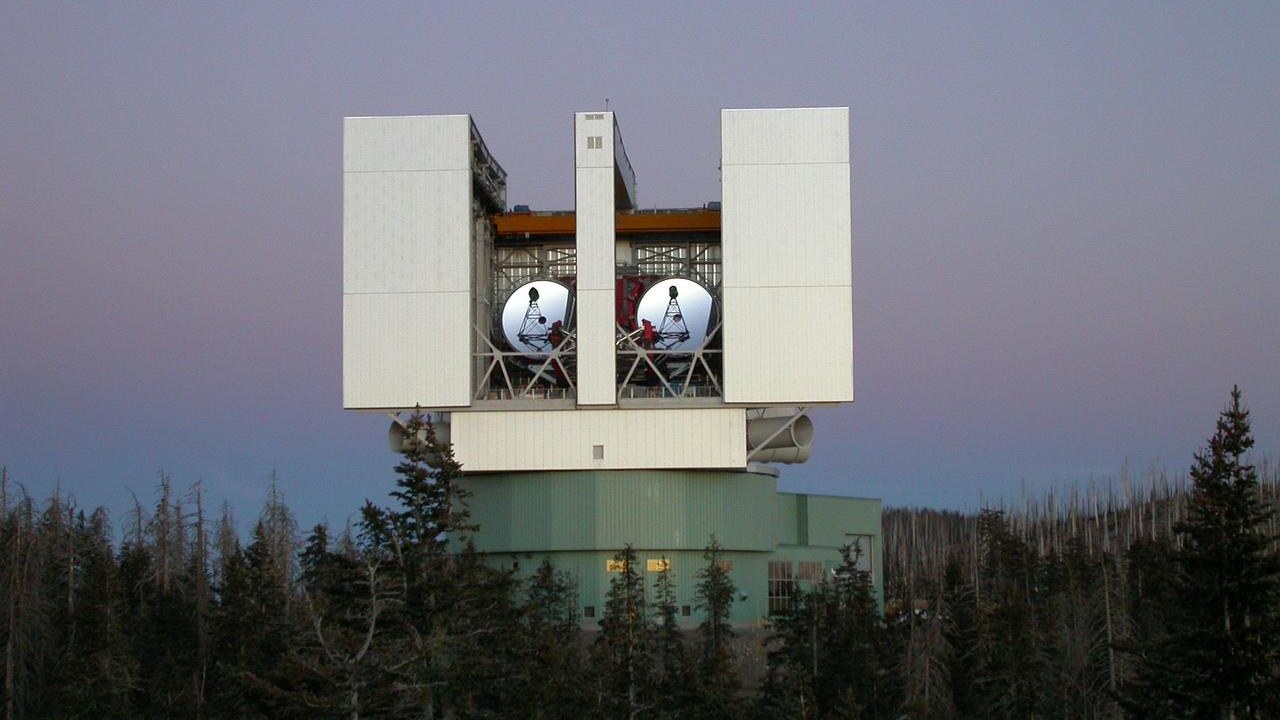
On Mount Graham in southeastern Arizona, at roughly 3,200 meters, the Large Binocular Telescope carries two 8.4-meter mirrors side by side on a single steerable mount. Together they gather as much light as one 11.8-meter dish, and when their beams are combined the pair resolves detail equivalent to a 22.8-meter aperture.
That layout is unusual, since most observatories house one mirror per dome. Sharing a mount lets both mirrors watch the same target at the same instant, either doubling the collected light or feeding an interferometer, and the adaptive secondary mirrors have produced some of the sharpest ground-based infrared images taken anywhere.
7. Subaru Telescope: The Monolith on Mauna Kea
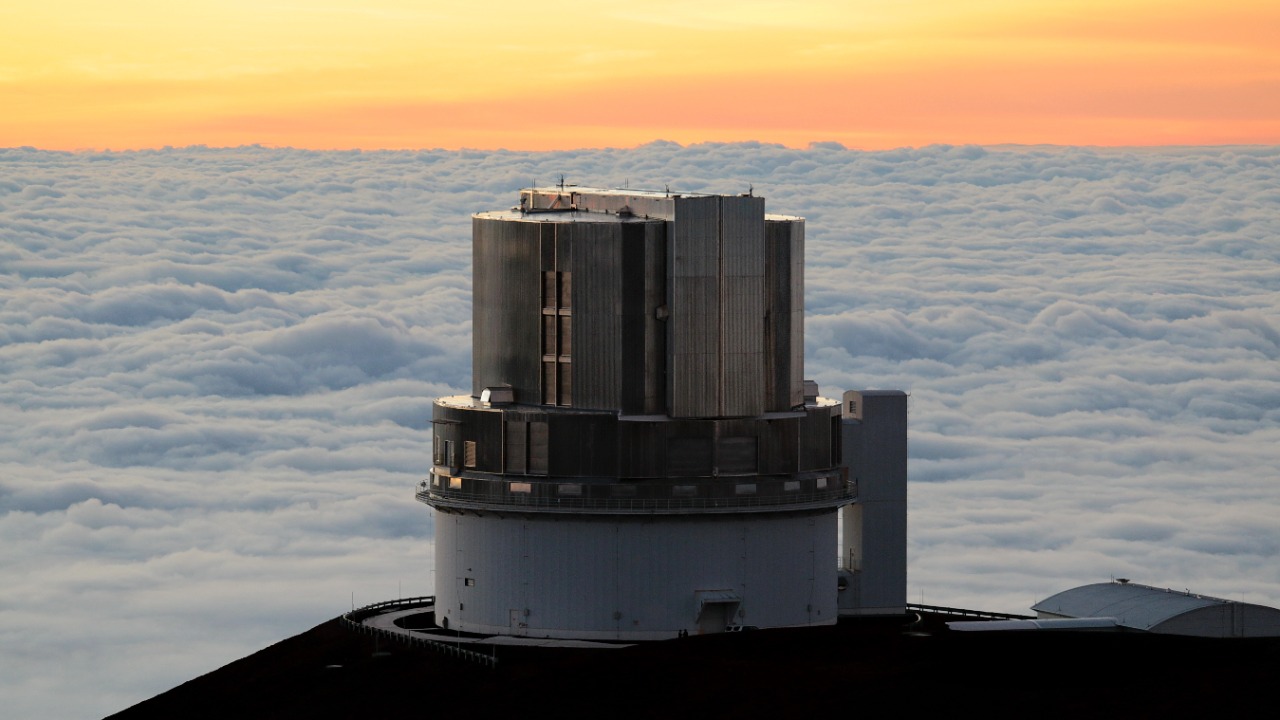
Japan’s National Astronomical Observatory runs the Subaru Telescope on Mauna Kea, and it takes a different approach from its segmented neighbors. Its 8.2-meter primary is a single monolithic piece of glass, among the largest ever cast for a telescope, kept in shape by hundreds of actuators pressing against its back.
The payoff is a wide, clean field of view, which Subaru exploits with survey cameras that capture large patches of sky in one exposure. That makes it a mapping instrument as much as a deep-staring one, well suited to counting distant galaxies and tracing how matter is distributed across the sky.
8. Southern African Large Telescope: The Southern Sky’s Biggest Eye
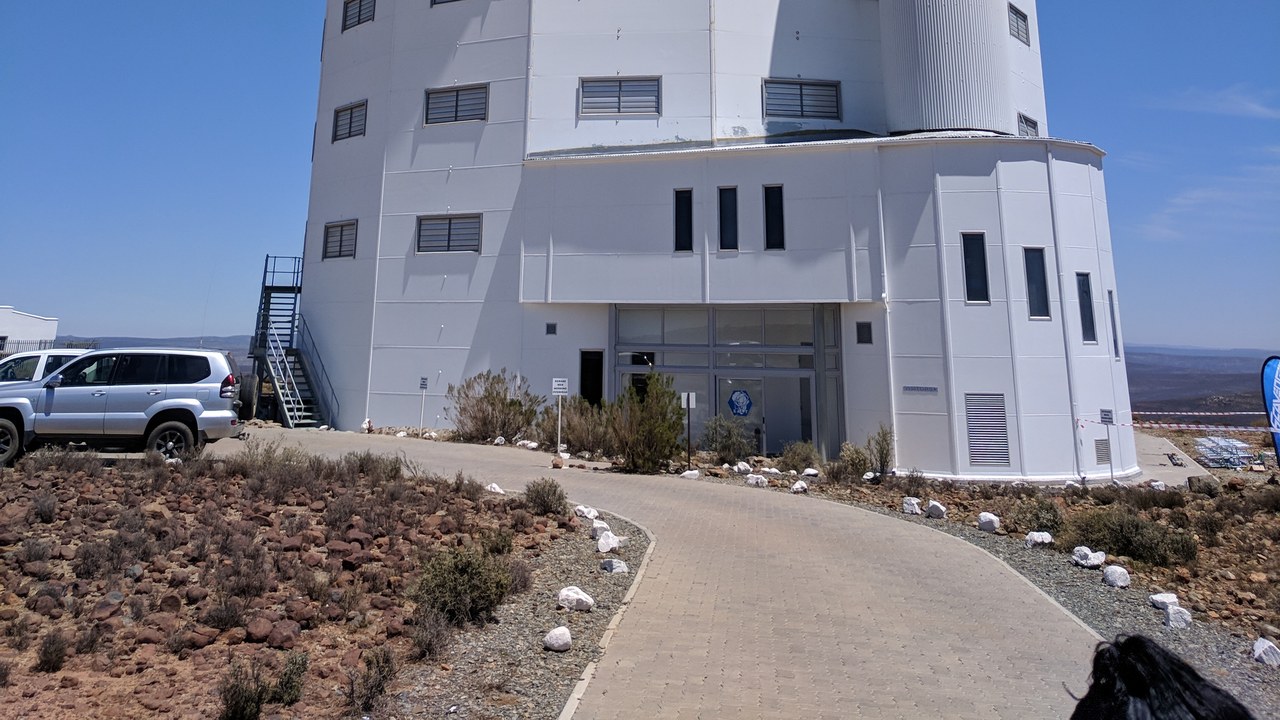
Near Sutherland in South Africa’s Karoo, on a plateau at about 1,798 meters, the Southern African Large Telescope spreads a mirror array roughly 11 meters across, built from 91 identical hexagonal segments. Nothing larger observes in visible light anywhere south of the equator.
Cost drove the design. The primary is fixed at a tilt and never moves to follow a target; instead a tracker at the top of the structure carries the instruments across the focal surface as the sky drifts past. That caps how long any object stays in view, but it made a mirror this size affordable.
More from Morning Overview
