
Most comets arrive as faint smudges that only a telescope can find. A handful, though, have swung close enough to the Sun or to Earth to become genuine naked-eye events, argued over by astronomers and remembered by everyone who looked up. Here are eight of the brightest comets seen from the ground within the past century.
1. Comet Hale-Bopp: Eighteen Months Overhead
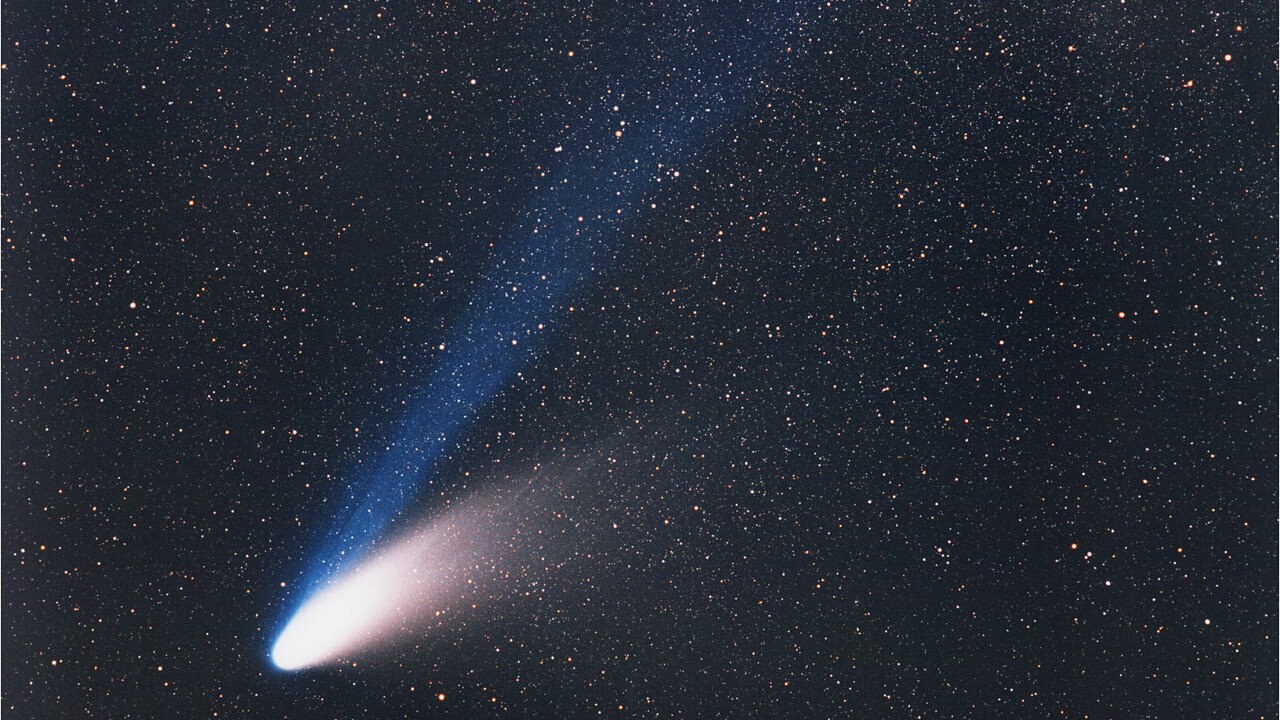
Alan Hale and Thomas Bopp picked it up independently in July 1995, while it was still beyond Jupiter, a distance that implied an unusually large nucleus. It stayed visible to the unaided eye for roughly 18 months, about twice the span of any previously recorded comet, and through the spring of 1997 it sat in the twilight with a golden dust tail and a fainter blue ion tail trailing behind it.
Perihelion arrived on April 1, 1997, and gravitational nudges from the planets trimmed the orbit from roughly 4,200 years to something closer to 2,500. That pushes the next return into the fifth millennium. Published estimates of the peak brightness vary, but no comet since has displaced it for the people who watched.
2. Comet Hyakutake: A Tail Across The Sky
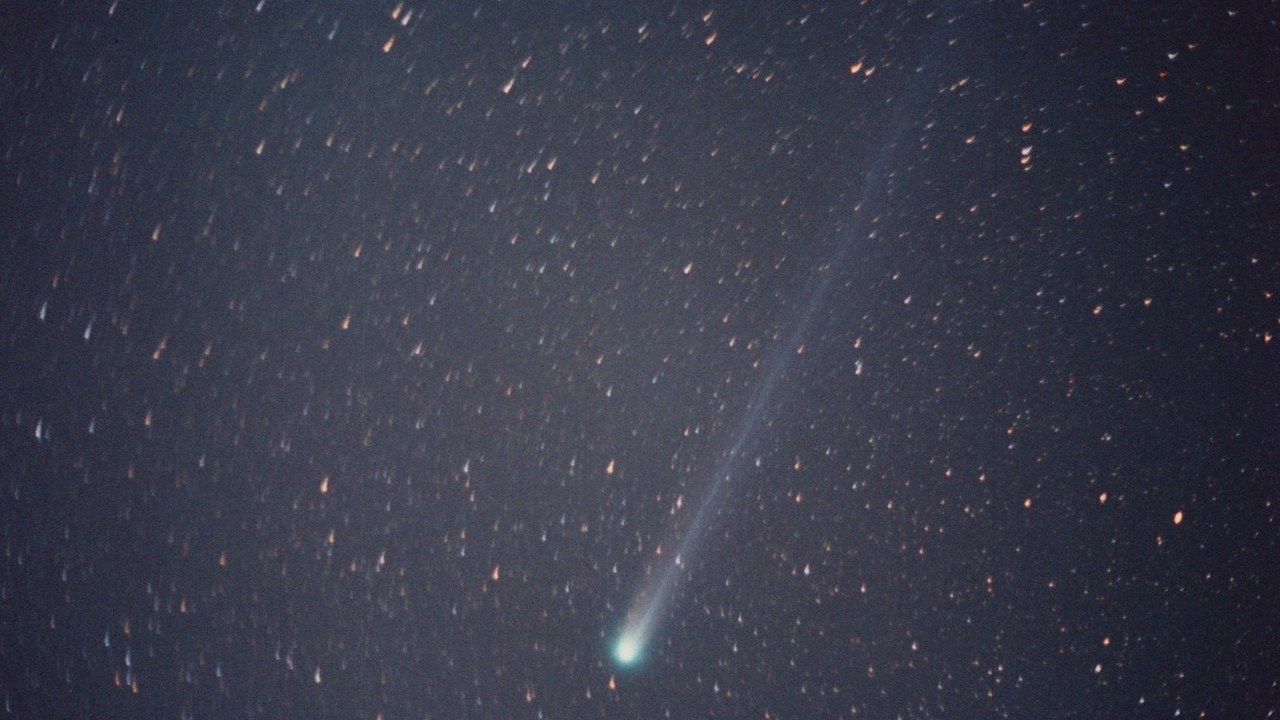
Yuji Hyakutake found it with large binoculars in January 1996, barely two months before it swept past Earth at about 0.1 astronomical units, one of the closest cometary approaches in two centuries. Proximity did the work. The blue-green coma rode high overhead while the tail stretched across an enormous arc of sky, and the Ulysses spacecraft later crossed its extended ion tail more than 3.8 astronomical units from the nucleus.
Perihelion followed on May 1, 1996, and the encounter reshaped the path it left on, stretching an orbit of roughly 17,000 years out to something near 70,000. Nobody alive in 1996 will get a second look. It also produced the first detection of X-rays coming from a comet.
3. Comet NEOWISE: The Lockdown Comet
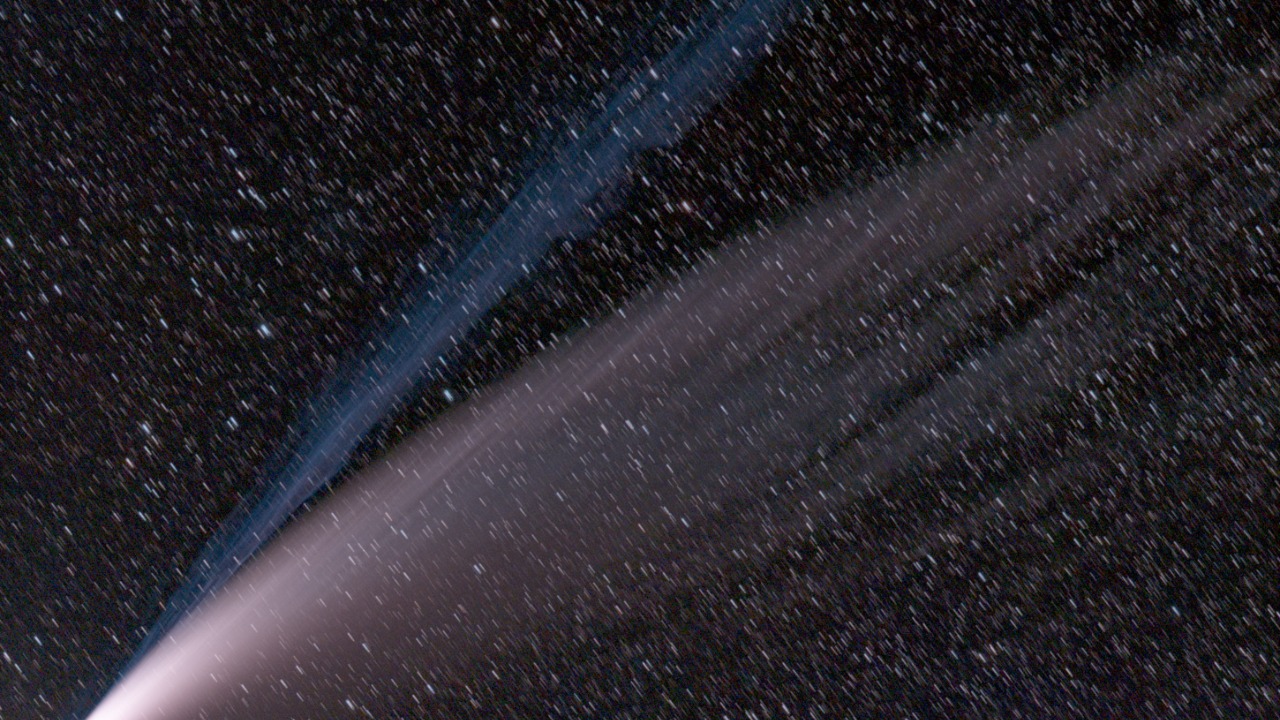
NASA’s NEOWISE infrared telescope caught it in late March 2020, and by early July it had become the brightest comet visible from northern latitudes since Hale-Bopp. Skywatchers stuck close to home found it low in the pre-dawn north-east, then in the evening sky after sunset, a bright head trailing a broad dust tail that long exposures resolved into a separate bluish ion stream alongside it.
Survival was not guaranteed. The comet came through perihelion on July 3, 2020, inside the orbit of Mercury, and that roasting is where much of the brightening came from. Its orbit runs on the order of 6,800 years, which makes the 2020 showing a single event rather than a recurring one for anyone who caught it.
4. Halley’s Comet: The One That Comes Back
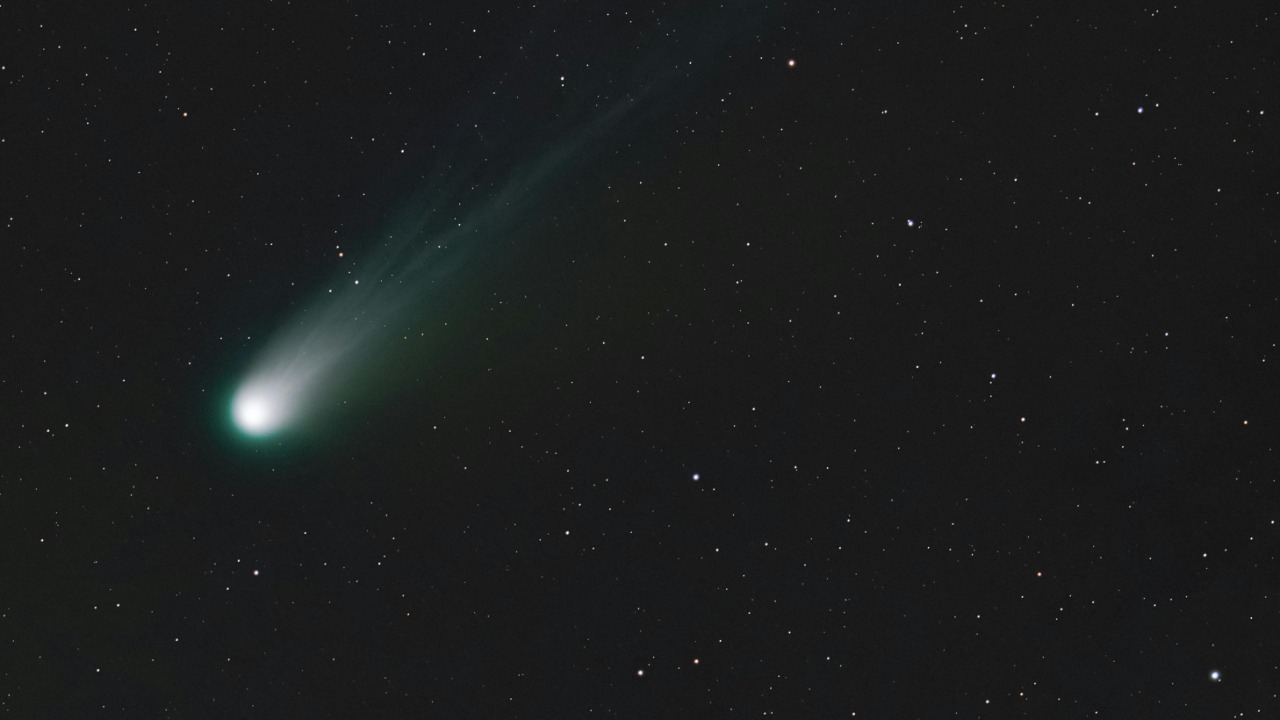
Edmond Halley worked out in the early 1700s that sightings logged in 1531, 1607 and 1682 belonged to one object, then predicted its return. The comet named after him is the only bright comet a person can reasonably expect to see twice in a lifetime. Its 1986 pass was among the poorest showings on record, with Earth sitting on the far side of the Sun at the wrong moment.
The apparition still mattered. Five spacecraft, including Europe’s Giotto, flew close enough to image a dark, peanut-shaped nucleus venting jets of dust. An orbital period of roughly 75 to 76 years sets the next return for 2061, and debris along its track feeds the Eta Aquariid and Orionid meteor showers.
5. Comet McNaught: Daylight And A Fanned Tail
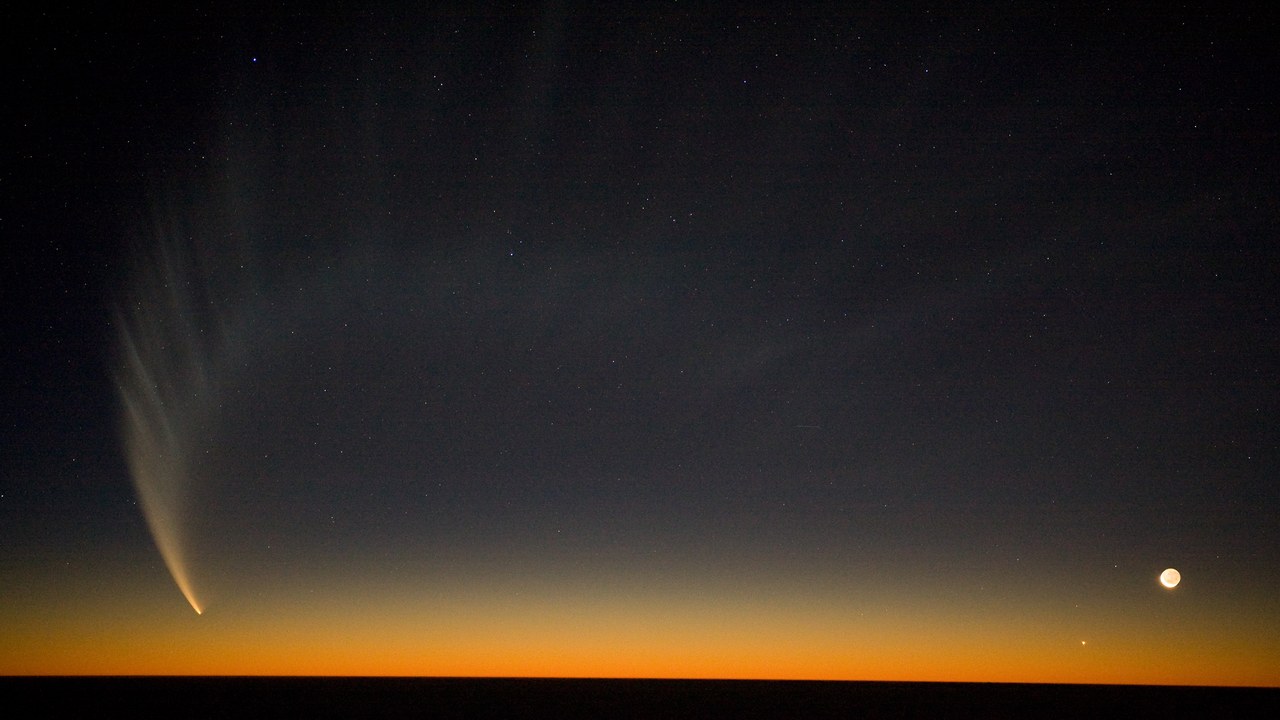
Robert McNaught spotted it in August 2006, and by January 2007 it had become the brightest comet in more than four decades, briefly picked out in broad daylight beside the Sun. Southern-hemisphere observers collected the real payoff after perihelion, when the dust tail unfurled into a striated fan sweeping across the evening horizon and earned the object its great comet designation.
Estimates place the peak near magnitude −5.5, brighter than Venus, though figures that extreme are difficult to pin down so close to the solar glare. The post-perihelion path is hyperbolic, meaning the encounter threw it out of the planetary neighbourhood for good. What people photographed in 2007 was a one-time performance.
6. Comet West: Brilliant And Barely Reported
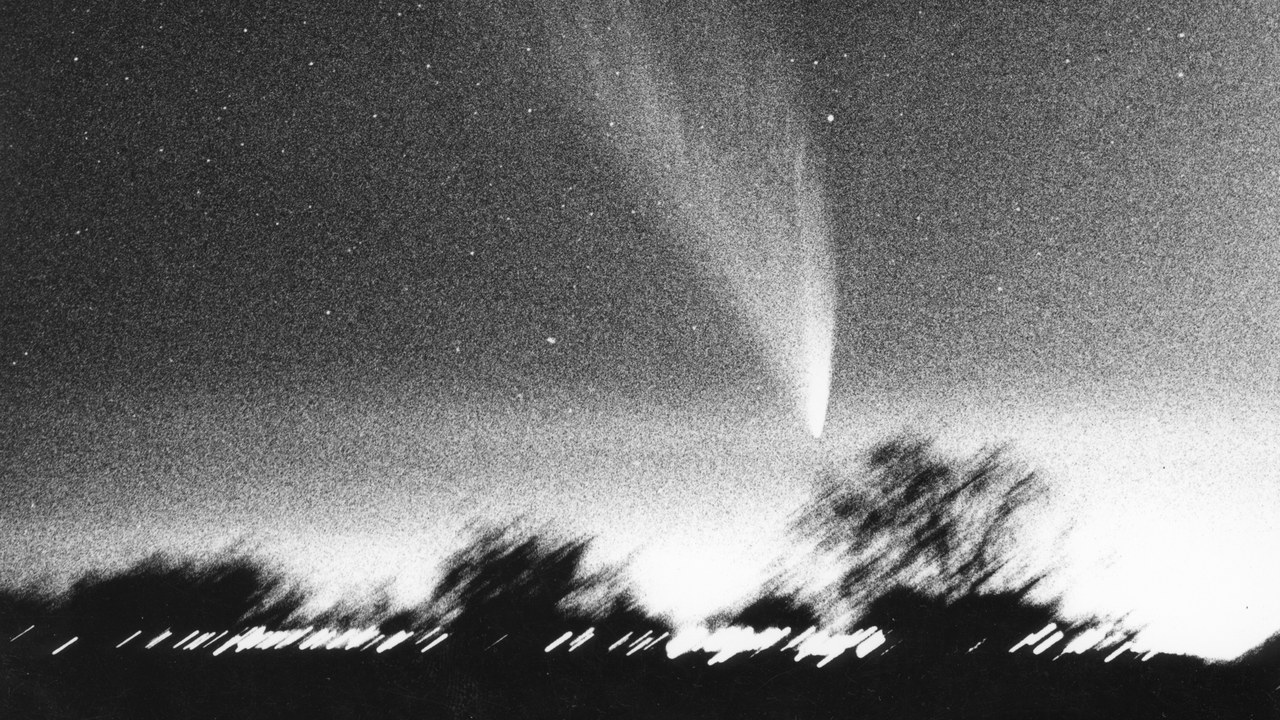
Richard West identified it on photographic plates taken at the European Southern Observatory in late 1975, and it reached perihelion on February 25, 1976. The nucleus split into four pieces around that pass, and the shed debris fed a broad, fan-shaped dust tail that dominated the pre-dawn sky for observers who bothered to set an alarm in March.
Peak brightness is generally placed near magnitude −3, enough to be glimpsed in daylight beside the Sun. Newspaper coverage stayed oddly muted, largely because Comet Kohoutek had underperformed so publicly two years earlier that editors had lost their appetite. The fragments continue on an orbit measured in hundreds of thousands of years, leaving 1976 as the only modern appearance.
7. Comet Ikeya-Seki: Brighter Than The Daytime Sun’s Glare
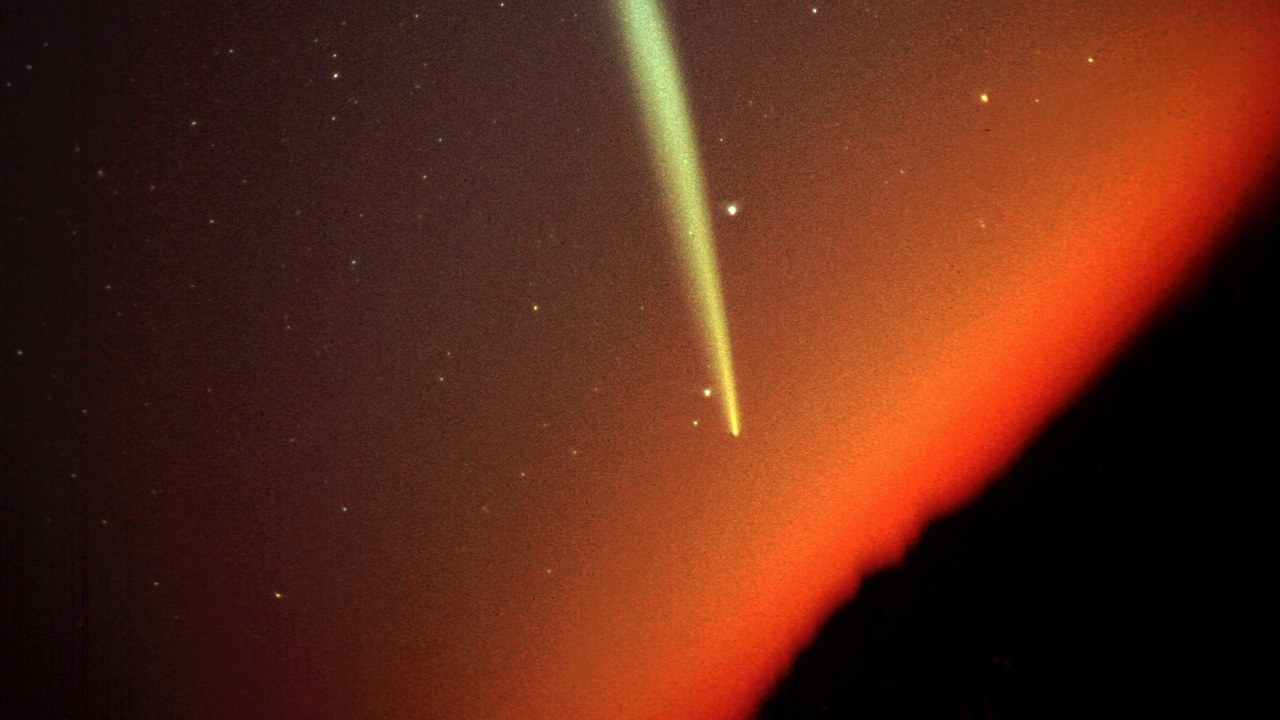
Kaoru Ikeya and Tsutomu Seki, both amateur astronomers in Japan, found it within minutes of each other in September 1965. A month later it grazed the Sun, passing roughly 450,000 kilometres above the surface as a member of the Kreutz sungrazer family, and that heating drove it to a brightness almost no modern observer has matched.
Reports describe it standing out next to the Sun in daylight, with published estimates of the peak reaching about magnitude −10, which would rank it among the brightest comets of the past thousand years. The nucleus broke into three pieces at perihelion, and those fragments travel on orbits of roughly 800 to 1,000 years.
8. Comet Holmes: An Explosion Nobody Predicted
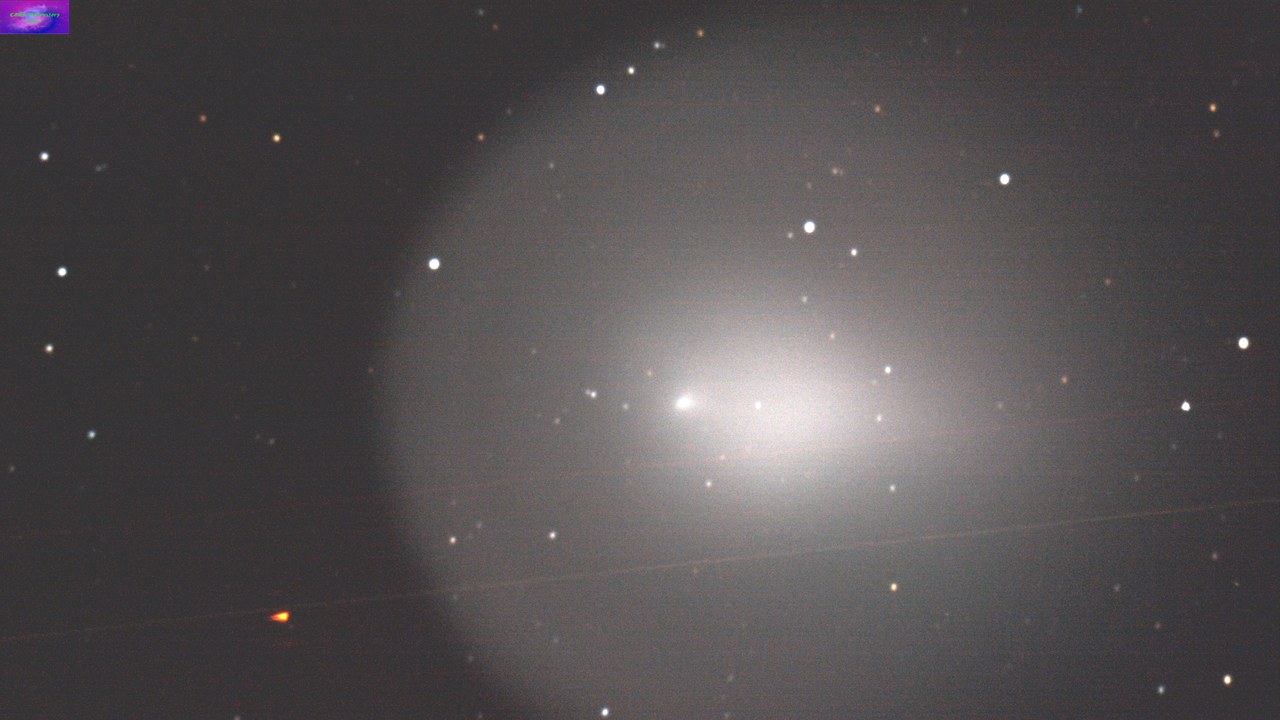
Edwin Holmes discovered this periodic comet during an outburst in November 1892, and it repeated the trick in October 2007, brightening by a factor of about half a million in roughly two days. A telescope-only object near magnitude 17 turned into a naked-eye point of light in the constellation Perseus, plainly visible from lit city streets.
The expanding shell of dust and gas kept swelling until the coma measured wider than the Sun, briefly the largest object in the solar system by volume. In orbital terms the comet is ordinary, circling every seven years or so without repeating the display, and the trigger behind the eruption is still argued over.
More from Morning Overview
- The FTC is warning about a scam quietly draining thousands from victims
- The NSA is again telling phone owners to switch off one location setting
- A handful of car transmissions are so tough mechanics say they almost never fail
- A handful of SUVs keep hitting 300,000 miles, and they share one engine trait
