Image Credit: TSgt. Michael Haggerty, USAF - Public domain/Wiki Commons
Military aviation spent the Cold War chasing the far edge of the speed envelope, where skin friction heats metal until it glows and fuel vanishes in minutes. The aircraft that pushed hardest were mostly interceptors and one-off prototypes, built to answer threats that sometimes never arrived. Here are eight of the fastest military aircraft ever built, measured by what their pilots actually recorded.
1. Lockheed SR-71 Blackbird: The Record That Still Stands
Image Credit: Pixabay/Pexels
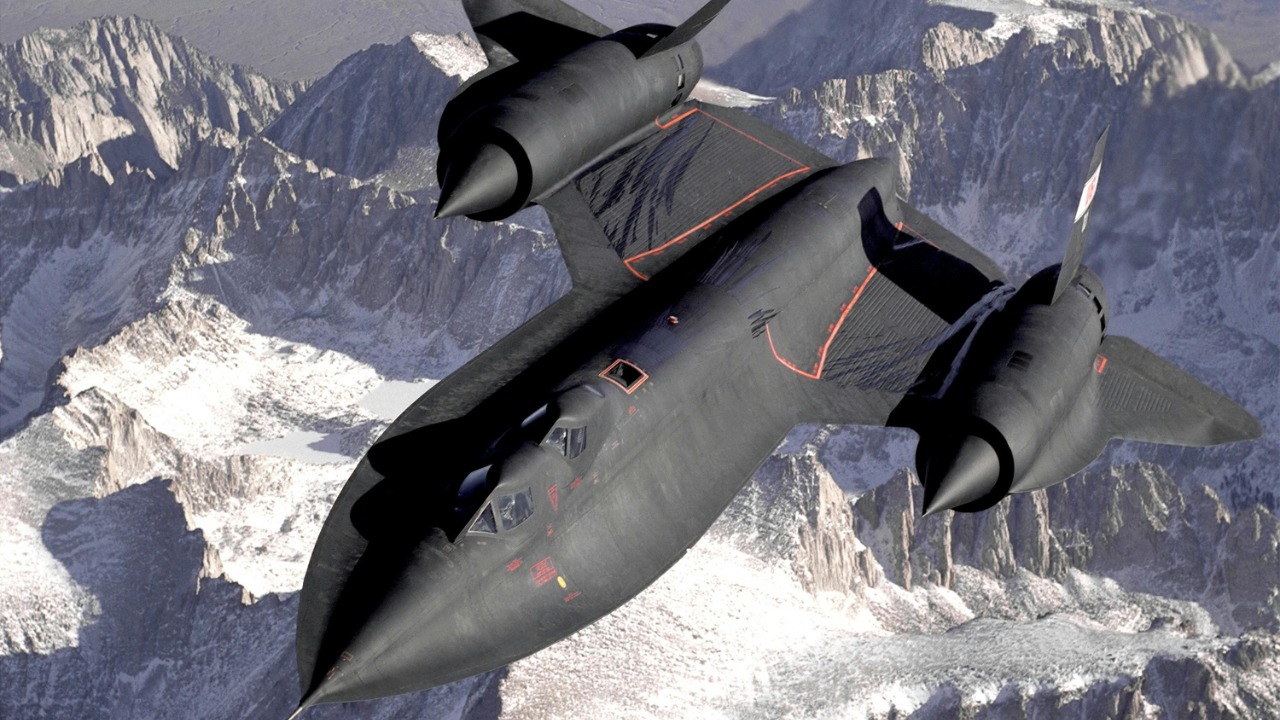
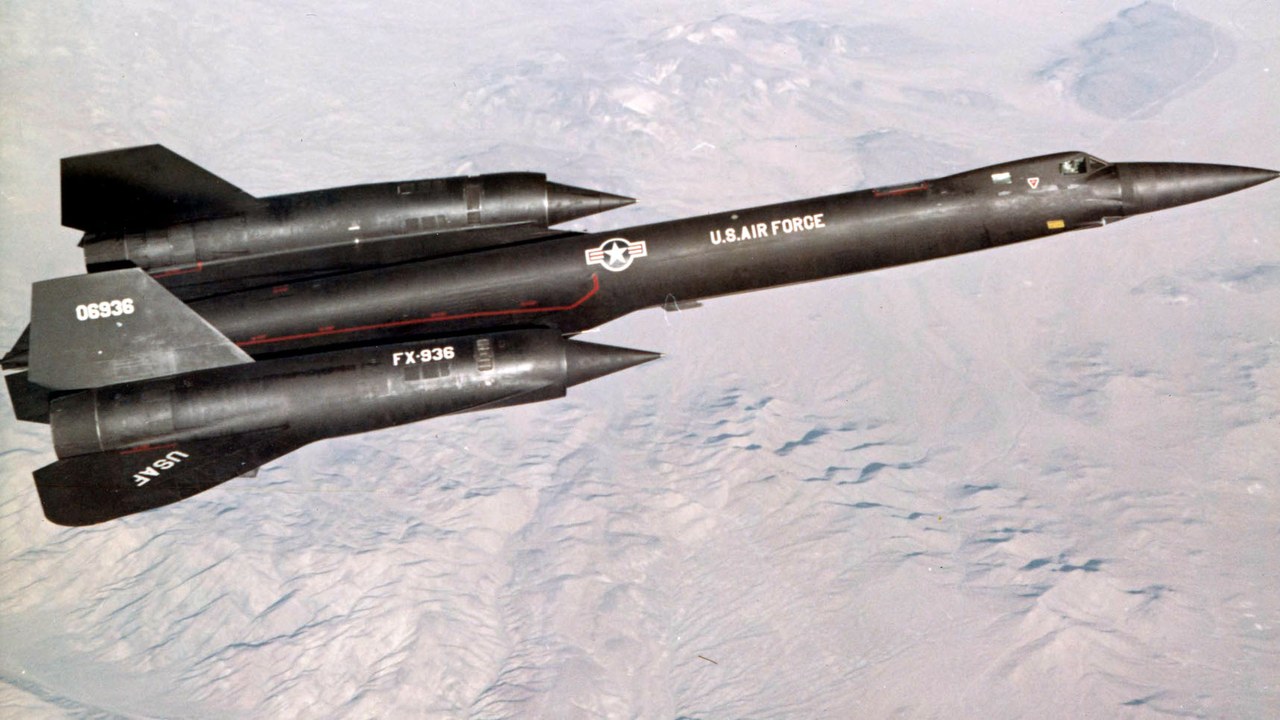
Speed records for jets still end at the Blackbird. On July 28, 1976, an SR-71A flown by Eldon Joersz and George Morgan was clocked at 2,193.167 mph near Beale Air Force Base, a mark the FAI still lists as the absolute speed record for an air-breathing crewed aircraft. Above roughly Mach 2 its J58 engines diverted airflow around the compressor, working as hybrid turbojet-ramjets.
Built mostly of titanium, the airframe grew several inches longer in cruise as friction heated its skin past 500 degrees Fahrenheit, so the tanks seeped fuel on the ground until the metal expanded. No Blackbird was lost to hostile fire, and the type retired in 1998 with the record untouched.
2. North American X-15: Mach 6.7 On Rocket Power
Image Credit: U.S. Air Force – Public domain/Wiki Commons
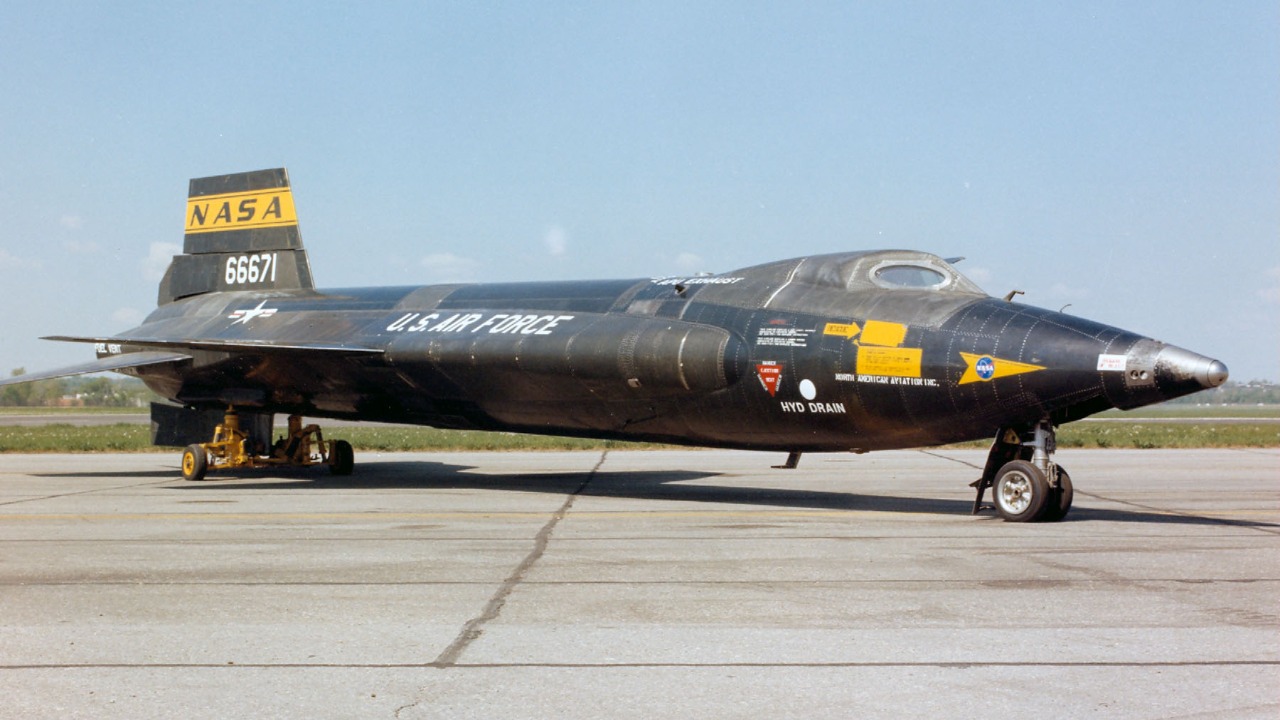
Dropped from beneath the wing of a B-52 rather than taking off, the X-15 traded runway for altitude. On October 3, 1967, the uprated X-15A-2 reached 4,520 mph, close to Mach 6.7, with Pete Knight at the controls, still the fastest recorded flight by a crewed powered aircraft. The rocket motor burned for roughly 90 seconds; the rest was a glide to a dry lakebed.
Heat from that run charred the ablative coating and wrecked the dummy ramjet under the tail, and the airframe never flew again. Across 199 flights the program mapped hypersonic control and structural heating for engineers who later built the Space Shuttle, and eight pilots earned astronaut wings for passing 50 miles up.
3. MiG-25 Foxbat: Fast Enough To Wreck Itself
Image Credit: Alex Beltyukov – RuSpotters Team – CC BY-SA 3.0/Wiki Commons
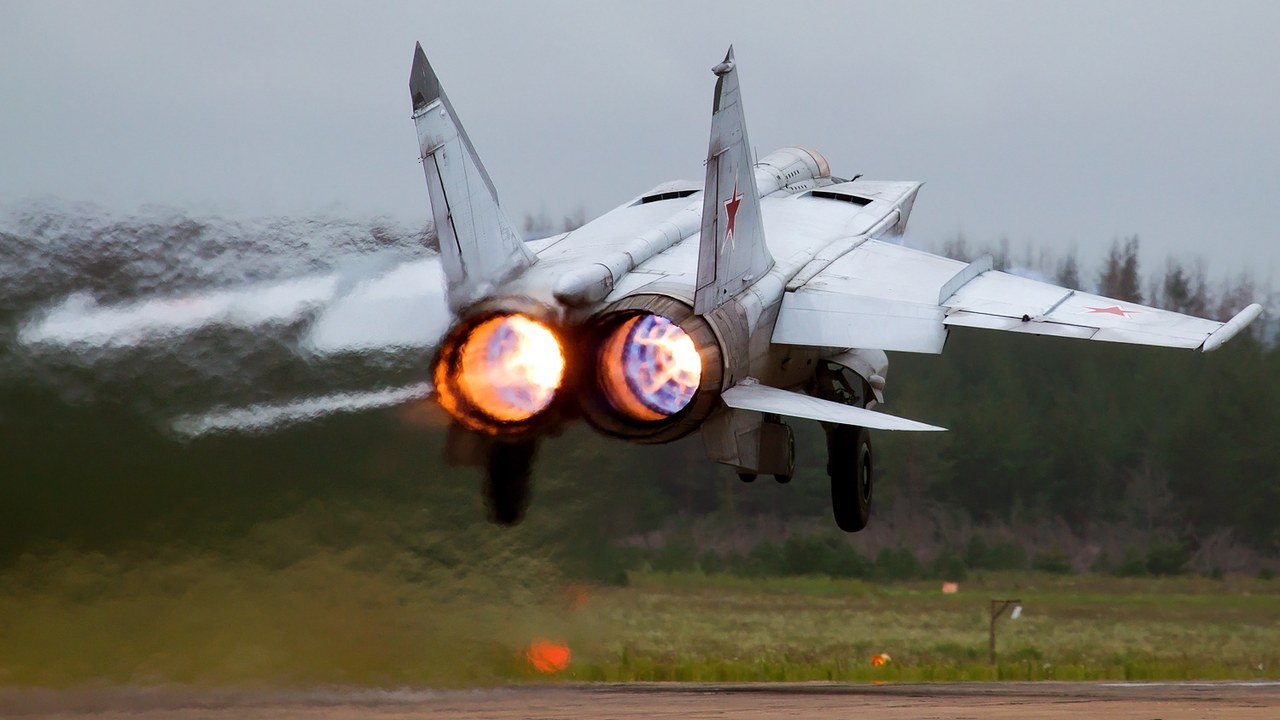
Western intelligence badly misread the Foxbat after one was tracked over Sinai in 1971 at roughly Mach 3.2, a dash that ruined its engines. Mikoyan capped normal operations at Mach 2.83 because sustained Mach 3 flight destroyed the powerplants, and the interceptor was welded mostly from nickel steel rather than titanium, making it heavy but cheap and startlingly quick in a straight line.
The illusion collapsed in 1976 when Viktor Belenko defected to Japan with one, exposing vacuum-tube electronics and a radar built to burn through jamming with raw power. Specially prepared E-266 versions still hold records: Alexander Fedotov climbed to 123,524 feet in 1977, an absolute altitude mark no jet has taken since.
4. MiG-31 Foxhound: The Fastest Fighter Still Flying
Image Credit: Dmitriy Pichugin – GFDL 1.2/Wiki Commons
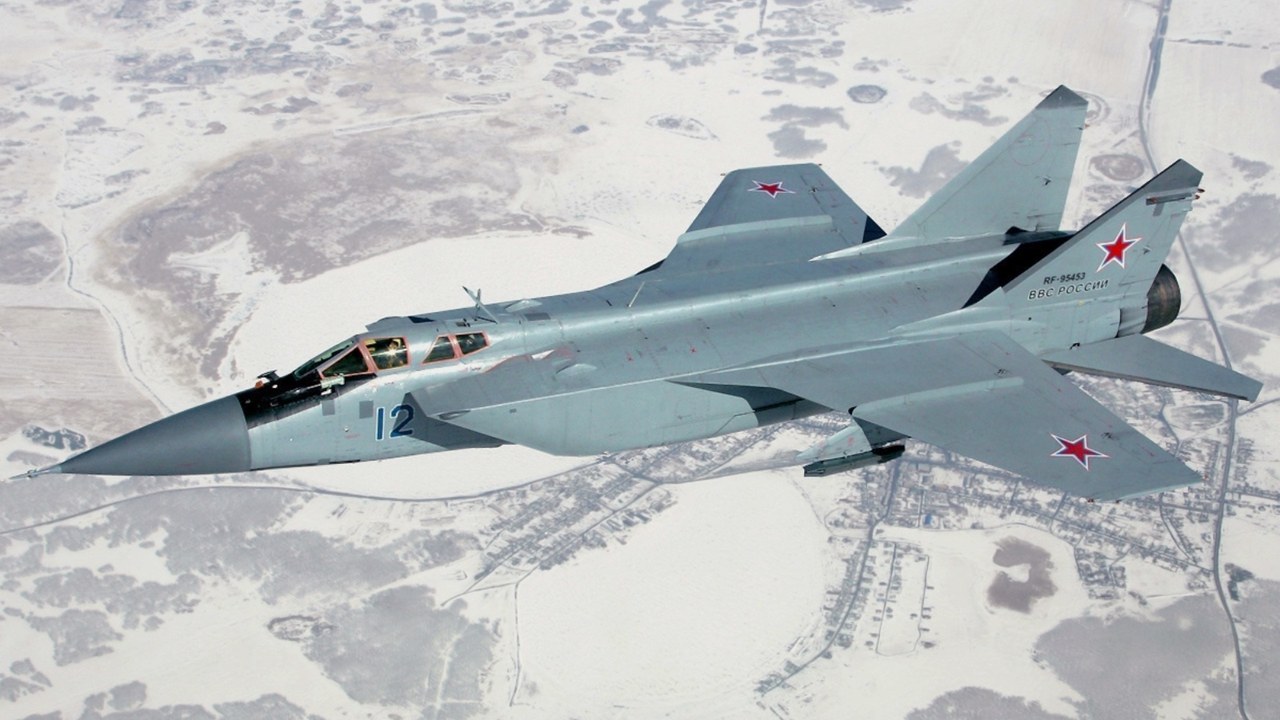
The Foxhound kept its predecessor’s speed and fixed nearly everything else. Rated at Mach 2.83 at altitude and, unlike the MiG-25, comfortable supersonic at low level, it carries a Zaslon phased-array radar that was the first electronically scanned set fitted to a fighter, tracking several targets at long range while four aircraft share one picture over datalink.
Speed is why the type endures. Russia uses it to cover Arctic distances that shorter-legged fighters cannot, and a modified version launches the Kinzhal missile, lending the weapon its own altitude and velocity. The airframes date to the 1980s and have been upgraded repeatedly rather than replaced, because nothing else in the inventory flies faster.
5. Lockheed YF-12: The Interceptor That Never Was
Image Credit: U.S. Air Force – Public domain/Wiki Commons
Before the Blackbird flew reconnaissance, its ancestor carried missiles. The YF-12 was an interceptor conversion of the A-12, fitted with fire-control radar and internal bays for the long-range AIM-47, and on May 1, 1965, one aircraft set a world speed record of 2,070.101 mph plus a sustained altitude record of 80,257 feet in a single day’s flying.
Only three were built. The Air Force cancelled the production order in 1968 as budgets drained toward Vietnam, leaving the survivors to NASA, which flew them into the late 1970s gathering data on propulsion and structural heating at Mach 3. One is preserved at the National Museum of the United States Air Force in Ohio.
6. XB-70 Valkyrie: A Mach 3 Bomber The Size Of An Airliner
Image Credit: US Air Force – Public domain/Wiki Commons
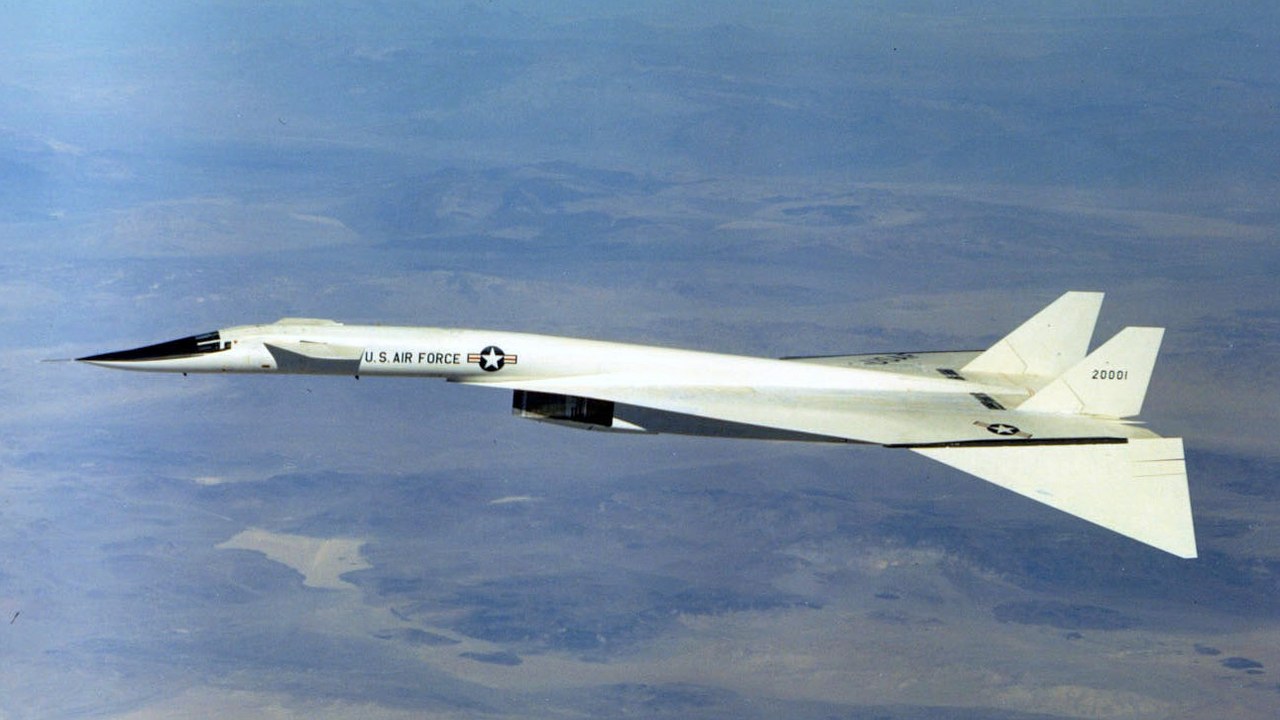
Six engines and a gross weight above 500,000 pounds made the Valkyrie the largest aircraft ever to cruise at Mach 3, and the second prototype touched Mach 3.08 in testing. Its outer wing panels hinged down as much as 65 degrees in flight, trapping the shock wave beneath the fuselage in a technique called compression lift.
Surface-to-air missiles killed the concept before the aircraft could: a high, fast bomber run stopped being survivable, and ballistic missiles did the same job for less money. Two were built, and the second broke apart after a mid-air collision with a chase plane in June 1966. The survivor sits in a museum hangar in Dayton, Ohio.
7. Bell X-2: First Past Mach 3, At A Price
Image Credit: NASA camera operator – Public domain/Wiki Commons
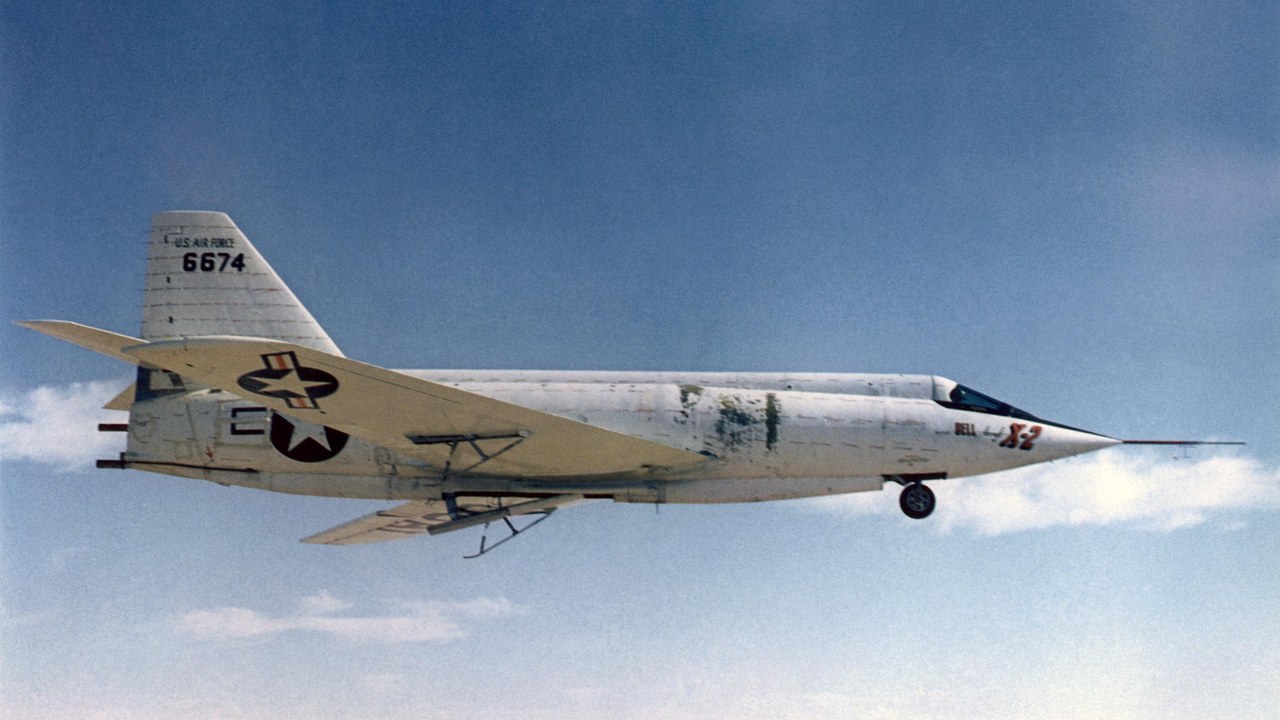
Sharply swept and skinned in heat-resistant alloy, the X-2 was built to probe the region past Mach 2 that engineers called the thermal thicket. On September 27, 1956, Captain Milburn Apt pushed it to Mach 3.196, about 2,094 mph, making him the first pilot to exceed three times the speed of sound. Weeks earlier Iven Kincheloe had taken the same aircraft to 126,200 feet.
Apt turned back toward base while still above Mach 3, and the aircraft tumbled into the violent divergence later named inertia coupling. The nose capsule separated as designed, but he was killed before the main parachute deployed. The accident ended the program, and its lessons on control at high Mach numbers passed to the X-15 team.
8. F-15 Eagle: Mach 2.5 On The Flight Line Today
Image Credit: Airman 1st Class Matthew Seefeldt – Public domain/Wiki Commons
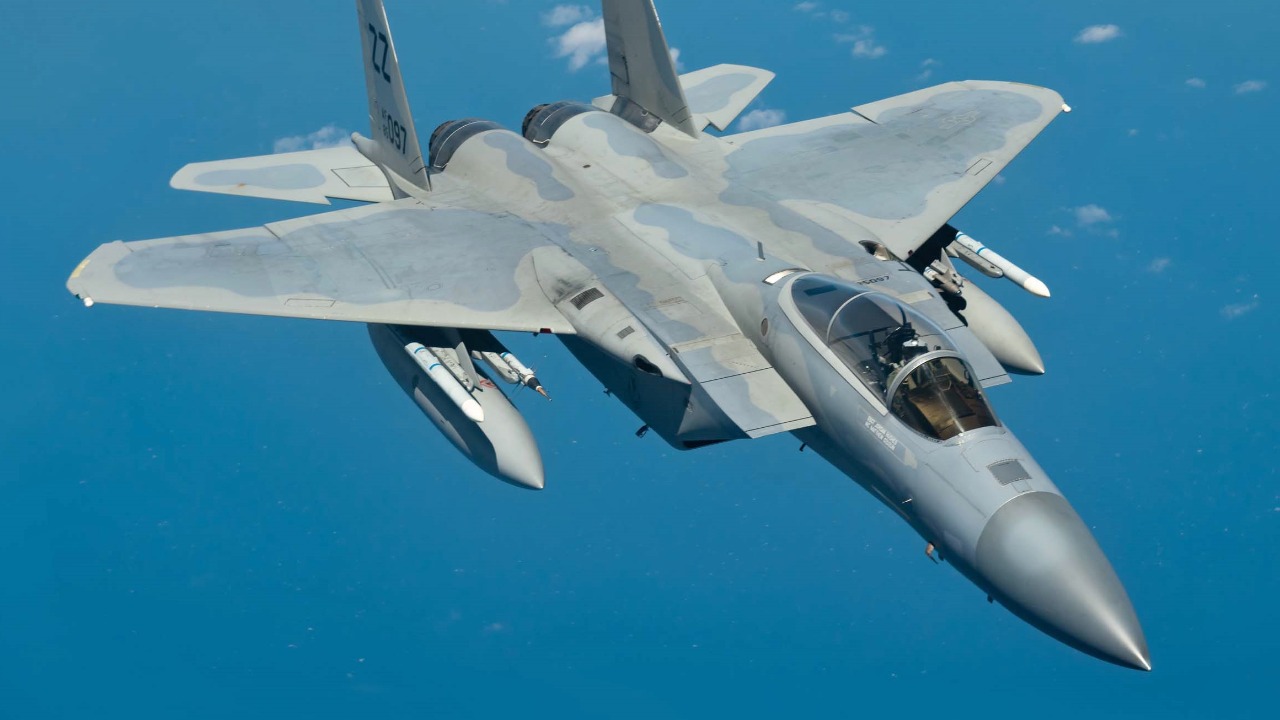
Every other entry here is a prototype or a museum piece; the Eagle is a production fighter still flying daily and cleared to roughly Mach 2.5, about 1,650 mph, at altitude. Two F100 engines give it a thrust-to-weight ratio above one at light fuel loads, so a stripped F-15A named Streak Eagle could climb vertically well enough to take eight time-to-climb records in 1975.
Speed matters less on its own than for what it buys: altitude and velocity hand a missile far more energy at launch. The type has been credited with more than 100 air-to-air victories without a loss in combat, and the F-15EX entered production more than five decades after the first Eagle flew.
Morning Overview is reader-supported. Some links in our articles are affiliate links, and we may earn a commission at no extra cost to you. As an Amazon Associate I earn from qualifying purchases. Full disclosure.