
Life in the deep ocean evolves under crushing pressure, scarce food, cold water, and darkness that sunlight never reaches. Those conditions reward bodies and behaviors that can appear almost invented when they finally reach a camera. These eight deep-sea creatures reveal how strange, resourceful, and visually spectacular life can become far below the surface.
1. Chambered nautilus: A Living Submarine Carries Its Own Chambers
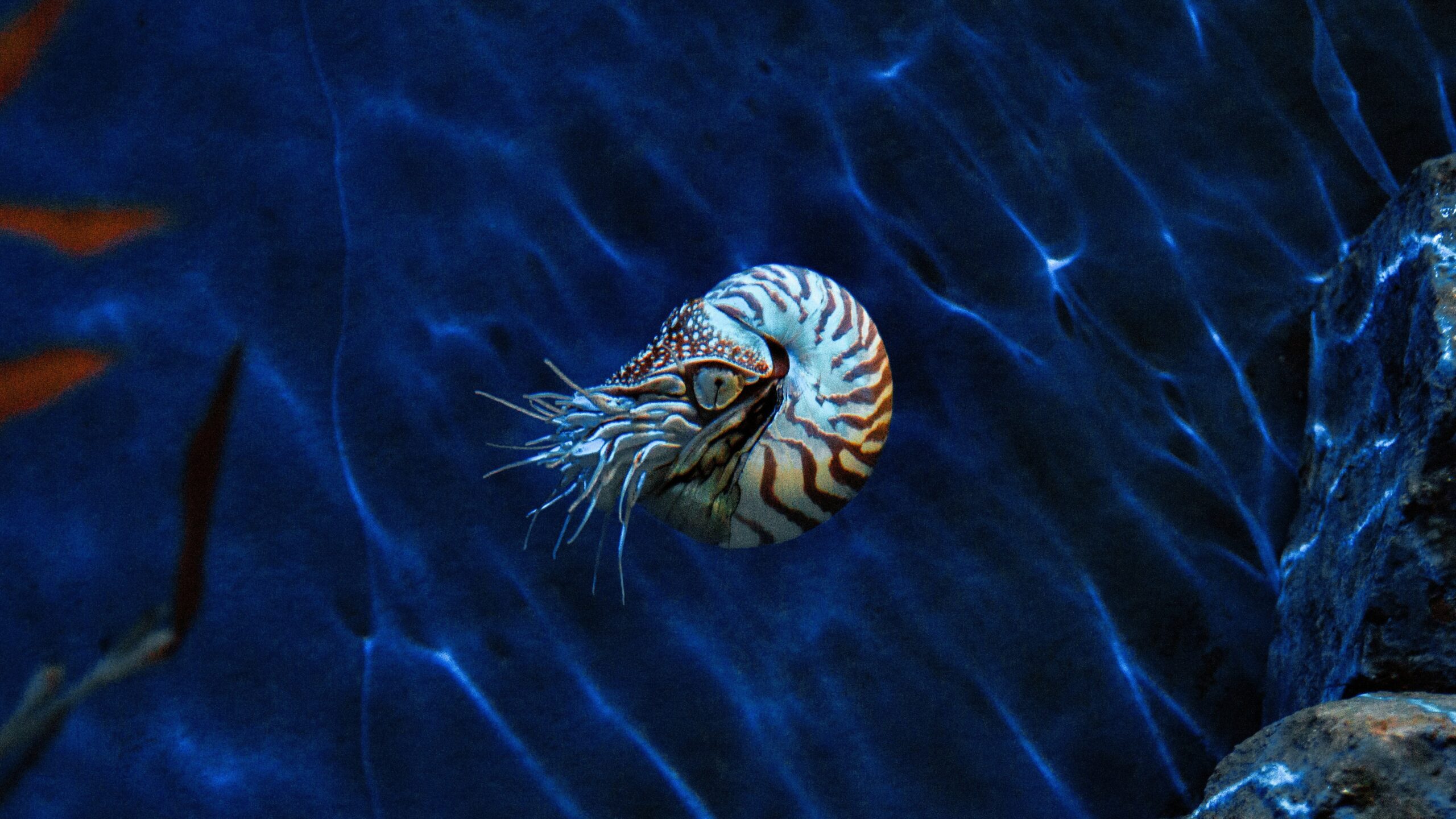
The chambered nautilus is a living cephalopod protected by a striped spiral shell divided into internal compartments. The chambered nautilus adjusts gas and liquid within those spaces to control buoyancy while the animal occupies the newest outer chamber. Dozens of slender tentacles surround a hard beak, giving the face a dense, almost mechanical appearance beneath the smooth geometry of the shell.
Jet propulsion moves the nautilus through the water, although it is less streamlined than squid or octopuses. It often makes vertical movements along deep reef slopes, retreating to cooler water and rising to feed. The combination of buoyancy chambers, ancient body plan, and watchful pinhole eyes creates an animal that resembles a small exploratory craft engineered long before human submarines existed.
2. Giant Pacific octopus: Eight Arms Become Camouflage and Force
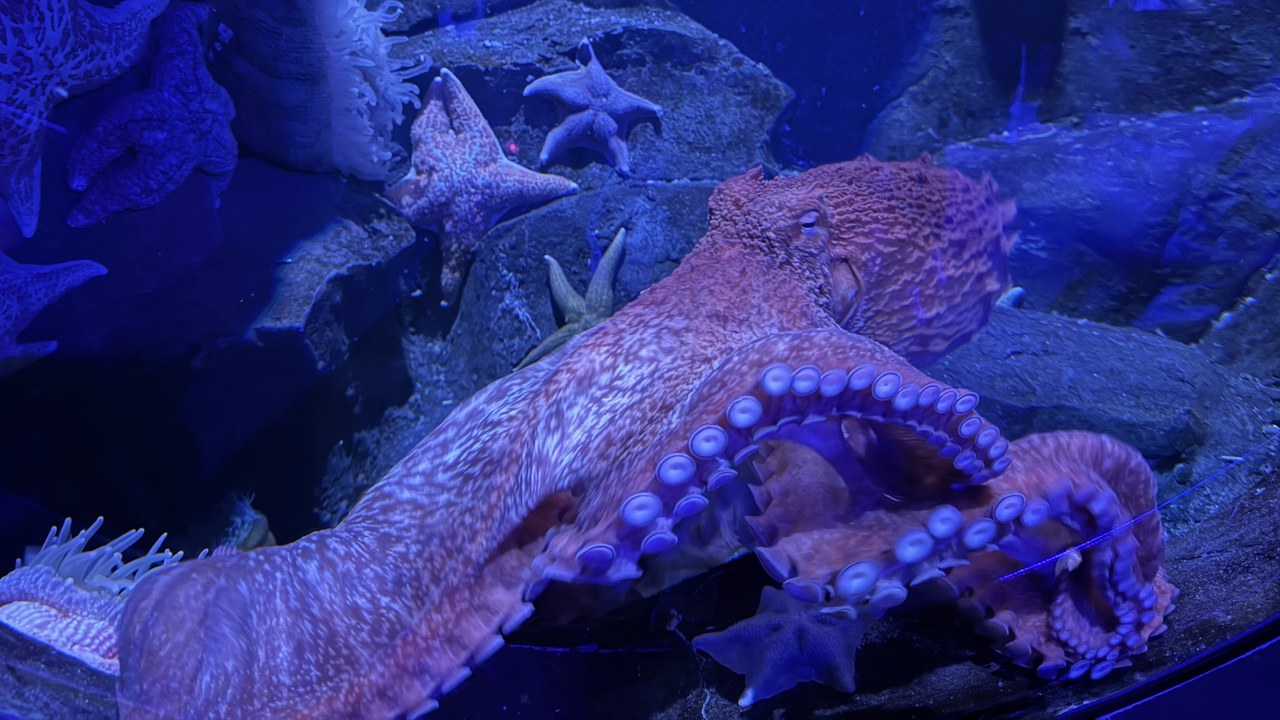
The giant Pacific octopus is among the largest octopus species, combining immense reach with a body able to squeeze through openings barely wider than its beak. The giant Pacific octopus inhabits cold North Pacific waters from coastal areas into deeper zones. Thousands of suckers provide grip and chemical sensing, turning each arm into both a manipulator and a tool for exploring hidden spaces.
Specialized skin cells let the animal change color and texture rapidly, blending with rock or signaling agitation. A boneless body, strong arms, keen vision, and problem-solving behavior make it appear less like a familiar mollusk than an adaptable underwater intelligence. The octopus can shelter in a den, move across open bottom, or envelop prey with a coordinated web of muscular limbs.
3. Giant isopod: A Seafloor Scavenger Grew to Startling Scale
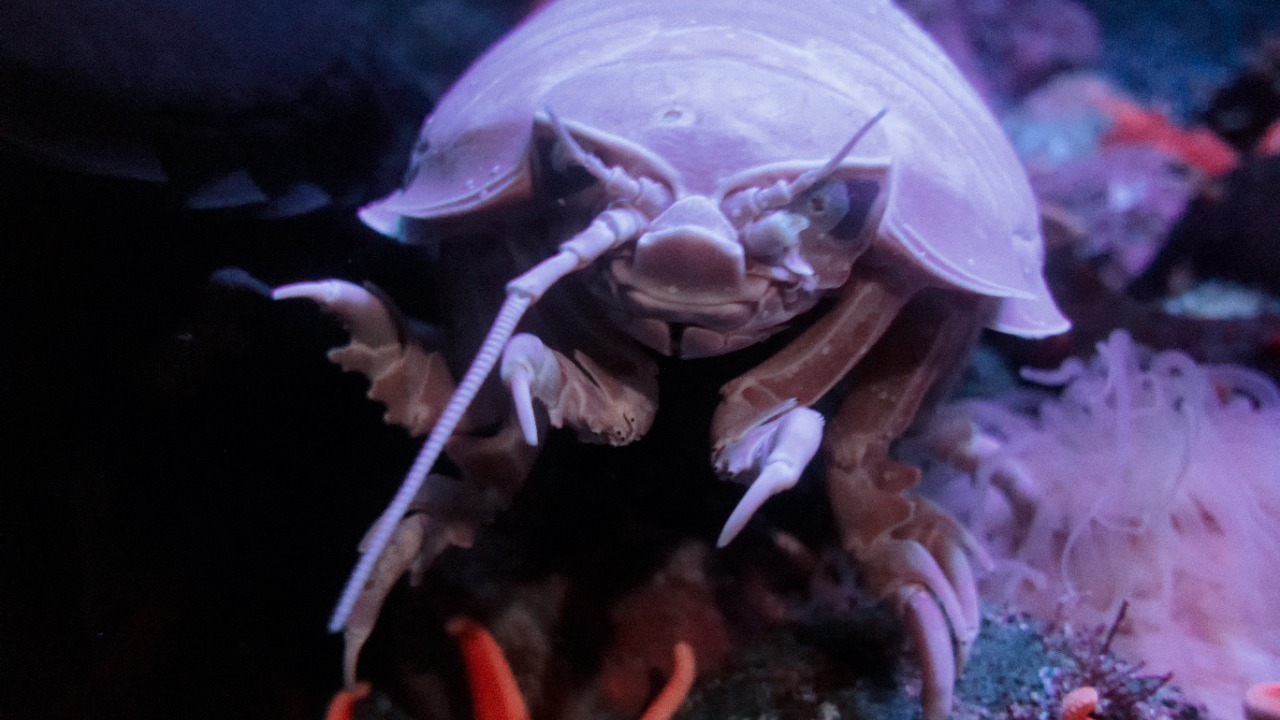
The giant isopod resembles an enormous armored relative of the pill bugs found on land. Britannica’s giant isopod account describes a deep-sea crustacean whose segmented plates, many legs, and scavenging habits suit life along the ocean floor. Some reach a size that makes the familiar body plan look alien, with broad armor and grasping appendages arranged beneath a domed shell.
Food can arrive unpredictably in the depths, so the ability to exploit a large meal and endure long gaps is valuable. The isopod searches the bottom for carrion and other available material rather than relying on constant prey. Its proportions provide one of the clearest examples of deep-sea gigantism, where a recognizable group produces species far larger than most relatives living in shallower environments.
4. Dumbo octopus: Ear-Like Fins Carry It Through the Abyss
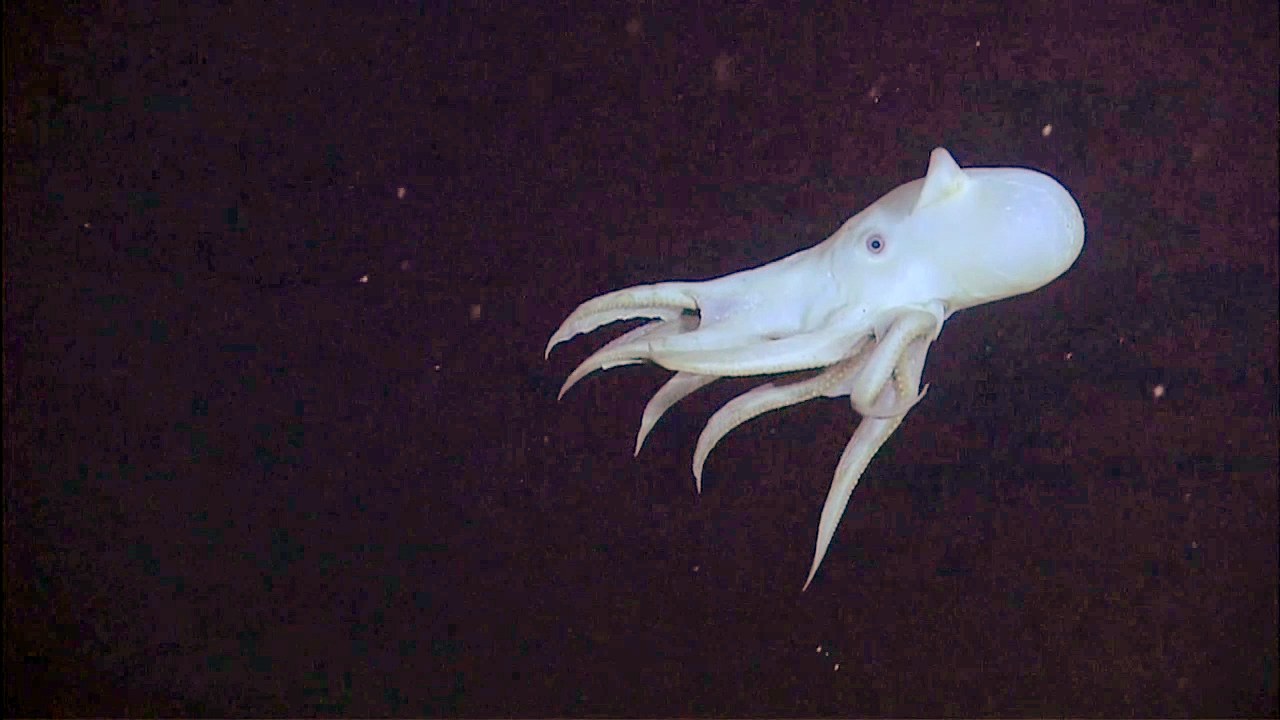
The Dumbo octopus belongs to the genus Grimpoteuthis and swims with a pair of prominent fins that resemble ears. The Grimpoteuthis genus includes deep-living octopuses observed thousands of feet below the surface, where the fins provide gentle propulsion. A web between the arms gives the animal a compact, umbrella-like shape that looks unlike the muscular silhouettes of many shallow-water octopuses.
Slow, controlled movement conserves energy in cold water where prey is scattered. The octopus can use its fins, pulse its web, and steer with its arms while searching above the seafloor. Its soft body and pale or translucent appearance reflect life without reefs, bright color displays, or sunlight. The familiar nickname is playful, but the design is a precise answer to extreme depth.
5. Giant tube worm: A Mouthless Animal Lives on Chemical Energy
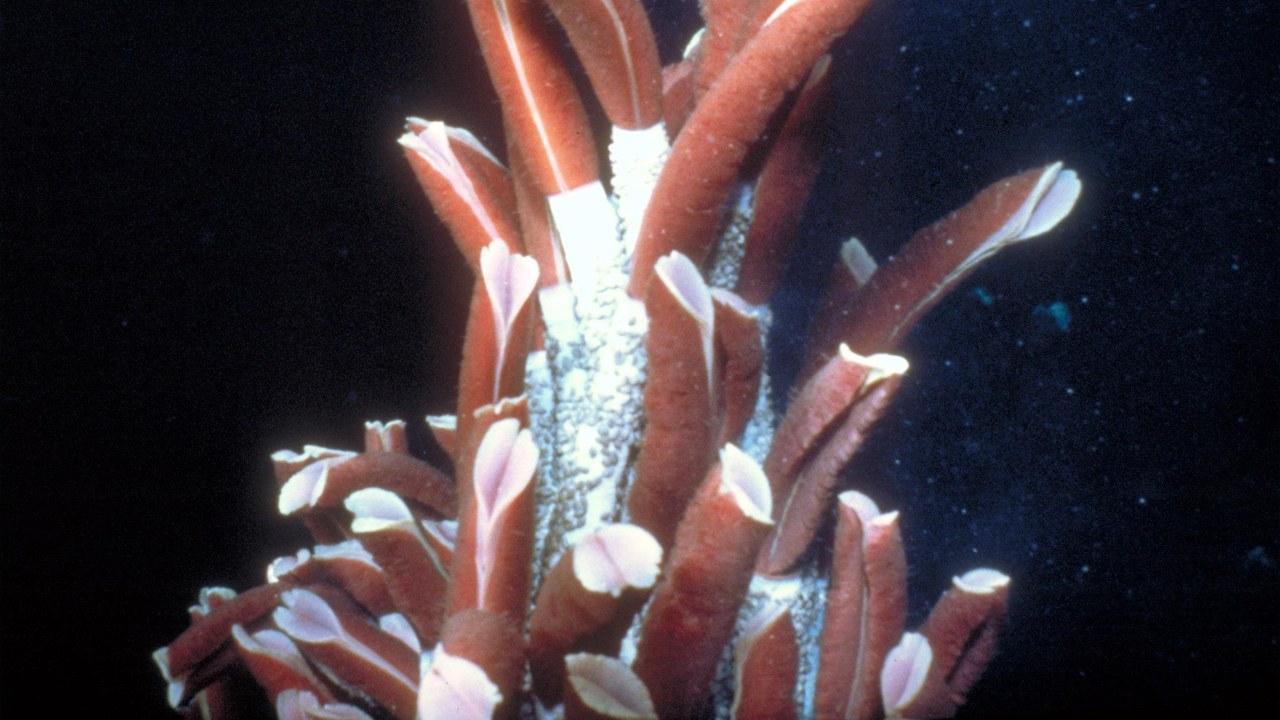
The giant tube worm Riftia pachyptila forms dense red-and-white colonies around hydrothermal vents where sunlight never supplies energy. The giant tube worm lacks a conventional mouth and digestive tract as an adult. Instead, symbiotic bacteria inside its body use chemicals from vent fluids to manufacture food, supporting growth in an environment once assumed too hostile for rich communities.
A bright red plume exchanges gases and chemicals with the water while a long protective tube anchors the animal near the vent. Whole fields of worms can rise from dark volcanic terrain like a forest built from soft chimneys. Their discovery changed understanding of ecosystems by proving that life could thrive on chemosynthesis rather than sunlight at the base of its food web.
6. Comb jelly: Moving Cilia Produce Living Rainbows
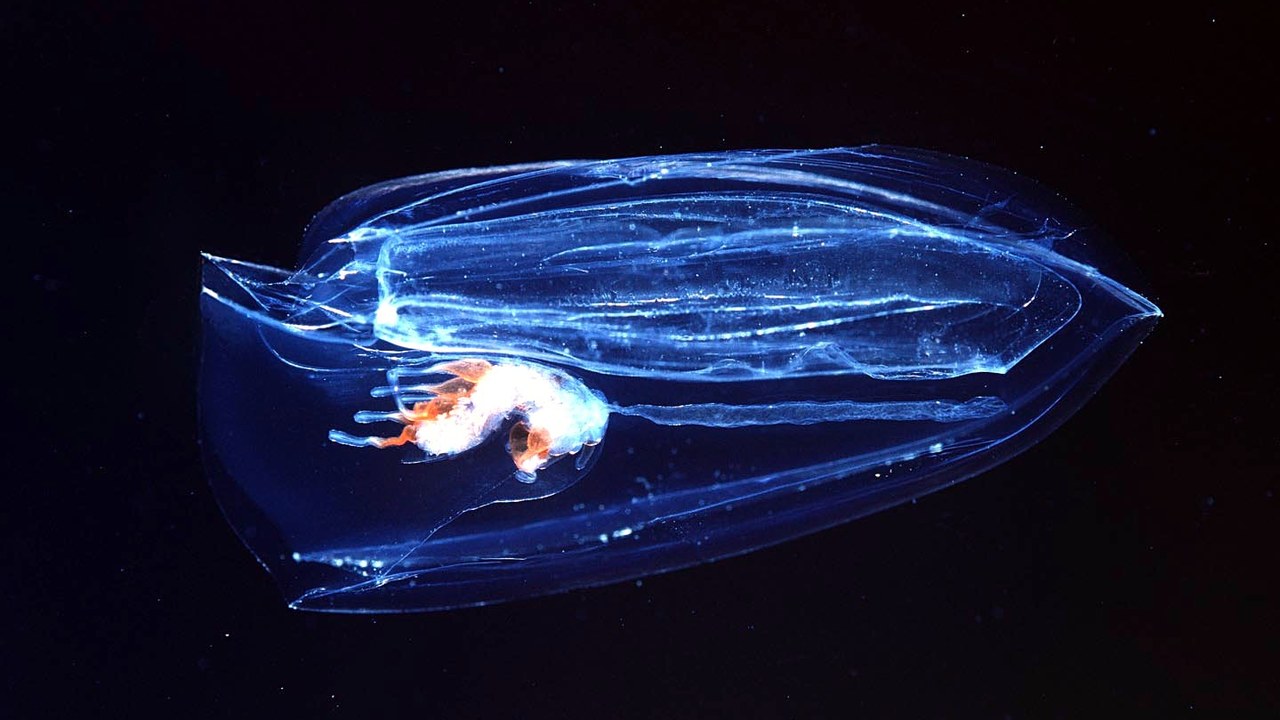
Comb jellies are gelatinous marine animals whose transparent bodies carry eight rows of tiny beating structures called comb plates. The Ctenophora group moves by coordinating those plates, which scatter light into shifting bands of color. The rainbow effect is structural rather than bioluminescent, making a nearly invisible animal flash with ordered color whenever light reaches its moving cilia.
Many comb jellies capture prey with sticky cells instead of the stinging cells associated with true jellyfish. Their soft bodies range from rounded forms to long ribbons and lobed shapes, all difficult to preserve without distortion. Deep-water species can add their own light production to the optical display. In darkness, the combination of transparency, pulsing motion, and moving color looks almost digital.
7. Sea angel: Transparent Wings Hide a Tiny Predator
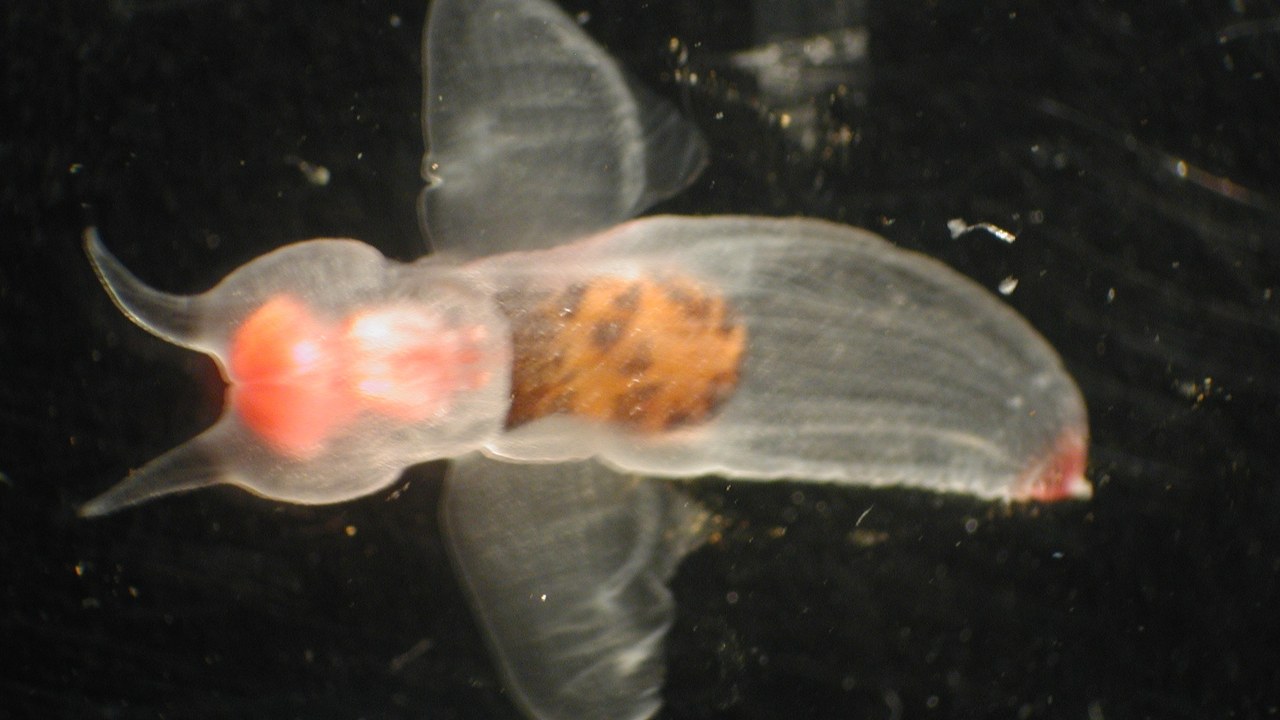
Sea angels are small swimming sea slugs that abandoned the seafloor and move through open water with a pair of winglike flaps. The sea angel group includes mostly transparent animals whose internal organs remain visible through the body wall. Their graceful pulsing resembles flight, giving a delicate appearance that contrasts sharply with their behavior as specialized predators of other pelagic snails.
When a sea angel encounters prey, feeding structures emerge from the head to grasp and extract the animal from its shell. That sudden transformation turns an ethereal swimmer into an efficient hunter. The tiny body, orange internal tissues, and clear winglike parapodia create one of the ocean’s strangest visual contradictions: something that looks like a drifting ornament but behaves like a compact predator.
8. Japanese spider crab: Enormous Legs Turn a Crab Into a Sea Spider
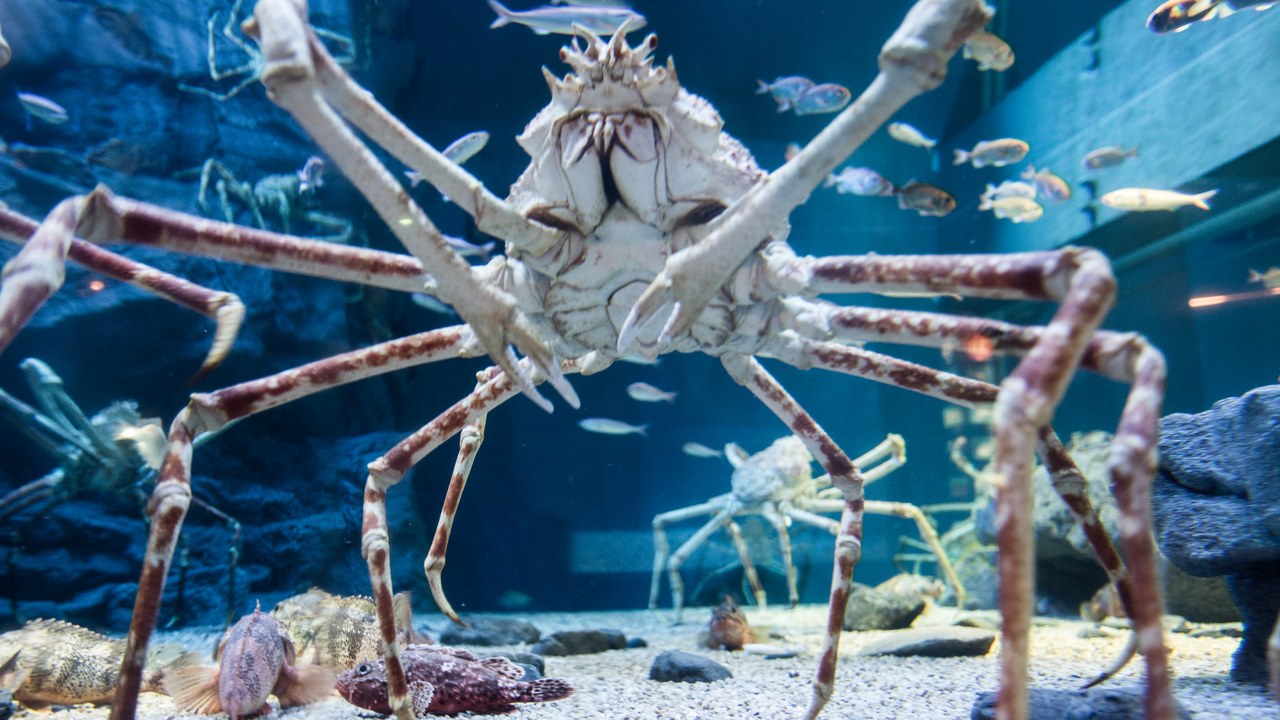
The Japanese spider crab combines a relatively compact body with legs that can span an astonishing distance. The Japanese spider crab lives in waters around Japan and is the largest living arthropod by leg span. Its long, jointed limbs let it step across the seafloor with a silhouette closer to a giant mechanical spider than a familiar shore crab.
Spines and a rough shell help the animal blend into rocky surroundings, and younger crabs may decorate themselves with living material for additional camouflage. The extreme proportions are most startling in an aquarium, where nearby fish and structures reveal the scale. Despite the threatening appearance, the crab is a slow-moving bottom dweller adapted to searching for food across a broad reach in deep water.
More from Morning Overview
- A Colorado wildfire has exploded past 87,000 acres with no containment
- A wildfire near Ouray swelled past 18,000 acres, putting Colorado towns on alert
- The Pentagon’s newest UFO files describe a fish-scaled, potato-shaped object on camera
- Scientists spotted a rare tusked whale alive at sea for the first time, then fired a crossbow at it.
