
Sixty years on, the class of 1966 still covers a remarkable range of ground. Muscle cars, luxury utilities, an Italian supercar and a few screen stars all trace their debuts or best-known moments to that period. Here are twelve of them, each with the figures that defined it.
Tech news in one quick read: Get the most interesting stories in startups, tech and programming, each with a short TLDR, in one daily email from TLDR.
We may earn a commission if you sign up.
1. Dodge Charger: Launch Day Muscle
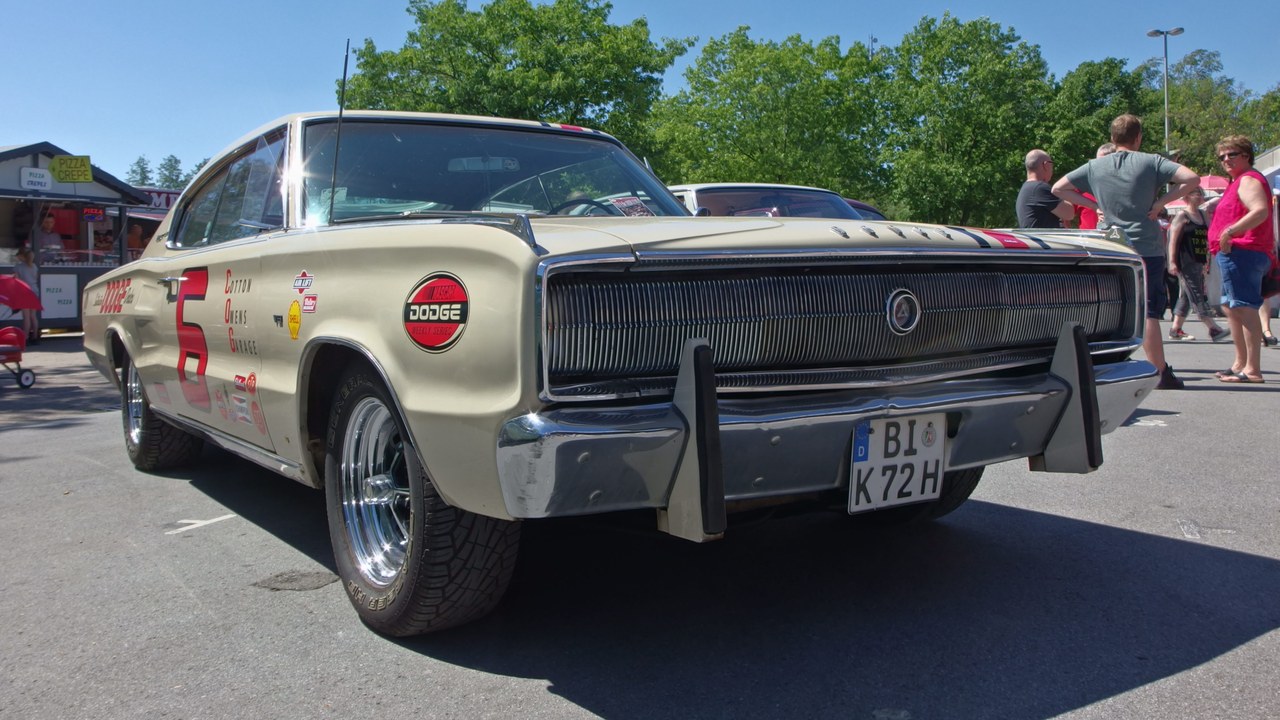
The Dodge Charger went on sale January 1, 1966, with a 230-hp 318 V8 as the base engine and a 425-hp Street HEMI on the option list, per Stellantis media materials.
That gap made the original Charger either a mild fastback or a serious street machine. Anyone shopping a survivor should confirm which engine it left the factory with, because originality matters a great deal to collectors of these cars. Either way, the car shows how much range a single nameplate could cover in its first year on sale.
2. Ford Bronco: The Sport-Utility Coinage
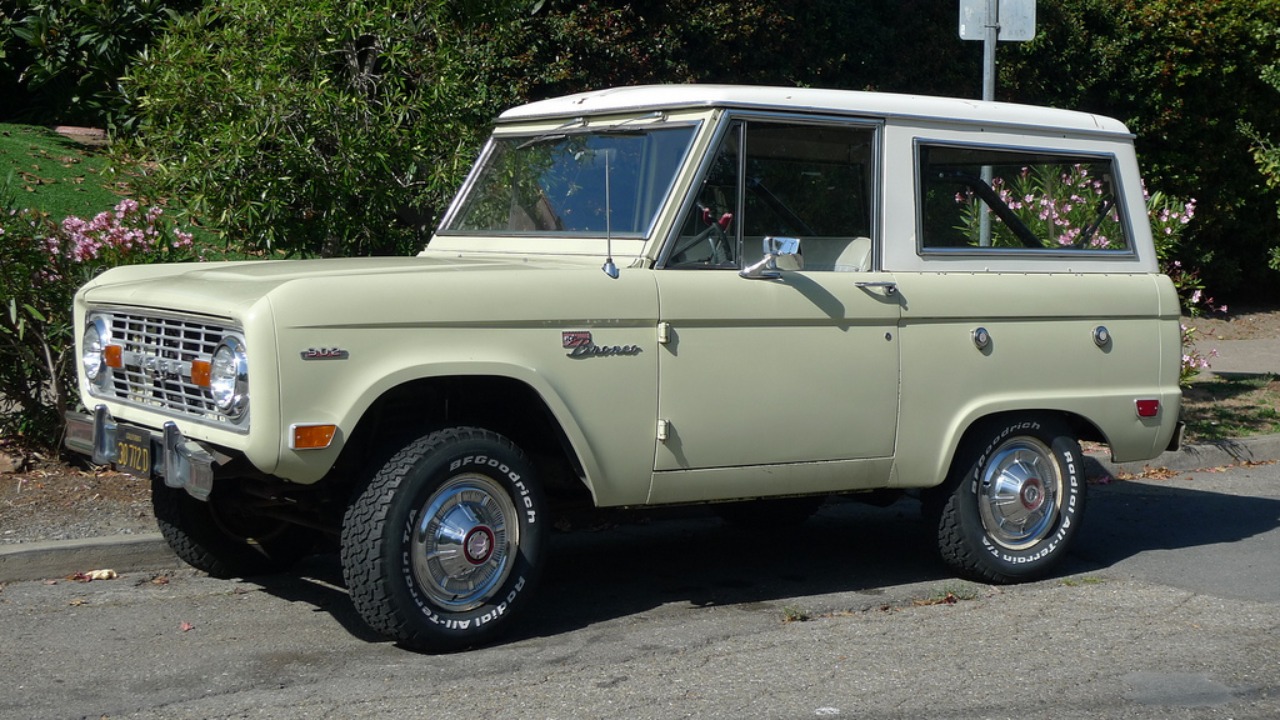
Ford introduced the Bronco on August 11, 1965, and coined the phrase ‘sport-utility’ with it, according to Ford’s anniversary package article. Production for the 1966 model year reached 23,776.
Strictly speaking, the debut came a few months before 1966, but the first full model year is what established the truck. Early examples are widely restored, so buyers should look closely for rust and for panels that are not original. For anyone curious about the history, the first-generation truck remains one of the clearest examples of a vehicle that created a whole category.
3. Jeep Super Wagoneer: Luxury With Four-Wheel Drive
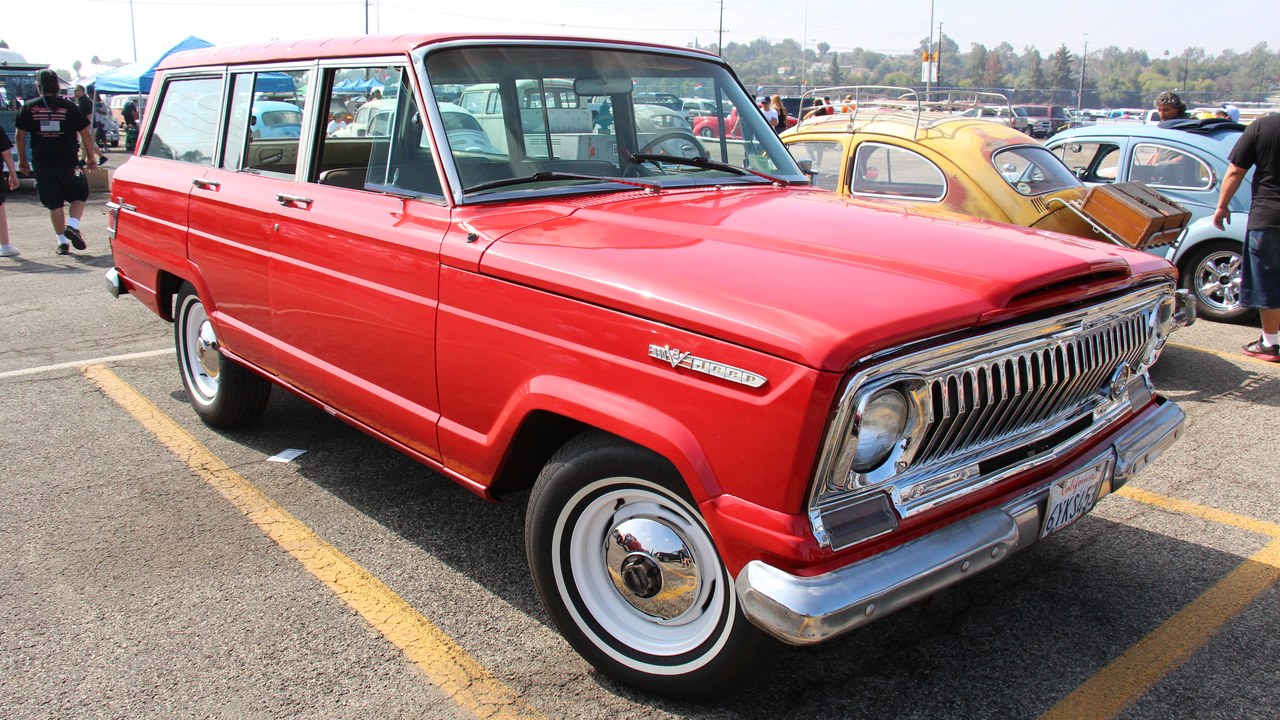
Jeep’s own history page calls the 1966 Super Wagoneer a true luxury 4×4, and the numbers back that up: a 270-hp 327 V8, standard air conditioning and a $5,943 sticker.
That price was almost double the base Wagoneer’s. The recipe of a plush, powerful, well-equipped utility vehicle may look familiar today, but few rivals tried it in the mid-1960s. Check that the air conditioning hardware is complete on any example for sale. Interested buyers should also expect parts for the specific luxury trim to be harder to find than for the plain Wagoneer.
4. Oldsmobile Toronado: Front-Drive Big Block
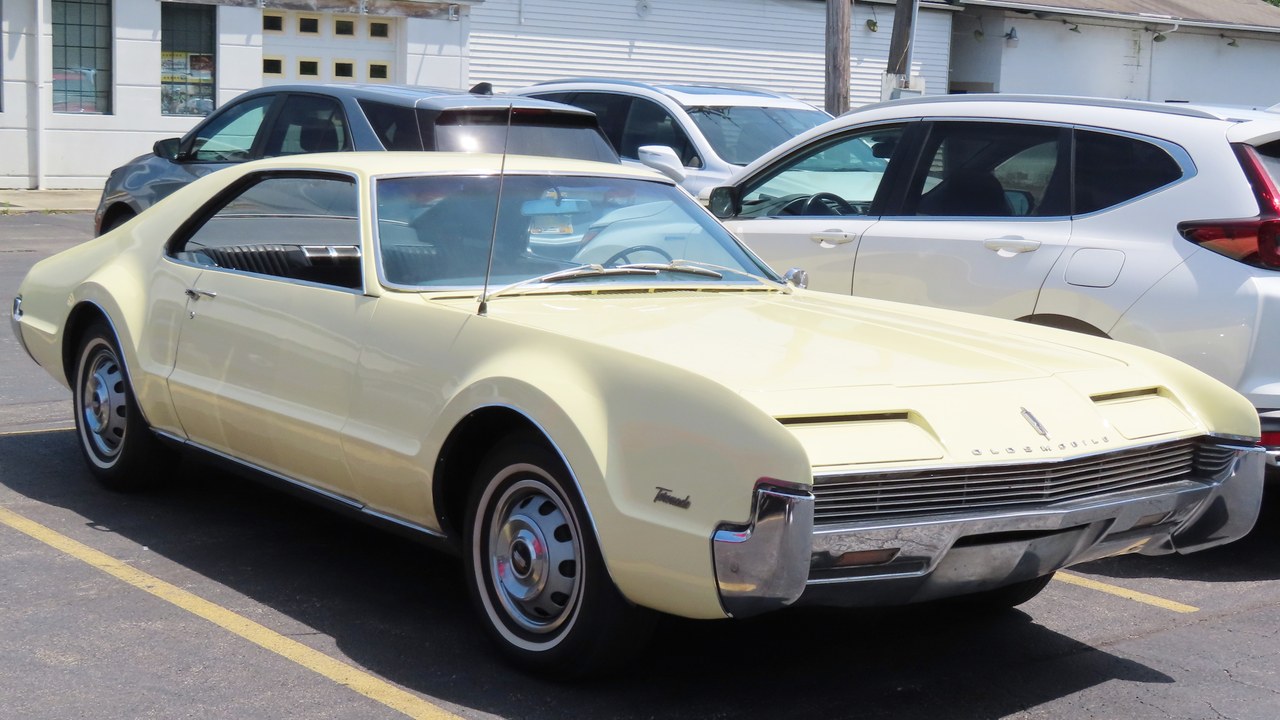
Oldsmobile’s 1966 Toronado sent a 385-hp 425 V8 through the front wheels, an unusual layout for a car that large, and Motor Trend named it its 1966 Car of the Year, as Hagerty’s design history recounts.
The unusual driveline is the car’s defining trait. Prospective owners should ask for service records covering the front-drive transmission and drive components, since specialist knowledge helps when something needs attention. Its place in automotive history rests on that combination of size, power and an award that confirmed the engineering was taken seriously.
5. Toyota Corolla: Japan’s Everyday Starter
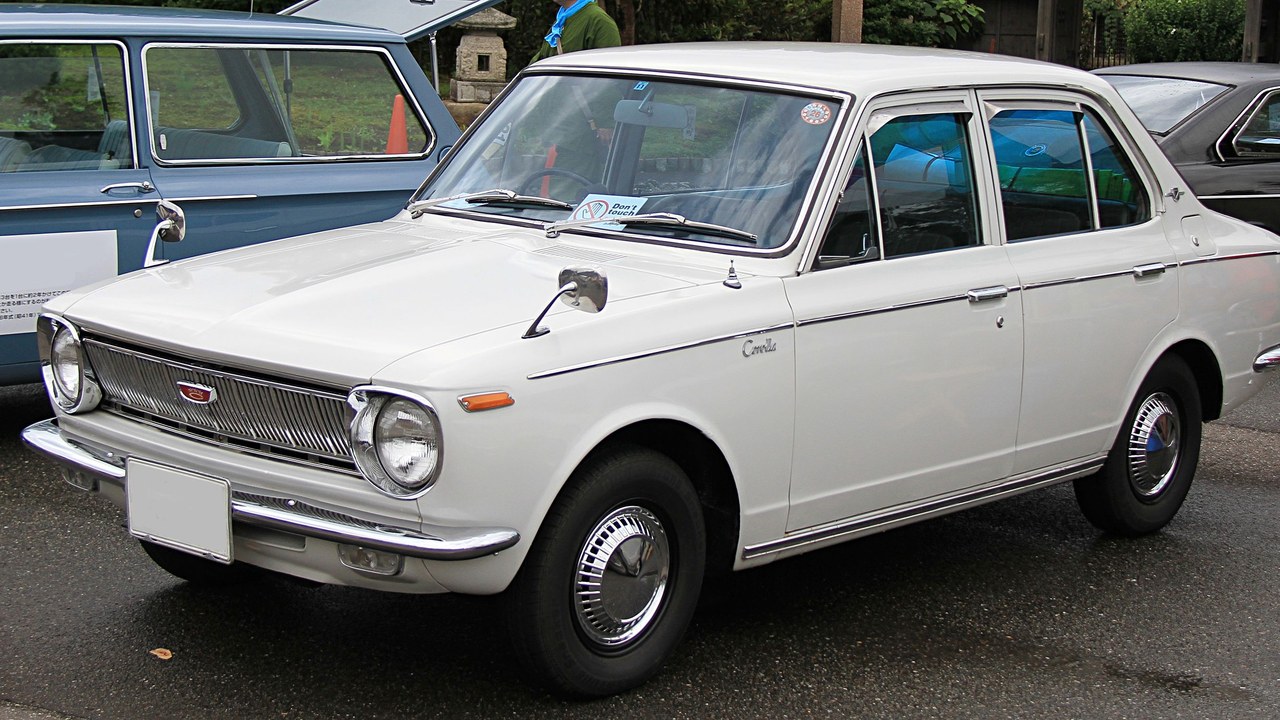
The first Corolla debuted in Japan in November 1966 with a 59-hp 1.1-liter engine and disc brakes, as Motor1’s anniversary report notes. Exports to the United States began in the summer of 1968 at $1,668.
Modest output and low pricing defined the formula, yet front disc brakes were a noteworthy feature for the era. Nothing about the first car hinted at the sales record the nameplate would later build. A test drive of a surviving example is a useful reminder of how basic and light the earliest economy cars were compared with today’s.
6. Lamborghini Miura: The Fastest Car
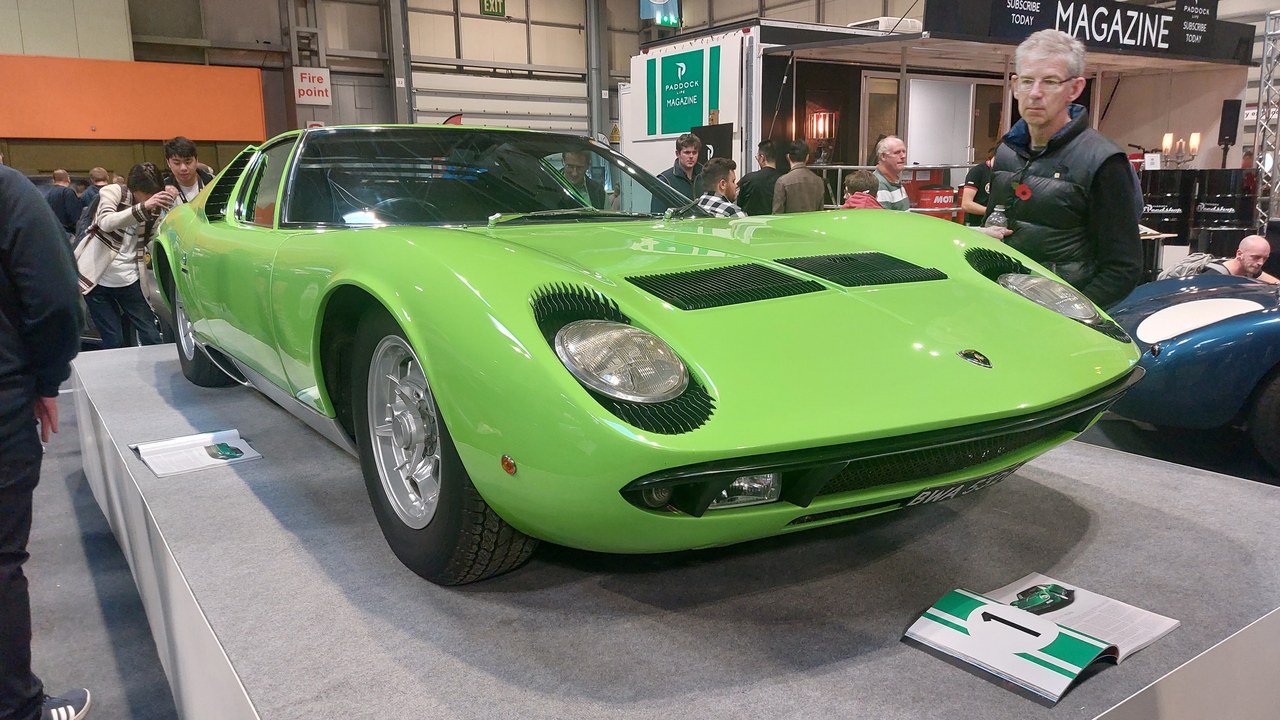
The Miura was presented at the Geneva Motor Show in March 1966, and Lamborghini’s own history page says it was billed as ‘The fastest car in the world’.
That claim was bold for a young manufacturer, and it helped put the Miura at the center of the supercar story. Real examples are rare and costly to maintain, so provenance and a specialist inspection matter more than any asking price. Sellers of genuine cars tend to document their history carefully, so asking for that paperwork is simple and sensible.
7. Alfa Romeo Spider Duetto: The Graduate’s Roadster
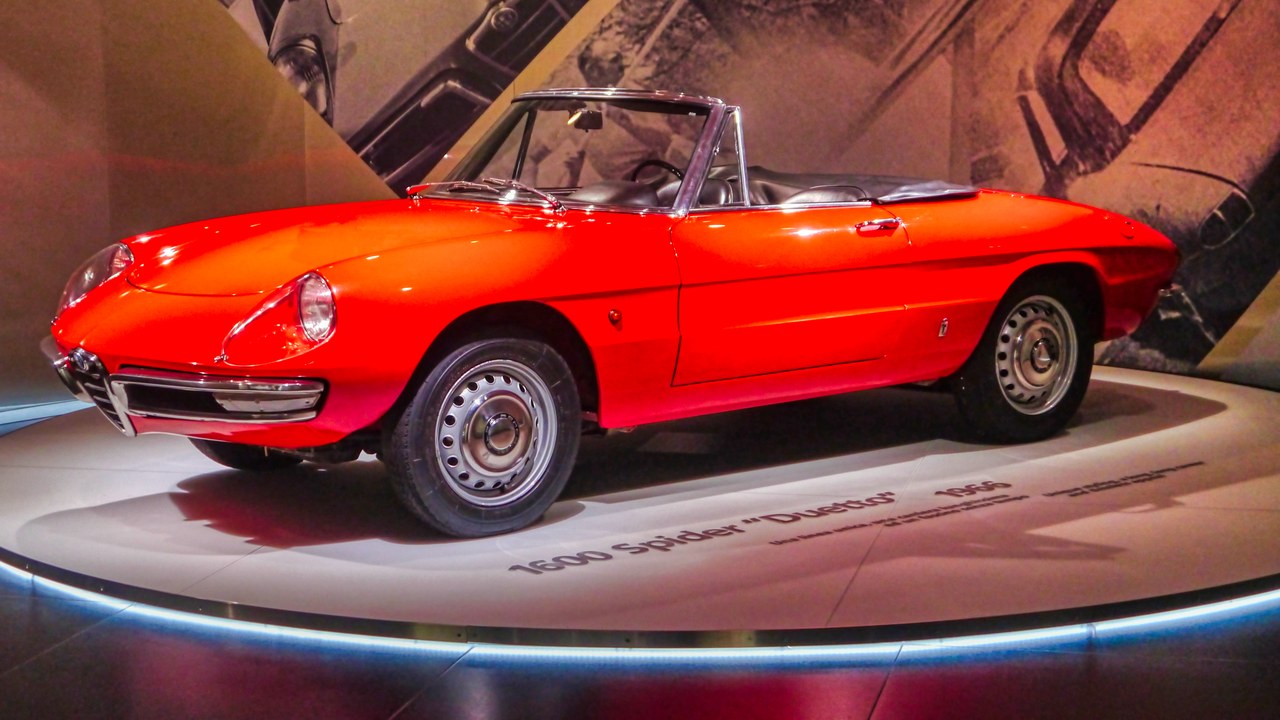
The Alfa Romeo Spider Duetto was shown at the 1966 Geneva show with a 109-hp 1.6-liter twin-cam and a five-speed manual, and it was the red Spider Dustin Hoffman drove in The Graduate, according to Hagerty’s buyer’s guide.
Dual Weber carburetors added to the character. Anyone considering one should use a buyer’s guide, test-drive for smooth carburetor behavior and inspect carefully for corrosion, a common concern on older Italian cars. Fans of classic film often seek out the Duetto for that screen connection alone, which is a charming reason to appreciate it.
8. Chevrolet Camaro: Pace Car Debut
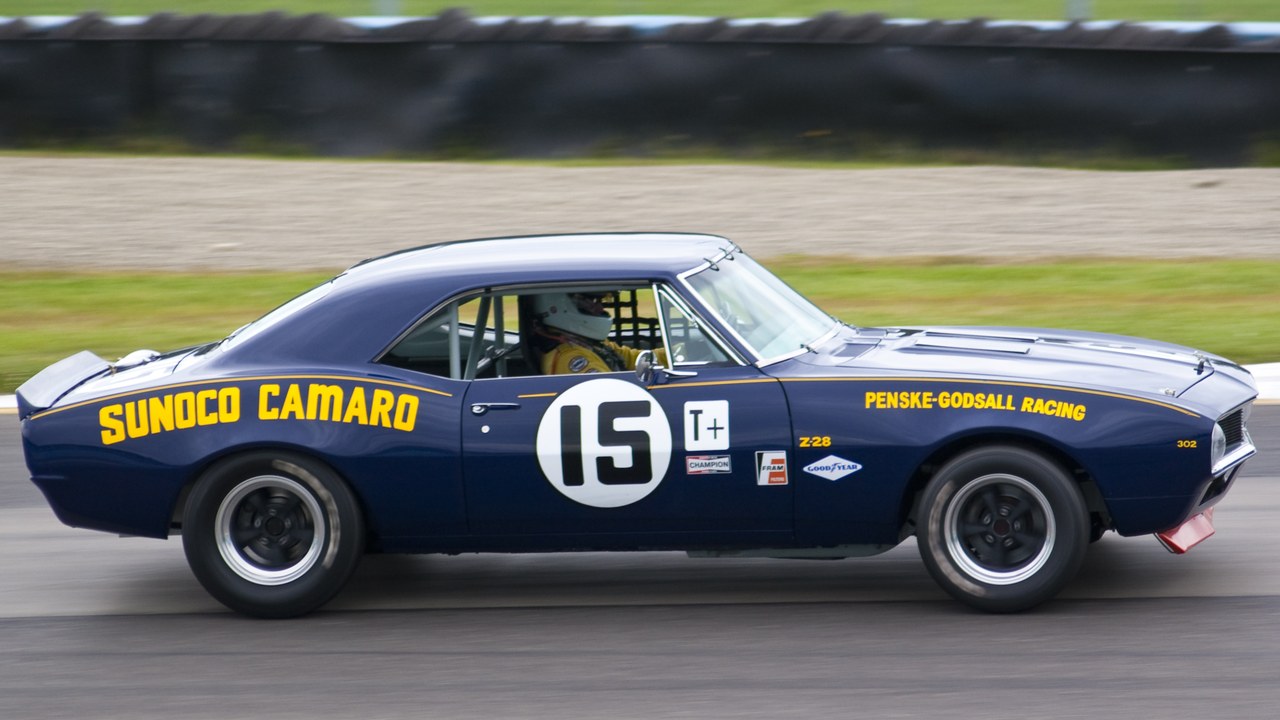
Camaro production began September 29, 1966, and a 1967 RS/SS 396 convertible paced the Indianapolis 500, per Wikipedia’s first-generation entry.
Technically a 1967 model, the car arrived in showrooms just before the year ended. Collectors chasing the pace-car association should verify any claimed tribute or original-equipment details through documentation rather than seller descriptions. Anyone shopping for a convertible from this era should also check the top mechanism, the frame and the condition of the interior.
9. Volvo P1800S: Three Million Miles

Irv Gordon bought his Volvo P1800S in June 1966 and had driven it 3,260,257 miles by October 2018, a month before his death, according to Wikipedia’s Irv Gordon article.
Few cars of any age come close to that figure. It stands as proof of what regular maintenance and careful driving can achieve, though no single story guarantees how another well-kept older car will hold up. It is a fitting reminder that the Volvo’s reputation for durability was built one mile at a time over decades.
10. 1966 Batmobile: Million-Dollar Crime Fighter
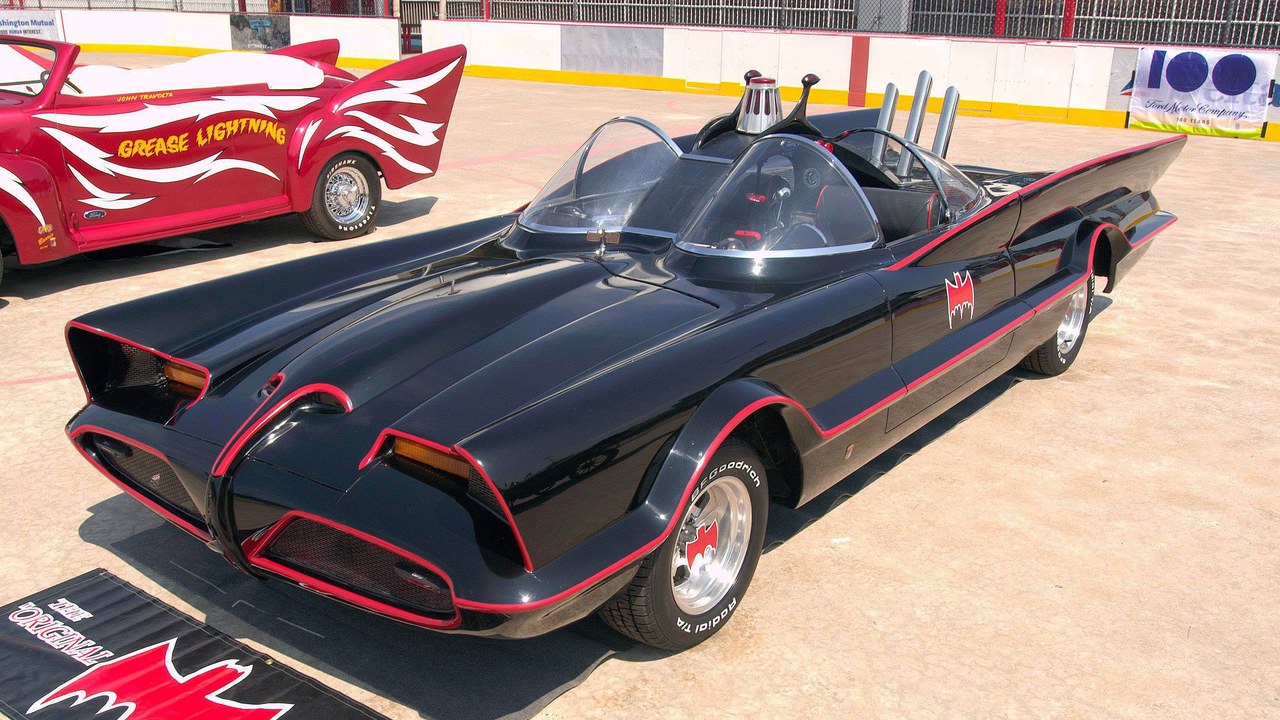
The Batmobile from the 1966 Batman film began as a 1955 Lincoln Futura concept car and sold in 2013 for $4,620,000, as 24/7 Wall St.’s ranking lists.
The sale shows how much a screen connection can add to a one-off vehicle. Replicas are far more attainable, but buyers should be clear on whether a car is original or a recreation. Fans of the television show can still appreciate the design, since the concept-car origins are plain to see in its look.
11. Green Hornet Black Beauty: Rockets Behind the Grille
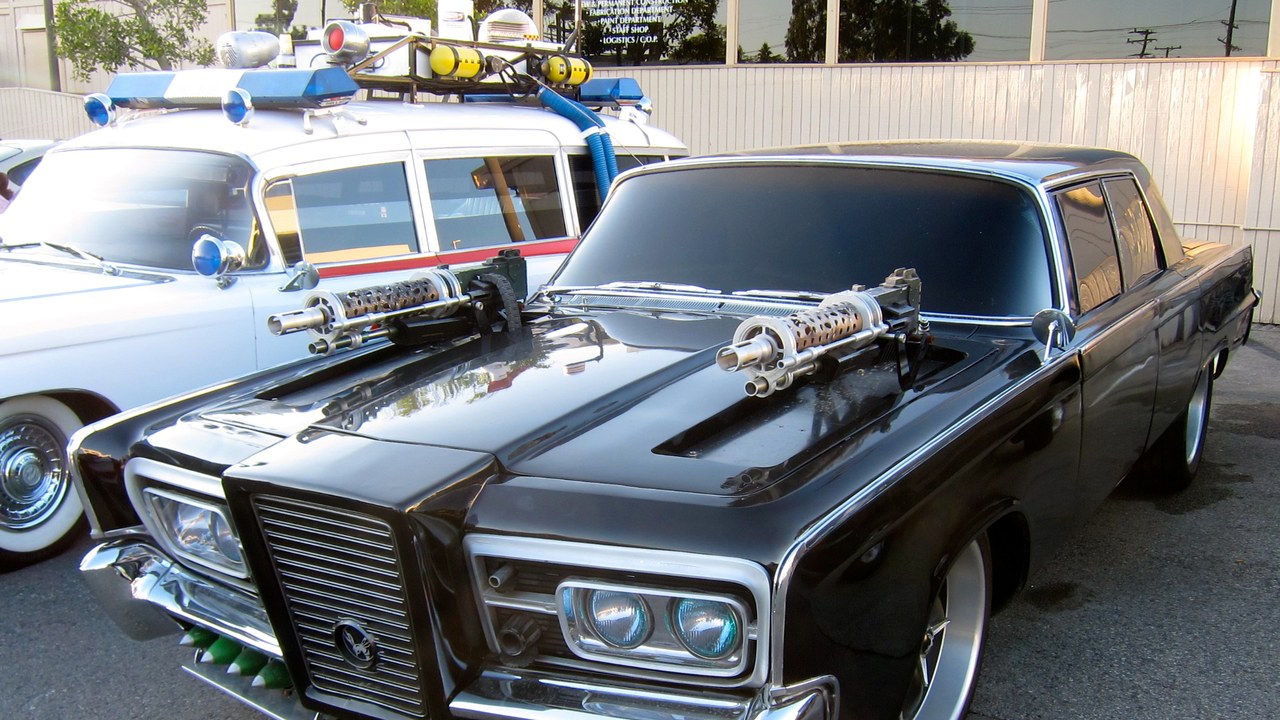
Black Beauty from The Green Hornet was built on a 1966 Imperial Crown, just under 19 feet long, with a gas-emitting grille gun flanked by rocket launchers, according to RM Sotheby’s lot description. The show ran only one season.
A short-lived series left a lasting car. The size alone makes it a presence, and anyone drawn to a screen-car tribute should expect a big, heavy project with specialized parts. The car remains a favorite at shows precisely because it looks like nothing else that ever left a studio lot.
12. Ford Thunderbird Town Landau: Landau Leads the Lineup
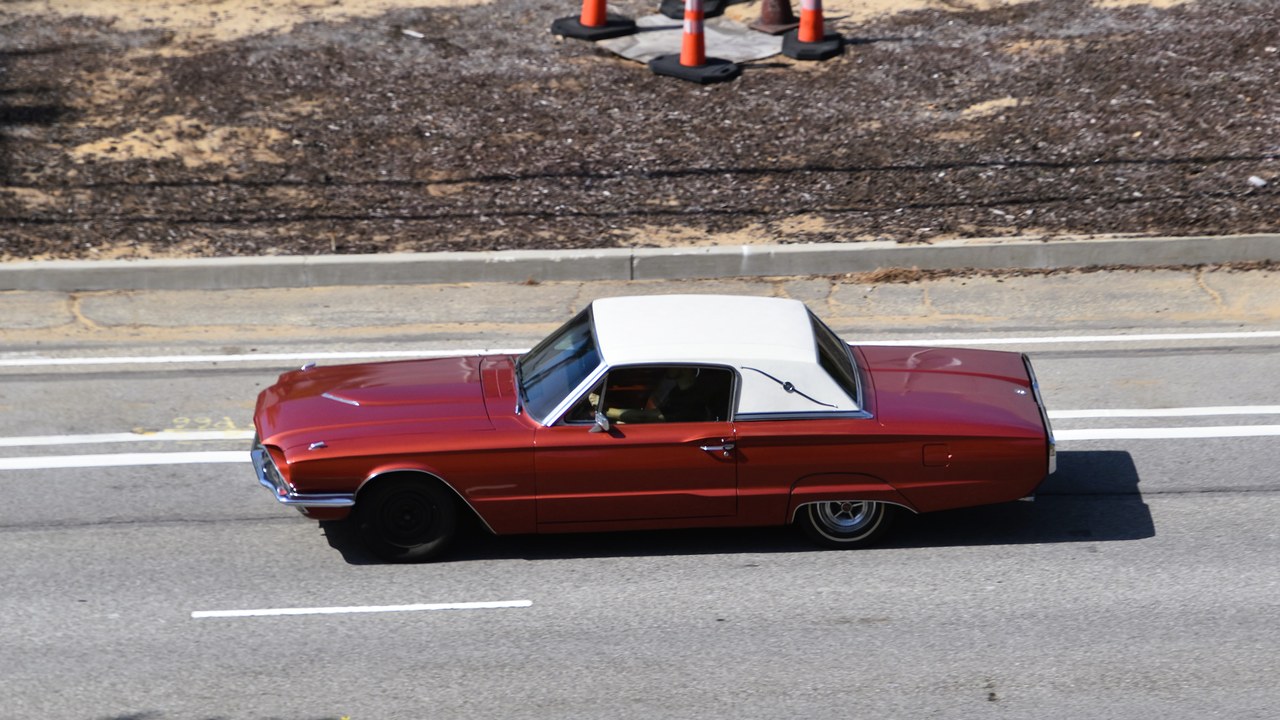
In 1966 the Thunderbird Town Landau outsold all other T-Birds combined, while the one-year Town Hardtop sold about 15,000, per Old Motors’ model-year review.
Buyers evidently preferred the formal roofline. Because the Town Hardtop lasted one year only, the model is a quirk worth asking about, and condition of trim pieces is worth checking on any example. Shoppers curious about these big personal luxury cars should look for solid bodywork and complete trim before worrying about anything else.
Tech news in one quick read: Subscribe to TLDR →
We may earn a commission if you sign up.
More from Morning Overview
- Arizona’s governor declared a statewide emergency after Flagstaff logged its wettest Nov. 1 on record
- A $1 billion gas plant planned for Superior, Wisconsin, has been abandoned
- A Chevy dealer wants $696,445 for a Corvette ZR1X after adding a $400,000 markup
- Zero Motorcycles unveiled an electric motorcycle targeted at under $8K and a street-legal dirt bike at EICMA
