
Doors that rise instead of swing out have been a hallmark of dramatic cars for seven decades. Some solved an engineering problem, others simply won attention in a showroom or a parking lot. Here are ten gullwing, scissor and butterfly-door cars, from a 1950s coupe to a modern electric SUV.
The day in tech, in one email: TLDR is the daily newsletter with links and TLDRs of the most interesting stories in startups, tech and programming.
We may earn a commission if you sign up.
1. Mercedes-Benz 300 SL Gullwing: The Door Sill Problem
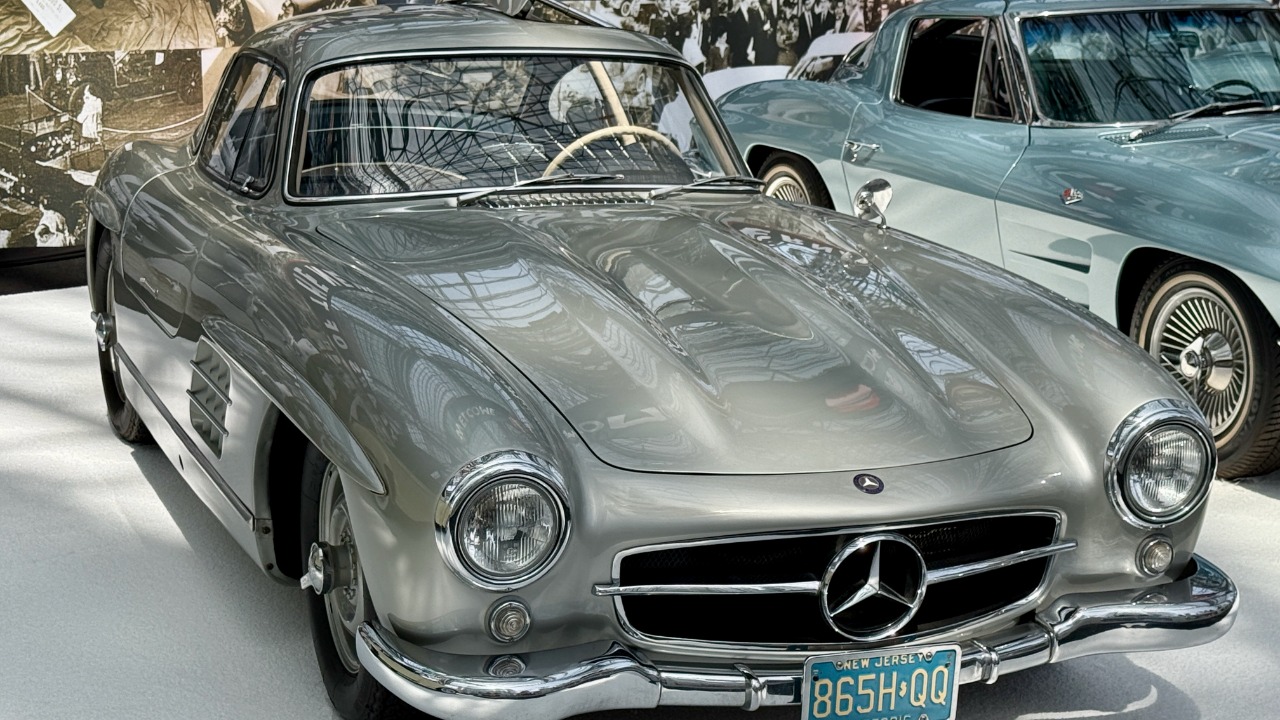
The 1954-57 coupe made 240 hp and listed at $6,820 in the United States, according to the Mercedes W198 entry. Its gullwing doors were a packaging answer rather than a styling stunt, since the tubular frame left a sill too high for conventional doors.
That engineering compromise became the defining feature of the model. Getting in meant stepping over a wide sill and ducking under the raised panel, a trade-off early owners accepted for the sake of a stiff, light chassis and a shape nobody could mistake. The $6,820 sticker and 240 hp figure place it firmly in the early postwar sports-car era, and the design still anchors the history of gullwing doors.
2. DeLorean DMC-12: A Steel Star of the Eighties
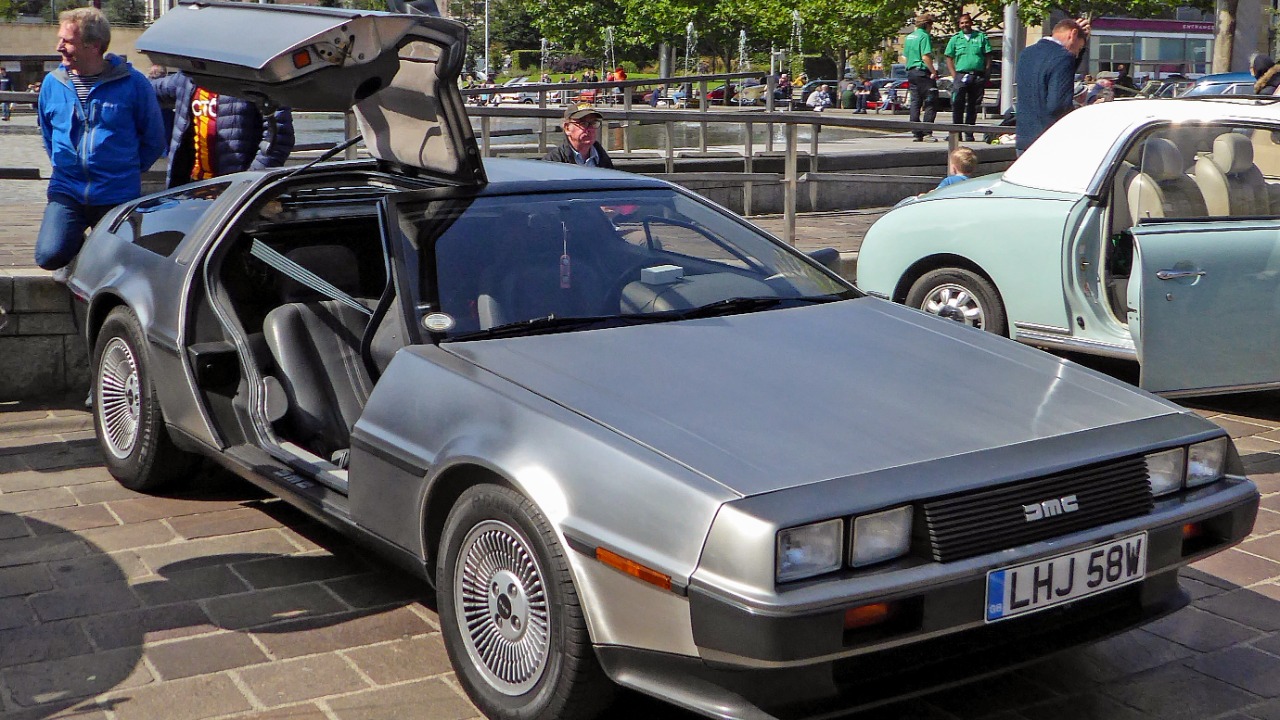
Production ran from January 1981 to December 1982, and the stainless-steel gullwing coupe reached buyers with a catch. Per the DMC DeLorean article, U.S. cars were derated to 130 hp, while the MSRP in 1981 stood at $25,000.
Performance never matched the looks. The company went into receivership in February 1982, so the DeLorean survives as a short-lived oddity whose fame arrived later, largely through film, rather than through anything it managed to achieve on the road. Its short window, roughly two years of production, is why the car is discussed more as a story than as a benchmark among the cars here.
3. Bricklin SV-1: The Hydraulic Wedge
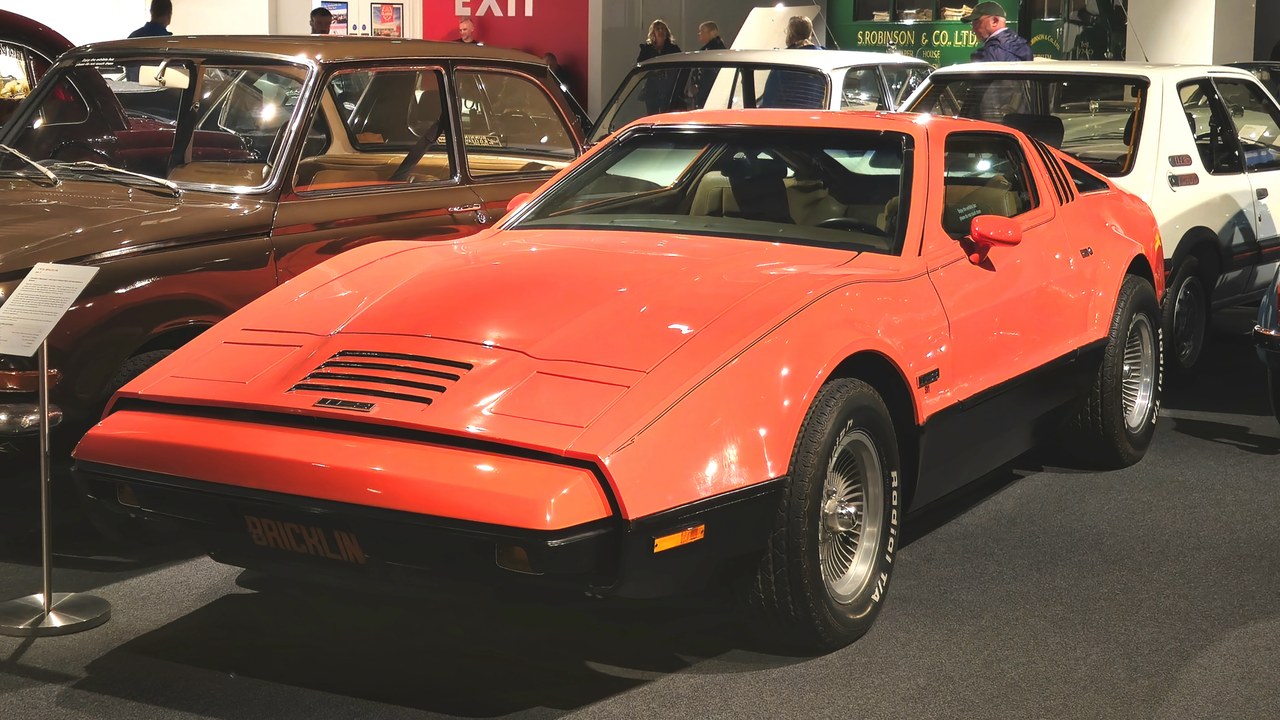
Fewer than 3,000 gullwing Bricklins were built in 1974-76, each priced at about $7,900, and Hagerty’s Bricklin profile notes that every door weighs 90 pounds. Hydraulics were needed to lift panels that heavy.
The SV-1 was pitched as a safety-minded sports car, yet the doors defined its reputation. Their weight and complexity made them a talking point as much as a feature, and the short production run keeps the Bricklin a rare sight today for anyone who goes looking. At about $7,900, it was priced as an attainable sports car, which makes the 90-pound hydraulic doors an unusually heavy-duty feature for the money.
4. Lamborghini Countach: The Door That Started It
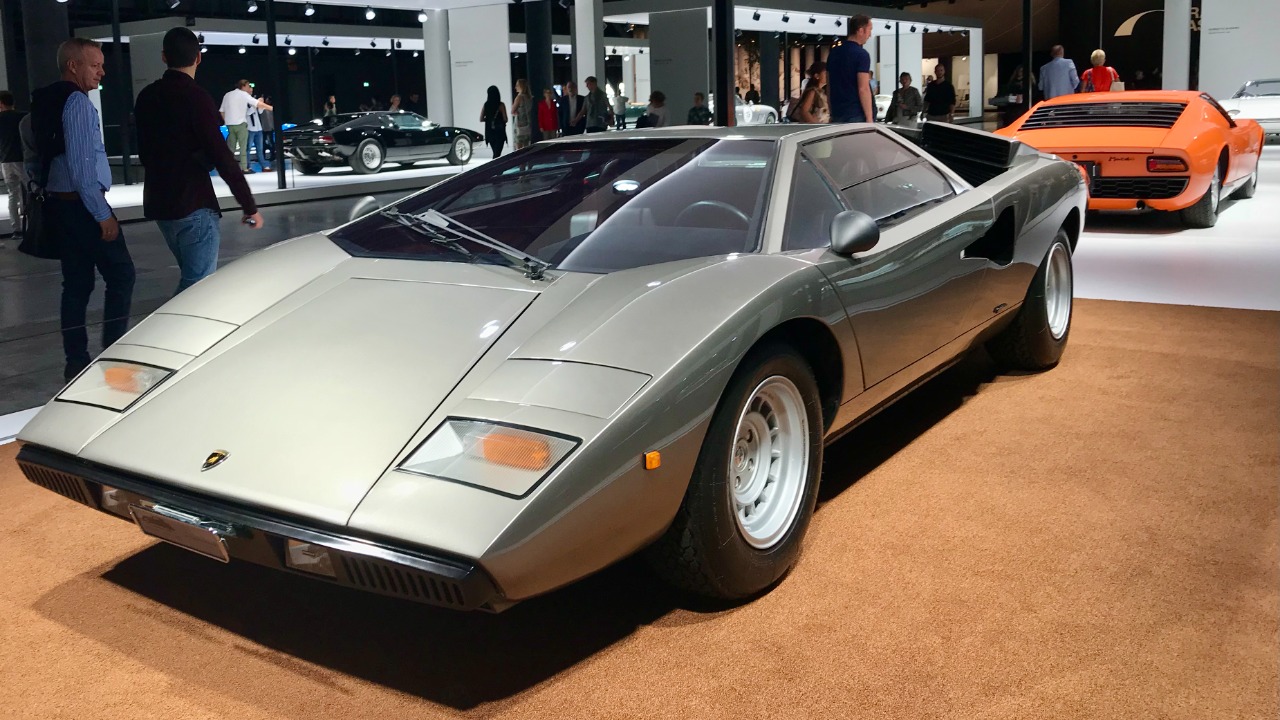
Marcello Gandini’s Countach, built from 1974 to 1990, was the first production vehicle with vertically opening scissor doors, according to Hagerty. That detail became visual shorthand for the Lamborghini brand.
Few later supercars resist the idea. The hinge arrangement lifts the door up and forward, which suits a wide, low body, and it set a template that Lamborghini flagships have echoed in the decades since, long after the original car left production. The 1974-1990 build span also shows how long the design stayed current, with the doors remaining central to its identity throughout the run.
5. Lamborghini Aventador: Raging Bull Revival
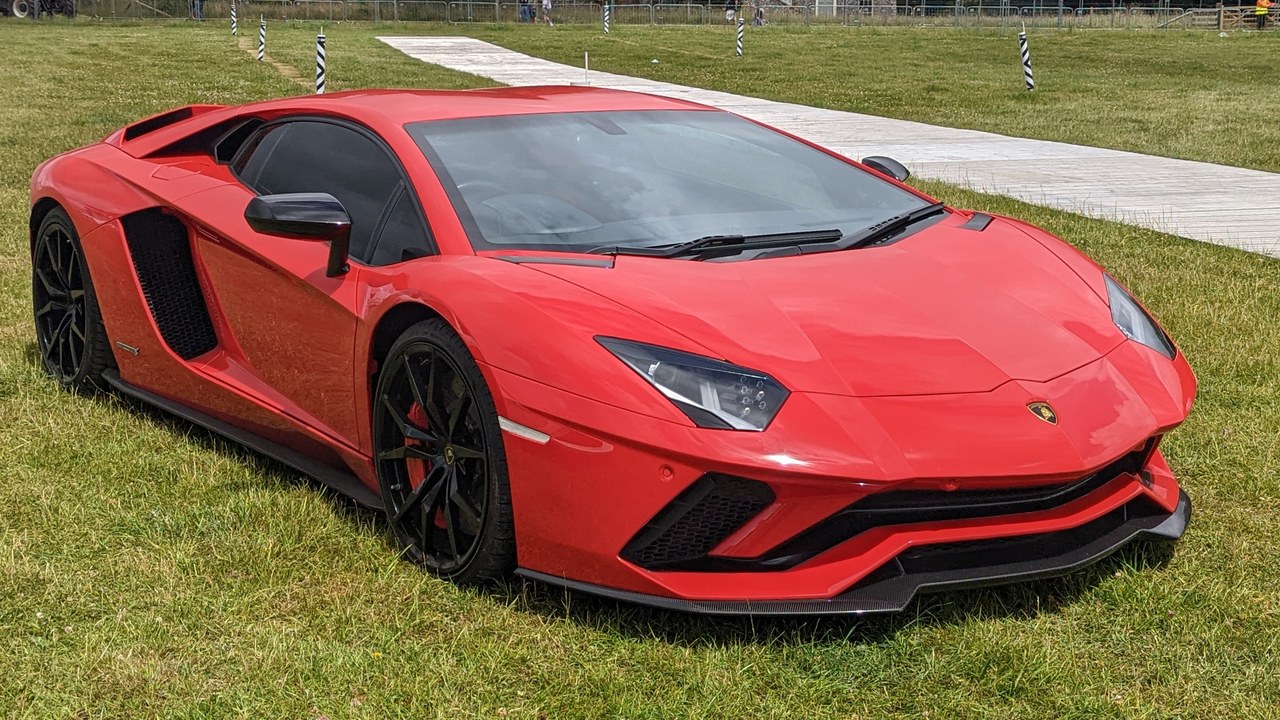
The scissor-door Aventador ran from February 2011 to 2022, totaling 11,831 units, and the original LP 700-4 version produced 690 hp, based on its Wikipedia entry.
That long production life makes it a far more common sight than the Countach. Lamborghini kept the vertical doors as a brand signature across the whole model cycle, so the layout carried straight through more than a decade of sales without a redesign. The 11,831 units built over roughly eleven years give collectors a wide supply, while the 690 hp output kept it near the top of its class.
6. Mercedes-Benz SLS AMG: Modern Gullwing Muscle
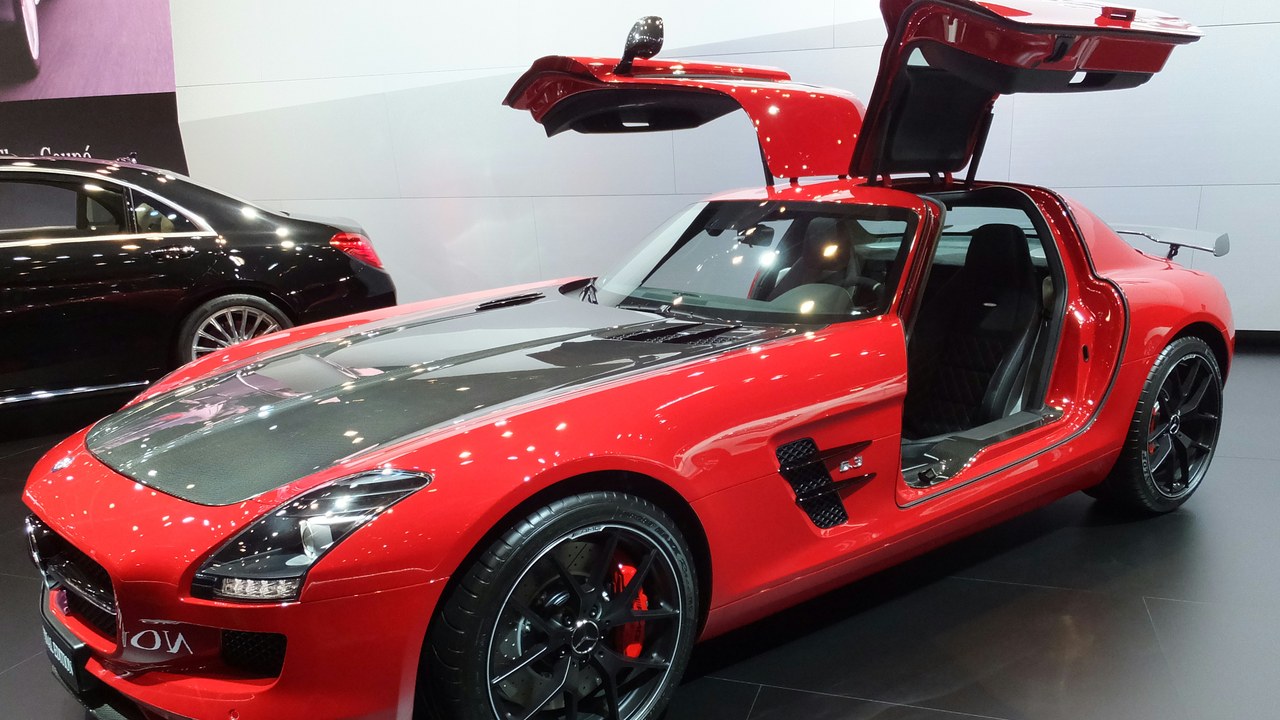
The gullwing SLS made 563 hp, production ended in early 2014, and 2,734 were sold in the U.S., based on the SLS AMG article.
The car deliberately revived the doors of the 300 SL, linking a modern AMG coupe to the 1950s original that opens this list. Buyers got an upward-opening entry that recalled the earlier car, with a far more modern structure and engine around it. With 563 hp, it also showed that gullwing doors could suit a fast modern car, and the 2,734 U.S. sales indicate a real following rather than a niche stunt.
7. McLaren F1: The Record-Setting Icon
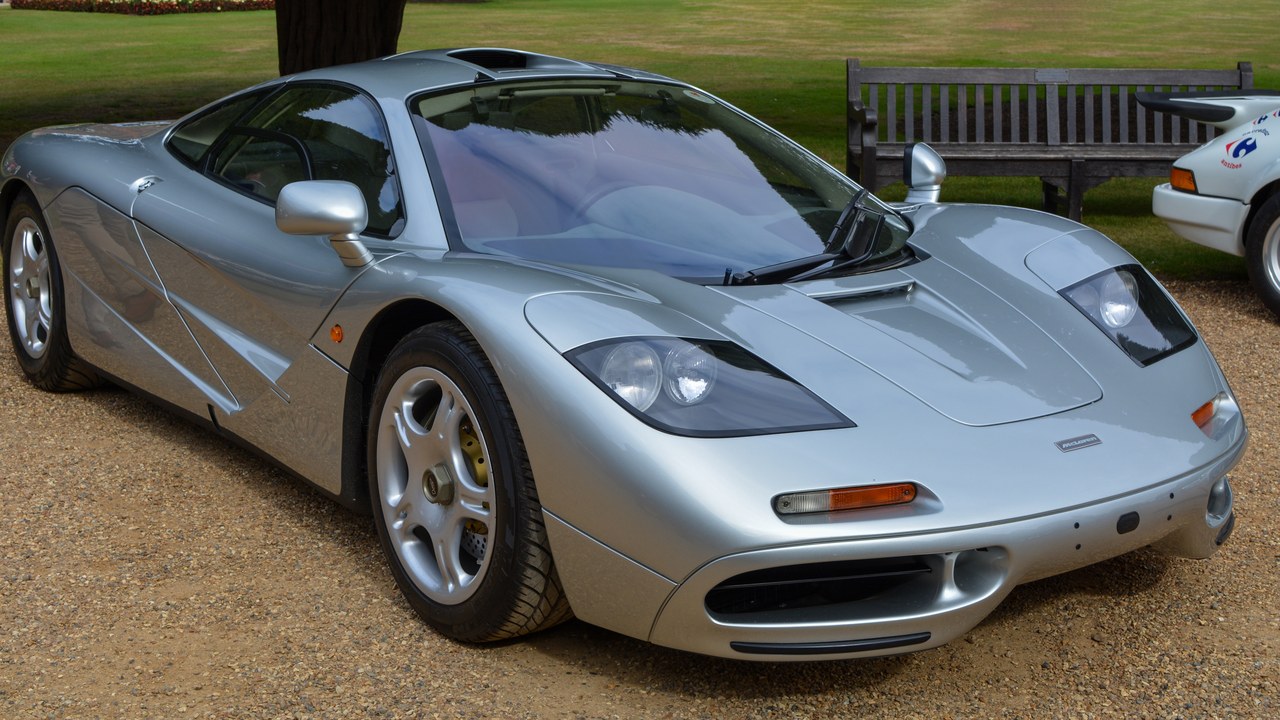
Only 106 cars were manufactured between 1992 and 1998, and an XP5 prototype set a 240.1-mph production-car record on March 31, 1998.
The design is remembered for that speed record and its scarcity, and the upward-opening doors are part of its look. The small build number and the record together explain why the F1 holds such a prominent place in supercar history. The 106-car total remains the number most often cited when owners and collectors talk about the model, and the 240.1-mph run is the figure that defines it.
8. McLaren 720S: Dihedral Daily Supercar
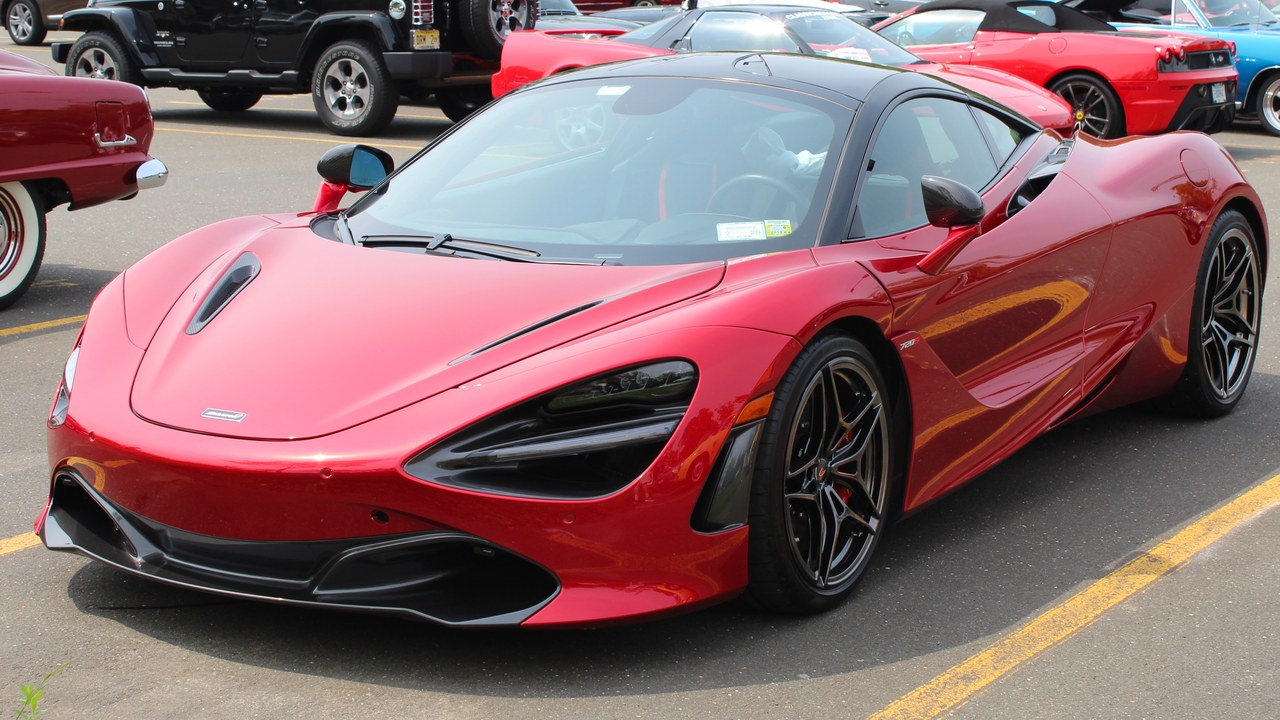
The 720S makes 710 hp, reaches 60 mph in 2.8 seconds and had an MSRP of $288,845, according to Kelley Blue Book’s road test. The same review gives a top speed of 212 mph.
The doors open upward and forward in a dihedral arc, which Kelley Blue Book calls scissor-style, so the label depends on the source. Either way, they are a signature of the modern McLaren range rather than an afterthought. At $288,845, it sat in rarefied territory, but the 2.8-second sprint to 60 mph and the 212 mph top speed show what that money bought.
9. Mercedes-Benz SLR McLaren: Silver Arrow Reborn
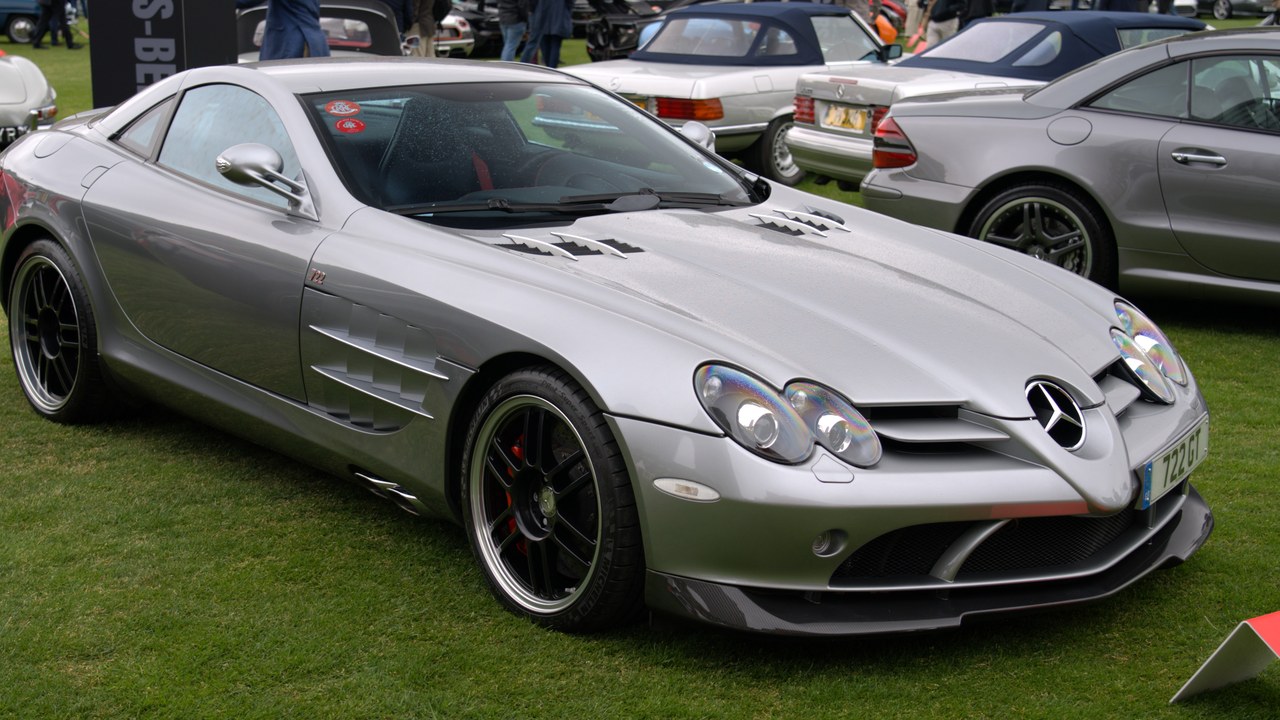
Sold from 2003 to 2010, the SLR McLaren had butterfly doors and 617 hp, with 2,157 cars produced and a top speed of 207 mph, according to Wikipedia.
The doors swing out and up from a hinge near the windshield, giving the car a dramatic entrance. Combined with the long hood, the result was a grand tourer built with McLaren that stayed in low-volume production for seven years. Production of 2,157 cars means it is not unobtainable, though at 617 hp and 207 mph it was among the quickest road cars of its era.
10. Tesla Model X: Falcon Wings for Families

Tesla announced it would wind down Model S and X production in the second quarter of 2026, as reported by Kelley Blue Book. The SUV’s rear falcon-wing doors were introduced in 2015.
Those double-hinged panels were among the most ambitious door designs on a mass-market vehicle, and the Model X closes the list as an example of how complicated they could be. With production winding down, existing cars become the way to see them in traffic. Wikipedia’s gull-wing door entry also lists the Model X as discontinued in 2026, so the used market is the place to find that unusual entry.
The day in tech, in one email: Get TLDR →
We may earn a commission if you sign up.
More from Morning Overview
- The NSA says three phone features should be off whenever you aren’t using them
- Hurricane Hunter radar shows four warning signs that a tropical cyclone is about to strengthen, a University of Miami study found
- Tropical Storm Rachel is dumping up to 12 inches on four Mexican states on its way to major hurricane strength
- The FTC says Lens.com doubled the price shoppers saw in Google ads
