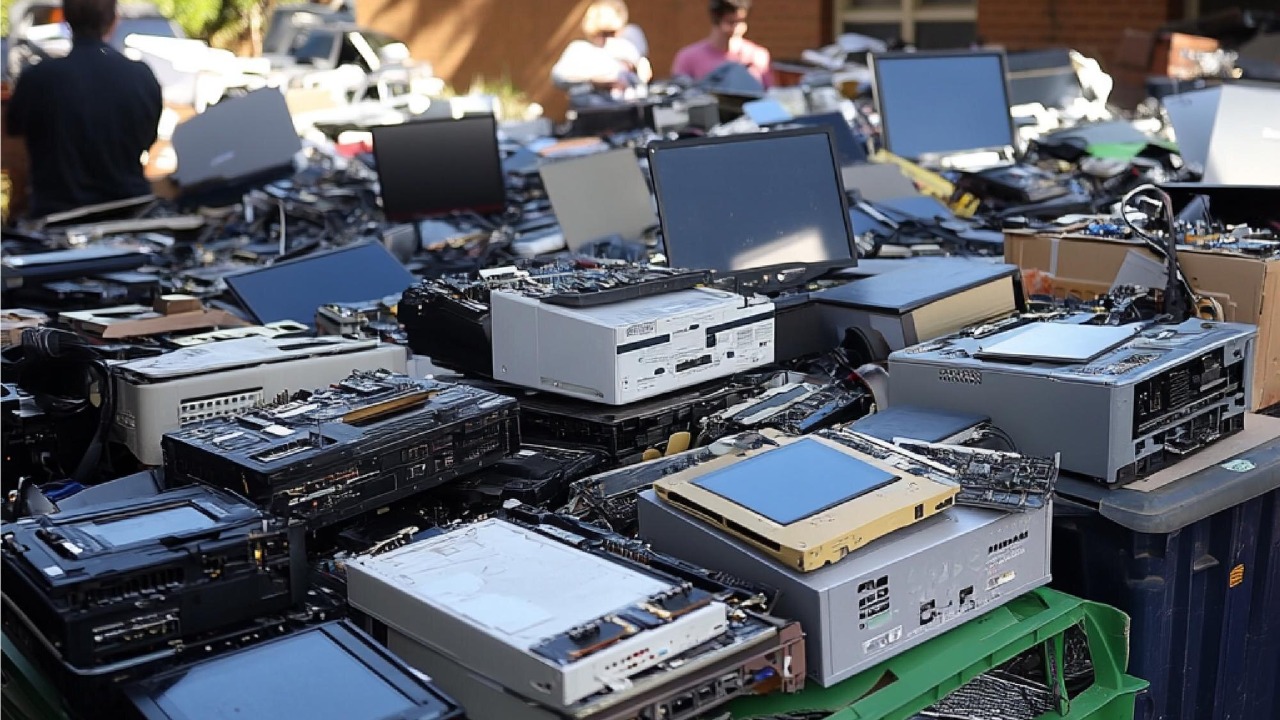

Old laptops and printers tend to linger in closets long after they stop working, even as new devices arrive and the pile of e-waste grows. The real shortcut is not a mysterious app or a paid service, but a network of free programs that will take that gear off your hands quickly if you know where to look. I will walk through how to turn that “graveyard” shelf into a same-day drop-off plan that protects your data and keeps toxic components out of the landfill.
Why free tech recycling is the real “secret trick”
The fastest way to clear out obsolete tech is to treat recycling as part of the upgrade, not an afterthought. When I look at the current options, the real “Secret Trick” behind Free Tech Disposal is that many major retailers and manufacturers already let you Recycle Printers and Laptops Instantly as a standard service, not a special promotion, so the friction is mostly psychological rather than logistical. Reporting that talks bluntly about how we all have that “Look, we have all got” junk drawer of dead gadgets underscores how normal this clutter has become, which is exactly why these programs have scaled up to handle it.
There is also a broader environmental and economic logic behind these offers. Guidance that urges people to Stop Hoarding Old Computers and Printers and explains How to Recycle Electronics for Free frames responsible disposal as the bare minimum for the planet, not a niche hobby. When I factor in that Unverified based on available sources, I see these free programs as a way to plug individual households into a larger circular system that recovers metals, plastics, and components instead of letting them leak into soil and water.
Big-box drop-off: Best Buy, Office Depot, Staples and Micro Center
For most people, the quickest hack is to treat a store run as an e-waste run. Best Buy generally accepts up to three household items per household per day to be recycled for free, including desktop computers, laptops, and printers, and that policy turns a routine errand into an instant clean-out of your home office. You can confirm the details of the Best Buy policy through current guidance on where to recycle your old PC, laptop, and printer for free, and the company’s own site for Best Buy reinforces that recycling is now part of its core customer offering. When I combine that with advice that explicitly highlights Best Buy as a place where you can be rid of old gear, it becomes clear that the chain is positioning itself as a default destination for unwanted tech.
Office-focused retailers have quietly built similar pipelines. Office Depot and OfficeMax, which merged into a single company, run a tech trade-in program both in-store and online, so you can bring in laptops or printers or ship them, and in some cases receive credit toward future purchases, a setup described in detail in guidance that walks through how Office Depot handles recycling and trade-ins. That same reporting notes that many printers and other devices can be recycled at Staples, which gives you another walk-in option if you live closer to that chain, and the underlying link on Office Depot spells out how the merged retailer fits into that ecosystem. For more specialized tech stores, At Micro Center there is a dedicated e-waste recycling program that lists Electronics We Recycle, from laptops to components, and the company’s own description of Micro Center recycling makes clear that customers are encouraged to drop off e-waste as part of a normal store visit.
Brand programs: Apple, HP and Amazon Trade-In
Device makers have their own reasons to keep old hardware in a controlled loop, and that works in your favor. Apple lets you recycle old Apple computers, monitors, and peripherals such as printers for free at an Apple Store, and that policy is spelled out in current guidance that explains how You can bring in those devices without paying a fee. When I read that alongside broader advice on where to recycle your old PC, laptop, and printer for free, it is clear that Apple is using its retail footprint as a collection network, which is especially useful if you are already visiting for a repair or upgrade and can simply add a dead MacBook or printer to the trip.
Printer makers are doing something similar, but with a stronger emphasis on closing the loop on cartridges and plastics. HP describes its Planet Partners program as a consumer recycling system for HP end-of-life equipment and printing supplies, explicitly tying it to a circular economy and warning that unmanaged e-waste is a significant contributor to environmental degradation, a point laid out in HP’s own Planet Partners materials. Before you send an HP printer into that stream, the company’s support documentation instructs you that After removing the cartridges, transferring or cancelling HP accounts, and restoring the factory defaults, you should recycle the HP printer, and that step-by-step is laid out in HP’s After support guide.
On the broader gadget side, With Amazon Trade you can send in Amazon devices like Kindles, Echo smart speakers, and Ring devices, along with some products from other brands, and receive credit or recycling depending on the item, a structure explained in detail in the section on With Amazon Trade. I see that as a hybrid between recycling and resale, since the program is designed to keep Amazon, Kindles, Echo, and Ring hardware in circulation or at least in a controlled recycling stream, while giving you a financial nudge to send devices back instead of tossing them.
Local search, Earth911 and community options
Not every town has a big-box electronics store, but that does not mean you are stuck with a closet full of dead tech. Earth911 is described as a nationwide clearinghouse for recycling programs of all kinds, with an electronics category that functions as an A-to-Z guide to where you can drop off gear, often free of charge, and that role is spelled out in coverage that highlights Earth911. Another report reinforces that you can Use the recycling center search function on Earth911 to find recycling centers near your ZIP code that accept laptops, desktops, and printers, and that specific instruction to Use the ZIP search tool is spelled out in guidance on Use the Earth911 database. When I plug in my own ZIP, I see a mix of municipal drop-off sites, nonprofit refurbishers, and occasional retailer events, which turns a vague intention to “recycle someday” into a specific address and schedule.
Community-focused guides for 2026 also emphasize that you should Resell or Donate Functional Electronics before you recycle, because Functional devices can often find new homes through Platforms like eBay, Craigslist, or local nonprofits, and that hierarchy is laid out in a Story Spark piece on Resell. That same guidance points back to the Best Buy Recycling Program as a catch-all for devices that are no longer usable, explaining that the retailer can recycle a variety of tech, and the full description of that Best Buy Recycling Program appears in the Story Spark overview at Best Buy Recycling. When I combine these local and national tools, the pattern is clear: sell or donate what still works, then lean on structured programs for the rest.
More from Morning Overview