
Muscle-car prices have climbed hard over the past two decades, and the headline auction results make the whole category look out of reach. Plenty of the era’s V8 cars never joined that climb, either because they were built in enormous numbers or because collectors chased a flashier sibling. Here are nine muscle cars that stayed surprisingly affordable.
1. Ford Mustang: Built By The Million

Ford’s pony car has been in continuous production since its April 1964 debut, and the original Mustang generation alone sold in numbers no rival matched. Volume is the whole story here: the ten-millionth car left the line in 2018, so the supply of running, restorable examples remains deep across nearly every model year.
That abundance keeps ordinary V8 coupes from the late 1960s and the fox-body era well below the fastback and Shelby cars that dominate auction coverage. Parts support is equally broad, which lowers the running cost as much as the purchase price.
2. Chevrolet Camaro: The Late-Model V8 Bargain
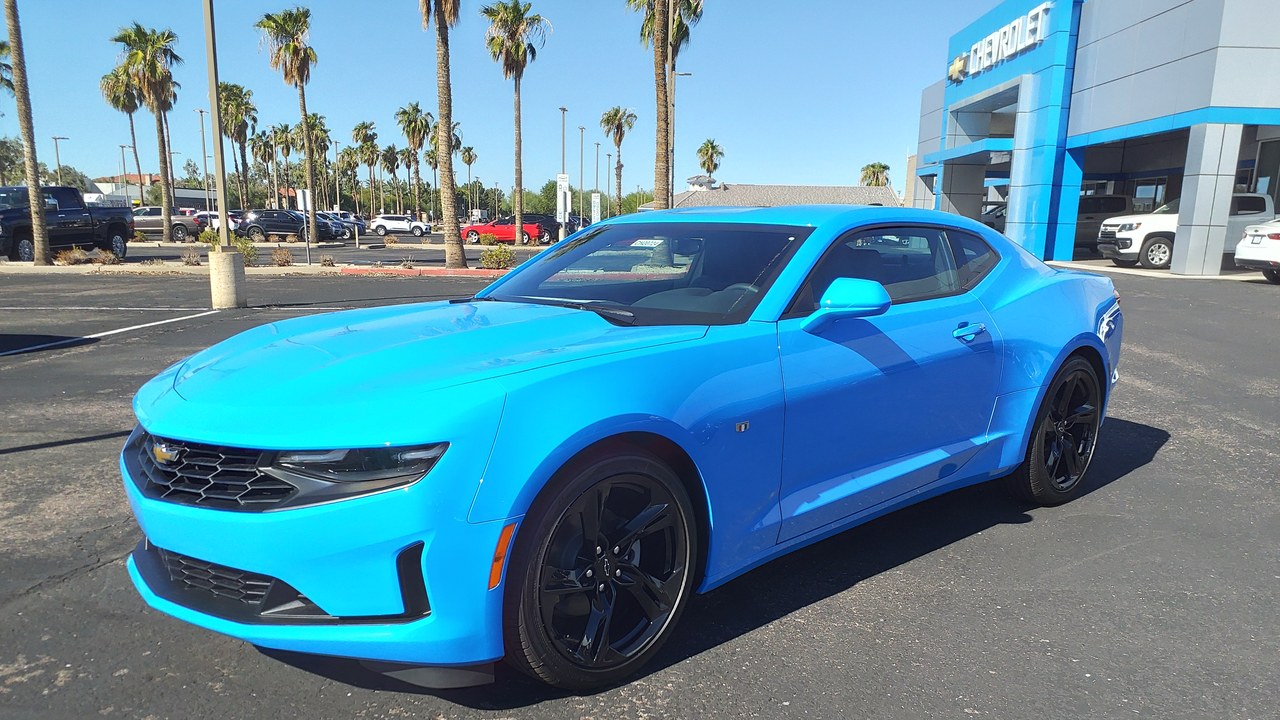
Chevrolet answered the Mustang in 1967, and the Camaro model line ran through six generations before assembly ended in 2024. The fourth generation, built from 1993 to 2002, is the cheap entry point: it carried small-block and later LS1 V8 engines in a car that never earned the collector reverence of a 1969 Z/28.
Depreciation did the rest. Those 1990s cars sat near the bottom of the used market for years, and while values have firmed, the gap between a driver-quality fourth-generation coupe and a first-generation restoration remains enormous.
3. Dodge Challenger: Modern Hemi, Used-Car Money
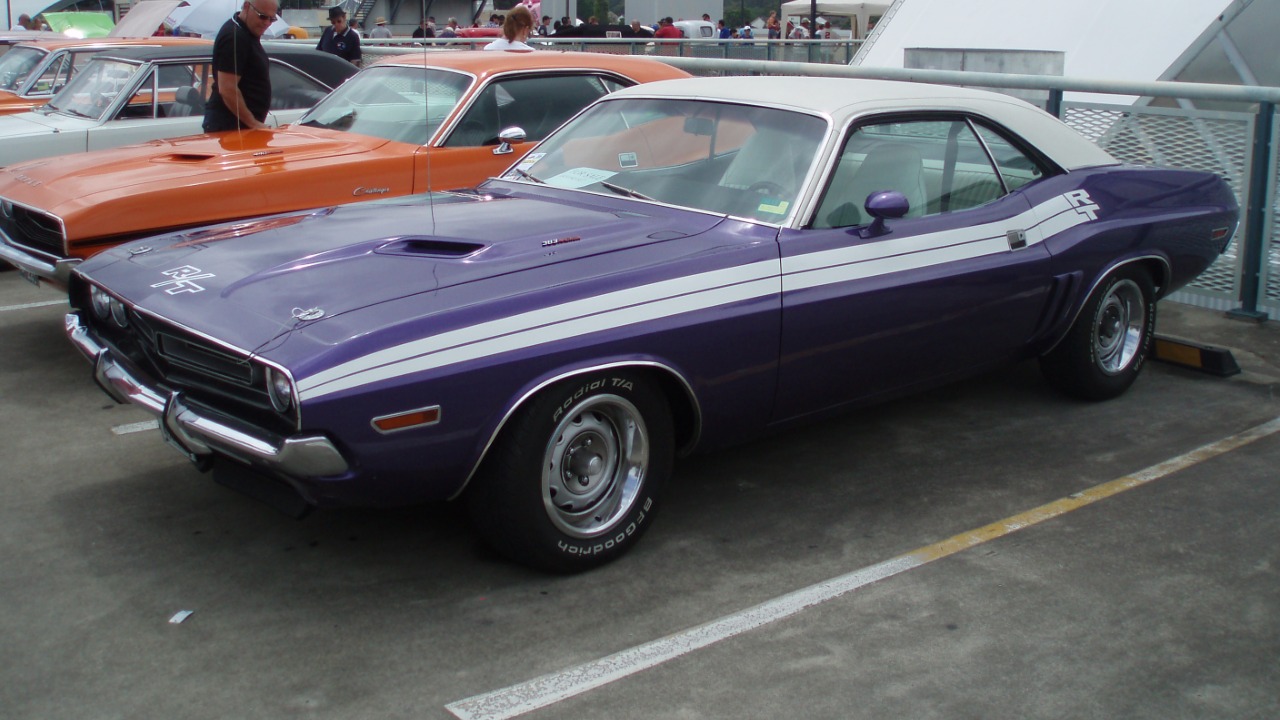
Dodge revived the nameplate in 2008 and kept the third-generation Challenger in production until 2023, an unusually long run that filled the used market with V8 coupes. The 1970 to 1974 originals command restoration money, especially in Hemi form, but the modern cars trade as ordinary depreciating vehicles.
Buyers get the proportions and the eight cylinders without the classic-car maintenance burden, since these are late-model vehicles with airbags, modern brakes and dealer parts availability. The trade-off shows up in running costs, because a heavy V8 coupe is expensive to insure and to fuel.
4. Pontiac GTO: The Overlooked Revival
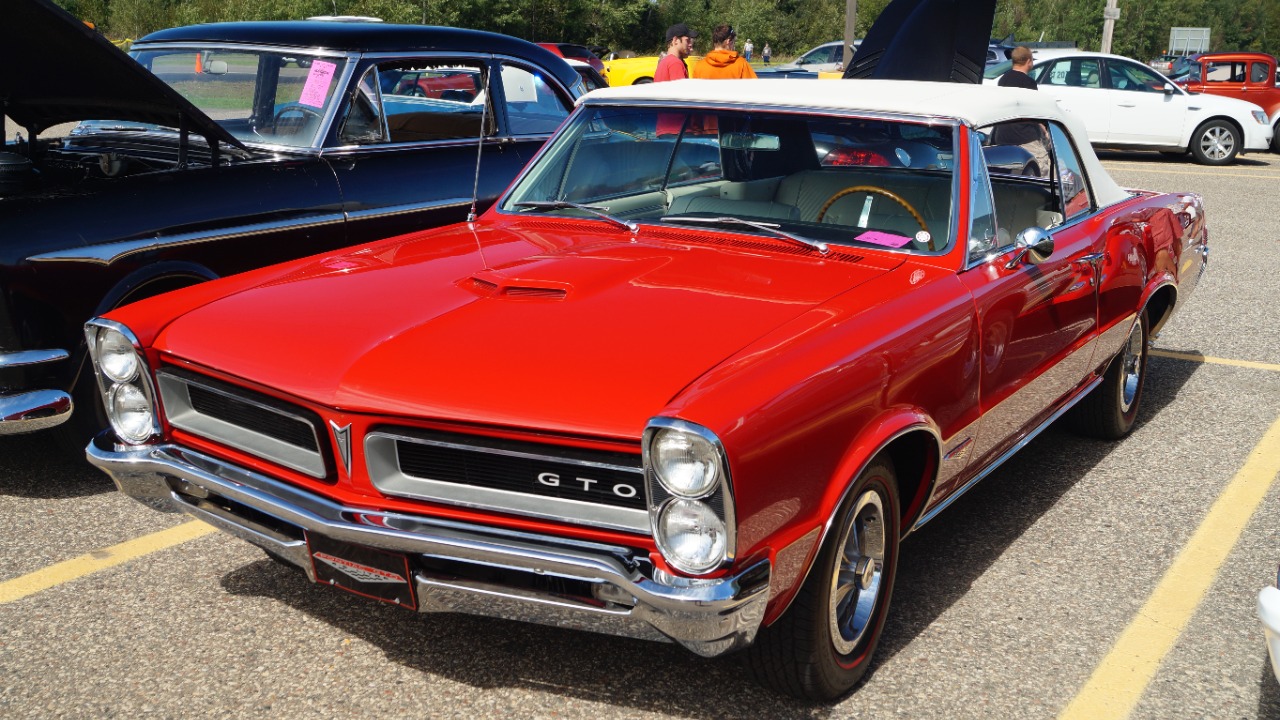
The GTO badge arrived in 1964 as an option package on the Pontiac Tempest and is widely credited with opening the muscle-car era, which is why the 1960s cars sit at the expensive end of the market. The 2004 GTO revival, built on Holden’s Australian Monaro and sold for three model years before Pontiac shut down in 2010, went the other way.
Conservative styling hurt the car when it was new and still suppresses demand, even though it carried a 5.7-litre and later 6.0-litre LS V8. Anyone chasing the badge rather than the chrome finds the revival costs a fraction of what a genuine 1960s example does.
5. Chevrolet Chevelle: Cheaper Below The SS Badge
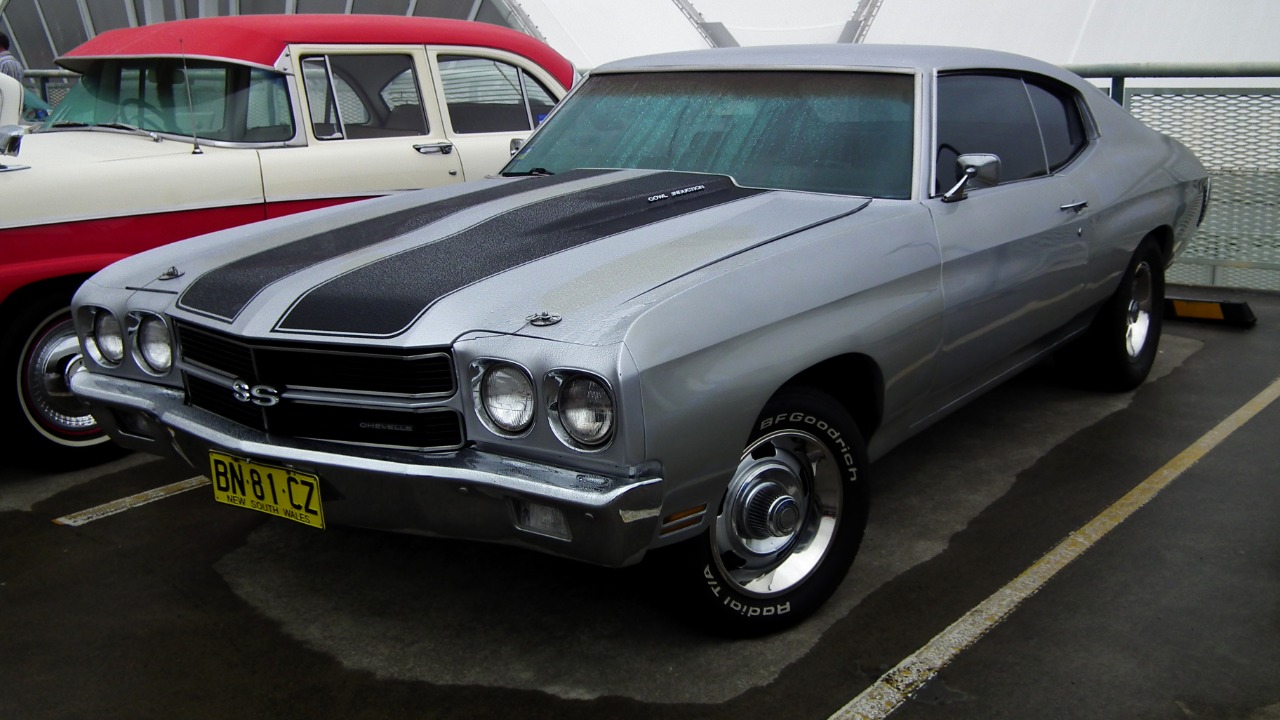
Chevrolet’s A-body intermediate ran from 1964 to 1977 and covered everything from base sedans to the big-block SS. Auction attention fixes on the 1970 SS 454, but the wider Chevelle range included Malibu trims and small-block coupes built in far greater numbers, and those are what keep the nameplate reachable.
The badge matters more than the metal here. Two cars can share a body shell and a chassis while differing enormously in price, so a plainer trim delivers the same period styling and the same aftermarket support at a much lower entry cost.
6. Ford Torino: Muscle Without The Name Recognition
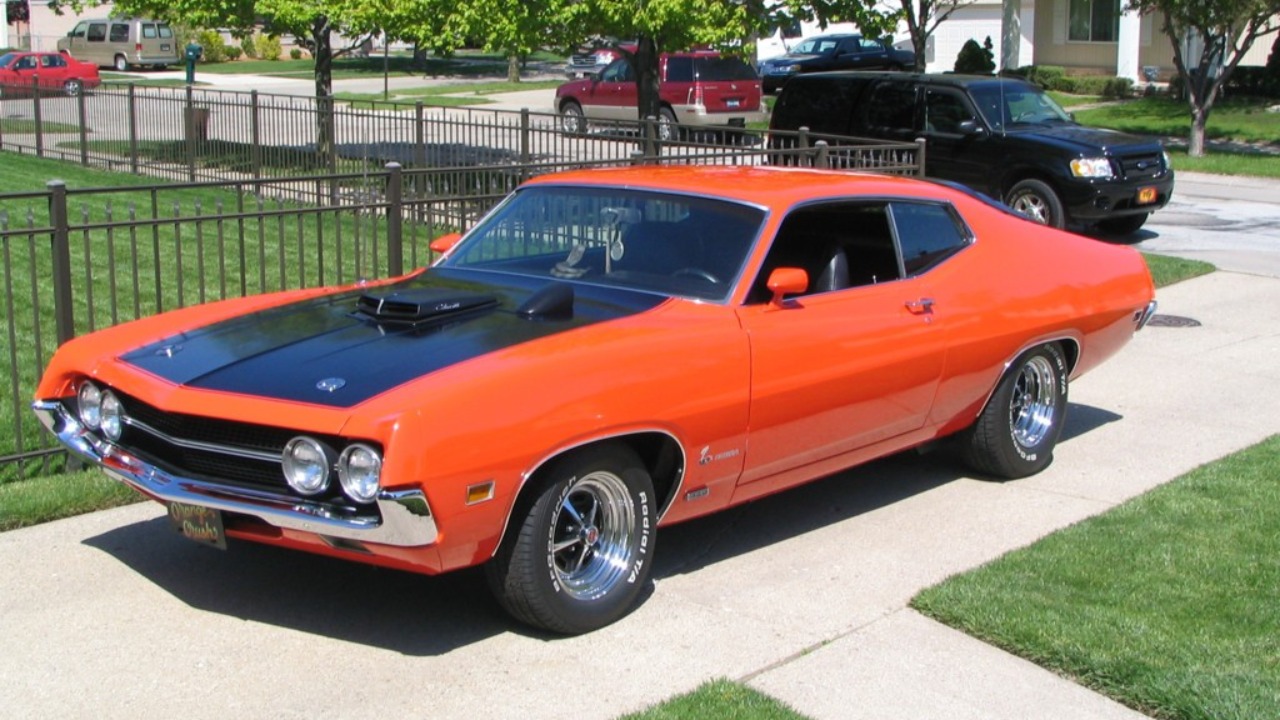
Ford’s intermediate wore the Torino name from 1968 to 1976 and included genuinely fast variants, among them the Cobra and the aerodynamic Talladega homologation car. The Torino model history never achieved the cultural shorthand of a Mustang or a Chevelle, and that anonymity is precisely why the nameplate stayed moderate in price.
Later Gran Torino models are better known as television set dressing than as performance cars, which depresses demand further. For a buyer indifferent to what the neighbors recognize, the Torino remains one of the least expensive routes into a period big-block Ford.
7. Plymouth Road Runner: Budget Muscle By Design
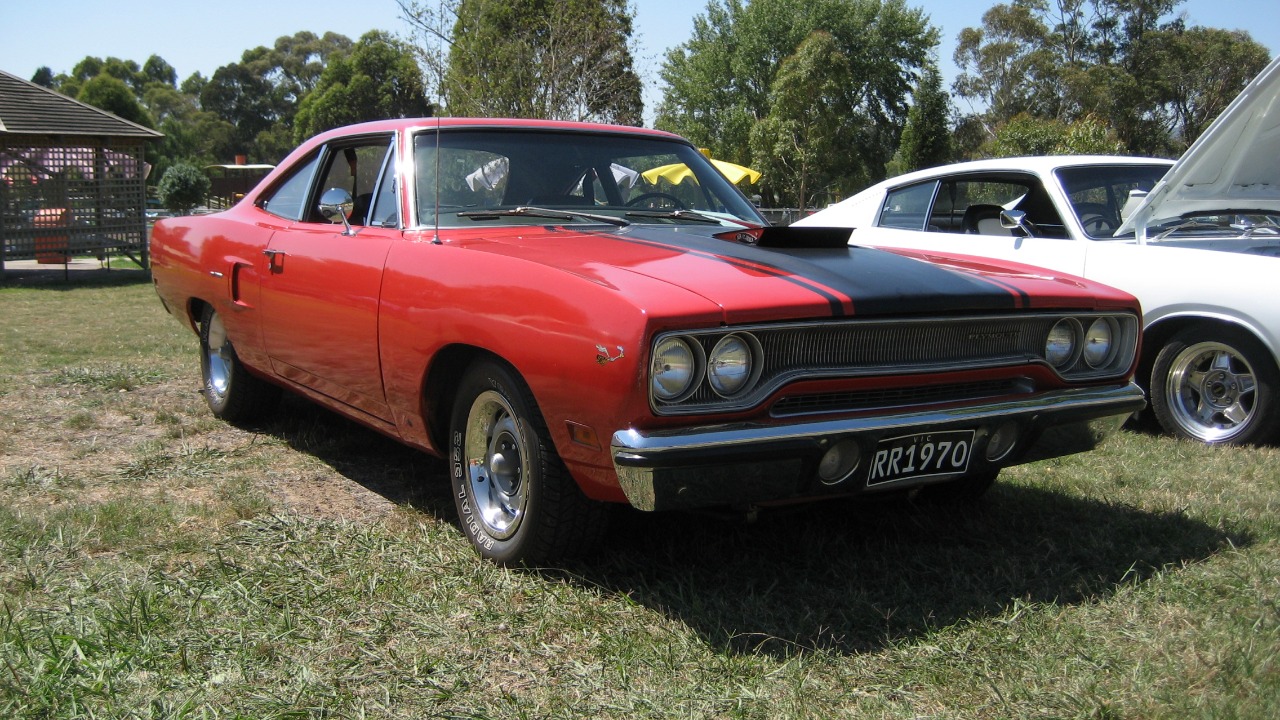
Plymouth engineered cheapness into the car from its 1968 launch, stripping options to hit a low price and licensing the Warner Bros. cartoon character to sell the idea. The Road Runner nameplate even came with a horn tuned to imitate the cartoon’s call, and the standard specification was deliberately spartan, down to rubber floor covering and a bench seat.
That austerity carries into the collector market, where a base car with the standard engine sits well beneath a Hemi or a Superbird. The plain versions were also built in the largest numbers, so supply works in a buyer’s favor rather than against it.
8. Buick Regal: Turbo Six Under The Halo Car
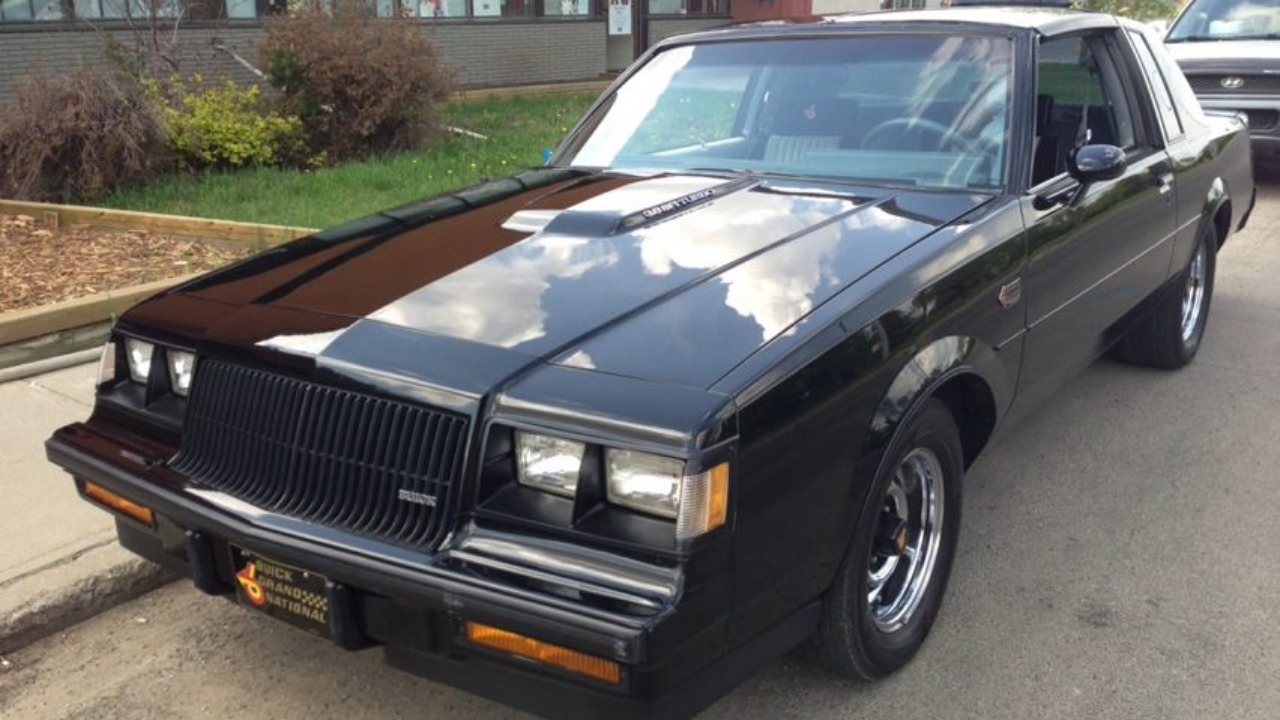
Buick’s Grand National turned the Regal into a performance name, and the 1987 GNX variant, of which only 547 were assembled, is the halo that sets the market’s reference point. Ordinary turbocharged Regals from the same period, including T-Type cars, share the turbo V6 architecture without the limited-run rarity that drives the headline prices.
That distinction is worth real money. A standard turbo Regal offers the same basic drivetrain story at a small share of what a GNX asks, and the G-body platform underneath is among the best-supported in the American aftermarket.
9. Mercury Cougar: The Mustang’s Quieter Cousin
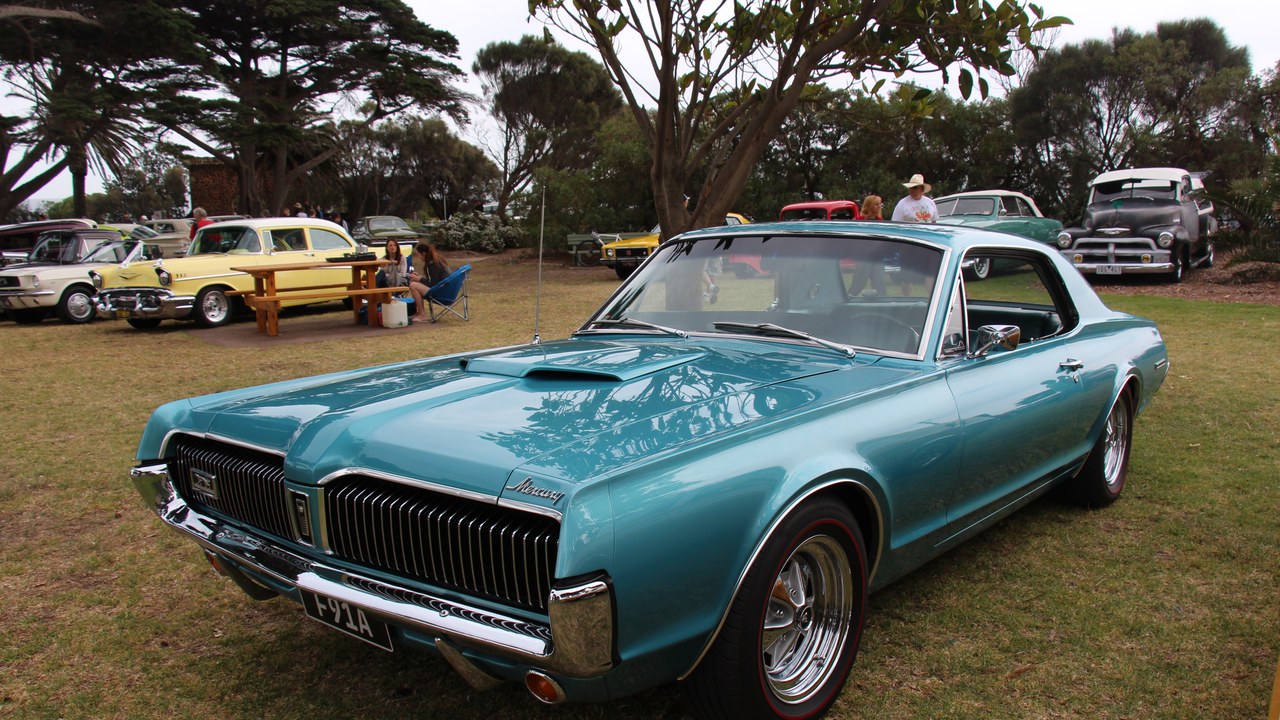
Mercury introduced the Cougar in 1967 on the Mustang’s platform, positioned as the pricier, more heavily trimmed alternative with a longer wheelbase and hidden headlights. Six decades on, the Cougar model line sits below its Ford sibling in value despite sharing much of the same hardware and many of the same drivetrains.
Badge preference explains most of that discount, and Mercury’s closure in 2011 removed whatever brand momentum remained. Mechanical parts interchange broadly with Mustang components, so ownership costs less than the scarcity of the name suggests, though trim-specific pieces are harder to track down.
More from Morning Overview
- Long-term use of common heartburn pills is tied to kidney and dementia risk
- A California supervolcano has bulged upward about two and a half feet since 1978
- The FTC is warning about a scam quietly draining thousands from victims
- The NSA is again telling phone owners to switch off one location setting
