Image Credit: NASA/JPL-Caltech - Public domain/Wiki Commons
Most robotic missions get a burst of attention at launch, a second burst at arrival, and then vanish from the news. Much of that hardware kept working anyway, logging measurements long after the press conferences ended. Here are eight NASA probes and rovers, from a pair of 1977 veterans to a rover on Mars, and what each one was built to find.
1. Voyager 1: The Farthest Object
<p>Image Credit: NASA/JPL – Public domain/Wiki Commons</p>
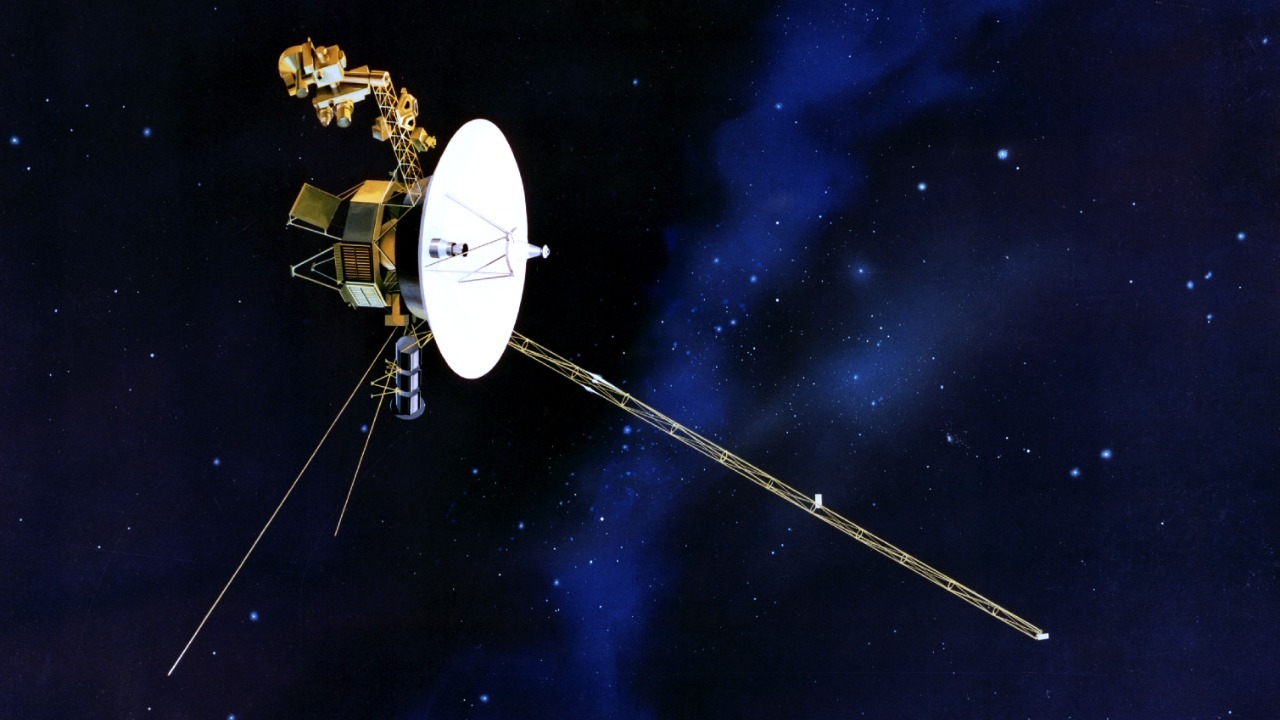
Voyager 1 lifted off in September 1977 for a tour of Jupiter and Saturn, then simply kept going. Its cameras caught volcanoes erupting on Io and structure inside Saturn’s rings before the imaging system was powered down to save electricity. In August 2012 it became the first probe to cross the heliopause into interstellar space, where its plasma wave instrument samples the density of the gas between the stars.
Distance is the whole problem now. The plutonium generators shed a few watts of output every year, so engineers have switched off instrument after instrument to stretch what remains, and a radio command takes the better part of a day to arrive. The computers aboard were designed before the personal computer existed.
2. Voyager 2: Four Planets, One Probe
Image Credit: NASA – Public domain/Wiki Commons
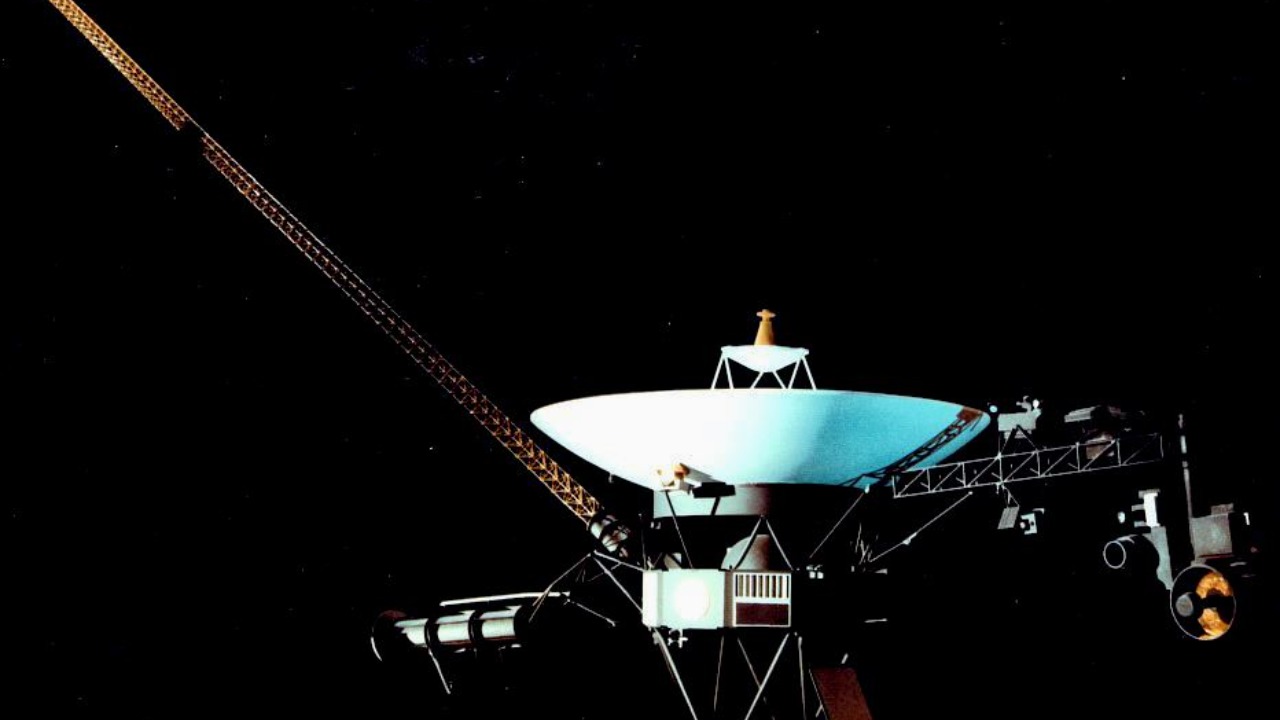
Sixteen days before its more famous twin, Voyager 2 launched on a rarer trajectory: a planetary alignment that occurs roughly once a lifetime let it reach all four giant planets. It passed Jupiter in 1979, Saturn in 1981, Uranus in 1986 and Neptune in 1989, and remains the only spacecraft to have visited the last two.
The haul from those encounters was enormous. It found nitrogen geysers venting from Triton, a storm on Neptune the size of Earth, and a stack of previously unknown moons and rings. It crossed the heliopause in November 2018, six years behind Voyager 1 and on the opposite side of the Sun.
3. Parker Solar Probe: Built To Take The Heat
Image Credit: Bill Ingalls – Public domain/Wiki Commons
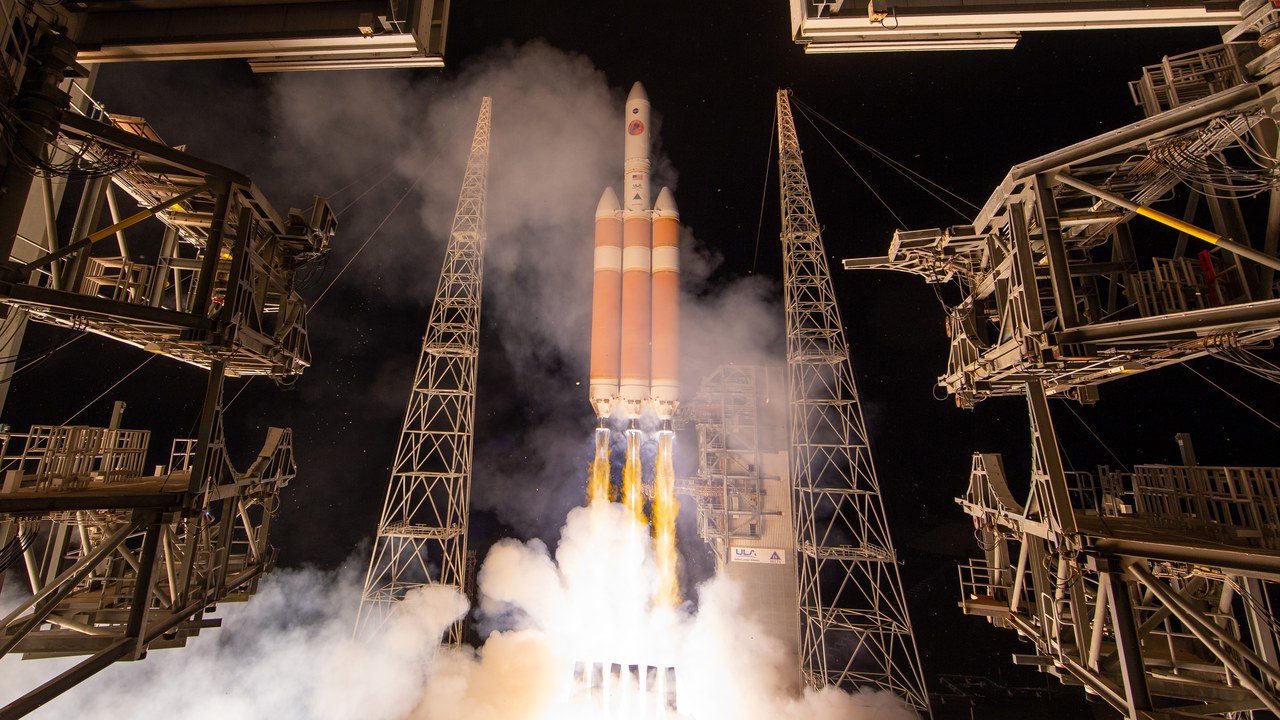
Getting close to the Sun is harder than leaving the solar system, because a spacecraft has to shed Earth’s orbital speed. Parker Solar Probe, launched in August 2018, uses repeated gravity assists at Venus to drop its perihelion lower with each loop, hiding behind a carbon-composite heat shield about four and a half inches thick.
In April 2021 it flew through the corona itself, the first craft to pass inside the Sun’s outer atmosphere. Its December 2024 pass brought it within roughly 3.8 million miles of the surface at about 430,000 miles per hour, which made it the fastest object humans have ever built.
4. Juno: Beneath The Cloud Tops
Image Credit: NASA – Public domain/Wiki Commons
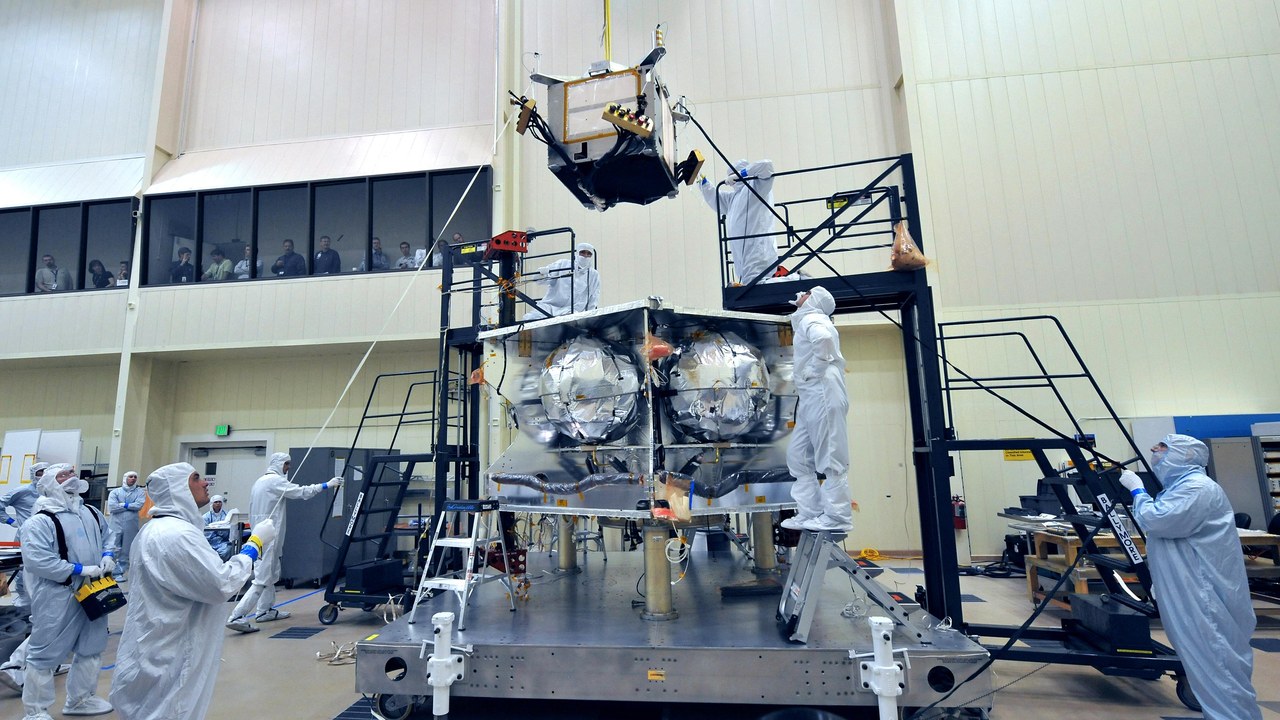
A looping polar orbit was the trick that let Juno survive Jupiter. Arriving on July 4, 2016 after a five-year cruise, it dives between the planet and its worst radiation belts, and its central instrument is a microwave radiometer that reads heat from hundreds of miles beneath the visible clouds.
What came back rewrote textbook Jupiter. Ammonia turned out to be patchy rather than smoothly mixed, the banded jet streams reach roughly 1,900 miles down, and the core looks diluted rather than a hard ball of rock. Polygons of cyclones sit at both poles, eight in the north and five in the south.
5. New Horizons: Past Pluto And Onward
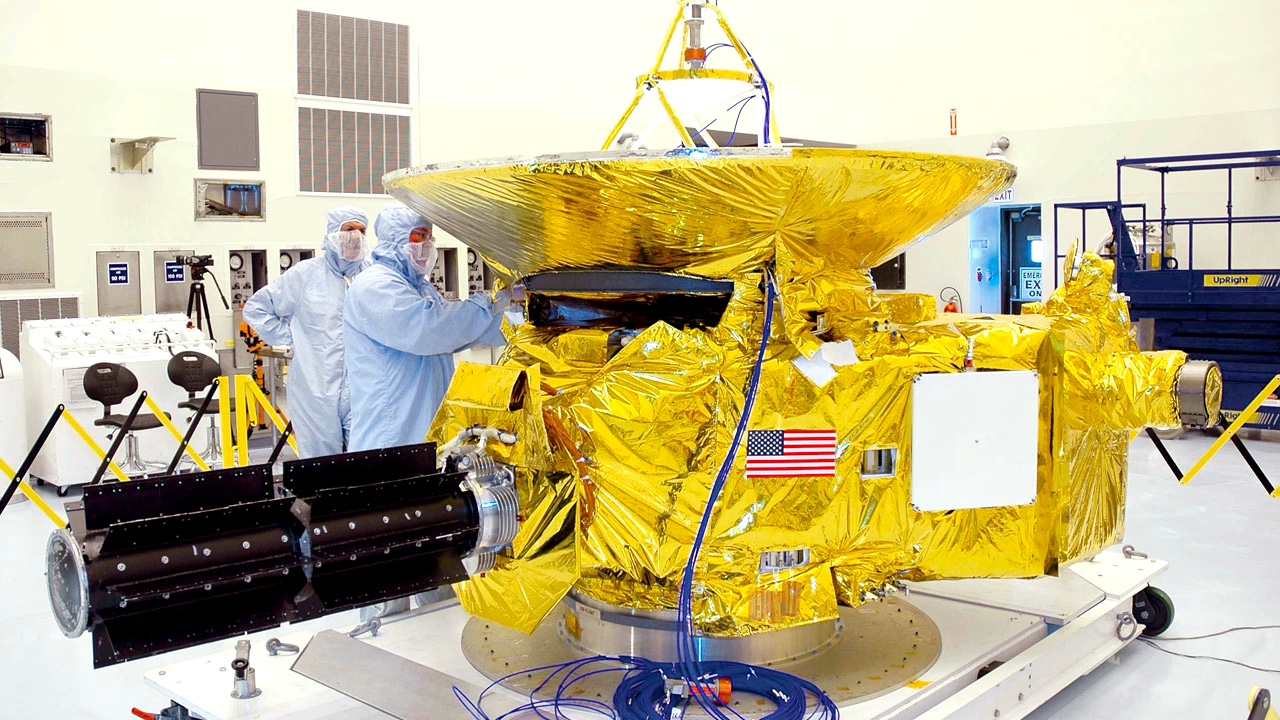
Image Credit: Unknown author
No spacecraft has ever left Earth faster. New Horizons departed in January 2006, borrowed a shove from Jupiter’s gravity a year later, and spent nine years crossing to the Pluto system, which it swept past on July 14, 2015 while running on a single nuclear generator.
Pluto turned out to have nitrogen glaciers, water-ice mountains and a haze-layered sky. On New Year’s Day 2019 the probe flew by Arrokoth, a snowman-shaped object a billion miles further out and the most distant body ever visited up close. Its dust counter was built and operated by university students.
6. Perseverance: Tubes In The Dust
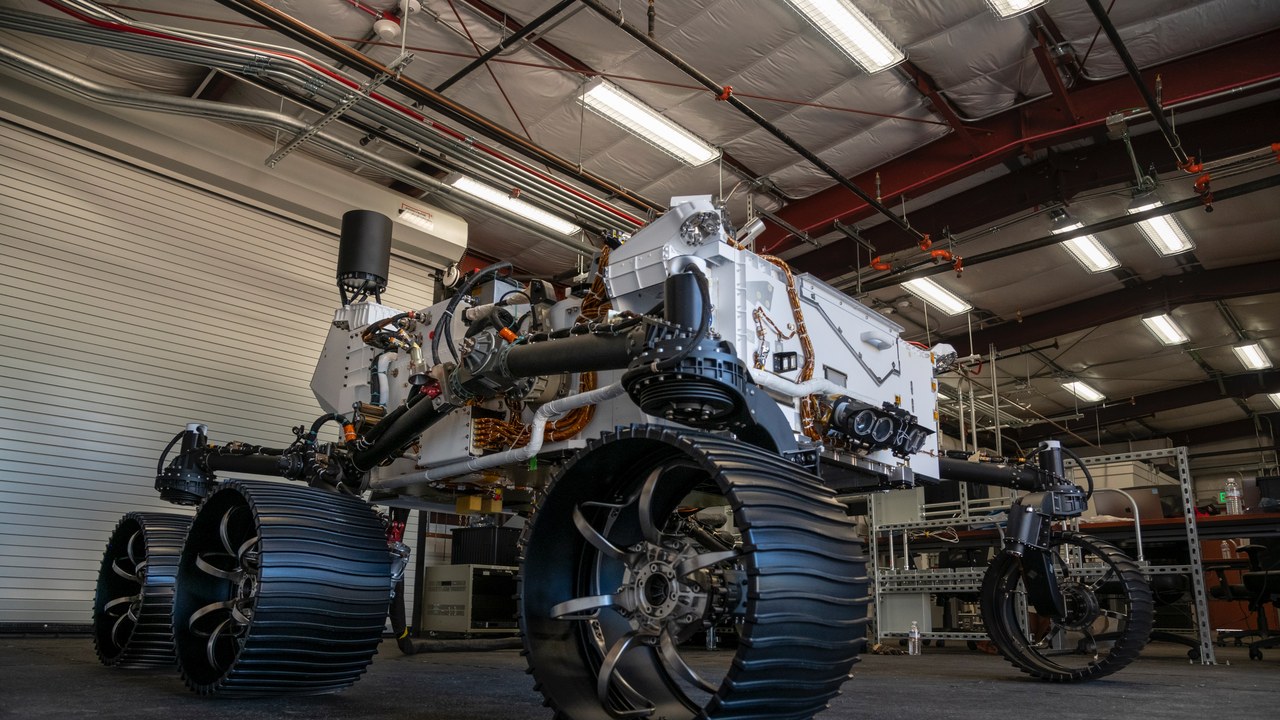
Image Credit: NASA/JPL-Caltech – Public domain/Wiki Commons
Jezero Crater was chosen because a river once emptied into it, leaving a delta of fine sediment where any Martian biology would likely be preserved. The Perseverance rover touched down there on February 18, 2021, carrying a drill that seals rock cores into sterile metal tubes for a future mission to collect.
A depot of ten sealed tubes was laid out on the crater floor as a backup cache. The rover also carried MOXIE, a toaster-sized unit that pulled breathable oxygen out of the carbon dioxide atmosphere, and it delivered Ingenuity, the small helicopter that logged 72 flights before rotor damage grounded it in January 2024.
7. Curiosity: A Slow Climb Uphill
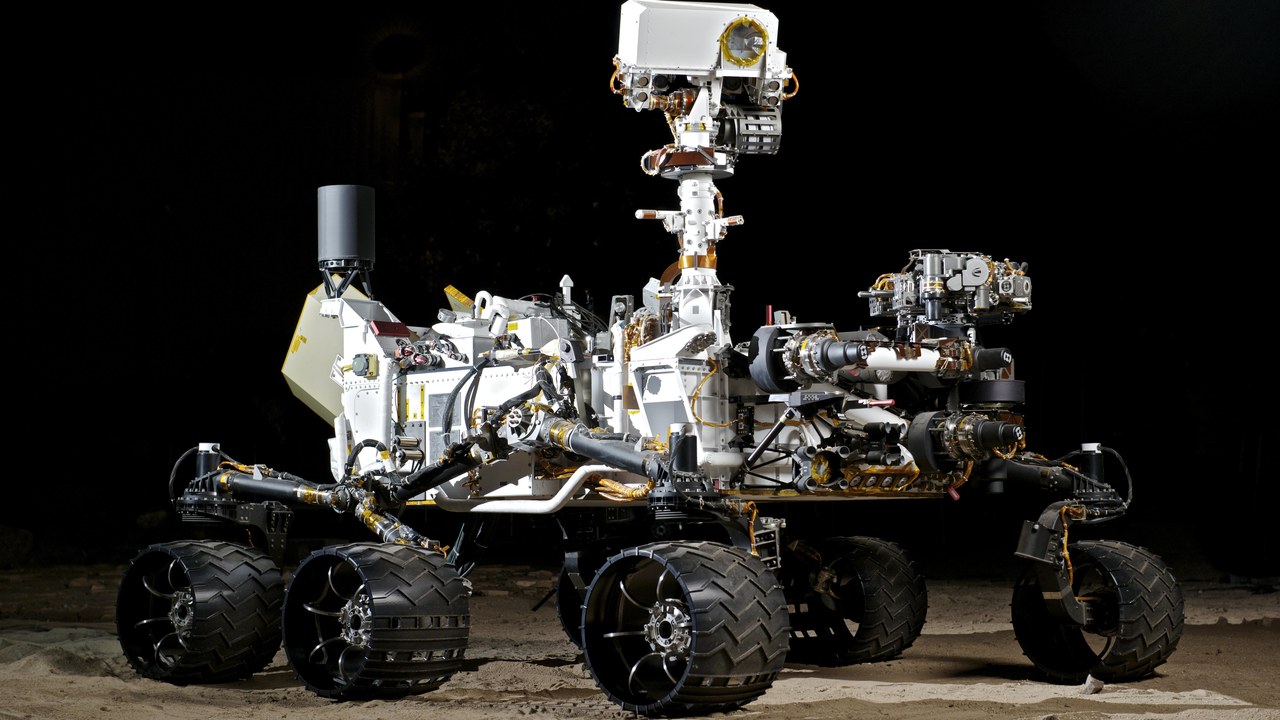
Image Credit: NASA/JPL-Caltech/Dan Goods and David Delgado – Public domain/Wiki Commons
A rocket-powered sky crane lowered Curiosity onto the floor of Gale Crater in August 2012, a landing method nobody had attempted before. The car-sized rover runs on a plutonium generator rather than solar panels, which frees it from dust storms and winter, and it has been grinding its way up a three-mile mound ever since.
Its findings redrew Mars. The crater held a freshwater lake for millions of years, the rock preserves organic carbon compounds, and its radiation instrument measured the dose an astronaut would absorb on the trip. Each layer climbed on the mound represents a later chapter in how the planet dried out.
8. Lucy: Chasing The Fossils Of Planets
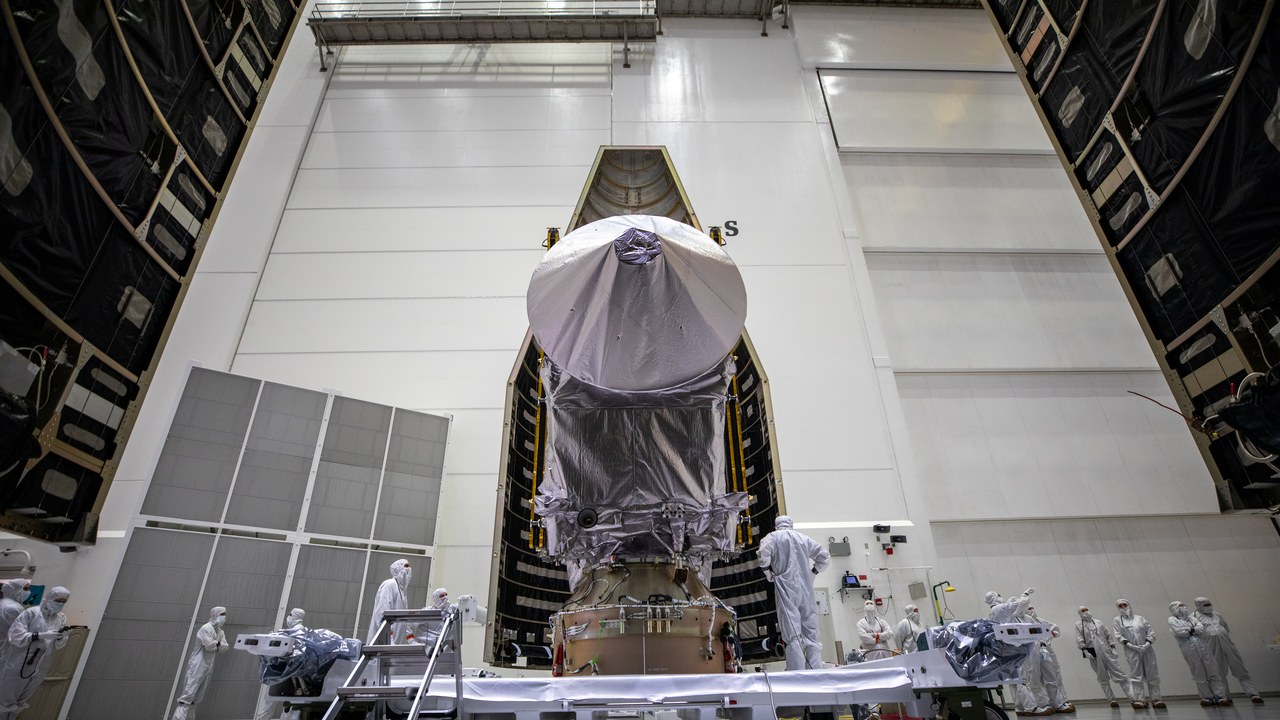
Image Credit: NASA Kennedy Space Center / NAS/Ben Smegelsky – Public domain/Wiki Commons
Named after the hominin skeleton, Lucy left Earth in October 2021 on a twelve-year path built to reach Jupiter’s Trojan asteroids, two swarms of debris trapped ahead of and behind the planet in its orbit. Their composition is thought to be leftover material from the era when the planets assembled.
The route includes practice targets in the main belt. In November 2023 the probe flew past little Dinkinesh and found it had a moon of its own, itself two lobes fused together, a configuration nobody expected at that size. A second rehearsal target, Donaldjohanson, followed in April 2025.
More from Morning Overview