
Leaving pavement behind exposes weaknesses that ordinary commuting can hide, from limited traction to vulnerable hardware and fragile drivetrains. The machines that endure beyond maintained roads combine durable construction with a layout suited to rough ground, remote work, or even water crossings. These five vehicles earned reputations by continuing where conventional transportation reaches its limit.
1. Toyota Land Cruiser: A Global Workhorse With Staying Power
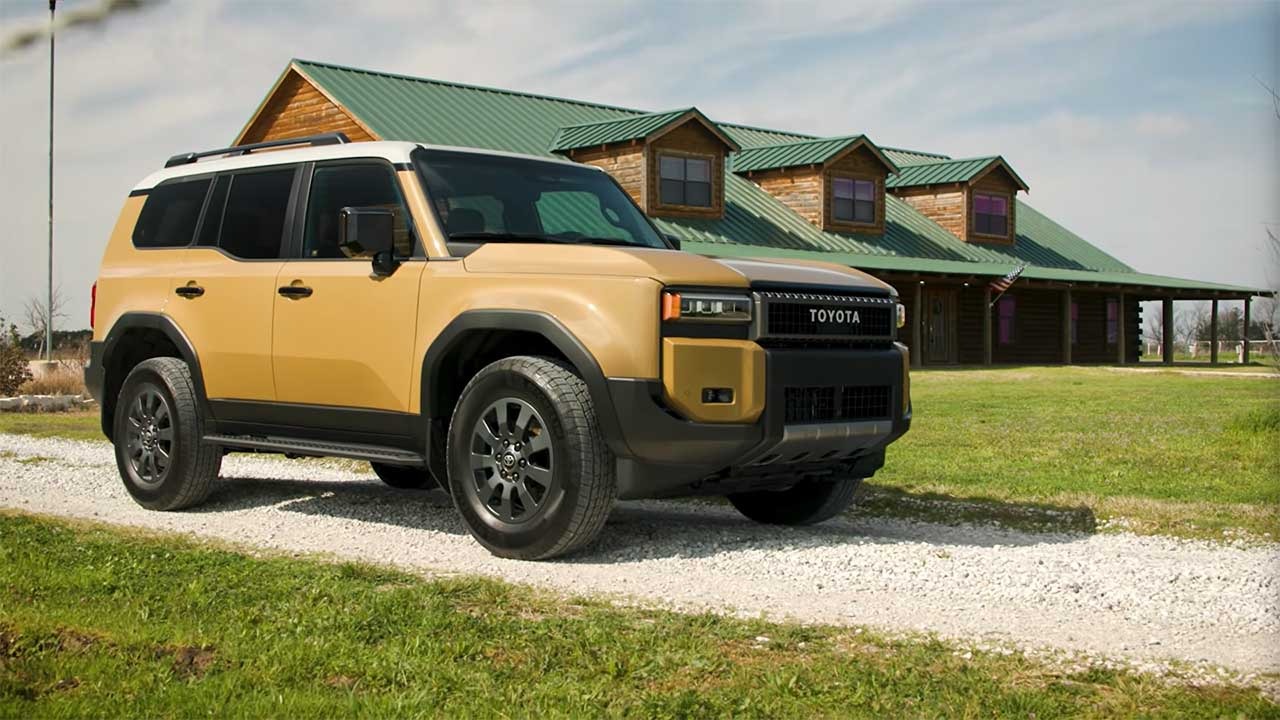
The Land Cruiser’s reputation reaches far beyond recreational trail driving. Toyota’s long-running four-wheel-drive nameplate became a fixture in places where distance, rough tracks, and scarce repair support reward mechanical durability. A longevity assessment highlighted the Land Cruiser as a global workhorse built to outlast almost anything, putting endurance at the center of its appeal rather than treating off-pavement ability as styling.
That combination matters because an expedition vehicle must do more than clear one dramatic obstacle. It must carry people and supplies across repeated miles of broken ground, absorb vibration, and remain predictable far from a dealership. The Land Cruiser’s body-on-frame construction and four-wheel-drive purpose fit that mission, while its long service history has made the model a familiar choice for demanding rural, humanitarian, and remote-area use. Reliability, in this setting, becomes part of the safety equipment.
2. Toyota Tacoma: Midsize Durability Above the Segment
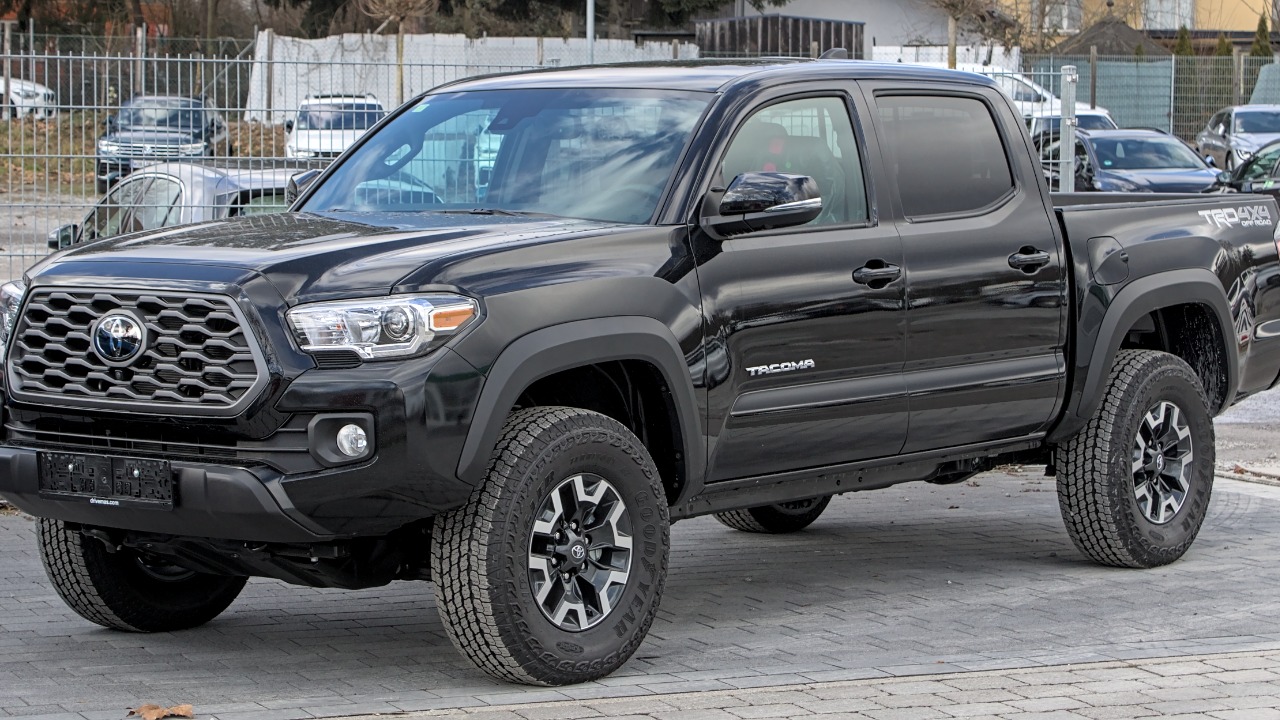
The Tacoma brings pickup utility to trails and work routes without the bulk of a full-size truck. In an iSeeCars analysis of long-lasting pickups, the Tacoma was the only midsize model to beat its segment average, with a 25.3% chance of reaching the study’s longevity benchmark. That figure gives the truck’s rugged reputation a data point tied to service life, not merely an outdoors-oriented trim package.
A midsize footprint can be an advantage once pavement narrows into forest roads or rocky two-tracks. Shorter overall dimensions make tight turns and placement easier, while a pickup bed keeps muddy recovery gear separate from the cabin. The durability result does not guarantee that every Tacoma will survive severe use; maintenance history, tires, load, and driver judgment still shape outcomes. It does suggest that the platform is unusually well represented among trucks that remain in service for the long haul.
3. Honda Ridgeline: Unibody Comfort With Trail Hardware
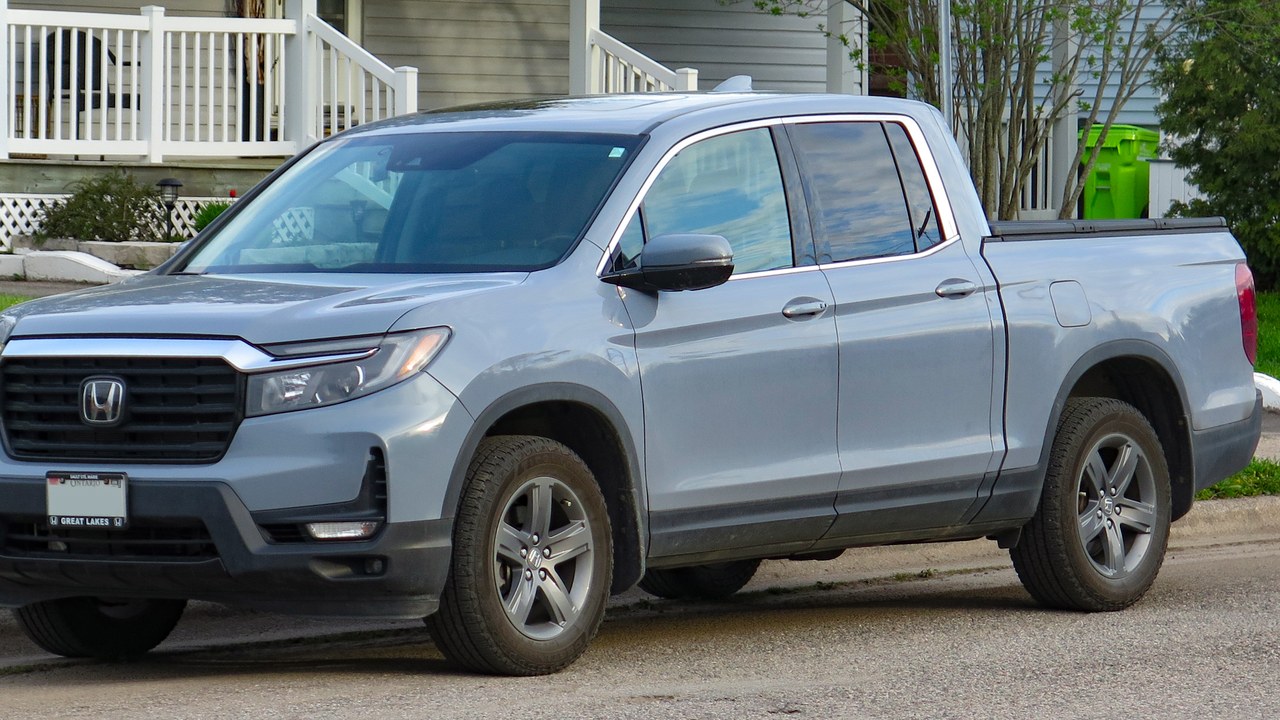
The Ridgeline approaches rough-road travel differently from body-on-frame pickups. Honda’s current capability page says its all-wheel-drive system includes modes for snow, sand, and mud, while the TrailSport adds an off-road-tuned suspension and all-terrain tires. That hardware gives the unibody truck a practical route beyond pavement without sacrificing the passenger-friendly cabin and composed ride that distinguish it from conventional pickups.
The distinction is important: the Ridgeline is not designed as a substitute for a dedicated rock crawler or heavy-duty work truck. Its strength is versatility across the less theatrical terrain that many owners actually encounter, including washboard roads, rutted access lanes, wet grass, and winter travel. Independent suspension and all-wheel-drive capability can make those transitions feel controlled rather than punishing. For drivers whose off-pavement miles begin after a long highway trip, that balance may be more useful than maximum articulation or towering ground clearance.
4. Jeep Wrangler: A Civilian Lineage Rooted in the Wartime Jeep
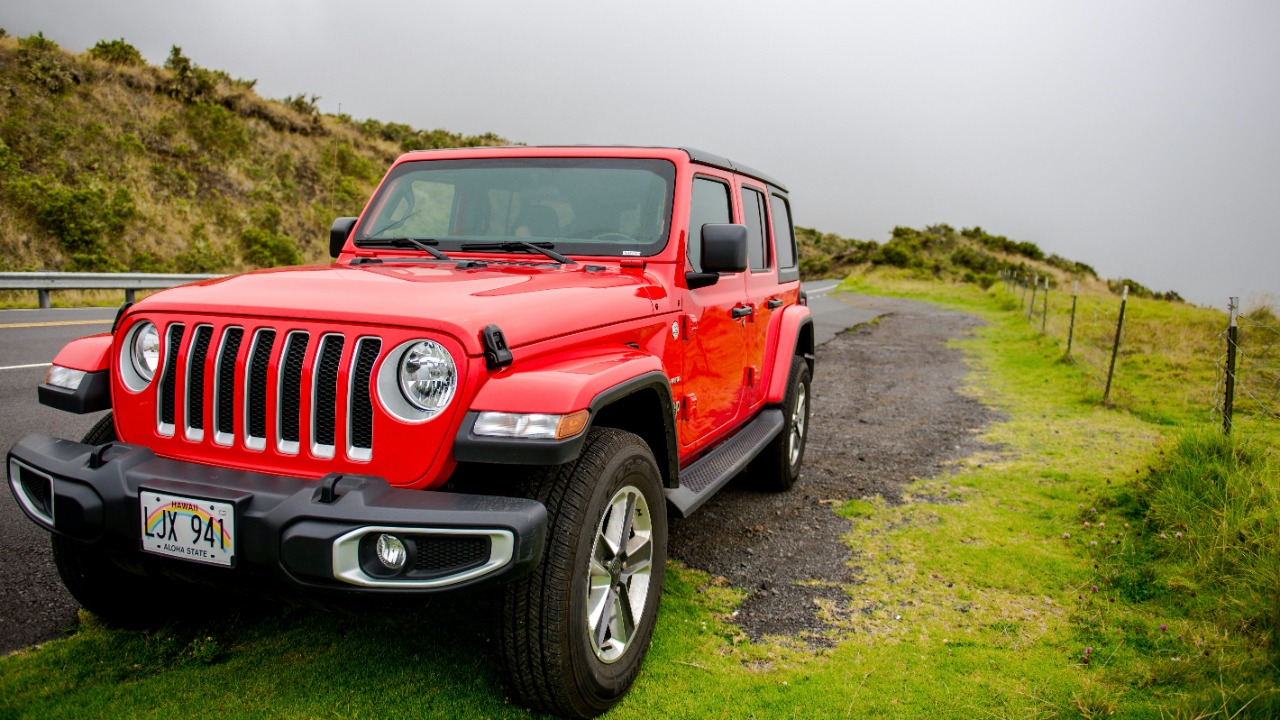
The Wrangler carries one of the clearest historical connections between a modern road vehicle and a machine created for terrain beyond roads. Its lineage traces through Jeep’s civilian models to the compact military vehicles of World War II; the Wrangler’s model history identifies it as the direct descendant of the wartime jeep. That ancestry still shows in an upright shape, short overhangs, selectable four-wheel drive, and a design centered on clearing obstacles.
Unlike crossovers that add rugged cues to a road-first platform, the Wrangler preserves hardware and proportions intended for low-speed control on difficult ground. Solid axles, low-range gearing, and removable body panels support a specialized identity that few vehicles retain. Those choices carry compromises in wind noise, ride behavior, and efficiency on pavement, but they also explain why the model remains a reference point for trail travel. Its purpose is visible before a tire ever touches dirt.
5. DUKW: The Six-Wheel Truck That Left Land Behind
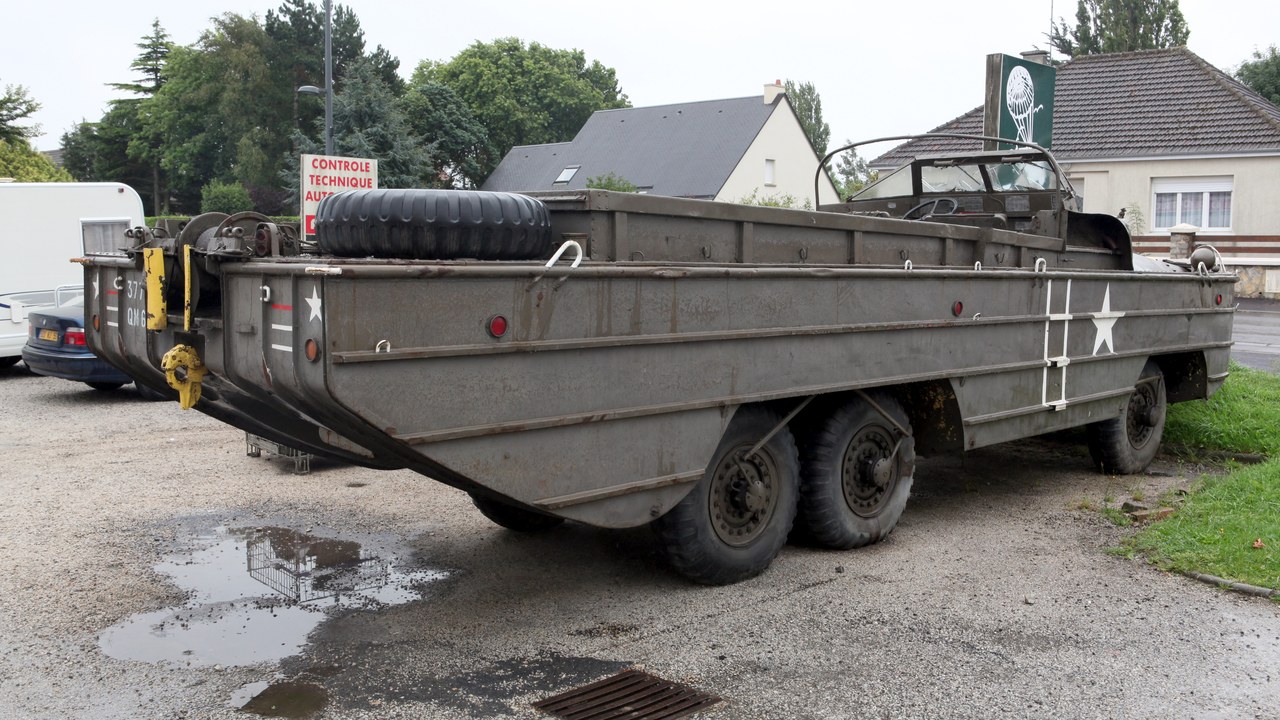
The DUKW expands the idea of off-pavement travel by eliminating the shoreline as a stopping point. Developed during World War II, the six-wheel amphibious truck could move cargo from ships through water and continue across beaches and roads. The DUKW’s service history includes the D-Day landings, where that ability helped bridge the gap between offshore supply vessels and forces operating inland. Its mission demanded mobility across two environments.
That capability came from combining a boatlike hull and water propulsion with the running gear of a military truck. The result was not elegant or fast, but elegance was beside the point: supplies had to keep moving when ports, roads, and unloading infrastructure were unavailable. Surviving examples often appear in museums, collections, and sightseeing fleets, yet the underlying engineering remains striking. Where the other vehicles on this list endure rough ground, the DUKW was built to keep going after the ground disappeared.
This article was produced with the assistance of AI and reviewed by Morning Overview editors prior to publication.
More from Morning Overview
- A Colorado wildfire has exploded past 87,000 acres with no containment
- A wildfire near Ouray swelled past 18,000 acres, putting Colorado towns on alert
- The Pentagon’s newest UFO files describe a fish-scaled, potato-shaped object on camera
- Scientists spotted a rare tusked whale alive at sea for the first time, then fired a crossbow at it.
