
Some cities face flood threats too large for ordinary walls, pumps, or neighborhood defenses to manage alone. Engineers have answered with movable gates and immense surge barriers designed to control water across rivers, channels, and lagoon entrances. Here are five flood barriers built to protect major urban regions when high water pushes toward them.
1. Thames Barrier: Movable Gates Guard London
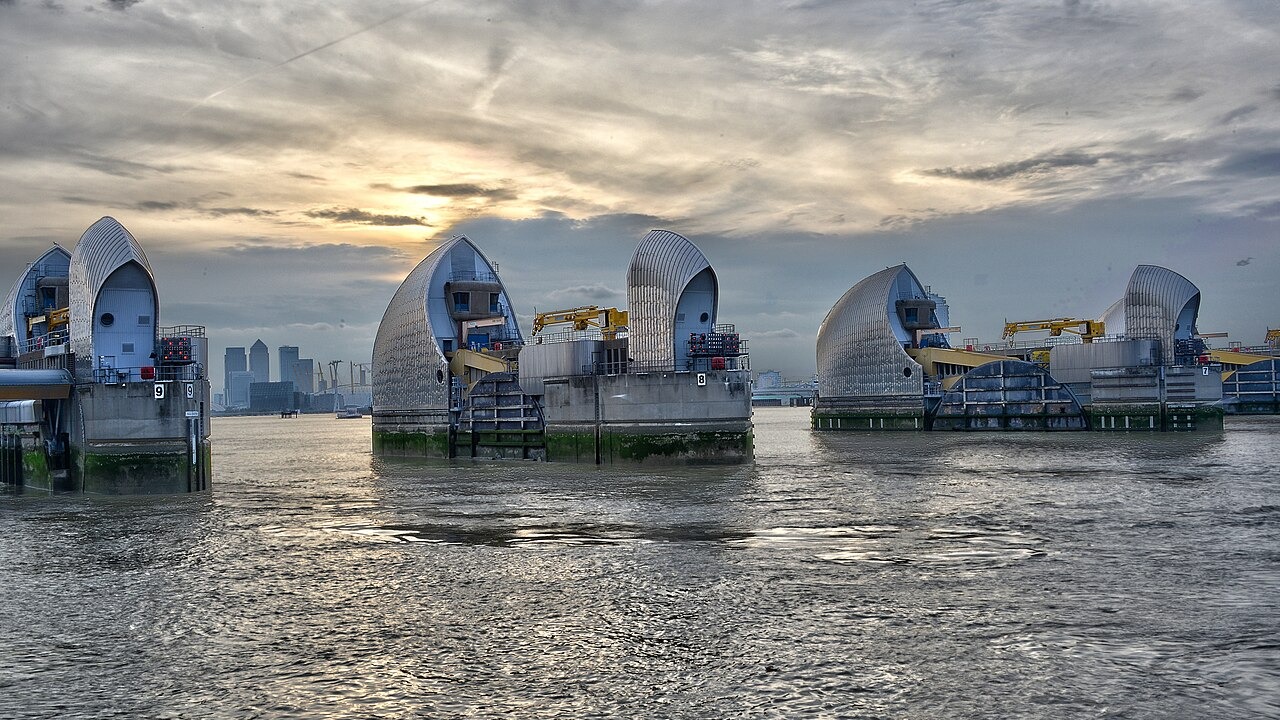
The Thames Barrier is a movable flood defense built to protect London from tidal flooding. Its distinctive silver structures span the river, housing gates that can be raised to interrupt a dangerous surge moving upstream. The system turns a working waterway into a controllable boundary when forecasts and river conditions indicate that low-lying parts of the capital face unacceptable risk.
Closing the barrier is a coordinated operational decision, not a permanent separation of London from the tide. River traffic, upstream flows, forecast timing, and the expected water level all matter when managers use the structure. Its value comes from combining massive engineering with monitoring and procedures that must work repeatedly over decades. The barrier cannot eliminate every source of flooding across the city, but it blocks a major pathway by which extreme tidal water can enter central London.
2. Maeslantkering: Automation Protects South Holland
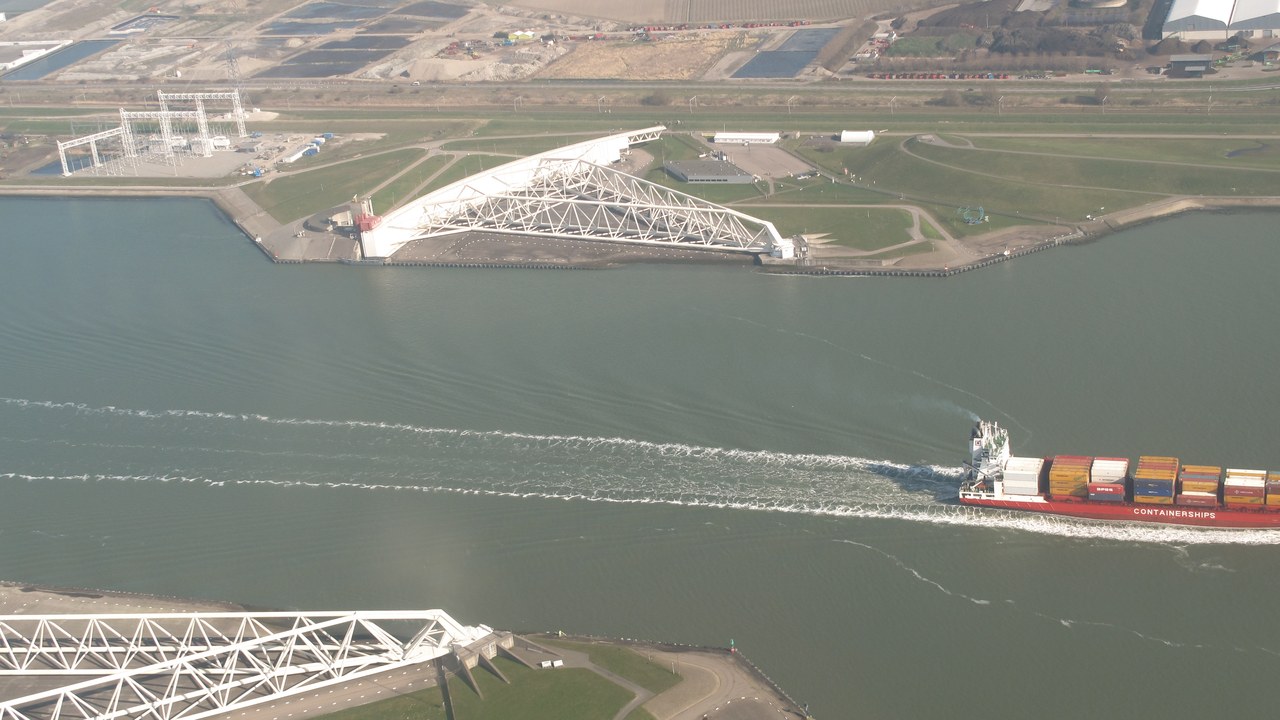
The Maeslantkering is an automated Dutch storm barrier protecting about two million people in South Holland. Two enormous movable arms can swing their gates into the waterway when high water threatens the region. The open design preserves access to one of the world’s busiest port areas during normal conditions, then transforms the channel into a defensive line when a closure is required.
Automation does not make the barrier simple. Sensors, forecasts, control systems, mechanical components, and carefully defined thresholds must agree before structures of this scale move into position. The gates also need testing and maintenance during the long periods when they remain open. Maeslantkering demonstrates a central challenge in flood engineering: a defense can protect a dense population without permanently obstructing the commerce and navigation that make the surrounding urban region economically important.
3. MOSE: Seventy-Eight Gates Can Seal the Lagoon
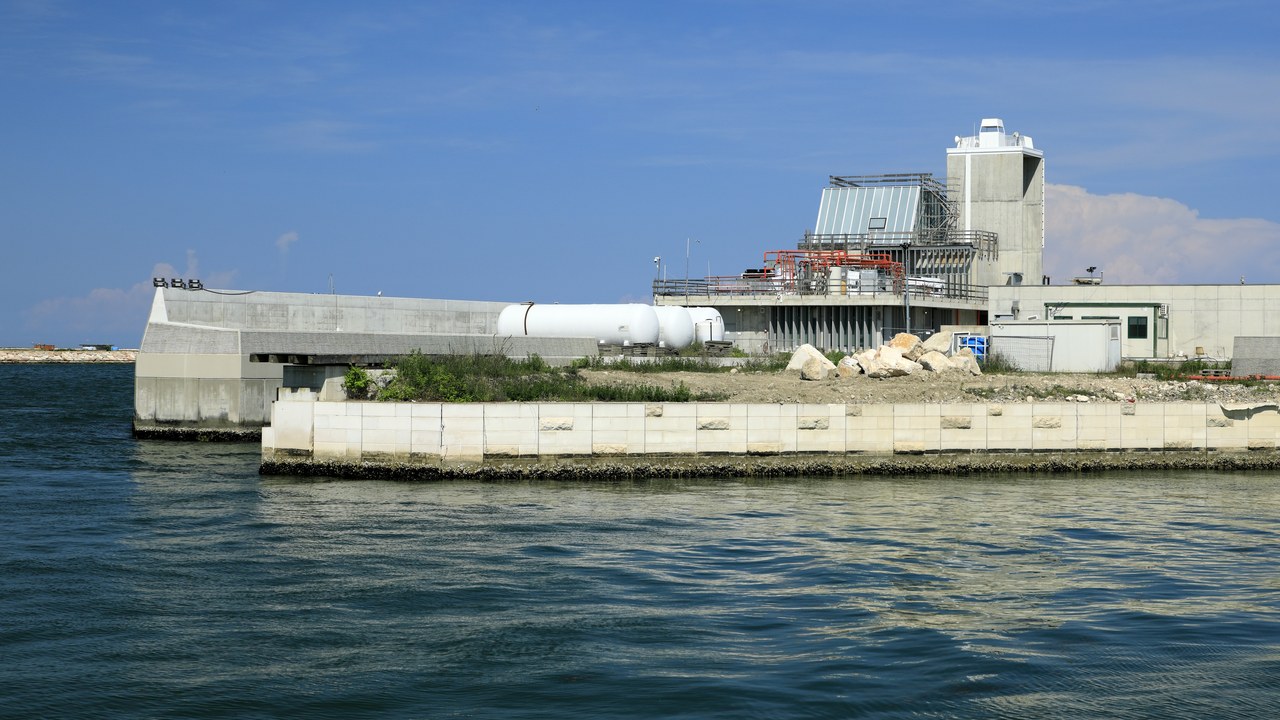
Venice’s MOSE system uses seventy-eight movable gates that can isolate the lagoon from damaging high water. The gates sit at lagoon inlets and rise when conditions demand a temporary separation from the sea. Most of the core machinery is not visible in an ordinary city view, yet its movement determines whether incoming water can continue pushing toward Venice’s streets and historic buildings.
MOSE must balance protection with the normal exchange of water and vessel movement through the lagoon. That is why the gates are movable rather than a permanent dam. Forecasting and timing remain essential, because the system has to respond before peak water arrives and return to its resting position afterward. The project illustrates how protecting a city built within water requires infrastructure distributed across its outer entrances, far from many of the landmarks receiving the benefit.
4. IHNC Lake Borgne Surge Barrier: A 1.8-Mile Wall Against Surge
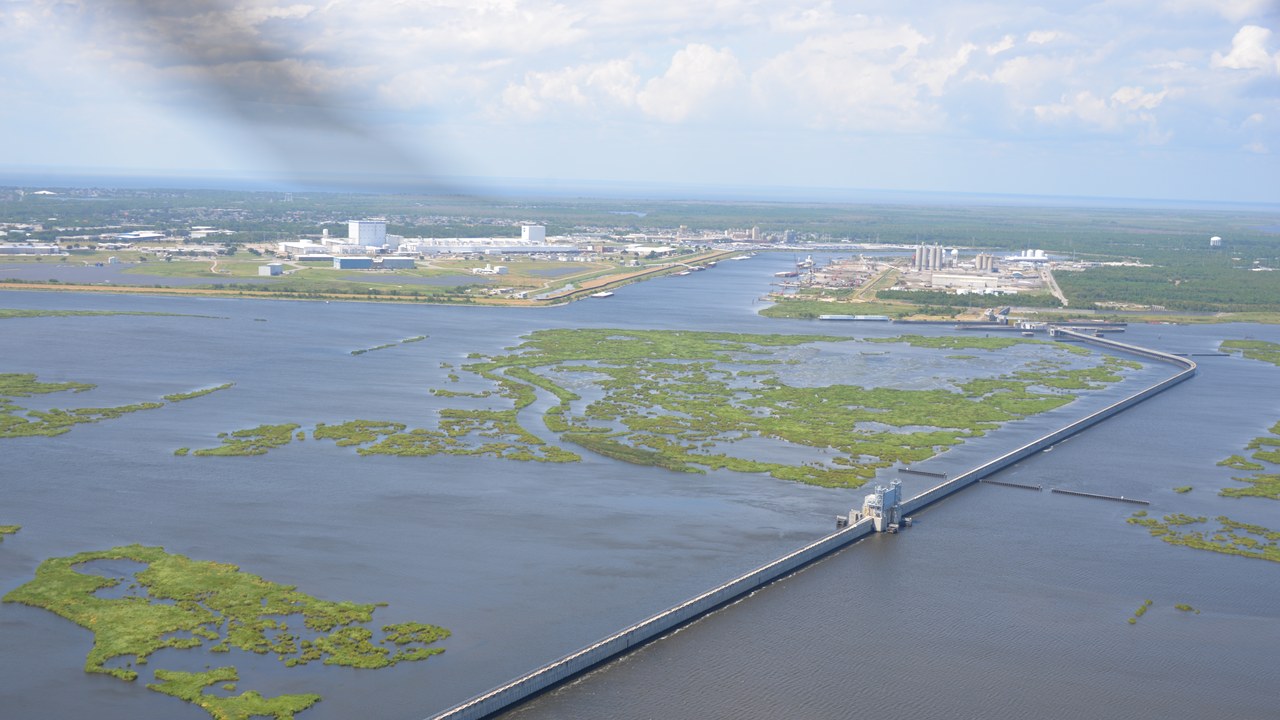
The IHNC Lake Borgne Surge Barrier stretches about 1.8 miles to reduce storm-surge risk around New Orleans. Its long line crosses a major approach by which hurricane-driven water can move toward vulnerable parts of the metropolitan area. Gates preserve navigation routes where needed, while the broader structure creates a defensive boundary across open water and marshy terrain.
A surge barrier of this length works as one part of a larger risk-reduction system rather than a standalone guarantee. Levees, floodwalls, gates, drainage, forecasting, and emergency action all contribute to protection during a storm. The structure’s scale reflects the geography of the threat: water can advance across a wide corridor, so the defense must control more than a single canal opening. Its aerial form makes visible how regional flood protection can extend far beyond a city’s streets.
5. Fox Point Hurricane Barrier: Harbor Gates Shield a Working City
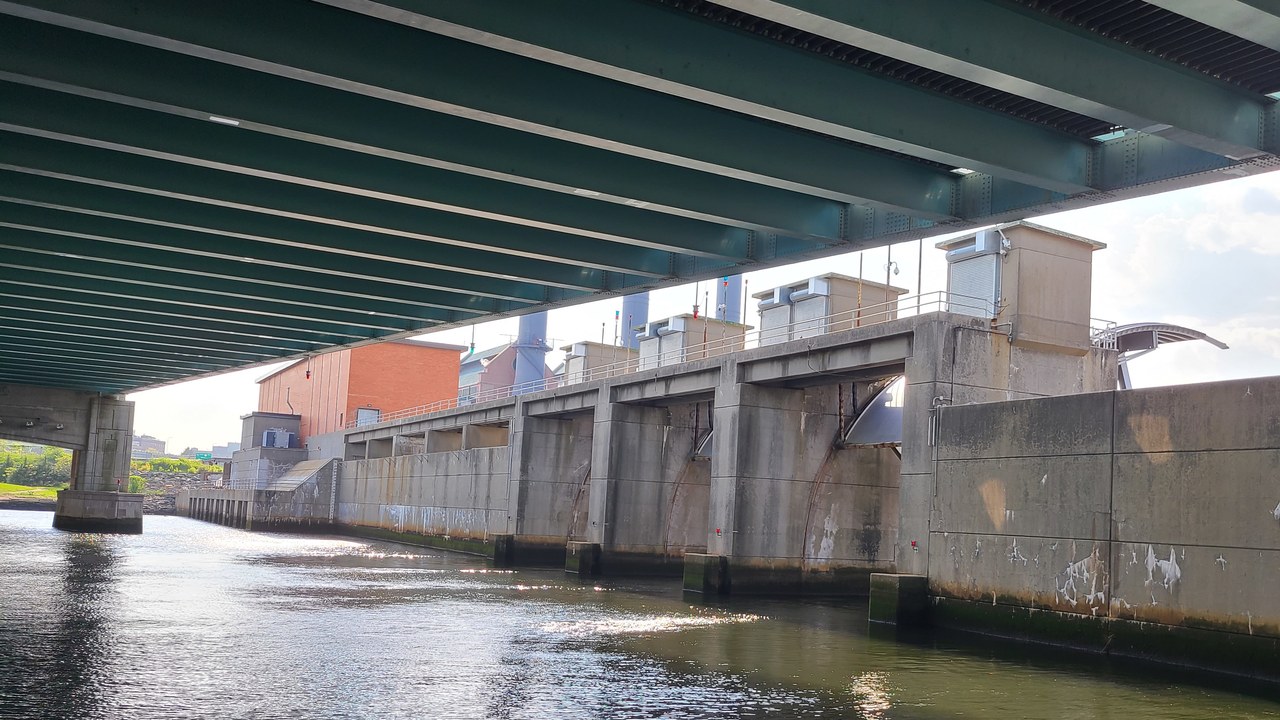
The Fox Point Hurricane Barrier provides tidal-flood protection for about 280 acres of downtown Providence. Its concrete structure crosses the Providence River through three openings equipped with large gates. When those gates close, they block coastal floodwater from moving inland; when open, they preserve a route for small vessels. Flanking dikes, street gates, sewer gates, and a pumping station extend the defense beyond the visible river crossing.
The pumps become especially important during a closure because river water still arrives from upstream and must be discharged toward the bay. That operating challenge separates a surge barrier from a simple wall: the structure has to stop water approaching from one direction without trapping damaging water on the other side. Fox Point protects Providence’s commercial center, transportation facilities, utilities, and homes through a coordinated system whose moving gates are only its most recognizable components.
This article was produced with the assistance of AI and reviewed by Morning Overview editors prior to publication.
More from Morning Overview
- A Colorado wildfire has exploded past 87,000 acres with no containment
- A wildfire near Ouray swelled past 18,000 acres, putting Colorado towns on alert
- The Pentagon’s newest UFO files describe a fish-scaled, potato-shaped object on camera
- Scientists spotted a rare tusked whale alive at sea for the first time, then fired a crossbow at it.
