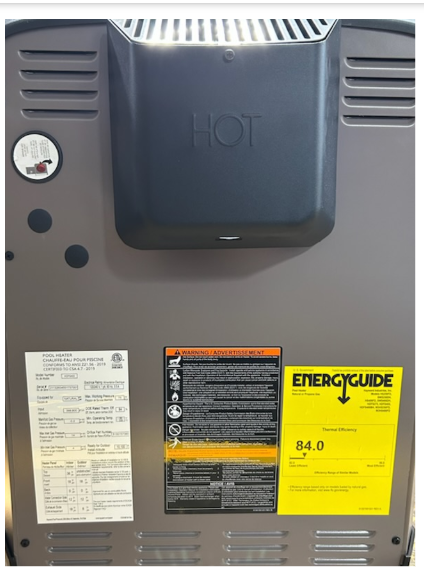
About 4,600 Hayward pool heaters are being recalled in the United States because they can produce high levels of carbon monoxide while running. The Consumer Product Safety Commission announced the action as recall 26-777 on September 17, 2026, and told owners to stop using the heaters immediately. No injuries or incidents had been reported when the notice went out.
The units went on sale only this year, between March and July 2026. That short sales window means nearly every affected heater is less than a year old and probably still sits in a pool system installed this season.
The HDFS400 Universal-HC and where it was sold
The recall covers the Hayward-branded HDFS400 Universal-HC Series, a 400,000 BTU model, and the commission’s notice puts the count at about 4,600 heaters. They were sold through pool equipment distributors, builders and service professionals nationwide from March 2026 through July 2026 for about $5,600 each. Hayward Industries, based in Charlotte, North Carolina, makes the heaters in the United States. Because the channel was professional rather than retail, many owners may never have handled a box or a receipt themselves, which makes the contractor who installed the unit the likeliest source of a model number.
Identification is straightforward once someone can see the unit. The heaters are brown with a black top, measure 21 inches long, 28 inches wide and 31 inches high, and carry a digital control panel. A name plate below the vent reads “HDFS400,” and the commission published a photo showing where that name plate sits on the recalled heater.
Why carbon monoxide is the hazard that matters
The commission’s hazard statement is blunt: the heaters can produce high levels of carbon monoxide, which can cause serious injury or death from CO poisoning. It does not describe a specific defect in the burner or venting in the public notice, and nothing in it should be read as more detailed than that. What the notice does establish is the outcome, which is a gas appliance that can put out more of the gas than it should during ordinary operation.
The Centers for Disease Control and Prevention describes carbon monoxide as an odorless, colorless gas that “kills without warning.” Its guidance says more than 400 Americans die each year from unintentional CO poisoning not linked to fires, with more than 100,000 emergency department visits and more than 14,000 hospitalizations. The agency lists headache, dizziness, weakness, nausea, chest pain and confusion as common signs, symptoms easily mistaken for the flu, and says sleeping or intoxicated people can die before any symptoms appear.
Pool equipment adds a wrinkle. Heaters often sit in sheds, enclosures or pump rooms where exhaust can collect, and those are places people walk into to check a valve or reset a timer.
The remedy Hayward and the commission are offering
The fix is a repair, not a refund or replacement. The commission tells owners to “stop using the pool heater immediately” and to contact Hayward Industries to schedule a free in-home inspection and repair by a qualified technician. Hayward can be reached toll-free at 855-500-5288 from 8 a.m. to 5 p.m. Eastern time, Monday through Friday, by email at [email protected], or through the recall information page on Hayward’s website. A free visit costs nothing, but it does require waiting for an appointment, and in the meantime the heater should stay off, including any automatic schedule or remote start.
The absence of reported incidents is reassuring only in a limited way. A recall issued before anyone is hurt is the system working as intended, yet carbon monoxide leaves little trace after the fact and is frequently misattributed. Anyone who did feel ill near a recalled heater can file a report through the commission’s recall complaint form, which feeds the agency’s tracking of whether a remedy is working.
Alarms, enclosures and the limits of a detector
The commission’s carbon monoxide information center says more than 200 people in the United States die every year from accidental non-fire CO poisoning tied to consumer products. Its advice is to install battery-operated alarms, or alarms with battery backup, on every level of a home and outside sleeping areas, and it notes that interconnected alarms are best because when one sounds, they all sound. The agency’s page on CO alarms covers placement and upkeep.
A bedroom alarm, however, does little for a person standing in a closed equipment room fifty feet from the house. Anyone with a recalled heater should treat the switch-off as the real protection, keep the enclosure ventilated until a technician has been through, and leave the area and call 911 if anyone feels dizzy or nauseated nearby, as the commission advises for suspected poisoning.
This article was produced with the assistance of AI and reviewed by Morning Overview editors prior to publication.
More from Morning Overview