
Mining haul trucks scale up far beyond anything found on a public highway, built to survive years of hauling raw rock and ore out of open pits. Payload capacity is the number that separates the merely huge from the record-setters, and manufacturers have chased it for decades. Here are ten of the biggest haul trucks ever built, from a record-holding Belarusian giant to the workhorses of the world’s deepest pits.
1. BelAZ 75710: Unmatched Payload Record
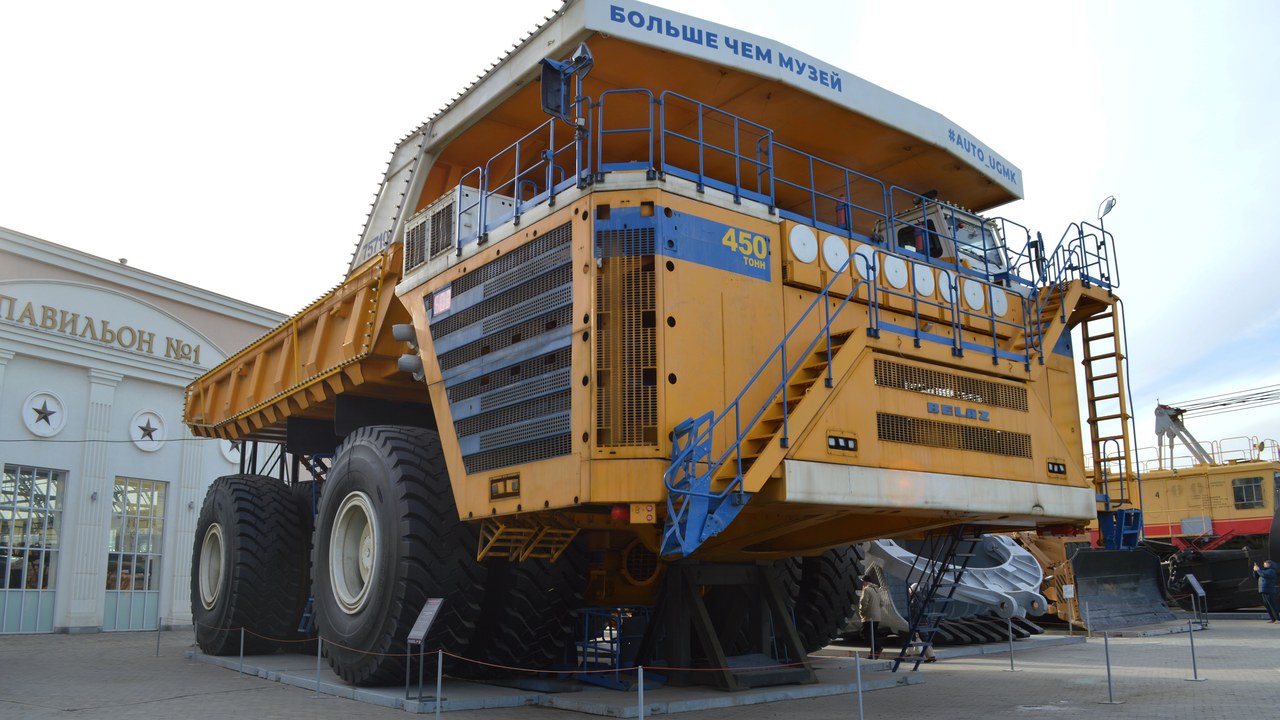
The BelAZ 75710 was engineered from the outset to move more rock per trip than any other production haul truck, and its 450-tonne payload rating still stands unmatched. Stretching 20.6 meters from end to end, the eight-wheeled rig needs every bit of that length to spread the load across its wheels.
That capacity puts the BelAZ about 90 tonnes ahead of its closest rival among today’s largest mining trucks, a margin wide enough that no other manufacturer has matched it since the 75710 entered production, giving mining operators a single vehicle that can carry what would otherwise take two smaller trucks.
2. Caterpillar 795F AC: Cat’s Electric Heavyweight
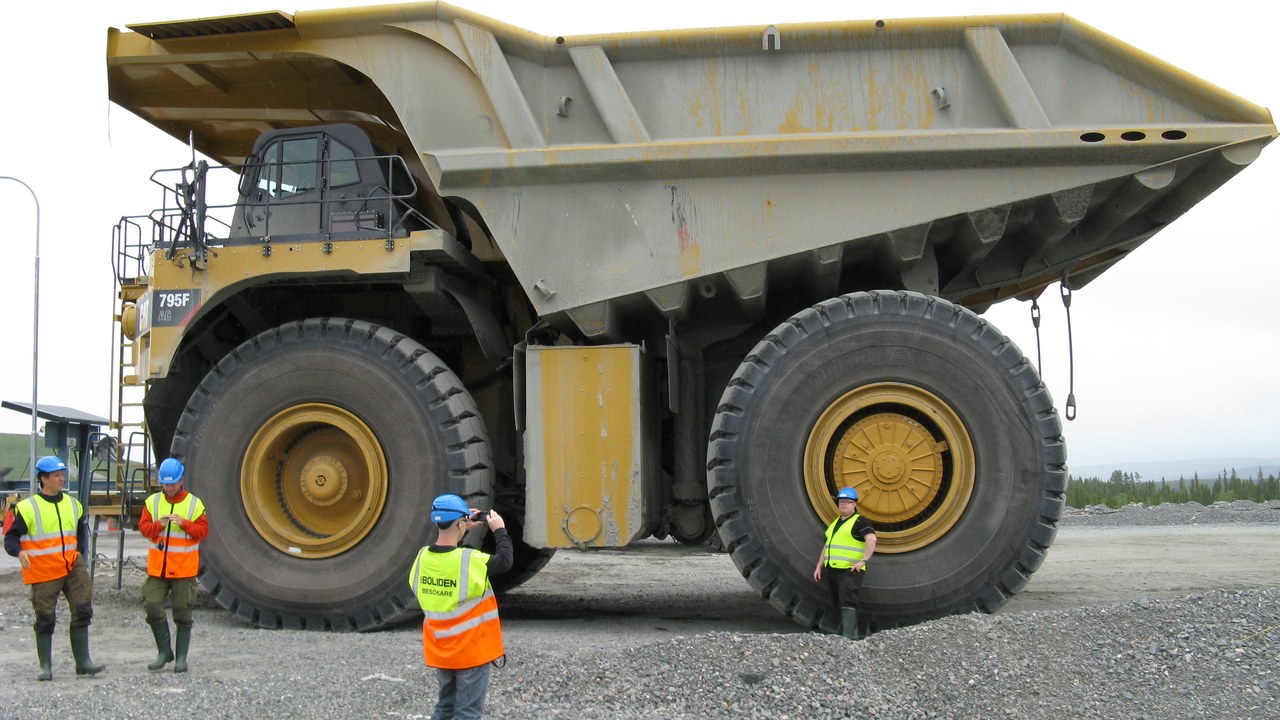
Caterpillar’s 795F AC pairs a diesel engine with an electric drive and carries a nominal 372 short tons per load, or 338 tonnes. Its Cat C175-16 engine produces 3,400 gross horsepower, and the loaded machine is rated at close to 1.27 million pounds.
The AC drive lets electric motors do the work at the wheels instead of a mechanical transmission, which smooths out hauling on steep ramps and cuts wear on brakes. That combination made the 795F AC Caterpillar’s answer to the electric-drive giants rivals had been selling to large mines for years.
3. Caterpillar 797B: The Middle Generation Giant
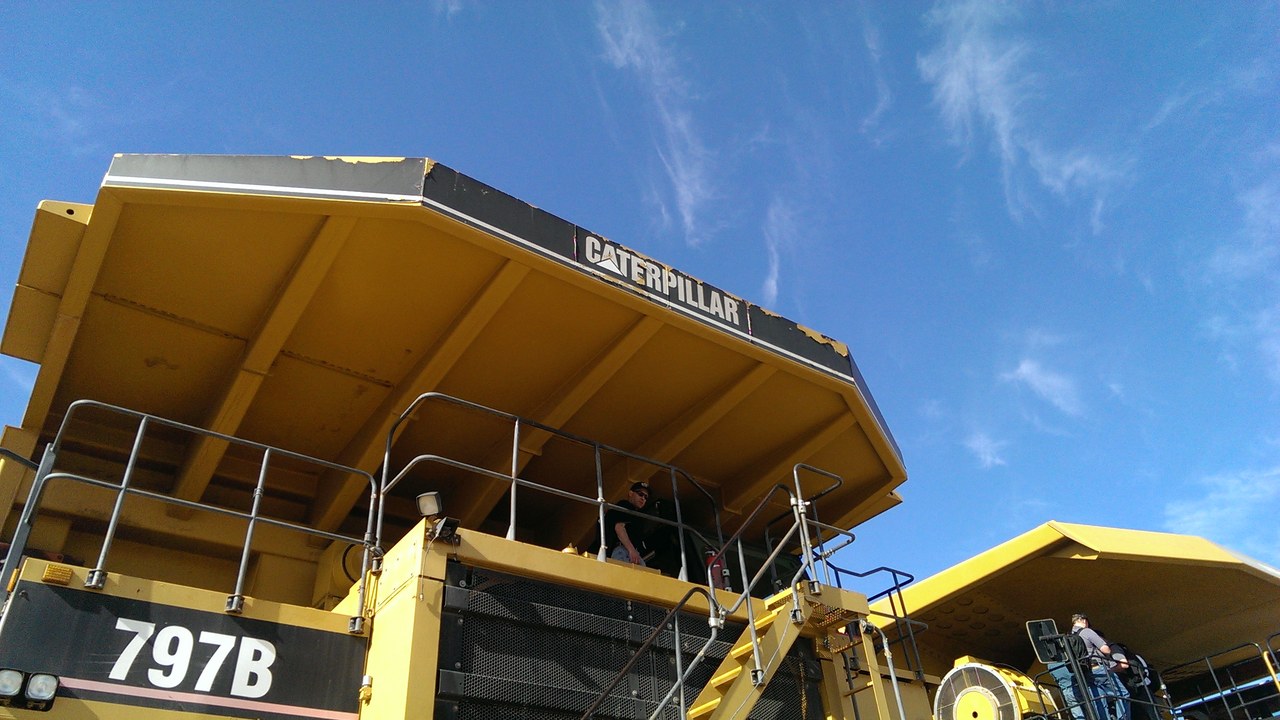
Caterpillar introduced the 797B in the spring of 2002, raising the payload of its flagship 797 line to 380 short tons, or 345 tonnes. A quad-turbocharged Cat 3524B engine rated at 3,550 gross horsepower pushes it to a top speed of 42 mph.
The B model bridged the original 1999 truck and the later 797F, which moved to a single 20-cylinder engine and a 400-short-ton rating. Each step raised both payload and horsepower, showing how Caterpillar kept stretching the same basic two-axle design to stay near the top of the payload race.
4. Liebherr T 282C: The Last Of A Line
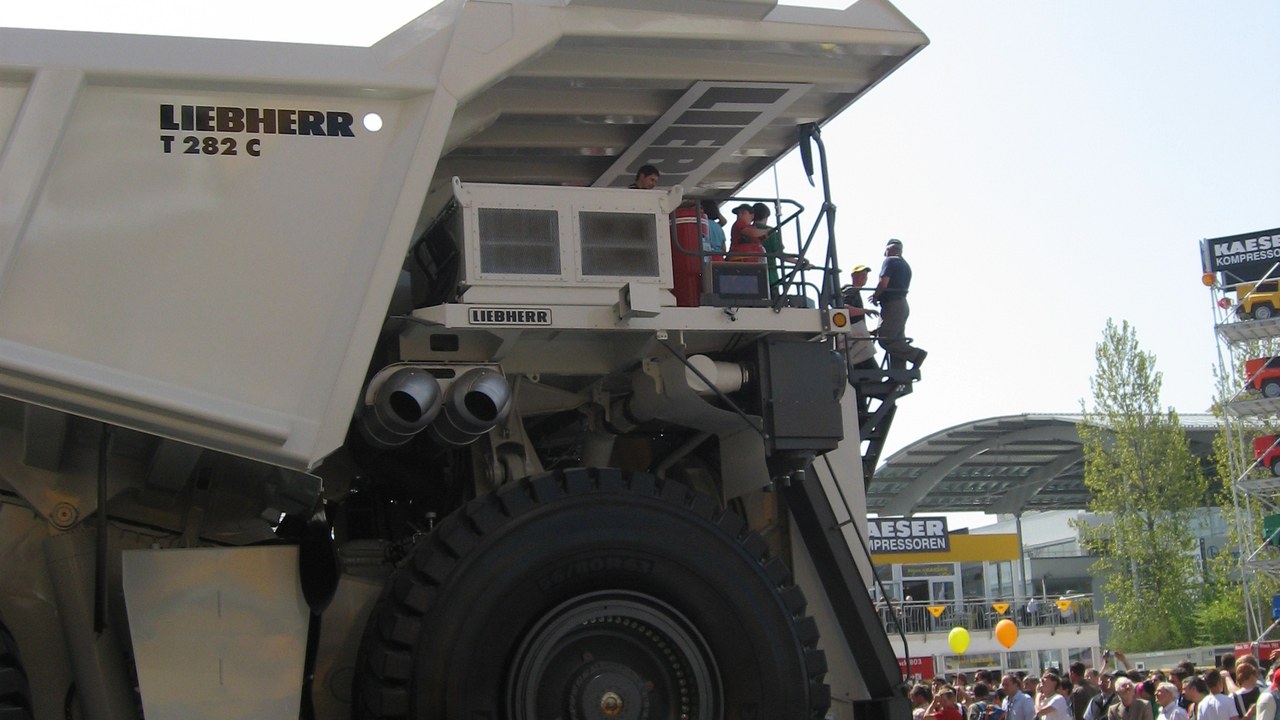
The Liebherr T 282C belongs to the 363-tonne payload class, and its production run ended in November 2018 when five trucks for BHP’s Peak Downs operation in Australia became the last ultra-class machines to leave the line. Liebherr replaced it with the T 284, first shown at MINExpo 2012.
The C model followed the record-setting T 282B and kept the same enormous 363-tonne payload class. Its successor, the T 284, was pitched by Liebherr as the lightest and most capable truck in the ultra class, a sign of how fiercely makers now compete on empty weight as well as capacity.
5. Komatsu 930E: Japan’s Electric Workhorse
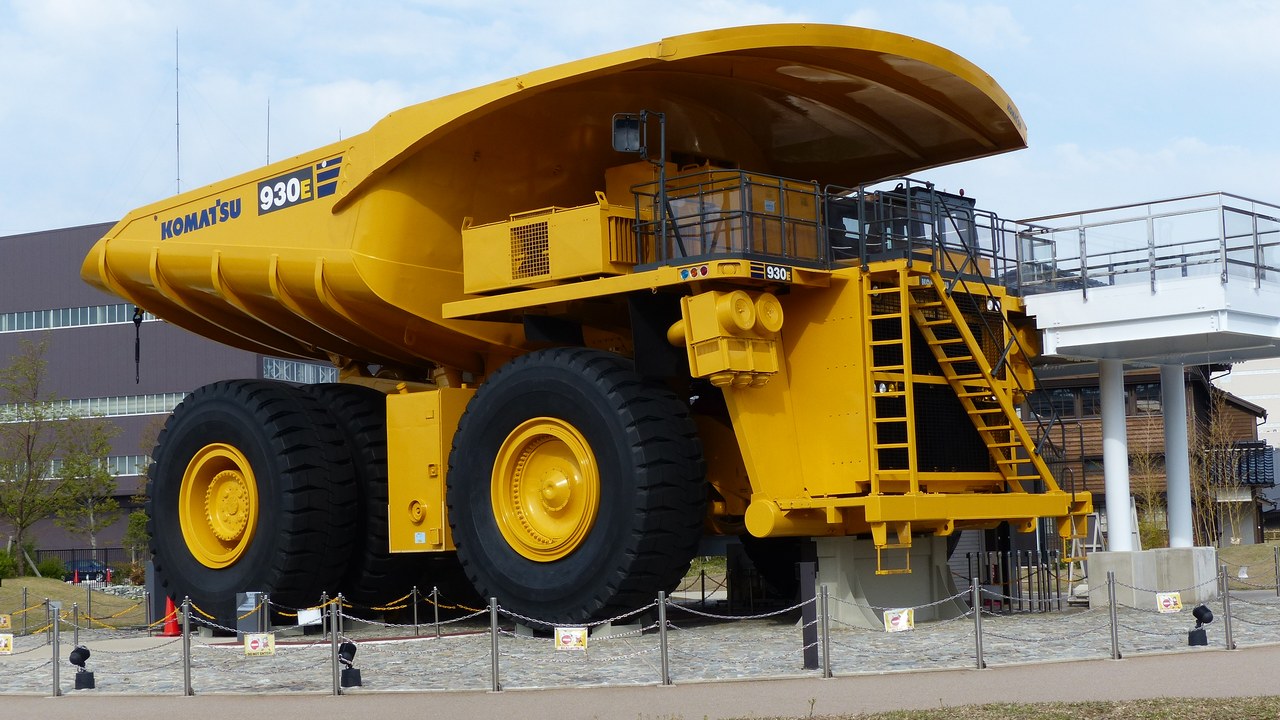
Komatsu’s current 930E-5 carries 320 short tons, or 290 metric tonnes, per load. A 2,700-horsepower engine drives an electric generator, and the fully loaded truck is rated at a nominal gross weight of 1,150,000 pounds.
The 930E name has carried through several generations, each built around the same diesel-electric layout. Electric wheel motors handle both propulsion and retarding on long downhill hauls, an approach Komatsu has used on its largest haulers for decades and one that eases the strain on mechanical brakes.
6. Liebherr T 264: Built For Speed
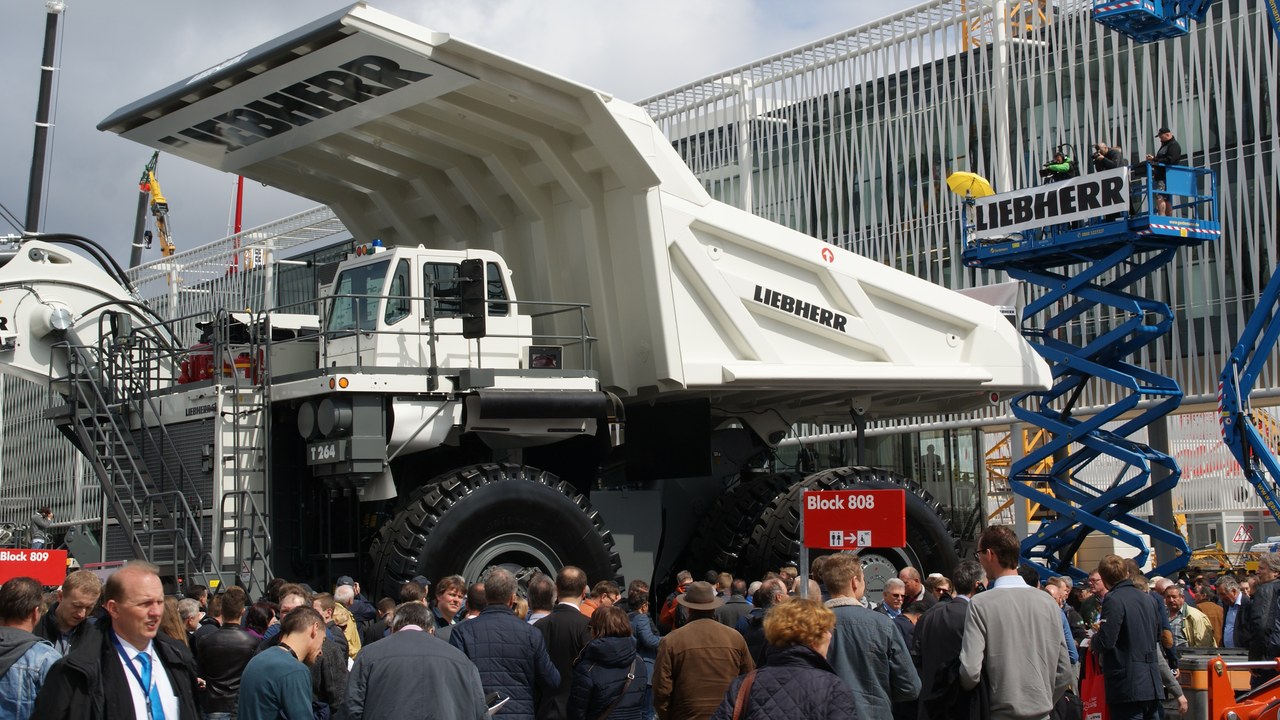
The Liebherr T 264 is rated for a 240-tonne payload and a gross vehicle weight of 416 tonnes, with engines producing 2,013 kW. Liebherr says its diesel-electric T 264 offers the fastest cycle times and biggest payload in its class.
Smaller than the ultra-class giants, the T 264 trades raw capacity for speed between shovel and dump point, which matters in pits where haul roads are short. Liebherr cites more than 2.2 million operating hours of field experience, and it has also shown a battery-electric version.
7. Liebherr T 282B: Four Years Unbeaten
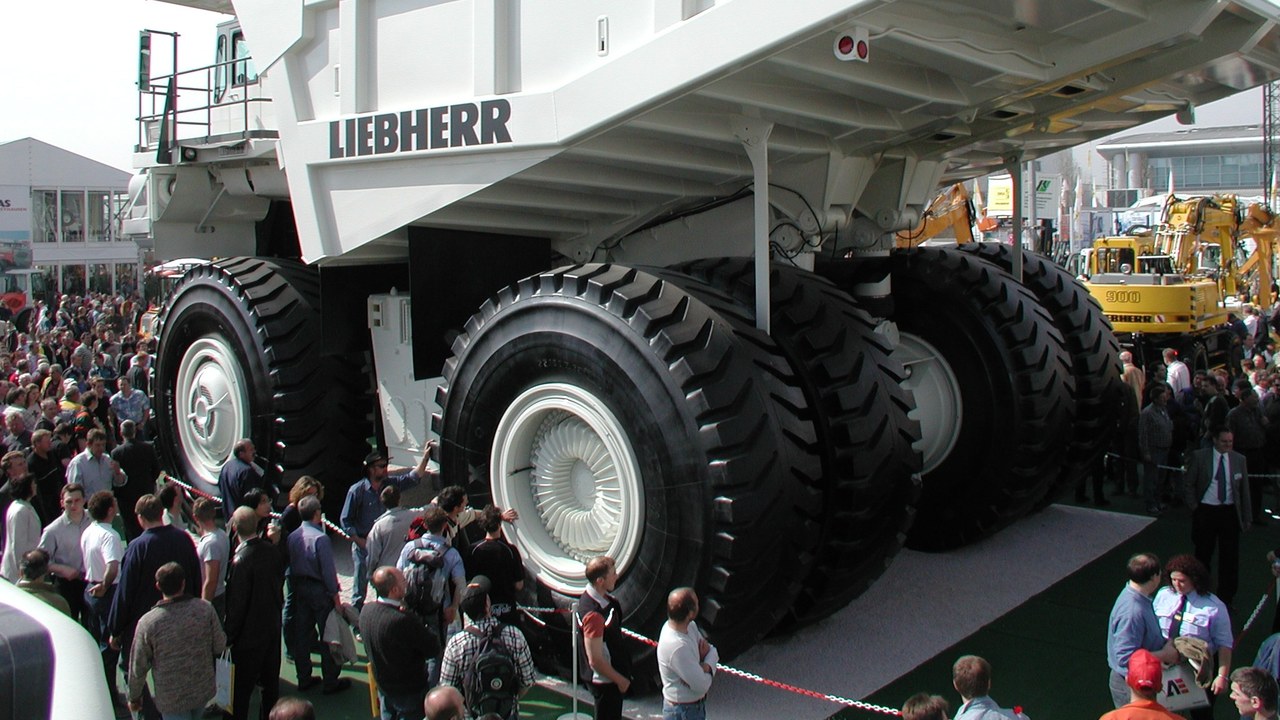
When it launched in 2004, the T 282B carried the largest haul truck payload in the world at 363 tonnes, a record that stood unmatched for more than four years. Liebherr held that title longer than most rivals have managed since.
The T 282B’s run at the top shows how slowly the payload ceiling moved before the mid-2000s, and how quickly newer entrants like the BelAZ 75710 would later blow past it once manufacturers started chasing the record again, eventually pushing payload figures roughly 90 tonnes beyond anything the T 282B ever carried.
8. BelAZ 75600: The Record Holder’s Big Brother
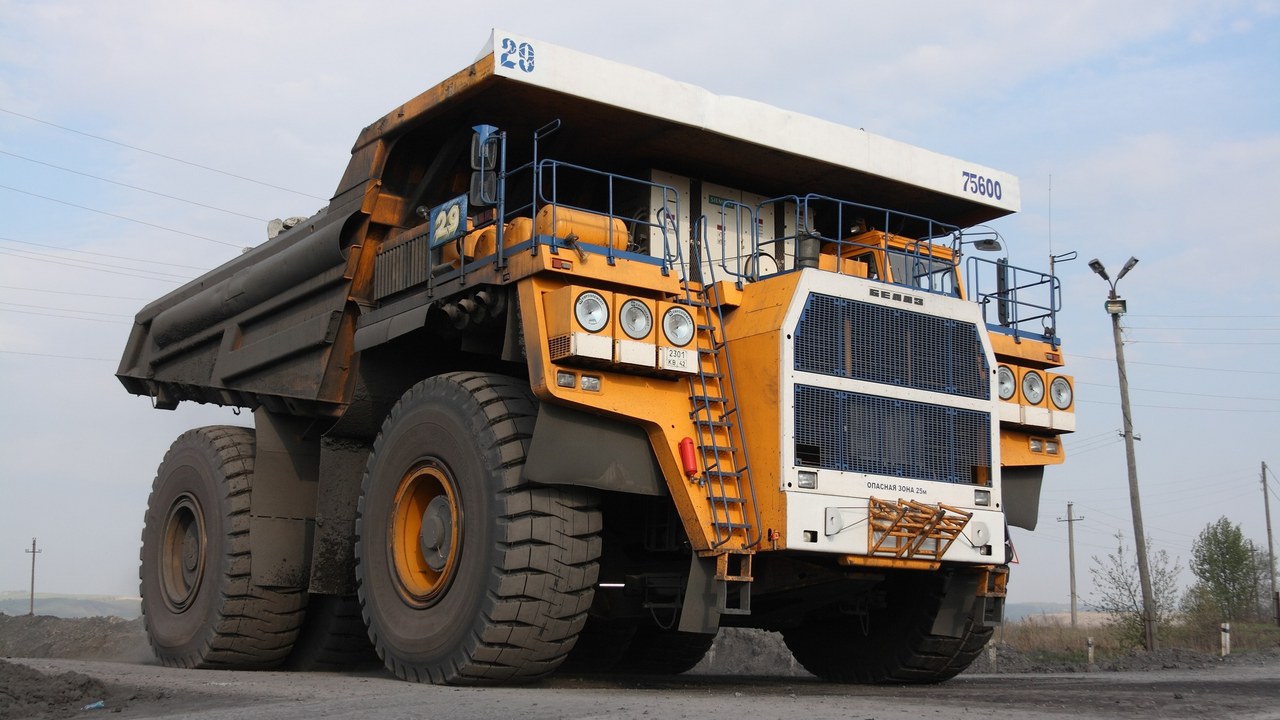
Before the 75710 arrived, the BelAZ 75600 series was the Belarusian maker’s biggest truck, with a maximum payload of 320 tonnes, or 350 short tons. Buyers can choose a Cummins QSK78 engine in the 75600 or an MTU 20V4000 in the 75601, rated at 2,610 kW and 2,800 kW.
The two engine options let mines choose between suppliers for parts and service, a practical concern for trucks that may run nearly nonstop. The series came before the eight-wheeled 75710, which later pushed BelAZ to the very top of the payload rankings.
9. Terex 33-19 Titan: The Original Giant
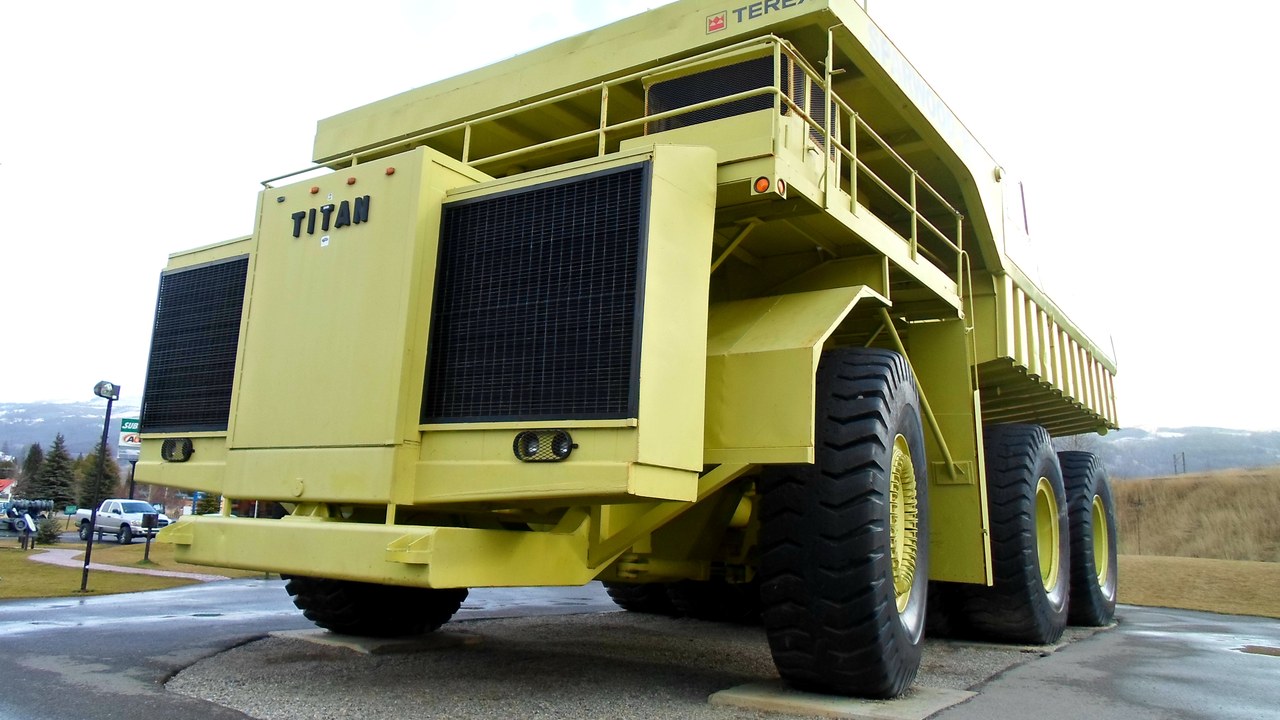
Built in 1973, the Terex 33-19 Titan carried 350 short tons and held the title of the world’s largest haul truck for 25 years before newer designs finally passed it. Only one Titan was ever built.
Rather than being scrapped, the Titan now sits on static display in Titan Park off Highway 3 in Sparwood, British Columbia, a reminder of just how far the ultra-class truck category has grown since a single prototype set the bar half a century ago.
10. Caterpillar 793D: The Everyday Heavy Hauler
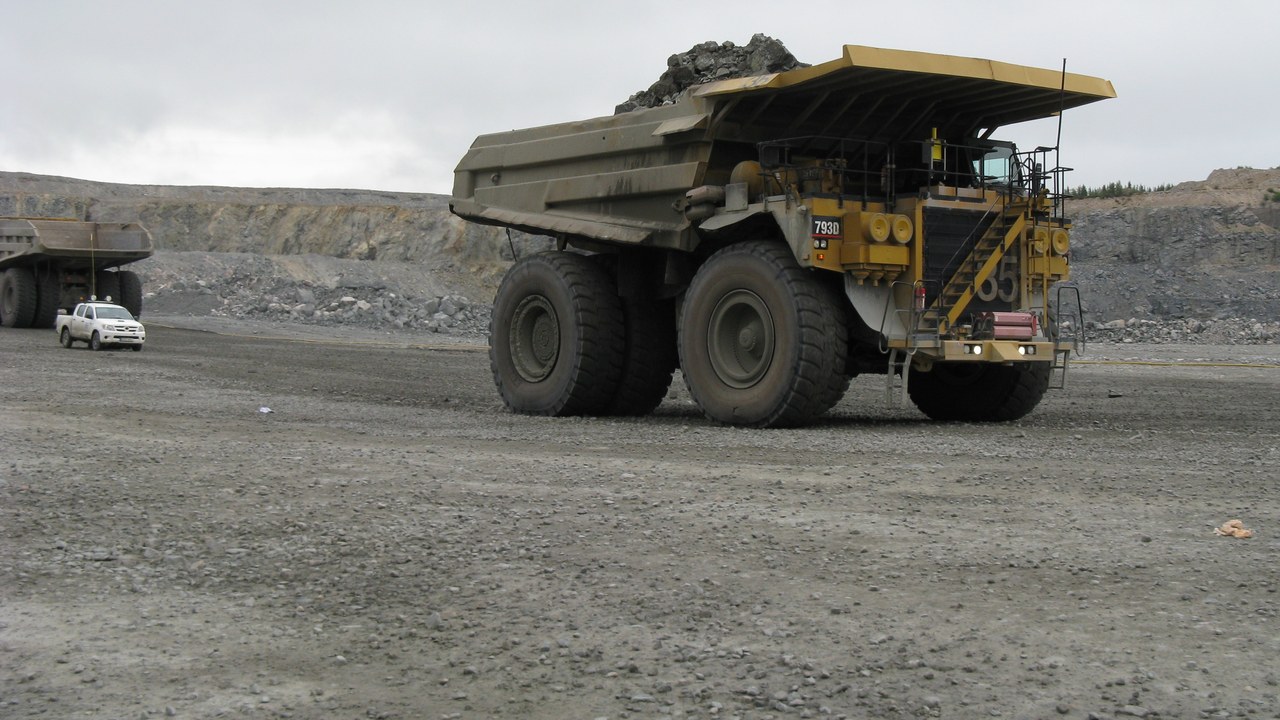
The Caterpillar 793D carries a nominal 240-ton payload, powered by a Cat 3516B HD engine rated at 1,801 kW. Caterpillar offered it in five arrangements, including Extra Top Speed for long flat hauls and a High Altitude package for mines above 2,750 meters.
The 793 family sits a step below the ultra-class trucks at the top of this list, but its size lets mines pair it with a wider range of shovels and loaders. Those flexible arrangements mean one basic truck can be tuned for very different haul roads and climates.
More from Morning Overview
- Older Teslas are wearing out in ways early owners never saw coming
- Early electric-car owners are hitting battery and screen failures no one warned them about
- A magnitude 5.3 quake struck off the Oregon coast this week
- Amazon’s Prime refunds are rising to $200 as millions more customers become eligible
