Many scientists hold the belief that the paradoxes associated with time travel, which have perplexed thinkers for centuries, can indeed be resolved. This notion arises from various scientific theories that continue to push the boundaries of our understanding of time, space, and reality.
Understanding Time Travel Paradoxes
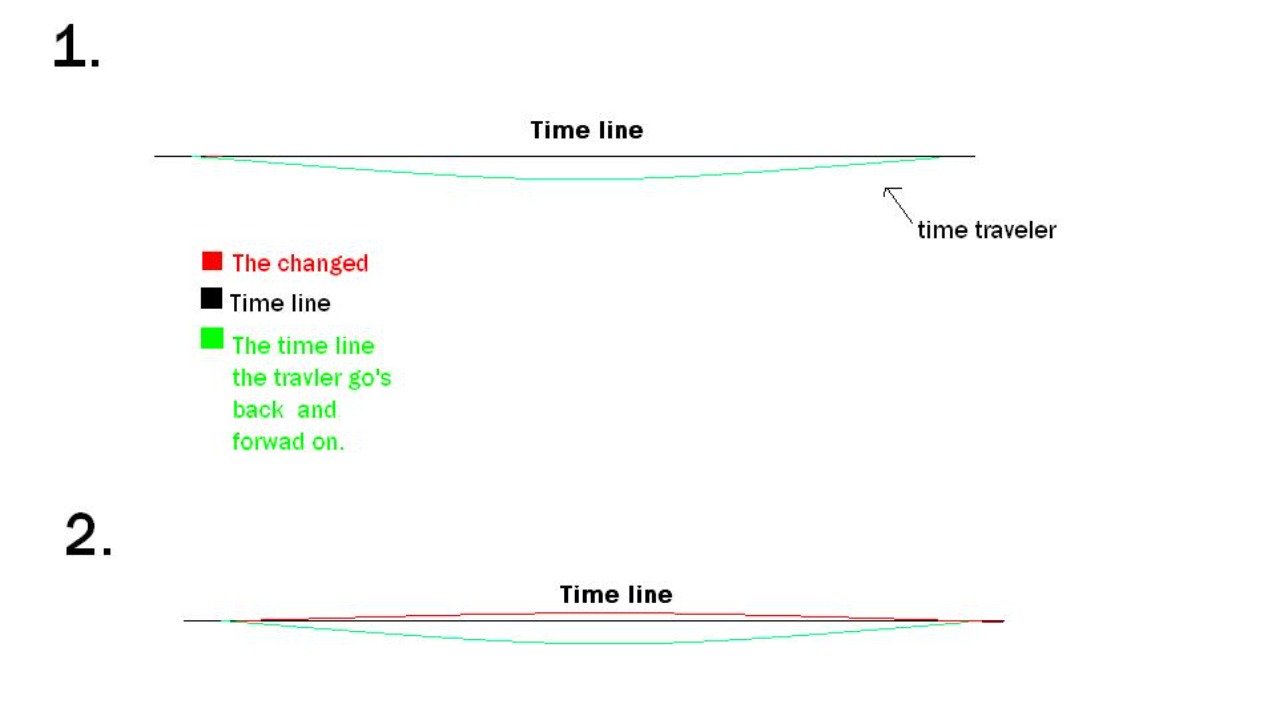
Time travel has always been a fascinating subject, largely due to the paradoxes it potentially introduces. Consider the well-known Grandfather Paradox. The crux of this paradox is the hypothetical scenario in which someone travels back in time and kills their own grandfather before the birth of their parent. This would apparently prevent the time traveler’s own existence, creating a logical inconsistency.
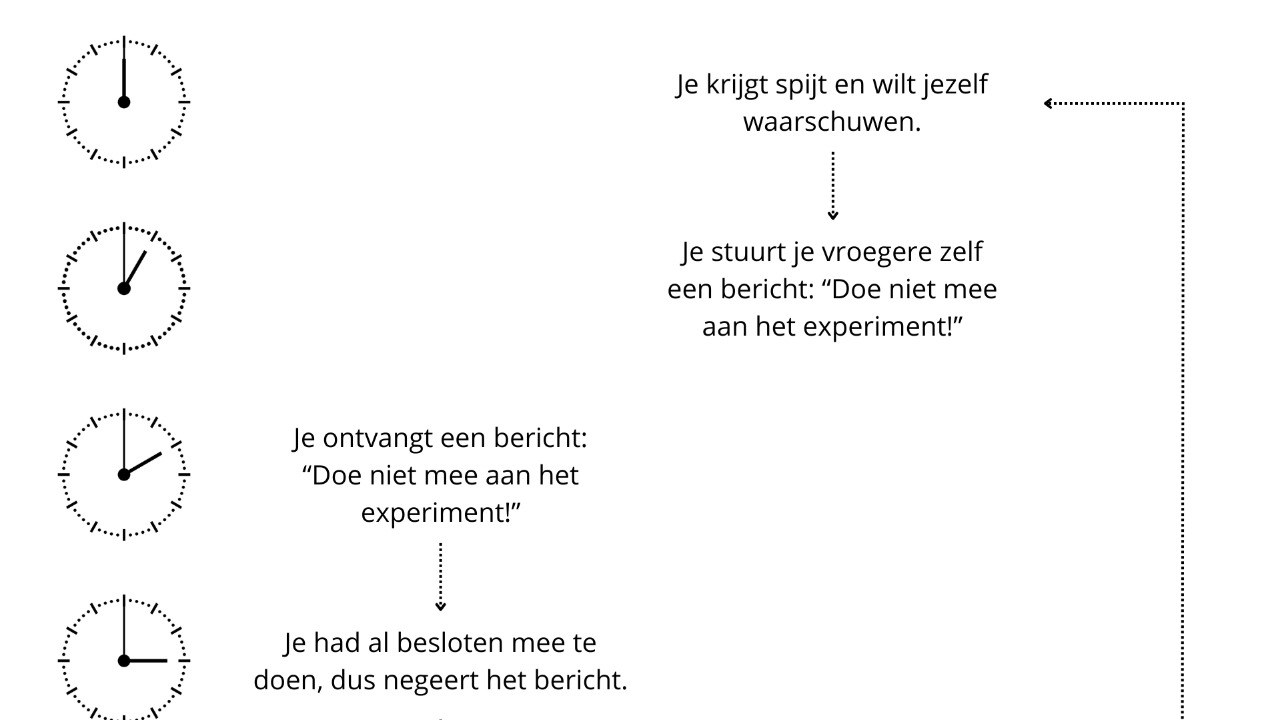
Another famous paradox is the Bootstrap Paradox, which involves an item or information sent back in time that becomes the source of the same item or information in the future. This creates a closed loop in time with no discernible origin, making it a perplexing concept. These paradoxes highlight some of the significant challenges we face when conceptualizing time travel.
Quantum Superposition and Its Implications for Time Travel
The principle of quantum superposition, a cornerstone of quantum mechanics, might provide some insights into the resolution of time travel paradoxes. In essence, this principle suggests that a particle can exist in multiple states simultaneously until observed or measured. Applying this principle to time travel, one might exist in both the past and the future at the same time.
Research suggesting that quantum superposition could help resolve time travel paradoxes has been gaining traction. Scientists theorize that the superposition of states could allow for the existence of multiple timelines, thereby potentially resolving paradoxes like the Grandfather Paradox. However, it’s important to note that these are still theories and require further exploration.
Novikov Self-Consistency Principle
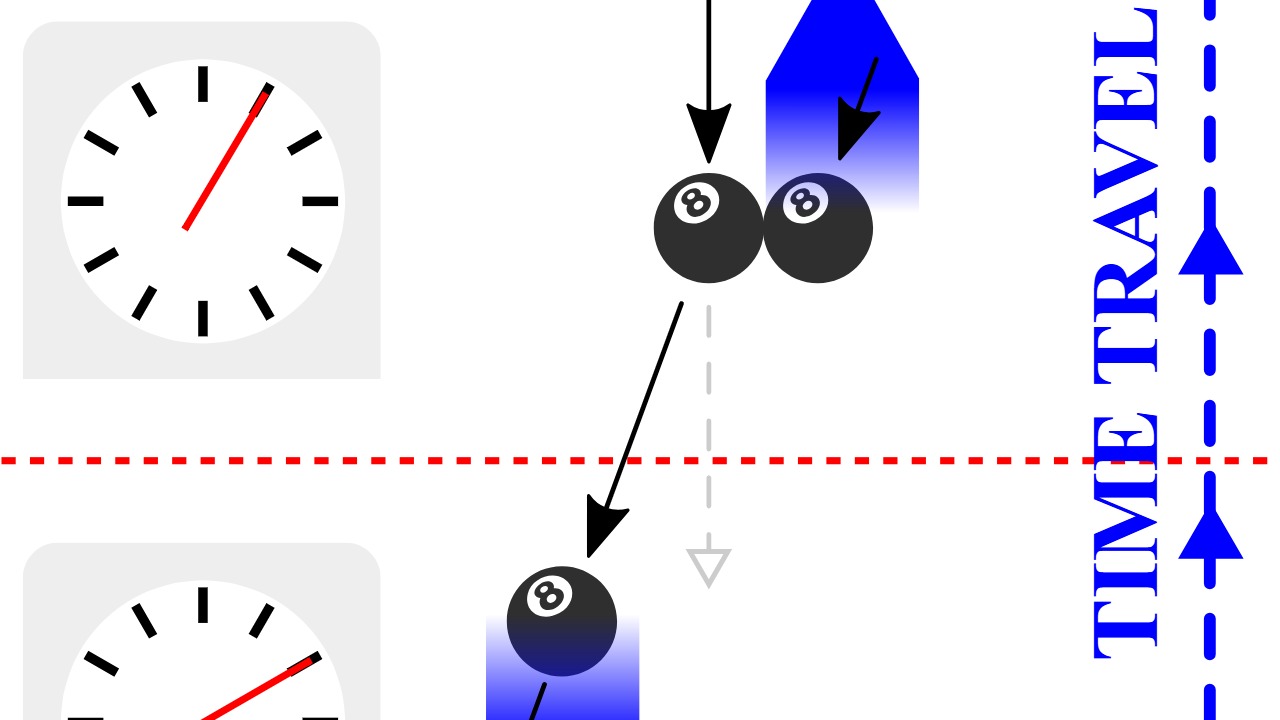
The Novikov Self-Consistency Principle is another theory that aims to address time travel paradoxes. This principle essentially states that if an event could cause a paradox, the probability of that event is zero. In other words, it’s impossible to create time paradoxes because any action a time traveler takes must have been part of history all along.
There is significant scientific support for this principle, as it seems to uphold the laws of causality. However, critics argue that it limits free will, as it suggests that time travelers are restricted in their actions. Despite these criticisms, the Novikov Self-Consistency Principle continues to be a major point of discussion in the scientific community.
Recent Mathematical Models Suggesting Paradox-Free Time Travel
Recent mathematical models have suggested that time travel could indeed be paradox-free. One study proposed that spontaneous timeline inconsistencies (or paradoxes) simply resolve themselves. The model suggests that the universe would adjust itself to any changes, maintaining a consistent timeline.
These models work on the concept of self-organizing systems seen in nature, where any disturbances are naturally corrected over time. If these models hold up to scrutiny, they could provide strong evidence that time travel paradoxes might be resolvable. However, as with all scientific models, they need to be validated through rigorous testing and analysis.
Implications and Future Research

The resolution of time travel paradoxes would have profound implications for our understanding of time and reality. It could fundamentally change the way we perceive causality and the nature of existence. Furthermore, these theories and models could pave the way for new research directions in physics and cosmology.
Future research in this field might involve more advanced mathematical modeling and possibly even experimental testing, although the latter is currently beyond our technological capabilities. Nevertheless, the quest for understanding time, space, and reality continues. Ultimately, whether we can ever truly solve the mystery of time travel paradoxes remains to be seen. For now, we can only marvel at the possibilities and continue our pursuit of knowledge in this fascinating field. More on these theories can be found on this list of scientific theories about time.
