The reality we understand and interact with daily might, according to some scientists, be nothing more than an elaborate simulation. This hypothesis, intriguing as it may be, is supported by various philosophical, scientific, and technological perspectives and has far-reaching implications for our understanding of reality.
The Concept of Simulated Reality: An Overview

The simulation hypothesis proposes that our reality is not an independent existence but a complex construct or simulation. This idea, while it may seem far-fetched, has been gaining traction in various scientific and philosophical circles. The basic premise of the simulation theory is that advancements in technology, particularly in computational power, have reached a point where they can create a simulated universe indistinguishable from the real one.
Philosophically, the concept of a simulated reality finds roots in the age-old debate of perception versus reality. It brings to the fore questions about existence, consciousness, and the nature of reality itself. Some philosophers argue that if a simulated reality is indistinguishable from a ‘real’ one, then they are effectively the same, blurring the line between the simulated and the real.
Scientific Evidence: Are we living in a Simulation?
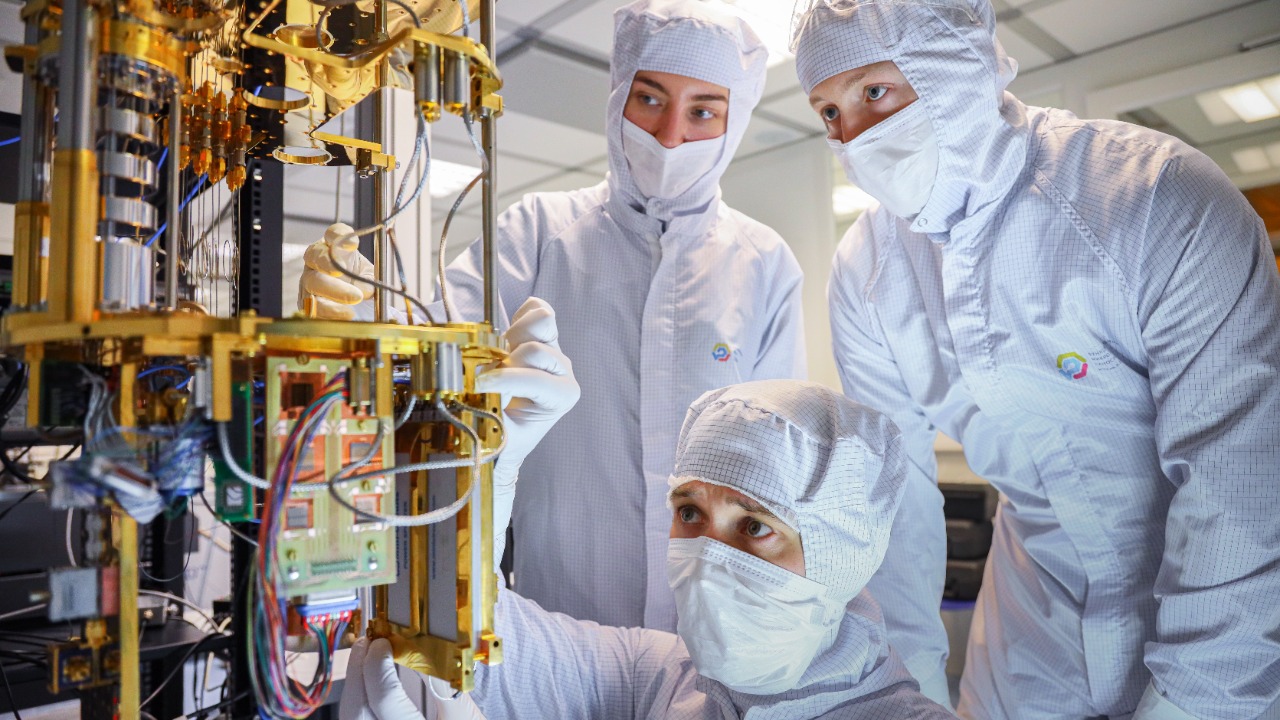
Quantum mechanics, with its paradoxes and counter-intuitive principles, has been a fertile ground for proponents of the simulation theory. Certain phenomena in quantum physics, such as the wave-particle duality and quantum entanglement, are seen by some as suggesting a simulated reality. In other words, these phenomena could be ‘glitches’ or ‘features’ of a computer-generated universe.
Another area of scientific interest is the role of mathematical patterns and constants in our universe. The prevalence of certain ratios, such as the golden ratio, or mathematical constants, like pi, in nature has led some scientists to suggest that these could be ‘clues’ or ‘signatures’ of a programmed universe. Additionally, the fact that our universe can be described and predicted so accurately by mathematical models and equations could be interpreted as evidence of a coded, simulated reality.
There have been various experiments and observations that scientists have proposed or conducted to test the simulation hypothesis. While these experiments have yet to provide definitive proof, they continue to fuel the ongoing debate about the nature of our reality.
Counterarguments: The Physical Impossibility of a Simulation

Not all scientists embrace the simulation hypothesis. Some argue that it is physically impossible to simulate a universe in its entirety due to the sheer complexity and scale of such a task. The amount of computational power required would be astronomical, far beyond what we can currently achieve or even foresee.
Another challenge in creating a simulated universe is the role of consciousness. The question of how consciousness arises, how it interacts with the physical world, and how subjective experience can be accounted for in a simulation presents significant challenges to the simulation hypothesis. Some argue that until we have a clear understanding and explanation of consciousness, the idea of a simulated reality remains speculative at best.
These counterarguments provide a necessary balance to the simulation hypothesis, highlighting the complexity and nuance of the debate. As one scientist explains, there is currently no definitive proof for or against the simulation hypothesis, and the question remains open for further research and exploration.
Implications of the Simulation Theory
The possibility of a simulated reality brings with it profound existential questions. If our reality is a simulation, what does that say about our existence? Are we mere lines of code in a cosmic program, or do we possess a unique, independent existence within the simulation? These questions challenge our understanding of reality and our place within it.
There are also ethical implications to consider. If our reality is simulated, then who are the simulators? What responsibilities do they have towards the beings within the simulation? And if we were to create our own simulated realities, what ethical guidelines should govern our interactions with those simulated beings?
Looking towards the future, the simulation theory presents a range of possible scenarios. If we were to confirm the simulation hypothesis, it could lead to a radical rethinking of our understanding of reality. If we were to refute it, we would nonetheless gain valuable insights into the nature of reality and our perception of it.
The Future of the Simulation Hypothesis

As technology continues to advance, it may provide further evidence for or against the simulation theory. Developments in quantum computing, for example, could potentially provide the computational power necessary to simulate a universe, lending credence to the simulation hypothesis. On the other hand, advances in neuroscience could lead to a better understanding of consciousness, which could challenge the feasibility of a simulated reality.
Future research in this field is likely to focus on finding definitive evidence for or against the simulation hypothesis. This could involve designing and conducting experiments that can test the hypothesis, as well as exploring the technological and philosophical implications of a simulated reality.
The role of artificial intelligence (AI) in this research is particularly noteworthy. AI has the potential to play a crucial part in proving or disproving the simulation hypothesis. For example, if we can create an AI that exhibits consciousness, it could suggest that consciousness can indeed be simulated. Conversely, if we find that there are inherent limitations to what AI can achieve, it could argue against the plausibility of a simulated reality.
