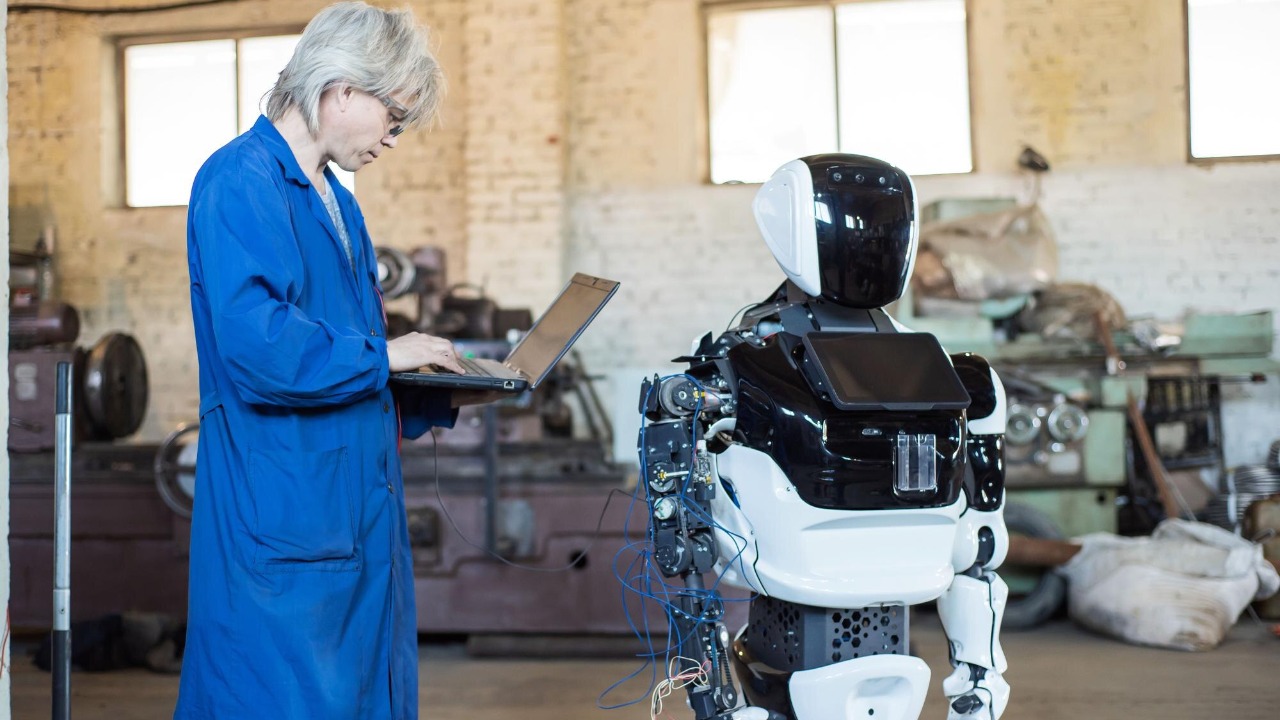

Corporate leaders keep promising that artificial intelligence will let them swap expensive humans for tireless software, yet the real world keeps pushing back. Across industries, attempts to fully automate complex jobs are running into messy data, brittle models, and customers who still want a person on the other end of the line. The pattern is clear: AI can be powerful, but when companies try to use it as a one-for-one replacement for workers, the results often flop.
Instead of a clean handoff from people to machines, what is emerging is a slower, more complicated reshaping of work. Systems that look impressive in demos stumble on real tasks, and organizations that rush to cut staff discover they still need human judgment, context, and accountability. The question is no longer whether AI is “good enough” in the abstract, but why so many real deployments fail to live up to the hype.
Automation dreams meet messy reality
In controlled tests, even advanced systems struggle to deliver the kind of reliable performance that would justify mass layoffs. In one large experiment, The AI tools evaluated through the Remote Labor Index failed on nearly half of the projects, often producing work that was simply not usable. That is not a rounding error, it is a structural warning that even when tasks look “digital,” they still contain edge cases, tacit knowledge, and coordination work that current models cannot reliably handle. When executives treat those systems as plug‑and‑play replacements, they are betting their operations on tools that still behave like interns, not seasoned staff.
The same fragility shows up inside IT departments that are supposed to be the most AI‑savvy. Practitioners describe how Data privacy and risks, integration headaches, and governance gaps slow or derail deployments that looked straightforward on paper. A leadership guide on AI value creation warns that executives keep Mistaking technical readiness for organizational readiness, assuming that because a model runs in a lab, the business is ready to reorganize around it. When that assumption collides with legacy processes and risk‑averse cultures, the “AI will replace workers” plan quietly turns into “AI will sit in a pilot environment for another year.”
Why so many AI projects fail inside companies
Even before jobs are on the line, the majority of corporate AI initiatives never make it to full scale. One analysis of Enterprise AI Adoption Pitfalls highlights how projects launch without clear outcomes, with Lack of goals and strategy at the top of the list. Many companies spin up proofs of concept because boards demand “something with AI,” not because teams have mapped where automation will actually create value. As a result, Many pilots stall in separate departments, disconnected from core workflows and starved of the change‑management support that would be required to redesign jobs around them.
Process design is another hidden failure point. António Costa argues that Many AI initiatives are doomed because leaders try to automate broken processes instead of fixing them first, so the model ends up amplifying inefficiency rather than eliminating it. A neuroscience‑driven framework on Understanding Why AI adds a human layer: fear of job displacement undermines adoption, as employees quietly resist tools they believe are designed to erase their roles and their professional identity. When leadership treats AI as a headcount reduction lever instead of a collaboration tool, they trigger the very cultural antibodies that cause projects to fail.
Jobs are changing, not disappearing
Despite the hype, the data on employment disruption is more nuanced than an apocalypse narrative. A major forecast notes that While AI could account for 6% of total US job losses, equating to 10.4 m roles, it also stresses that widespread AI‑driven job replacement remains constrained by regulation, customer expectations, and the cost of large‑scale change. A separate assessment projects that the more realistic path is augmentation, with AI reshaping roughly one in five roles rather than wiping them out, and analysts at Jan citing Gartner to argue that human labor will remain central for the foreseeable future.
On the ground, workers are already describing this slower shift. One employee at a global firm wrote that they work for one of the biggest companies in the world and, while AI is being adopted, it is going to be a slow process that will not replace many “thinking” jobs within the next decade, a view shared in a Jan discussion. Career strategist Lauren Herring argues that the skills that matter most in leadership, negotiation, and complex collaboration are still out of reach for current systems, noting that Oct shows AI can automate tasks but cannot define what a job should be. Even in hands‑on roles, Electricians remain hard to replace because their work is physical, unpredictable, and rooted in real‑world problem solving, as highlighted in a list of Electricians and other jobs that resist automation.
When “AI replaces workers” backfires
Some companies are discovering the limits of full automation the hard way. A widely viewed breakdown of fast‑food experiments describes how, since 2023, Taco Bell rolled out artificial intelligence at more than 1,000 drive‑throughs, only to face customer frustration when the systems misheard orders or could not handle simple customizations, a cautionary tale captured in a Cold Fusion video. In contact centers, industry analysts now say 2026 is the year leaders accept that AI alone cannot run customer support, with the most successful organizations shifting their strategy from “Replace agents” to “Augment agents,” a pivot described in an assessment of how 2026 is redefining maturity in that sector.
Healthcare finance offers a similar lesson. Hospitals are pouring money into AI‑powered revenue cycle tools, and More than half of senior finance leaders expect these systems to improve margins, yet early adopters report that automation alone is not enough to fix billing and reimbursement, according to an analysis of why More automation still needs human oversight. In clinical care, physicians are pushing back on the idea that algorithms will replace them, arguing that Much of the anxiety about AI in medicine is misplaced because the technology is better suited to augmenting diagnosis and workflow than to taking over the doctor‑patient relationship, a point made in a reflection that Much of the fear of replacement distracts from using AI to improve outcomes.
The quiet pivot from replacement to augmentation
Despite these setbacks, the pressure to cut labor costs is not going away. One widely cited survey found that Nearly 4 in 10 companies plan to replace workers with AI by 2026, with High earners and employees without AI skills flagged as the most at risk for layoffs, according to Nearly the survey. Yet even among firms that have already cut staff, there are signs of reconsideration. Labor analysts expect that in 2026, companies that rushed to downsize during early AI adoption will reevaluate those decisions, with some turning “AI fires” into boomerang hires, a trend previewed in coverage that cites In 2026 and uses Swedish buy‑now‑pay‑later giant Klarna as an example.
Inside organizations, leaders are slowly learning that the real work is not swapping humans for software, but redesigning roles so people and systems complement each other. A leadership coach who studies failed deployments notes that Nov shows boards often demand visible AI moves without funding the training and change management needed to make them stick. Another practitioner framework argues that to avoid wasted investment, organizations must confront blind spots around incentives, culture, and the ability to sustain new ways of working, as outlined in the The SPACES Framework. Even developers are becoming more cautious, with one analysis noting that Here is the uncomfortable truth: as systems have grown more “agentic,” trust has actually fallen because of hallucinations and unpredictable behavior in edge cases, a concern detailed in a piece on Here for developers.
More from Morning Overview