The YF-23 Black Widow II and the J-20 Mighty Dragon stand as titans of modern military aviation, each illustrating the technological prowess of their respective nations. As stealth fighters, they incorporate cutting-edge innovations tailored for dominance in aerial combat. A face-off between these two aircraft offers a fascinating glimpse into their distinct design philosophies and the strategic imperatives that guided their creation. This exploration delves into their capabilities, from stealth features to combat systems, to assess which might hold the upper hand in a hypothetical encounter.
Design and Development
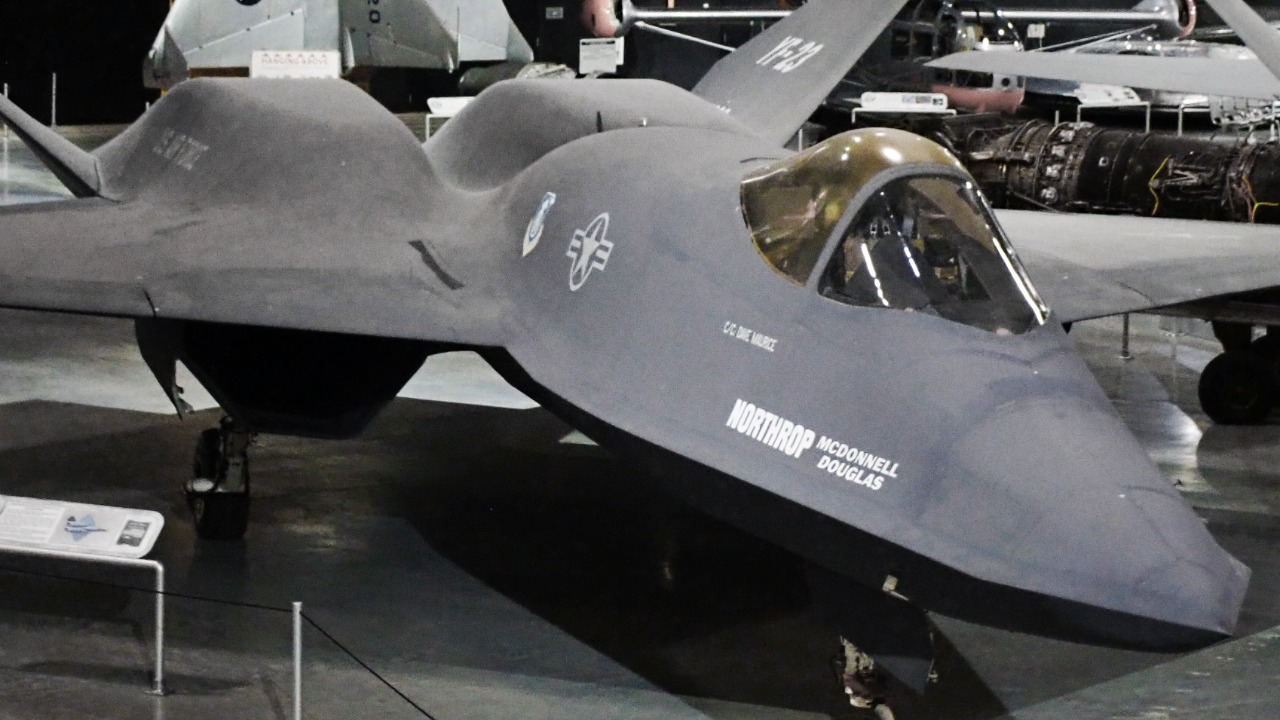
YF-23 Black Widow II Origins
The YF-23 Black Widow II emerged from the United States’ Advanced Tactical Fighter (ATF) program in the late 1980s and early 1990s, a period marked by significant geopolitical shifts and military innovation. Developed by Northrop Grumman, the YF-23 was designed to address the challenges posed by emerging Soviet threats. Its development was driven by a need for a next-generation fighter that could outperform the aging fleet of F-15s and F-16s. While it ultimately lost the ATF competition to the Lockheed Martin F-22 Raptor, the YF-23’s innovative design continues to be a reference point in stealth technology.
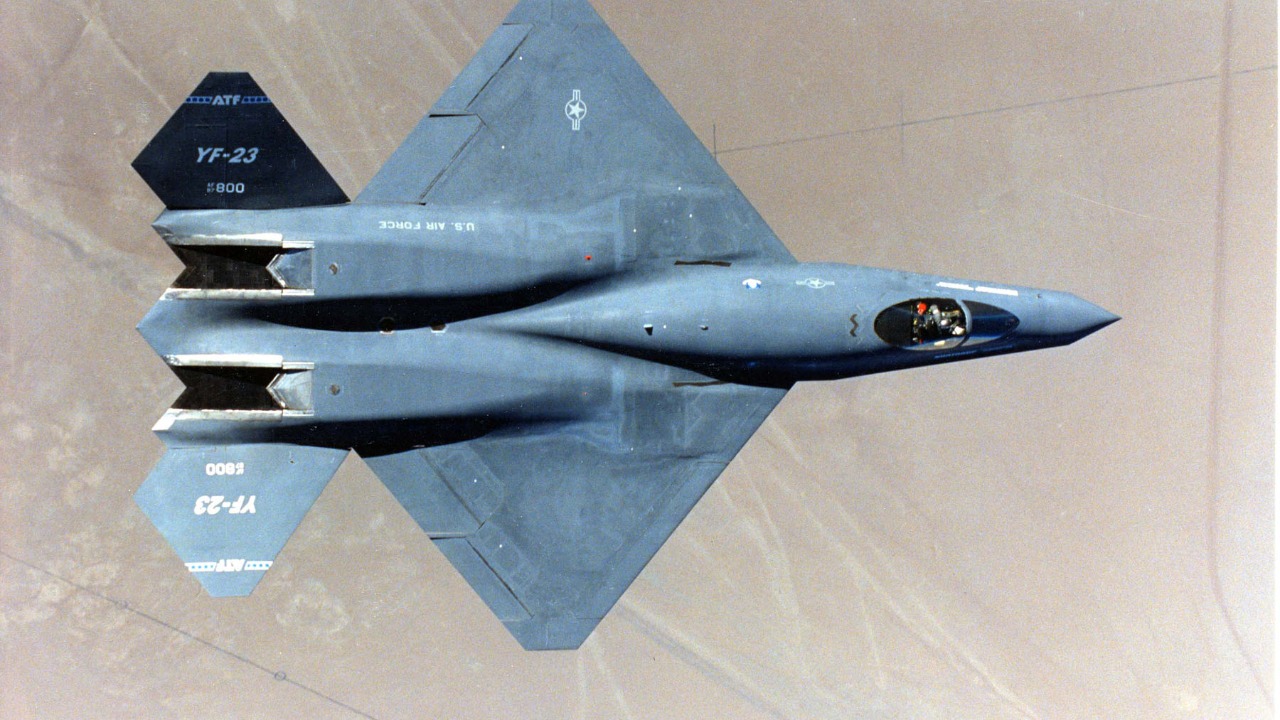
The YF-23’s development was characterized by a focus on stealth and speed, integrating advanced materials and unique aerodynamics to minimize radar cross-section. Its diamond-shaped wings and V-tail configuration were pioneering at the time, allowing for reduced drag and enhanced stealth capabilities. Despite its cancellation, the YF-23 remains a symbol of American ingenuity and ambition in aerospace design.
J-20 Mighty Dragon’s Evolution
China’s J-20 Mighty Dragon represents a significant leap in the country’s military aviation capabilities. Developed by Chengdu Aerospace Corporation, the J-20 was conceived as part of China’s broader strategy to achieve parity with Western air forces and assert its regional influence. The J-20’s development, which began in the late 1990s, reflects China’s determination to integrate advanced stealth technology and long-range capabilities into its air force.
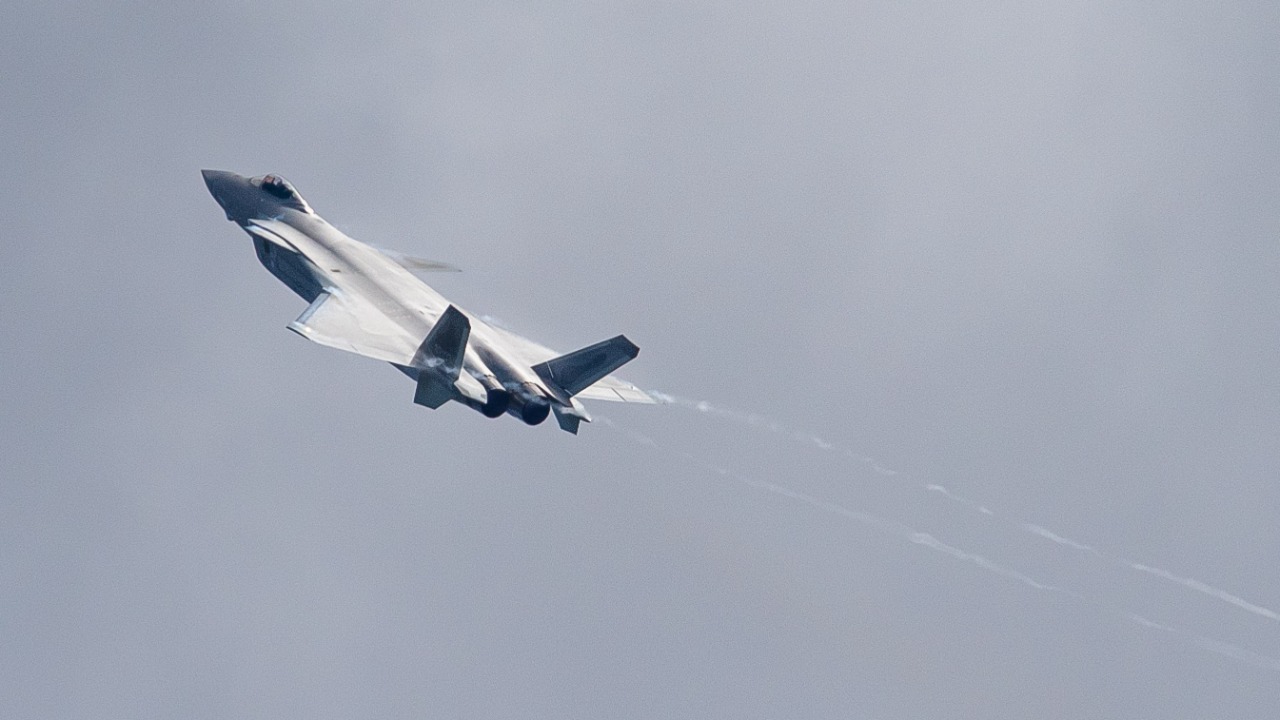
The J-20’s evolution has been marked by continuous upgrades and refinements, including advancements in stealth coatings, avionics, and propulsion systems. Its design incorporates features aimed at maximizing stealth, such as canards, a blended fuselage, and internal weapons bays. These elements, combined with its long-range capabilities, position the J-20 as a formidable platform for both air superiority and strategic deterrence. For more details, you can explore an analysis of the J-20’s capabilities here.
Stealth Capabilities
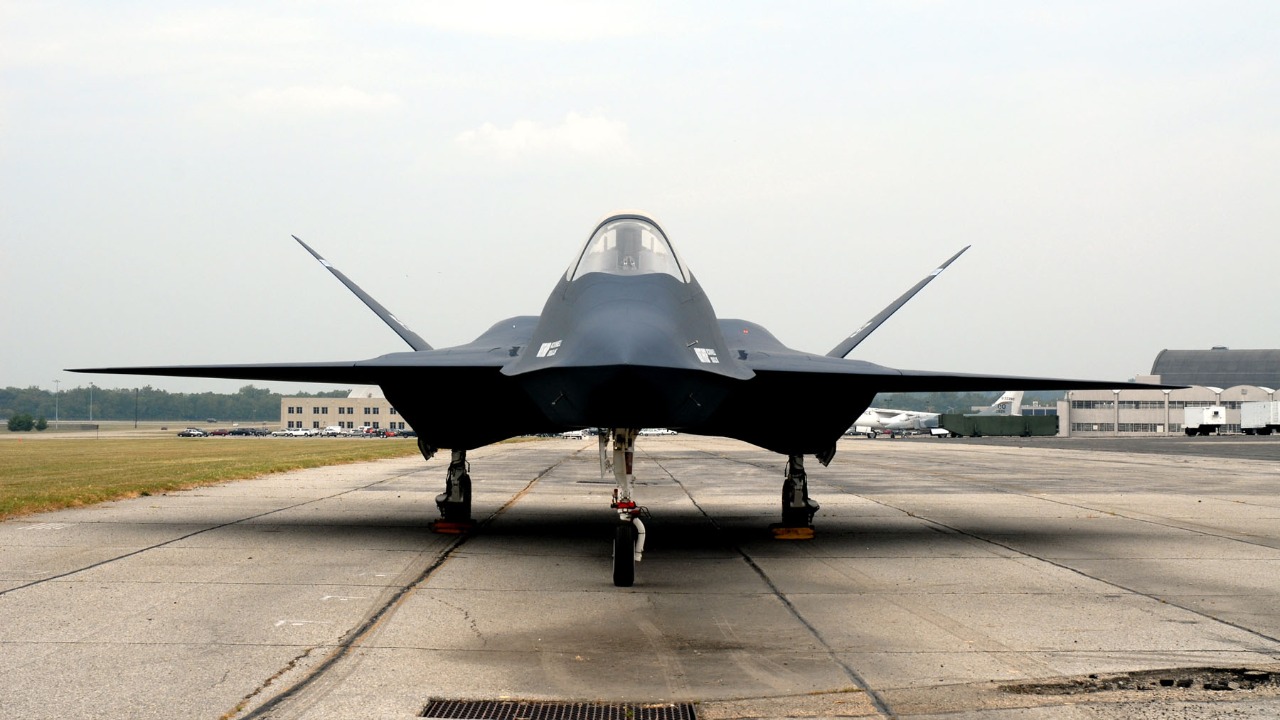
Radar Evasion Technology
Stealth technology is a critical component of both the YF-23 and the J-20, with each aircraft employing distinct approaches to radar evasion. The YF-23’s design prioritizes stealth through its unusual shape, which includes diamond-shaped wings and a V-tail. These elements, combined with radar-absorbing materials, were intended to minimize its radar cross-section, making it difficult for enemy radar systems to detect.
In contrast, the J-20 incorporates a combination of design features and materials to achieve stealth. Its canard-delta configuration, coupled with a carefully shaped fuselage, helps reduce its radar signature. Additionally, the use of radar-absorbent coatings further enhances its stealth capabilities. The ongoing evolution of the J-20 suggests that China continues to invest heavily in refining its stealth characteristics, aiming to match or surpass Western standards.
Infrared and Electronic Warfare
Both fighters are equipped with advanced infrared and electronic warfare systems designed to evade detection and counter enemy threats. The YF-23 was designed with infrared suppression in mind, using engine placement and exhaust cooling techniques to reduce its heat signature. These features, though never fully tested in combat, highlight the aircraft’s potential to evade infrared tracking systems.
The J-20, on the other hand, has been outfitted with sophisticated electronic warfare suites that enhance its survivability. These systems include electronic countermeasures that can disrupt enemy radar and communication systems, providing a tactical advantage. Additionally, the J-20’s emphasis on network-centric warfare allows it to integrate seamlessly with other assets in the Chinese military, enhancing its overall effectiveness. For a deeper dive into the infrared and electronic warfare capabilities, check out this resource.
Performance and Maneuverability
Speed and Range
The YF-23 and J-20 both boast impressive speed and range, critical factors in determining their combat effectiveness. The YF-23 was designed with a focus on high-speed performance, utilizing two Pratt & Whitney YF119 engines capable of achieving speeds exceeding Mach 2. Its innovative propulsion system, which included variable cycle technology, promised exceptional range and endurance.
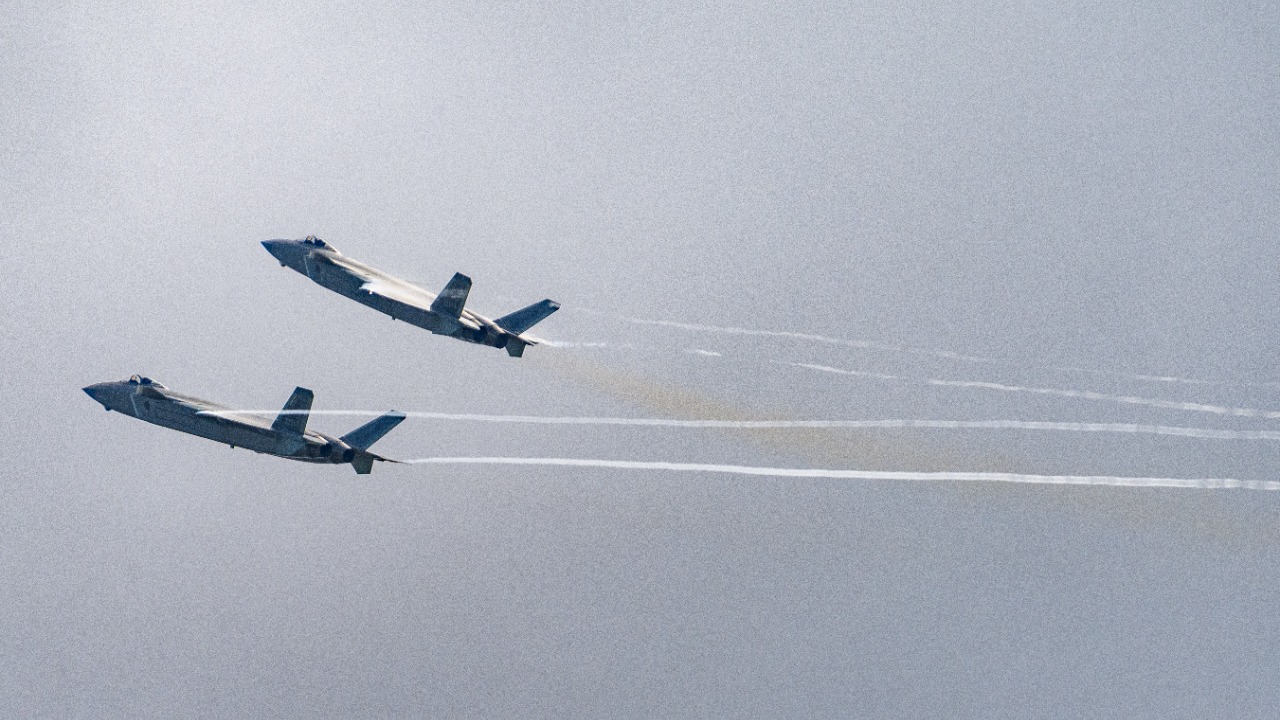
The J-20’s performance metrics are equally noteworthy. Powered by a pair of advanced turbofan engines, the Mighty Dragon is believed to achieve speeds comparable to the YF-23, with a focus on long-range missions. This capability is crucial for China’s strategic objectives, allowing the J-20 to project power across vast distances. The J-20’s operational range, combined with its refueling capability, ensures it can maintain a persistent presence in contested areas.
Agility and Combat Maneuvering
Maneuverability is another area where the YF-23 and J-20 diverge. The YF-23’s aerodynamic design, featuring diamond-shaped wings and a V-tail, was optimized for stability at high speeds rather than extreme agility. This design choice reflects a strategic emphasis on speed and stealth rather than close-quarters dogfighting.
Conversely, the J-20 incorporates features aimed at enhancing its agility in combat. The canard configuration, coupled with advanced control surfaces, provides the J-20 with improved maneuverability. This design prioritizes versatility, allowing the J-20 to engage effectively in various combat scenarios. The combination of speed, range, and agility positions the J-20 as a versatile platform capable of adapting to diverse mission requirements.
Weaponry and Combat Systems
Armament Configuration
Both the YF-23 and J-20 are equipped with advanced weaponry designed to establish air superiority and conduct precision strikes. The YF-23 was intended to carry a mix of air-to-air missiles within its internal weapons bays, preserving its stealth profile. Although it never entered production, its potential payload included AIM-120 AMRAAMs and AIM-9 Sidewinders, aligning with its role as a formidable air superiority fighter.
The J-20’s armament is similarly impressive, with a focus on versatility and firepower. Its internal weapons bays can accommodate a variety of air-to-air and air-to-ground missiles, including the PL-15 and PL-21 long-range missiles. This flexibility allows the J-20 to perform a range of missions, from intercepting enemy aircraft to engaging ground targets. For more insights into the J-20’s combat capabilities, you can read more here.
Avionics and Targeting Systems
Advanced avionics and targeting systems are crucial components of both fighters, enhancing their combat effectiveness. The YF-23 was designed to integrate state-of-the-art avionics, including advanced radar systems capable of tracking multiple targets simultaneously. These systems were intended to provide a comprehensive situational awareness, allowing pilots to make informed decisions in high-stakes environments.
The J-20 features a sophisticated suite of avionics, including an advanced radar system and electro-optical targeting systems. These technologies enable the J-20 to detect and engage targets at long ranges, enhancing its strategic reach. The integration of these systems reflects China’s focus on creating a network-centric fighter capable of operating in highly contested environments.
Tactical Advantages
Strategic Roles and Deployment
The strategic roles of the YF-23 and J-20 are shaped by their respective national defense strategies. The YF-23 was envisioned as a key component of the United States’ air superiority doctrine, emphasizing rapid response and global reach. Although it was never deployed, its design philosophy underscores the importance of stealth and speed in maintaining air dominance.
The J-20, in contrast, serves as a cornerstone of China’s military modernization efforts. Its deployment aligns with China’s goals of regional power projection and deterrence. The J-20’s ability to operate in contested areas, coupled with its long-range capabilities, supports China’s strategic objectives in the Asia-Pacific region and beyond. This dual role of deterrence and power projection underscores the J-20’s significance within China’s military arsenal.
Past Performance and Missions
While the YF-23 never saw active service, its legacy lives on through its influence on subsequent aircraft designs and stealth technology. Its development provided valuable insights into stealth and propulsion technologies that continue to inform modern aerospace engineering.
The J-20 has been actively integrated into the People’s Liberation Army Air Force (PLAAF), participating in various exercises and patrols. Its operational deployment in the South China Sea and other critical regions demonstrates its role in China’s strategic posturing. These missions provide insight into the J-20’s effectiveness and its evolving role in the Chinese military. For an analysis of the J-20 in various combat scenarios, you can explore more here.
