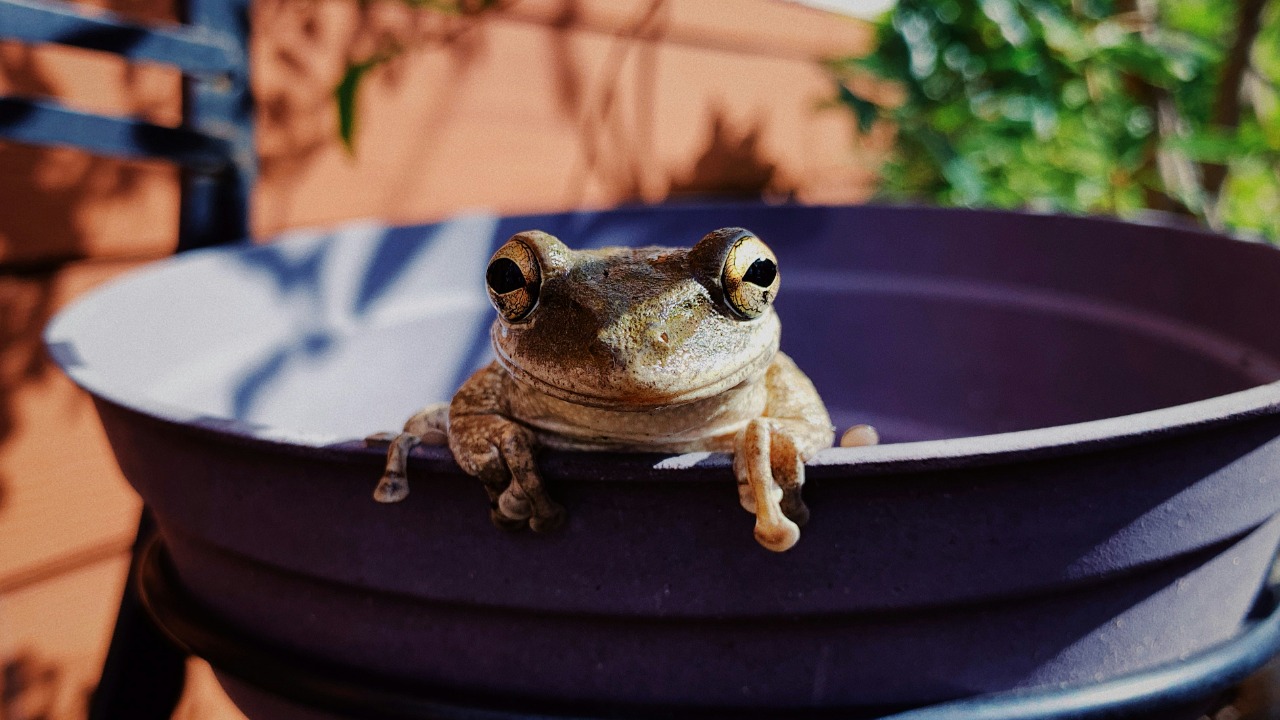

Artificial intelligence is sliding into physics classrooms so smoothly that it can feel like a harmless upgrade rather than a fundamental shift. The risk is not a sudden collapse of learning, but a slow erosion of reasoning skills as students offload more and more of the hard thinking to machines. The real question is when the water gets hot enough that educators, students, and policymakers decide they have to jump.
The frog in the physics lab
The old parable of the frog that fails to notice slowly heating water has become a shorthand for creeping, unnoticed risk, and it fits the way AI is entering physics education almost perfectly. Instead of a dramatic moment when teachers abandon problem sets to a chatbot, what I see is a series of small concessions: a hint here, a derivation there, a full solution when the homework is due in an hour. Each step feels reasonable, but together they can leave students surrounded by answers they did not actually produce.
Researchers studying AI in physics classrooms have started to describe this pattern explicitly as a “boiling frog” problem, warning that the danger is not one bad tool but a gradual shift in what counts as learning. In recent work on AI support for physics problem solving, the authors show how large models can now carry out multi-step reasoning that used to be the core of the course, which means the line between legitimate assistance and full outsourcing is moving under our feet. The more capable the systems become, the easier it is for both students and instructors to accept a little more automation without noticing how much conceptual work has been handed over.
From plug-and-chug to GPT-5 Thinking
Early classroom experiments with AI tutors often exposed a familiar weakness: models could plug numbers into formulas but struggled to connect concepts or justify each step. That limitation created a natural boundary, since a tool that only handled routine algebra still left the heavy conceptual lifting to the student. According to a detailed analysis of successive model generations, however, newer systems like GPT-5 Thinking have moved far beyond those plug-and-chug tendencies, producing structured reasoning chains that look a lot like the worked examples in a traditional physics textbook.
In that study, the authors compare outputs from earlier GPT models with the more advanced GPT-5 Thinking and find that the newer system can interpret word problems, select appropriate physical principles, and carry out multi-step derivations with a level of coherence that would have been unthinkable just a few years ago. The paper, available as an arXiv analysis, argues that this shift changes the nature of the risk: when an AI can not only compute but also explain, it becomes much harder for students to tell where their own understanding ends and the model’s begins.
Why incremental change is so hard to see
Part of what makes the boiling frog metaphor so sticky in discussions of AI is that it captures how humans misjudge slow, cumulative change. In a widely shared reflection on AI adoption, a Founder and Executive Recruitment Expert uses the story of the frog to warn that organizations can normalize each small efficiency gain without ever asking what kind of culture they are building. The same pattern shows up in classrooms when teachers accept one more AI-generated hint or allow one more assignment to be drafted with a model because it seems like a minor accommodation.
In physics education, the incrementalism is especially subtle because the subject already relies on layers of abstraction and symbolic manipulation. When a student moves from using a calculator to using a model that can “Drop” directly into a full derivation, the surface activity still looks like problem solving. The danger is that each new layer of assistance feels like a natural extension of the last, so neither students nor instructors feel a clear moment when they have crossed from support into substitution. By the time anyone notices that conceptual understanding has cooled, the habits around AI use may be deeply entrenched.
What the boiling-frog paper actually says
The most pointed version of this warning in physics education comes from a recent paper that explicitly labels the situation as a “boiling-frog problem.” The authors invoke the “well-known (and fortunately apocryphal) story” to argue that physics instructors risk being lulled into complacency as AI tools improve, adjusting their expectations of student work instead of rethinking the role of human reasoning. They emphasize that the issue is not a single bad policy but a pattern of small, reasonable-seeming adaptations that collectively undermine the goals of the course.
In their view, the arrival of GPT-5 Thinking is a tipping point because it can now handle tasks that used to be the exclusive domain of human learners, from setting up free-body diagrams to articulating the assumptions behind a model. The authors write that this level of capability demands more than tinkering at the margins of assessment design, and they call for a deeper reexamination of what physics education is supposed to cultivate. Their argument, laid out in a focused boiling-frog discussion, is that educators must decide whether they are teaching students to operate AI tools or to think like physicists, and then redesign courses accordingly.
How AI reshapes what “understanding” looks like
Once a model can generate not just answers but plausible reasoning, the traditional signals of understanding start to blur. A neatly written derivation, a clear explanation of why a minus sign appears, or a step-by-step solution that invokes the right conservation law can all be produced by GPT-5 Thinking with little effort from the student. That makes it harder for instructors to distinguish between genuine comprehension and what might be called “borrowed understanding,” where the logic is correct on the page but never passed through the student’s own cognitive machinery.
This shift forces a redefinition of what counts as learning in physics. If a student can prompt an AI to explain the difference between electric potential and electric field, is the educational goal met when they can repeat that explanation, or only when they can apply it in a novel context without assistance? The boiling-frog paper suggests that as models become more fluent, educators will need to rely less on polished written work and more on forms of assessment that reveal how students think in real time, whether through oral exams, whiteboard sessions, or tightly supervised in-class problem solving.
Uncertainty, calibration, and the illusion of safety
One reason AI can feel safer than it is in the classroom is that its confidence often appears calibrated, even when the underlying uncertainty is poorly understood. In machine learning research, there is a growing focus on how to represent and manage uncertainty so that systems do not overstate what they know. Dr Arno Solin, an Assistant Professor who works on probabilistic modeling, has highlighted the importance of “stationary activations” for better uncertainty calibration in deep learning, arguing that the way networks are structured can change how reliable their confidence estimates appear.
In a talk on Machine uncertainty calibration, Dr Arno Solin explains how even subtle architectural choices can make a model seem more or less sure of its outputs, regardless of the actual error rate. Translated into the physics classroom, that means an AI tutor might present a derivation with the same calm authority whether it is correct or subtly flawed, and students are poorly positioned to detect the difference. If educators treat the model’s tone as a proxy for reliability, they risk reinforcing misconceptions with a veneer of mathematical precision.
Where the heat is already rising in physics class
In practical terms, the water is warming fastest in the parts of physics education that rely on routine problem sets and standard derivations. Introductory mechanics courses, for example, often assign dozens of near-identical problems on inclined planes, circular motion, or energy conservation, precisely because repetition helps students internalize patterns. GPT-5 Thinking can now handle these with ease, generating not only the final numerical answer but also the intermediate steps and justifications that instructors expect to see in a student’s notebook.
Upper-level courses are not immune. In electromagnetism or quantum mechanics, where the algebra becomes more intricate, students may be even more tempted to lean on AI to navigate the symbolic complexity. A model that can manipulate Dirac notation or solve boundary-value problems in partial differential equations can save hours of work, but it can also short-circuit the struggle that often leads to deeper insight. The boiling-frog concern is that as more of this heavy lifting migrates to AI, the threshold for what counts as “too much help” keeps drifting upward, and the culture of the course quietly shifts from exploration to answer retrieval.
When to jump: practical lines in the sand
If the risk is gradual, the response has to be deliberate. One way to avoid the boiling-frog trap is for physics departments to set explicit norms about which parts of the learning process must remain human. That might mean drawing a bright line around conceptual modeling, requiring students to articulate the physical situation, choose coordinate systems, and identify relevant principles before any AI assistance is allowed. It could also involve reserving certain assessments, such as midterms and key lab reports, for strictly AI-free work under supervised conditions.
Another strategy is to treat AI as a subject of study rather than a hidden assistant. Instructors can ask students to compare their own solutions with those generated by GPT-5 Thinking, analyze where the model’s reasoning diverges from standard methods, and reflect on what they learned from the differences. By making the tool visible and contestable, educators can help students develop a critical stance toward AI output instead of a passive dependence on it. The jump, in this sense, is not a rejection of technology but a conscious decision to keep human judgment at the center of physics education.
Designing courses for a world with GPT-5 Thinking
Ultimately, the presence of powerful AI in physics class is not a temporary anomaly but a new baseline. Course design that assumes students will not have access to tools like GPT-5 Thinking outside the exam hall is already out of step with reality. Instead, instructors can redesign syllabi around tasks where AI is least helpful or most transparently limited, such as open-ended modeling projects, experimental design, or critical evaluation of conflicting explanations for the same phenomenon.
That redesign also means rethinking what success looks like. Rather than rewarding the fastest path to a correct answer, courses can emphasize the ability to frame good questions, to test the robustness of a solution under different assumptions, and to explain why a particular approach is appropriate. In a world where an AI can produce a flawless derivation on command, the distinctive value of a physics education may lie less in executing known procedures and more in deciding which problems are worth solving and how to interpret the results responsibly. The key is to recognize that the water is heating up and to choose, collectively and consciously, when and how to jump to a new way of teaching.
More from Morning Overview