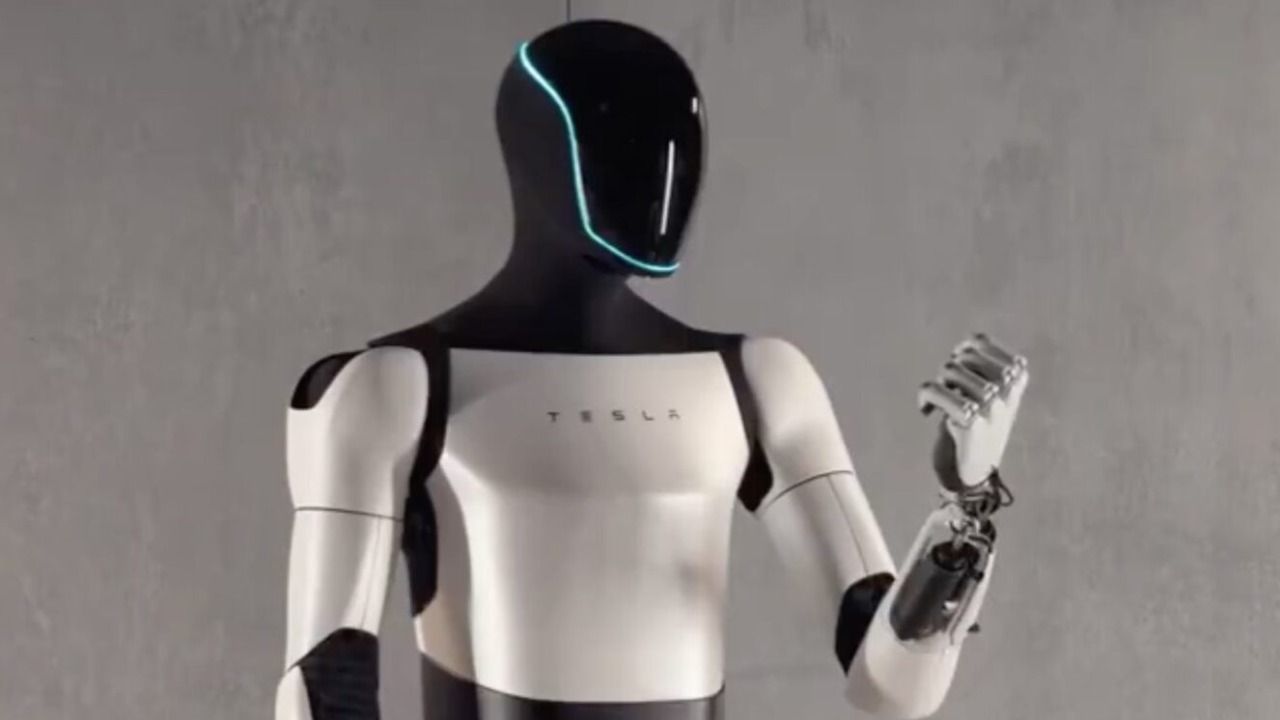

Behind the glossy demo videos and bold promises, Elon Musk’s Optimus program is quietly trying to turn Tesla into a robotics manufacturer on a scale the industry has never seen. The humanoid project is not just about building a single impressive robot, but about creating a new kind of factory, supply chain, and data pipeline that can mass produce “physical AI” workers. What Musk’s Optimus team is really building, in other words, is an entirely new industrial platform that could matter as much to Tesla’s future as its cars.
The real mission: turning Optimus into a general‑purpose worker
At the core of the project is a simple but radical claim: a humanoid robot that can handle the “dangerous, repetitive, and boring” jobs humans do today. Elon Musk, as Tesla’s CEO, has described Optimus as a general-purpose robotic assistant meant to take on exactly those tasks, positioning it as a kind of universal worker that can move through the same spaces and use the same tools as people. In that framing, the robot is not a novelty gadget but a new labor category, one that could be dropped into factories, warehouses, and eventually homes without redesigning the world around it, which is why the company stresses that the machine should navigate “a world built for humans” rather than a custom robotic environment.
That ambition is already shaping how the team designs the bot’s body and behavior. Reporting on the project notes that Optimus is intended to be “friendly” and able to navigate a room alongside humans, a reminder that social acceptance is as important as technical capability if the robot is going to share workspaces with people. The same accounts emphasize that Optimus is still under development but has become central to Tesla’s story about its own future, with the company presenting the humanoid as a way to eliminate dangerous repetitive work while keeping humans focused on more complex tasks, a theme that runs through descriptions of Optimus and through coverage that highlights how the bot is meant to move safely through human environments and avoid collisions as it works alongside humans.
Inside the factories where Optimus is learning to work
To understand what the Optimus team is really building, it helps to look at where the robots are being trained. Tesla’s own manufacturing sites are the testbed, and the company has already said that Optimus is now doing factory work inside its facilities. The broader Tesla factory network, which includes highly automated plants for vehicles and energy products, gives the robotics team a controlled but realistic environment to teach the bots how to move, grasp, and coordinate with existing production lines. Those same sites are where the company can quietly iterate on hardware and software, away from public demos, while measuring whether a humanoid can actually keep up with industrial cycle times.
One focal point is the massive complex often referred to as Giga Texas, a sprawling site that Tesla promotes as a new kind of integrated manufacturing hub. That facility is not just a car plant, it is a proving ground for the idea that robots can be woven into every stage of production, from moving parts to handling finished components. By embedding Optimus units inside places like the main Tesla factory and the Giga Texas site, the team can collect real-world data on how the robots perform in tight spaces, around forklifts and human workers, and under the relentless cadence of automotive manufacturing, which is far less forgiving than a staged demonstration.
From Gen 3 prototypes to a million‑robot vision
Publicly, the most visible sign of progress is the Optimus Gen 3 hardware, which Tesla has framed as part of a “Robotic Moonshot” to push toward what it calls sustainable abundance. The Gen 3 iteration is meant to be lighter, more capable, and cheaper to build than earlier versions, and the company has hinted that even a small number of deployed units could free human workers to focus on more intellectual tasks. That is the logic behind the push to refine the robot’s hands, gait, and balance, and to make the machine look so lifelike that, as Elon Musk has teased, people might “need to poke it to believe it’s an actual robot,” a remark that underscores how much effort is going into humanlike motion and appearance in the latest designs.
Behind the scenes, though, the team is working toward a far more aggressive scale. Musk has talked about a plan for a million-strong Optimus robot army, a phrase that captures both the ambition and the skepticism the project attracts. In that vision, Optimus units would fan out from manufacturing to daily chores, taking on everything from moving parts in factories to handling household tasks. The Gen 3 platform is a stepping stone toward that mass deployment, with the company ramping up hiring ahead of a V3 reveal and quietly stacking talent in areas like actuation, AI, and manufacturing engineering to support the next phase of the program. Coverage of the Robotic Moonshot highlights how Optimus Gen 3 is framed as a key enabler of that scale, while reports on ramping up Optimus hiring and on a million‑strong Optimus army show how central that scale narrative has become.
Why 2026 is the make‑or‑break year
Financially, 2026 is shaping up as a defining test of whether Optimus is more than a science project. Analysts who track Tesla’s stock have started to describe the coming year as a “defining year” for the company, in part because the automotive business is under pressure and new growth stories are needed. In that context, the Tesla Optimus Robot, Hands Free, sits alongside self-driving and robotaxis as a potential driver for TSLA, with investors watching closely to see whether the humanoid can move from flashy demos to revenue-generating deployments. The phrase “Along with self-driving, the Optimus humanoid robot is a potential TSLA stock driver” captures how tightly the robot’s fate is now tied to market expectations.
Internally, Musk has already shifted timelines to reflect the difficulty of the task. He told shareholders in 2022 that mass production of Optimus would begin by 2025, but the new target is 2026, a delay that signals both the complexity of humanoid robotics and the company’s determination to get it right before scaling. At the same time, Musk has called Tesla “at a critical juncture” as he lowered near-term targets for robots and robotaxis, a reminder that the company is trying to balance hype with execution. Reports that 2026 could be The Year of the Robot, with Tesla’s Optimus humanoid at the center of that narrative, sit alongside more cautious takes that note Tesla’s history of optimistic timelines and the risk that delays could weigh on TSLA if the robot does not deliver. Those crosscurrents are evident in analysis that frames 2026 as a defining year for TSLA, in commentary that labels 2026 The Year of the Robot for Tesla and Optimus, and in coverage of how Musk, Elon Musk has adjusted Optimus timelines while stressing that the bot is already doing factory work.
How Optimus is actually being trained and tested
Beyond timelines and prototypes, the most revealing details come from how the team is gathering data. One reported strategy has been to collect data using Optimus itself, setting up bots to circle the inside perimeter of facilities and record what they see. That approach turns the robot into its own mapping and perception tool, letting engineers refine navigation and obstacle avoidance based on the exact environments where the machines will eventually work. It also hints at a feedback loop where every deployed unit becomes a sensor that improves the fleet, similar to how Tesla has used its cars to feed driving data back into its autonomy systems.
Inside the factories, Optimus is being asked to do more than just walk. Earlier footage showed the robot putting trash in bins, vacuuming, and moving car parts, tasks that sound simple but require reliable grasping, path planning, and coordination with other machines. Reporting notes that each robot required several engineers to keep it running during these early trials, a reminder that the system is still fragile and heavily supported behind the scenes. Yet those same reports emphasize that “All of” these tasks are part of a deliberate push to turn Optimus into a household helper over time, starting with controlled industrial chores and gradually expanding into more complex roles. Accounts of Another solution that used Optimus to gather its own data, and coverage that describes how In May Optimus was shown putting trash in bins and moving car parts, underline how the team is using repetitive, real-world tasks as the training ground for a much broader vision.
The supply chain nobody has built before
One of the least glamorous but most important parts of the Optimus story is the supply chain. For cars and computers, there are existing ecosystems of suppliers, standardized components, and decades of manufacturing know-how. But for humanoid robots, there is no such mature supply chain, which means Tesla cannot simply order most of what it needs off the shelf. Musk and his team have acknowledged that reality directly, noting that for automobiles and computers you have an existing supply chain, but for humanoid robots you do not, which forces Tesla to rethink everything from actuators to sensors to the materials used in the robot’s joints.
As a result, Tesla is building much of the Optimus stack itself. Reports on the company’s robotics plans explain that, in other words, Tesla will have to produce some or even many of the components it will need, because Optimus is not built from off-the-shelf parts. That has led the company to create an entirely new supply chain, from neural networks to actuators, in order to support what some analysts call the “Quiet Enablers of the Physical AI Revolution.” Musk has even suggested that Optimus could become Tesla’s biggest product of all time, a claim that only makes sense if the company can industrialize the robot at scale. The behind-the-scenes work to do that is visible in commentary that stresses how Indeed Optimus is not built from off-the-shelf parts, in earnings-call summaries that note Tesla will have to produce many of its own components and that Musk has called Optimus the company’s “biggest product of all time,” and in analysis of how But for humanoid robots there is no existing supply chain, which is why Tesla is at what Musk calls a critical juncture.
Scaling lessons from rockets and robots
To pull this off, the Optimus team is borrowing lessons from other high-intensity manufacturing efforts, including space hardware. One telling comparison comes from Pearson at Agile Space Industries, who described the company’s next phase as “scaling the business” after proving out its technology, and said the challenge is now adding high-production capability. That mindset, moving from bespoke engineering to repeatable, high-volume production, is exactly the shift Tesla is trying to make with Optimus: turning a handful of hand-tuned prototypes into a product that can be built, serviced, and upgraded at industrial scale.
Tesla’s own robotics roadmap reflects a similar transition. Coverage of Tesla Progress in Robotics and Future Plans notes that Musk hinted in July 2025 at Optimus production starting in 2025 and ramping substantially in 2026, framing the coming years as a ramp-up period rather than a one-off launch. The same reporting emphasizes that Tesla is not only an electric car company, it is positioning itself as a robotics and AI manufacturer, with Optimus as a flagship example. That shift is visible in how the company talks about its future factories, its hiring priorities, and its willingness to invest in custom components, all of which echo Pearson’s observation that once the core technology works, “the next phase for us is going to be scaling the business” and that the challenge is adding high-production capability, a point captured in the Pearson quote and in the Tesla Progress in Robotics and Future Plans that describe how Tesla is preparing to ramp Optimus substantially in 2026.
Where Optimus fits in the wider robot landscape
Even as Tesla pushes ahead, Optimus is entering a crowded and fast-evolving field. Analysts looking at robots in 2026 argue that the rise of Terminator-style machines is not what is actually happening, and that the near-term reality is more about remote control and teleoperation. Some early reports on the 1X Neo B platform, for instance, suggest that 2026 will mark the year of the home-teleoperated robot, where humans still drive much of the intelligence while the machine handles the physical presence. That perspective highlights a key question for Optimus: how quickly can Tesla move from heavily supervised, semi-autonomous behavior to the kind of general-purpose autonomy Musk has promised.
At the same time, Tesla is trying to differentiate Optimus by tying it directly into its existing AI and manufacturing stack. The company’s factories give it a built-in customer for early deployments, and its experience with vehicle autonomy provides a large corpus of perception and planning technology that can be adapted to humanoid form. Yet the broader robotics community is moving too, with other players exploring different form factors, control schemes, and business models. The contrast between teleoperated systems like Neo and Tesla’s push for a fully autonomous humanoid underscores how ambitious the Optimus roadmap is, and how much work remains to close the gap between demos and dependable daily use. That tension is captured in analysis of Dec robots in 2026 that emphasize Remote control and Early reports on Neo, and in mapping tools like Neo-related locations that show where some of this teleoperated experimentation is taking place.
More from MorningOverview