The James Webb Space Telescope (JWST) has recently made a groundbreaking discovery: a new moon orbiting Uranus. This finding not only adds to our understanding of the Uranian system but also showcases the advanced capabilities of the Webb telescope in exploring distant celestial bodies. As the space community celebrates, the discovery marks a significant milestone in planetary science and our quest to understand the complexities of our solar system.
The Discovery Process
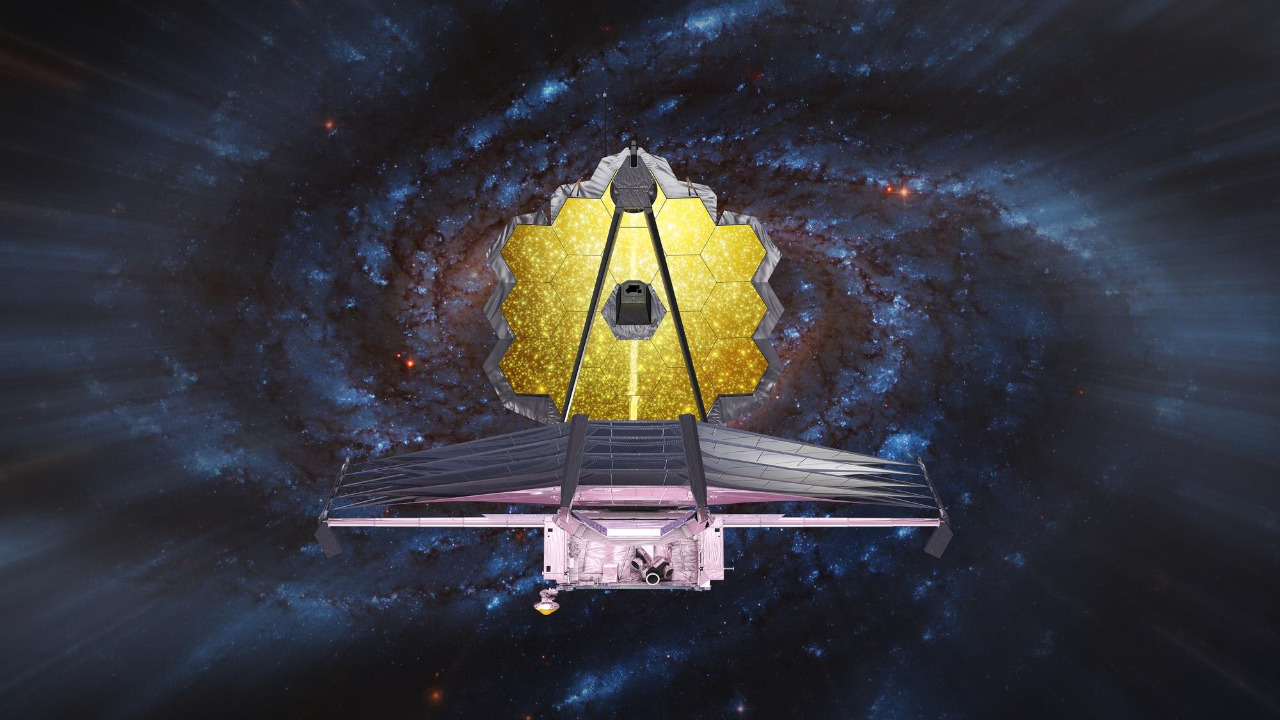
The James Webb Space Telescope, equipped with cutting-edge technology, has opened new frontiers in space exploration. Its recent identification of a new moon orbiting Uranus is a testament to its advanced capabilities. The telescope’s infrared imaging system played a crucial role in this discovery. By capturing high-resolution images in the infrared spectrum, the JWST could detect faint celestial objects otherwise invisible in visible light. This capability allows astronomers to peer through the dense gas and dust surrounding Uranus, revealing hidden aspects of its moon system.
To confirm the presence of this new moon, scientists employed meticulous data analysis techniques. They cross-referenced the new data with previous observations and employed sophisticated models of Uranus’s gravitational field and orbital dynamics. This rigorous analysis ensured the moon was not a mere anomaly or artifact of observation. The official announcement of the discovery was met with excitement and intrigue from the global scientific community. Many researchers believe this finding could offer unprecedented insights into the formation and evolution of Uranus and its moons.
Characteristics of the New Moon
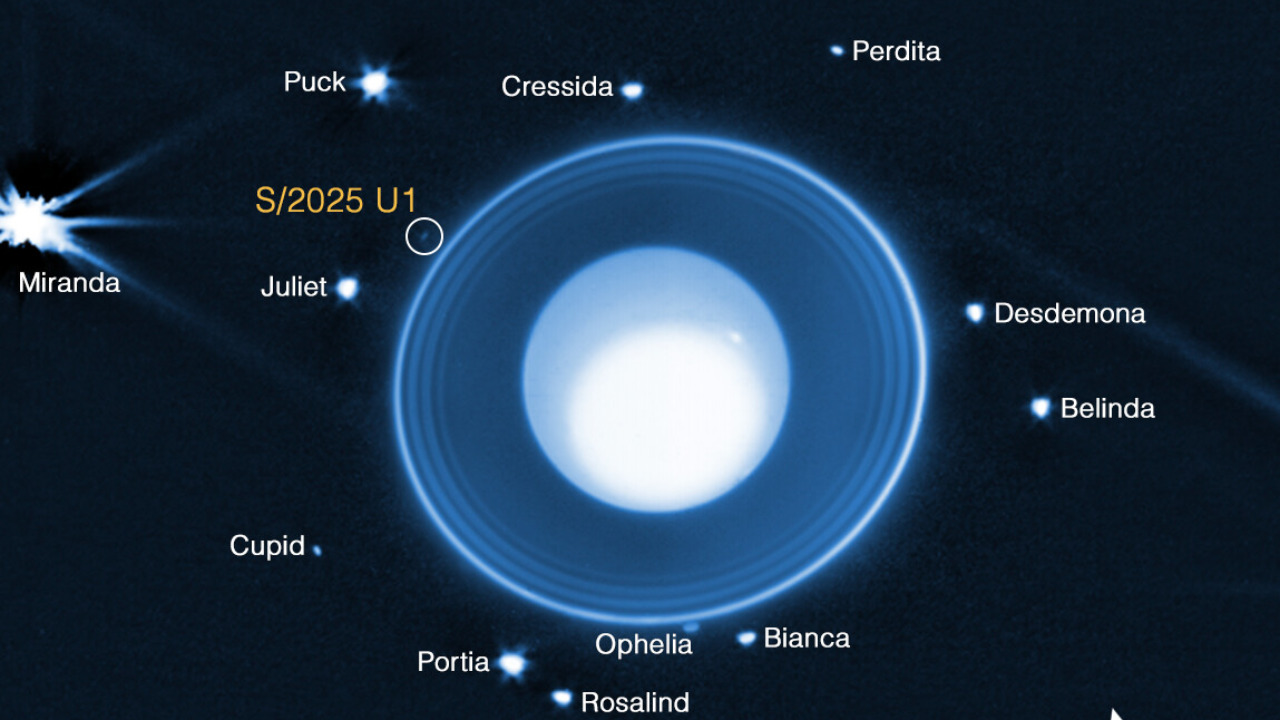
The newly discovered moon of Uranus presents intriguing characteristics that set it apart from its celestial siblings. Preliminary analysis suggests the moon is relatively small, with an estimated diameter of just a few kilometers. This size places it among the smaller moons in the Uranian system, which is home to both large bodies like Titania and Oberon and smaller irregular moons. Early spectroscopic data hints at a composition rich in ices and silicates, similar to other moons in the outer solar system. Such information is vital for understanding the moon’s origin and its role within the Uranian system.
In terms of its orbital dynamics, the moon follows a unique path around Uranus. It lies at a considerable distance from the planet, with an orbital period that suggests it might have been captured rather than formed in situ. This discovery prompts further examination of orbital mechanics and the history of Uranus’s moon system. Scientists are eager to study these dynamics more closely, as they could reveal new insights into the gravitational interactions between Uranus and its moons. Future missions may focus on exploring the moon’s surface or atmosphere, offering a closer look at its properties and potential for harboring organic compounds.
Implications for Our Understanding of Uranus
The discovery of a new moon adds an exciting chapter to our understanding of the Uranian moon system, now comprising 28 known moons. This system is diverse, ranging from large icy bodies to small, irregular-shaped moons. The new moon’s discovery prompts scientists to revisit existing formation theories regarding Uranus and its moons. One prevailing theory suggests that these moons resulted from a giant impact, but the presence of a newly discovered body might point to more complex evolutionary processes.
By comparing Uranus’s moon system with those of other gas giants like Jupiter and Saturn, scientists can gain valuable context. Jupiter’s system is dominated by its four large Galilean moons, while Saturn boasts a diverse array of moons, including icy Enceladus and the giant Titan. In contrast, Uranus’s moons offer a different perspective on planetary evolution and the processes that govern moon formation. Understanding these differences and similarities helps refine models of planetary formation and the dynamic interactions within these systems.
Role of the James Webb Space Telescope in Modern Astronomy

The James Webb Space Telescope, with its suite of advanced instruments, is revolutionizing our understanding of the cosmos. Its discovery of the new Uranian moon showcases the technological advancements that distinguish it from previous telescopes. Unlike its predecessor, the Hubble Space Telescope, JWST is optimized for infrared observation, allowing it to penetrate cosmic dust clouds and unveil hidden celestial phenomena. This capability was instrumental in detecting the faint signature of Uranus’s new moon.
Beyond this discovery, the JWST has made significant contributions to astronomy. It has identified distant galaxies, observed the atmospheres of exoplanets, and provided insights into the early universe’s formation. Its findings are reshaping our understanding of planetary systems, star formation, and the potential for life beyond Earth. As the JWST continues its mission, the scientific community anticipates further groundbreaking discoveries that will illuminate the mysteries of our solar system and beyond.
Looking ahead, the future prospects of the James Webb Space Telescope are boundless. Scientists are eager to leverage its capabilities to explore the outer solar system, search for new celestial bodies, and delve into the atmospheres of exoplanets for signs of life. The telescope’s ability to observe distant worlds with unprecedented clarity opens new avenues for research and discovery. As we continue to explore the universe, the JWST stands as a pivotal tool in our quest to unravel the secrets of the cosmos.
