In a groundbreaking discovery, researchers have detected a previously unknown quantum force capable of bending light in controlled lab simulations. This finding challenges our current understanding of quantum mechanics and opens new avenues for research in physics. The implications of this force could revolutionize technology and redefine fundamental principles in the field.
The Discovery of the Unknown Quantum Force
The discovery of this unknown quantum force emerged from a series of meticulously designed lab simulations aimed at exploring the behavior of light under extreme conditions. Utilizing advanced computational models and high-precision instruments, researchers were able to observe light bending in ways that defied current scientific explanations. The simulations were conducted in a controlled environment where variables could be precisely adjusted to isolate the effects of this mysterious force.
Leading the charge in this pioneering study were teams from the Massachusetts Institute of Technology (MIT) and the Max Planck Institute for Quantum Optics. Their collaborative efforts brought together some of the brightest minds in the field. Despite the excitement surrounding these findings, initial reactions from the scientific community have been mixed, with some experts expressing skepticism. This skepticism primarily stems from the unprecedented nature of the force and the potential implications for established theories.
Understanding Quantum Mechanics and Light

Quantum mechanics, a cornerstone of modern physics, governs the behavior of matter and energy at the smallest scales. Its principles, while complex, provide the framework for understanding phenomena that classical physics cannot explain. Light, as both a particle and a wave, exemplifies the dual nature of quantum entities. In quantum physics, light interacts with various forces, exhibiting behaviors such as diffraction and interference.
Traditionally, the forces known to affect light include gravity, as demonstrated by Einstein’s theory of general relativity, and electromagnetic forces, which govern the interactions between charged particles. These forces have been extensively studied and form the basis of our current understanding of light’s behavior in the universe. However, the newly discovered quantum force introduces an element of unpredictability, challenging the fundamental assumptions that have long been held in the field.
Implications of the New Force on Current Theories
The discovery of this unknown quantum force presents significant challenges to existing theories of quantum mechanics. If confirmed, it could necessitate a reevaluation of the Standard Model of particle physics, which currently accounts for known forces and particles. The introduction of a new force could imply the existence of previously unidentified particles or interactions, potentially reshaping our understanding of the universe’s fundamental structure.
Beyond theoretical implications, the practical impact of this force could be profound, paving the way for technological advancements in fields such as telecommunications, where manipulating light is crucial. The ability to bend light in novel ways could enhance the performance of optical fibers or enable the development of new kinds of lenses and imaging systems. Additionally, this discovery could inform the future of quantum computing, potentially leading to breakthroughs in processing power or data transmission capabilities.
Reproducibility and Verification of Results

Ensuring the reproducibility of these findings is vital for their acceptance within the scientific community. The researchers have taken extensive measures to replicate the results of the initial study, employing a range of methods to verify their observations. By sharing their data and methodologies with independent researchers, they aim to facilitate rigorous peer review and encourage further exploration of this phenomenon.
The importance of independent verification cannot be overstated, as it serves as the bedrock of scientific inquiry. However, replicating these findings poses significant challenges, primarily due to the complexity of the simulations and the precision required in the experimental setup. Despite these obstacles, the scientific community remains committed to unraveling the mysteries surrounding this force, driven by the potential for groundbreaking discoveries.
Future Research and Potential Applications
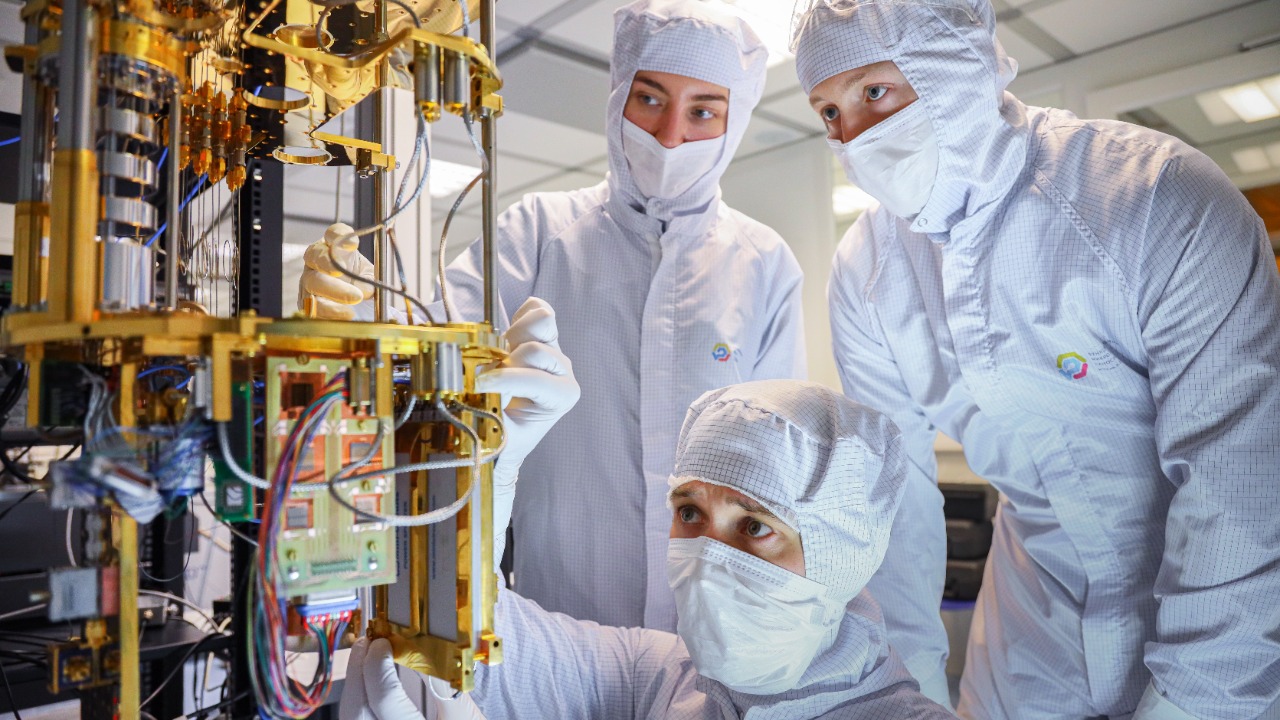
As researchers continue to delve into the nature of this unknown quantum force, several proposed studies aim to uncover its underlying mechanisms and interactions. International collaborations are likely to play a crucial role in advancing our understanding, as they bring together diverse perspectives and expertise. By pooling resources and knowledge, scientists hope to accelerate the pace of discovery and unlock the full potential of this force.
The applications of this force are potentially vast, extending beyond physics into areas such as telecommunications, optics, and even medicine. In telecommunications, for example, the ability to manipulate light more effectively could lead to faster and more efficient data transmission. In optics, new lens technologies could revolutionize imaging systems, enhancing everything from microscopes to cameras. Meanwhile, in quantum computing, understanding and harnessing this force could lead to new methods of information processing, potentially transforming the field.
