The concept of habitable zones around black holes seems paradoxical, given the extreme conditions that define these cosmic entities. However, recent theoretical studies suggest otherwise, introducing new perspectives on life’s survival near black holes and potential implications for our understanding of extraterrestrial life.
Understanding Black Holes and Their Characteristics
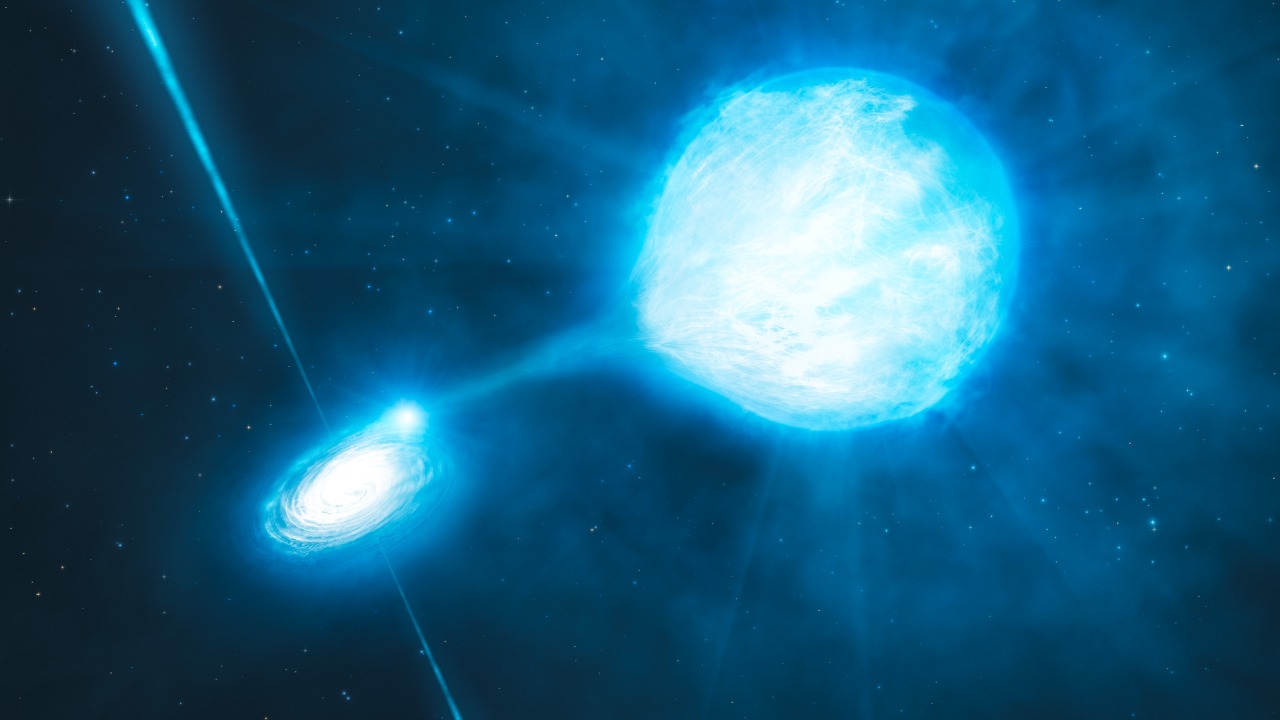
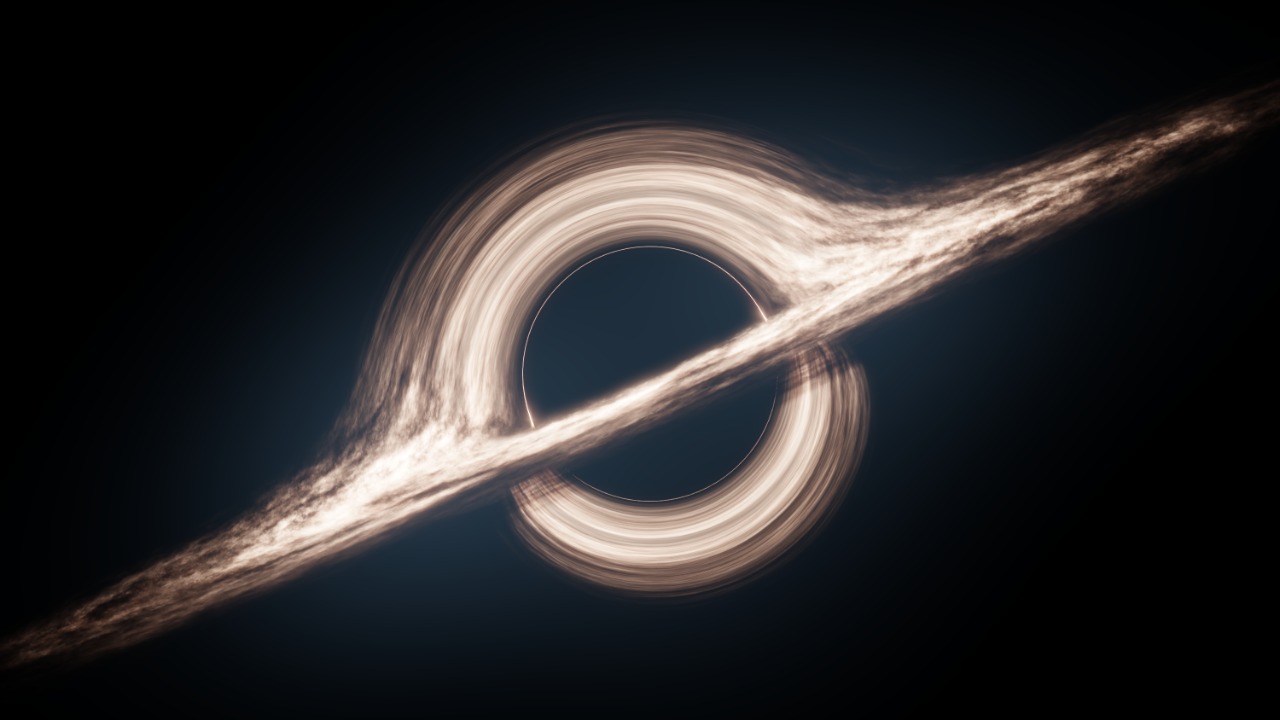
Black holes, the remnants of massive stars, are regions in space where gravity is so strong that nothing, not even light, can escape their pull. They form when a star exhausts its nuclear fuel and collapses under its gravity, creating a point in space with infinite density known as a singularity. This is all surrounded by an event horizon, the point of no return beyond which anything falls irretrievably into the black hole. The conditions around black holes are extreme, with intense gravity, high energy particles, and ionizing radiation being the norm.
Recent discoveries and theories from leading research have further deepened our understanding of these fascinating cosmic entities. For instance, studies have indicated that black holes may spin at nearly the speed of light, warp space-time, and even generate powerful jets of radiation and particles that stretch thousands of light-years into space. These revelations, while painting a picture of an extremely hostile environment, also hint at the complexity and diversity of phenomena around black holes.
The Concept of Habitable Zones in Space
The “Goldilocks” Zone refers to the region around a star where conditions are just right – not too hot, not too cold – for liquid water to exist on the surface of a planet, a condition believed to be critical for life as we know it. The determination of these habitable zones is based on a variety of factors, including the size and temperature of the star, as well as the distance and orbital characteristics of the planet.
Examples of known habitable zones exist in our galaxy and beyond. The most well-known is our own solar system, where Earth resides comfortably within the Sun’s habitable zone. Another example is the TRAPPIST-1 system, a red dwarf star system that houses at least three planets within its habitable zone.
Theoretical Studies on Habitable Zones Around Black Holes

Contrary to what one might expect, theoretical studies have suggested the possibility of habitable zones around black holes. These zones, unlike traditional ‘Goldilocks’ Zones around stars, would not rely on stellar radiation for heat. Instead, they would be heated by the intense radiation generated by matter falling into the black hole, a process known as accretion.
One such study led by Professor Tomáš Opatrný suggests that a stable “habitable” zone could exist around certain black holes. The research, available for review on Research Archive, posits that the interplay between a planet’s orbit and the spin of a black hole could create conditions suitable for life. The study explores how a planet could maintain a stable orbit within the black hole’s habitable zone potentially allowing for the existence of life.
Implications for the Fermi Paradox and the Search for Extraterrestrial Life

The idea of habitable zones around black holes has profound implications for the Fermi Paradox – the apparent contradiction between high estimates of extraterrestrial life and the lack of evidence or contact with such civilizations. If life can exist in the harsh environment around black holes, it could mean that life is much more resilient and widespread in the Universe than we previously thought. This could provide a new direction for the search for extraterrestrial life.
Future research directions are plentiful and exciting, albeit challenging. Scientists need to further investigate the nature of black hole habitable zones, the types of life that could survive there, and ways of detecting such life. These studies would require advancements in technology and a deeper understanding of extremophiles – organisms that thrive in extreme conditions on Earth.
Unanswered Questions and Future Studies

Though these discoveries are groundbreaking, they also raise more questions. What kind of life could survive in a black hole’s habitable zone? How could we detect it? These are questions that current technology and understanding may not be able to answer, but they provide exciting directions for future research.
Future studies would benefit from advancements in technology, particularly in telescopes capable of observing black holes and their surrounding environments. In addition, interdisciplinary collaboration among astronomers, biologists, and other scientists would be crucial in making significant progress in this field. As the mysteries of black holes and habitable zones continue to unravel, we may find that our Universe is far more habitable and diverse than we ever imagined.
