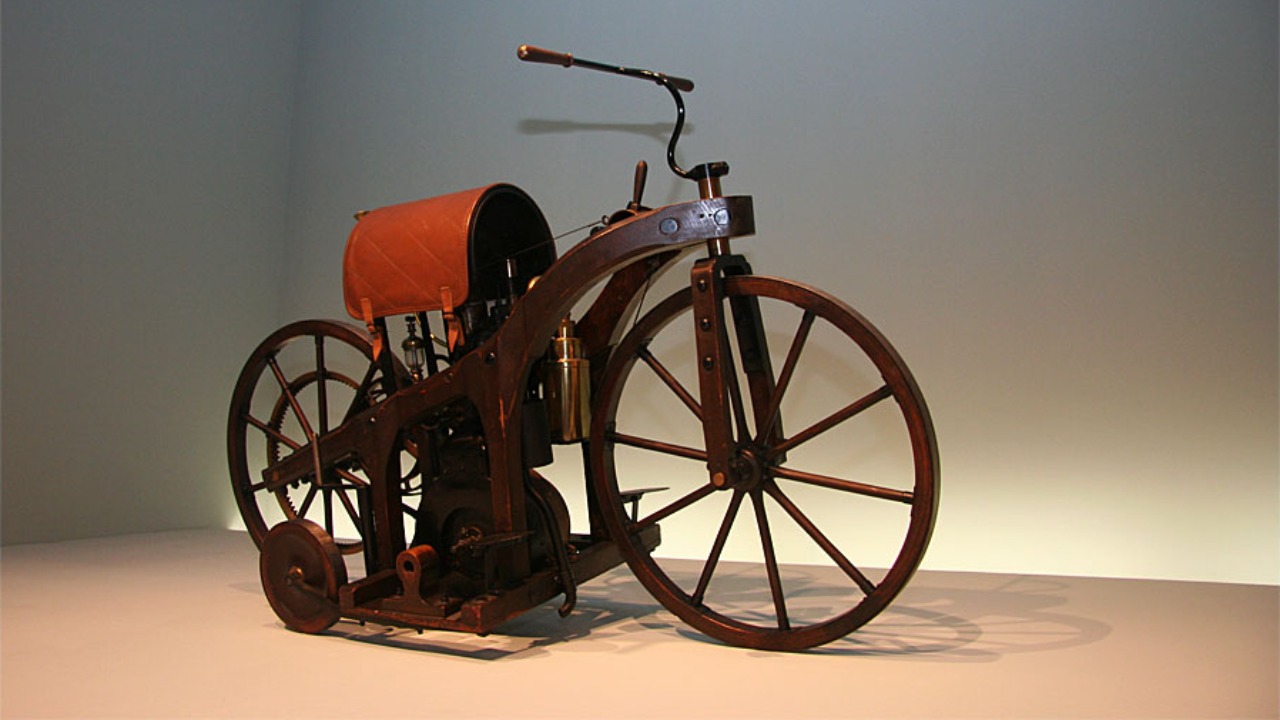

Gottlieb Daimler, a pioneering German engineer, invented the world’s first motorcycle in 1885 and later developed the first motorized truck in 1896. This truck served as a precursor to the modern pickup truck by combining engine power with an open cargo bed for hauling goods. These dual innovations laid foundational groundwork for personal and utility vehicles that remain central to transportation today. A stark reminder of their shared road presence came when one person was injured in South Bend in a crash involving a motorcycle and a pickup truck on June 23, 2025 (source).
Daimler’s Early Innovations in Powered Vehicles

In 1885, Gottlieb Daimler created the Reitwagen, the world’s first motorcycle, which was a wooden-framed vehicle powered by a single-cylinder gasoline engine producing 0.5 horsepower. This marked the first use of an internal combustion engine on two wheels, setting a precedent for future developments in motorized transport (source). Daimler’s collaboration with Wilhelm Maybach was crucial in refining the engine, enabling the motorcycle to reach a top speed of 7.5 mph. This vehicle served as a testbed for automotive technologies that would later influence the design and functionality of larger vehicles.
The experiments with lightweight, mobile powertrains directly influenced Daimler’s shift toward larger utility vehicles in the late 19th century. By testing and perfecting the internal combustion engine on a smaller scale, Daimler was able to apply these advancements to more robust and practical applications. This transition from personal to utility vehicles demonstrated the versatility and potential of motorized transport, paving the way for future innovations in the automotive industry.
The Birth of the Motorized Pickup Truck
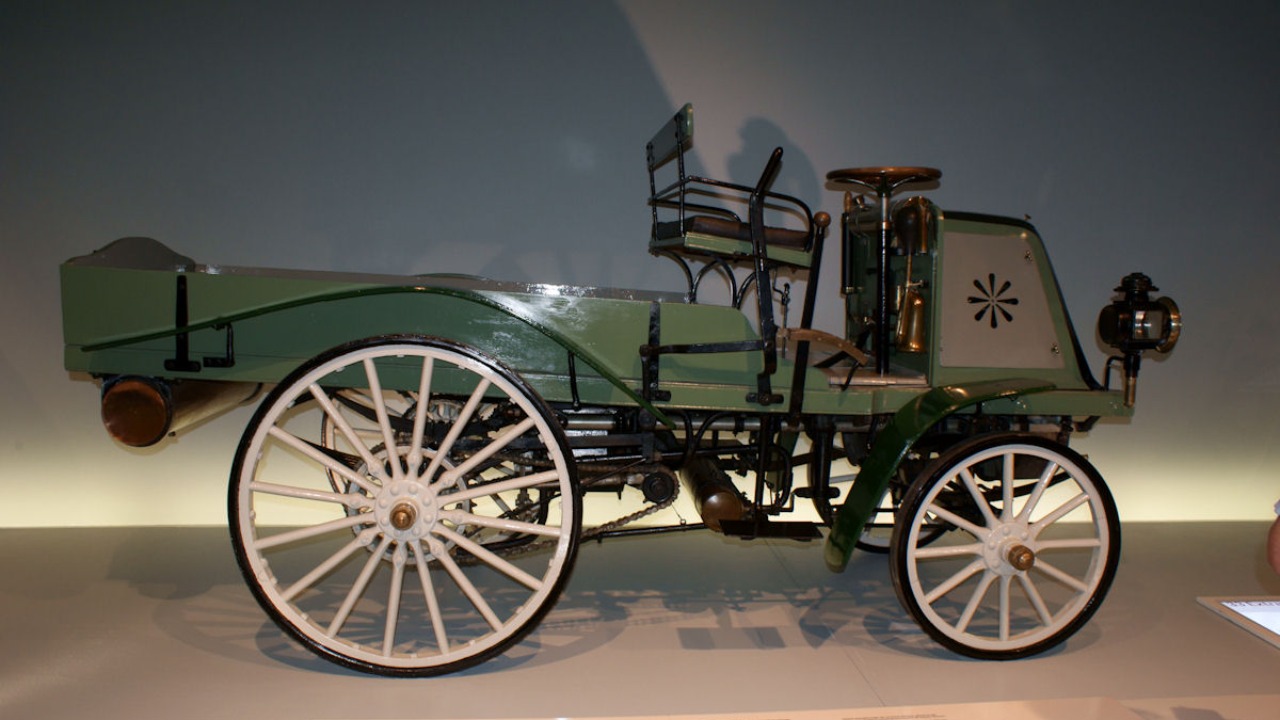
In 1896, Daimler introduced the first motorized truck, a four-wheeled vehicle equipped with a 1.5-liter engine and a rear cargo platform capable of carrying up to 1,500 pounds. This vehicle is recognized as the first practical motorized delivery vehicle akin to a pickup truck (source). The truck’s design featured chain-driven wheels and an open bed, prioritizing functionality for commercial hauling over passenger comfort. This innovation marked a significant step in bridging personal transport with industrial needs, showcasing the adaptability of Daimler’s engine technology.
The design of the 1896 truck was a direct evolution from Daimler’s earlier motorcycle engine scaling. By increasing the engine’s capacity and adapting it for a larger vehicle, Daimler was able to create a new category of motorized transport that met the demands of commercial enterprises. This development not only highlighted the potential for motorized vehicles in industrial applications but also set the stage for future advancements in the design and functionality of pickup trucks.
Evolution of Pickup Trucks Post-Daimler

The transition to American innovations in pickup truck design began with the 1913 Ford Model T pickup variant, which featured a detachable tonneau cover that converted into a cargo bed. This design built on Daimler’s motorized utility concept, offering a versatile solution for both personal and commercial use (source). As the automotive industry evolved, mid-20th-century advancements like the 1948 Ford F-1 emerged. This model was the first mass-produced “F-Series” truck with a dedicated pickup body, emphasizing durability for postwar farming and construction.
Daimler’s designs continue to influence modern concepts, such as the Ford F-100 Clyde pickup truck concept, which reimagines classic utility with electric power and retro styling (source). This concept vehicle highlights the ongoing relevance of Daimler’s innovations, demonstrating how foundational ideas can be adapted to meet contemporary needs and environmental considerations. The evolution of pickup trucks from Daimler’s initial designs to modern electric concepts underscores the enduring impact of his pioneering work in the automotive industry.
Modern Intersections of Motorcycles and Pickup Trucks
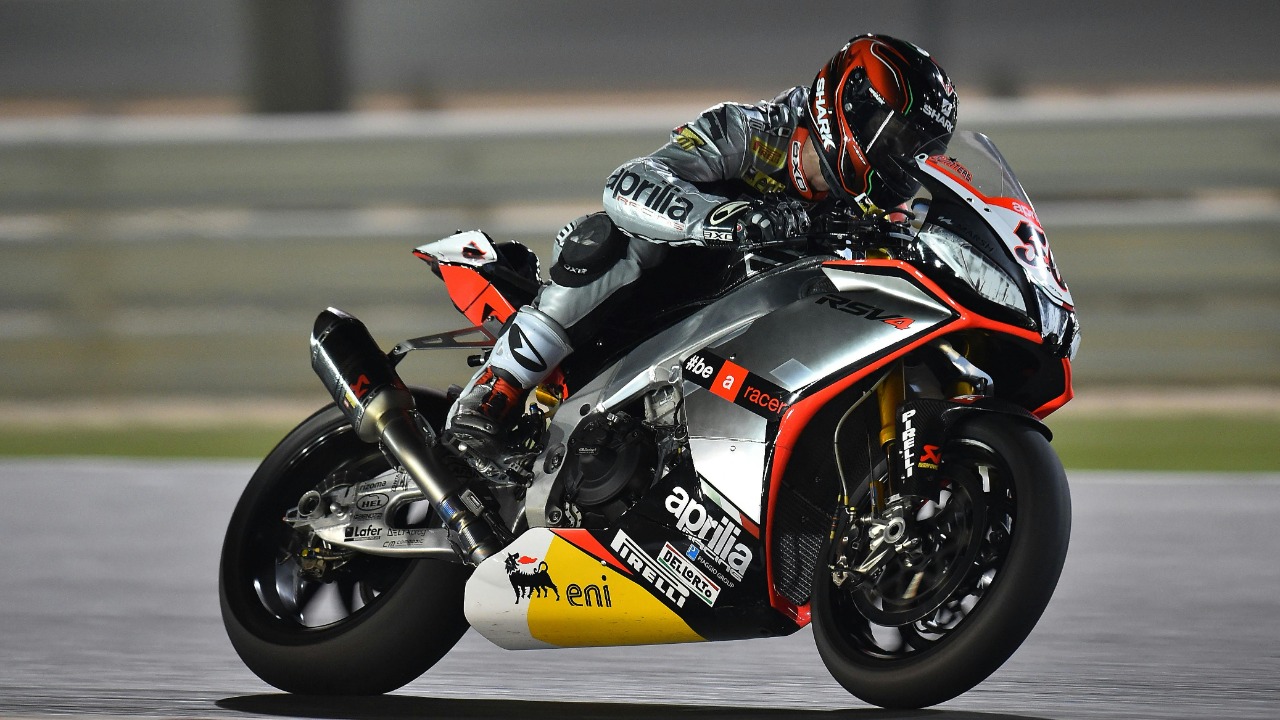
Recent incidents, such as the crash in South Bend where one person was injured in a collision between a motorcycle and a pickup truck, highlight the ongoing safety implications of these vehicles sharing the road (source). Daimler’s legacy vehicles continue to coexist in modern traffic environments, with pickup trucks often used for towing motorcycles. This dynamic underscores shared vulnerabilities and the need for careful consideration of safety measures in traffic planning and vehicle design.
Regulatory and design responses to such crashes are crucial in ensuring safer multi-vehicle environments. By drawing parallels to early 20th-century adaptations of Daimler’s inventions, modern engineers and policymakers can develop strategies to mitigate risks associated with the interaction of different vehicle types on the road. The continued evolution of safety standards and vehicle technologies reflects the ongoing influence of Daimler’s pioneering work in shaping the future of transportation.