
The North American F-86 Sabre, achieving speeds up to Mach 1.25 during the Korean War era, marked an early milestone in U.S. supersonic fighter development. Meanwhile, the McDonnell Douglas F-15 Eagle holds a record top speed of Mach 2.5, making it one of the most enduring fast jets in service. These aircraft exemplify U.S. advancements in aerial speed, with the Lockheed Martin F-22 Raptor reaching Mach 2.25 in modern stealth configurations, underscoring ongoing innovations in fighter jet propulsion.
1. The Pioneering Supersonic Era: North American F-86 Sabre
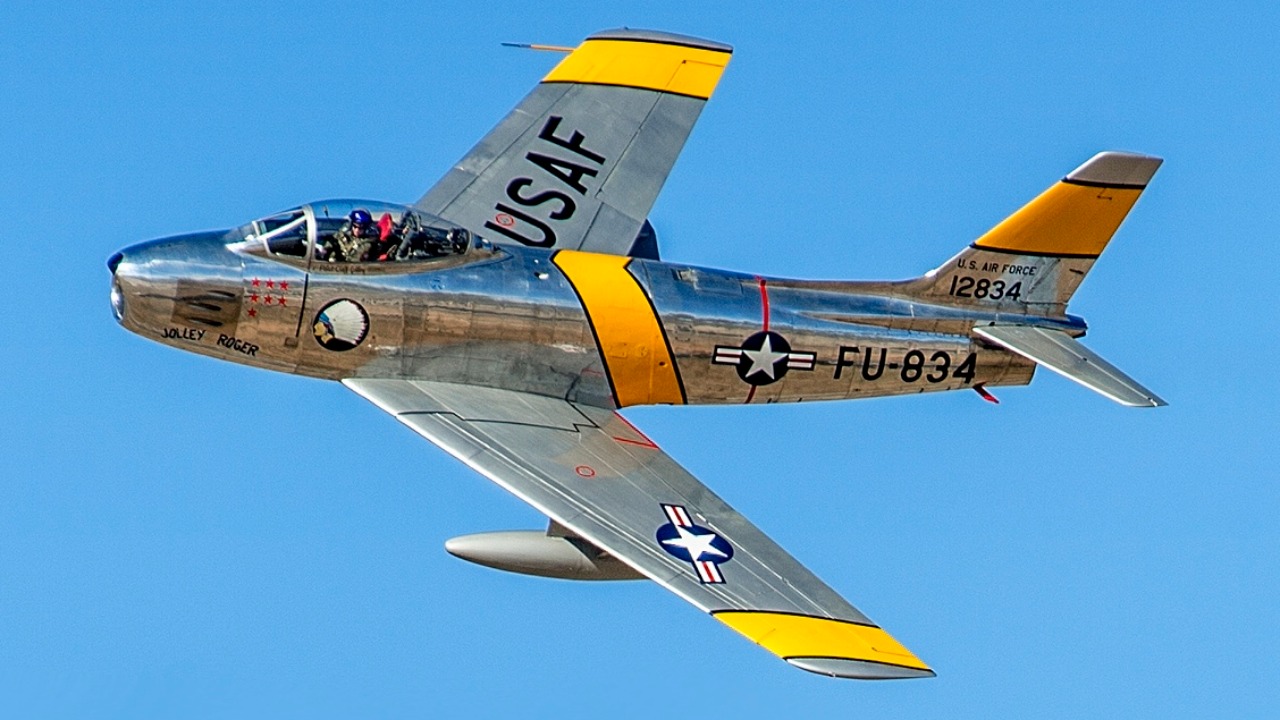
The North American F-86 Sabre was a groundbreaking aircraft as the first U.S. fighter to break the sound barrier in level flight, reaching speeds of 670 mph. Deployed in 1949, it played a crucial role in the Korean War, engaging in combat against the formidable MiG-15s. The Sabre’s design was revolutionary, featuring the General Electric J47 turbojet engine, which enabled it to reach Mach 1.25 in dives. This advancement significantly influenced post-WWII jet design, setting a new standard for speed and agility in fighter aircraft [source].
With production numbers exceeding 9,800 units, the F-86 Sabre was not only a technological marvel but also a prolific fighter in the U.S. arsenal. Variants such as the F-86D all-weather interceptor expanded its capabilities, showcasing the adaptability of its design. This widespread production and deployment underscored the aircraft’s importance in maintaining air superiority during its service period [source].
2. Cold War Speed Breakthroughs: Convair F-106 Delta Dart
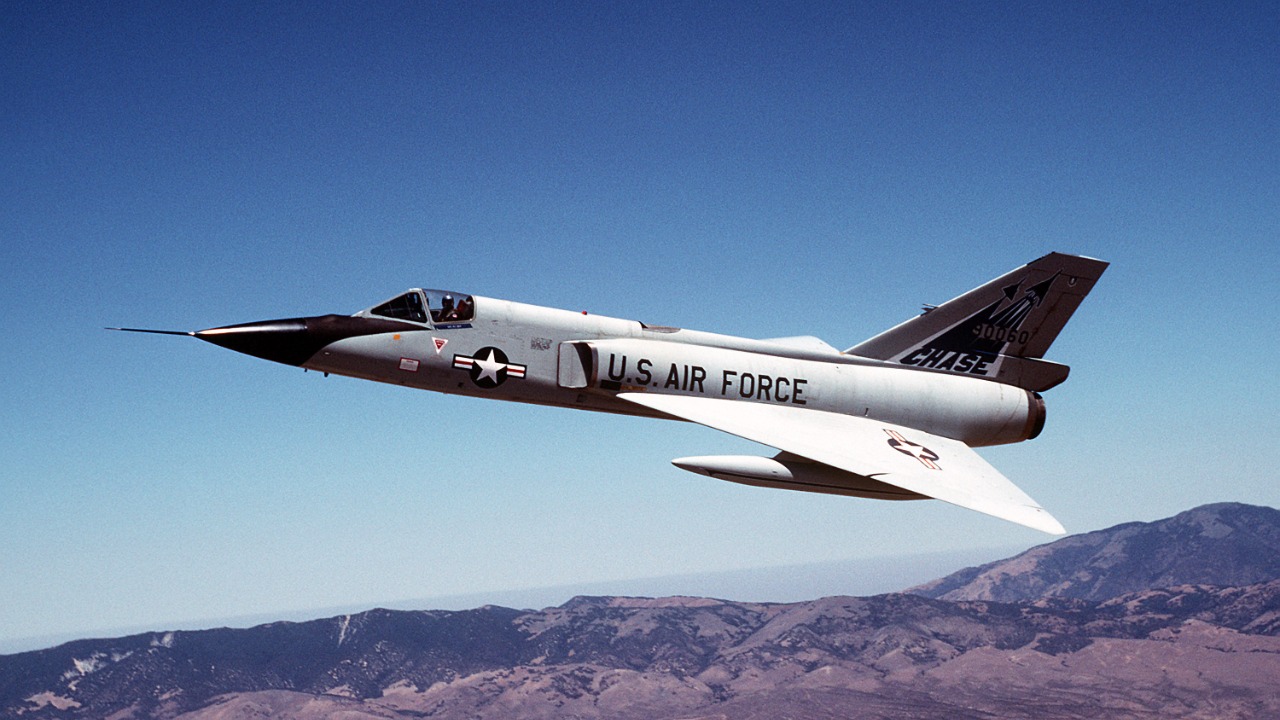
The Convair F-106 Delta Dart represented a significant leap in speed and technology during the Cold War. Achieving a top speed of Mach 2.3 in 1959, it was powered by the Pratt & Whitney J75 engine, making it the U.S. Air Force’s primary interceptor throughout the 1960s. Its service ceiling of 57,000 feet and armament, including AIM-4 Falcon missiles, made it a formidable component of NORAD defense operations. These capabilities were crucial in maintaining U.S. airspace security during a tense period of geopolitical rivalry [source].
Despite its impressive performance, the F-106 was retired in 1988, with many units converted to target drones under the Pacer Six program. This transition highlighted the evolving needs of military aviation and the continuous push for newer technologies. The F-106’s legacy, however, remains as a testament to the rapid advancements in speed and interception capabilities during its era [source].
3. Versatile Mach 2 Dominance: McDonnell Douglas F-15 Eagle
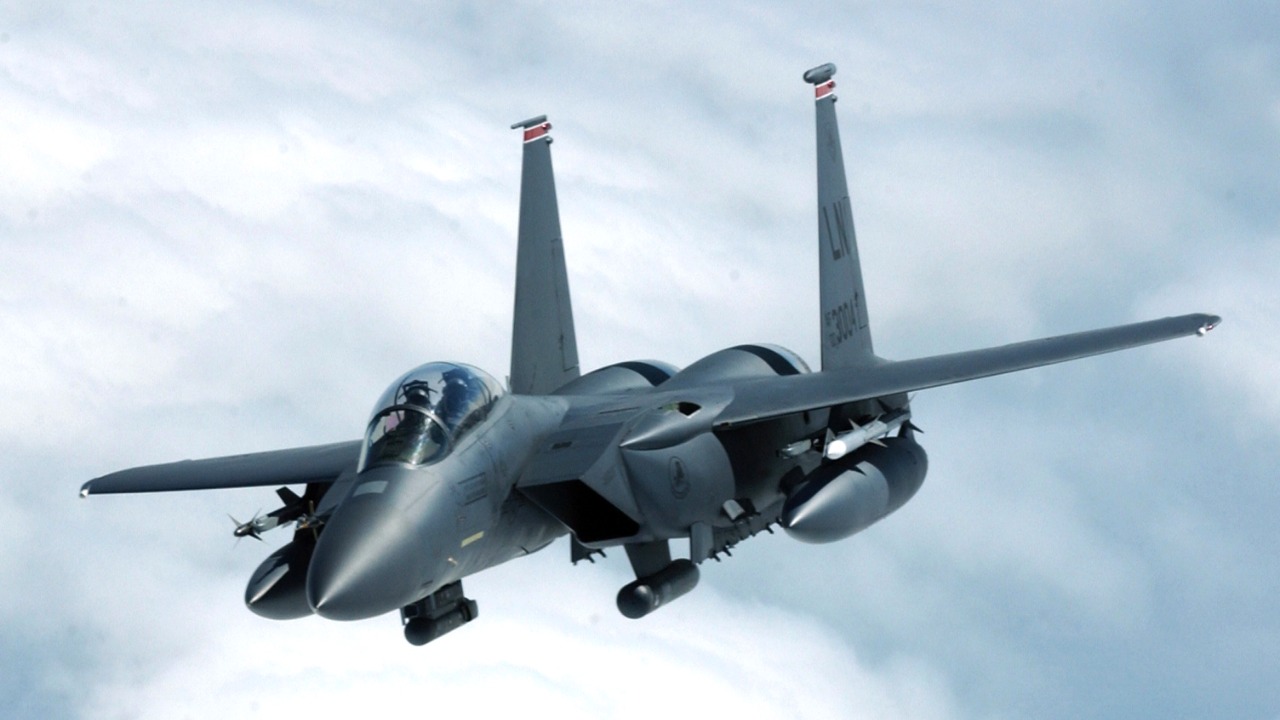
The McDonnell Douglas F-15 Eagle, introduced in 1976, set a new benchmark for fighter jet performance with its maximum speed of Mach 2.5. Equipped with twin Pratt & Whitney F100 engines, the F-15 has maintained an unmatched air superiority record. Its combat deployments, notably during Operation Desert Storm in 1991, resulted in over 30 air-to-air kills without any losses, underscoring its dominance in aerial combat [source].
Ongoing upgrades, such as the F-15EX variant entering service in 2021, have ensured the Eagle’s continued relevance in modern warfare. These enhancements focus on extending range and retaining speed, allowing the F-15 to adapt to new combat environments and technological demands. The F-15’s enduring presence in the U.S. Air Force highlights its exceptional design and operational success [source].
4. Stealth and Agility at High Speeds: Lockheed Martin F-22 Raptor
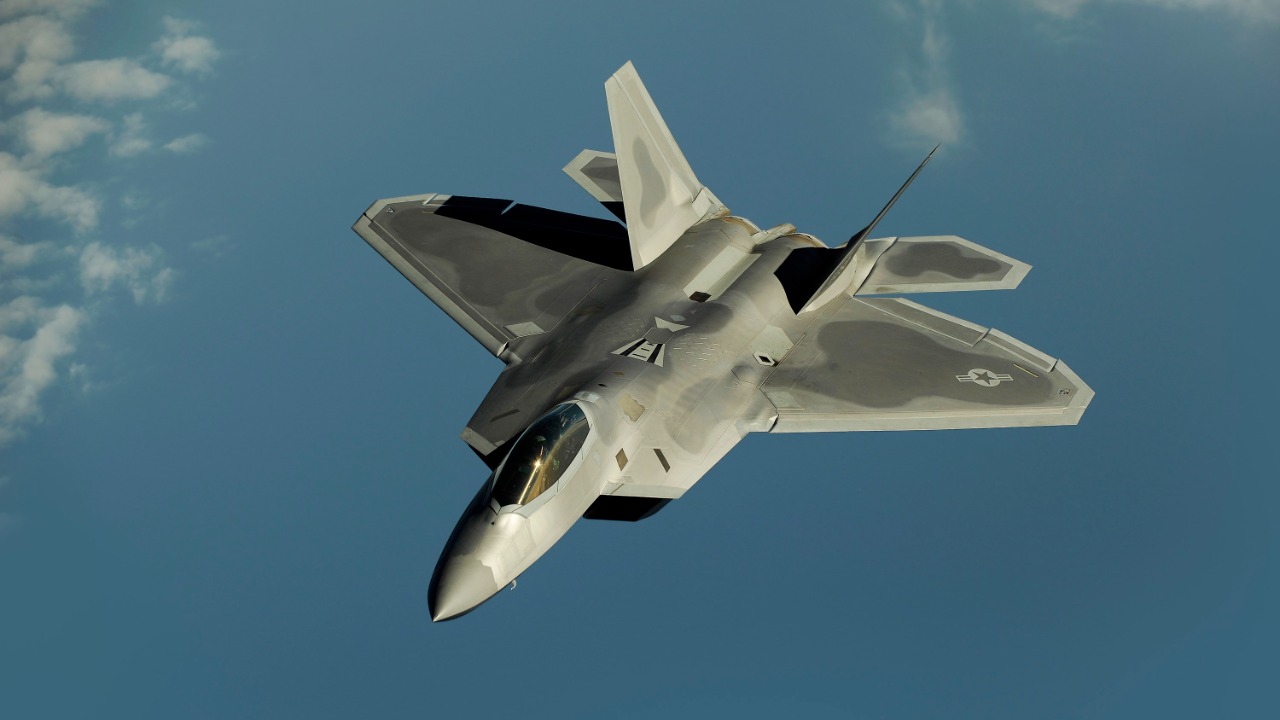
The Lockheed Martin F-22 Raptor combines stealth with speed, capable of supercruise at Mach 1.82 without afterburners. First flown in 1997 and operational since 2005, the F-22 integrates advanced stealth technology with Pratt & Whitney F119 engines. Its radar cross-section is reduced to a mere 0.0001 m², allowing it to operate undetected in contested airspace. The F-22’s weapon bays, designed for AIM-120 AMRAAM missiles, further enhance its speed and agility in combat scenarios [source].
Despite a production halt at 195 units in 2011 due to costs, the F-22 remains a critical component of the U.S. Air Force. Its ability to perform Mach 2.25 dashes in exercises demonstrates its continued strategic value. The F-22’s role in modern air defense highlights the importance of integrating speed with stealth to maintain air superiority [source].
5. Modern Multi-Role Velocity: Lockheed Martin F-35 Lightning II
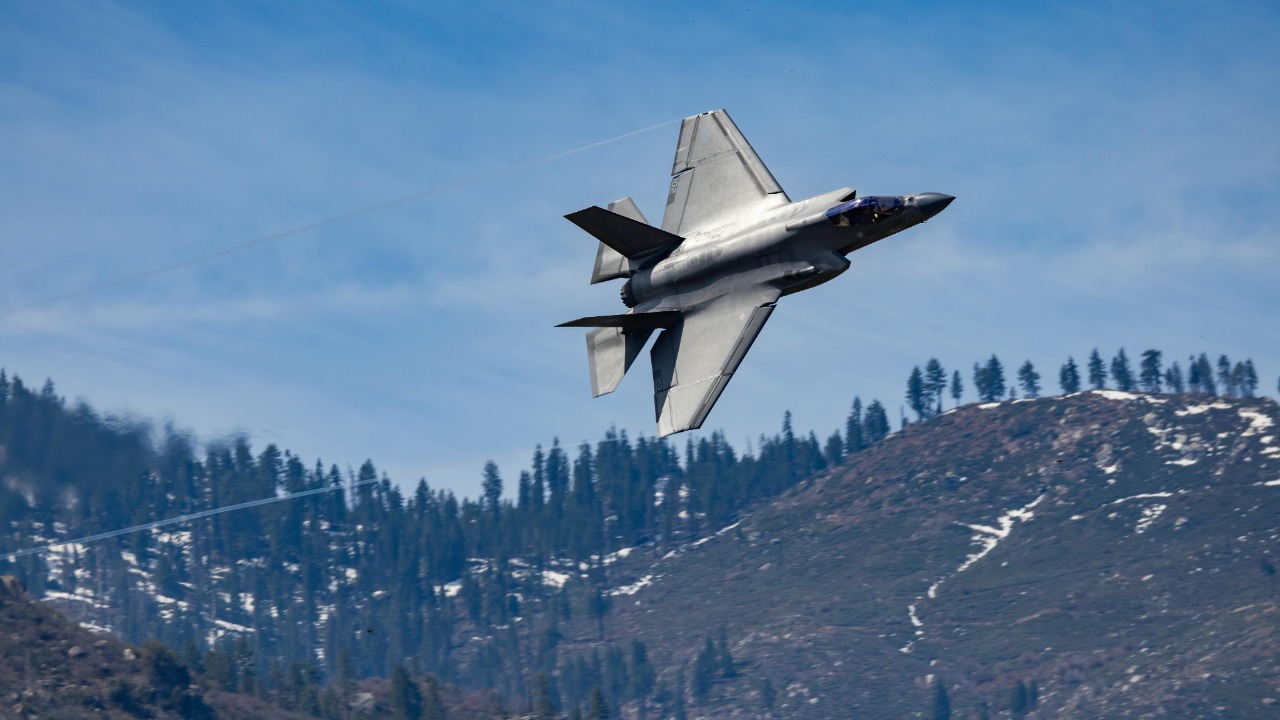
The Lockheed Martin F-35 Lightning II, with a top speed of Mach 1.6, represents the pinnacle of modern multi-role fighter design. Powered by the Pratt & Whitney F135 engine, the F-35 entered service in 2015 across various U.S. military branches, supporting joint operations. Its versatility is exemplified by variants like the F-35B, which features short takeoff and vertical landing capabilities, making it suitable for deployment at Marine Corps bases and other strategic locations [source].
The F-35’s integration with hypersonic missile systems enhances its rapid response capabilities, positioning it as a key player in global air combat scenarios. This integration reflects broader trends in military aviation, where speed and adaptability are crucial for maintaining strategic advantages. The F-35’s role in modern warfare underscores the ongoing evolution of fighter jet technology and its impact on global defense strategies [source].
